Technical Knowledge
Analysis on rapid construction technology of high-flatness flooring in large-area automobile workshops
▶1◀ Technical Overview
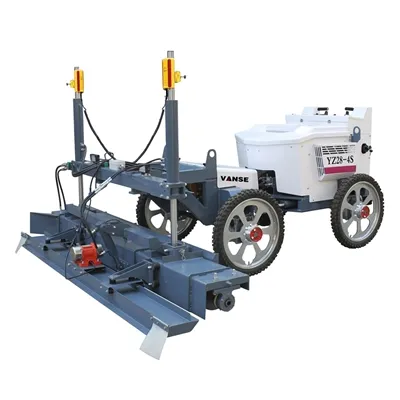
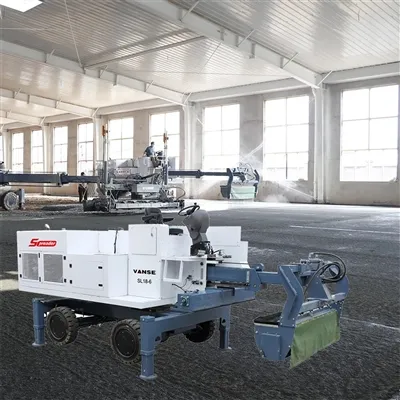
The rapid construction technology of large-area and high-flatness floors in automobile factories is an efficient and high-precision floor construction method. It is mainly used in floor construction of industrial factories such as automobile manufacturing and machinery manufacturing. This technology uses advanced laser leveling technology and equipment to achieve high flatness requirements for large-area floors, while improving construction efficiency and shortening the construction period.
▶2◀ Key points of construction technology
1. Before construction
, clean and level the construction site to ensure that there are no debris or bumps on the ground. At the same time, according to the design requirements and construction conditions, select the appropriate laser leveler and other auxiliary equipment, and carry out inspection and debugging.
2. Concrete mix proportion design:
Carry out concrete mix proportion design based on the design requirements and material properties of the floor. While meeting the strength requirements, optimize the mix ratio, reduce the amount of cement, reduce the heat of hydration, and avoid cracks in the concrete.
3. Concrete pouring and leveling shall adopt the method of large-area concrete pouring,
and concrete shall be poured continuously according to the construction sequence. A laser leveler is used to initially level, vibrate and finely level the concrete to ensure the flatness and compactness of the floor. During the leveling process, pay attention to controlling the traveling speed and elevation of the leveling head to avoid excessive vibration or vibration leakage.
4. Surface treatment and maintenance:
After the concrete is initially set, use a polishing machine to polish the floor surface to improve the gloss and wear resistance of the floor. During the maintenance period, keep the floor surface moist and take appropriate moisturizing measures to prevent cracks.
5. Quality inspection and acceptance
After the floor construction is completed, quality inspection and acceptance will be carried out. The testing content includes the flatness, strength, wear resistance and other aspects of the floor. For unqualified floors, promptly handle and repair them.
▶3◀ Technical advantages
1. High flatness:
Using laser leveling technology, high-precision floor flatness requirements can be achieved and the visual effect and performance of the floor can be improved.
2. Rapid construction:
Compared with the traditional manual scraping method, the laser leveling machine has higher production efficiency, can shorten the construction period and reduce the construction cost.
3. High degree of automation:
Laser leveling machines and other equipment have a high degree of automation, which can reduce manual operations and human errors and improve construction quality.
4. Wide scope of application:
This technology is suitable for floor construction of various large-area industrial plants with high flatness requirements, such as automobile manufacturing, machinery manufacturing, electronics industry and other fields.
5. Environmentally friendly:
There is no noise, no vibration and no pollution during the construction process, which is in line with the concept of green construction.
To sum up, the rapid construction technology of large-area and high-flatness floors in automobile workshops has significant advantages and characteristics. Through reasonable construction preparation, concrete mix ratio design, pouring and leveling surface treatment and maintenance, as well as quality inspection and acceptance and other construction technical points, the quality and efficiency of floor construction can be effectively improved. In the future, with the continuous advancement of technology and the expansion of application scope, this technology will play a more important role in industrial construction fields such as automobile factories.
Thanks to All the Friends Who Support and Trust Shandong Vanse Machinery Technology Co., Ltd.
If you want to know more about Shandong Vanse Machinery Technology Co., Ltd. or have any questions, please feel free to contact us:
Our Factory
Shandong Vanse Machinery Technology Co., Ltd.








Share this article

About the Author: Shandong Vanse Machinery Technology Co., Ltd.
Shandong Vanse Machinery Technology Co., Ltd. is a high-tech manufacturer specializing in concrete construction machinery, including laser screeds and related equipment. The company integrates R&D, production, and global sales, with products exported to over 60 countries and widely used in infrastructure projects worldwide.
Previous Post
Next Post
Related Articles
You Might Also Like
What are the common faults and troubleshooting methods of concrete laser leveling machines?
The concrete laser leveling is a precision mechanical equipment, and some malfunctions will inevitably occur during use. Common faults and troubleshooting methods of concrete laser levelings will be introduced below, including the following aspects: 1. The laser transmitter does not work The laser transmitter not working is one of the common failures of concrete laser leveling machines. The elimination method is as follows: Check whether the power supply is normal. If the power supply is abnormal, replace the power supply. Check whether the laser transmitter is blocked by debris or dust and needs to be cleaned regularly. Check whether the connection cable of the laser transmitter is loose or detached. The connection cable needs to be re-plugged or replaced. Check whether the driver of the laser transmitter is working properly and replace the faulty driver. 2. The receiver cannot receive laser signals The failure of the receiver to receive the laser signal is another common failure of the concrete laser leveling. The elimination method is as follows: Check whether the laser signal transmitter and receiver are aligned and adjust the position and angle of the laser transmitter and receiver. Check whether the connection cable of the laser signal receiver is loose or detached. The connection cable needs to be re-plugged or replaced. Check whether the circuit board of the laser signal receiver is working properly. The faulty circuit board needs to be replaced. 3. The machine cannot start normally The failure of the machine to start properly is another common failure of concrete laser leveling machines. The elimination method is as follows: Check whether the power supply is normal. If the power supply is abnormal, replace the power supply. Check whether the machine's switch is turned off. It needs to be turned on. Check whether the machine's connection cable is loose or detached. It is necessary to re-plug or replace the connection cable. Check whether the machine's circuit board is working properly and replace the faulty circuit board. 4. The machine cannot operate normally The failure of the machine to operate properly is also one of the common failures of concrete laser leveling machines. The elimination method is as follows: Check whether the machine's sensor is sensitive. If the sensor is malfunctioning or damaged, the sensor needs to be replaced. Check whether the flattening head of the machine is working properly. If the flattening head fails, it needs to be replaced. Check whether the machine's motor is working properly. If the motor fails, it needs to be replaced. Check whether the machine's control system is working properly. If the control system fails, the control system needs to be replaced. 5. The machine makes abnormal sounds If there is abnormal sound during use of the concrete laser leveling, it may be a signal that the machine is faulty. The elimination method is as follows: Check whether the machine's bearings are working properly. If the bearings are faulty, they need to be replaced. Check whether the machine's gearbox is working properly. If the gearbox fails, it needs to be replaced. Check whether the machine is blocked by debris or dust and needs to be cleaned regularly. Check whether the lubricant of the machine is added normally. If the lubricant is insufficient, lubricant needs to be added regularly. To sum up, common faults and troubleshooting methods of concrete laser leveling machines include the laser transmitter not working, the receiver unable to receive the laser signal, the machine unable to start normally, the machine unable to operate normally and the machine making abnormal sounds, etc. For these faults, it is necessary to carefully check and take corresponding troubleshooting methods to ensure the normal operation of the machine and improve work efficiency.Emery floor cleaning Emery wear-resistant floor cleaning and maintenance
Emery floor cleaning and emery wear-resistant floor maintenance Emery flooring is widely used in industrial plants, warehouses, parking lots and other places because of its wear resistance, anti-skid, and easy cleaning. However, long-term use and improper maintenance may cause stains, wear and other problems on the floor, affecting the appearance and usability. Therefore, cleaning and maintenance during operation is very important. This article will introduce the cleaning and maintenance methods of emery floor. •◆• Emery floor cleaning 1. Remove surface debris: Use a broom or vacuum cleaner to remove dust, sand and other debris on the ground to ensure that the ground is clean and tidy. 2. Use neutral cleaners: Choose neutral or weakly alkaline cleaners and avoid using strong acid and alkali cleaners to avoid damage to the floor. 3. Wet cleaning method: After diluting the detergent, apply it evenly on the ground with a mop or floor washer, then rinse it with clean water and finally use a water absorber to absorb the water. 4. Dry cleaning method: For minor stains, you can use dry cleaning powder or sandpaper to gently wipe them, and then use a vacuum cleaner to absorb the stains and dust •◆• Emery wear-resistant floor maintenance 1. Regular cleaning: It is recommended to clean at least once a day to keep the floor clean and tidy. For special stains such as oil stains and chemicals, they should be cleaned in time to avoid remaining for a long time. 2. Avoid heavy pressure and scratching: Avoid heavy objects, sharp objects, etc. from direct contact with the ground to avoid scratching or damaging the ground. If heavy equipment needs to be moved, it is recommended to lay protective mats on the floor or use roller devices. 3. Regular maintenance: Regularly check the wear and tear of the floor. If necessary, perform partial repairs or overall renovation. At the same time, the floor can be polished regularly to restore its gloss and anti-slip properties. 4. Control humidity: Maintain appropriate indoor humidity and avoid the ground from being too wet or dry. Too much moisture may cause problems such as mildew and deformation of the ground; too much dryness may cause the ground to crack and fall off. To sum up, the cleaning and maintenance of emery floor need to be carried out regularly to maintain its beauty and usability. At the same time, care must be taken to avoid damage to the ground during use to extend its service life.Technology-Shandong VANSE DZ25-2 laser leveling machine
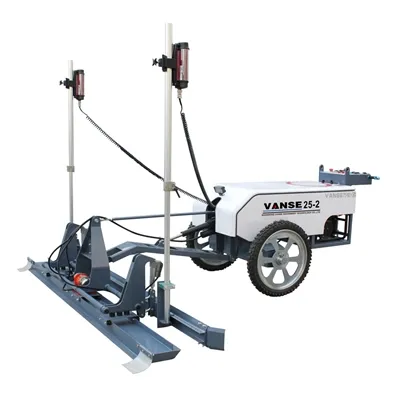
"Technology brings development" is true. Compared with more traditional floor machinery and equipment, the emergence of laser leveling machines is all the rage. As a mechanical equipment, it can effectively help our floor industry construction workers shorten the construction period and improve the construction quality. Today, let's take a look at the advantages of the DZ25-2 laser leveling machine, which makes us so fascinated by it. The unique hand-held and dual control modes allow our construction workers to control freely and flexibly. Only one person is needed to operate this machine for construction. The two wheels move independently, which is convenient and flexible. Because it is equipped with an electric-driven two-wheel walking system, the wheels can move independently and do not affect the construction of the front leveling head. We can manually control the forward, backward, steering and travel speed of the wheels, which is very convenient to move. The leveling head is composed of scrapers, vibrators, vibration plates and other components, and all materials are made of magnesium alloy used in aviation. The integrated leveling head integrates multiple processes such as leveling, leveling, and vibration, and is completed by the machine at one time. It is both efficient and labor-saving. The high-frequency vibrator of 4,000 times per minute ensures a more stable construction quality. The uniform high-frequency vibration of the vibration plate of the leveling head makes the concrete floor dense and avoids cracking of the floor caused by deformation. It can effectively solve the problems of hollowing, peeling, cracking and inequality of the floor. Some people may ask, what is the magic of the "laser" of the laser leveling machine? Don't worry, the magic will of course be put at the end! Don't you think so? The laser transmitter of the DZ25-2 laser leveling machine is arranged independently, so that we can ensure the consistency of the ground elevation when paving a large area as a whole, without any error. When carrying out large-scale block construction, it can also reduce construction joints, greatly reducing the cost of later maintenance of the ground. Concrete laser leveling machine The most magical laser measurement and control system can automatically control the elevation. This is because the design elevation of the top surface of the floor is automatically controlled by the laser machine computer, which ensures the flatness of the higher ground. It can directly achieve accurate leveling on the concrete layer. The flatness of the ground is not affected by the vibration of the construction template. There is no need to support the template in the middle, which reduces the input of labor and materials, reduces the construction procedures, and speeds up the construction progress. Some people will ask, what is the construction efficiency? 300 square meters of construction area per hour, about 3,500 square meters of construction work per day, don't you like such construction efficiency? I can't wait to get a few machines and put them into construction as soon as possible.