Technical Knowledge
Advantages of super flat floor over ordinary floor?

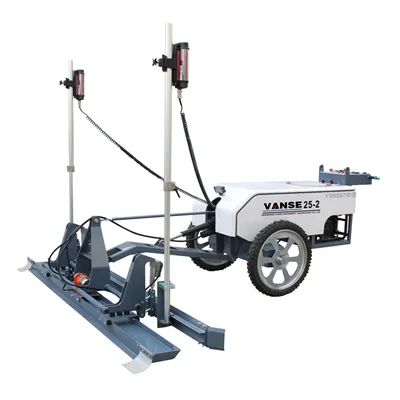
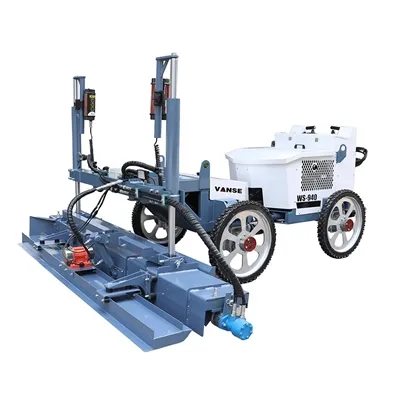
Super-flat flooring is a roadway area where forklifts are permanently used on the ground. It is usually classified as "super-flat flooring". It uses a high-precision laser leveling machine to pave and level newly poured concrete and combine it with certain floor construction techniques. , a kind of floor that meets certain specific use requirements; super flat floor is the highest specification and highest standard advanced floor in the world. It is designed to improve the flatness and wear resistance of the ground and extend the service life of the ground. . So, what are the advantages of super flat floors compared to ordinary floors? Diyi Construction will introduce it to you from the following three aspects.
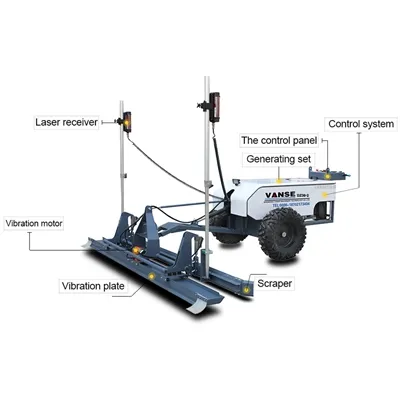
1. Different equipment and instruments In order to ensure the flatness of the ground, many factors need to be considered in the design of the super-flat floor process, including the working time of the instruments and equipment and the selection of construction tools. Laser leveling, infrared detection and ultrasonic leveling technologies are generally used in super-flat floor construction, while ordinary floor construction does not require so many equipment and instruments.
2. The flatness of the ground is different. Super-flat floors generally use laser leveling machines to replace traditional manual leveling of concrete. The ground elevation can reach laser-level accuracy. Lasers are used to control the levelness and flatness of the ground, so as to achieve true leveling. super flat floor. The flatness of ordinary concrete floors generally only reaches 5mm/2m, while the flatness of super-flat floors generally refers to the flatness of 3~4mm/2m or higher. It can be seen that the flatness requirements far exceed the general standards of our country's floors.
3. Different construction techniques. Super-flat floors abandon the traditional practice of constructing the concrete base and surface layers separately. They use a special laser leveling machine and polishing technology to process the concrete into a high-density, high-gloss floor. To a large extent, It reduces the problems of cracks and hollows caused by poor combination between the base layer and the surface layer, and also allows the forklift to run more smoothly.
Relatively speaking, ordinary floors are relatively poor and can only meet general design requirements. They cannot meet conventional requirements for the maximum bearing capacity of the ground and the smooth operation of forklifts. In addition, ordinary floors are more likely to have cracks, hollows, sand and dust in the future.
Because of the special technology of the super flat floor, the surface hardness and flatness of the floor are extremely high, which prolongs its use time. It is widely used in large warehousing centers, logistics centers, comprehensive distribution centers in the retail industry, ultra-narrow lane warehouses, and railway transportation reserves. Centers, cargo terminals, TV program studios, ice rinks, production workshops using precision instruments and equipment, etc. Industrial workshops that require special flatness on the ground, aerospace manufacturing centers, etc.
Thanks to All the Friends Who Support and Trust Shandong Vanse Machinery Technology Co., Ltd.
If you want to know more about Shandong Vanse Machinery Technology Co., Ltd. or have any questions, please feel free to contact us:
Our Factory
Shandong Vanse Machinery Technology Co., Ltd.








Share this article

About the Author: Shandong Vanse Machinery Technology Co., Ltd.
Shandong Vanse Machinery Technology Co., Ltd. is a high-tech manufacturer specializing in concrete construction machinery, including laser screeds and related equipment. The company integrates R&D, production, and global sales, with products exported to over 60 countries and widely used in infrastructure projects worldwide.
Previous Post
Next Post
Related Articles
You Might Also Like
Introduction to the construction process and precautions of laser leveling machine
Regarding the construction process and precautions of the laser leveling machine, I believe this is also a question that operators are more concerned about. We all know that if we want to use the laser leveling machine better, we need to understand its construction process and precautions. In order to help everyone use the equipment better, we will introduce this aspect to you in the next article. I hope you will be interested in it. Check whether the outer template has been fully supported, confirm that the laser leveling construction equipment is intact, find the specified elevation, and install the laser transmitter; check whether the slump of the concrete on site meets the requirements of laser leveling. When using the precision laser leveling machine, the slump of the concrete is required to be 160±10mm; and confirm that the concrete can be supplied continuously. Be careful to avoid obstacles when installing the laser transmitter; the speed of the laser leveling machine should not be too fast during leveling; the concrete should be initially leveled before leveling, and the concrete after initial leveling should be higher than the established elevation. 1. Before starting work, one operator shall check the machine equipment, set up the transmitter with the operator, and install the handheld receiver; adjust the scraper of the floor machine in a static state, and there shall be no error at two points; operate the laser leveling machine, observe whether the machine is working properly, check whether the laser receiver is in a horizontal position, and supervise whether the material replenisher is scraping and filling in time; at the end of the construction on the same day, clean the machine after the machine cools down, and check whether the functions of the machine are normal; check the power of the transmitter. 2. One operator shall assist the operator in installing and debugging the machine, and set up the transmitter with the main operator and install the handheld receiver. Check whether the transmitter is placed safely; measure the height of the concrete after preliminary paving; measure the height of the concrete after leveling. Focus: the edge of the concrete and the concrete surface scraped by hand; at the end of the construction on the same day, clean the machine after the laser leveling machine cools down, and check the power of the handheld receiver. 3. When the laser leveling machine is not operated, two material replenishers shall perform preliminary leveling of the concrete with the paving worker. When following the machine, they shall obey the instructions of the main operator and scrape and fill the machine scraper position. 4. 2-4 pavers need to follow the command of the operator and perform preliminary leveling of the concrete. The above are the precautions and construction processes for the use of laser leveling machines introduced by the manufacturer. I hope it can provide you with some effective reference opinions. If you have any questions or don't understand the above issues, you can call us for consultation. We will patiently answer your questions.How to use the concrete laser leveling do concrete work
Laser leveling machine is developed according to the increasing demand of modern industrial plant, large shopping mall, warehouse and other large area cement concrete ground for ground quality, such as strength, flatness, levelness, etc. It has the characteristics of good performance and high efficiency. A. Preparations: (1) After the basic treatment, the laser paver is debugged and fixed reference level is drawn according to the original level; non-woven fabrics and side dies are laid, laser transmitters are erected, and ground elevation is introduced into laser leveller according to the original level. (2) The concrete is transported by commercial concrete. The commercial concrete is transported to the entrance and exit of the garage by tank truck, and then transported to the construction site by three-wheel dumper truck. (3) The elevation of the ground floor is checked by hand-held laser receiver, and the elevation is introduced into the laser paver to adjust the reference point (±0.00) on the leveller. B. Concrete Paving: (1) After the formwork is supported, the warehouse should be cleaned one day in advance and soaked with water before pouring concrete. When approaching pouring, drain open water, sweep cement slurry or interface agent. Obvious water accumulation is strictly prohibited at this time. If so, the concrete can be paved only if it is removed resolutely. (2) After the concrete is laid down, it is preliminarily flattened. The flattened height should be 3cm thicker than the elevation. Then it is leveled with a laser paver. The corners which can not be leveled can be leveled by gasoline leveling ruler or manual method. (3) For concrete mixer can not drive to the site area, but also use tractors to transport concrete. After the completion of the pouring, the floor lighting construction will begin when the concrete is initially solidified. (4) In construction, the laser signal received by the laser paver receiver (10 times per second ) automatically adjusts the elevation in real time to ensure that the construction elevation is always in the set standard. Because the laser transmitter is fixed after being set up, it can ensure that the construction of large area of the ground does not produce cumulative errors. (5) During the construction, the operator uses a hand-held laser receiver to inspect the ground after the construction of the machine to ensure that the smoothness error is within the controllable range again. *Notice: It is necessary to ensure that all parts of the laser leveling machine are connected perfectly, without any loosening, so as to prevent problems in the operation process. Add enough lubricating oil to laser leveling machine in advance to improve the flexibility of controller, so as to improve work efficiency. The surface insulation of cable must be complete, and the slightly damaged parts should be treated with caution until they are all in good condition. This can not only ensure the safety of construction personnel, but also the safety of passers-by. After turning on the power supply, it is necessary to check the direction of the motor rotation. If there is a mistake, it is necessary to change the line immediately in order to avoid greater problems in working hours. Laser leveling machine operators should undergo professional training, such as in the operation process, they can not tilt, can not grasp too tight and other elements should be mastered well, in order to avoid accidents accidentally. Laser leveling machine in the construction process, needs density of soil, can repeat consolidation, don't move back and forth, so even if the result is the same, it will spend more energy on moving, not economical. Welcome for asking if you had any needs in the concrete paving machine needs!!Concrete laser leveling machine: Save labor & money and shorten the construction period!
Do you know? Using a concrete laser leveler can save up to 60% of high-intensity labor, save 50% of construction costs, and shorten the construction period by 50%! The strength and compactness of the floor have increased by 25%, and the levelness and flatness have exceeded national standards. The completed "three-super" floor has reached the international first-class level. 1. Labor costs are halved and efficiency doubled! The traditional process requires multiple manual operations such as formwork support, dotting, and paving, which requires at least 20 manpower. With the use of a concrete laser leveler, the total number of people has been reduced by more than half, and it is still possible for one person to operate! The daily construction area can reach 2,500 square meters to 3,500 square meters, which is really labor-saving and efficient! 2. Laser point alignment, high precision and low error! Leveling is not easy with traditional techniques. You need to support templates to control the elevation of the ground and pull control lines. But the elevation error is a bit large, and the level and smoothness of the floor may not be guaranteed… However, it is completely different with a laser point transmitter! It is suitable for one-time paving of large areas. It has a laser measurement and control system to control the elevation in real time. No wires are required for leveling, and there is no need for side boards in the middle to control the ground elevation. In this way, the elevation error caused by the vibration of the formwork during the construction process is avoided, and the elevation error caused by traditional manual block formwork is also reduced! 3. The flatness and integrity are better! In the traditional construction process, the formwork is set up one day and the water is poured the other day. The construction can only be carried out piece by piece, which has some limitations. If this continues, continuous operation will not be possible, and the integrity will not necessarily be much better, and it will easily lead to accumulated errors in the construction joints! But that's not the case with concrete laser levelings! It is a master at paving large areas of floor in one go! Not only can the paving efficiency be improved, but the integrity is also better! Compared with traditional construction, it is no match! 4. The ground is denser and more uniform! Do you know? The leveling machine has a high-frequency vibrator that operates 4,000 times per minute! It allows the leveling head vibrator to produce uniform high-frequency vibration, making the concrete floor denser and more uniform!