Technical Knowledge
Superflat floor construction technology
April 29, 2026

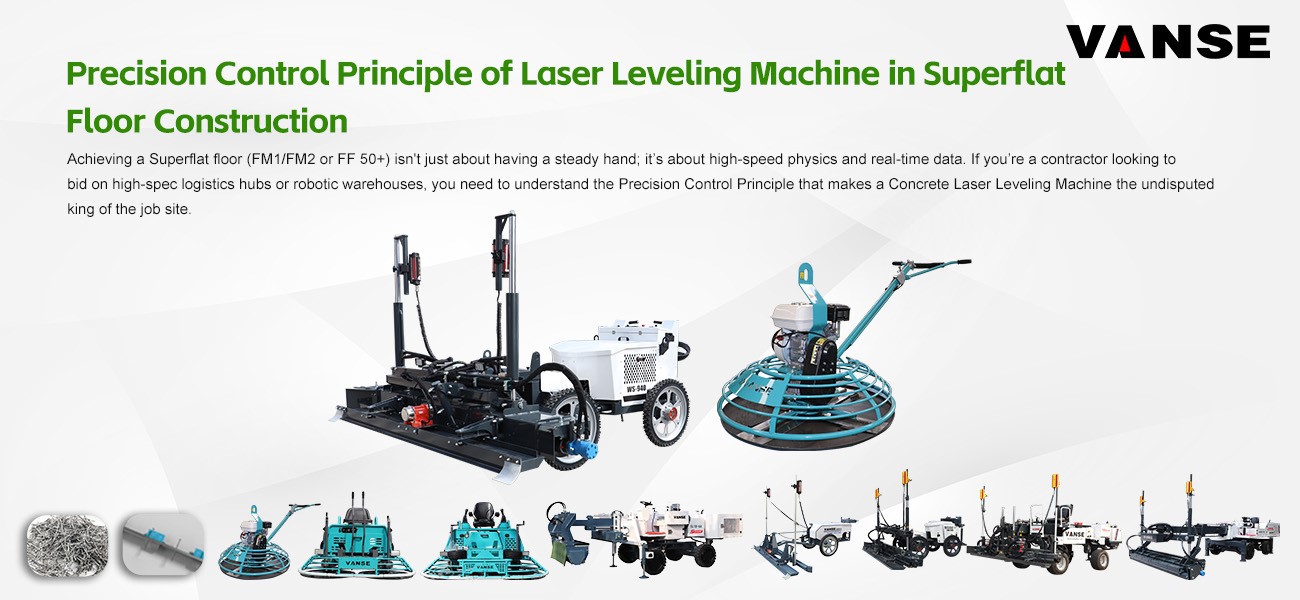
In the era of automated logistics and high-reach VNA (Very Narrow Aisle) warehouses, "flat" isn't just an aesthetic choice-it’s a functional requirement. Superflat floor construction technology is designed to meet extreme tolerances, typically measured as FF (Floor Flatness) and FL (Floor Levelness) numbers (e.g., FF 50+ or FM1 standards).
If you are a contractor looking to master this high-spec field, you don't just need workers; you need a synchronized ecosystem of precision machinery. Here is the ultimate professional workflow for Superflat success, featuring the specialized lineup from Vanse Machinery.
Phase 1: Controlled Placement & Material Handling
Superflat precision begins before the leveling starts. If your concrete distribution is uneven, you create "slump variations" that lead to dips later.
The Strategy: Use a Vanse Concrete Distributor to discharge the mix in uniform ribbons. To get material into tight strips or multi-level bays without the heavy footprint of a truck, the Vanse Mini Dumper (available in electric or gasoline) is the perfect "last-mile" tool. It allows your crew to place concrete with surgical precision, reducing the manual "shoveling" that often leads to inconsistencies.
Phase 2: High-Precision Leveling (The Core)
This is where the Superflat status is won or lost. Traditional manual leveling simply cannot hit FM1/FM2 numbers consistently.
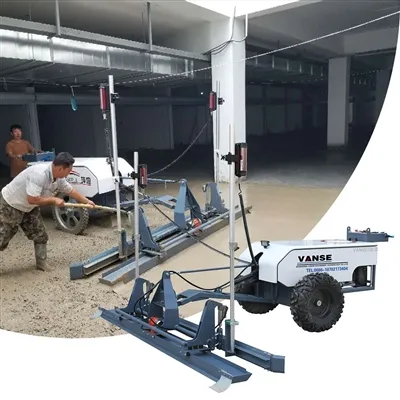
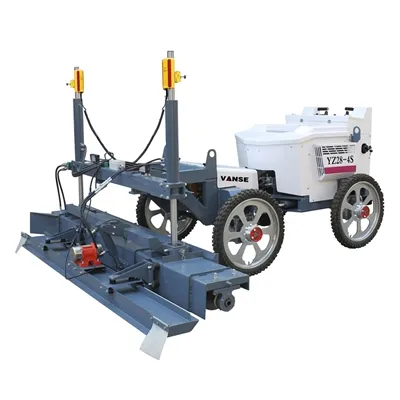
The Vanse Edge: The Vanse YZ30-4E Telescopic Boomed Laser leveling is the industry standard for large-scale precision. Its 6-meter telescopic boom allows the leveling head to strike off the concrete while the machine remains stationary, eliminating the "tire track" issues that ruin FL scores. For smaller projects, the agile Vanse YZ25-4 offers the same high-frequency vibration and laser-controlled precision in a compact frame, ensuring every square meter is consolidated from the bottom up.
Phase 3: Uniform Surface Hardening
VNA floors must be incredibly wear-resistant. However, manual "dry-shake" broadcasting is notoriously uneven, which can lead to color variations and localized "dusting."
The Strategy: Transition to a Vanse Automatic Topping Spreader. By mechanically applying the wear-resistant hardener immediately behind the laser leveling, you ensure a perfectly uniform grams-per-square-meter application. This creates a monolithic bond with the base slab, preserving the flatness achieved by the laser leveling machine while adding iron-clad durability.
Phase 4: Densification & The Mirror Finish
Once the concrete begins to set, you need to "seal" it. In Superflat flooring, this isn't just for looks; it’s about surface density.
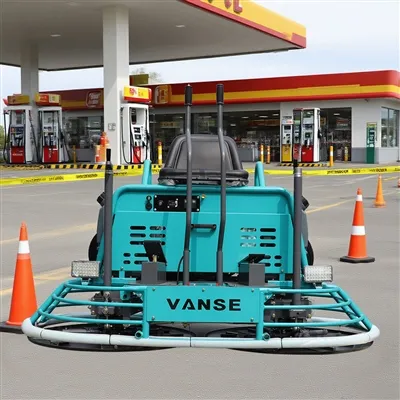
The Vanse Edge: A machine like the Vanse Ride-on Power Trowel, provides the heavy compaction needed to "burnish" the floor. Its precision pitch control allows the operator to make micro-adjustments to the blades, smoothing out any remaining micro-imperfections to create a mirror-like finish that meets the highest FF (Flatness) requirements.
Phase 5: Precision Stress Relief (The Joints)
Even the perfect slab will fail if the joints are ragged. In VNA lanes, joint integrity is critical for forklift wheel health.
The Strategy: Use a Vanse Concrete Cutting Machine (Floor Saw) for early-entry or standard contraction joints. Its stable chassis and high-speed blade ensure clean, straight cuts that won't spall or lift, protecting the floor’s long-term FF/FL integrity.
Why Global Buyers are Investing in the "Vanse Workflow"
When you visit www.vansemac.com, you’re not just looking for a "smoothing tool"; you’re looking for a guaranteed result. Here is why international contractors are making the switch:
Labor Savings: A full Vanse fleet can turn a 12-man manual crew into a high-output 5-man team, often paying for itself in labor savings within 6-12 months.
Reduced Rework: Avoid the nightmare of "grinding" a floor that failed its F-number test. Vanse machines are designed to hit the spec the first time.
Reliability: By using world-class components (Honda, Rexroth, Danfoss), Vanse ensures your fleet stays on the job site, not in the repair shop.
Final Thought
Superflat floor construction is the "Formula 1" of the concrete world. You wouldn't take a family sedan to a race track-so don't take "standard" equipment to a Superflat job site. Equip your team with the precision of Vanse (www.vansemac.com) and transform every pour into a high-performance asset.
Ready to upgrade? Check out the full range of Superflat solutions at Vanse Machinery and see how we can help you set a new standard in your market.
Note: The parameters provided in this document are for reference only and are not mandatory. Due to differences in technical characteristics between different brands and models of laser levelers, please consult the manufacturer for a suitable solution before actual operation. This reference document assumes no responsibility for any issues arising from failure to follow the manufacturer's instructions.
Thanks to All the Friends Who Support and Trust Shandong Vanse Machinery Technology Co., Ltd.
If you want to know more about Shandong Vanse Machinery Technology Co., Ltd. or have any questions, please feel free to contact us:
Our Factory
Shandong Vanse Machinery Technology Co., Ltd.


About the Author: Shandong Vanse Machinery Technology Co., Ltd.

Shandong Vanse Machinery Technology Co., Ltd. is a high-tech manufacturer specializing in concrete construction machinery, including laser screeds and related equipment. The company integrates R&D, production, and global sales, with products exported to over 60 countries and widely used in infrastructure projects worldwide.

Shandong Vanse Machinery
Leading manufacturer specializing in high-performance concrete laser screeds, telescopic arm flatwork handlers, and mechanical ride-on power trowels.
Post overview
Main PRODUCT Categories
Need Machine Guidance?
Speak directly with Shandong Vanse field specialists for tailored equipment quotes and site planning.
Contact Us TodayRelated Articles
You Might Also Like
May 4, 2023
VANSE Group’s excellent after-sales service team serves every customer with heart, builds the VANSE brand with quality, and makes products go global.
VANSE Group's excellent after-sales service team serves every customer with heart, builds the VANSE brand with quality, and makes products go global. The large-scale 360 degree laser leveling machine is equipped with advanced laser system and full hydraulic control system, which makes the concrete construction ground more precise and dense, and meets the high standard construction requirements while efficiently constructing. The application of a large 360 degree laser leveling machine will ensure the achievement of various high standard engineering construction standards, comprehensively improve the quality of engineering construction, and create higher value for customers. A large 360 degree laser leveling machine is a device that uses the laser emitted by the transmitter as the reference plane, and controls the leveling head in real-time through the laser receiver on the laser leveling machine, thereby achieving high-precision and rapid concrete leveling. It is developed for modern industrial factories, large shopping malls, warehouses, and other large areas of cement concrete floors, which have increasingly high requirements for ground quality such as strength, flatness, and levelness. VANSE Group engineers serve Turkish customers. The telescopic arm of a large 360 degree laser leveling machine is 6 meters long, and the leveling work width is 4 meters. It can complete the leveling of 24 square meters of concrete per minute. The flexible and efficient hydraulic control system can control the height of the scraper and fabric rotation, maintaining the flatness of the leveling layer. Another characteristic of the 360 degree concrete laser leveling machine is to save labor, improve efficiency, shorten the construction period by two-thirds, and reduce more than half of the labor. Large 360-degree laser leveling machine is your best choice!Read More
June 10, 2025
Quality testing method for concrete pavement
Concrete pavement occupies a vital position in modern transportation infrastructure, and its quality is directly related to the service life, driving safety and comfort of the road. In order to ensure the quality of concrete pavement, comprehensive and scientific quality inspection is indispensable. With the continuous advancement of science and technology, advanced equipment such as concrete laser leveling machine is increasingly widely used in concrete construction, which also puts forward higher requirements for quality inspection methods. The following will introduce the quality inspection method for concrete pavement in detail. As the key cementing material of concrete, the quality of cement has a profound impact on the performance of concrete. When testing cement, the following aspects should be paid attention to: Strength: According to relevant standards, the 3-day and 28-day compressive and flexural strength of cement is measured through cement mortar strength test to ensure that it meets the design requirements. For example, for 42.5-grade ordinary silicate cement commonly used in road engineering, the 28-day compressive strength should not be less than 42.5MPa. Set time: Use a setting time meter to detect the initial and final setting time of cement. Generally speaking, the initial setting time of ordinary Portland cement shall not be earlier than 45 minutes, and the final setting time shall not be later than 10 hours, so as to ensure that the concrete has sufficient operation time during the construction process and can harden in time. Stability: The boiling method is used to test the stability of cement to ensure that the volume change of cement during the hardening process is uniform, without abnormal phenomena such as cracking, so as to avoid quality problems such as cracks in the concrete pavement due to poor cement stability. Aggregates include coarse aggregates (such as crushed stone and pebbles) and fine aggregates (such as natural sand and machine-made sand). The key points of quality inspection are as follows: Particle grading: The particle grading of aggregates is determined by screening tests to ensure that it meets the requirements of relevant standards. Good particle grading can make the aggregates compactly stacked in concrete, reduce the amount of cement used, and improve the strength and durability of concrete. For example, the maximum particle size of coarse aggregates is usually no more than 1/3 of the thickness of the concrete slab, and should meet the requirements of continuous grading. Mud content and mud block content: Excessive mud and mud block content will reduce the bonding force between aggregate and cement paste, affecting the strength and durability of concrete. The mud and mud block content of aggregates are determined by the water washing method. Generally, the mud content of coarse aggregates is required to be no more than 1%, and the mud block content is no more than 0.5%; the mud content of fine aggregates is required to be no more than 3%, and the mud block content is no more than 1%. Robustness: The sodium sulfate solution immersion method is used to test the robustness of aggregates and evaluate their durability under the influence of climate and environmental changes. Aggregates with good robustness can effectively resist the erosion of external factors and extend the service life of concrete pavements. Admixtures can significantly improve the performance of concrete and need to be strictly tested before use: Water reduction rate: The water reduction rate is an important indicator for measuring the performance of water reducers. By comparing the water consumption of concrete mixtures with and without admixtures, the water reduction rate is calculated to ensure that it meets the requirements of the product manual. Generally, the water reduction rate of high-efficiency water reducers should not be less than 15%. Setting time difference: Detect the effect of admixtures on the setting time of concrete. The initial setting time difference and the final setting time difference should meet the construction requirements to avoid abnormal setting time of concrete due to admixtures, which will affect the construction progress and quality. Compressive strength ratio: Determine the compressive strength ratio of concrete with admixtures and benchmark concrete at different ages, evaluate the effect of admixtures on the strength development of concrete, and ensure that admixtures will not reduce the final strength of concrete. The water used for concrete mixing and curing should meet relevant standards and should not contain harmful substances that affect the performance of concrete. The test items include pH value, insoluble matter, soluble matter, chloride, sulfate, etc. For example, it is generally required that the pH value of water used for concrete is not less than 4, and the chloride content (measured in Cl⁻) does not exceed 500mg/L (reinforced concrete) or 1000mg/L (plain concrete). Slump is an important indicator for measuring the fluidity of concrete mixture. At the construction site, a slump cone is used for testing. The concrete mixture is loaded into the slump cone in three layers, and each layer is rammed 25 times. Then the slump cone is lifted vertically to measure the height difference between the cone height and the highest point of the concrete specimen after collapse, which is the slump value. According to the construction requirements, the appropriate slump can ensure the uniformity and density of the concrete during the paving process. For example, when concrete laser leveling machine is used for concrete paving, the slump is generally controlled at 30-50mm to ensure that the concrete can be paved smoothly and can achieve good flatness under the action of the laser leveling machine. For dry and hard concrete mixtures, a Vebe consistency meter is required to detect its Vebe consistency. This indicator reflects the consistency of the concrete mixture under vibration. During the test, the concrete mixture is loaded into the slump cone, and then the slump cone is placed in the container of the Vebe consistency meter. After lifting the slump cone, the vibration table is turned on and the stopwatch is started at the same time. When the concrete surface changes from uneven to flat, the stopwatch is stopped. The recorded time is the Vebe consistency value. The Vebe consistency value should meet the design and construction requirements. Generally, the Vebe consistency of dry hard concrete is between 10-30s. The air content has an important influence on the frost resistance and durability of concrete. The air content of the concrete mixture is tested using an air content meter. The appropriate amount of air content can form tiny bubbles inside the concrete, relieve the stress caused by the freeze-thaw cycle, and improve the frost resistance of the concrete. Generally, the air content of the concrete is required to be controlled between 3% and 5%, and the specific value is determined according to the environment and design requirements of the project. The temperature of the concrete mixture has a significant impact on its performance and construction quality. In a high temperature environment, if the temperature of the concrete mixture is too high, it will accelerate the cement hydration reaction, resulting in too fast slump loss and even false setting; in a low temperature environment, if the temperature of the concrete mixture is too low, it will delay the cement hydration reaction and affect the strength growth of the concrete. Use a thermometer to measure the temperature of the concrete mixture at the mixing site and the pouring site. According to the ambient temperature and construction requirements, take corresponding temperature control measures, such as cooling the raw materials in high temperatures in summer and heating and insulating the concrete in low temperatures in winter. Flatness: The flatness of the base directly affects the thickness uniformity and driving comfort of the concrete pavement. Use a 3m ruler or a flatness meter to detect the flatness of the base surface, and the allowable deviation is generally not more than 10mm. For parts that do not meet the flatness requirements, they should be trimmed to ensure that the base surface is flat, providing a good foundation for the construction of the concrete pavement. Compactness: Insufficient compaction of the base will cause road subsidence and other diseases. The compaction degree of the base layer is tested by sand filling method, water filling method or ring knife method to ensure that it meets the design requirements. For example, for lime-stabilized soil base layer, the compaction degree is generally required to be not less than 95%. Strength: The strength of the base layer is the key to ensuring the bearing capacity of the pavement structure. The strength of the base layer is tested by making specimens for unconfined compressive strength test through on-site core sampling. The strength of the base layer should meet the design requirements to ensure that it can withstand the vehicle load transmitted from the concrete pavement. Casting thickness: During the concrete pouring process, the pouring thickness of the concrete is regularly tested using a steel chisel or other measuring tools to ensure that it meets the design requirements. The thickness deviation of the concrete slab is generally controlled within the range of +10mm, -5mm. Insufficient thickness will affect the bearing capacity and service life of the pavement, while excessive thickness will cause material waste. Vibration quality: Vibration is a key link to ensure the compactness of concrete. The vibration effect can be judged by observing the surface condition of the concrete, such as whether there is slurry overflow and bubble discharge. At the same time, an inserted vibrator can be used to detect the density of the concrete inside to ensure uniform vibration without missing vibration or over-vibration. For concrete pavements constructed with a concrete laser leveling machine, it is necessary to ensure that the concrete has been initially vibrated and compacted before the laser leveling machine is operated to ensure that the laser leveling machine can play a better role and achieve high-precision flatness control. Rebar arrangement (if any): For reinforced concrete pavements, check whether the type, specification, quantity, spacing, position of the steel bars, and the connection method and anchorage length of the steel bars meet the design requirements. Improper steel bar arrangement will affect the structural performance of the concrete pavement, such as bearing capacity and crack resistance. At the construction site, a steel ruler is used to measure the spacing and position of the steel bars, observe the connection and anchorage of the steel bars, and ensure that the quality of the steel bar project meets the standards. 3m ruler method: This is a commonly used road surface flatness detection method. Place a 3m ruler along the longitudinal direction of the road surface and measure the maximum gap between the ruler and the road surface to assess the road surface flatness. Measure 2 locations every 200m, and measure 10 feet continuously at each location. Judge whether the road surface flatness meets the requirements based on the gap value. Generally, the allowable deviation is no more than 5mm. Continuous flatness meter method: This method can continuously measure the road surface flatness, with high detection efficiency and more accurate results. The continuous flatness meter travels along the road surface, collects the elevation data of the road surface through sensors, and calculates the flatness index (such as the International Roughness Index IRI). After the concrete pavement construction is completed, this method can be used to conduct a comprehensive inspection of the road surface to provide detailed data for road surface quality assessment. For roads constructed with concrete laser leveling machines, the continuous flatness meter test results can intuitively reflect the construction effect of the laser leveling machine. The IRI value should generally be controlled within a certain range, such as no more than 2.0m/km, to ensure that the road surface has good driving comfort. Vehicle-mounted bump accumulation meter method: The bumpiness of the road surface is measured by the bumpiness of the vehicle when it is driving on the road. The vertical vibration acceleration of the vehicle is measured by a sensor installed on the vehicle, and the bump accumulation value (VBI) is converted. This method has a fast detection speed and is suitable for rapid detection of large-area road surface flatness. When conducting quality inspection on concrete pavement, the road surface flatness condition can be evaluated according to the VBI value, and verified with other detection methods to fully grasp the road surface quality. Structural depth: The structural depth reflects the macro texture depth of the road surface and has an important impact on the road surface skid resistance. The road surface structural depth is detected by sand spreading method or laser structural depth meter. The sand spreading method is to spread a certain amount of standard sand on the road surface, flatten the sand into a circle with a push plate, measure the coverage area of the sand, and calculate the structural depth value. The laser structural depth meter uses laser scanning technology to quickly measure the road surface structural depth. Generally, the structural depth of cement concrete pavement is required to be between 0.7 and 1.1mm to ensure that the road surface still has sufficient skid resistance under adverse conditions such as moisture. Friction coefficient: The friction coefficient is a direct indicator of the road surface skid resistance. Use a pendulum friction meter or a dynamic friction coefficient tester to detect the road surface friction coefficient. The pendulum friction meter measures the friction force of the pendulum sliding on the road surface when it swings freely from a certain height, and calculates the friction coefficient of the road surface (BPN value). The dynamic friction coefficient tester simulates the friction between the tire and the road surface during vehicle driving and measures the friction coefficient in real time. According to different road grades and usage requirements, the road friction coefficient should reach the corresponding standard value. For example, the BPN value of general urban roads should not be less than 45 to ensure driving safety. Core drilling method: The core drilling method is the most direct and reliable method to detect the strength of concrete pavement. After the concrete pavement is hardened, a core drill is used to drill a core sample on the pavement. The diameter of the core sample is generally not less than 100mm and not less than 3 times the maximum particle size of the aggregate. After the core sample is processed into a standard test piece, a compressive strength test is carried out, and the strength of the concrete pavement is evaluated based on the test results. The core drilling position should be representative, and at least 1 core sample should be drilled every 3km for each lane. The compressive strength of the core sample should meet the design requirements. For example, for a concrete pavement with a design strength grade of C30, the average compressive strength of the core sample should not be less than 30MPa, and the minimum value should not be less than 25.5MPa. Rebound method: The rebound method is a non-destructive detection method. The rebound value of the concrete surface is detected by a rebound hammer. The strength of the concrete is estimated based on the correlation between the rebound value and the concrete strength. When using the rebound method, the measurement areas should be evenly arranged on the pavement. The area of each measurement area should not be greater than 0.04m², and the number of measurement areas should not be less than 10. At the same time, the influence of the carbonization depth of concrete on the rebound value should be considered and necessary corrections should be made. The detection results of the rebound method have certain limitations. It is generally used as an auxiliary detection method of the core drilling method for the preliminary evaluation of the strength of large-area concrete pavements. Ultrasonic rebound comprehensive method: This method combines the advantages of the ultrasonic method and the rebound method. By measuring the ultrasonic sound velocity and rebound value of concrete, the strength of concrete is comprehensively estimated. Ultrasonic sound velocity reflects the density and uniformity of concrete, and the rebound value reflects the hardness of concrete surface. The combination of the two can more accurately evaluate the strength of concrete. The ultrasonic rebound comprehensive method is suitable for batch testing of concrete pavement strength. The accuracy of the test results is relatively high, but the operation is relatively complex and requires professional testing equipment and technicians. Core drilling method: The drilled core sample can not only be used for strength testing, but also can intuitively measure the thickness of the concrete pavement. Use a caliper to measure the thickness of the core sample with an accuracy of 0.1mm. Drill sample cores at 2 locations on the left and right within every 100m of pavement paving width to test the thickness of the board. The pavement thickness deviation should meet the design requirements, and the general allowable deviation is +10mm, -5mm. Radar detection method: Use ground penetrating radar to emit high-frequency electromagnetic waves to the pavement, and detect the thickness of the concrete pavement based on the reflection characteristics of the electromagnetic waves at the interface of different media (such as concrete and base). The radar detection method has the advantages of fast, non-destructive, and continuous detection, and can obtain thickness data of large-area pavements in a short time. However, this method requires professional radar equipment and data analysis software, and the detection results are greatly affected by factors such as the material properties and water content of the pavement structure layer, and calibration and verification are required before use. Appearance inspection: Observe the surface of the concrete pavement with the naked eye to check whether there are cracks. Record the location, direction, length, width and other information of the cracks. For cracks with smaller width, a crack observation instrument can be used to measure and accurately measure the crack width. Generally, cracks with a width of no more than 0.2mm are considered to be small cracks and can be closed on the surface; cracks with a width of more than 0.2mm need to analyze the cause and take corresponding repair measures, such as grouting repair. Non-destructive testing technology: In addition to appearance inspection, non-destructive testing equipment such as ultrasonic flaw detectors and infrared thermal imagers can also be used to detect whether there are cracks inside the concrete pavement. The ultrasonic flaw detector transmits and receives ultrasonic waves, and judges whether there are defects and cracks inside according to the reflection and refraction characteristics of ultrasonic waves when propagating inside the concrete. The infrared thermal imager uses the difference in temperature distribution on the surface of the object to detect internal defects. When there are cracks inside the concrete, a corresponding temperature abnormality area will be formed on the surface, which can be intuitively displayed through infrared thermal images. Non-destructive testing technology can detect hidden cracks inside the pavement, provide a basis for timely prevention and control measures, and ensure the integrity and safety of the pavement structure.Read More
January 6, 2025
Large area concrete laser leveling diamond wear-resistant floor and corrugated compartment joint anti-cracking construction method
1. High-precision leveling: – With the help of a concrete laser leveling machine, the operation is carried out based on the precise plane reference formed by the laser beam. The laser receiver feedbacks the deviation information in real time, and the leveling machine automatically and accurately adjusts the scraper height and vibration frequency to ensure that the floor flatness error can be controlled within a very small range, usually within ±2mm, providing a solid foundation for subsequent processes, especially suitable for precision manufacturing workshops, high-end storage facilities and other places with strict requirements on flatness. 2. Excellent wear resistance: – In the initial setting stage of concrete, diamond wear-resistant materials are evenly spread. With its high hardness and high strength, it is closely integrated with the surface of concrete. After smoothing and finishing, a solid and wear-resistant protective layer is formed, which greatly improves the wear resistance of the floor, effectively copes with high-intensity wear scenes such as heavy-loaded vehicles and frequent cargo handling, and significantly extends the service life of the floor. 3. Unique corrugated compartment joint design: – Abandoning the traditional straight compartment joint, the corrugated compartment joint is adopted. This design not only meets the needs of concrete expansion and contraction and prevents cracks, but also has a better stress dispersion effect than the straight joint, which can effectively reduce the risk of cracks caused by uneven foundation settlement and temperature changes. It can also add a unique visual beauty to the floor and enhance the overall image of the site. 4. High efficiency of construction: – All construction links are closely connected, from base treatment, concrete pouring, laser leveling, to wear-resistant material spreading, compartment joint setting and subsequent maintenance, all in one go and in an orderly manner. Laser leveling technology greatly improves the leveling efficiency. Compared with traditional manual leveling methods, the construction speed can be increased several times, which greatly shortens the overall construction period and reduces the project construction cost. It is widely used in various large-scale and high-load indoor and outdoor concrete floor projects, such as large industrial plants, logistics distribution centers, airport aprons, exhibition halls, port terminal cargo yards and other places, especially for projects with high requirements for floor flatness, wear resistance and crack resistance, and the expectation of a certain aesthetics. 1. Laser leveling principle: – The laser transmitter releases a rotating laser beam to form a high-precision horizontal control surface. The laser receiver installed on the leveling machine continuously captures the laser signal, compares the real-time elevation of the floor with the laser reference surface, and transmits the generated deviation signal to the control system, prompting the hydraulic mechanism of the leveling machine to respond quickly, accurately control the scraper, vibrator and other components, and realize fast and accurate leveling and vibration of the concrete, achieving a high-precision leveling effect. 2. The wear-resistant principle of corundum: – When the concrete is in the initial setting state and the surface has a certain viscosity, the spread corundum particles can be embedded in the surface of the concrete. With the subsequent leveling and finishing operations, the corundum is deeply combined with the concrete. With its excellent hardness and wear resistance, it builds a solid defense line against wear on the concrete surface, protecting the main structure of the floor from friction loss in daily use. 3. The anti-cracking principle of the corrugated compartment joint: – Compared with the straight joint, the curved shape of the corrugated compartment joint can more effectively disperse the stress during the expansion and contraction of the concrete. When the concrete needs to expand and contract due to factors such as temperature rise and fall and foundation settlement, the corrugated joint guides the stress to disperse along the curve to avoid excessive stress concentration, thereby reducing the possibility of cracks and ensuring the integrity and stability of the floor. 1. Construction preparation: – Technical preparation: Read the construction drawings in detail, clarify the technical requirements, prepare a rigorous construction plan, and organize construction personnel to conduct technical briefings. – Site preparation: Thoroughly clean up debris and accumulated water on the construction site, ensure that the base is flat, and take reinforcement measures for weak bases; reasonably plan the temporary drainage system for construction; design the concrete pouring and leveling route and the layout of the compartment joints according to the shape and area of the site. – Material preparation: Strictly purchase high-quality cement, sand, admixtures, diamond wear-resistant materials, etc. according to design requirements, strictly inspect the raw materials to ensure that the quality meets the standards; prepare sufficient water and electricity for construction. – Equipment preparation: Comprehensively debug concrete laser leveling machines, concrete mixing equipment, transportation equipment, wear-resistant material spreaders, trowels, etc. to ensure that the equipment is in good operating condition; accurately calibrate the laser system to ensure that the emitted laser plane matches the floor design elevation. 2. Base treatment: – Deeply clean the base to remove dust, oil and other pollutants; compact the base with a roller or compacting machine, with a compaction degree of not less than 90%; use concrete or mortar to repair and level the local potholes and holes on the base, so that the base leveling error is controlled within ±10mm. 3. Concrete pouring: – Accurately weigh the raw materials according to the designed mix ratio, use a forced mixer to fully mix the concrete, and the mixing time is not less than 90 seconds to ensure the uniformity of the concrete; use pumping or self-unloading to transport the concrete to the construction area, control the pouring speed, prevent concrete segregation, and the pouring thickness should be slightly higher than the designed floor elevation by 10-20mm to reserve operating space for subsequent leveling. 4. Laser leveling: – Turn on the laser leveling machine and keep moving at a constant speed, usually controlled at 1-2m/min; the operator flexibly adjusts the scraper height and vibration frequency of the leveling machine in real time according to the signal fed back by the laser receiver to ensure that the concrete surface is flat and vibrated densely; the leveling work of adjacent areas must be completed before the initial setting of the concrete, and the overlapping construction width must be no less than 10cm to ensure the integrity of the floor. 5. Spreading of wear-resistant materials: – When the concrete is initially set (generally there are slight footprints when stepping on it, and the sinking depth is about 3-5mm), use a special spreader to evenly spread the diamond wear-resistant material on the floor surface according to the specified amount, and the spreading thickness is approximately 3-5mm; during the spreading process, the spreading speed and direction must be accurately controlled to prevent the accumulation or leakage of wear-resistant materials, and ensure that the spreading uniformity reaches more than 90%. 6. Smoothing and finishing: – After the wear-resistant material is spread, use the trowel to smooth it immediately. The trowel should be operated in a crisscross pattern to make the wear-resistant material fully blend with the concrete. The number of smoothing times should be no less than 3 times. As the concrete continues to harden, when there is no water stain on the surface and it feels slightly hard when pressed with fingers, it should be smoothed manually. Aluminum alloy rulers, trowels and other tools should be used to make the floor surface bright and smooth. 7. Corrugated compartment joint setting: – Before the concrete is finally set, according to the pre-designed compartment joint layout, a special mold or cutting equipment is used to make a corrugated compartment joint. The mold or cutting tool should ensure that the depth of the joint reaches 1/3 – 1/4 of the thickness of the concrete slab, and the joint width is controlled at 5 – 10mm. During the production process, the shape of the joint should be regular and smooth, and the anti-cracking and aesthetic functions of the compartment joint should be effectively exerted. 8. Maintenance: – After finishing and setting the compartment joints, the floor shall be maintained in time by covering with plastic film, spraying curing agent or laying water straw mats, etc. The maintenance time shall not be less than 7 days. During this period, the concrete surface must be kept moist to avoid cracks caused by water loss; warning signs shall be set up during the maintenance period, and vehicles and pedestrians are strictly prohibited from passing on the floor that does not meet the strength requirements. 1. Flatness Quality Control: – Before construction, use professional instruments to finely calibrate the laser system to ensure the accuracy of the laser plane; during the construction process, regularly use a 2m ruler and feeler gauge to check the flatness, at least once every 100-200 square meters, and adjust the leveler immediately if deviation is found; after finishing, use a laser flatness meter to comprehensively test the flatness of the floor to ensure that it meets the design requirements. 2. Wear-resistant performance quality control: – Select diamond abrasive wear-resistant materials strictly according to design requirements, and carefully check quality certification documents; in the spreading process, strengthen on-site supervision to ensure that the spreading amount and uniformity meet the standards; after maintenance, on-site wear resistance tests can be carried out, such as grinding a certain area with a grinding wheel, observing the wear condition, and judging whether the wear resistance meets the standards. 3. Partition seam quality control: – When making partition seams, strictly control the depth, width and shape of the seams, and use precise measuring tools for inspection; regularly inspect the partition seams to check whether there are debris blocking them. If problems are found, clean and repair them in time to ensure that the partition seams function normally. 1. Organize construction personnel to participate in safety training to familiarize them with the operating specifications and safety precautions of various construction equipment (such as laser leveling machines, concrete mixers, cutting equipment, etc.). 2. Set up safety warning signs in conspicuous locations on the construction site to clearly divide the construction area and non-construction area to prevent unrelated personnel from entering the construction danger zone. 3. Regularly conduct safety inspections on construction equipment, focusing on electrical insulation, mechanical protection devices, etc., to ensure the safe operation of equipment and prevent safety accidents caused by equipment failure. 4. Provide construction personnel with complete personal protective equipment, including safety helmets, safety shoes, gloves, etc., to ensure the personal safety of construction personnel. 1. Classify and collect solid waste such as concrete residues and discarded diamond abrasive material packaging bags generated during the construction process, and regularly transport them to designated garbage disposal sites. 2. Reasonably plan construction time, avoid high-noise concrete mixing, equipment operation and other operations during residents' rest periods, and take noise reduction measures when necessary, such as installing silencers on equipment. 3. Strengthen the control of dust on construction sites, cover material storage sites, close transport vehicles, regularly sprinkle water to reduce dust, and maintain a clean environment on the construction site. 1. Economic Benefit: – High-precision laser leveling combined with efficient construction process greatly shortens the construction period and reduces labor, equipment rental and other cost expenditures; diamond abrasive wear-resistant floor reduces the cost of later maintenance and floor replacement; corrugated compartment seams reduce the cost caused by crack repair, and the comprehensive economic benefits are significant. 2. Social Benefit: – Provide high-quality floor solutions for large-scale industrial, logistics and other projects to meet the needs of industry development; reduce construction noise, dust and other pollution, and help environmental protection and urban sustainable development. In a large automobile manufacturing plant construction project, this construction method was used, with a construction area of more than 80,000 square meters. The floor flatness error is precisely controlled within ±1.5mm, meeting the requirements for the installation of precision equipment on the automobile production line; the diamond abrasive wear-resistant layer effectively resists the wear caused by the transportation of production equipment and vehicle driving; the corrugated compartment seams are beautiful and have no cracks, providing a solid guarantee for the efficient and stable operation of the plant, and have been highly praised by the owner. For example, in the renovation project of a busy port terminal cargo yard, this construction method also achieved remarkable results. A large area of floor was quickly built with excellent wear and crack resistance, which met the high-intensity operation needs of the port and greatly improved the cargo yard operation efficiency.Read More