Technical Knowledge
Detailed explanation of application scope of laser leveling machine

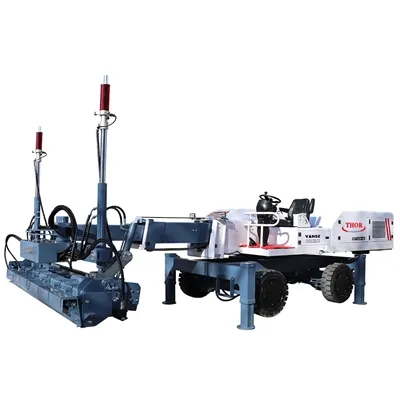
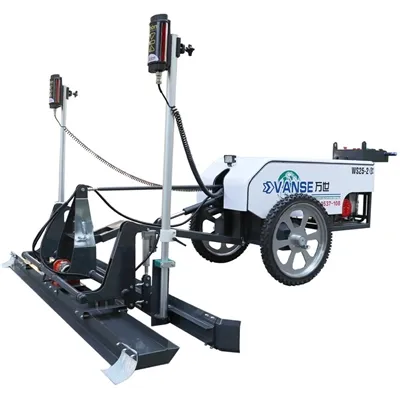
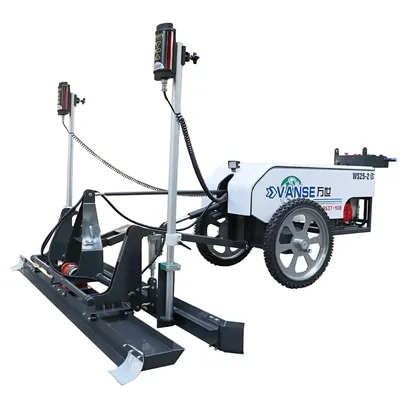
Concrete laser leveling machine is widely used. It is an advanced machine used to super-flatten and level concrete floors. Its application range can be roughly divided into two categories: indoor floor engineering and outdoor floor engineering. These two categories are further subdivided. The following is a detailed introduction to the use of concrete laser leveling machine and the projects of this type that Vanse Machinery's products have done.
Nowadays, concrete laser leveling machines are being used more and more widely. The specific scope of application can be divided into two categories:
1. Indoor floor
①. Industrial plants, workshops, and automated warehouses:
Vanse Machinery has done such projects as Harbin Haier workshop, Beijing Benz workshop, Baoding Great Wall Motors No. 5 spraying workshop, Shandong Classic Group steel structure production line workshop and other projects.
②. Clean workshops for electronic appliances, food materials, medicine, etc.:
Vanse Machinery has done such projects as: Suzhou Samsung Electronics Factory, Shandong Xingda Ecological Winery, Shandong Parkson Biological Workshop, Shandong Yuda Medical Workshop and other projects.
③. Large warehouse-style supermarkets, logistics centers, exhibition centers, etc.:
Such projects that Vanse Machinery has done include: Xi'an Fuju Home Plaza, Shenzhen Walmart Supermarket, Wuhan Vipshop Logistics Park, Guangxi Convention and Exhibition Center, Tianjin Yupei Logistics Park and other projects.
2. Outdoor floor
①. Wharf, container yard, cargo yard:
Such projects that Vanse Machinery has done include: Hubei Xiangzhou Industrial Park, Shanxi Shenlong Energy Coking and other projects.
②. Airport runway, apron, parking lot:
Such projects that Vanse Machinery has done include: Shandong Xinbaihui underground parking plant, Changchun FAW-Volkswagen parking lot, Hebei Hualian Supermarket large underground parking lot, Sichuan Wanda Plaza large underground parking lot, Hubei Xiangyang Dongjin Century City underground parking lot and other projects
③. Plaza, residential ground, municipal pavement, etc.:
Such projects that Vanse Machinery has done include: Nanjing Huawei Electronics Company floor, Shenyang Electronics Factory floor integration, Sichuan Hualian Plaza, Hubei Xiangyang Dongjin Century City and other projects.
Shandong Yanzhou Vanse Machinery Technology Co., Ltd. is the only high-tech enterprise in China that integrates R&D, manufacturing, sales, and technical services, specializing in concrete laser leveling machines. The use of "" brand concrete laser leveling machines can reduce about 60% of high-intensity labor, save about 50% of construction costs, shorten about 50% of construction period, and increase the strength and density of the floor by about 25%. The company has always been based on the tenet of "people-oriented, leading technology, honest management, and creating a well-known brand". We will provide customers with reliable products and perfect services, develop together, and create good results.
Thanks to All the Friends Who Support and Trust Shandong Vanse Machinery Technology Co., Ltd.
If you want to know more about Shandong Vanse Machinery Technology Co., Ltd. or have any questions, please feel free to contact us:
Our Factory
Shandong Vanse Machinery Technology Co., Ltd.








Share this article

About the Author: Shandong Vanse Machinery Technology Co., Ltd.
Shandong Vanse Machinery Technology Co., Ltd. is a high-tech manufacturer specializing in concrete construction machinery, including laser screeds and related equipment. The company integrates R&D, production, and global sales, with products exported to over 60 countries and widely used in infrastructure projects worldwide.
Previous Post
Next Post
Related Articles
You Might Also Like
Concrete laser leveling machine operator training
Concrete laser leveling machine operator training program ☞ Training objectives This training aims to ensure that operators fully master the operating skills of concrete laser levelings, understand safe operating procedures, improve work efficiency, and ensure construction quality. ☞ Training content 1. Equipment introduction and basic principles: Introduce the working principle, main components and functions of the concrete laser leveling. 2. Equipment installation and debugging: Instruct operators to install and debug equipment correctly to ensure normal operation of equipment. 3. Operation skills training: Make operators proficient in various operations of the equipment, including starting, running, stopping, etc. 4. Safe operating procedures: Emphasize safety awareness and ensure that operators understand and comply with safety regulations. 5. Daily care and maintenance: Teach how to perform daily maintenance and extend the service life of the equipment. 6. Common faults and troubleshooting methods: It is convenient for operators to master the identification and troubleshooting methods of common faults. ☞ Training methods 1. Theoretical teaching: Impart theoretical knowledge through explanations, illustrations, videos, etc. 2. Practical drills: Conduct practical drills in a safe environment to develop operational skills. 3. Case analysis: Analyze cases in actual projects to improve operators' problem-solving abilities. 4. Group discussion: Encourage operators to exchange experiences and make progress together. ☞ Training evaluation 1. Theoretical examination: Test the theoretical knowledge of the training to ensure that the operators master the basic theory. 2. Practical assessment: Evaluate the performance of operators in practical exercises to ensure that they have practical operational capabilities. 3. Case-solving ability assessment: Evaluate the operator's ability to solve practical problems. 4. Feedback survey: Collect operators' feedback on training to continuously improve the training plan. ☞ Training effect tracking 1. Post-training follow-up: Regularly visit operators who have completed training to understand the problems they encountered in actual work, and provide necessary help and guidance. 2. Operation specification inspection: Regularly check whether the actual operation of the operator meets the safety and specification requirements, and promptly correct operations that do not meet the requirements. 3. Equipment usage tracking: Monitor the actual use of the concrete laser leveling by operators, collect equipment operation data, and analyze equipment performance and efficiency in order to make necessary adjustments or replacements to the equipment. 4. Work quality evaluation: Regularly evaluate the operator's work quality, including the flatness of concrete leveling, work efficiency, etc., to ensure that the construction quality meets the project requirements. 5. Training effect evaluation: Regularly evaluate the training effect, including adjustments and improvements to training content, methods, evaluation standards, etc., to better meet actual needs and improve training quality. Through comprehensive consideration and implementation of the above five aspects, the work efficiency and construction quality of concrete laser leveling machine operators can be effectively improved, while ensuring the safe and stable operation of the equipment. In actual operation, the training program should be flexibly adjusted and optimized according to specific circumstances to achieve the best training effect.How to properly clean the laser leveling machine oil tank, let the experts tell you in detail
Many users often ignore a part when maintaining the laser leveler, that is, the fuel tank. During the process of the leveler leveling the ground, a lot of things will enter the fuel tank. If the fuel tank is not cleaned all the time, the more and more things accumulated in the fuel tank in the long run will inevitably have an adverse effect on the fuel tank. At this point, everyone should pay attention to the cleaning of the laser leveler fuel tank and learn to clean the fuel tank correctly. Correct method of cleaning the laser leveler fuel tank: The fuel tank cleaning is divided into two steps, internal and external. When cleaning the engine fuel system, use the engine non-disassembly cleaning agent, because the non-disassembly cleaning agent does not need to disassemble the fuel system. On the one hand, it can start to thoroughly clean the fuel system, and on the other hand, it is beneficial to protect the engine's fuel system. When cleaning the laser leveler, you can use a clean cloth to block the fuel pipe port, and then constantly change the position and direction of the plastic pipe to try to avoid rubbing the oil level sensor. After blowing and washing for 20 minutes, release the gasoline, and the impurities in the gasoline will flow out together. It should be noted that the fuel released from the fuel tank should be precipitated for 72 hours before use. When cleaning the outside of the fuel tank, it is necessary to check whether there are dents or oil leakage in the fuel tank, fuel pipes, joints, etc., and check whether the fixing screws of the fuel tank bracket are tightened; when cleaning the inside, open the fuel tank port, take out the filter barrel, suck out the oil, and then insert the cleaned plastic tube from the refueling port to the bottom of the fuel tank, and gently blow the gasoline at the bottom of the fuel tank to make it roll to achieve the cleaning effect. It is really necessary to clean the fuel tank of the laser leveler. As the laser leveler is used for a longer time, the precipitated impurities in the gasoline will accumulate more and more in the fuel tank. These impurities first settle at the bottom of the fuel tank. When there are too many sediments, they will enter the car engine with the fuel, causing serious wear and tear on the engine. As long as you clean the fuel tank once, car owners will find how necessary it is to clean the fuel tank regularly. During the cleaning process, not only particles and colloids, but even incredible things such as tin foil and plastic sheets will be washed out. Many things car owners don't know how they got into the fuel tank. If these wastes are not cleaned up in time, the impact on the engine of the laser leveler is imaginable. This is the end of the introduction to the method of cleaning the oil tank of the laser leveling machine. I believe that you have understood it very clearly after reading it. If you want to know more about the leveling machine, you can continue to pay attention to our website, and we will provide you with more information in this regard.What changes will the construction effect of the laser leveling machine have under different climatic conditions?
The effect of laser leveling machine construction under different climatic conditions may be affected to a certain extent, mainly reflected in the following aspects: 1. **Temperature changes**: – Extremely high or low temperatures may affect the performance of electronic components of laser leveling machine, such as the accuracy of laser transmitters and receivers. High temperature may cause the equipment to overheat, and low temperature may affect battery life and the response speed of electronic components. – Temperature also affects the setting time and hardening process of concrete. At high temperatures, concrete may lose moisture and solidify faster, which may shorten the operating window of the laser leveling machine, while at low temperatures, concrete solidifies more slowly and it may take longer to complete the leveling work. 2. **Humidity and rainfall**: – High humidity may affect the propagation of laser signals. Although laser leveling machines are usually designed with waterproof functions, continuous high humidity or direct rainfall may interfere with laser signals and affect leveling accuracy. – Rain will directly affect the pouring and leveling of concrete, because rain will make the concrete surface unstable, increase the difficulty of leveling, and may also cause the operation of the laser leveling machine to be suspended until the weather improves. 3. **Wind**: – Strong winds may interfere with the laser signal, especially when working outdoors. Wind may cause the laser transmitter or receiver to move slightly, affecting the accuracy of leveling. – Wind may also accelerate the evaporation of water from the concrete surface, especially in dry and hot conditions, which may affect the surface quality of the concrete and the final leveling effect. 4. **Lighting conditions**: – Strong sunlight or reflected light may interfere with the reception of laser signals, especially when there is strong light directly in the path of the laser signal. This is not a problem when working at night or on cloudy days. 5. **Dust and sand**: – Large amounts of dust and sand may block the laser signal, especially when working in a dusty environment. This may require more frequent cleaning and maintenance to ensure the normal operation of the laser leveling machine. In order to avoid the above factors affecting the construction effect of the laser leveling machine, the measures usually taken include: – Avoid construction in extreme weather conditions as much as possible, or choose the time of day when the weather conditions are most stable. – Perform regular maintenance on the laser leveling machine to ensure its optimal performance in various environments. – Take appropriate concrete pouring and maintenance measures to adapt to different climatic conditions. – Use auxiliary equipment such as protective covers or parasols to reduce the interference of external environmental factors on laser signals. In short, although the laser leveling machine is designed to take into account the influence of various environmental factors, in actual construction, it is still necessary to make corresponding adjustments according to specific climatic conditions to ensure construction quality and safety.