Insight blog
Global Market Guide to Bulk Laser Screed Procurement
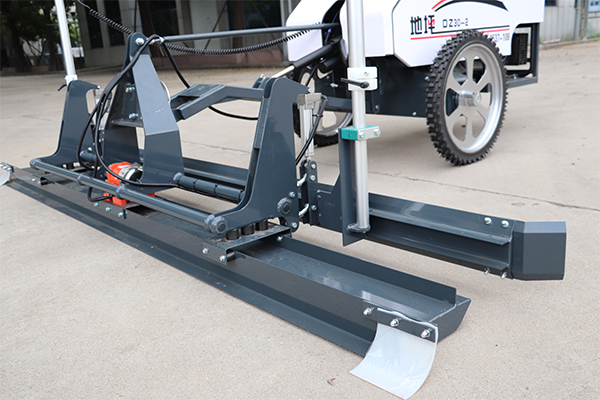
Global Market Guide to Bulk Laser Screed Procurement
Quick Answer

For successful bulk laser screed procurement in the Global market, B2B buyers should select suppliers based on verified leveling performance, suitable machine configuration, local service capability, spare-parts access, operator training, warranty terms, and proven experience on industrial concrete projects. The best sourcing approach is not simply choosing the lowest quoted machine price; buyers should compare total operating value over several projects, including transport, commissioning, labor savings, uptime, consumables, and support response.
Leading companies to include in an initial sourcing shortlist are Somero Enterprises, Ligchine International, Allen Engineering, Wacker Neuson, Shandong Vanse Machinery Technology, and BRT Road Machinery. Buyers in North America often prioritize Somero, Ligchine, and Allen Engineering for established contractor networks. Buyers in Europe, the Middle East, Southeast Asia, Africa, and Latin America should also evaluate qualified international suppliers, including Chinese manufacturers with CE certification, ISO-controlled production, relevant local compliance documentation, and responsive pre-sales and after-sales teams. These suppliers can offer significant cost-performance advantages when they provide training, parts planning, and regional technical coverage.
Start by defining slab size, pour volume, concrete mix, reinforcement, flatness tolerance, jobsite access, and expected annual utilization. Then request a live demonstration or jobsite video using comparable concrete conditions before placing a wholesale laser screed order.
Global Market Demand for Laser Screeds

Demand for concrete laser screeds continues to grow across the Global market because logistics facilities, manufacturing plants, data centers, cold-storage buildings, airports, ports, terminal yards, and distribution warehouses require large, flat, durable slabs. A traditional hand-screeding crew can complete small areas effectively, but large continuous pours require high output, repeatable elevation control, and consistent surface preparation. Laser-guided screeding equipment helps contractors reduce labor dependence while improving slab uniformity.
Key construction hubs include Houston, Dallas, Toronto, Vancouver, Mexico City, São Paulo, Rotterdam, Hamburg, Dubai, Riyadh, Jeddah, Singapore, Kuala Lumpur, Sydney, Melbourne, Johannesburg, Lagos, Mumbai, and major industrial corridors in China. These locations have active logistics, port, warehouse, infrastructure, and manufacturing investments. Global buyers frequently procure machines through direct factory supply, regional distributors, equipment rental partners, or project-based procurement teams.
For international sourcing, buyers should review shipping routes through major ports such as Shanghai, Ningbo, Qingdao, Rotterdam, Antwerp, Jebel Ali, Singapore, Los Angeles, Long Beach, Santos, and Durban. Shipping cost is important, but equipment downtime after delivery is usually more expensive than freight. A supplier with clear commissioning procedures, stocked wear parts, remote diagnostics, and trained technicians can protect project schedules far better than a seller offering only a low ex-works quotation.
What Wholesale Buyers Should Compare First

Wholesale purchasing is common for distributors, rental companies, industrial flooring contractors, concrete construction groups, and project owners managing multiple sites. A buyer may purchase several identical ride-on units for fleet consistency, combine a boom-type screed with smaller ride-on equipment, or build a regional rental inventory. In each situation, supplier evaluation should focus on the intended operating model rather than on machine appearance alone.
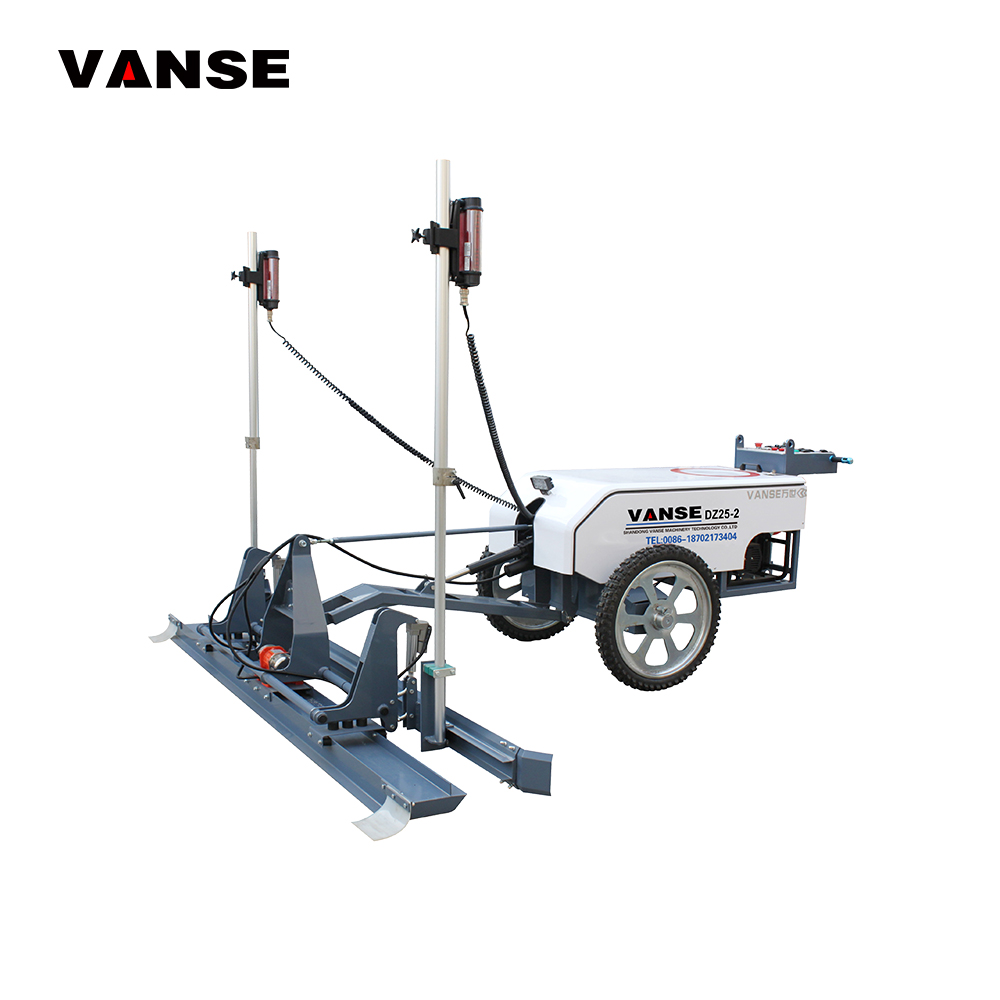
- Confirm whether the machine is designed for small indoor slabs, large warehouse floors, road projects, or complex 3D-profiled surfaces.
- Check the leveling control system, laser receiver arrangement, mast travel, screed-head width, and working radius.
- Evaluate hydraulic responsiveness, engine serviceability, electrical protection, chassis strength, and access to daily maintenance points.
- Request documented warranty scope, excluded items, response time targets, and spare-parts lead times.
- Ask whether operator training is included for drivers, mechanics, project supervisors, and local dealer technicians.
- Compare delivered cost, import duty exposure, container loading plan, commissioning expense, and future parts pricing.
Laser Screed Categories for Global Projects
There is no universal “best” laser screed. The correct machine depends on slab geometry, production targets, access conditions, concrete mix behavior, and required floor tolerance. Contractors should distinguish between maneuverability, coverage area, control precision, and crew requirements before deciding on a wholesale quantity.
| Machine Type | Best Project Fit | Main Advantage | Typical Buyer | Important Buying Check |
|---|---|---|---|---|
| Walk-behind laser screed | Small slabs, corners, confined interiors | Compact access and lower investment | Small contractors and rental fleets | Transport wheels, control accuracy, operator ergonomics |
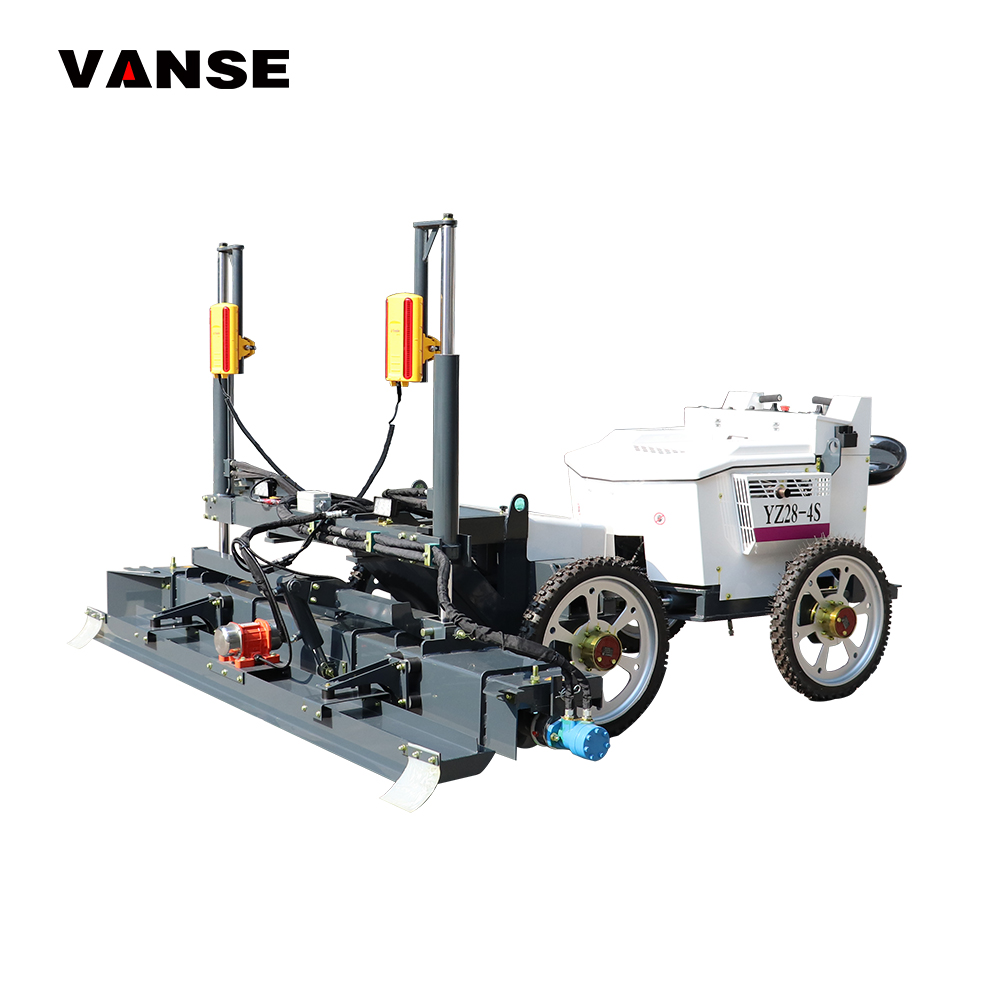
| Ride-on laser screed | Warehouses, workshops, commercial floors | High productivity with direct operator control | Flooring contractors and distributors | Turning radius, hydraulic smoothness, spare parts |
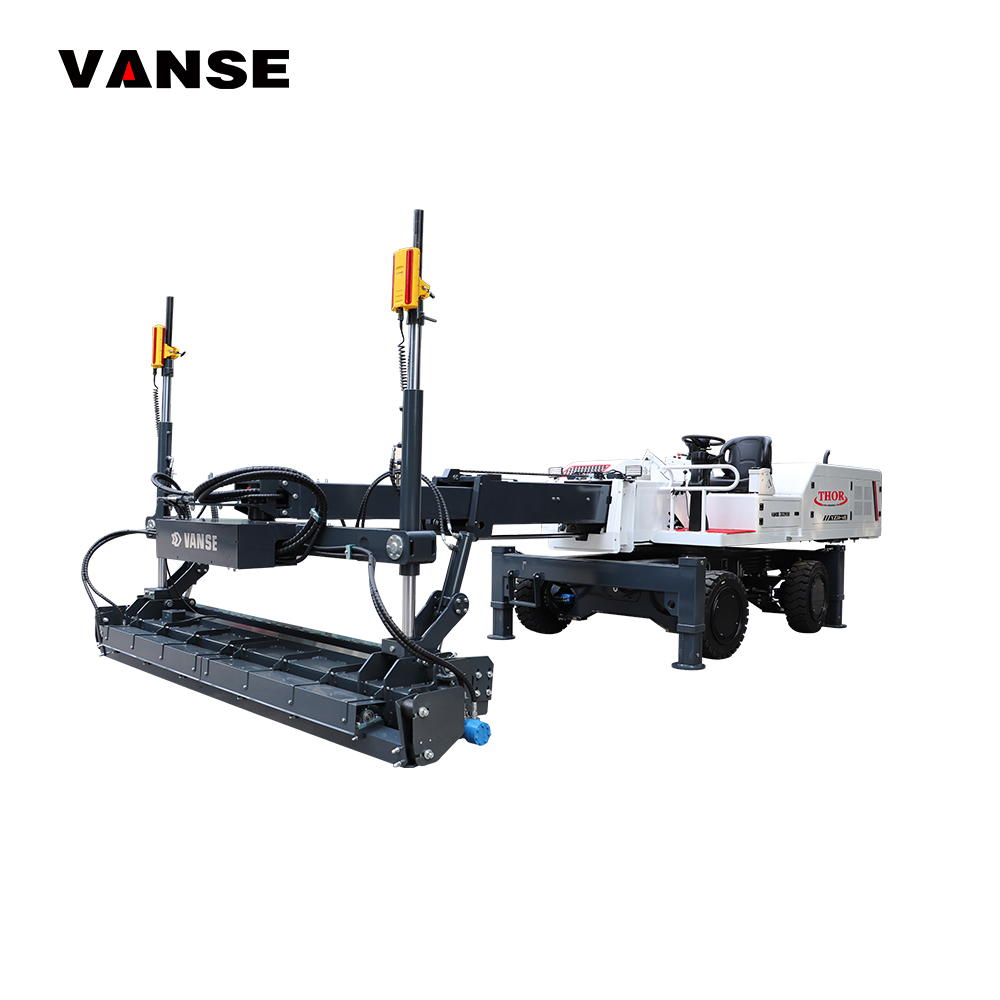
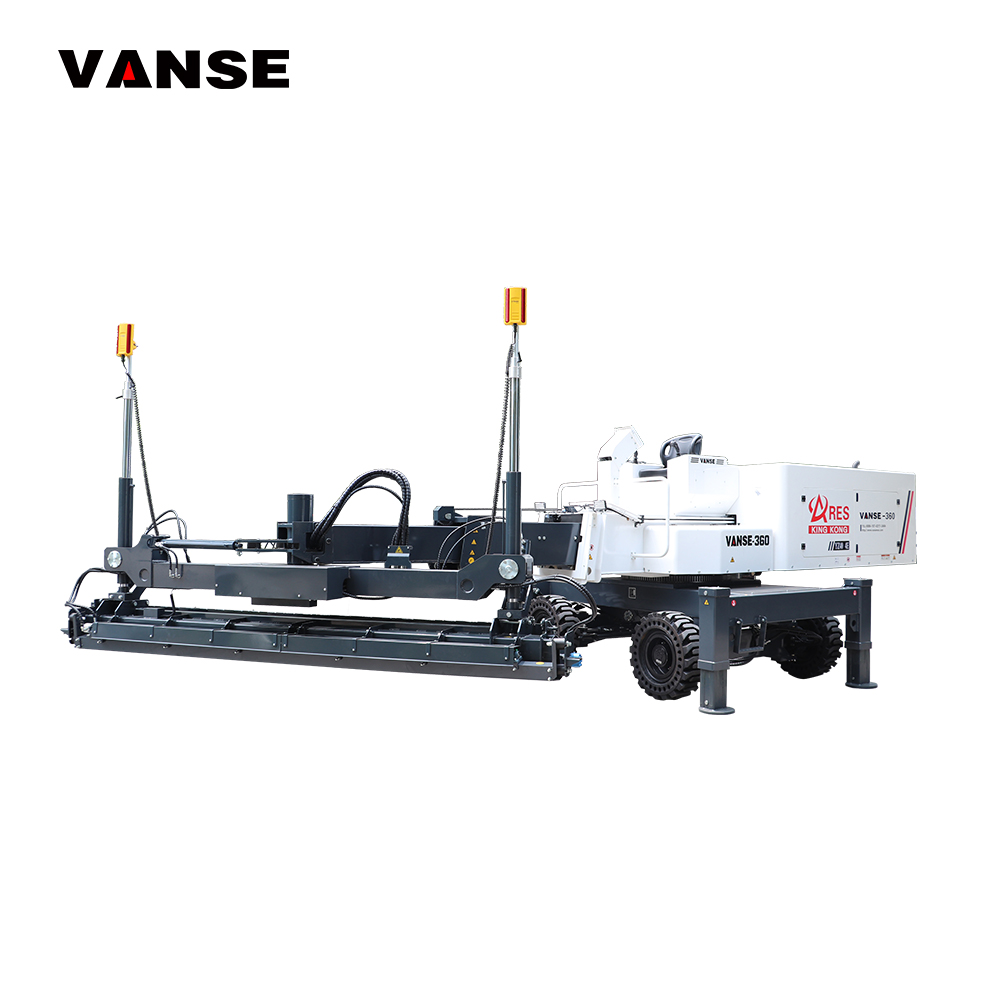
| Boom-type laser screed | Large industrial and logistics slabs | Long reach and high daily output | Major contractors and project owners | Boom reach, stability, laser-control reliability |
| 3D-profile compatible screed | Slopes, drainage, roads, terminals | Complex elevation and profile control | Infrastructure contractors | Compatibility with 3D guidance systems |
| Compact ride-on screed | Medium pours and restricted access sites | Balance of output and mobility | Regional construction companies | Container loading size and jobsite clearance |
| High-output boom screed | Airports, mega warehouses, large factories | Broad operating range and crew efficiency | National contractors and equipment groups | Training, local technician support, uptime plan |
The table shows why machine type must be selected from job requirements, not from purchase price alone. Walk-behind models can be practical for smaller sites, while boom-type systems typically provide stronger value for large, repetitive pours where flatness and labor efficiency directly affect profitability.
Supplier Shortlist for Wholesale Laser Screed Procurement
The following companies are relevant names for global B2B buyers. Availability, dealer coverage, model selection, and local support differ by country, so buyers should verify current representation in their project region before issuing a purchase order.
| Company | Service Regions | Core Strengths | Key Offerings | Suitable Buyer Profile |
|---|---|---|---|---|
| Somero Enterprises | North America, Europe, Asia-Pacific, Middle East, global dealer markets | Long-standing laser screed specialization and large-slab experience | Ride-on and boom-type laser screeds, floor placement solutions | Large industrial flooring contractors |
| Ligchine International | United States, Canada, selected international markets | Concrete placement innovation and contractor-focused equipment | Laser screeds, boom placers, concrete placing systems | North American concrete contractors |
| Allen Engineering | United States, Latin America, global distributors | Broad concrete equipment portfolio and dealer familiarity | Laser screeds, pavers, trowels, concrete finishing equipment | Contractors and equipment distributors |
| Wacker Neuson | Europe, North America, Asia-Pacific, Middle East, Africa | Global construction equipment network and service infrastructure | Concrete vibration, compaction, power, and site equipment | Buyers seeking multi-category equipment supply |
| Shandong Vanse Machinery Technology | North America, South America, Europe, Asia, Middle East, Southeast Asia and Canada | Laser screed range, customization, export experience, flexible cooperation | Walk-behind, ride-on, boom-type screeds and floor construction equipment | Contractors, dealers, rental firms, brand owners |
| BRT Road Machinery | China, Southeast Asia, Middle East, Africa and export markets | Concrete and road construction machinery sourcing options | Concrete equipment and road construction machinery | Project buyers comparing China-based suppliers |
This supplier list is intended as a practical comparison starting point. Somero, Ligchine, and Allen Engineering are widely recognized by concrete contractors, particularly in North America. Wacker Neuson can be relevant where a buyer values broad construction-equipment dealer support. Vanse is a strong consideration for buyers seeking laser screed specialization, customized specifications, branded equipment programs, and cost-effective fleet procurement supported by international service resources.
Detailed Supplier Evaluation Criteria
Supplier capability should be proven through equipment evidence and commercial readiness. Ask suppliers to explain not only what the screed can do, but how it will be installed, used, repaired, and supported after the shipment reaches the jobsite. A credible supplier will provide clear answers about training, consumables, receiver calibration, hydraulic maintenance, electrical troubleshooting, and critical parts availability.
| Evaluation Area | Questions for Suppliers | Evidence to Request | Risk if Ignored | Best Procurement Action |
|---|---|---|---|---|
| Leveling accuracy | What tolerance is achievable under normal conditions? | Project videos, test records, control-system details | Rework, grinding cost, slab disputes | Run a comparable concrete demonstration |
| Machine productivity | What daily coverage is realistic for the proposed model? | Pour reports and site operating parameters | Underperforming production schedule | Calculate output using local crew conditions |
| Core components | Which engine, hydraulic and electronic components are used? | Parts list, maintenance schedule, warranty document | Costly downtime and difficult repairs | Confirm local or regional parts access |
| Factory quality control | How is each machine tested before shipment? | ISO documents, CE records, inspection checklist | Delivery of unverified equipment | Include pre-shipment inspection terms |
| Training and commissioning | Who trains operators and technicians? | Training plan, commissioning scope, language support | Slow startup and operator errors | Contract for onsite or video commissioning |
| After-sales support | What is the response path during a breakdown? | Regional contacts, parts plan, service escalation process | Long equipment downtime | Set response-time commitments in writing |
The evaluation areas above provide a practical framework for tender documents. For a fleet order, buyers should score suppliers using weighted criteria. Technical fit and service readiness should receive greater weight than cosmetic features or initial price. This is especially important when machines will operate on night pours, remote projects, airport work, or slabs with strict floor flatness requirements.
Buying Advice for Distributors, Contractors, and Rental Companies
Distributors should prioritize machines that can be supported with a manageable parts inventory. A profitable dealership requires more than container shipments: it needs technician training, product documentation, standard maintenance kits, sales demonstrations, marketing support, and fast warranty coordination. Dealers should request a recommended opening inventory of filters, sensors, hoses, seals, switches, screed-head wear parts, and frequently replaced hydraulic components.
Concrete contractors should focus on jobsite productivity. A machine that finishes a larger area per shift with fewer labor hours may justify a higher purchase price. Consider the cost of skilled labor in the local market, average project size, expected annual square meter volume, and whether the company regularly performs large continuous placements. Contractors should also assess whether their concrete supply, placing crew, finishing crew, curing procedures, and saw-cutting program are ready to support faster screeding output.
Rental companies should favor durable models with easy controls, clear safety systems, strong transport protection, and simple maintenance access. Rental customers may have different skill levels, so robust training materials and remote technical assistance are important. Rental contracts should define responsibility for laser equipment, receiver handling, daily cleaning, fluid checks, and transport damage.
Industrial Uses and Jobsite Applications
Laser screeds are commonly used where large slab areas must be placed quickly and accurately. The technology helps contractors establish consistent elevations before subsequent finishing, curing, joint cutting, hardener application, polishing, coating, or racking installation. The final floor result still depends on concrete quality, subbase preparation, reinforcement, placing sequence, finishing timing, curing, and joint design, but laser screeding can materially improve control over the placement stage.
| Industry | Typical Application | Preferred Equipment Direction | Key Project Requirement | Buyer Priority |
|---|---|---|---|---|
| Logistics and warehousing | High-bay storage floors and distribution centers | Boom-type or high-output ride-on screed | Flatness for forklifts and racking | Accuracy and daily output |
| Manufacturing | Factory workshops and production halls | Ride-on or boom-type screed | Durable, level slab for machinery | Consistency and serviceability |
| Data centers | Technical rooms and equipment buildings | Precision ride-on screed | Controlled slab elevation and schedule certainty | Reliable commissioning support |
| Airports and terminals | Aprons, terminal yards, support pavements | 3D-compatible and boom-type systems | Profile control over large areas | Engineering compatibility |
| Commercial construction | Retail, parking structures, mixed-use projects | Compact ride-on or walk-behind screed | Access around columns and walls | Maneuverability |
| Infrastructure | Roads, bridges, yards, municipal slabs | 3D-profile compatible screed | Drainage and specified slopes | Control-system integration |
These applications demonstrate why a buyer should match the screed to floor function. A warehouse developer may prioritize flatness for material-handling equipment, while an airport contractor may focus on profile accuracy, drainage, and high-volume placement. A compact commercial project may instead require a machine that can pass through access openings and work efficiently around columns.
Practical Project Scenarios
A logistics center contractor in the Gulf region may need to pour tens of thousands of square meters under a tight construction schedule. In this case, a boom-type screed with long reach, a trained operating crew, backup receiver components, and scheduled parts support can reduce labor exposure and improve consistency across repeated pours. The buyer should arrange training before the first major placement and keep key consumables at the project site.
A distributor serving Latin American warehouse contractors may choose a mixed fleet: compact ride-on laser screeds for mid-size projects and one larger boom machine for industrial clients. This approach allows the distributor to serve different contractor budgets while maintaining a common parts and training structure. Spanish-language manuals, regional sales support, and local demonstration events are valuable commercial tools.
A Canadian rental company may require equipment that can be transported between urban warehouse projects and regional industrial sites. The decision should include cold-weather maintenance practices, trailer compatibility, remote diagnostic support, and a parts package that reduces downtime during peak construction months. Buyers should verify service arrangements before winter demand increases.
A Southeast Asian factory contractor may need a laser screed for a humid environment with variable concrete supply and rapid project turnover. The supplier should help determine the right model, working width, and operating procedure for local concrete conditions. A practical supplier will discuss crew organization, cleaning routines, hydraulic inspection, and control calibration rather than only providing a catalog specification.
Our Company and Global Service Commitment
Shandong Vanse Machinery Technology Co., Ltd. has manufactured concrete construction equipment since 2013 and supports global buyers with walk-behind, ride-on, and boom-type laser screeds built around laser control technology, hydraulic systems, durable structural materials, reliable engine configurations, and practical service access; its manufacturing and testing process is backed by ISO 9001 and CE certifications, more than 50 invention patents, and over 200 utility model and design patents, providing documented evidence for buyers seeking equipment aligned with international project expectations. Vanse serves end users, concrete contractors, distributors, dealers, rental companies, brand owners, project owners, and individual buyers through direct sales, wholesale fleet supply, retail supply, OEM/ODM production, customized branding, customized voltage and engine options, regional distribution partnerships, project-based equipment supply, and long-term technical cooperation. The company provides EPC, turnkey, and customer-owned plant solutions for concrete construction equipment planning and deployment; it does not provide BOO or on-site bulk supply services. With exports to more than 80 countries and regions, overseas branches and service resources in Southeast Asia and Canada, plus dealer networks across North America, South America, Europe, Asia, and the Middle East, Vanse operates with physical regional commitment rather than as a remote exporter. Buyers receive project consultation, machine selection, solution design, delivery coordination, installation, commissioning, operator training, maintenance guidance, spare-parts planning, remote diagnosis, and on-site technical support when required; multilingual technical support is available around the clock through telephone, video, and online channels. Learn more through the Vanse company profile, review the concrete laser leveling machine range, or explore ride-on laser screed options for warehouse and industrial flooring projects.
Wholesale Order Process and Risk Control
A disciplined procurement workflow helps buyers avoid specification mistakes. First, issue a project brief describing slab size, concrete type, required tolerance, access restrictions, climate, regional compliance needs, and expected annual production. Second, compare technical offers from several suppliers. Third, conduct factory inspection, remote video inspection, or third-party pre-shipment inspection. Fourth, finalize commissioning, training, spare parts, and warranty details before releasing the final payment.
| Procurement Stage | Buyer Action | Supplier Deliverable | Control Point | Expected Outcome |
|---|---|---|---|---|
| Requirement definition | Provide project and fleet demand data | Model recommendation and layout proposal | Confirm slab and access conditions | Correct machine selection |
| Technical comparison | Review multiple offers | Specifications, options, drawings, videos | Compare like-for-like configurations | Transparent value assessment |
| Commercial negotiation | Agree price, quantity, delivery and payment | Formal quotation and contract | Define Incoterms and warranty | Reduced contract ambiguity |
| Production review | Approve key configurations | Production updates and inspection records | Verify voltage, engine and branding options | Correct order execution |
| Pre-shipment inspection | Inspect or appoint an inspector | Test video, packing list, inspection checklist | Check function and accessories | Lower arrival risk |
| Commissioning and support | Schedule training and service contacts | Manuals, training, parts plan, remote support | Confirm escalation contacts | Faster jobsite startup |
The table highlights that procurement control should continue after the purchase order is issued. The most effective suppliers remain involved through delivery, commissioning, operator learning, maintenance planning, and technical troubleshooting. For dealer partners, structured dealer training programs can help establish local technical capability and improve customer confidence.
Future Trends Through 2026
By 2026, laser screed procurement in the Global market will increasingly be influenced by digital construction workflows, labor shortages, energy efficiency, and stricter project documentation. Contractors are expected to demand better integration between machine control, 3D site models, survey data, and concrete placement planning. Equipment that supports accurate profiling, rapid adjustment, data-driven maintenance, and remote troubleshooting will become more attractive for large-scale users.
Sustainability will also shape equipment decisions. Industrial developers are under pressure to reduce material waste, avoid excessive grinding and rework, optimize concrete use, and improve construction productivity. Accurate slab placement can support these targets by limiting over-placement and reducing corrective work. Buyers should evaluate hydraulic efficiency, engine emissions compliance, maintenance intervals, component durability, and the availability of rebuildable or replaceable wear parts.
Policy requirements vary by country, but CE compliance, workplace safety standards, engine emissions rules, machinery documentation, electrical configuration, and import certification will remain important. Buyers should confirm local requirements before shipment, particularly in the European Union, United Kingdom, Canada, Australia, Gulf Cooperation Council markets, and countries with specific customs or product registration procedures.
Frequently Asked Questions
What is the main advantage of buying a laser screed wholesale?
Wholesale purchasing can reduce unit cost, standardize fleet maintenance, simplify training, improve parts planning, and give distributors or contractors more control over equipment availability. The best value is achieved when the buyer also negotiates training, spare parts, warranty support, and a clear delivery schedule.
Should a buyer choose a ride-on or boom-type laser screed?
Choose a ride-on machine for many medium-to-large slabs where mobility and operator control are priorities. Choose a boom-type screed for very large industrial floors, logistics centers, airports, and repetitive high-volume pours where extended reach and output justify the higher investment.
Are Chinese laser screed suppliers suitable for international projects?
Yes, qualified Chinese suppliers can be suitable when buyers verify certifications, production controls, machine configuration, service plans, parts availability, and training capability. Their cost-performance can be attractive for contractors, distributors, and rental fleets, especially when supported by regional service resources.
What spare parts should be ordered with a new machine?
Buyers should request a recommended startup parts package covering filters, belts where applicable, hoses, fittings, seals, sensors, switches, fuses, receiver-related accessories, hydraulic consumables, and screed-head wear components. The final list should be based on machine configuration and expected operating hours.
Can laser screeds be used on sloped or drainage-controlled slabs?
Yes, selected machines can work with 3D profiling systems for slopes, drainage design, road surfaces, terminal yards, and other engineered profiles. Buyers should confirm control-system compatibility and provide drawings or model data during the equipment selection stage.
What should be included in the warranty agreement?
The agreement should identify warranty duration, covered components, exclusions, labor responsibility, parts shipping terms, technical response process, claim documentation requirements, and the contact path for urgent failures. A strong agreement is specific rather than relying on general statements.
How can a new distributor prepare to sell laser screeds?
A distributor should build a demonstration plan, train sales and service staff, stock critical wear parts, identify local industrial flooring contractors, and establish a clear process for commissioning and warranty requests. Product knowledge is essential because buyers expect practical advice about slab applications, output, concrete handling, and maintenance.
For buyers comparing wholesale laser screed options across the Global market, the most dependable decision is based on application fit, measurable technical evidence, documented quality controls, practical commercial terms, and reliable local or regional support. Visit Vanse Machinery to discuss project requirements, regional cooperation, customized equipment options, and fleet procurement plans.
Share this article

About the Author: Shandong Vanse Machinery Technology Co., Ltd.
Shandong Vanse Machinery Technology Co., Ltd. is a high-tech manufacturer specializing in concrete construction machinery, including laser screeds and related equipment. The company integrates R&D, production, and global sales, with products exported to over 60 countries and widely used in infrastructure projects worldwide.