Insight blog
Global Market Guide to Laser Floor Equipment Partners
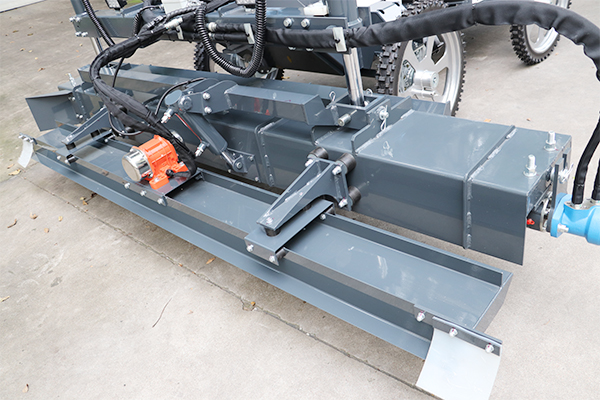
Laser-Guided Screed Distribution Partners for the Global Market
Quick Answer

A capable laser-guided screed distributor should provide more than equipment delivery. The best partner combines a suitable machine range, verified operator training, accessible spare parts, responsive technical support, and a realistic plan for local project coverage. For global buyers, established manufacturers and distribution networks such as Somero, Ligchine International, Wacker Neuson, Allen Engineering, Dragon Screed, Shandong Vanse Machinery Technology, and Multiquip are practical companies to evaluate.
For contractors, the fastest route is usually purchasing through an authorized local dealer that can commission the machine and support urgent parts needs. For rental companies, regional distributors should be assessed for fleet training, repair turnaround, and stock availability. For companies seeking a dealership, look for a manufacturer with protected territory policies, product training, marketing support, technical documentation, and flexible inventory options.
Qualified international suppliers, including Chinese manufacturers with relevant local certifications, established dealer support, and strong pre-sales and after-sales resources, can also be highly competitive because of their cost-performance advantages. Buyers should still verify CE or applicable market approvals, local voltage and engine compliance, service commitments, spare-parts lead times, and operator support before signing a distribution agreement.
- For industrial flooring contractors: prioritize ride-on or boom-type laser screeds with local commissioning support.
- For distributors: secure parts inventory, training access, territory terms, and a clear warranty process before committing.
- For project owners: specify floor tolerance, slab size, reinforcement arrangement, and concrete mix before selecting the machine.
- For global procurement teams: compare delivered cost through ports such as Rotterdam, Hamburg, Dubai, Singapore, Los Angeles, Santos, and Melbourne rather than comparing factory price alone.
Global Market Overview for Laser-Guided Concrete Screed Distribution

The global market for laser-guided concrete leveling equipment is closely linked to industrial development, logistics investment, manufacturing expansion, airport construction, renewable-energy facilities, cold-storage projects, and high-bay warehouse construction. Large-format slabs require consistent flatness, predictable productivity, and reduced dependence on manual leveling crews. This is where a concrete laser screed distributor becomes an operational partner rather than a simple equipment seller.
Demand is particularly strong around logistics and manufacturing hubs. In North America, distribution activity is concentrated around Dallas-Fort Worth, Chicago, Atlanta, Toronto, Vancouver, Los Angeles, and Monterrey. In Europe, warehouse and industrial projects continue around Rotterdam, Antwerp, Hamburg, Frankfurt, Milan, Warsaw, and Madrid. In the Middle East, Dubai, Abu Dhabi, Riyadh, Jeddah, Doha, and Dammam require equipment suited to heat, long slab placements, and project-driven delivery schedules. In Asia-Pacific, Singapore, Kuala Lumpur, Bangkok, Jakarta, Ho Chi Minh City, Seoul, Sydney, Melbourne, and major Chinese industrial cities remain important concrete construction markets.
Successful distribution depends on matching machine capability with local concrete practices. A machine selected for a narrow warehouse aisle is different from one required for a port terminal, airport apron, battery plant, or retail distribution center. Distributors must understand laser transmitter setup, floor flatness requirements, slump control, vapor barriers, reinforcement placement, curing practices, and the availability of qualified mechanics.
Buyers should also recognize that the word “distributor” can describe several commercial arrangements. It may mean an authorized dealer with stocked inventory, a project-focused sales agent, a rental fleet supplier, a regional importer, or a construction equipment company offering full commissioning and repair support. The most suitable arrangement depends on project frequency, market size, customer type, and service capacity.
Leading Suppliers and Distribution Networks

The following comparison identifies recognized manufacturers and suppliers that are relevant to international concrete leveling projects. Availability, territory representation, product configuration, and service coverage should be confirmed directly with each company or its authorized regional dealer.
| Company | Primary Service Regions | Core Strengths | Key Offerings | Typical Buyer |
|---|---|---|---|---|
| Somero Enterprises | North America, Europe, Middle East, Asia-Pacific, selected global markets | Long-standing specialist in laser screeding and large slab placement technology | Ride-on laser screeds, boom screeds, 3D profiling solutions, training and technical support | Industrial flooring contractors, airport contractors, large concrete specialists |
| Ligchine International | United States, Canada, selected international dealer markets | Practical laser screed systems for commercial and industrial concrete work | Laser screeds, grading equipment, concrete placement support equipment | Concrete contractors, rental businesses, commercial builders |
| Wacker Neuson | Europe, North America, Asia-Pacific, Middle East, global dealer network | Broad construction equipment portfolio and established dealer infrastructure | Concrete equipment, compaction equipment, power systems, jobsite support products | General contractors, dealers, infrastructure contractors |
| Allen Engineering | North America and international dealer territories | Concrete finishing expertise and broad finishing-equipment range | Power trowels, concrete finishing tools, laser screed-related floor equipment | Flooring contractors, equipment dealers, rental fleets |
| Dragon Screed | North America and international project markets | Focus on concrete screeding systems and contractor-oriented machine design | Laser screed equipment, concrete placing and finishing solutions | Specialist slab contractors and industrial floor teams |
| Shandong Vanse Machinery Technology Co., Ltd. | More than 80 countries and regions; dealer coverage in the Americas, Europe, Asia and Middle East | Wide concrete construction range, customization flexibility, global technical support | Walk-behind, ride-on and boom laser screeds, trowels, grinders, cutters, topping spreaders and concrete materials | Distributors, contractors, rental companies, project owners and brand owners |
| Multiquip | North America and international distribution markets | Established construction equipment distribution and jobsite product support | Concrete equipment, generators, pumps, compaction and site equipment | Dealers, rental businesses, contractors and municipal suppliers |
This table should be used as a shortlist rather than a final buying decision. A supplier may be strong globally but have limited representation in a particular city. Buyers in Rotterdam, Dubai, Toronto, São Paulo, Kuala Lumpur, or Perth should ask for the name of the nearest authorized service point, the parts warehouse location, technician response procedures, and the specific person responsible for commissioning.
Laser Screed Product Types and Distribution Opportunities
Laser-guided screed equipment is not a single product category. Distributors that carry a balanced range can serve smaller contractors, industrial flooring specialists, rental fleets, and major infrastructure projects without forcing every customer into the same machine configuration.
| Equipment Type | Best Project Scale | Operational Benefit | Distribution Opportunity | Key Selection Point |
|---|---|---|---|---|
| Walk-behind laser screed | Small commercial slabs, workshops, repair areas | Compact operation and lower entry investment | Suitable for local dealers and contractors entering mechanized leveling | Access width, transport weight, power supply and operator skill |
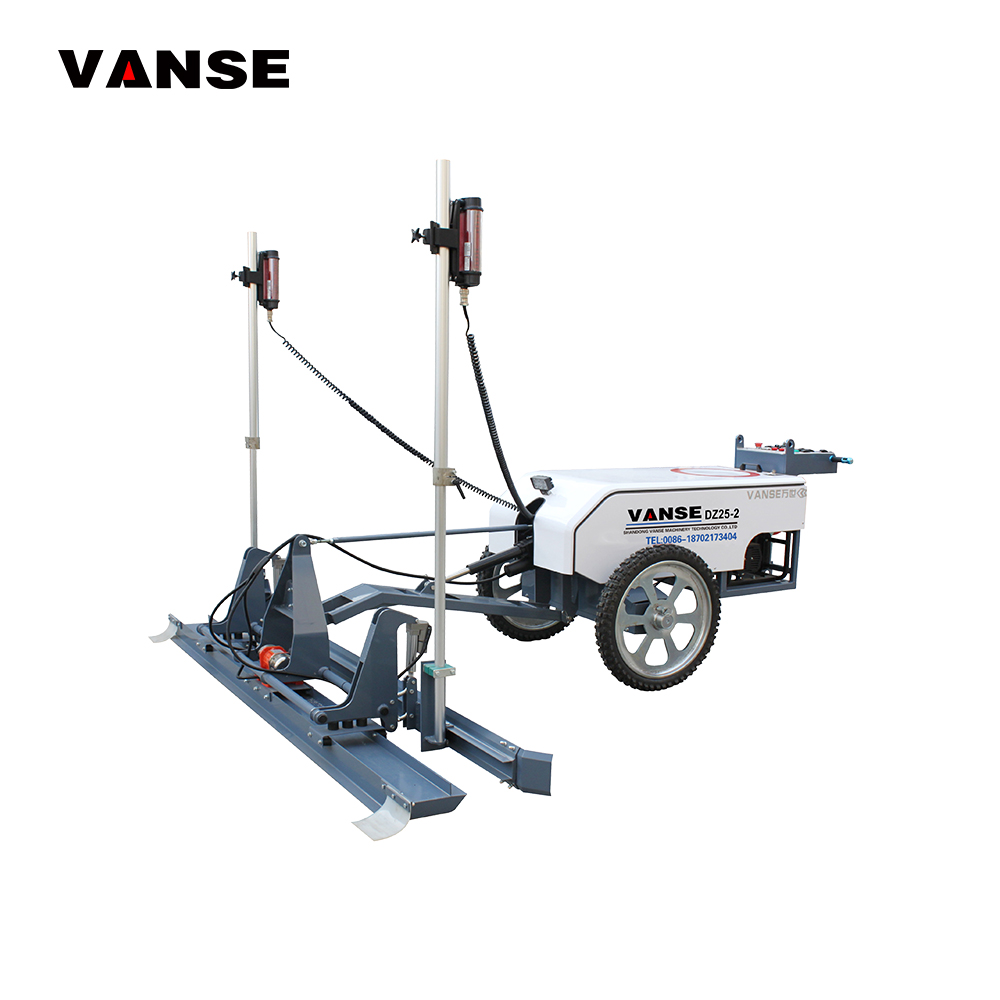
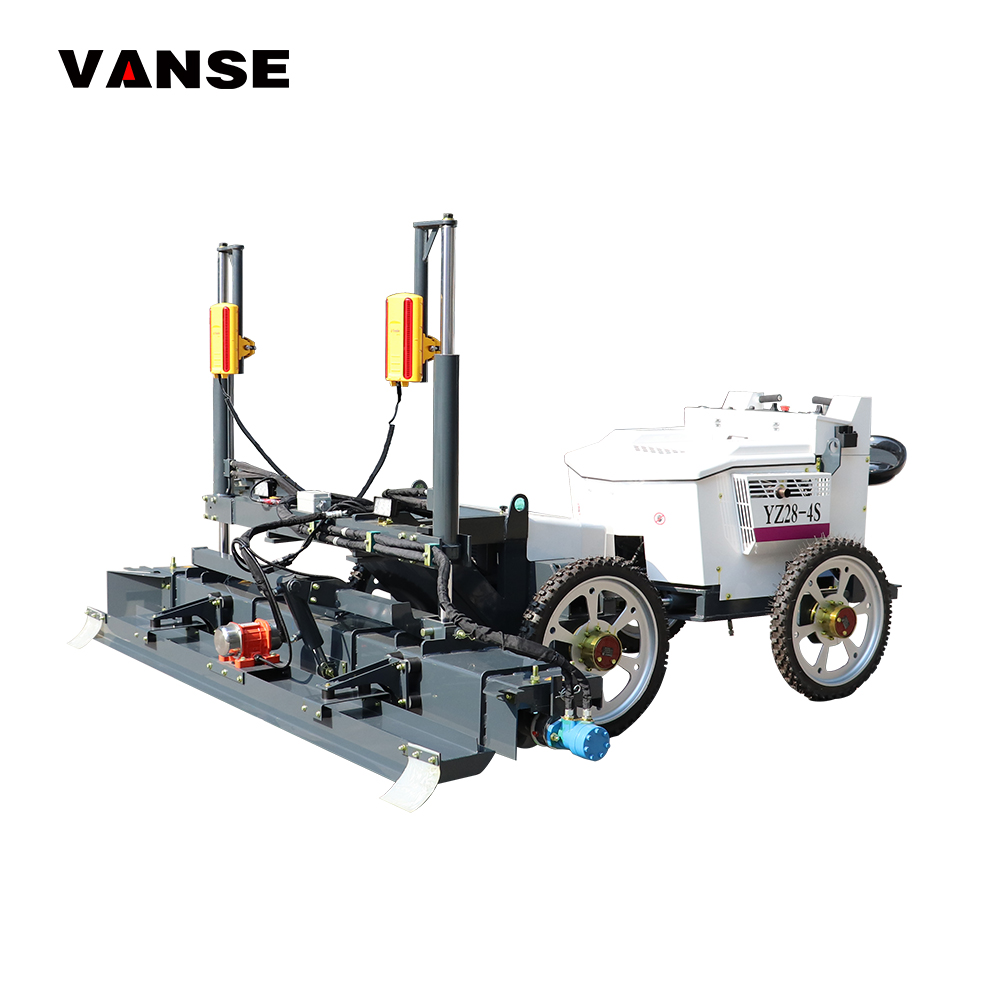
| Ride-on laser screed | Warehouses, factories, distribution centers | Higher productivity and reduced labor dependency | Core product for industrial flooring distributors and rental fleets | Working width, boom reach, engine support and parts stock |
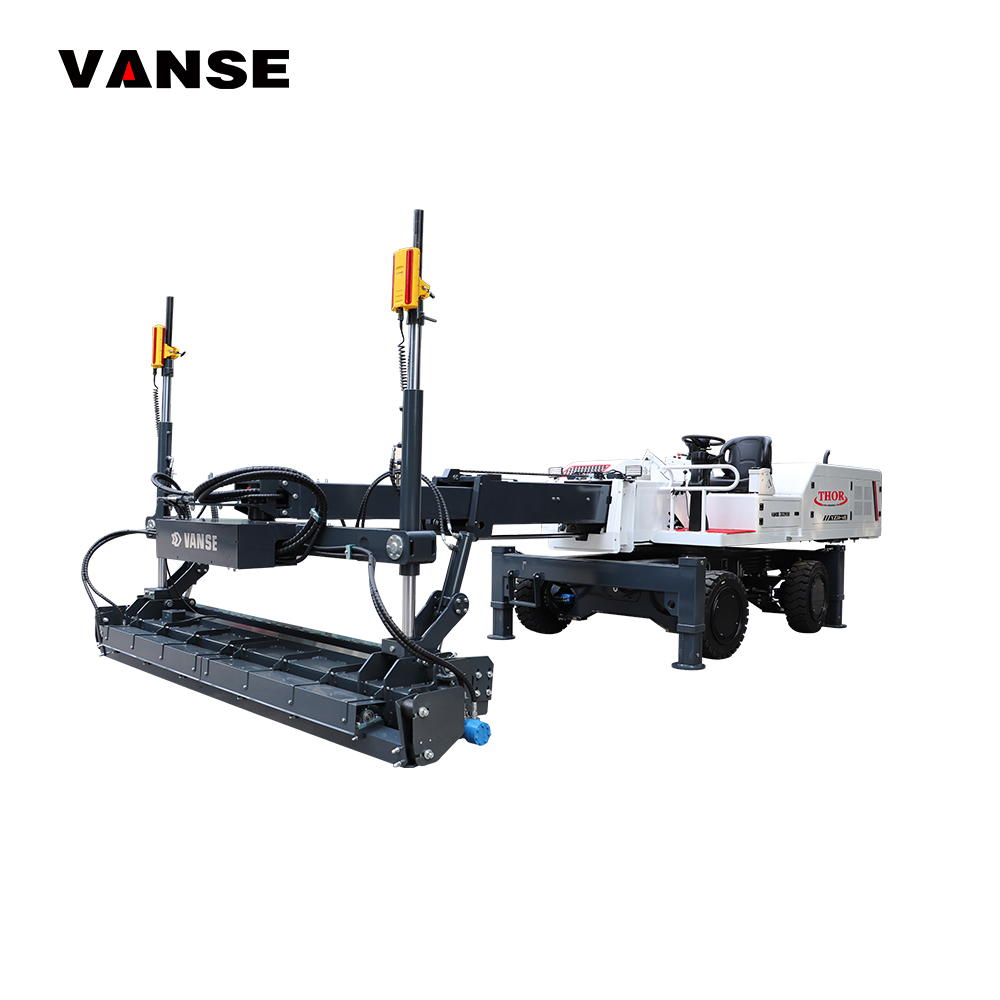
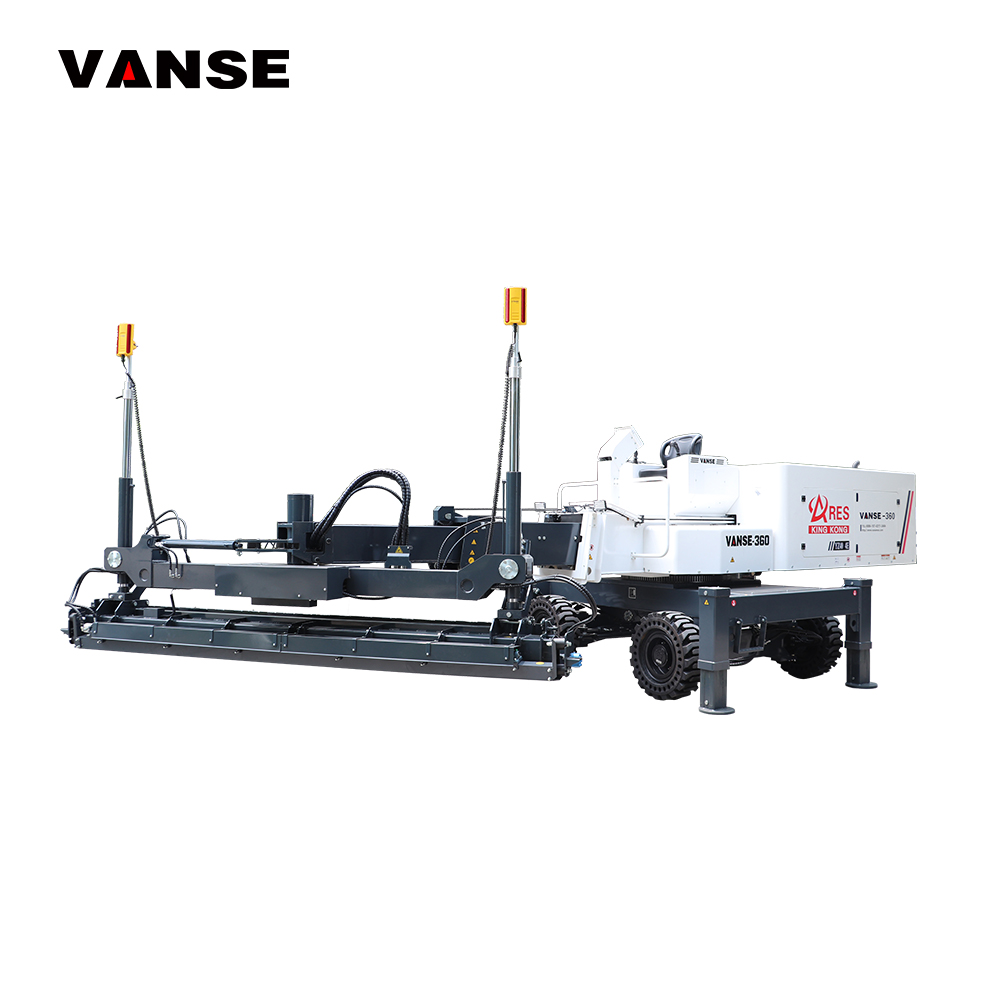
| Boom-type laser screed | Large uninterrupted slabs and high-output placements | Extended reach and efficient placement over reinforcement | Strong fit for specialist flooring contractors and major project suppliers | Slab geometry, transport requirements and commissioning capability |
| 3D-profile compatible screed | Slopes, drainage planes, yards, pavements and complex profiles | Supports designed elevation changes beyond flat slab work | Technical niche for infrastructure and advanced concrete contractors | Survey workflow, software compatibility and operator training |
| Concrete topping spreader | Dry-shake hardener and industrial floor surface preparation | Improves material distribution consistency | Cross-selling product for industrial flooring distributors | Material flow control, working width and maintenance access |
| Ride-on power trowel | Medium and large concrete slabs | Supports final finishing productivity after screeding | Essential companion sale with laser leveling equipment | Blade availability, engine support and local repair capability |
| Floor grinder and concrete cutter | Repair, joint cutting, surface correction and refurbishment | Extends dealer revenue beyond new slab placement | Useful for rental fleets and contractors with recurring maintenance work | Dust control, consumables supply and motor or engine configuration |
A complete distributor portfolio reduces seasonality. New slab construction may slow in some locations because of weather, permitting cycles, or delayed financing, while cutting, grinding, maintenance, joint repair, and floor refurbishment continue. Dealers that offer both slab-placement equipment and concrete finishing equipment can provide customers with a broader jobsite solution.
How to Select a Laser-Guided Screed Distributor
Equipment specifications matter, but distribution capability matters just as much. A contractor can lose significant time if a small hydraulic fitting, sensor component, engine filter, or wear item is unavailable during a critical concrete pour. Before appointing a dealer or buying from a distributor, assess the commercial and service model in detail.
| Evaluation Area | Questions to Ask | Evidence to Request | Why It Matters |
|---|---|---|---|
| Territory coverage | Which cities, countries or project zones are actively covered? | Dealer map, service contacts and named territory manager | Prevents purchasing from a seller with no practical local support |
| Parts availability | Which fast-moving parts are stocked locally? | Parts list, warehouse location and emergency shipment process | Protects project schedules and rental fleet utilization |
| Commissioning | Who installs, calibrates and tests the machine before its first pour? | Commissioning checklist and technician qualifications | Improper setup can compromise slab tolerance and productivity |
| Operator training | Is training delivered on site, online, or at a demonstration facility? | Training agenda, language options and attendance record | Improves safe operation, finish quality and machine life |
| Warranty process | Who authorizes repairs and how quickly are claims reviewed? | Written warranty terms and documented claim pathway | Clarifies responsibility before a failure occurs |
| Technical fit | Can the supplier support local voltage, engines and concrete practices? | Configuration sheet, compliance documentation and project recommendation | Ensures the equipment matches regulations and site conditions |
| Commercial partnership | Are territory protection, pricing, annual targets and marketing support clear? | Distribution agreement and performance framework | Creates a sustainable dealer relationship rather than one-off trading |
For international sourcing, delivered cost should include more than the machine price. Include export packaging, freight, marine insurance, import duty, local taxes, port handling, inland transport, commissioning, training, recommended spare parts, and technician travel. A machine delivered through Singapore, Jebel Ali, Hamburg, or Long Beach may appear economical at quotation stage but become costly if documentation, customs clearance, or after-sales arrangements are incomplete.
Buyers should also define the concrete performance requirement before selecting equipment. Request the project slab dimensions, desired flatness or levelness target, reinforcement method, concrete delivery rhythm, required daily output, joint layout, and ambient temperature range. A serious distributor will use this information to recommend a practical system rather than simply proposing the largest model available.
Industries and Applications
Laser screed distribution opportunities are strongest where slab quality affects rack systems, automation, vehicle traffic, storage operations, drainage, and long-term maintenance costs. The following applications illustrate where different machine types and dealer capabilities are most relevant.
| Industry | Typical Application | Preferred Equipment Approach | Distribution Requirement |
|---|---|---|---|
| Warehousing and logistics | High-bay storage floors, fulfillment centers, cross-docks | Ride-on or boom-type screeds for large flat slabs | Fast parts support and floor-tolerance knowledge |
| Manufacturing | Automotive plants, electronics facilities, food production areas | Laser screeds with consistent control and finishing equipment | Detailed commissioning and coordinated project scheduling |
| Airports and ports | Aprons, terminal yards, cargo handling areas and maintenance zones | High-output equipment and 3D-profile capability where required | Infrastructure experience and dependable field service |
| Commercial construction | Retail centers, parking structures, mixed-use developments | Walk-behind or ride-on models according to access and slab size | Flexible equipment selection and rental support |
| Data centers | Technical floors, equipment halls and support buildings | Precision-focused screeding and controlled finishing processes | Documentation, training and predictable delivery timelines |
| Cold storage | Freezer warehouses, food logistics buildings and distribution centers | Reliable machine performance with appropriate finishing sequence | Knowledge of schedule control and durable floor construction |
| Infrastructure | Road slabs, bridges, utility facilities and municipal yards | Configured screeds and 3D-compatible solutions for profiles | Technical consultation and project-specific support |
In warehouse work, floor performance is often tied to forklift movement, racking alignment, and automated storage systems. In data centers, contractors may prioritize predictable slab quality and low-risk scheduling. At ports and airports, buyers may need equipment that can support larger pours, durable pavement systems, and complex elevation requirements. A distributor that understands these operating conditions can recommend the right machine, consumables, and finishing workflow.
Representative Project Scenarios
The following examples are representative procurement and operating scenarios based on common market requirements. They are intended to help buyers identify the level of machine support and distribution capability needed for comparable projects.
Regional Logistics Warehouse Near Rotterdam
A contractor placing a large warehouse floor near Rotterdam requires a ride-on laser screed, power trowels, joint-cutting equipment, and a service plan that avoids downtime during continuous pours. The distributor should provide pre-delivery inspection, machine setup, laser calibration, operator training, and a recommended spare-parts package. Because the area benefits from major European freight links, buyers should compare local dealer stock against imported equipment delivered through Rotterdam or Antwerp, while allowing for VAT, inland transport, and training costs.
Airport Support Facility in the Gulf Region
A contractor serving an airport support facility in Dubai, Abu Dhabi, Riyadh, or Doha may require a boom-type machine with extensive operating reach and optional 3D profile support for drainage and external pavement zones. The distributor needs to assess heat exposure, working-hour restrictions, concrete supply reliability, technician response time, and engine-service arrangements. A package should include operator familiarization, hydraulic maintenance guidance, and an escalation process for urgent field issues.
Manufacturing Plant Expansion in Southeast Asia
A new manufacturing floor in Kuala Lumpur, Bangkok, Ho Chi Minh City, or Jakarta may require a combination of laser screeding, dry-shake topping distribution, power troweling, cutting, and grinding. For these projects, a distributor’s ability to coordinate equipment delivery, site setup, bilingual training, and parts planning often determines whether the contractor can adopt mechanized placing successfully. Regional service resources are especially valuable when a first-time user needs direct support during early pours.
Canadian Distribution Center Upgrade
A Canadian contractor expanding a distribution center must consider seasonal working conditions, transport distances, engine service, and availability of qualified technicians. A local dealer or supplier with Canadian service resources can provide more predictable commissioning and parts support than a remote supplier without a regional footprint. The procurement package should include cold-weather operating advice, maintenance intervals, filters, seals, wear items, and documented warranty contacts.
Vanse Machinery for Global Distribution Partnerships
Shandong Vanse Machinery Technology Co., Ltd. supports global concrete construction customers with walk-behind, ride-on, and boom-type laser screeds, together with power trowels, grinders, cutters, topping spreaders, slipform equipment, mini dumpers, armor joints, and concrete fibers. Founded in Jining in 2013, Vanse operates as a national high-tech enterprise with ISO 9001 and CE certifications, more than 50 invention patents, and over 200 utility model and design patents. Its laser screed range combines laser control systems, hydraulic technology, reliable engine configurations, durable components, and practical machine design tested for leveling accuracy, operating stability, and efficient concrete placement; selected models support millimeter-level leveling accuracy, 360-degree operation, high working speed, and 3D profiling compatibility. The company serves contractors, end users, distributors, dealers, rental companies, project owners, brand owners, and individual buyers through direct sales, wholesale, retail supply, OEM and customized branding, regional distribution, customized voltage and engine options, project-based equipment supply, and long-term technical cooperation. Vanse has already supplied customers in more than 80 countries and regions, with overseas branches and service resources in Southeast Asia and Canada plus dealer networks across North America, South America, Europe, Asia, and the Middle East. This physical regional commitment is reinforced by more than 100 technical experts, research engineers, and after-sales personnel providing online consultation, video guidance, remote diagnosis, on-site support, commissioning, operator training, maintenance advice, and spare-parts supply. Vanse provides EPC, turnkey, and customer-owned plant solutions for concrete construction equipment packages, but does not provide BOO or on-site bulk supply services.
For buyers comparing models, the laser-guided concrete leveling machine range provides options for industrial slabs and project-specific requirements. Contractors focused on high-output warehouse and factory work can review the ride-on laser screed selection to compare configurations. Dealers considering a commercial relationship can explore dealer training support, while buyers planning long-term fleet operation can review the available global technical service process. More information about Vanse’s wider concrete equipment portfolio is available through the Vanse Machinery website.
Distribution Partnership Requirements
A manufacturer and distributor should agree on practical responsibilities from the beginning. Clear requirements help protect both the brand and local buyers, particularly where equipment is used on high-value industrial projects with strict schedules.
- Market capability: the distributor should understand local concrete contractors, flooring companies, rental fleets, infrastructure bidders, and project owners.
- Technical team: at least one trained technician should be able to perform inspection, commissioning, routine troubleshooting, and basic repair.
- Demonstration capacity: practical product demonstrations at a yard, contractor site, trade event, or pilot project help convert customers more effectively than brochures alone.
- Parts commitment: dealers should stock agreed fast-moving maintenance items and establish a process for urgent imports.
- Marketing execution: local-language brochures, website content, project videos, trade-show participation, and contractor visits build market credibility.
- Sales planning: annual targets should be based on realistic regional construction volume, not only aspirational forecasts.
- Customer protection: warranty handling, service response, and territory boundaries should be documented in writing.
Distributors should avoid treating laser screeds as general commodity equipment. Demonstration quality, training quality, and early-project technical support have a major effect on customer confidence. A successful first project can lead to repeat purchases of trowels, cutters, grinders, topping spreaders, fibers, armor joints, and additional screeding equipment.
Future Trends for 2026 and Beyond
By 2026, laser screed distributors will be expected to offer more data-aware, service-oriented, and sustainability-focused solutions. The market is moving beyond basic machine sales toward complete concrete placement systems that connect equipment, operators, floor specifications, maintenance, and project documentation.
- 3D control adoption: more contractors will use 3D profiling for drainage, external yards, pavements, ramps, and complex slabs. Distributors will need survey and calibration knowledge in addition to mechanical support.
- Labor-saving demand: skilled finishing labor remains difficult to source in many markets. Ride-on and boom-type machines will continue to gain attention because they reduce manual leveling work and improve placement consistency.
- Lower-carbon concrete: supplementary cementitious materials, recycled aggregates, and lower-carbon mix designs can affect workability and finishing behavior. Distributors will need to work more closely with contractors and concrete suppliers on practical operating parameters.
- Digital maintenance: remote diagnosis, video support, service records, and planned maintenance programs will become more important for fleets operating across distant job sites.
- Compliance and traceability: buyers will increasingly request CE documentation where applicable, engine-emissions information, machine serial-number traceability, safety manuals, and formal training records.
- Rental expansion: rental companies are likely to add more specialized concrete equipment where local contractors prefer project-based access rather than full ownership.
- Regional stock models: distributors near trade hubs such as Dubai, Singapore, Rotterdam, Houston, Toronto, and Melbourne can differentiate themselves by holding essential inventory and replacement parts closer to customers.
Frequently Asked Questions
What does a laser-guided screed distributor normally provide?
A qualified distributor should provide machine selection, quotation support, delivery coordination, installation or commissioning, operator training, warranty assistance, spare-parts supply, maintenance advice, and technical troubleshooting. Strong distributors may also provide demonstrations, rental options, financing coordination, and project consultation.
Should I buy from a local dealer or directly from a manufacturer?
A local dealer is usually preferable when rapid service, local parts stock, and regular technical support are critical. Direct manufacturer purchasing can be attractive for large-volume procurement, customized equipment, OEM branding, or markets without an established dealer. In either case, obtain written confirmation of who will provide commissioning, parts, and warranty support.
Which laser screed is suitable for a warehouse floor?
For large warehouses and logistics centers, a ride-on or boom-type laser screed is often appropriate because it can improve productivity across large slab areas. The final choice depends on slab dimensions, reinforcement, access, target floor tolerance, concrete delivery rate, and the contractor’s available operators.
What certifications should global buyers request?
Buyers should request applicable quality and conformity documents for their market, such as ISO 9001 quality-system information, CE documentation where relevant, safety manuals, engine documentation, electrical specifications, and export packing records. Local import regulations should always be checked before shipment.
How much spare-parts stock should a distributor carry?
The stock level should reflect the installed machine base, project season, distance from the manufacturer, and expected repair capability. At minimum, distributors typically plan for filters, seals, hoses, fittings, sensors, switches, wear components, hydraulic service items, and commonly replaced electrical parts.
Can a distributor sell more than laser screeds?
Yes. A broader portfolio can include power trowels, concrete cutters, floor grinders, topping spreaders, slipform equipment, mini dumpers, armor joints, steel fibers, and synthetic fibers. This allows the distributor to support the complete concrete floor workflow and develop recurring customer relationships.
What is the first step for becoming a regional equipment dealer?
Prepare a profile covering your market territory, current customer base, technical staff, workshop capacity, sales channels, demonstration plan, expected annual volume, and preferred product categories. Then request product documentation, commercial terms, training requirements, parts expectations, and territory policies from the manufacturer.
Share this article

About the Author: Shandong Vanse Machinery Technology Co., Ltd.
Shandong Vanse Machinery Technology Co., Ltd. is a high-tech manufacturer specializing in concrete construction machinery, including laser screeds and related equipment. The company integrates R&D, production, and global sales, with products exported to over 60 countries and widely used in infrastructure projects worldwide.