Insight blog
Global Market: Laser and Vibratory Screed Selection Guide
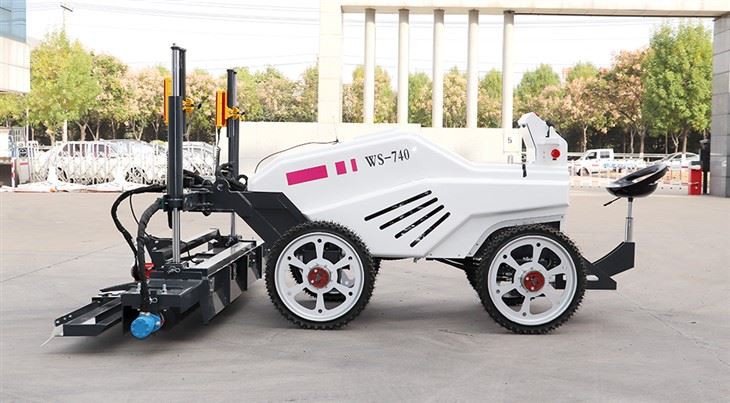
Laser Screed Versus Vibrating Screed for Global Concrete Projects
Quick Answer

A laser screed is the better choice for large, high-specification slabs where flatness, levelness, labor savings, and placement speed matter most. It uses laser-guided elevation control and a hydraulically operated screed head to place and strike off concrete at consistent grades. A vibrating screed is generally the more affordable and portable choice for small slabs, repair work, sidewalks, residential foundations, narrow bays, and locations where a laser machine cannot move efficiently.
For the Global market, contractors should select a laser screed for warehouses, logistics centers, factories, airport aprons, distribution hubs, data centers, and large industrial floors. Choose a vibrating screed when project areas are limited, budgets are tight, access is restricted, or the concrete volume does not justify a ride-on or boom-type laser screed.
The practical decision is usually based on slab size, required floor tolerance, labor availability, concrete delivery rate, site access, and the cost of rework. Qualified international suppliers, including Chinese manufacturers with relevant CE or ISO certifications, local technical support, and strong pre-sales and after-sales capabilities, can also be a sensible option because they may offer a stronger cost-performance ratio than established premium brands.
How Laser Screeds and Vibrating Screeds Work

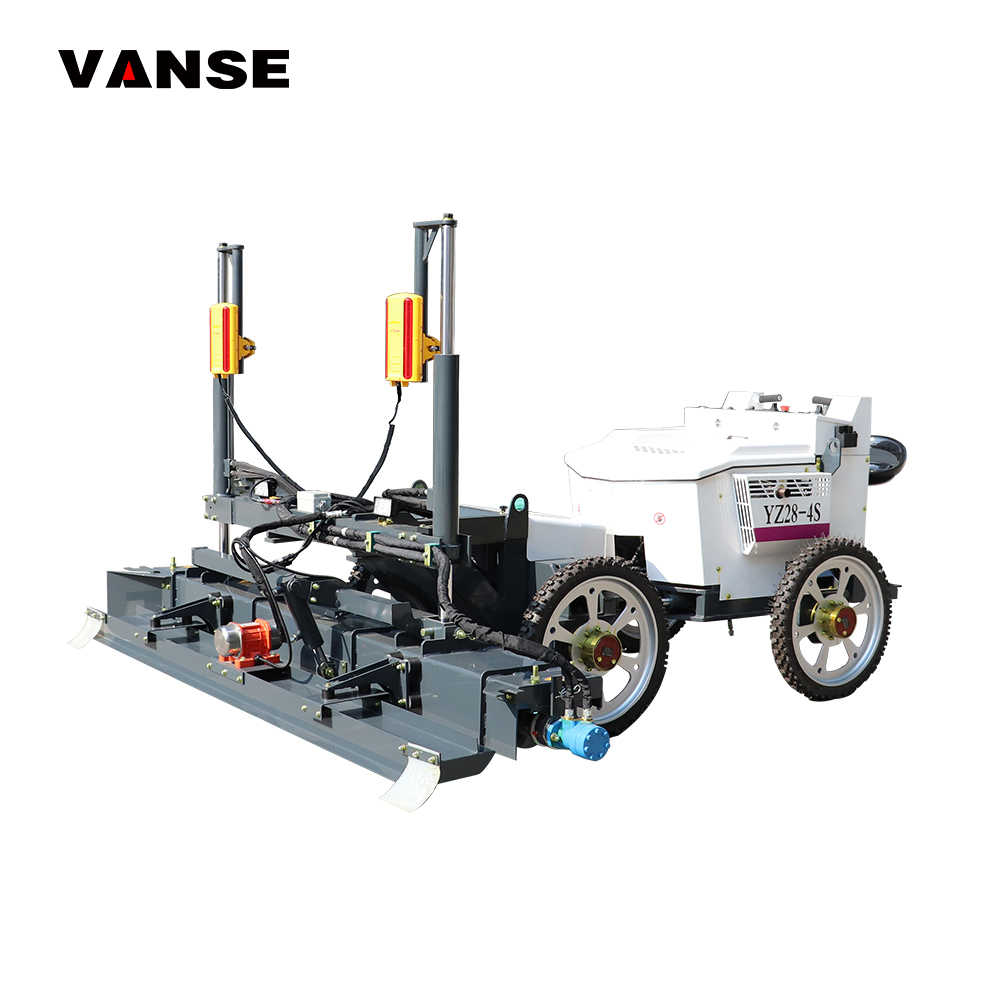
A laser screed is a concrete placement machine that automatically controls screed-head elevation by receiving signals from a rotating laser transmitter. The machine operator drives a walk-behind, ride-on, or boom-type unit across fresh concrete while the hydraulic screed head spreads, levels, consolidates, and strikes off the material. The result is a flatter slab with fewer manual corrections, especially when the concrete supply is continuous and the crew can maintain a steady placing rhythm.
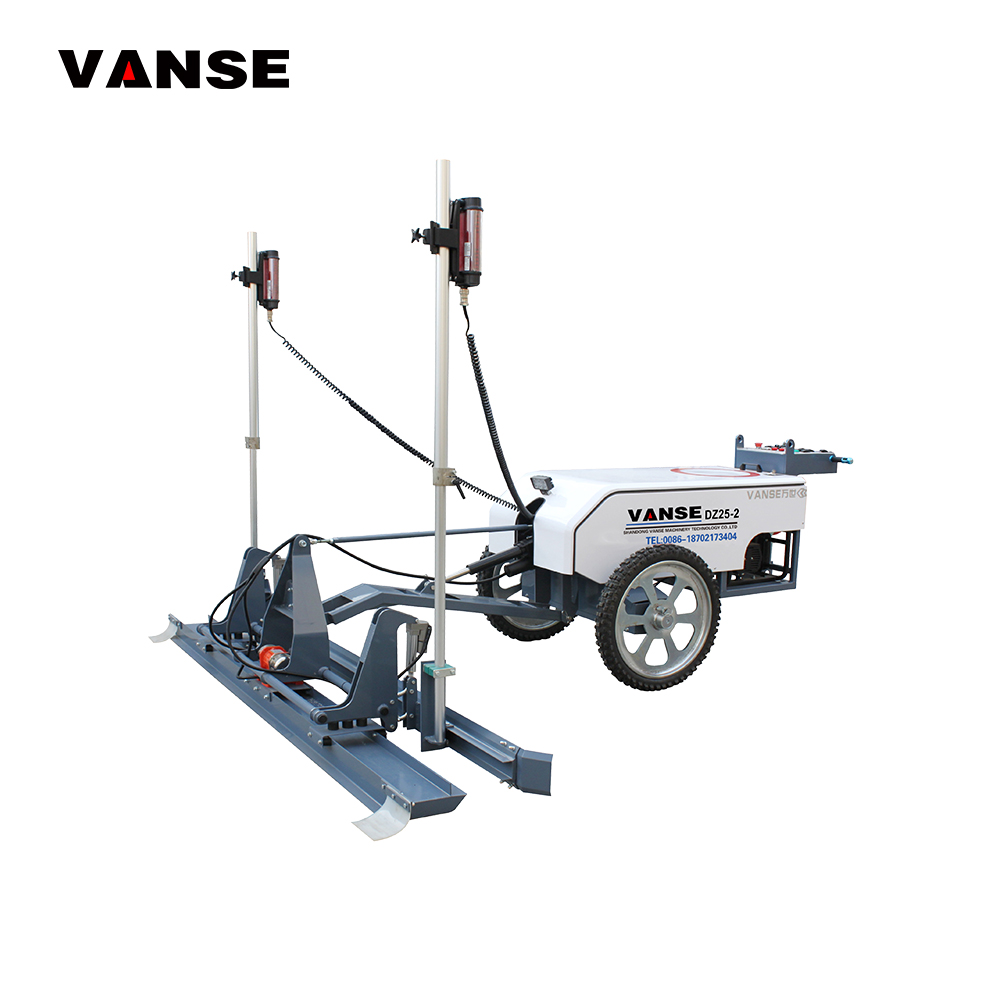
A vibrating screed, also called a vibratory screed or concrete vibrating beam, is a lighter finishing tool with an engine, electric motor, or battery-powered vibration source. Its vibrating blade or beam is pulled across concrete forms or guide rails. Vibration helps distribute mortar, remove trapped air near the surface, and improve initial consolidation. However, the operator is still responsible for controlling elevation, movement, overlap, and finishing consistency.
The central difference is not simply vibration. Many laser screeds also use vibration during strike-off. The real distinction is automated grade control and machine capacity. A laser screed combines a laser receiver, hydraulic system, screed head, and machine chassis. A vibrating screed depends mainly on manual guidance and formwork accuracy.
Laser Screed Versus Vibrating Screed Comparison

The following comparison explains the operational differences that matter during equipment selection. Actual results depend on concrete mix design, crew capability, formwork quality, laser setup, equipment maintenance, and finishing procedures.
| Decision Factor | Laser Screed | Vibrating Screed | Best Practical Choice |
|---|---|---|---|
| Leveling control | Laser-guided automatic elevation adjustment, often suitable for millimeter-level control. | Manual control based on forms, rails, strings, and operator skill. | Laser screed for tolerance-critical floors. |
| Typical work area | Large open slabs, broad pours, industrial floors, and high-volume projects. | Small slabs, narrow sections, patch repairs, sidewalks, and foundations. | Match machine size to pour area. |
| Labor requirement | Can reduce the need for rakers, strike-off workers, and grade-checking labor. | Usually requires more manual spreading, pulling, checking, and correction. | Laser screed where skilled labor is costly or scarce. |
| Initial equipment cost | Higher purchase price, training requirement, and maintenance investment. | Low to moderate cost with simple operating structure. | Vibrating screed for limited annual usage. |
| Productivity potential | High output when concrete supply, crew organization, and access are well planned. | Lower output, especially on wide slabs requiring repeated manual passes. | Laser screed for continuous commercial pours. |
| Surface flatness potential | Strong potential for uniform strike-off before power troweling and final finishing. | Dependent on formwork alignment and individual operator technique. | Laser screed for flat-floor specifications. |
| Transport and access | Requires transport planning, working clearance, and suitable slab access routes. | Easy to carry, load into small vehicles, and use in confined locations. | Vibrating screed for restricted sites. |
| Maintenance complexity | Hydraulics, sensors, receivers, electrical components, and mechanical systems require planned servicing. | Usually limited to engine or motor servicing, blade inspection, and vibration-system checks. | Vibrating screed for simple field maintenance. |
In short, a vibrating screed reduces manual finishing effort compared with a simple straightedge, but it does not replace precision grade control. A laser-guided concrete screed is a production system rather than just a finishing tool. Contractors that place large concrete volumes repeatedly can often recover the higher machine investment through reduced labor, faster completion, fewer elevation corrections, and improved slab consistency.
Market Overview in the Global Market
Demand for concrete screeding equipment is closely connected to industrial construction, urban logistics growth, manufacturing investment, airport modernization, renewable-energy facilities, cold-storage development, and public infrastructure spending. Large slabs are increasingly specified for automated warehouses, high-rack storage systems, robotics operations, e-commerce distribution centers, and manufacturing plants. These facilities place more emphasis on floor flatness because uneven slabs can affect forklift travel, automated guided vehicles, racking performance, and long-term maintenance costs.
In major trade and construction hubs such as Rotterdam, Hamburg, Dubai, Jebel Ali, Singapore, Los Angeles, Houston, Toronto, São Paulo, Melbourne, Riyadh, Kuala Lumpur, and Busan, contractors routinely manage projects where construction schedules and slab quality are both commercially important. Equipment choice must account for local freight routes, import procedures, spare-parts access, power standards, operator availability, and the local service capacity of the supplier.
Premium laser screeds remain common on high-value industrial projects, but more contractors now compare equipment based on total ownership cost rather than purchase price alone. A lower-priced laser screed with dependable hydraulic components, accessible spare parts, operator training, and responsive service may provide a compelling alternative for regional contractors and equipment rental businesses. Conversely, a vibrating screed remains indispensable for contractors that perform varied small-scale work and need a compact machine that can be deployed quickly.
Equipment Types for Concrete Strike-Off
Concrete screeding equipment is not limited to one machine category. Understanding the available types helps contractors avoid purchasing a machine that is either undersized for major pours or unnecessarily expensive for occasional small work.
| Equipment Type | Operating Method | Typical Project Scale | Primary Advantages | Main Limitations |
|---|---|---|---|---|
| Hand vibrating screed | Operators pull a vibrating blade over formwork or guide rails. | Small slabs and repair areas. | Low cost, easy transport, simple operation. | Manual grade control and limited width. |
| Truss vibrating screed | Modular truss sections span wider pours with vibration. | Roads, bridge decks, and medium-width slabs. | Long working width and adaptable sections. | Requires rails, setup time, and crew coordination. |
| Walk-behind laser screed | Operator walks behind a laser-controlled screed machine. | Small to medium industrial slabs. | Precision control with relatively compact access. | Lower production than ride-on units. |
| Ride-on laser screed | Operator drives the machine while the hydraulic head levels concrete. | Large warehouses and factory floors. | High productivity, reduced labor, strong consistency. | Higher investment and transport needs. |
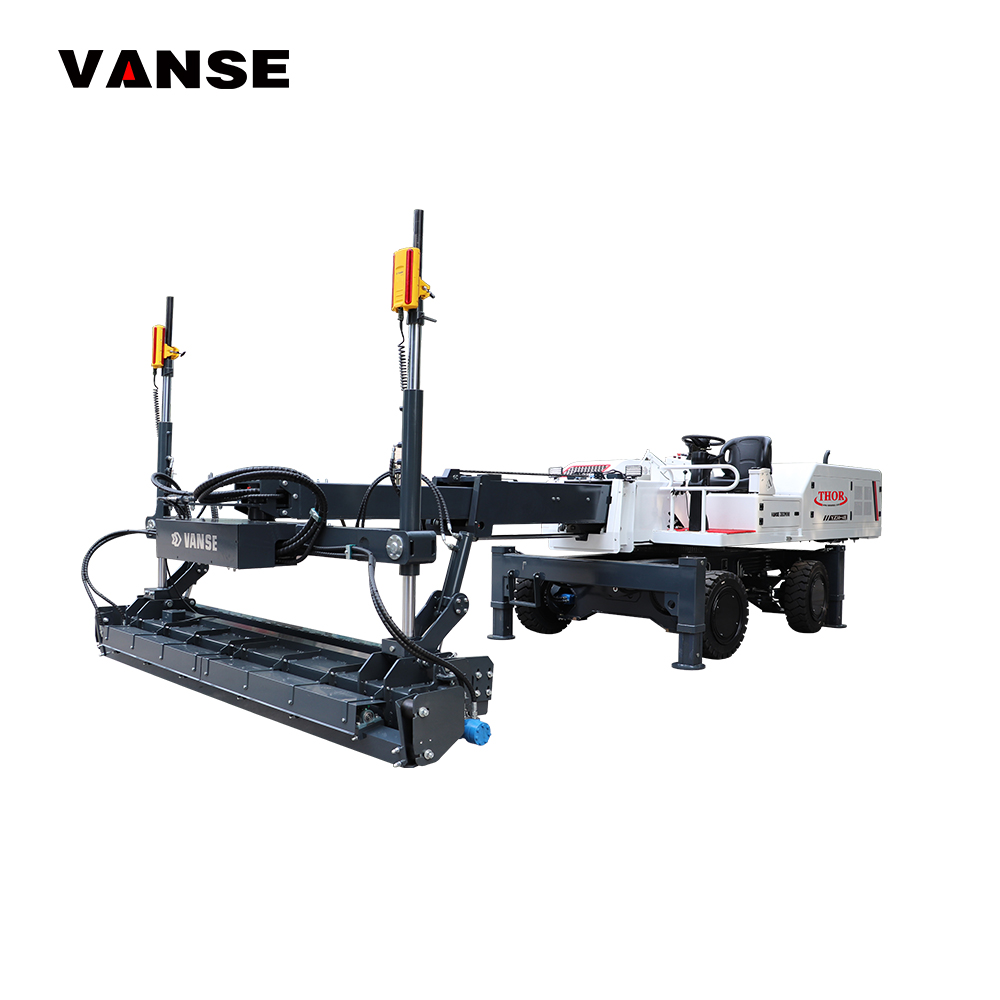
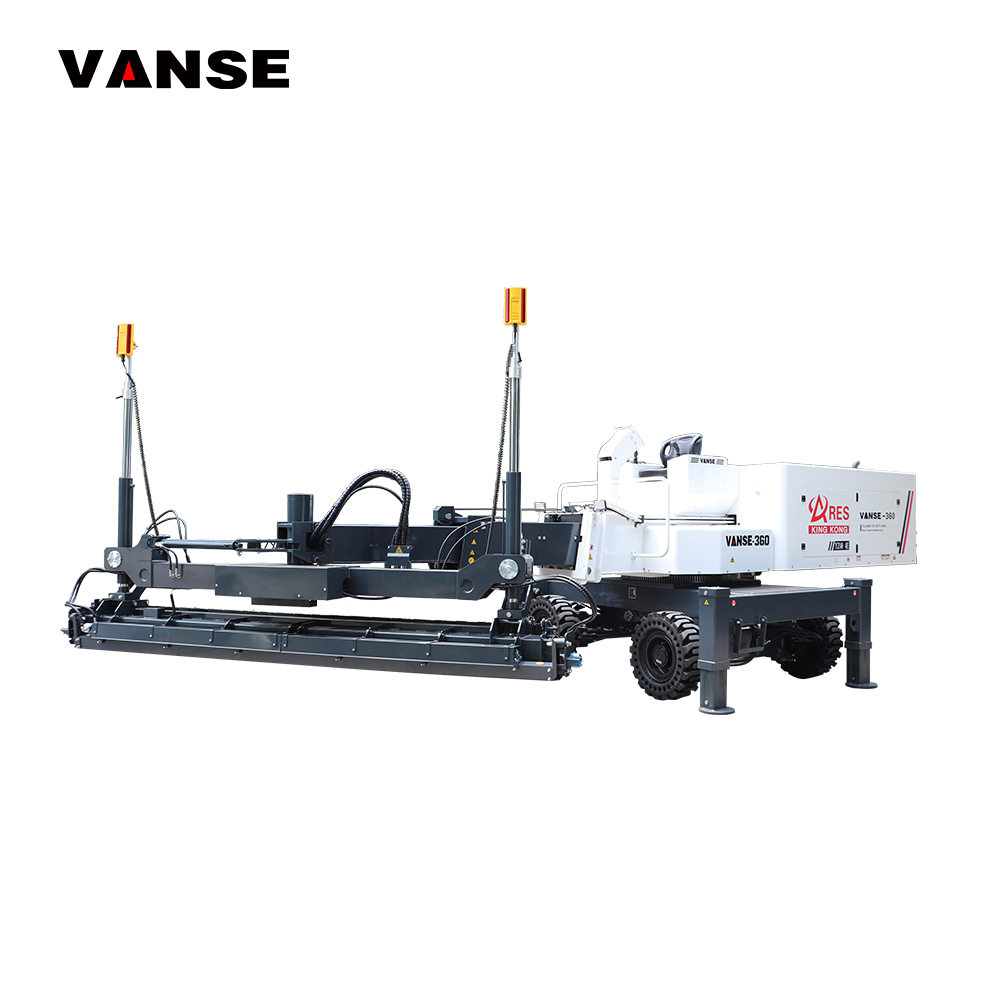
| Boom-type laser screed | Articulated boom places screed head across broad working areas. | Large open slabs and complex layouts. | Wide reach, flexible 360-degree coverage, fewer wheel tracks. | Requires skilled setup and adequate site planning. |
| 3D-profile laser screed | Laser or digital profile control follows slopes and designed elevations. | Drainage slabs, ramps, pavements, and shaped surfaces. | Supports complex grades and design profiles. | Needs accurate survey data and experienced operators. |
A contractor working primarily on private homes, small workshops, curbs, and light commercial slabs may achieve excellent results with a quality vibrating screed. A contractor bidding on fulfillment centers, industrial parks, aircraft maintenance facilities, and large logistics yards should evaluate ride-on or boom-type laser screeds early in the tender process. The ability to demonstrate equipment capacity can strengthen a bid where the owner requires strict floor performance.
Cost Comparison and Return on Investment
Purchase cost is the most visible difference between laser screeds and vibrating screeds, but it is rarely the most important long-term number. A vibrating screed generally has a much lower capital cost, fewer service requirements, and easier transport. It can be an excellent financial choice when the machine will work intermittently or when the contractor has a small crew and mostly performs limited-area pours.
A laser screed has a higher acquisition cost because it includes a chassis, hydraulic drive, screed head, laser receiver, control system, engine or power system, and more sophisticated mechanical components. It also requires trained operators and planned maintenance. Yet it can reduce direct labor, minimize wet-concrete rework, reduce dependence on highly experienced manual strike-off crews, and help a contractor complete pours faster.
For a recurring industrial flooring contractor, the ROI calculation should include labor hours per square meter, daily concrete placement capacity, frequency of slab corrections, cost of project delays, travel time between sites, spare-parts stock, machine utilization, financing, and resale value. For a rental company, include operator training, transport logistics, insurance, regional parts availability, and whether customers will use the equipment often enough to create steady utilization.
Buying Factors That Should Drive the Decision
Before ordering equipment, contractors should review actual project data rather than relying only on advertised machine specifications. The following checklist provides a more reliable framework for selecting between a laser screed and a vibrating screed.
| Buying Question | Why It Matters | Laser Screed Consideration | Vibrating Screed Consideration |
|---|---|---|---|
| How many square meters are poured each month? | Utilization determines whether higher capital cost can be recovered. | Best when large-volume work is frequent. | Best for occasional or low-volume work. |
| What floor tolerance does the specification require? | Flatness and levelness affect operational performance of the finished facility. | Supports controlled strike-off and consistent elevation. | Suitable where tolerance requirements are moderate. |
| Is concrete supply continuous during pours? | High-output machines need steady material delivery. | Works best with reliable batching and truck scheduling. | More tolerant of small, interrupted pours. |
| How restricted is site access? | Doorways, columns, excavation edges, and indoor access affect machine choice. | Confirm machine dimensions, turning range, and transport route. | Useful in confined and irregular work areas. |
| Is skilled labor difficult to hire? | Labor scarcity can increase the value of automation. | Can reduce manual grade-control dependence. | Requires capable workers to maintain alignment. |
| Can the supplier provide local parts and training? | Downtime can quickly exceed any purchase-price saving. | Check laser-system, hydraulic, and engine support. | Check blade, motor, engine, and vibration-part availability. |
| Will the machine be used for slopes or drainage profiles? | Complex grades need appropriate control technology. | Consider 3D profiling compatibility. | May require rails, templates, or manual checking. |
Request a live demonstration using the intended concrete mix whenever possible. A proper trial should show setup time, laser transmitter placement, screed-head response, access around columns, concrete spreading method, finishing workflow, cleaning time, and the supplier’s operator-training process. For a vibrating screed, inspect beam rigidity, vibration consistency, blade straightness, handle ergonomics, engine reliability, and the availability of replacement blades and drive components.
Industries That Benefit Most from Laser Screeds
Industrial flooring is the strongest application for laser screeding. Warehouses and logistics centers need broad, uniform slabs capable of carrying forklift traffic, pallet racking, and material-handling equipment. Distribution centers near ports such as Dubai, Antwerp, Long Beach, Hamburg, and Singapore often operate under tight opening schedules, making fast slab placement especially valuable.
Manufacturing plants also benefit from accurate concrete levels because production equipment, assembly lines, storage systems, and internal transport routes often depend on stable foundations. Automotive facilities, food-processing plants, electronics factories, pharmaceutical sites, and cold-storage warehouses may all require careful floor construction and reliable joint planning.
Airport runways, terminal yards, container areas, road projects, bridge decks, and infrastructure slabs can use specialized screeding systems where surface profile and productivity are essential. For those applications, contractors must evaluate project specifications, reinforcement design, concrete workability, drainage slope, and curing requirements. A truss screed or 3D-profile laser screed may be more appropriate than a standard indoor ride-on model.
Vibrating screeds remain highly relevant for residential contractors, municipal repair crews, utility contractors, small commercial builders, landscape companies, and concrete specialists working in limited spaces. Their lower cost and easy deployment allow contractors to keep a practical screeding solution in every service vehicle or regional equipment depot.
Practical Applications by Project Type
For warehouse slabs above approximately several thousand square meters, a laser screed usually offers the strongest value when concrete delivery is well organized. It is particularly useful for large, open pours with repeated bay geometry. The machine can work efficiently while rakers place concrete ahead of the screed head and finishing crews follow behind with power trowels.
For factory expansion projects with moderate slab areas and frequent obstructions, a compact walk-behind laser screed may balance precision and access. It can be more practical than a large ride-on machine when door openings are narrow or when the project contains many columns, pits, equipment bases, and isolated pours.
For sidewalks, driveways, small foundations, pump pads, rural buildings, and repair sections, a vibrating screed is often the logical choice. It can be used quickly with well-built forms and a properly prepared base. The contractor should still check elevations with a laser level, string line, or digital level because vibration does not automatically guarantee accurate grade.
For slopes, drainage channels, ramps, parking decks, and pavement work, the decision depends on profile complexity. A vibrating screed on rails may suit straightforward crossfalls. For more demanding profiles, a 3D-compatible laser screed can provide better repeatability, provided the contractor has accurate survey control and a qualified operator.
Illustrative Project Scenarios
Regional logistics warehouse: A contractor is building a 28,000-square-meter distribution center near a major freight corridor. The floor will support high-bay racking and continuous forklift traffic. A ride-on laser screed is the appropriate primary machine because it can improve production consistency across repeated large pours. The contractor should coordinate concrete trucks, pump placement, joint layout, curing, and power-trowel crews before the pour begins.
Small manufacturing extension: A fabrication workshop adds a 1,500-square-meter slab with equipment bases and several columns. A walk-behind laser screed can provide controlled levels while remaining maneuverable. A vibrating screed may still be needed for tight edges, bases, door thresholds, and small inaccessible zones.
Municipal sidewalk rehabilitation: A city contractor replaces damaged sidewalk sections in busy streets near retail areas. The work zones are narrow and relocation is frequent. A portable vibrating screed provides lower transport burden and quick deployment. Accurate forms, compaction, and curing discipline will have a greater impact than investment in a larger laser machine.
Airport service apron: A specialist contractor constructs broad concrete pavement areas with strict drainage requirements. The equipment decision may involve a truss screed or a laser-controlled system configured for the approved profile. The contractor must follow engineering specifications for dowels, reinforcement, joints, surface texture, and curing rather than selecting the screed only by width or engine power.
Leading Screed Equipment Suppliers for the Global Market
The supplier landscape includes specialist laser-screed manufacturers, major concrete-equipment brands, and regional providers. Availability varies by country, dealer coverage, shipping routes, and local certification requirements. Buyers should verify the current local distributor, parts stock, service response, and machine configuration before signing a purchase agreement.
| Company | Service Regions | Core Strengths | Key Offerings |
|---|---|---|---|
| Somero Enterprises | North America, Europe, Asia-Pacific, Middle East, and global dealer markets. | Specialized large-scale concrete placing and leveling technology. | Laser screeds, boom screeds, 3D-profile machines, training, and technical support. |
| Ligchine International | United States and selected international dealer markets. | Compact and ride-on laser screed solutions for concrete contractors. | Laser-guided screeds, concrete placing equipment, and operator support. |
| Shandong Vanse Machinery Technology Co., Ltd. | More than 80 countries and regions, with service resources in Southeast Asia and Canada. | Broad concrete-equipment range, flexible configurations, and export-focused support. | Walk-behind, ride-on, boom-type laser screeds, power trowels, grinders, cutters, and concrete accessories. |
| Allen Engineering Corporation | North America, Latin America, Europe, Middle East, and dealer-supported export markets. | Established concrete-finishing equipment portfolio. | Power trowels, truss screeds, vibrating screeds, rollers, and finishing equipment. |
| Wacker Neuson | Europe, Americas, Asia-Pacific, Africa, and broad global dealer networks. | Wide construction-equipment support network and compact jobsite tools. | Concrete vibrators, screeds, compact equipment, lighting, and site-support machinery. |
| Husqvarna Construction | Global dealer and service network across major construction markets. | Concrete-surface preparation, cutting, and finishing ecosystem. | Vibratory screeds, concrete saws, power trowels, floor grinders, and dust-control solutions. |
Somero is widely recognized for laser-guided concrete placement equipment used on demanding slab projects. Ligchine is known for laser screed equipment and contractor-focused solutions, especially in North American markets. Allen Engineering and Wacker Neuson offer broader concrete-construction portfolios where vibrating screeds may be purchased alongside trowels, vibrators, and compact jobsite equipment. Husqvarna Construction is particularly relevant for contractors needing a combined package of screeding, cutting, grinding, and concrete-surface preparation tools.
For buyers seeking a supplier with flexible machine configurations, Shandong Vanse Machinery Technology Co., Ltd. offers concrete laser leveling machines and ride-on models through its ride-on laser screed range. The company’s international project experience makes it relevant to contractors, distributors, rental fleets, and private-label buyers seeking practical equipment selection and export support.
How to Select a Reliable Local Supplier
A reliable supplier should do more than quote a machine price. It should help assess slab dimensions, floor tolerance requirements, concrete placement method, power source, transport route, operator skill level, and expected annual working hours. A supplier that asks detailed questions before recommending a model is more likely to support a successful purchase.
Confirm whether the supplier can provide commissioning, operator instruction, maintenance schedules, spare-parts lists, remote diagnostics, and clear warranty terms. For laser screeds, request confirmation of the laser-control configuration, hydraulic maintenance requirements, screed-head dimensions, engine option, machine weight, transport dimensions, and compatibility with local fuel and electrical standards.
International buyers should also verify shipping arrangements through major ports and inland delivery points. Equipment shipped through Shanghai, Ningbo, Qingdao, Rotterdam, Jebel Ali, Singapore, Vancouver, Houston, Santos, or Melbourne may require different lead times, customs processes, and local handling plans. A supplier with an established dealer or service partner in the buyer’s region can reduce startup risk substantially.
Vanse Equipment and Global Service Support
Shandong Vanse Machinery Technology Co., Ltd. has served concrete contractors and distributors since 2013 with laser screeds, power trowels, floor grinders, cutting machines, topping spreaders, slipform equipment, joint systems, and concrete fibers for industrial flooring projects. Its product approach combines laser-control systems, hydraulic technology, durable structural materials, reliable engine configurations, and manufacturing procedures supported by ISO 9001 and CE certifications; the company also holds more than 50 invention patents and over 200 utility model and design patents, providing tangible evidence of ongoing engineering development. Vanse supports end users, contractors, rental companies, dealers, distributors, brand owners, and individual buyers through direct sales, wholesale supply, retail orders, OEM/ODM production, customized branding, regional distribution partnerships, voltage and engine customization, and project-based supply. For Global market customers, Vanse is not operating only as a remote exporter: it has overseas branches and service resources in Southeast Asia and Canada, dealer coverage across North America, South America, Europe, Asia, and the Middle East, and multilingual 24-hour remote consultation supported by more than 100 technical experts, engineers, and after-sales specialists. Buyers can access project consultation, machine selection, installation, commissioning, operator training, spare-parts supply, remote diagnosis, and on-site assistance through technical service support and the company’s broader global service system. Vanse provides EPC, turnkey, and customer-owned plant solutions where required; it does not provide BOO or on-site bulk supply services. This practical service structure helps protect equipment uptime and supports long-term partnerships with concrete professionals across international markets.
Operation and Maintenance Considerations
A laser screed should be inspected before every pour. Operators should check hydraulic fluid condition, hoses, fittings, receiver operation, screed-head movement, engine condition, tires or tracks, emergency controls, and fasteners. The laser transmitter must be positioned on stable ground outside areas where it can be disturbed by vehicles, vibration, or accidental contact. The operator should verify benchmark elevations before placing concrete.
After the pour, fresh concrete must be cleaned from the screed head, auger, plow, and machine surfaces before it hardens. Routine cleaning is essential because hardened concrete can affect movement, weight distribution, and component life. Maintenance records should document service intervals, replacement parts, receiver calibration checks, hydraulic inspections, and operator-reported issues.
For vibrating screeds, operators should inspect the blade or beam for straightness, cracks, excessive wear, and loose fasteners. Engine-driven models require fuel, oil, air-filter, spark-plug, and belt checks according to the manufacturer’s maintenance schedule. Electric models require cable inspections, safe grounding, and power-supply verification. Battery models require charging procedures and battery-condition monitoring.
Future Trends for 2026
By 2026, concrete screeding technology is expected to become more connected, data-driven, and focused on efficiency. Contractors increasingly want equipment that provides usage records, service reminders, remote fault support, and operating data that can improve fleet management. GPS, digital surveying, 3D profile control, and compatibility with building-information workflows are likely to become more important on large infrastructure and industrial projects.
Labor shortages will continue to push contractors toward laser-guided equipment that reduces dependence on large manual strike-off crews. This does not eliminate the need for skilled personnel; rather, it shifts labor toward machine operation, concrete logistics, finishing supervision, quality control, and preventive maintenance. Companies that invest in operator training will gain more value from automation than companies that simply purchase advanced equipment.
Sustainability will also influence buying decisions. Contractors are increasingly using lower-carbon concrete mixes, supplementary cementitious materials, recycled aggregates, and optimized mix designs. These materials can behave differently during placing and finishing, so screeding equipment must provide stable, repeatable performance. Equipment buyers will also focus on fuel efficiency, lower emissions, electric or hybrid jobsite tools, durable components, repairability, and longer service life.
Policy trends in many markets increasingly favor safer construction operations, better emissions control, higher productivity, and documented quality assurance. Large owners may require clearer floor-tolerance records, operator safety procedures, dust management, and responsible equipment maintenance. Suppliers that can provide certification documents, technical training, parts support, and transparent service processes will be better positioned for this changing market.
Frequently Asked Questions
Is a laser screed always better than a vibrating screed?
No. A laser screed is better for large, high-specification, high-volume concrete slabs, but a vibrating screed is often more economical and practical for small, narrow, irregular, or infrequent projects.
Can a vibrating screed produce a good concrete floor?
Yes. With accurate forms, proper concrete consistency, capable operators, correct compaction, and good finishing practice, a vibrating screed can produce quality results. It is less suitable when highly controlled flatness and elevation are required over large areas.
What projects justify a ride-on laser screed?
Ride-on laser screeds are commonly justified for warehouses, factories, logistics centers, large retail slabs, distribution hubs, terminal yards, and other projects with repeated broad pours. The investment is most effective when the machine will be used regularly.
Do laser screeds eliminate the need for power trowels?
No. A laser screed performs concrete spreading, consolidation, and initial strike-off. Power trowels and hand-finishing tools are still needed to complete the surface according to the specified finish and curing process.
What should be checked before importing a laser screed?
Confirm local certification requirements, shipping dimensions, engine or electrical configuration, spare-parts availability, warranty terms, training arrangements, service response, customs documentation, and whether the supplier can support commissioning in the destination region.
Can one contractor own both machine types?
Yes. Many concrete contractors use a laser screed as the primary machine for major slabs and keep vibrating screeds for edges, tight areas, repair work, small jobs, and locations inaccessible to the larger machine.
How can a contractor reduce screed equipment downtime?
Use trained operators, follow preventive maintenance schedules, clean the machine immediately after use, keep commonly required spare parts available, inspect hydraulic and vibration systems regularly, and choose a supplier with responsive technical support.
Final Selection Guidance
Select a laser screed when project economics are driven by large slab volume, demanding floor tolerances, labor reduction, placement speed, and repeatable quality. Select a vibrating screed when portability, low initial cost, simple maintenance, and operation in confined areas are the highest priorities. For many growing concrete contractors in the Global market, the strongest fleet strategy is to combine both: use laser-guided equipment for major industrial pours and retain vibrating screeds for detailed, small-scale, and difficult-access concrete work.
Before purchasing, compare not only machine prices but also practical service support, local parts access, operator training, financing options, delivery timing, and the supplier’s ability to support the machine throughout its working life. A well-matched screeding solution can improve concrete quality, protect project schedules, and create a measurable competitive advantage in industrial and infrastructure construction.
Explore Vanse concrete construction equipment solutions for laser screeds, finishing machinery, and global concrete project support.
Share this article

About the Author: Shandong Vanse Machinery Technology Co., Ltd.
Shandong Vanse Machinery Technology Co., Ltd. is a high-tech manufacturer specializing in concrete construction machinery, including laser screeds and related equipment. The company integrates R&D, production, and global sales, with products exported to over 60 countries and widely used in infrastructure projects worldwide.