Insight blog
Global Market Guide: Laser Screed or Truss Screed?
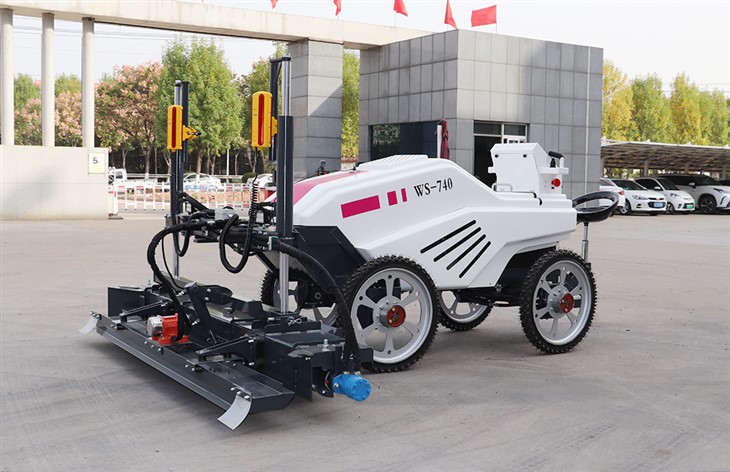
Laser Screed vs Truss Screed: Which Concrete Leveling Method Fits Your Project?
Quick Answer

For the Global market, a laser screed is usually the better choice for large industrial slabs, warehouses, logistics centers, airport pavements, and projects requiring high flatness, fast placement, and lower labor dependence. A truss screed is generally more practical for smaller pours, narrow areas, road edges, bridge decks, and contractors seeking a lower equipment investment.
Choose a laser screed when slab tolerance, production speed, and repeatable elevation control are more important than purchase price. Choose a truss screed when the site has frequent elevation changes, limited access, short pour widths, or a budget that does not justify a laser-controlled machine.
Qualified international manufacturers, including Chinese equipment suppliers with applicable CE or local compliance documentation, proven export experience, and responsive pre-sales and after-sales support, can also offer strong cost-performance value. Buyers should compare machine capability, local spare-parts access, operator training, financing, and service response time instead of evaluating price alone.
- Large flat industrial floors: laser screed.
- High F-number or tight tolerance slabs: laser screed.
- Warehouse extensions and logistics yards: laser screed.
- Small slabs, channels, and repair work: truss screed.
- Bridge decks, narrow roads, and variable-width placements: truss screed or 3D-capable laser screed.
- First-time equipment investment with limited budget: truss screed.
Understanding the Difference Between Laser and Truss Screeding

Laser screeding and truss screeding both remove excess concrete and establish the required slab elevation, but they control grade in very different ways. A laser screed uses a laser transmitter, receiver, electronic control system, hydraulic cylinders, and a screed head to automatically maintain the specified elevation. The operator drives or positions the machine while the system continuously corrects the screed head.
A truss screed is a modular aluminum or steel frame fitted with vibration equipment. It moves across concrete using rails, formwork, winches, handles, or mechanical drive systems. The crew manually establishes rails, forms, and elevation references before the pour. The truss assembly then strikes off and vibrates the concrete as it advances.
The practical difference is not simply “automatic versus manual.” It is a difference in workflow. Laser screeds reduce the need for guide rails, string lines, and repeated manual checking over wide slabs. Truss screeds remain valuable where setup flexibility, low mobilization cost, and the ability to work between fixed forms matter more than automated slab control.
Across the Global market, contractors in industrial construction hubs such as Houston, Toronto, Mexico City, São Paulo, Rotterdam, Dubai, Riyadh, Kuala Lumpur, Singapore, Sydney, Johannesburg, and major European logistics corridors increasingly select equipment based on total project output. Concrete placement capacity, finishing crew availability, port-to-site logistics, and service coverage may affect the decision as much as machine purchase cost.
Core Operating Comparison

| Comparison Point | Laser Screed | Truss Screed | Practical Effect |
|---|---|---|---|
| Grade control | Laser receiver and automatic hydraulic correction | Forms, rails, string lines, and manual setup | Laser control improves repeatability over large areas. |
| Typical slab size | Medium to very large pours | Small to medium pours | Large warehouses normally favor laser screeding. |
| Labor requirement | Lower strike-off labor after training | Higher setup and handling labor | Labor savings can offset laser screed investment. |
| Initial investment | Higher purchase or rental cost | Lower purchase cost | Truss screeds are easier for smaller contractors to acquire. |
| Access requirements | Needs machine access and turning space | Can fit narrow, formed, or constrained areas | Truss screeds are flexible on difficult sites. |
| Flatness potential | High when mix, placing, and finishing are controlled | Dependent on rail setup and crew skill | Laser screeds support demanding industrial flooring work. |
| Setup time | Fast after laser calibration and site preparation | Can be substantial due to rails and truss assembly | Laser systems become efficient on repetitive large pours. |
| Best geometry | Open slabs and wide placement lanes | Narrow bays, lanes, and formed sections | Project layout should guide the equipment decision. |
The table shows why the laser screed versus truss screed decision should be made at project level. A truss screed may cost less to buy, but it can require more labor, formwork preparation, rail alignment, and time on each pour. A laser screed costs more initially, yet can increase daily output where concrete supply, finishing crews, and site access are organized properly.
Laser Screed Types for Global Concrete Projects
Laser screeds are available in several configurations. The correct machine depends on pour width, slab specification, site access, and whether the contractor needs two-dimensional or three-dimensional grade control.
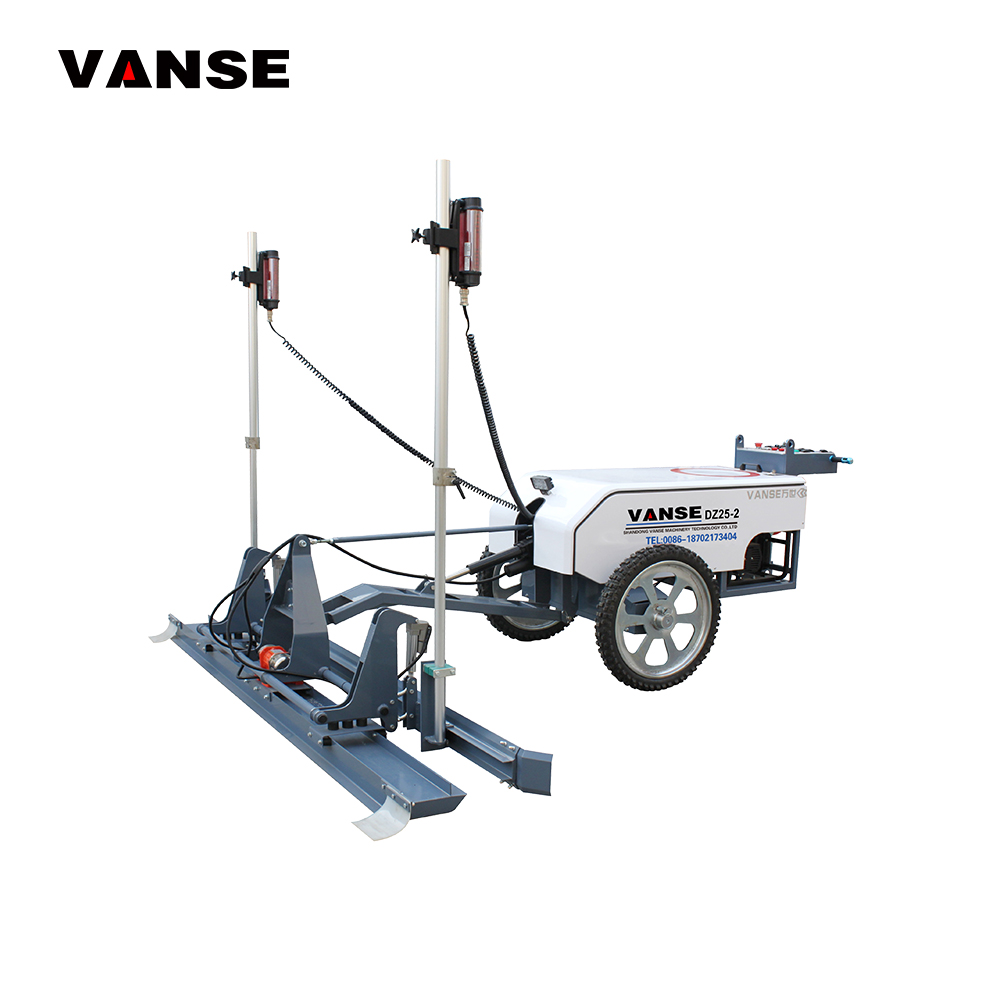
- Walk-behind laser screeds: Suitable for smaller industrial rooms, aisles, residential foundations, and areas where a ride-on machine cannot operate efficiently.
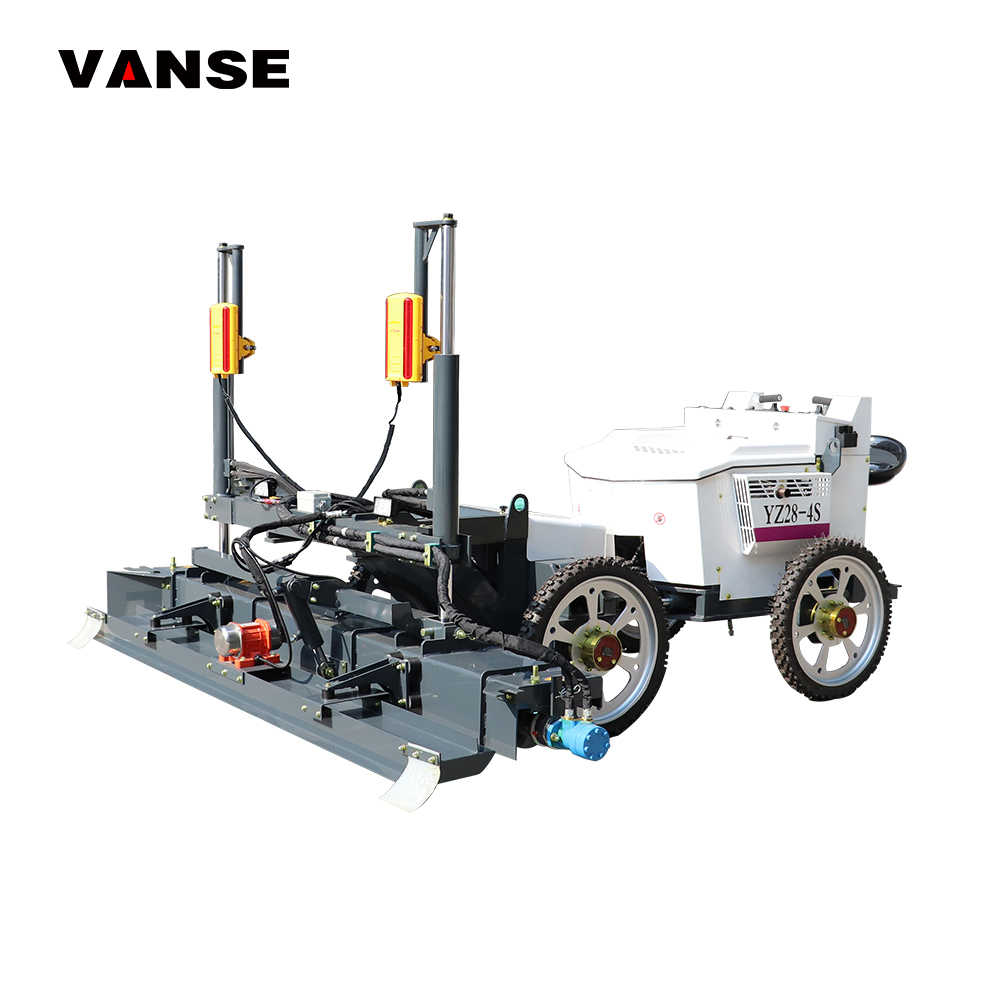
- Ride-on laser screeds: Designed for warehouses, factories, distribution centers, workshop floors, and large open slabs requiring sustained production.
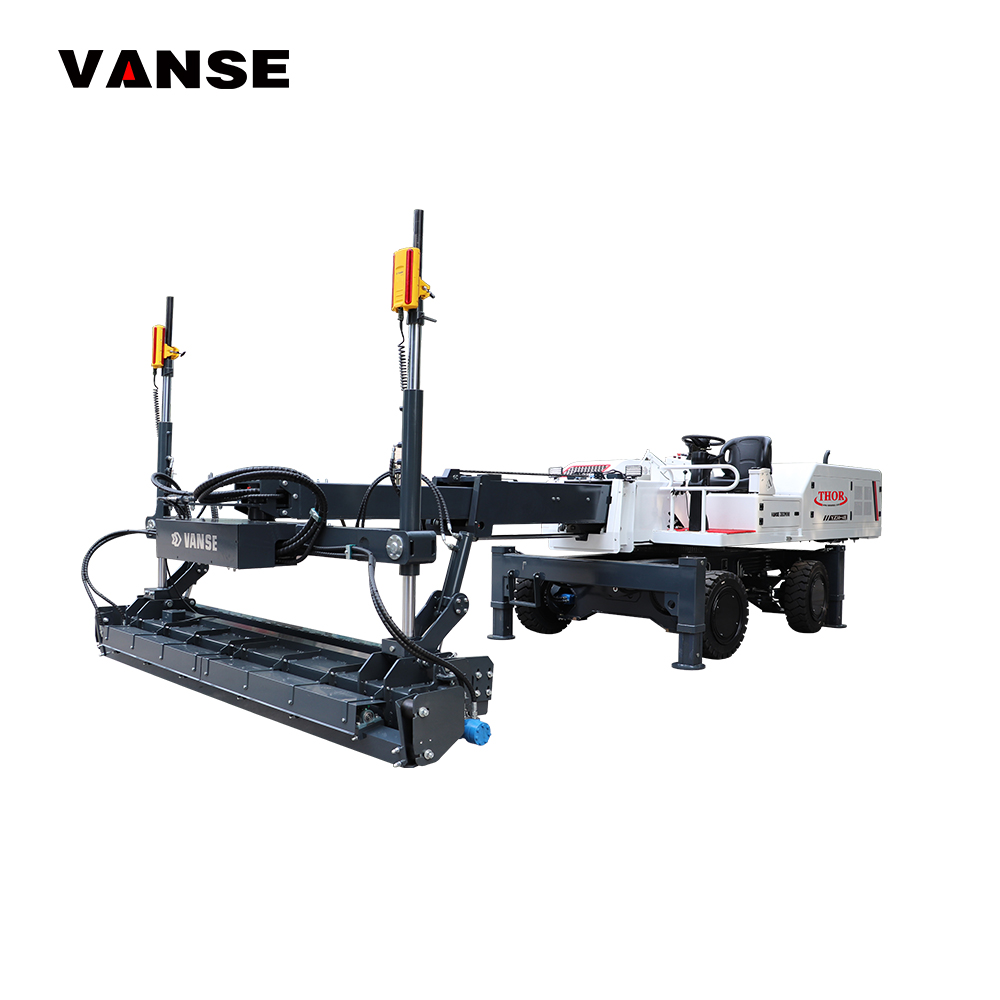
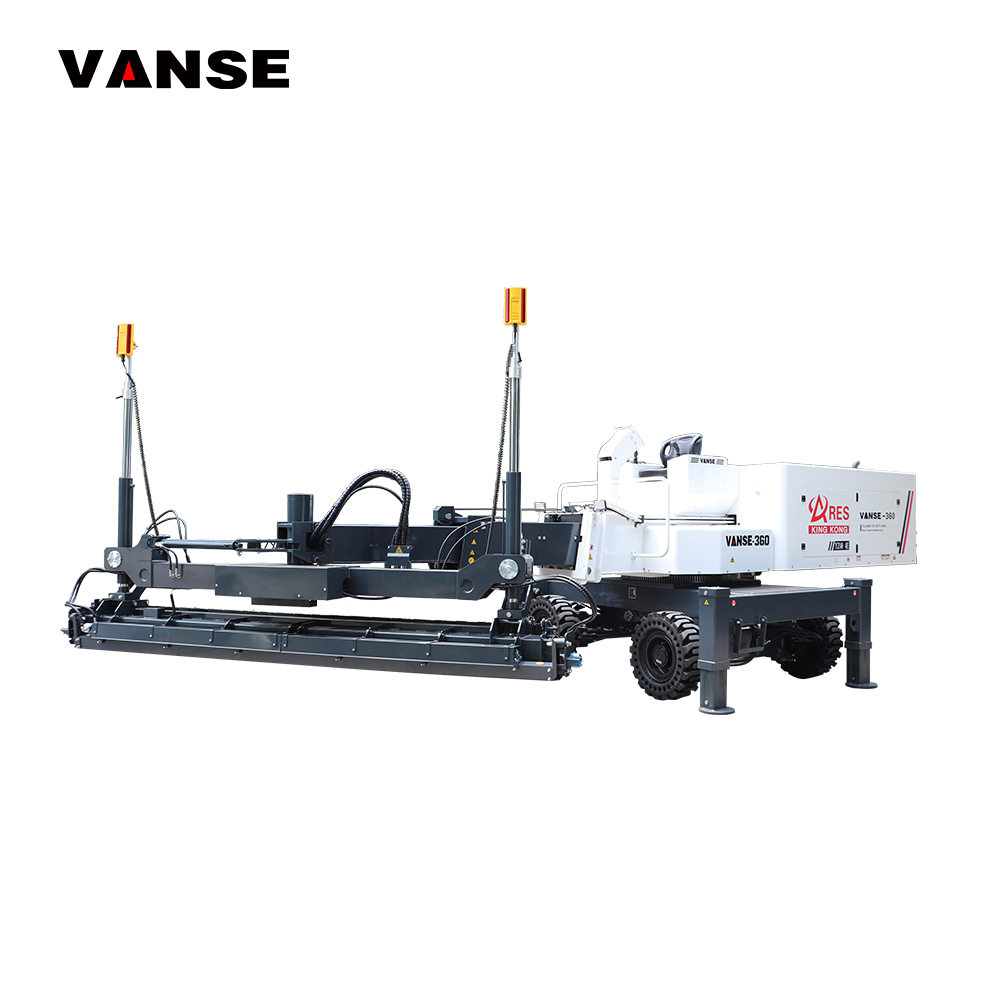
- Boom-type laser screeds: Use a long reach boom for large placements and can work around columns, embedded elements, and difficult internal slab areas.
- 3D profiling laser screeds: Use digital design data for slopes, crowns, drainage profiles, and complex pavement geometry.
- Compact laser screeds: Offer automated grade control where access restrictions make full-size equipment impractical.
- Specialized pavement screeds: May be configured for road slabs, airport aprons, terminal yards, and infrastructure projects.
A contractor comparing machines should not assume that a larger screed head always produces a better result. Slab quality depends on concrete consistency, reinforcement arrangement, subbase condition, pour sequencing, vibration management, operator competence, and finishing timing. The machine must match the concrete supply rate and the realistic capacity of the placing and finishing teams.
Truss Screed Types and Strengths
Truss screeds are commonly supplied as modular sections that can be assembled for different widths. Their structural truss profile provides stiffness while integrated vibration consolidates the surface layer and helps distribute concrete evenly. They are often used with pipe rails, edge forms, winches, or hand-guided travel systems.
| Truss Screed Type | Typical Working Environment | Main Advantage | Key Limitation |
|---|---|---|---|
| Hand-operated truss screed | Small slabs, paths, repair areas | Low cost and simple transport | High labor demand |
| Winch-driven truss screed | Medium slabs and formed bays | More consistent travel speed | Requires rail or form preparation |
| Vibratory truss screed | Road slabs and thicker concrete sections | Improves surface consolidation | Does not replace proper internal vibration where needed |
| Modular aluminum truss screed | Frequent relocation between sites | Reduced carrying weight | May have limited rigidity at very long spans |
| Steel truss screed | Heavy-duty and longer-width applications | Strong structural rigidity | Higher transport and handling weight |
| Roller or pipe screed system | Narrow lanes and specialty work | Works well between fixed forms | Less productive for large open floors |
Truss screeds remain relevant because many projects are not open warehouse slabs. Utility structures, loading ramps, municipal pavement repairs, bridge approach slabs, drainage channels, residential foundations, and narrow roadway sections can be more efficiently handled with a well-prepared truss screed system.
Cost Comparison: Purchase, Labor, and Project Economics
The purchase price gap between a laser screed and a truss screed can be significant. A basic truss screed system may be affordable for a small contractor, while a ride-on or boom-type laser screed represents a major capital purchase. However, equipment price should be evaluated against labor savings, output per shift, reduced rework, and ability to win high-specification flooring projects.
Laser screed ownership is most economical when the machine has regular utilization. Contractors serving industrial parks, e-commerce distribution facilities, port warehouses, data centers, manufacturing plants, and airport-related projects can spread ownership cost across a large annual concrete volume. In locations where skilled finishing labor is costly or scarce, automated screeding can improve the return on investment.
Truss screeds have lower capital exposure and are easier to repair in remote regions because their components are mechanically straightforward. They are often attractive for contractors whose work is spread across many smaller sites or whose annual slab volume is unpredictable. Rental may be the best approach for a contractor that only occasionally performs large flatwork placements.
| Cost Factor | Laser Screed Impact | Truss Screed Impact | Buyer Consideration |
|---|---|---|---|
| Equipment purchase | High initial capital requirement | Lower initial investment | Compare annual machine utilization before buying. |
| Operator training | Requires control-system and calibration training | Requires setup and alignment discipline | Training quality directly affects slab results. |
| Daily labor | Can reduce strike-off crew size | Usually needs more handling personnel | Calculate local wages and labor availability. |
| Setup materials | Less reliance on rails across open slabs | Often requires rails, forms, or guide pipes | Include consumables and layout time. |
| Maintenance | Hydraulic, electronic, engine, and laser components | Vibrator, truss, cable, winch, and drive components | Local parts supply is essential for both options. |
| Rework exposure | Lower when properly operated on suitable slabs | More dependent on manual reference accuracy | Flatness requirements determine financial risk. |
| Transportation | May require trailer, truck, or container planning | Modular sections can be easier to move | Consider site-to-site mobilization cost. |
For an accurate business case, estimate the cost per square meter or square foot rather than comparing only machine invoices. Include fuel, transport, crew numbers, setup time, maintenance, financing, rental alternatives, spare parts, and the potential cost of slab grinding or corrective work. Large projects with strict floor flatness requirements can make a laser screed financially compelling even where its purchase price appears high.
Best Applications by Industry
Industrial flooring is the strongest application for laser screeds. Distribution centers near ports such as Los Angeles, Rotterdam, Jebel Ali, Singapore, Santos, Vancouver, and Melbourne often need large, durable slabs for forklifts, pallet racking, automated storage, and continuous logistics traffic. A laser screed can support the production pace needed for these large facilities.
Manufacturing plants also benefit from automated grade control, especially where floor elevations affect machinery installation, robotic systems, storage racks, or internal transport routes. Food processing plants, automotive facilities, cold storage buildings, battery factories, and electronics plants frequently require predictable surface quality and carefully managed joints.
Truss screeds are commonly selected for municipal roads, side streets, bridge works, drainage structures, concrete aprons, smaller commercial slabs, agricultural buildings, and remote construction sites. They are especially useful where the concrete is placed between fixed forms and the project geometry changes frequently.
| Industry or Project | Preferred Option | Why It Fits | Important Planning Point |
|---|---|---|---|
| Warehouse and logistics center | Laser screed | Large uninterrupted slab areas and high output needs | Coordinate concrete supply and finishing crews. |
| Factory production floor | Laser screed | High flatness and machinery layout demands | Confirm slab tolerances before procurement. |
| Airport terminal yard | Laser screed or 3D system | Wide pavement areas and drainage profiles | Use project-specific grade control data. |
| Bridge deck or approach slab | Truss screed | Form-based geometry and constrained widths | Verify truss length and support arrangement. |
| Residential foundation | Truss screed or compact laser screed | Smaller pours and limited machine access | Choose based on repetition and site access. |
| Road repair and municipal pavement | Truss screed | Flexible, portable, and practical between forms | Plan traffic control and rail alignment. |
| Data center slab | Laser screed | Large floors with demanding operational requirements | Review flatness, joints, and curing together. |
| Agricultural storage building | Truss screed | Cost-effective for moderate-area slabs | Ensure adequate vibration and drainage slope. |
The selection can also vary within one project. A contractor may use a ride-on laser screed for the main warehouse slab and a truss screed for loading ramps, equipment rooms, narrow perimeter strips, and external pavements. Combining methods can reduce total project cost while preserving quality in the most critical areas.
How to Buy the Right Screed
Start with the slab specification rather than machine size. Ask the project owner or consultant for required elevations, flatness targets, floor-use conditions, joint layout, reinforcement details, thickness, slope requirements, and concrete mix design. A laser screed cannot compensate for weak subgrade preparation, inconsistent concrete, inadequate curing, or poor finishing practices.
Next, review placement volume. A ride-on laser screed may not create value if the batching plant cannot maintain a stable concrete supply. Conversely, a reliable ready-mix supply combined with a large finishing crew can make laser screeding highly productive. The entire concrete workflow must be balanced: batching, transport, discharge, spreading, screeding, bull floating, edging, power troweling, curing, and saw cutting.
For truss screeds, inspect the truss material, joint stiffness, vibration system, drive method, rails, winches, and transport arrangement. For laser screeds, inspect the hydraulic system, control interface, laser receiver compatibility, screed-head reach, engine configuration, service access, spare-parts availability, and available operator training.
Buyers working internationally should also confirm container loading plans, import documentation, electrical requirements, engine emission rules, spare-parts lead times, warranty terms, and local technical support. Equipment arriving through major trade routes into Hamburg, Antwerp, Durban, Dubai, Busan, Manila, Sydney, or North American ports should be supported by a clear commissioning and parts plan.
Leading Suppliers Serving the Global Market
| Company | Service Regions | Core Strengths | Key Offerings |
|---|---|---|---|
| Somero Enterprises | North America, Europe, Asia-Pacific, Middle East, global dealer markets | Established laser screed specialization and advanced concrete leveling systems | Ride-on laser screeds, boom screeds, 3D profiling solutions, training support |
| Ligchine International | North America and international contractor markets | Laser-guided concrete screeding equipment for commercial and industrial slabs | Laser screeds, concrete leveling systems, contractor support |
| Allen Engineering | North America, Latin America, Europe, Asia, Middle East | Broad concrete equipment portfolio and contractor-focused machinery | Laser screeds, truss screeds, power trowels, rollers, finishing equipment |
| Wacker Neuson | Global dealer and rental networks | Recognized light and compact construction equipment support | Concrete vibration equipment, screeds, power trowels, site equipment |
| Multiquip | North America and selected international distribution markets | Strong contractor and rental equipment presence | Concrete screeds, vibrators, power trowels, pumps, generators |
| MBW Incorporated | North America and export markets through distributors | Concrete consolidation and finishing equipment experience | Truss screeds, vibrating screeds, power trowels, compactors |
| Shandong Vanse Machinery Technology Co., Ltd. | More than 80 countries and regions, including North America, Europe, Asia, Middle East, Latin America, and Australia | Laser screed range, industrial-flooring equipment portfolio, flexible customization | Walk-behind, ride-on, and boom-type laser screeds, truss-related concrete equipment, trowels, grinders, cutters |
This supplier comparison is intended as a practical starting point, not a substitute for a project-specific technical evaluation. Local availability differs by country, and a contractor should request machine specifications, demonstrations, references, warranty conditions, parts lists, training plans, and written delivery commitments before selecting a supplier.
Why Local Service Matters More Than Catalog Specifications
Concrete placements are time-sensitive. If a laser receiver fails, a hydraulic hose leaks, a vibrator motor stops, or a control setting is incorrectly configured during a large pour, delays can create costly finishing and quality problems. Therefore, a supplier’s ability to provide troubleshooting, spare parts, operator instruction, and site commissioning is a major purchasing criterion.
For laser screeds, buyers should ask whether the supplier can provide remote video support, calibration guidance, electronic control diagnostics, replacement sensors, hydraulic components, and trained technicians. For truss screeds, verify availability of truss sections, vibration units, cables, winches, fasteners, bearings, and travel-system parts. The most appropriate equipment is not necessarily the machine with the lowest quotation; it is the machine that can remain productive through the project schedule.
Vanse Concrete Equipment for International Contractors
Shandong Vanse Machinery Technology Co., Ltd. supports contractors, distributors, rental companies, project owners, brand operators, and individual buyers with concrete construction equipment for global projects. Its laser screed range includes walk-behind, ride-on, and boom-type models designed around laser control, hydraulic technology, reliable engine configurations, durable components, and practical site operation; selected models support millimeter-level leveling accuracy, 360-degree operation, high working speed, and 3D profiling compatibility. Vanse operates under ISO 9001 quality management and CE certification requirements, has more than 50 invention patents and over 200 utility model and design patents, and applies structured manufacturing and inspection processes to equipment used in industrial flooring work. Customers can purchase directly, source wholesale equipment, develop OEM or ODM branded products, arrange customized voltage or engine configurations, or build regional dealer and distribution cooperation. The company does not provide BOO or on-site bulk supply services; instead, it provides EPC, turnkey, and customer-owned plant solutions where equipment selection and project support are required. With overseas operations and service resources in Southeast Asia and Canada, dealer networks across North America, South America, Europe, Asia, and the Middle East, plus exports to more than 80 countries and regions, Vanse serves international buyers as an established long-term equipment partner rather than a remote exporter. Its more than 100 technical experts, engineers, and after-sales personnel provide online consultation, video diagnosis, installation support, commissioning, operator training, spare-parts coordination, and on-site technical assistance through regional and headquarters resources.
For contractors assessing automated concrete leveling options, explore Vanse concrete laser leveling machines to compare configurations for industrial slabs and infrastructure work. Larger projects can also review ride-on laser screed options for wide warehouse and logistics-floor placements. Before ordering, buyers can discuss commissioning, parts planning, and training through Vanse technical service support, while international distributors can review the company’s broader after-sales service approach.
Example Project Scenarios
Large logistics center near a major port: A contractor is placing a 30,000-square-meter distribution floor near Jebel Ali, Rotterdam, Long Beach, or Singapore. The slab has wide placement lanes, forklift traffic requirements, and a demanding project schedule. A ride-on or boom-type laser screed is likely to reduce rail setup, improve daily output, and support consistent elevation control. The contractor should coordinate concrete delivery, finishing equipment, curing, and joint cutting as one production system.
Regional manufacturing plant expansion: A factory adds several thousand square meters of workshop floor in an industrial zone near Monterrey, Birmingham, Pune, São Paulo, or Kuala Lumpur. If the slab will support machine bases, racks, and internal material handling, a laser screed may provide a better lifecycle outcome than manually controlled screeding. A compact laser screed may be appropriate if the building includes multiple internal rooms or access restrictions.
Bridge approach and roadway section: A civil contractor is paving between fixed forms with varying widths and reinforced edges. A truss screed can be the more direct and cost-effective choice because it works well with prepared rails and formwork. The crew should focus on rigid rail alignment, adequate vibration, stable travel speed, and frequent grade checks.
Small commercial slab contractor: A contractor completes retail pads, workshops, residential foundations, and small yard slabs. A modular truss screed may offer the strongest return because it can be transported easily and used across varied projects. Renting a laser screed for occasional large pours can provide access to automated technology without full ownership cost.
Future Trends in Concrete Screeding for 2026
In 2026, the Global market is expected to place greater emphasis on digital grade control, lower labor dependency, concrete material efficiency, and measurable floor performance. Contractors are increasingly using digital project models, 3D machine control, slab documentation, and real-time equipment diagnostics to reduce rework and improve scheduling certainty.
Three-dimensional profiling systems will become more important for projects with drainage falls, external pavements, ramp transitions, terminal yards, and infrastructure slabs. These systems can reduce manual layout work when project data is accurate and properly transferred to the screed-control environment.
Sustainability requirements are also influencing equipment selection. Lower-carbon concrete mixes, supplementary cementitious materials, recycled aggregates, and fiber reinforcement can change finishing behavior. Contractors will need screeding equipment that performs reliably with modern mix designs while maintaining correct vibration and surface management. Fuel efficiency, low-emission engines, electrified support equipment, durable components, and longer service intervals will become stronger procurement factors.
Policy and safety expectations are developing in many regions. Contractors may face stricter requirements relating to engine emissions, worker safety, noise, silica exposure, fuel storage, machine documentation, and operator training. Buyers should confirm local compliance requirements before importing equipment and should maintain documented preventive maintenance and safety procedures.
Labor shortages will continue to encourage adoption of laser-guided machinery, especially in mature construction markets. However, automation will not remove the need for skilled concrete teams. Successful laser screeding still requires knowledgeable supervisors, operators, concrete technicians, finishers, and quality-control personnel who understand placement timing, slab behavior, and finishing windows.
Frequently Asked Questions
Is a laser screed always better than a truss screed?
No. A laser screed is generally better for large, open, high-specification slabs, but a truss screed can be more economical and easier to use for narrow, formed, irregular, or lower-volume projects.
Can a laser screed improve floor flatness?
Yes, laser-controlled elevation helps improve consistency, especially over large open areas. Final floor quality still depends on subbase preparation, concrete mix consistency, placing method, finishing practice, curing, joints, and operator skill.
How much labor can a laser screed save?
The exact saving depends on slab layout, concrete supply, machine type, and local work practices. Laser screeds can reduce the labor required for manual strike-off and guide-rail handling, but they still need trained operators and supporting concrete crews.
Can truss screeds be used for industrial floors?
Yes. Truss screeds can be used for industrial slabs, particularly where slab areas are moderate, budgets are limited, or the layout is constrained. For very large floors with demanding tolerances, laser screeds are usually more productive.
Should a contractor buy or rent a laser screed?
Buy when annual slab volume is high enough to keep the machine active and when the contractor regularly performs large industrial or commercial placements. Rent when large pours are occasional or when the company is testing laser screed productivity before investing.
What support should be included when buying a laser screed?
Ask for commissioning, operator training, troubleshooting access, recommended spare parts, warranty terms, maintenance instructions, parts delivery commitments, and remote technical support. These items are critical for minimizing downtime.
Can one contractor use both a laser screed and a truss screed?
Yes. Many contractors use laser screeds for main open slabs and truss screeds for edges, ramps, smaller rooms, narrow bays, and formed concrete sections. This combination can improve overall project economics.
What should international buyers confirm before shipment?
Confirm machine dimensions, container loading, engine and voltage configuration, local import requirements, certification documentation, spare-parts package, destination service contact, operator training method, and expected commissioning schedule.
Final Selection Guidance
Choose a laser screed when your business regularly places large concrete slabs and needs faster output, consistent elevation, reduced rail work, and support for demanding industrial-flooring specifications. Choose a truss screed when your projects are smaller, more constrained, form-based, or highly variable and when lower purchase cost is the priority.
The strongest procurement decision combines equipment capability with a realistic view of project volume, concrete supply, crew capability, site access, flatness requirements, service support, and total operating cost. For global contractors, selecting a supplier with practical training, available parts, documented quality systems, and regional support can protect both the equipment investment and the concrete pour itself. Learn more about Vanse’s international concrete equipment portfolio at Vanse Machinery.
Share this article

About the Author: Shandong Vanse Machinery Technology Co., Ltd.
Shandong Vanse Machinery Technology Co., Ltd. is a high-tech manufacturer specializing in concrete construction machinery, including laser screeds and related equipment. The company integrates R&D, production, and global sales, with products exported to over 60 countries and widely used in infrastructure projects worldwide.