Insight blog
Automated Laser Leveling vs Hand Screeding in Global Market
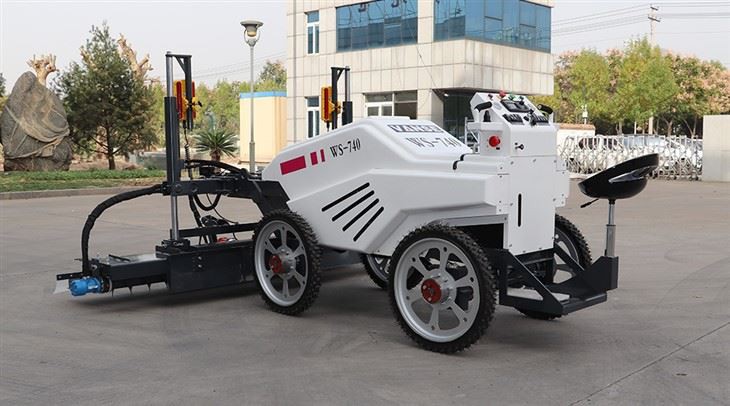
Automated Laser Leveling vs Hand Screeding in the Global Market
Quick Answer

For most medium and large slab-on-grade projects, automated laser leveling is the better choice because it delivers more consistent flatness, reduces labor dependence, improves placement speed, and helps contractors control long-term floor quality. Hand screeding remains practical for small pours, inaccessible spaces, repair work, residential slabs, and projects where equipment mobilization would cost more than the productivity gained.
The essential comparison is simple: manual screeding has a lower entry cost and greater flexibility in tight areas, while a concrete laser screed has a higher initial investment but can reduce labor, rework, and schedule risk on warehouses, factories, logistics parks, airports, terminal yards, and large commercial floors. Contractors should compare total installed cost per square meter or square foot rather than machine purchase price alone.
For Global market buyers, established suppliers such as Somero, Ligchine, Wacker Neuson, Allen Engineering, and Shandong Vanse Machinery Technology can be evaluated according to project size, local service availability, parts lead time, operator training, and technical support. Qualified international suppliers, including Chinese manufacturers with applicable CE or local certification requirements, responsive pre-sales engineering, and strong after-sales support, can also offer a compelling cost-performance option for contractors and distributors.
Why the Choice Matters for Global Concrete Projects

Concrete floor construction is increasingly judged by measurable outcomes: flatness, levelness, joint performance, curing quality, abrasion resistance, loading capacity, and delivery speed. In the Global market, large-format floors support e-commerce warehouses, cold-storage facilities, manufacturing plants, data centers, retail distribution hubs, ports, airport aprons, and production lines. A floor that looks acceptable during pouring can still create expensive problems if it causes forklift vibration, rack instability, drainage failure, coating defects, or excessive grinding after curing.
The decision between a laser screed and a manual screed affects the entire placement workflow. It changes how the contractor plans concrete supply, organizes crews, establishes elevation control, manages reinforcement, handles embeds, schedules finishing teams, and verifies tolerance. In high-volume projects near global trade and logistics centers such as Rotterdam, Hamburg, Dubai, Singapore, Los Angeles, São Paulo, Toronto, Melbourne, and Jeddah, time certainty can be as valuable as labor savings. Delays in one concrete pour can disrupt ready-mix deliveries, pumps, finishing crews, curing operations, and follow-on trades.
Automated laser screeding uses laser transmitters, machine-mounted receivers, hydraulic controls, and a leveling head to strike off and consolidate fresh concrete at the required elevation. Depending on machine type, it can operate with a boom, telescopic arm, auger, plow, or vibrating screed head. Manual screeding relies on workers using straightedges, vibratory trusses, roller screeds, hand tools, stringlines, grade pins, and visual checks. Both systems can produce useful results, but the repeatability and production capacity are very different.
Automated Laser Leveling Versus Hand Screeding at a Glance

The following comparison focuses on practical operating differences rather than headline claims. Actual productivity depends on mix design, concrete delivery consistency, reinforcement congestion, slab thickness, weather, pump capacity, crew experience, and specified tolerance.
| Decision Factor | Automated Laser Leveling | Hand Screeding | Practical Implication |
|---|---|---|---|
| Level control | Laser-guided automatic elevation adjustment | Controlled by pins, stringlines, screed rails, and operator skill | Laser systems provide stronger consistency across large pours. |
| Typical pour scale | Medium to very large slabs | Small slabs, edges, rooms, repairs, and irregular zones | Use machinery where repeated large-area production justifies mobilization. |
| Labor requirement | Smaller strike-off crew after operator training | Larger crew required for placing, pulling, checking, and correcting | Manual methods are more exposed to labor shortages and fatigue. |
| Speed | High daily output when concrete supply is stable | Moderate output, limited by crew strength and coordination | Laser screeds support compressed schedules and larger daily placements. |
| Initial investment | Higher equipment purchase, transport, and training cost | Lower equipment cost | Manual screeding is easier to start; laser screeding has better scale economics. |
| Surface tolerance potential | Strong potential for consistent flatness and levelness | Highly dependent on crew experience and control setup | Specified industrial floors generally benefit from machine control. |
| Access constraints | Requires maneuvering space and suitable site access | Can reach narrow, confined, and obstructed areas | Manual screeding remains necessary around walls, columns, pits, and details. |
| Best commercial model | Ownership, rental fleet, specialist contractor, or distributor support | General contractor-owned tools and local labor crew | Equipment selection should match annual slab volume, not a single pour. |
This table shows why the two methods are not always direct substitutes. A large logistics floor may use a boom-type laser screed for the main field, then use hand screeds and finishing tools for perimeter strips, door thresholds, pits, drains, and areas behind fixed obstructions. The best projects often combine both methods within one coordinated placement plan.
How Concrete Laser Screeds Work
A concrete laser screed begins with a reference plane created by one or more rotating laser transmitters. The machine receiver detects the laser signal and communicates with its control system. Hydraulic cylinders adjust the screed head height to maintain the target elevation while the machine moves through fresh concrete. The leveling head spreads, trims, vibrates, and consolidates material, leaving a more uniform surface for bull floating, power troweling, curing, saw cutting, and joint treatment.
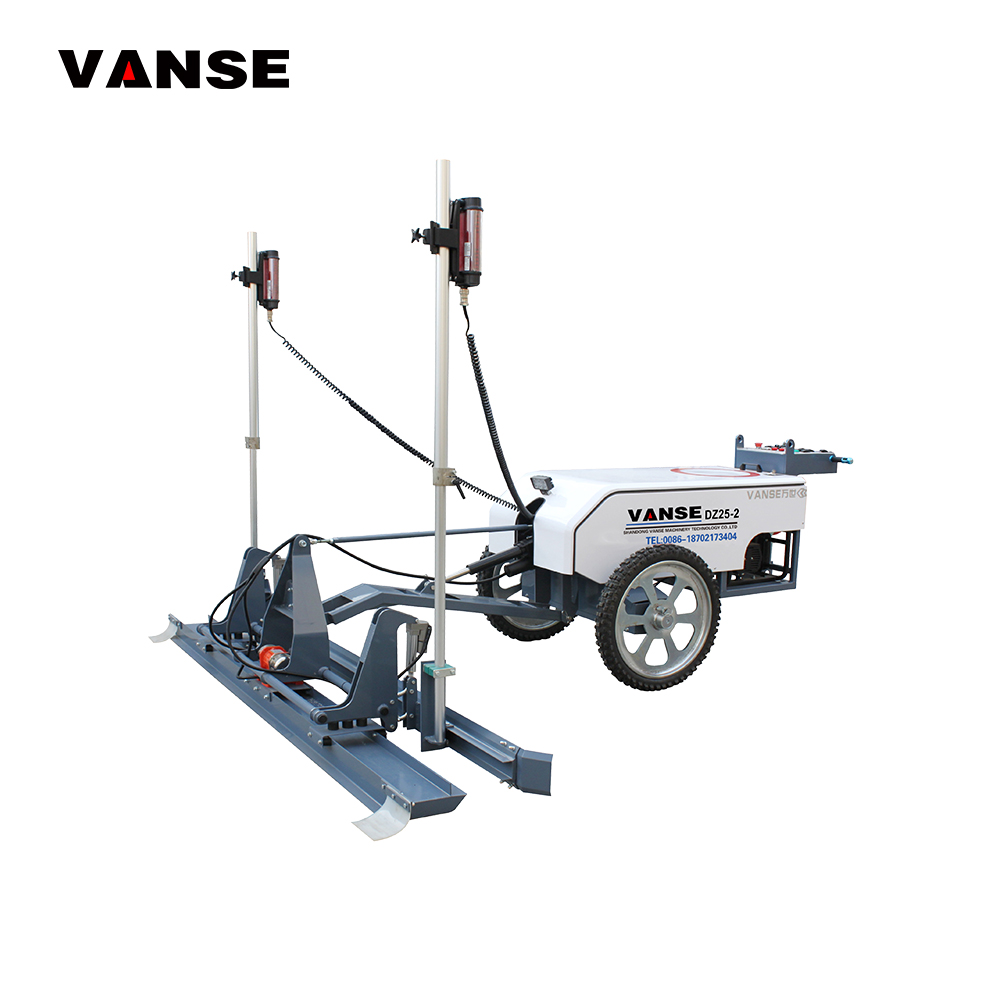
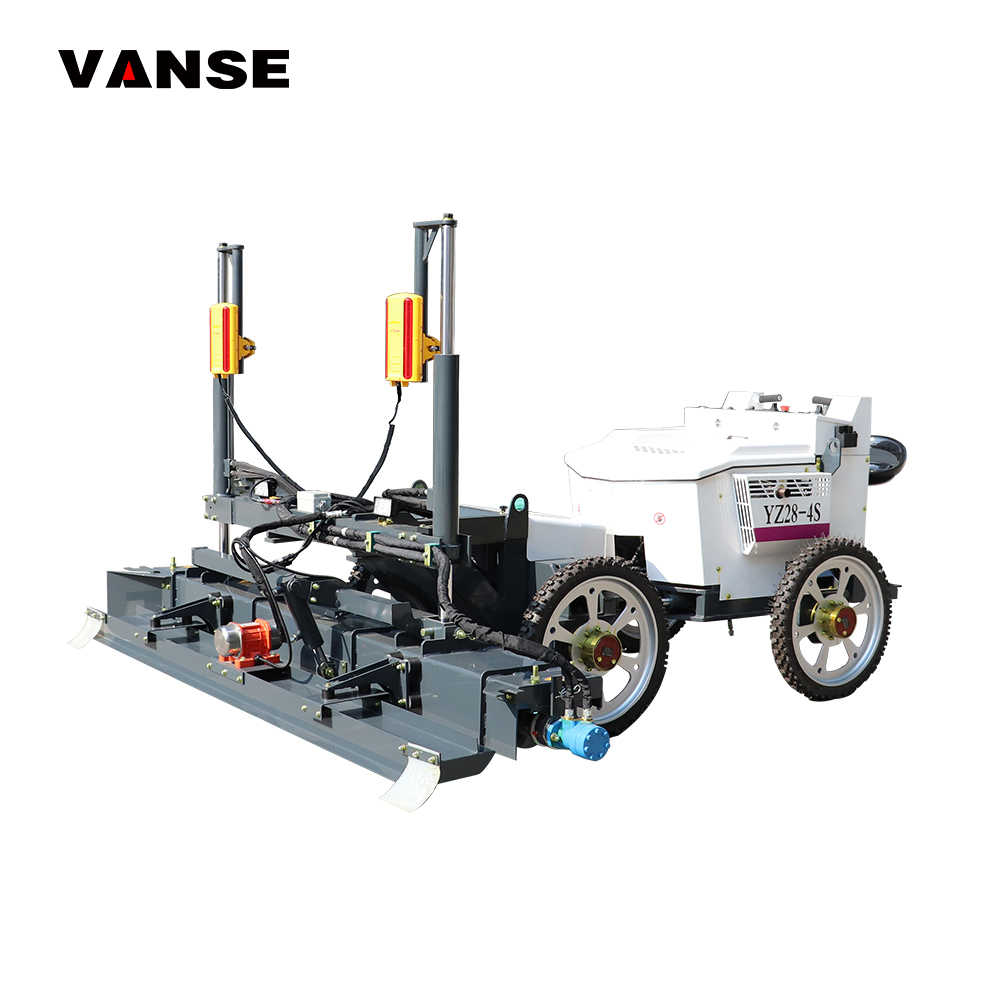
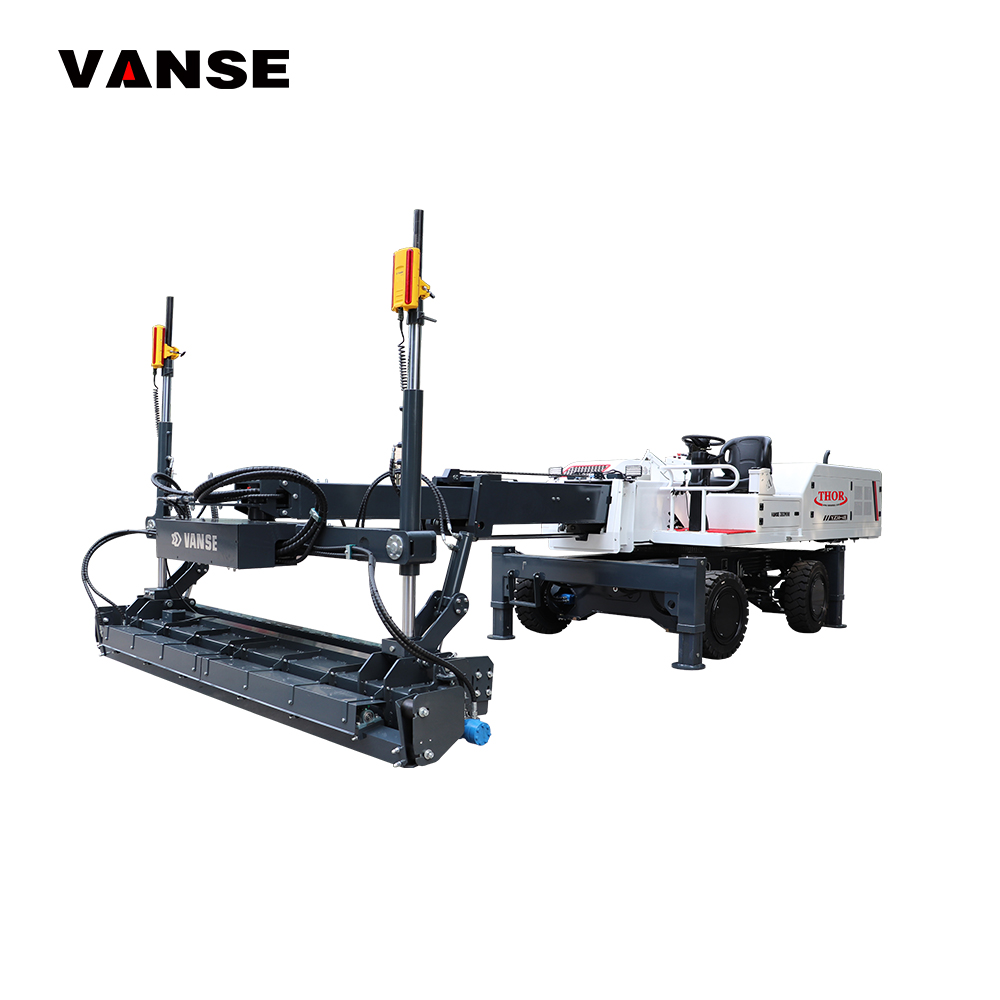
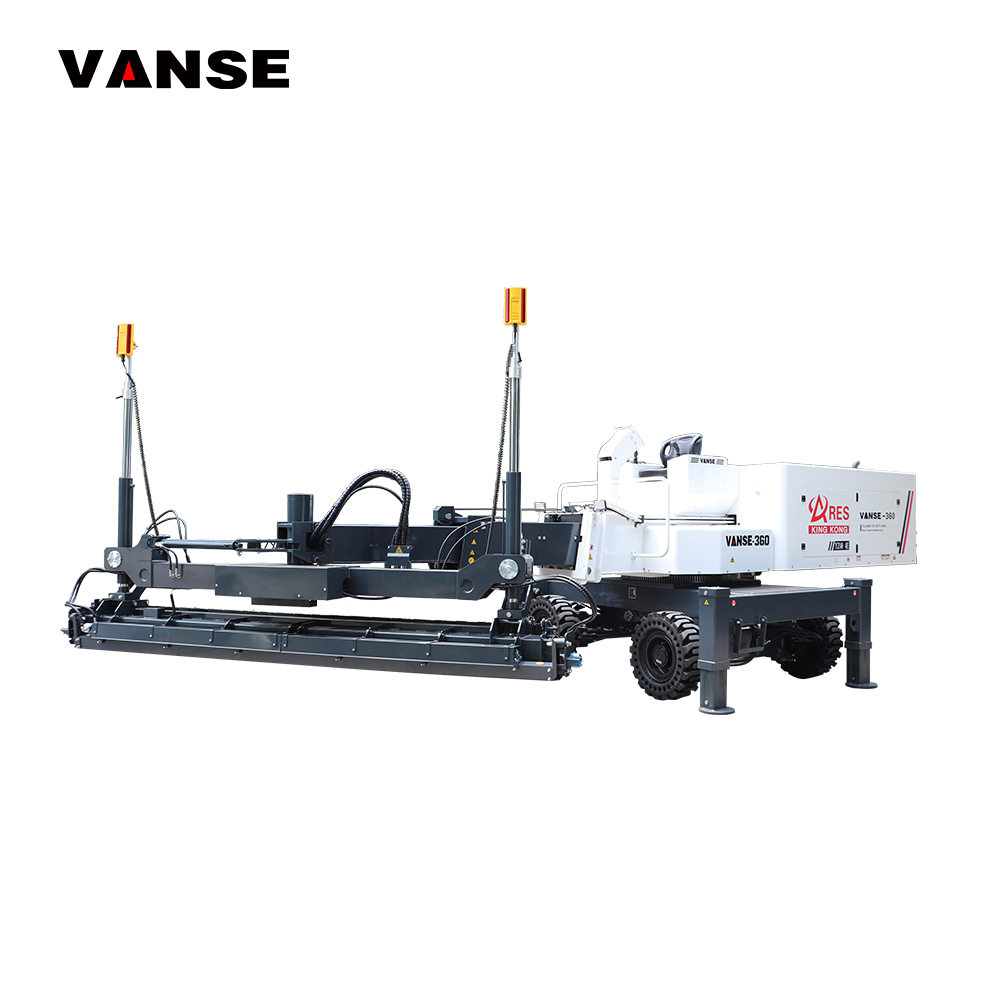
Ride-on laser screeds are designed for open slab areas where an operator can drive the machine efficiently across the pour. Boom-type models offer extended reach and can work around reinforcement, forms, and previously placed areas with fewer wheel tracks in the slab. Compact walk-behind or smaller laser-controlled machines can suit projects with limited access, although their coverage and output are lower than large boom units. Advanced configurations may support 3D profiling for slopes, drainage planes, ramps, and complex concrete profiles.
Laser screeding does not eliminate the need for skilled concrete management. Concrete must arrive at a consistent slump and within the approved mix parameters. The placing crew must avoid segregation, maintain adequate material ahead of the machine, and coordinate with pump operators. Finishing should begin at the correct time, not simply immediately after screeding. Laser control improves strike-off precision, but it cannot correct poor subbase preparation, badly positioned reinforcement, unstable formwork, incorrect mix design, or inadequate curing.
Manual Screeding Methods and Their Continuing Value
Manual screeding includes hand-operated straightedges, magnesium screeds, aluminum screed boards, roller screeds, vibrating truss screeds, and form-to-form strike-off methods. The crew uses grade stakes, rails, stringlines, fixed forms, or visual elevation references to move concrete into position. Skilled workers can obtain respectable results, particularly on smaller jobs, but consistency becomes harder as slab width, placement volume, heat, and crew fatigue increase.
Manual work remains valuable where machine access is impossible or uneconomical. Examples include bathrooms, balconies, equipment pads, small workshops, residential garages, ramps with difficult geometry, repair patches, trench reinstatement, and slabs inside occupied buildings. It is also commonly used for final touch-up after a laser screed passes through the main area. Contractors should not view manual screeding as obsolete; it is a necessary complementary capability.
The main limitation is variation. A crew may deliver an excellent floor on one day and struggle on the next if weather changes, concrete arrives inconsistently, the team is understaffed, or work extends late into the pour. Where floors will carry narrow-aisle forklifts, high-bay storage racks, automated guided vehicles, or high-speed material handling equipment, the risk of variation can outweigh the savings from using only manual methods.
Cost Comparison: Purchase Price Is Not the Whole Story
A manual screed package costs far less than a ride-on or boom laser screed. However, project economics should include labor, output, corrective grinding, concrete waste, equipment downtime, schedule exposure, operator availability, fuel, transport, and the commercial impact of failing floor tolerance requirements. A contractor completing only occasional small slabs may be better served by manual equipment or rental. A specialist flooring contractor with recurring warehouse and industrial work may achieve a faster return through ownership.
| Cost Category | Automated Laser Leveling | Hand Screeding | Buyer Evaluation Point |
|---|---|---|---|
| Machine acquisition | Higher capital expenditure | Low capital expenditure | Compare financing, rental rates, and expected annual utilization. |
| Labor per pour | Usually lower for main-field strike-off | Usually higher | Calculate local wage rates, overtime, and labor availability. |
| Training | Requires operator and laser setup training | Requires practical crew skill and supervision | Training is essential in both systems, but it is more formal for laser equipment. |
| Productivity loss risk | Can be affected by breakdown or poor logistics | Can be affected by fatigue, labor absence, and uneven skills | Assess backup equipment, parts stock, and crew depth. |
| Rework exposure | Generally lower on large, controlled placements | Can rise on large areas with demanding tolerance | Include grinding, overlays, and delayed handover costs. |
| Transport and mobilization | Needs trailer, lifting plan, or freight coordination | Simple transport and quick setup | For remote projects, freight and site logistics can change the result. |
| Maintenance | Hydraulics, engine, electronics, sensors, wear parts | Lower maintenance; mainly tools and vibrators | Confirm regional parts availability before ordering equipment. |
| Residual value | Potential resale value if the brand has service support | Limited but low-risk resale value | Known brands and documented service histories protect resale value. |
The table highlights a key procurement principle: calculate cost per completed square meter, not cost per machine. For example, a manual crew may appear cheaper until a project requires more workers, longer shifts, additional finishing, or corrective grinding. Conversely, buying a large laser screed for occasional small residential work can create idle capital, storage costs, and operator inefficiency. The correct answer depends on realistic annual volume and project mix.
Choosing the Right Equipment Type
Equipment selection should begin with slab geometry, placement volume, required tolerances, access routes, and concrete supply capacity. A machine that is too small may become a bottleneck. A machine that is too large may be difficult to transport, operate, and justify financially. Contractors should map the full process from batch plant or ready-mix dispatch to final curing before specifying a screeding system.
| Project Condition | Recommended Approach | Suitable Equipment | Reason for Selection |
|---|---|---|---|
| Small residential slab | Predominantly manual | Hand screed, roller screed, compact vibrator | Fast setup and low equipment cost outweigh automation benefits. |
| Medium commercial floor | Manual or compact laser-assisted approach | Ride-on screed or manual tools depending on access | Decision depends on repetition, tolerance, and local rental availability. |
| Warehouse distribution center | Automated main-field screeding | Ride-on or boom-type laser screed | Large open areas benefit from high output and consistent elevation. |
| High-bay logistics facility | Laser screed plus specialist finishing control | Boom laser screed and precision measurement tools | Flatness requirements are typically more demanding for material handling. |
| Airport apron or terminal yard | Heavy-duty automated placement plan | Boom-type or large ride-on laser screed | Wide paving areas, strict logistics, and productivity needs favor automation. |
| Factory with dense columns and embeds | Hybrid workflow | Laser screed for open zones; manual tools for details | Machine reach is useful, but obstruction work still requires hand finishing. |
| Sloped drainage floor | 3D-controlled screeding where justified | 3D-compatible laser screed and survey control | Designed slopes require accurate digital geometry and verification. |
| Repair or renovation project | Manual or compact equipment | Hand screed, small roller screed, grinding tools | Limited access and irregular boundaries reduce machine efficiency. |
Before purchasing, ask the supplier to review drawings, slab thickness, reinforcement plans, joint layout, concrete specification, expected daily pour area, access restrictions, and target flatness criteria. A credible supplier should recommend a machine configuration rather than simply offering the largest available model. Buyers should also request operator training, commissioning support, recommended spare parts, maintenance intervals, and an explanation of how the machine will be serviced in their region.
Industries and Applications That Benefit Most
Industrial flooring is the clearest application for automated laser leveling because floor performance directly affects daily operations. Warehouses with reach trucks and automated storage systems need stable, repeatable surfaces. Manufacturing facilities need durable slabs that support machinery, pallet traffic, and production flow. Logistics parks require fast construction because building schedules are tied to tenant handover and supply-chain operations.
Other suitable applications include distribution centers, cold stores, e-commerce fulfillment buildings, automotive plants, ports, container yards, airport runways, aircraft hangars, commercial retail floors, agricultural buildings, large workshops, bridges, road slabs, utility yards, and infrastructure bases. For many of these applications, the machine is not the only solution; it is one part of a system that includes subbase compaction, reinforcement placement, vapor barrier installation, concrete delivery, finishing, curing, joint cutting, and floor protection.
Manual screeding remains common in housing, small commercial units, renovations, compact utility areas, site repairs, and work with frequent changes in shape or elevation. It is also useful at slab edges and around walls, pits, drains, columns, loading dock details, and embedded equipment foundations. The most efficient contractors keep both automated and manual capabilities available.
Project Scenarios from Global Construction Work
Logistics warehouse near a major port: A contractor building a large distribution facility near Rotterdam, Singapore, or Jebel Ali may need to place extensive floor areas on a compressed schedule. A boom-type laser screed can reduce the need for screed rails and help maintain a consistent pour rhythm. Manual crews remain assigned to edge strips, dock pits, ramps, and joint detailing. The main commercial benefit is predictable output and reduced dependence on a large pulling crew.
Manufacturing plant expansion: A factory expansion in Mexico, Poland, Vietnam, or Saudi Arabia may contain machinery bases, trenches, dense reinforcement, and columns. A hybrid method is usually best: automated screeding across open bays, careful manual work around embedded items, and detailed level checks before finishing. The contractor should coordinate machine routes before the first truck arrives.
Airport terminal service area: Airport slabs often involve broad, exposed areas and strict scheduling around operational constraints. Large laser screeds can support production, but site planning is critical. Machine transport, fuel, lighting, curing protection, concrete delivery routes, and contingency equipment must be planned in advance. Manual methods remain important for localized repairs and geometric transitions.
Small retail renovation: A small shop floor in a dense urban location may have limited access through doors, elevators, or occupied corridors. Here, hand screeding, roller screeds, and compact finishing equipment are more realistic than bringing in a large laser screed. The contractor can still improve accuracy by using clear grade references and systematic level verification.
Leading Concrete Screed Suppliers for Global Buyers
Supplier selection should be based on machine fit, service coverage, training, spare parts, technical documentation, and the supplier’s ability to support actual site conditions. The companies below are recognized participants in concrete leveling, screeding, or industrial floor equipment markets. Buyers should verify local dealer status, machine availability, certification requirements, and current support arrangements before signing a purchase order.
| Company | Service Regions | Core Strengths | Key Offerings |
|---|---|---|---|
| Somero Enterprises | North America, Europe, Asia-Pacific, Middle East, global dealer markets | Specialization in concrete leveling technology and large slab productivity | Boom screeds, ride-on laser screeds, 3D profiling solutions, training support |
| Ligchine International | North America and international distribution markets | Laser-guided screeding systems for commercial and industrial placements | Laser screeds, placing and finishing support equipment, contractor-focused solutions |
| Allen Engineering Corporation | United States, Latin America, Europe, Asia, Middle East through dealers | Broad concrete placement and finishing equipment portfolio | Ride-on trowels, vibratory screeds, concrete finishing equipment, support tools |
| Wacker Neuson | Europe, Americas, Asia-Pacific, Africa, Middle East | Global construction equipment network and dealer-based service structure | Concrete vibrators, screeds, compaction equipment, power tools, lighting |
| MBW Incorporated | North America and selected international markets | Durable concrete finishing and compaction equipment for contractors | Vibratory screeds, trowels, compaction equipment, surface preparation tools |
| Shandong Vanse Machinery Technology Co., Ltd. | More than 80 countries and regions, including North America, Europe, Asia, Middle East, and South America | Laser screeds, industrial floor machinery, flexible customization, global technical service | Walk-behind, ride-on, and boom-type laser screeds, power trowels, grinders, cutters, floor materials |
This supplier comparison is intended to help buyers create a shortlist. Somero is widely associated with large-scale laser screeding, while Ligchine is known for contractor-focused laser screeding systems. Allen Engineering, Wacker Neuson, and MBW provide important complementary equipment for placing, vibration, finishing, and jobsite support. Shandong Vanse provides a broader concrete floor equipment and materials package for buyers seeking machine selection, customized configurations, distribution cooperation, and project-oriented technical support.
How to Buy a Laser Screed with Lower Risk
Start with a site-specific productivity calculation. Estimate annual concrete volume, average slab size, working days, expected machine utilization, labor rates, rental alternatives, and target floor tolerance. Then identify whether the machine will be used by an in-house team, a specialist flooring division, a rental fleet, or subcontractors. Ownership is strongest when the machine has repeat work and trained operators; rental can be more suitable for occasional projects.
Ask suppliers for a live demonstration or documented operating video showing the same machine category on a similar slab. Confirm whether the quoted package includes laser transmitter, receiver, hydraulic system, screed head, engine configuration, transport arrangement, spare parts, tooling, commissioning, and operator training. The cheapest quotation may exclude essential components that later create delays.
For international procurement, clarify Incoterms, packing method, container loading, port routing, customs documentation, local taxes, installation support, warranty terms, remote diagnostics, and parts shipment procedures. Projects supplied through major ports such as Shanghai, Ningbo, Hamburg, Antwerp, Long Beach, Vancouver, Santos, Dubai, and Melbourne should also account for inland transport, unloading equipment, and site storage conditions.
What to Verify Before Equipment Delivery
| Verification Item | Why It Matters | Recommended Buyer Action | Risk if Ignored |
|---|---|---|---|
| Applicable certification | Supports regulatory and project compliance | Confirm CE, ISO documentation, and country-specific requirements | Import delays, rejected equipment, or site compliance issues |
| Power and engine configuration | Fuel quality, emissions rules, and service access vary by country | Specify approved engine and voltage options before production | Costly modification or limited local service support |
| Laser control package | Accurate control depends on compatible transmitters and receivers | Confirm included components, calibration, and training scope | Machine cannot achieve planned leveling performance |
| Spare parts plan | Wear parts and hydraulic items affect uptime | Order recommended commissioning and first-year spare parts | Extended downtime during a critical pour schedule |
| Operator training | Equipment performance depends on correct setup and daily checks | Arrange on-site, video, or regional training before first major pour | Poor results, avoidable wear, and operator safety problems |
| Site access and transport | Large machines need loading, unloading, and maneuvering space | Check dimensions, weight, lifting points, and trailer needs | Delivery complications and delayed mobilization |
| Concrete supply plan | Screed output relies on continuous fresh concrete availability | Coordinate batch plant, pumps, truck cycle, and backup capacity | Cold joints, waiting time, and loss of productivity |
| Service response process | Fast diagnosis protects project schedules | Get named contacts, service channels, and parts lead times in writing | Unclear responsibility when technical problems occur |
These checks protect both contractors and distributors. A distributor should also confirm product training materials, technical manuals, local warranty handling, marketing support, recommended showroom stock, and the supplier’s ability to support demonstration projects. Equipment sales are more sustainable when customers can see local references, access spare parts, and receive trained assistance during their first major concrete placement.
Vanse Concrete Equipment for International Flooring Contractors
Shandong Vanse Machinery Technology Co., Ltd. has operated in concrete construction equipment since 2013 and serves contractors, industrial flooring companies, distributors, rental businesses, project owners, and equipment brand partners in more than 80 countries and regions. Its product range includes walk-behind, ride-on, and boom-type concrete laser screeds alongside power trowels, floor grinders, cutting machines, topping spreaders, slipform equipment, mini dumpers, armor joints, steel fibers, and synthetic fibers. Vanse supports equipment selection through its concrete laser leveling machine range, giving buyers a practical route to combine strike-off equipment with related floor construction tools and materials.
Vanse demonstrates product strength through ISO 9001 and CE certifications, more than 50 invention patents, over 200 utility model and design patents, and continuing development cooperation with technical experts, Shandong University, and Changan University. Its laser screeds integrate laser control systems, hydraulic technology, reliable engines, durable components, and practical machine design, with selected models supporting millimeter-level leveling accuracy, 360-degree operation, high working speed, and 3D profiling compatibility. Rather than relying on unverified generic claims, buyers can review the company’s company profile and manufacturing background when assessing production capability, testing discipline, export experience, and equipment suitability for industrial flooring work.
For Global market customers, Vanse supports direct sales, wholesale supply, retail orders, dealer and regional distributor partnerships, OEM and customized branding, project-based equipment supply, customized voltage and engine options, and long-term technical cooperation. The company serves end users, distributors, dealers, brand owners, and individual buyers with flexible cooperation structures. It provides EPC, turnkey, and customer-owned plant solutions for concrete construction equipment planning and project support; it does not provide BOO or on-site bulk supply services. With overseas service resources in Southeast Asia and Canada, dealer coverage across North America, South America, Europe, Asia, and the Middle East, and multilingual 24-hour technical consultation, Vanse has established practical international market experience beyond remote export sales. Its team of more than 100 technical experts, research engineers, and after-sales specialists supports consultation, selection, delivery, installation, commissioning, operator training, spare parts, remote diagnosis, and on-site technical assistance through its technical service system.
Future Trends for 2026 and Beyond
By 2026, concrete floor contractors will face rising pressure to improve productivity while reducing labor dependence, material waste, noise, fuel use, and rework. The shortage of experienced concrete workers in many markets is increasing interest in machine-controlled placement. Laser screeds support this transition because a trained operator and organized placing crew can cover larger areas with more repeatable results than a fully manual crew.
Digital control will continue to expand. More projects will use 3D profiles for drainage slabs, ramps, yards, airport areas, and complex industrial layouts. Digital survey files, machine guidance, remote diagnostics, and maintenance records will help contractors standardize operations across multiple sites. Equipment suppliers that provide operator training and responsive technical support will have an advantage because automation only works well when users understand calibration, daily inspection, concrete behavior, and troubleshooting.
Sustainability will also influence purchasing decisions. Better strike-off accuracy can reduce the need for excessive concrete placement, corrective grinding, overlays, and material waste. Contractors will increasingly compare fuel efficiency, engine compliance, component life, transport efficiency, and repairability. Green building requirements, embodied-carbon reporting, and environmental procurement policies may encourage more precise material use and durable floor systems with longer service life.
Policy changes will vary by country, but buyers should expect greater attention to machinery emissions, worker safety, machine guarding, noise, documentation, and import compliance. The right supplier should be able to explain certification scope, provide technical documents, recommend suitable engine and electrical configurations, and support safe operator training for the destination market.
Frequently Asked Questions
Is a laser screed always better than manual screeding?
No. A laser screed is usually more productive and consistent for medium and large open slabs, but manual screeding is often the better option for small pours, confined areas, repairs, irregular geometry, and edge work. Many professional projects use both methods.
Can a laser screed improve floor flatness?
It can improve consistency in elevation and strike-off across large placements, helping the contractor pursue demanding flatness and levelness requirements. Final results still depend on subbase quality, concrete mix consistency, placement practices, finishing, curing, joint design, and quality control measurements.
How large should a project be before buying a laser screed?
There is no fixed minimum area. The decision should be based on annual slab volume, frequency of projects, labor costs, rental availability, expected utilization, required tolerance, and the cost of schedule delays or rework. Contractors with recurring industrial flooring work often benefit sooner than occasional small-slab contractors.
Do laser screeds replace power trowels?
No. A laser screed performs spreading, trimming, leveling, and consolidation during fresh concrete placement. Power trowels are used later in the finishing process to close and densify the surface when the concrete reaches the correct finishing stage.
Can a laser screed work on sloped floors?
Yes, selected systems can work with 3D profiling or programmed slope control. Buyers should provide design drawings and drainage requirements to the supplier so the correct machine, control package, and surveying procedure can be specified.
What support should an international buyer request?
Request technical consultation, machine configuration confirmation, certification documents, packing details, delivery planning, installation guidance, commissioning, operator training, warranty terms, recommended spare parts, remote diagnostics, and local or regional service contact details.
Should distributors stock spare parts for concrete laser screeds?
Yes. A distributor should normally stock common wear parts, filters, hydraulic items, sensors, electrical components, and service consumables based on the installed machine population. A defined spare-parts plan shortens downtime and strengthens customer confidence.
Final Buying Recommendation
Choose manual screeding when project sizes are small, site access is difficult, and flexibility matters more than high daily output. Choose automated laser leveling when work involves repeated industrial slabs, warehouses, logistics facilities, factories, terminal yards, airport-related construction, or other large concrete areas where accuracy, crew efficiency, and schedule reliability affect profitability.
For the strongest result, build a hybrid concrete placement system: use a suitable laser screed for open main-field areas, retain skilled manual crews for details and edges, verify levels continuously, and invest in finishing, curing, jointing, and maintenance planning. Buyers seeking a complete machinery package can explore Vanse concrete construction equipment solutions and evaluate the machine configuration, technical service, and cooperation model that best fits their local market and project pipeline.
Share this article

About the Author: Shandong Vanse Machinery Technology Co., Ltd.
Shandong Vanse Machinery Technology Co., Ltd. is a high-tech manufacturer specializing in concrete construction machinery, including laser screeds and related equipment. The company integrates R&D, production, and global sales, with products exported to over 60 countries and widely used in infrastructure projects worldwide.