Insight blog
Global Market Concrete Laser Screed Buyer Handbook 2026
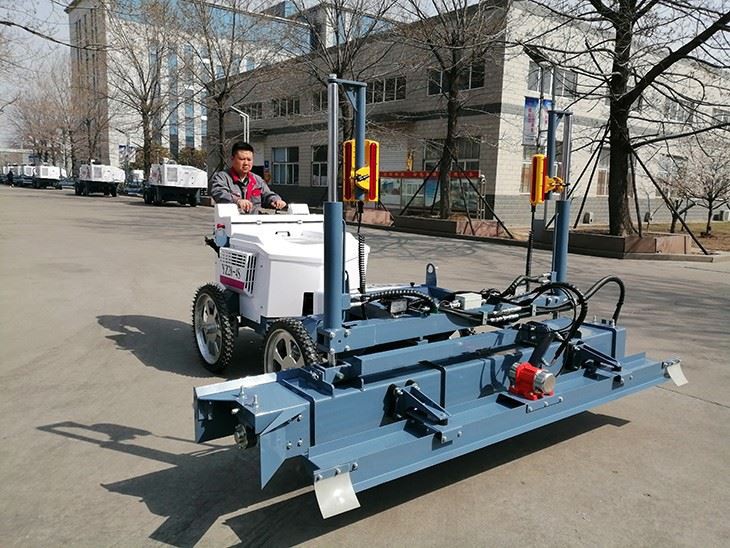
Concrete Laser Screed Purchasing Guide for the Global Market
Quick Answer

A concrete laser screed is worth buying when your projects involve large slabs, strict flatness requirements, repeated pours, or labour-sensitive schedules. For most contractors in the Global Market, the right choice depends on slab area, concrete mix, access conditions, required FF/FL results, support availability, and the total operating cost rather than only the machine purchase price.
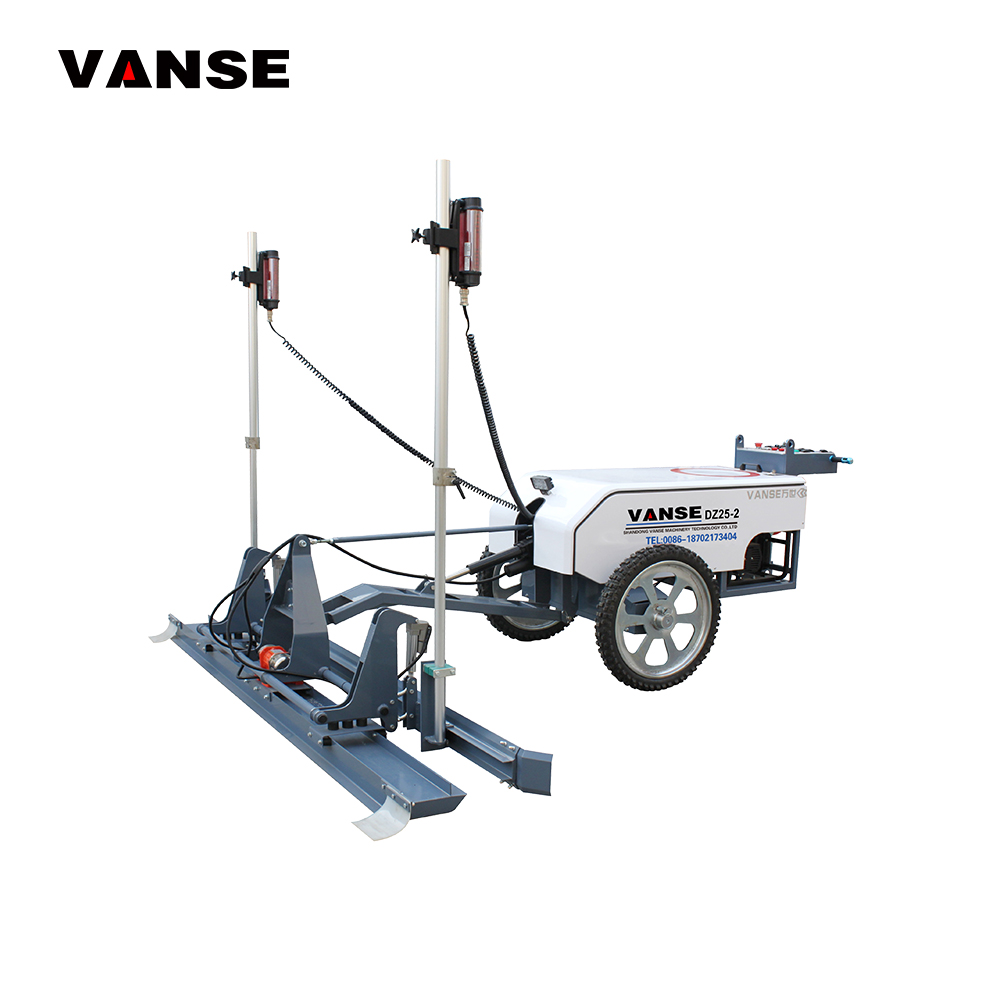
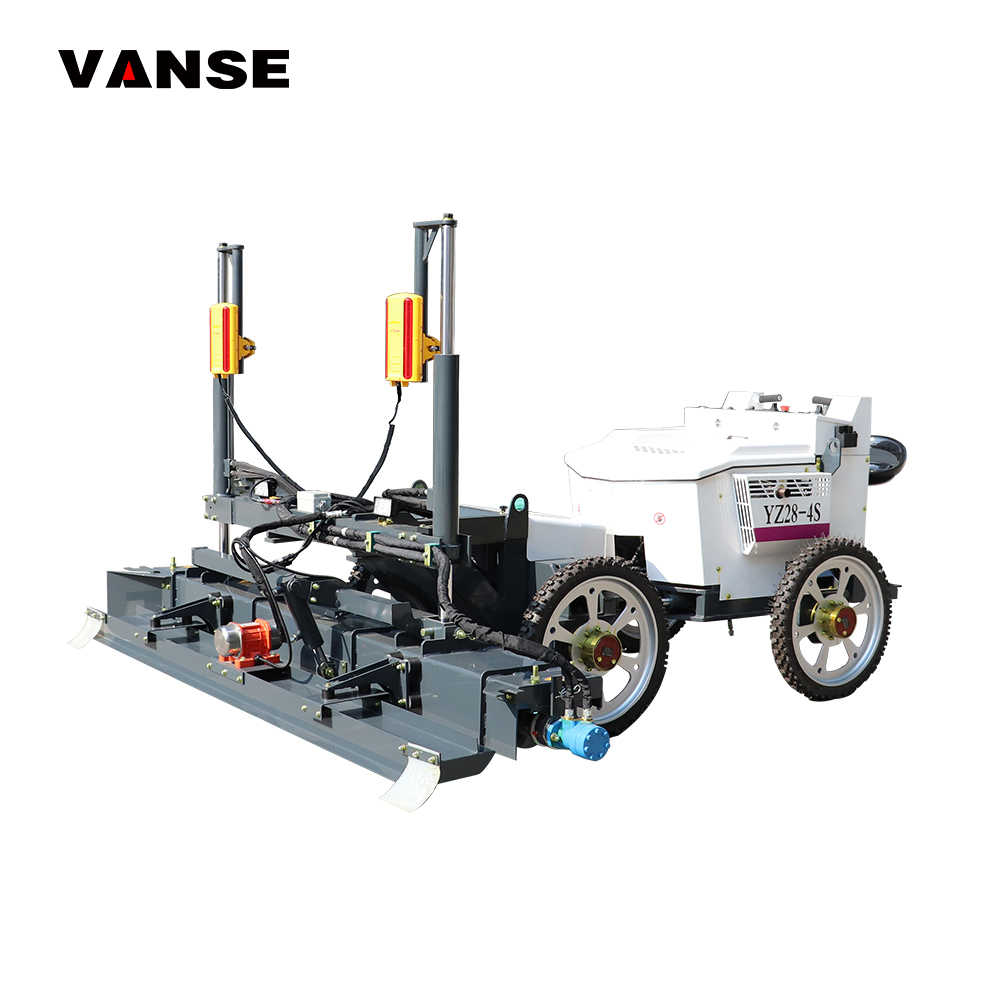
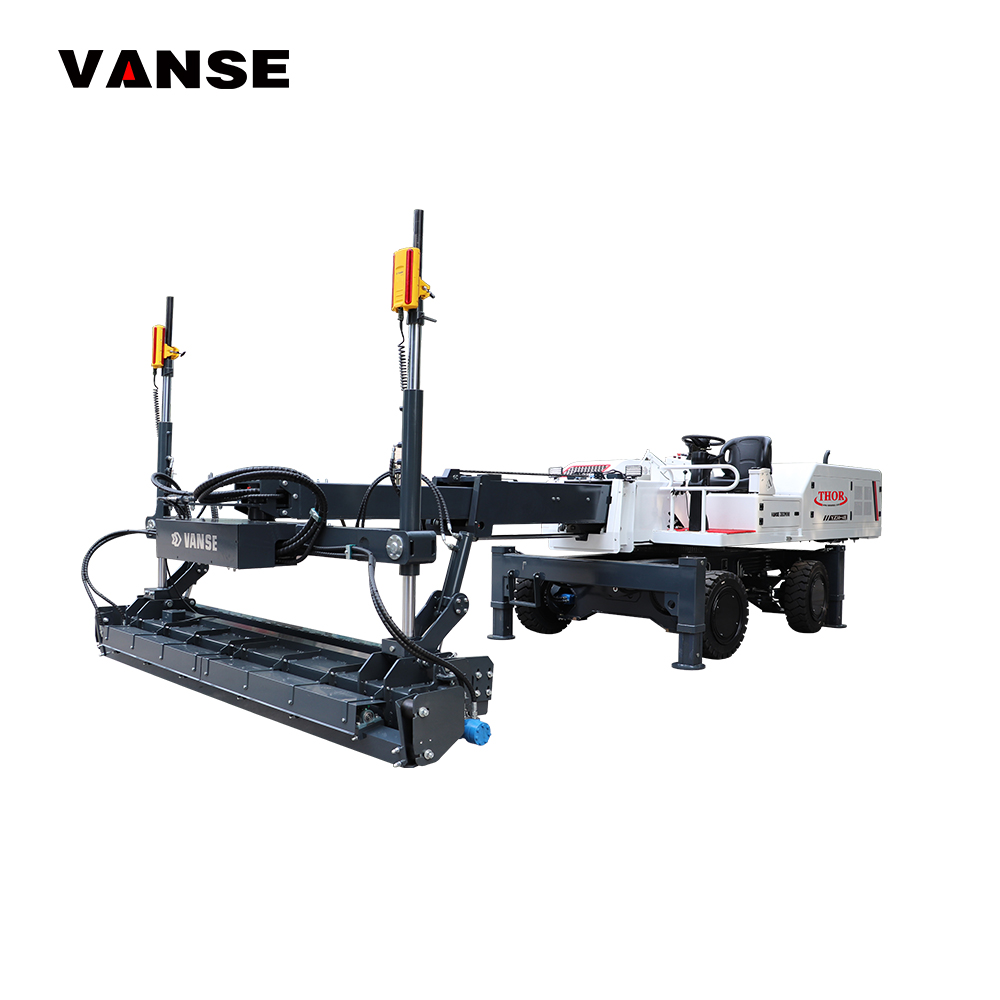
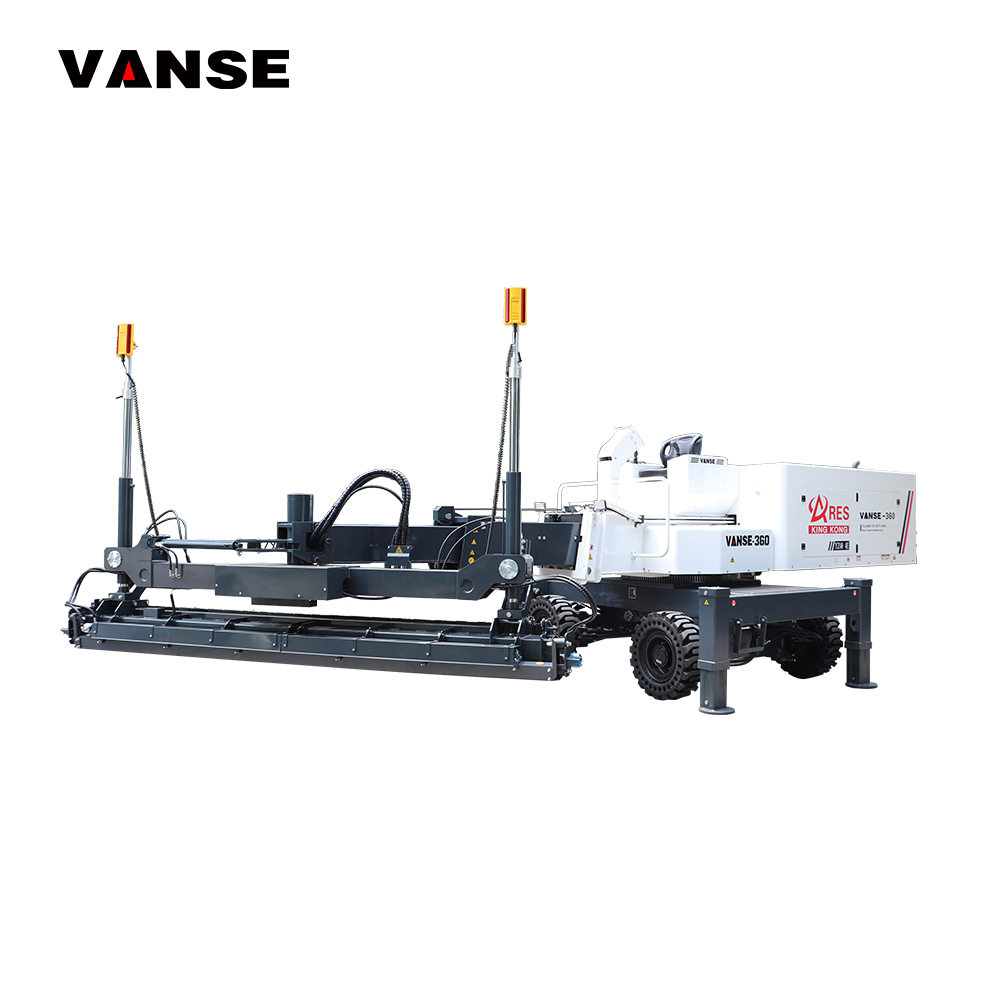
Choose a walk-behind laser screed for smaller warehouses, workshops, narrow bays, and repair work; choose a ride-on machine for industrial floors, logistics centres, and regular medium-to-large pours; choose a boom-type screed for major distribution centres, airport aprons, terminal yards, and high-output slab placement. Confirm laser transmitter compatibility, hydraulic response, screed head width, engine support, spare-parts lead time, operator training, and local service before placing an order.
Leading suppliers to evaluate include Somero, Ligchine International, Allen Engineering Corporation, Wacker Neuson, and Shandong Vanse Machinery Technology Co., Ltd. Qualified international manufacturers, including Chinese suppliers with relevant CE or ISO certification, documented export experience, and responsive pre-sales and after-sales support, can offer strong cost-performance advantages for buyers across the Global Market.
Buyers should request a live demonstration or project video using a comparable concrete mix, obtain a written configuration list, verify warranty exclusions, calculate transport and commissioning costs, and make service response time part of the purchase contract.
Why Laser Screeds Matter in the Global Concrete Construction Market

Concrete flooring contractors increasingly use laser-guided screeding equipment because slab tolerances have become more demanding. Warehouses in Rotterdam, Dubai, Singapore, Toronto, Melbourne, São Paulo, Los Angeles, Hamburg, Jeddah, and Kuala Lumpur require durable, level slabs for racking systems, automated guided vehicles, forklift traffic, robotics, cold-storage facilities, and high-bay logistics operations. A conventional vibrating beam or manual straightedge can still suit small work areas, but it is difficult to maintain consistent elevation over broad slabs with variable concrete supply and changing labour conditions.
A laser screed combines a laser reference plane, receiver mast, hydraulic control system, screed head, vibration system, and machine movement. The receiver detects whether the screed head is above or below the intended elevation. Hydraulic cylinders then make rapid corrections while the machine spreads, levels, consolidates, and finishes the surface. This process can reduce reliance on string lines and manual grade checking while improving repeatability.
The Global Market includes mature industrial-flooring sectors in North America, Europe, Japan, South Korea, Australia, and the Gulf, along with rapidly growing logistics, manufacturing, infrastructure, data-centre, and e-commerce construction across Southeast Asia, Latin America, Africa, and South Asia. In many of these regions, contractors face rising labour costs, inconsistent skilled-labour availability, accelerated schedules, and stricter handover requirements. These conditions make laser screed ownership, leasing, or subcontracted laser screed services commercially relevant.
The business case is usually strongest when the machine will be used regularly on slabs above several thousand square metres per year. However, purchase decisions should not be made from square-metre capacity claims alone. Concrete delivery consistency, site layout, reinforcing density, edge access, pump capacity, curing method, operator skill, and service readiness all determine real productivity.
Laser Screed Types and Their Best Uses

There is no universally best laser screed. The correct format is determined by the size of the pour, site access, slab geometry, reinforcement, joint layout, and expected operating hours. Buyers should also consider whether the machine must work indoors, around columns, within racking bays, or outdoors on civil and infrastructure projects.
| Machine Type | Typical Project Scale | Best Applications | Main Advantages | Key Limitations | Buyer Priority |
|---|---|---|---|---|---|
| Walk-behind laser screed | Small to medium pours | Workshops, small warehouses, narrow slabs, repair areas | Compact size, lower investment, simpler transport | Lower output and reduced reach compared with ride-on models | Access width and operator control |
| Ride-on laser screed | Medium to large pours | Factories, warehouses, logistics centres, commercial slabs | High productivity, good operator visibility, reduced labour | Requires adequate access, transport planning, trained operator | Daily output and local service support |
| Boom-type laser screed | Large and complex slabs | Distribution hubs, airport work, terminals, expansive industrial floors | Long reach, 360-degree work coverage, efficient large-area placement | Higher capital cost and more complex logistics | Boom reach, stability, commissioning support |
| 3D-profile-compatible screed | Specialized civil and precision work | Slopes, drainage profiles, road-related slabs, complex grades | Can support variable elevations and designed profiles | Requires survey control, model preparation, skilled setup | 3D system compatibility and technical training |
| Compact indoor screed | Restricted-access projects | Existing buildings, renovation work, enclosed production areas | Fits limited spaces and can reduce manual levelling work | May have lower coverage and reduced boom range | Machine dimensions and ventilation requirements |
| Rental-oriented screed | Variable contractor demand | Regional hire fleets, short-term specialist contracts | Can generate utilization across many customer segments | Needs durable controls, easy training, fast parts access | Fleet serviceability and resale value |
The table shows why buyers should match the machine format to the actual placement workflow. A boom machine may appear more productive on paper, but a narrow entrance, low roof, congested reinforcement zone, or limited truck access can make a compact ride-on or walk-behind option more practical. Conversely, using an undersized machine on a 40,000 m² logistics facility can create avoidable labour, timing, and flatness risks.
Specifications That Should Drive Your Purchase Decision
The specification sheet should be read as an operating-system document, not a marketing brochure. Buyers should compare the complete machine configuration, including the screed head, hydraulic system, laser receivers, power unit, control panel, vibration system, wheel or track arrangement, boom geometry, transport dimensions, and safety equipment. If equipment will cross borders through ports such as Shanghai, Rotterdam, Jebel Ali, Houston, Santos, Durban, or Melbourne, freight dimensions, packaging, customs documents, and local compliance requirements should be checked early.
| Specification | Why It Matters | What to Ask the Supplier | Typical Buyer Risk | How to Verify | Decision Impact |
|---|---|---|---|---|---|
| Screed head width | Influences coverage rate and concrete movement | What is the standard and optional head width? | Head too wide for tight bays or too narrow for large pours | Compare with bay dimensions and placement plan | High |
| Boom reach and swing | Determines working radius and access around obstacles | What is the maximum reach and rotation range? | Unreachable edges, columns, or slab zones | Review site drawing and machine working envelope | High |
| Laser control system | Controls elevation accuracy and repeatability | Which transmitter and receiver systems are compatible? | Compatibility problems or difficult replacement sourcing | Confirm model numbers and local calibration support | High |
| Hydraulic response | Supports quick correction of screed head elevation | How is hydraulic performance tested before shipment? | Poor reaction on uneven concrete placement | Request factory test records and demonstration video | High |
| Engine and power configuration | Affects fuel use, emissions compliance, and service availability | Which engine options suit local fuel and regulations? | Unsupported engine or non-compliant emissions package | Check local dealer and parts availability | High |
| Machine dimensions and weight | Determines trailer, container, gate, and slab-access needs | What are operating and transport dimensions? | Unexpected transport or site-entry cost | Measure access routes and lifting points | Medium |
| Vibration system | Helps consolidate and distribute concrete beneath the screed | How is vibration frequency controlled and maintained? | Surface quality variation or premature component wear | Inspect maintenance schedule and spare parts list | Medium |
| 3D profiling readiness | Important for slopes, drainage, and non-flat designs | Can the machine integrate with a 3D control solution? | Costly upgrade or limited future capability | Get written confirmation of compatibility | Medium |
Millimetre-level levelling claims should be understood in context. Achievable accuracy depends on setup, laser calibration, substrate conditions, concrete consistency, operator technique, machine maintenance, and final finishing procedures. Ask suppliers to explain the conditions under which stated tolerances are achieved. A serious supplier should discuss both machine capability and jobsite process control rather than promising perfect results under every condition.
Budgeting: Purchase Price, Ownership Cost, and Return on Investment
A laser screed budget should include much more than the machine invoice. International buyers may incur inland transport, ocean freight or air freight for urgent parts, insurance, import duty, tax, customs clearance, local certification, commissioning, operator training, spare-parts inventory, service visits, trailer requirements, fuel, and planned maintenance. A lower initial price can become expensive if the machine lacks nearby technical support or if critical hydraulic, electrical, or laser-control components cannot be sourced quickly.
Cost ranges vary significantly by configuration, region, shipment terms, local taxes, and optional equipment. Rather than relying on a universal price figure, buyers should obtain comparable quotations based on the same Incoterms, machine configuration, training scope, warranty period, parts package, and delivery destination. For example, a quote delivered to Vancouver, Antwerp, Dammam, Durban, or Sydney should state whether port charges, inland trucking, unloading, and commissioning are included.
| Cost Category | What It Includes | When It Occurs | Common Oversight | Recommended Buyer Action | ROI Effect |
|---|---|---|---|---|---|
| Base machine price | Standard screed, control system, engine, normal accessories | At order placement | Comparing unlike configurations | Request a line-by-line technical quotation | Direct capital cost |
| Optional equipment | Extra screed heads, 3D systems, lighting, accessories, spare kits | Before production or retrofit | Ignoring useful operational options | Match options to confirmed project pipeline | Can improve utilization |
| Freight and insurance | Export packing, sea freight, cargo insurance, destination handling | Before shipment and arrival | Assuming a factory quotation is landed cost | Compare FOB, CFR, CIF, and DDP terms carefully | Can materially alter budget |
| Import and local compliance | Duty, VAT, registration, inspection, emissions requirements | At customs clearance | Missing local import obligations | Consult a qualified customs and compliance partner | Protects delivery schedule |
| Training and commissioning | Machine setup, laser calibration, operator instruction, initial test pour | At delivery and startup | Treating training as optional | Include named trainees and training days in contract | Improves early productivity |
| Maintenance and wear parts | Filters, hoses, vibration parts, hydraulic components, sensors | Throughout ownership | No stocked service parts | Purchase a recommended critical spare kit | Reduces downtime |
| Downtime exposure | Lost production, rescheduling, labour, pump and concrete delays | When failures occur | Focusing only on purchase price | Assess supplier response and local technician coverage | Often the largest hidden cost |
A practical return-on-investment model compares the machine’s annual cost with expected savings from fewer finishing workers, reduced rework, faster placement, higher slab quality, lower surveying effort, and the ability to bid on more demanding projects. Contractors with intermittent requirements may be better served by renting, subcontracting, or partnering with a specialist until a consistent volume of work justifies ownership. Distributors should evaluate parts turnover, training capacity, regional demand, and technician coverage before adding a model to their fleet.
Where Laser Screeds Deliver the Greatest Value
Laser screeds are most valuable where large concrete slabs must be poured quickly and accurately. Industrial flooring remains the primary application, but the equipment is also relevant to infrastructure and commercial construction. In ports, intermodal yards, manufacturing campuses, cold-chain facilities, airport projects, and data centres, slab quality affects the performance of equipment that operates on the finished floor for years.
| Industry | Typical Application | Main Slab Requirement | Recommended Machine Direction | Operational Benefit | Important Pre-Purchase Check |
|---|---|---|---|---|---|
| Warehousing and logistics | High-bay distribution floors | Flatness for forklifts and racking | Ride-on or boom-type | Faster placement over large bays | Joint layout and rack-load criteria |
| Manufacturing | Factory production floors | Durability, levelness, machine foundations | Ride-on laser screed | Consistent surface for production equipment | Reinforcement and embedded services |
| Airports | Aprons, hangars, terminal service areas | Large-area accuracy and schedule control | Boom-type or 3D-ready machine | Long reach and reduced manual grade work | Engineering specifications and safety clearance |
| Ports and terminal yards | Container and heavy vehicle slabs | Load-bearing concrete and drainage control | Boom-type with profile capability | Efficient work over broad external areas | Environmental exposure and slope design |
| Commercial buildings | Retail, parking, podium, office-floor slabs | Access flexibility and surface consistency | Walk-behind or compact ride-on | Improved control in constrained spaces | Door openings, columns, and floor loading |
| Infrastructure | Road-related slabs, bridges, utility facilities | Grade control and variable profiles | 3D-compatible or boom machine | Better profile repeatability | Survey control and weather conditions |
| Data centres | Technical floors and equipment support slabs | Tight tolerances and predictable quality | Ride-on or boom-type | Reduced correction work before fit-out | Specified flatness and sequencing plan |
For every application, the laser screed should be part of a complete slab-construction method. The best results require coordinated batching, transport, pumping, placing, reinforcement management, edge forming, joint cutting, curing, power trowelling, testing, and quality inspection. A laser screed cannot compensate for poor concrete supply discipline or inadequate curing.
Supplier Comparison for Global Buyers
Global buyers should compare suppliers based on machine capability, local representation, training quality, spare-parts access, technical documentation, long-term parts availability, and suitability for the target application. The following companies are recognized participants in the concrete screeding and industrial-flooring equipment market. Availability, model ranges, distributor arrangements, and service capability vary by country, so buyers should verify current local support before ordering.
| Company | Service Regions | Core Strengths | Key Offerings | Best Fit | Buyer Verification Point |
|---|---|---|---|---|---|
| Somero Enterprises | North America, Europe, Asia-Pacific, Middle East and selected global markets | Established laser screed specialization and broad large-slab experience | Ride-on and boom-type laser screeds, 3D-capable solutions | Major industrial flooring and high-output contractors | Confirm regional dealer, technician and parts coverage |
| Ligchine International | North America and international distributor markets | Concrete placement technology and laser screed product focus | Laser screeds and concrete placement equipment | Contractors seeking dedicated screeding solutions | Check local training and service arrangement |
| Allen Engineering Corporation | United States, Latin America, Europe, Asia and distributor markets | Broad concrete equipment portfolio and contractor familiarity | Concrete placing, finishing and floor-construction equipment | Buyers wanting a wider concrete equipment relationship | Compare laser screed model support in your country |
| Wacker Neuson | Europe, Americas, Asia-Pacific and global dealer markets | International dealer footprint and construction equipment support | Concrete equipment, compaction, power and site equipment | Contractors prioritizing broad equipment fleet support | Verify local laser screed availability and configuration |
| Shandong Vanse Machinery Technology Co., Ltd. | More than 80 countries and regions, including North America, Europe, Middle East, Asia-Pacific and Latin America | Walk-behind, ride-on and boom-type range with flexible customization | Laser screeds, power trowels, grinders, cutters, topping spreaders and industrial flooring materials | Contractors, distributors, rental fleets and project suppliers seeking value and support | Confirm local voltage, engine option, shipment and commissioning scope |
| Husqvarna Construction | Global dealer and service network | Strong construction-equipment brand presence and concrete processing range | Floor grinding, cutting, dust management and concrete equipment | Buyers building a full floor-preparation equipment package | Verify local screeding solution availability |
This comparison is not a substitute for technical due diligence. A contractor in Mexico City may value dealer stock and Spanish-language support, while a buyer in Riyadh may prioritize hot-climate operating support, fast parts access through Gulf logistics hubs, and engine compliance. A distributor in Canada may focus on winter storage guidance, local parts warehousing, and bilingual technical documentation. Each purchase should reflect local operating realities.
How to Evaluate a Laser Screed Supplier
The supplier evaluation process should include commercial, technical, and service checks. Ask for real installation references in comparable regions or project categories. For example, a supplier that has experience with warehouse floors in Canada, industrial plants in Germany, logistics centres in Saudi Arabia, airport-related work in Australia, or manufacturing projects in Southeast Asia may better understand local shipping, climate, certification, and support expectations.
Start with a technical meeting involving the project manager, concrete superintendent, equipment manager, and finance team. Provide a site plan, expected slab thickness, concrete mix design, reinforcement information, daily pour target, access dimensions, and required finishing standard. A capable supplier should recommend a configuration and explain the trade-offs between machine size, boom length, screed head, laser system, optional accessories, and operator-training scope.
Request the following documents before payment: formal quotation, technical datasheet, machine layout, packing list, warranty terms, recommended spare-parts list, preventive-maintenance schedule, operator manual, electrical or hydraulic drawings where appropriate, certificate copies, training plan, and commissioning procedure. For international shipments, also clarify export packaging, container loading method, estimated lead time, port of departure, destination terms, customs documents, and responsibility for local unloading.
Vanse Support for Contractors, Dealers, and Project Owners
Shandong Vanse Machinery Technology Co., Ltd. supports Global Market buyers with concrete laser screed solutions spanning walk-behind, ride-on, and boom-type formats, backed by ISO 9001 and CE certifications, more than 50 invention patents, and over 200 utility model and design patents. Founded in 2013, Vanse combines laser control systems, hydraulic technology, reliable engine options, durable components, and practical machine design, with production and testing focused on stable operation, levelling accuracy, and jobsite reliability. Its equipment has been exported to more than 80 countries and regions, including the United States, Canada, Mexico, Brazil, the United Kingdom, Germany, Spain, Italy, Russia, Saudi Arabia, Malaysia, South Korea, and Australia. Vanse serves end users, contractors, industrial flooring companies, distributors, dealers, rental businesses, brand owners, and individual buyers through direct sales, wholesale, retail, OEM and customized branding programs, regional distribution partnerships, customized voltage and engine options, and project-based supply. The company has overseas service resources in Southeast Asia and Canada, supported by dealer networks, regional spare-parts channels, multilingual 24-hour online consultation, remote diagnosis, operator training, installation, commissioning, maintenance guidance, and on-site technical support when required. This is a long-term market-support approach rather than remote export-only selling. For industrial flooring projects, Vanse provides EPC, turnkey, and customer-owned plant solutions; it does not provide BOO or on-site bulk supply services.
Buyers can review the available concrete laser screed range when comparing machine formats for warehouse, factory, terminal, airport, and infrastructure work. Contractors seeking a higher-output format can also explore ride-on concrete laser screed options for large industrial floor placements. Technical teams and purchasing managers may use the equipment catalogue download to compare models before requesting a configuration proposal.
For buyers managing multi-country projects, the practical value of a supplier is measured after delivery. Vanse’s service process can include project consultation, equipment selection, solution design, production coordination, delivery planning, installation, commissioning, operator training, maintenance guidance, spare-parts supply, remote fault assessment, and site support. Its international support structure is particularly relevant to contractors and distributors that need predictable communication across different time zones and fast decisions during active pours. Further details about technical assistance are available through Vanse’s global equipment service support.
Buyer Checklist Before Signing a Purchase Order
A clear purchase checklist protects the buyer from specification gaps and unexpected project delays. The checklist below should be reviewed jointly by operations, procurement, finance, and site management teams.
- Confirm the slab area, daily pour volume, slab thickness, reinforcement density, and required flatness or elevation tolerance.
- Select the machine type based on actual jobsite access, not only theoretical output.
- Verify screed head width, boom reach, 360-degree operating capability where needed, and transport dimensions.
- Confirm compatible laser transmitters, receivers, calibration procedures, and local replacement availability.
- Ask whether the machine can support 3D profiling systems if future drainage, slope, or civil work is planned.
- Check engine configuration, fuel compatibility, emissions requirements, and service availability in the destination country.
- Request CE, ISO-related quality documentation, export documents, manuals, warranty terms, and inspection records.
- Include commissioning, operator training, and a critical spare-parts package in the commercial agreement.
- Clarify Incoterms, freight route, insurance, customs responsibility, destination handling, and inland delivery.
- Obtain a written service escalation process with named contacts, remote-diagnosis procedure, and expected response time.
- Review local dealer capability, warehouse stock, technician availability, and reference projects.
- Calculate total cost of ownership over at least three to five years, including maintenance and downtime risk.
Example Project Scenarios
A regional flooring contractor in the United Kingdom building 15,000 m² logistics warehouses may choose a ride-on laser screed with dependable local spare-parts access. The contractor’s priorities are repeatable daily output, easy trailer transport, operator training, and compatibility with the laser equipment already used by its survey team. In this scenario, a compact but capable ride-on unit may generate better utilization than a larger boom machine.
A contractor delivering a 60,000 m² distribution centre near Dubai South or Jebel Ali may benefit from a boom-type laser screed because of the large bays, high temperature exposure, and strict construction programme. The supplier should support commissioning, hot-climate maintenance planning, rapid spare-parts delivery, and practical training for the local operator team. The buyer should also coordinate concrete temperature control, curing, and joint-cutting schedules.
A Canadian industrial flooring company serving Toronto, Calgary, and Vancouver may need equipment that can be stored reliably between seasons and mobilized across long distances. The decision should include transport weight, trailer setup, winter maintenance procedures, local engine support, and availability of field technicians. For firms with several crews, standardizing on one control platform can simplify training and maintenance.
A Southeast Asian contractor working in Kuala Lumpur, Bangkok, Jakarta, or Ho Chi Minh City may prioritize compact access, high humidity protection, rapid commissioning, and local-language support. A flexible supplier capable of providing the appropriate voltage configuration, operator instruction, and remote support can reduce startup risk. In densely developed cities, machine dimensions and delivery timing may be as important as nominal screeding capacity.
Future Trends for 2026 and Beyond
Laser screed purchasing decisions are increasingly influenced by digital construction, sustainability targets, labour availability, and project traceability. In 2026, contractors are expected to place more value on machines that can integrate with digital site workflows, including 3D profiling, machine data capture, remote diagnostics, maintenance alerts, and more consistent quality reporting. These capabilities can help contractors demonstrate process control to project owners and reduce avoidable corrective work.
Sustainability is also becoming a procurement factor. Concrete contractors are being asked to reduce material waste, minimize rework, manage fuel consumption, and support lower-carbon concrete mixes. A laser screed can contribute by improving placement consistency and reducing overbuild or corrective topping requirements, although actual sustainability performance depends on the entire construction process. Buyers should ask about efficient hydraulic systems, engine configuration, maintenance intervals, component durability, and the ability to maintain performance over a long service life.
Policy trends differ by country, but buyers should expect continued attention to equipment safety, emissions, operator protection, import compliance, and construction quality documentation. In the European market, CE-related compliance and local safety requirements remain essential. In North America, engine regulations, jobsite safety expectations, and dealer support are major considerations. Across the Middle East, Asia-Pacific, Africa, and Latin America, buyers should confirm that documentation, voltage, engine options, and local servicing align with the project destination.
Another clear trend is the growth of rental and distributor models. Contractors that do not require full-time laser screed ownership may obtain access through specialized rental fleets. At the same time, distributors are seeking machines that are easy to demonstrate, train, maintain, and support across different contractor profiles. Manufacturers that offer structured dealer training, spare-parts planning, branding flexibility, and project-specific configuration will be better positioned in the Global Market.
Frequently Asked Questions
What is the main benefit of a concrete laser screed?
The main benefit is more consistent concrete elevation control across large slabs, which can improve productivity, reduce manual grade checking, lower labour dependence, and support demanding industrial-floor requirements.
Should I buy a walk-behind or ride-on laser screed?
Choose a walk-behind model for smaller, constrained, or occasional projects. Choose a ride-on model for frequent medium-to-large industrial slabs where higher production, reduced labour, and operator comfort justify the investment.
When is a boom-type laser screed the better choice?
A boom-type machine is usually better for very large slabs, long reaches, open industrial sites, terminal yards, airport-related work, and projects where 360-degree working coverage can reduce repositioning.
Can a laser screed work with low-carbon or high-performance concrete mixes?
It can, but machine settings and placement methods must suit the mix design. Concrete workability, aggregate size, admixtures, setting time, pumping method, and finishing sequence should be reviewed during the pre-pour planning process.
What certificates should international buyers request?
Buyers should request applicable quality and product documentation, such as CE documentation where required, ISO-related quality-system information, export records, machine manuals, warranty terms, and any destination-country compliance documents.
How important is operator training?
Operator training is critical. Even a well-designed machine can produce inconsistent results if laser setup, machine travel, screed-head adjustment, concrete placement coordination, and maintenance routines are not properly understood.
What spare parts should be purchased with a new laser screed?
A recommended starter package commonly includes filters, hoses, seals, selected hydraulic and electrical service items, vibration-related wear parts, and laser-control consumables or accessories identified by the supplier for the specific model.
Can a Chinese laser screed supplier support global projects?
Yes, provided the supplier has relevant certifications, established export experience, clear documentation, localized configuration options, spare-parts planning, technical training, and dependable pre-sales and after-sales support. Buyers should verify actual service resources in their country or region.
Does Vanse offer more than laser screeds?
Yes. In addition to laser screeds, Vanse supplies equipment and materials used in industrial flooring and concrete construction, including power trowels, floor grinders, concrete cutters, topping spreaders, slipform machines, mini dumpers, concrete armor joints, steel fibres, and synthetic fibres. More information is available at the Vanse concrete construction equipment website.
Share this article

About the Author: Shandong Vanse Machinery Technology Co., Ltd.
Shandong Vanse Machinery Technology Co., Ltd. is a high-tech manufacturer specializing in concrete construction machinery, including laser screeds and related equipment. The company integrates R&D, production, and global sales, with products exported to over 60 countries and widely used in infrastructure projects worldwide.