Insight blog
Global Market Guide to Choosing Concrete Screed Vendors
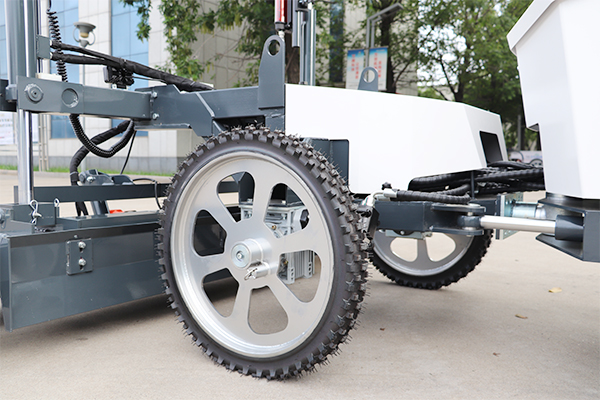
How to Choose a Concrete Laser Screed Vendor in the Global Market
Quick Answer

For buyers in the Global market, the best concrete laser screed vendor is not necessarily the supplier offering the lowest machine price. Choose a supplier that can match the screed type to your slab size, concrete mix, floor-flatness target, operator skill level, local fuel or voltage requirements, and after-sales capacity. Leading options to evaluate include Somero Enterprises, Ligchine International, Allen Engineering, Masterscreed, Shandong Vanse Machinery Technology, and regional concrete-equipment distributors serving your project location.
For large warehouses, logistics parks, factory floors, airport yards, and industrial slabs, prioritize ride-on or boom-type laser screeds with verified leveling performance, rapid spare-parts access, operator training, and remote diagnostics. For smaller commercial floors and restricted sites, walk-behind systems may provide a more practical return on investment.
Qualified international manufacturers, including Chinese concrete machinery companies with applicable CE or local certifications, proven export experience, and responsive pre-sales and after-sales support, should also be considered. They can offer strong cost-performance value, especially for contractors, rental fleets, distributors, and project owners seeking flexible specifications and long-term parts support.
Global Market Overview for Laser-Guided Concrete Equipment

The Global market for laser-guided concrete placement equipment is shaped by the continued construction of logistics centers, manufacturing campuses, data-related infrastructure, cold-storage facilities, airport terminals, container yards, commercial developments, and transport corridors. These projects increasingly demand flatter slabs, faster placement cycles, reduced labor dependence, and better traceability of construction quality. A concrete laser screed helps contractors meet these requirements by controlling elevation through laser receivers, hydraulic leveling systems, screed heads, and automated machine movement.
Major buying activity is concentrated around construction and distribution hubs such as Rotterdam, Hamburg, Antwerp, Dubai, Jeddah, Singapore, Port Klang, Los Angeles, Houston, Toronto, São Paulo, Sydney, Melbourne, London, Frankfurt, Warsaw, Mexico City, and industrial cities across Southeast Asia. Although regional standards, import duties, engine preferences, and service expectations differ, buyers consistently evaluate the same business risks: slab-quality failure, machine downtime, shortage of skilled finishers, delayed parts, and insufficient commissioning support.
A laser screed is often purchased after a contractor has experienced uneven floor elevations, excessive manual raking, high labor costs, or rework claims on a conventional concrete placement job. In high-bay warehousing, automated storage systems and narrow-aisle forklifts make floor tolerances particularly important. In industrial plants, slab accuracy can affect equipment installation, drainage, rack alignment, machine vibration, and long-term maintenance. The purchase decision should therefore be based on total installed project value, not only on the factory quotation.
The right supplier should understand whether the buyer needs a standalone machine, a complete placement package, project-based support, rental-fleet standardization, dealership inventory, or a customized equipment program. The supplier should also be able to explain machine productivity in realistic conditions, accounting for access, reinforcement, vapor barriers, edge work, concrete supply continuity, pump availability, weather, and the finishing crew’s capacity.
Leading Concrete Screed Vendors to Review

The following companies are established names that Global market buyers may include in an initial sourcing review. Product availability, distributor territories, current model ranges, and local technical support should always be confirmed directly with the manufacturer or authorized dealer before purchase.
| Company | Primary Service Regions | Core Strengths | Key Offerings | Best-Fit Buyer |
|---|---|---|---|---|
| Somero Enterprises | North America, Europe, Asia-Pacific, Middle East, and distributor-led global markets | Long-standing laser screed specialization, large-slab experience, broad contractor recognition | Ride-on and boom-type laser screeds, floor placement technology, training support | Major industrial flooring contractors and large slab specialists |
| Ligchine International | United States and international dealer-supported markets | Laser-guided screed systems designed for concrete contractors seeking productive slab placement | Ride-on laser screeds, concrete placement equipment, contractor-oriented configurations | Commercial and industrial concrete contractors |
| Allen Engineering | North America and global dealer markets | Broad concrete equipment portfolio and contractor familiarity | Laser screed solutions, power trowels, finishing equipment, related concrete tools | Contractors wanting integrated concrete equipment sourcing |
| Masterscreed | Europe, Middle East, Africa, and export markets | European concrete-flooring focus and laser screed experience | Laser screeds and equipment for industrial slab placement | Flooring specialists and regional equipment partners |
| Shandong Vanse Machinery Technology Co., Ltd. | Global market, including North America, South America, Europe, Asia, Middle East, Southeast Asia, and Canada | Broad concrete construction range, flexible customization, international export experience | Walk-behind, ride-on, and boom-type laser screeds; trowels; grinders; cutters; fibers; joints | Contractors, distributors, rental companies, and OEM partners |
| Shandong HIKING Machinery Co., Ltd. | China-based export markets and distributor-led international sales | Concrete construction machinery sourcing option for price-sensitive projects | Concrete laser screeds and associated floor construction equipment | Buyers comparing Chinese manufacturing alternatives |
This comparison is a starting point rather than a ranking. Somero is frequently evaluated on large, technically demanding slabs because of its established specialization. Ligchine and Allen Engineering are often considered by contractors seeking access to North American concrete-equipment ecosystems. Masterscreed can be relevant for buyers working through European and Middle Eastern equipment channels. Vanse and other export-capable Chinese manufacturers are increasingly evaluated where customized specifications, broader equipment bundles, dealer cooperation, and capital efficiency are important.
Laser Screed Types and Their Commercial Uses
Laser screed selection begins with the actual placement environment. A machine that performs well on an open 15,000-square-meter warehouse slab may be unsuitable for a small retail building, a corridor with multiple columns, or a road project requiring specialized profiles. Buyers should ask suppliers to identify the limits of each machine rather than simply promote the highest-capacity model.
| Machine Type | Typical Project Environment | Operational Advantages | Key Limitations | Supplier Questions to Ask |
|---|---|---|---|---|
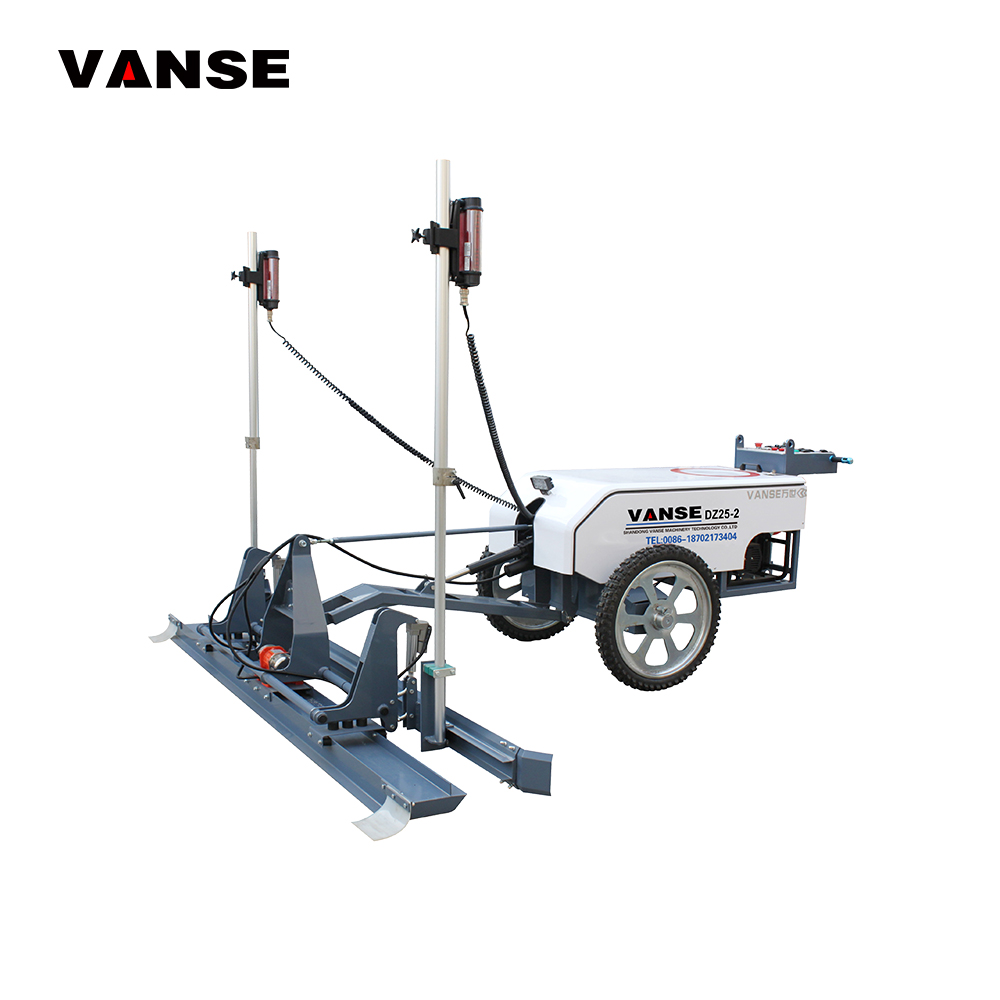
| Walk-behind laser screed | Small warehouses, commercial interiors, repair zones, compact foundations | Lower entry cost, easier transport, useful in confined areas | Lower output than ride-on or boom systems | What is the effective working width and real daily output? |
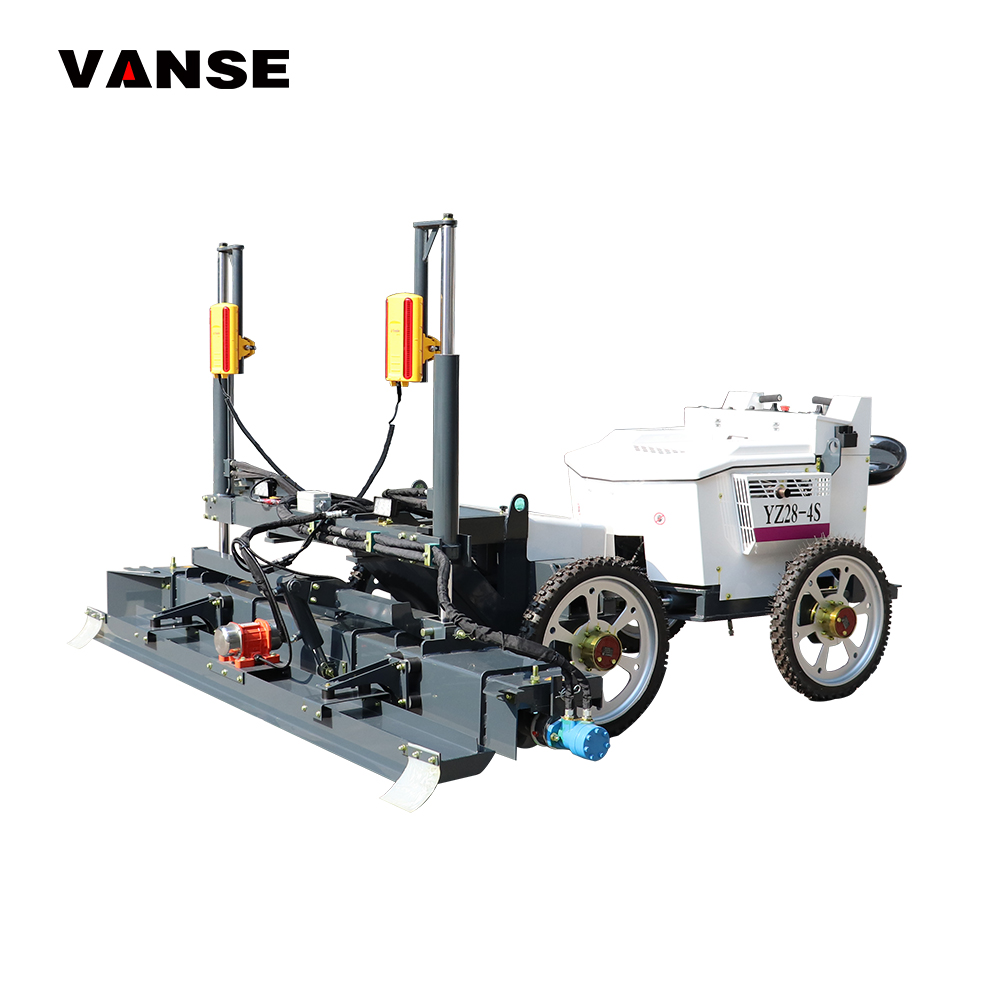
| Ride-on laser screed | Medium and large industrial floors, distribution centers, factories | High productivity, less manual raking, improved operator control | Requires access planning and trained operators | What are the turning radius, weight, and service intervals? |
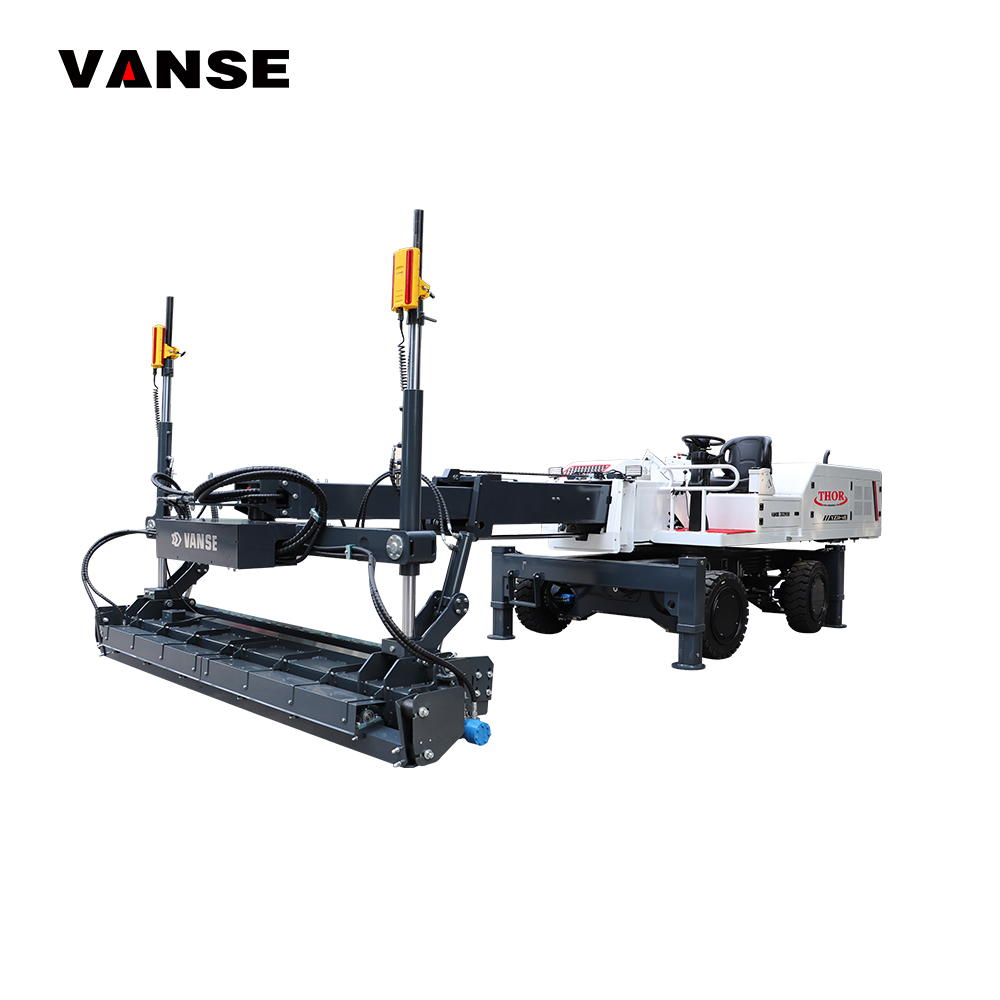
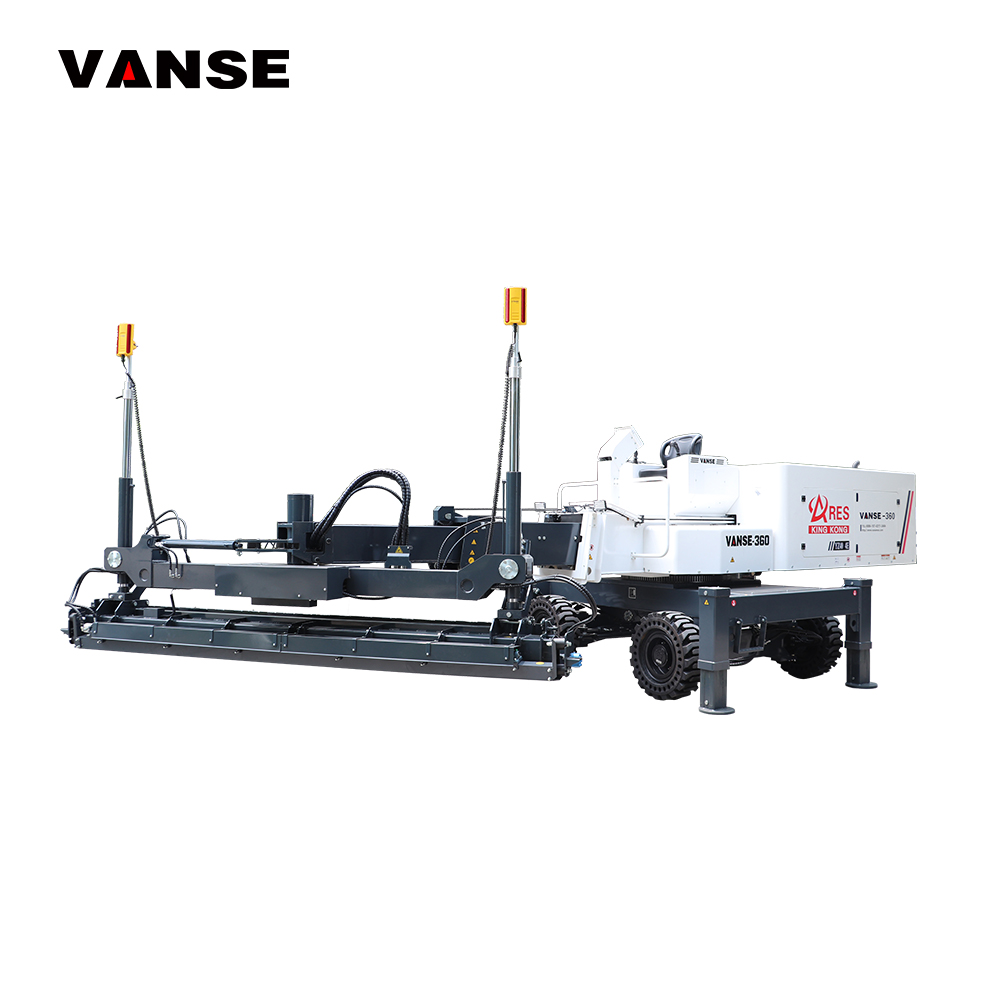
| Boom-type laser screed | Large open slabs, logistics facilities, terminal yards, airport structures | Wide operating reach, 360-degree working capability on selected models | Higher investment and more detailed site planning | What boom reach, slab coverage, and setup area are required? |
| 3D-profile-compatible screed | Slopes, drainage areas, roads, ramps, specialized pavement work | Supports complex elevation plans and profile control | Requires design data, calibration discipline, and trained personnel | Which 3D systems are compatible and how is data transferred? |
| Diesel-powered configuration | Outdoor sites, remote infrastructure works, ports, large open slabs | Fuel autonomy and strong suitability for remote construction | Must meet local emissions and fuel-quality requirements | Which engine configuration is supplied for my destination market? |
| Customized-voltage or engine configuration | Distributor programs, regulated markets, specialized project fleets | Better local compliance and easier integration with existing fleet policies | May affect lead time and spare-parts planning | Which components and documentation can be customized? |
Walk-behind machines are typically suitable where access is narrow, slab areas are limited, or budgets do not justify a larger unit. Ride-on systems are often the most practical choice for contractors moving from manual placement toward mechanized industrial floor construction. Boom-type systems are designed for projects where a large operating radius and rapid concrete placement can significantly reduce labor and schedule pressure. If drainage slopes, external pavements, ramps, or non-flat surfaces are involved, 3D compatibility may be more valuable than a standard two-dimensional laser setup.
When reviewing models, buyers should ask for usable output figures instead of relying on theoretical coverage. Real productivity depends on concrete delivery consistency, screed-head width, boom reach, reinforcement congestion, slab geometry, crew coordination, and finishing capacity. A laser screed can place and level concrete quickly, but the downstream finishing operation must keep pace.
How B2B Buyers Should Evaluate a Concrete Screed Vendor
A disciplined supplier evaluation process protects both the equipment investment and the construction schedule. The most successful buyers involve project managers, equipment managers, operators, procurement personnel, financial teams, and maintenance staff before making a final decision. This avoids a common problem: purchasing a technically impressive machine without confirming its suitability for local servicing, transport, concrete practices, or operator capability.
| Evaluation Area | What Good Evidence Looks Like | Warning Sign | Practical Buyer Action |
|---|---|---|---|
| Leveling accuracy | Defined machine specifications, demonstration results, calibration procedure, project references | Unverified accuracy claims without operating conditions | Request a documented demonstration or customer reference |
| Machine durability | Component specifications, welding standards, hydraulic protection, inspection records | No clear explanation of frame, hoses, cylinders, or wear parts | Review photos, factory process, and maintenance schedule |
| Engine and compliance | Destination-market engine options and compliance documentation | Generic engine descriptions or unclear import paperwork | Confirm regulations before issuing a purchase order |
| Parts availability | Regional stock, parts lists, lead-time commitment, serial-number tracking | Only factory-stock promises with no emergency plan | Order critical consumables and service kits with the machine |
| Operator training | On-site, video, remote, or dealer-led commissioning and training plan | Machine delivery with no operating curriculum | Include training deliverables in the contract |
| Technical response | Named service contacts, remote diagnosis process, multilingual support | Sales staff cannot explain fault response procedures | Test support responsiveness before purchase |
| Customization capability | Written confirmation for voltage, engine, branding, accessories, or regional adaptation | Verbal promises without technical drawings or specification sheets | Attach approved specifications to the purchase agreement |
| Total cost of ownership | Clear pricing for machine, freight, commissioning, consumables, and spare parts | Low initial quote with undefined post-delivery costs | Compare five-year ownership cost, not purchase price alone |
Leveling accuracy should be evaluated in the context of the slab specification. A supplier may state millimeter-level leveling capability, but the final slab result also depends on site preparation, laser setup, concrete consistency, crew practice, finishing method, and measurement protocol. Buyers should discuss the target flatness and levelness requirements with the screed supplier before committing to a model.
Service is equally important. A contractor may lose far more money from a stopped placement crew than from the price difference between two machines. Ask whether the supplier can provide spare parts by air freight, whether a dealer holds common service items, whether online video troubleshooting is available, and how quickly an engineer can be mobilized for a major issue. Buyers near large ports such as Dubai, Rotterdam, Singapore, Santos, Los Angeles, or Vancouver should also clarify Incoterms, destination handling, customs documentation, and local inland delivery arrangements.
Industries That Benefit from Laser Screeding
Laser screeding is most valuable where slab quality, repeatability, and construction speed directly affect operational performance. Industrial flooring contractors use it to reduce manual labor and to improve elevation control over wide pours. General contractors use it to manage schedule risk on large concrete packages. Equipment rental companies use it to provide specialized machinery to contractors who do not need to own a screed year-round.
| Industry | Typical Application | Main Project Requirement | Recommended Equipment Direction |
|---|---|---|---|
| Warehousing and logistics | High-bay warehouses, sorting centers, fulfillment facilities | Flat, durable floors for racking and forklift movement | Ride-on or boom-type laser screed |
| Manufacturing | Automotive, machinery, electronics, food production plants | Accurate levels for equipment and internal transport systems | Ride-on screed with suitable finishing package |
| Airports and ports | Terminal yards, hangars, apron support areas, container facilities | High-output placement and large-area coverage | Boom-type screed and 3D capability where required |
| Commercial construction | Retail floors, malls, offices, parking structures | Efficient placement around columns and building constraints | Walk-behind or compact ride-on system |
| Infrastructure | Road works, bridges, ramps, utility platforms | Profile control, slope management, durable concrete placement | 3D-compatible screed where geometry demands it |
| Cold storage and food logistics | Temperature-controlled warehouses and distribution hubs | Stable floors, joint coordination, disciplined construction sequence | Ride-on screed with planned joint and finishing support |
| Data and technology facilities | Equipment rooms, service areas, supporting structures | Reliable elevation control and project schedule coordination | Machine chosen to match access and specification requirements |
For logistics and warehouse projects, laser screeds are often combined with concrete power trowels, joint systems, floor grinders, curing strategies, and fiber reinforcement planning. This integrated approach matters because floor performance is influenced by more than one machine. The concrete mix, slab thickness, reinforcement, joint layout, curing, saw cutting, and traffic commissioning must work together.
Project Applications and Practical Procurement Scenarios
A contractor building a 30,000-square-meter distribution center near a major freight corridor may need a boom-type screed because the slab can be poured in broad, open zones. The supplier should assess daily pour volume, batching-plant output, truck circulation, access for the boom, finishing crew capacity, and the required floor specification. A machine purchase should be paired with operator training before the first major pour, not after problems occur.
A regional flooring contractor working on several 2,000- to 8,000-square-meter factory floors may prefer a ride-on model. This configuration can provide meaningful labor savings while remaining easier to transport between cities and customer sites. The supplier should provide a loading plan, service intervals, spare-parts package, receiver calibration instructions, and a clear list of operator checks before each shift.
A distributor in the Middle East, Southeast Asia, Latin America, or Africa may need a different commercial model. Rather than buying one machine for a single project, the distributor may require branded inventory, local voltage adaptation, selected engine options, sales training, marketing materials, technical manuals, fast-moving parts, and regional dealership protection. In this situation, the supplier’s ability to support a long-term channel is more important than a one-time export transaction.
For a public infrastructure project with ramps, drainage zones, or variable elevations, the buyer should clarify whether a standard laser system is sufficient. If the project requires digital profile control, 3D compatibility, survey-data handling, and operator training become essential. The supplier should explain who creates the design file, who validates the setup, and how the site team checks finished elevations.
Illustrative Case Scenarios for Buyer Planning
These scenarios show how procurement decisions can be linked to operational needs. They are planning examples rather than claims about a particular named project.
Large Logistics Floor Near a Container Port
A contractor constructing a logistics warehouse near Port Klang, Singapore, Rotterdam, or Jebel Ali may face demanding schedules because concrete deliveries, steel erection, racking installation, and tenant handover are tightly linked. A boom-type concrete laser screed can help cover large open areas with fewer manual leveling workers. The vendor should coordinate machine shipment, commissioning timing, local fuel requirements, spare-parts planning, and remote support across the project schedule.
Factory Expansion With Limited Skilled Labor
An industrial contractor expanding a manufacturing plant may be challenged by limited availability of skilled concrete finishers. A ride-on screed can reduce dependence on manual placement labor while giving the team more consistent elevation control. The buyer should request a training plan that covers laser transmitter setup, screed-head adjustment, daily inspection, hydraulic safety, cleaning, transport, and basic fault diagnosis.
Regional Rental Fleet Development
A rental company serving commercial contractors may purchase a fleet mix of walk-behind and ride-on screeds. Its priority is not only placement output but also ease of use, standardized wear parts, training materials, durable transport points, and fast repair turnaround. The vendor should provide a recommended spare-parts list and identify which service procedures can be performed by the rental company’s workshop.
Dealer Program for Multiple Countries
An equipment dealer operating between Europe, the Gulf region, Africa, or Latin America may seek a manufacturer willing to offer market-specific specifications and private branding. The supply agreement should define sales territory, demonstration support, warranty responsibilities, lead times, stock strategy, technical training, and marketing approval. A successful dealer relationship requires inventory discipline and active field support, not only a container shipment.
Local Supplier and Distributor Due Diligence
Local suppliers can provide major advantages in logistics, site visits, financing coordination, demonstrations, and parts response. However, buyers should verify whether the local company is an authorized distributor, a general trading company, a rental operator, or an independent reseller. Ask for the serial-number support process, warranty authorization, workshop capability, stock list, and technician qualifications.
In mature construction markets, a local dealer may hold stock and provide rapid service. In emerging or geographically dispersed markets, the manufacturer’s direct remote support and export documentation can be just as important. The best arrangement is often a combination: a capable manufacturer with an established dealer, local parts stock, and trained technicians near the buyer’s operating territory.
Buyers should also evaluate transport realities. A supplier located close to a major export port such as Qingdao, Shanghai, Ningbo, Busan, Hamburg, Antwerp, Savannah, Houston, Santos, or Melbourne may offer practical freight options, but the buyer still needs confirmation of packaging, container loading, cargo insurance, import documentation, and destination clearance responsibilities. For heavy equipment, inland transport and unloading arrangements should be planned before shipment.
Vanse as a Global Concrete Construction Equipment Partner
Shandong Vanse Machinery Technology Co., Ltd. brings a practical Global market proposition for contractors, industrial flooring companies, distributors, rental businesses, and project owners seeking more than a remote equipment export transaction. Founded in Jining, China in 2013, Vanse manufactures walk-behind, ride-on, and boom-type concrete laser screeds alongside power trowels, grinders, cutters, topping spreaders, slipform equipment, concrete armor joints, and steel or synthetic fibers, allowing buyers to build coordinated floor-construction packages. Its equipment development combines laser control, hydraulic technology, durable material selection, reliable engine configurations suited to project requirements, and controlled manufacturing and testing processes; the company holds ISO 9001 and CE certifications, more than 50 invention patents, and over 200 utility model and design patents. Vanse supports direct sales, wholesale, retail, project supply, OEM and ODM-style customized branding, regional distribution partnerships, and tailored voltage or engine options for end users, dealers, distributors, brand owners, and individual buyers. With exports to more than 80 countries and regions, overseas service resources in Southeast Asia and Canada, regional dealer networks across North America, South America, Europe, Asia, and the Middle East, and a technical team of more than 100 engineers and after-sales specialists, the company supports project consultation, machine selection, delivery, installation, commissioning, operator training, spare-parts supply, remote diagnosis, and on-site assistance. Vanse provides EPC, turnkey, and customer-owned plant solution support where applicable; it does not provide BOO or on-site bulk supply services. Buyers can review the concrete laser screed range, compare ride-on laser screed options, download the equipment catalog, or learn more through the Vanse company profile.
Procurement Checklist Before Signing a Purchase Order
Before approving a concrete laser screed supplier, obtain a final specification sheet that states the model, working range, machine dimensions, weight, engine configuration, applicable voltage where relevant, standard accessories, optional accessories, laser-control configuration, delivery scope, warranty terms, packing method, and service commitments. If the machine will be imported, confirm the commercial invoice, packing list, certificate requirements, country-of-origin documentation, customs codes, and freight terms.
Request a detailed acceptance plan. This should state how the machine will be inspected upon delivery, who will conduct commissioning, what training is included, what performance parameters will be checked, and how warranty issues will be reported. For contractors with critical pours, it is wise to stock wear items, filters, hydraulic consumables, laser-system accessories, and any model-specific parts that could stop the machine.
Do not overlook the operator. Even the best screed system needs a trained crew that understands concrete behavior and works with the placing and finishing teams. Suppliers that offer video support, multilingual manuals, live online diagnosis, and field training can substantially reduce the learning curve and improve early project results.
Future Trends in the Global Market
By 2026, laser screed procurement is expected to focus more strongly on digital control, data-supported quality management, lower-emission equipment choices, and reduced material waste. Contractors are under pressure to build faster while meeting tighter floor tolerances, managing labor shortages, and reducing construction-related environmental impact. This is increasing interest in machines that can work with 3D profile systems, provide more repeatable elevation control, and integrate into disciplined project-quality workflows.
Sustainability will affect buying decisions in several ways. Better leveling can reduce overpouring and unnecessary concrete consumption. Accurate slab placement can also reduce grinding, patching, and rework. Buyers may increasingly request fuel-efficient engine options, maintenance-friendly hydraulic systems, long-life wear components, and packaging strategies that reduce avoidable waste. In urban or regulated markets, engine emissions compliance and noise considerations may influence equipment selection.
Policy trends will also matter. Infrastructure spending, logistics-sector investment, industrial reshoring, airport modernization, and energy-transition construction are likely to support demand for large concrete slabs in many regions. At the same time, import compliance, machine safety documentation, local emissions rules, and product certification requirements may become more stringent. Buyers should select suppliers that can provide organized technical documentation and adapt equipment specifications to destination-market requirements.
For distributors, the future opportunity lies in combining machinery with service. The most competitive dealers will not simply sell a laser screed; they will offer demonstrations, operator training, spare parts, field troubleshooting, finishing-equipment packages, concrete-flooring consultation, and a clear route to warranty support. Manufacturers that invest in regional operations and dealer capability will be better positioned than suppliers relying only on occasional export sales.
Frequently Asked Questions
What is the most important factor when choosing a concrete laser screed vendor?
The most important factor is the supplier’s ability to match the machine to your project requirements and support it after delivery. Accuracy, machine capacity, operator training, spare parts, and response time should be evaluated together.
Should buyers choose a local supplier or an international manufacturer?
Either can be suitable. A local supplier may offer faster physical access and site support, while an international manufacturer may provide broader customization and better cost-performance. The strongest option is often an international manufacturer with authorized local service resources, parts planning, and proven export documentation.
Is a ride-on laser screed enough for a large warehouse?
It may be, depending on pour size, slab geometry, daily output, crew capacity, and required schedule. Very large open-floor projects may benefit from a boom-type machine with wider reach and higher placement efficiency.
Can laser screeds be used for sloped floors or ramps?
Yes, but buyers should verify whether the machine supports the required profile-control method. Complex slopes, drainage plans, and pavement geometry may require a 3D-compatible setup and trained operators.
What spare parts should be purchased with a new laser screed?
Ask the supplier for a recommended commissioning and first-year service package. Common priorities include filters, seals, hydraulic consumables, wear items, receiver-related accessories, hoses, and components identified as critical for avoiding downtime.
How can a buyer verify supplier quality before ordering?
Review certifications, factory capabilities, product documentation, export experience, customer references, training plans, warranty terms, service contacts, and spare-parts processes. A live video inspection, factory audit, machine demonstration, or third-party inspection can provide additional assurance.
Does Vanse offer only laser screeds?
No. Vanse also supplies concrete power trowels, floor grinding machines, cutting machines, topping spreaders, slipform equipment, mini dumpers, armor joints, and concrete reinforcement fibers. Its wider range can help buyers coordinate equipment and materials for industrial flooring projects.
Where can buyers start a discussion with Vanse?
Buyers can begin through the Vanse machinery website and provide project location, slab area, target finish, expected daily pour volume, site access details, preferred engine or voltage requirements, and local service expectations.
Share this article

About the Author: Shandong Vanse Machinery Technology Co., Ltd.
Shandong Vanse Machinery Technology Co., Ltd. is a high-tech manufacturer specializing in concrete construction machinery, including laser screeds and related equipment. The company integrates R&D, production, and global sales, with products exported to over 60 countries and widely used in infrastructure projects worldwide.