Insight blog
Global Market Guide to Concrete Laser Screed Partners
How Global Buyers Can Select Reliable Concrete Laser Screed Partners
Quick Answer

For buyers in the Global market, the best concrete laser screed partner is not simply the supplier offering the lowest machine price. Select a company that can prove leveling accuracy, provide parts availability, train operators, support your project schedule, and supply a machine suited to slab size, concrete mix, reinforcement layout, and local engine or electrical requirements.
Leading names commonly considered by industrial flooring contractors include Somero, Ligchine, Allen Engineering, Wacker Neuson, Shandong Vanse Machinery Technology, and Honda-powered regional equipment distributors. Each has different strengths in large-area slabs, maneuverability, dealer coverage, finishing equipment integration, or cost-effective export supply.
Qualified international suppliers, including experienced Chinese manufacturers, should also be considered when they hold relevant certifications such as CE or ISO 9001, offer transparent technical documentation, and maintain strong pre-sale and after-sale support. Their cost-performance advantage can be valuable for contractors, distributors, rental fleets, and project owners that need dependable equipment without paying a premium solely for a legacy brand name.
Before ordering, request a live machine demonstration or production video, verify service response procedures, confirm the spare-parts list, compare laser system compatibility, review the warranty, and calculate total cost of ownership rather than focusing only on the initial quotation.
Global Market Overview for Concrete Laser Screed Equipment

Concrete laser screeds are increasingly used where flatness, productivity, reduced labor dependency, and repeatable slab quality are important. Across industrial parks in North America, logistics hubs in Europe, manufacturing zones in Southeast Asia, Gulf-region warehouse developments, and large infrastructure projects in Latin America, contractors are under pressure to place larger concrete slabs within tighter completion windows.
The Global market includes mature industrial flooring markets as well as emerging construction regions. Mature markets often prioritize documented floor-flatness performance, fleet uptime, emissions compliance, safety systems, and dealer service. Fast-growing markets may place greater weight on purchase affordability, simple maintenance, flexible engine configurations, operator training, and access to replacement components. A practical supplier must understand both conditions.
Large warehouses near Rotterdam, Hamburg, Dubai, Jebel Ali, Singapore, Los Angeles, Houston, São Paulo, Melbourne, Toronto, and Busan frequently require wide uninterrupted floor areas. In these projects, machine output affects not only labor cost but also pour sequencing, curing windows, joint planning, and downstream racking installation. A laser screed should therefore be evaluated as part of the full concrete placement system rather than as an isolated machine.
Demand is also expanding beyond warehouses. Airport aprons, terminal yards, factory workshops, data-center campuses, cold-storage facilities, parking decks, roads, bridge approaches, ports, and distribution centers increasingly benefit from accurate concrete leveling technology. A capable machine supplier can discuss screed selection alongside power trowels, cutting equipment, topping spreaders, floor grinders, fibers, armor joints, and practical site workflow.
Why Supplier Evaluation Matters More Than Machine Price

A concrete laser screed is a productivity asset with moving hydraulic systems, laser receivers, electronic controls, leveling heads, vibrators, pumps, drive components, and wear parts. Even a well-designed machine can lose value if the buyer cannot obtain filters, hoses, sensors, blades, hydraulic fittings, repair guidance, or field support quickly.
For a contractor pouring concrete on a fixed schedule, downtime can create major financial exposure. Ready-mix trucks may be queued, crews may be on site, reinforcement may be installed, and a finishing team may be waiting. The real value of a supplier is therefore measured during commissioning, operator learning, troubleshooting, and maintenance—not only during quotation negotiations.
Global buyers should ask whether the supplier has supplied comparable machines to projects with similar concrete mixes, temperatures, site access limitations, slab thicknesses, and finishing specifications. A boom-type screed that performs well on an open logistics slab may not be the best solution for a congested manufacturing expansion or a reinforced concrete deck with frequent obstructions.
Types of Concrete Laser Screed Machines
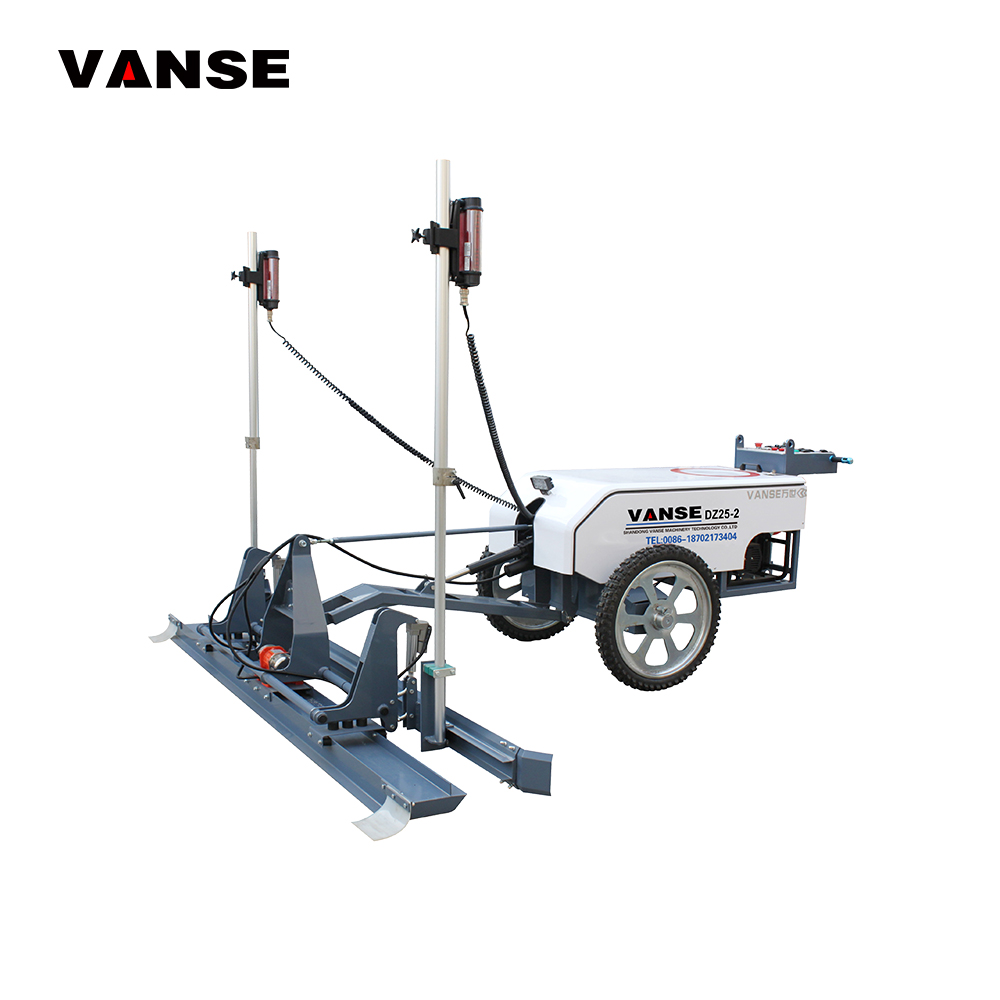
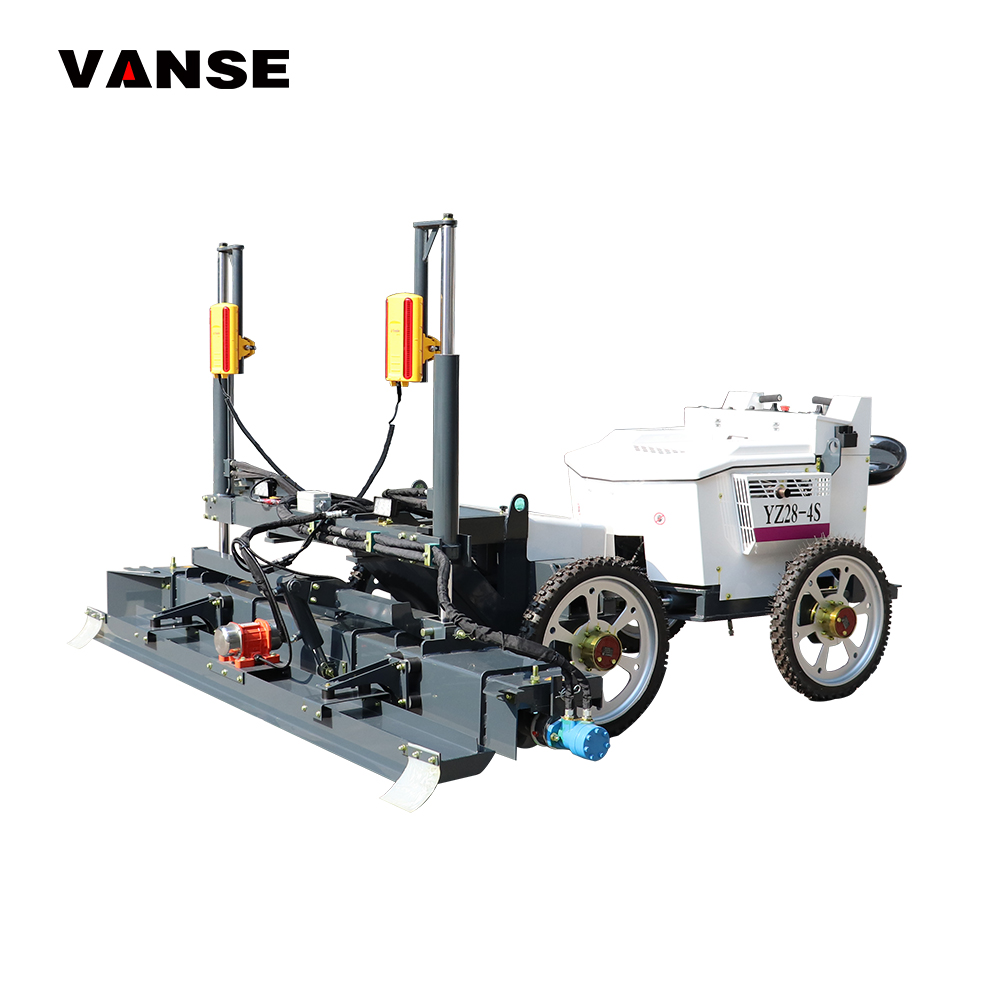
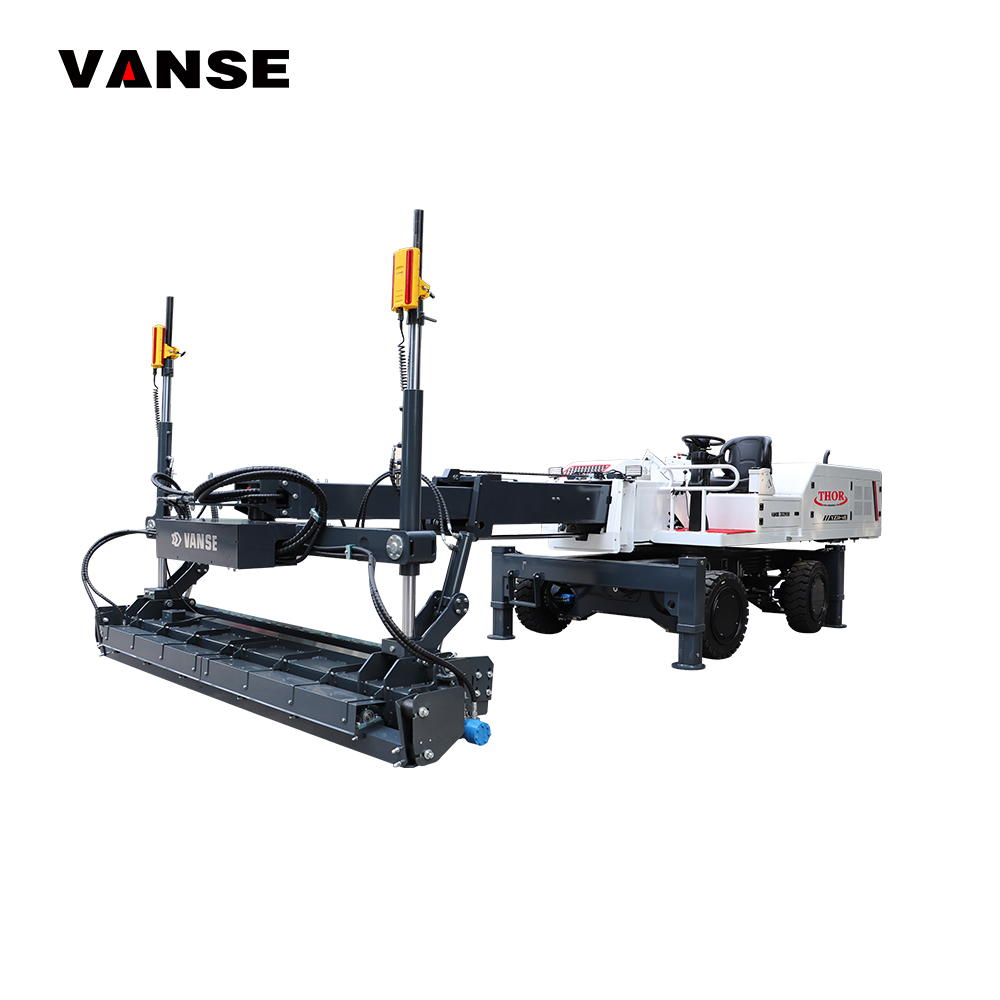
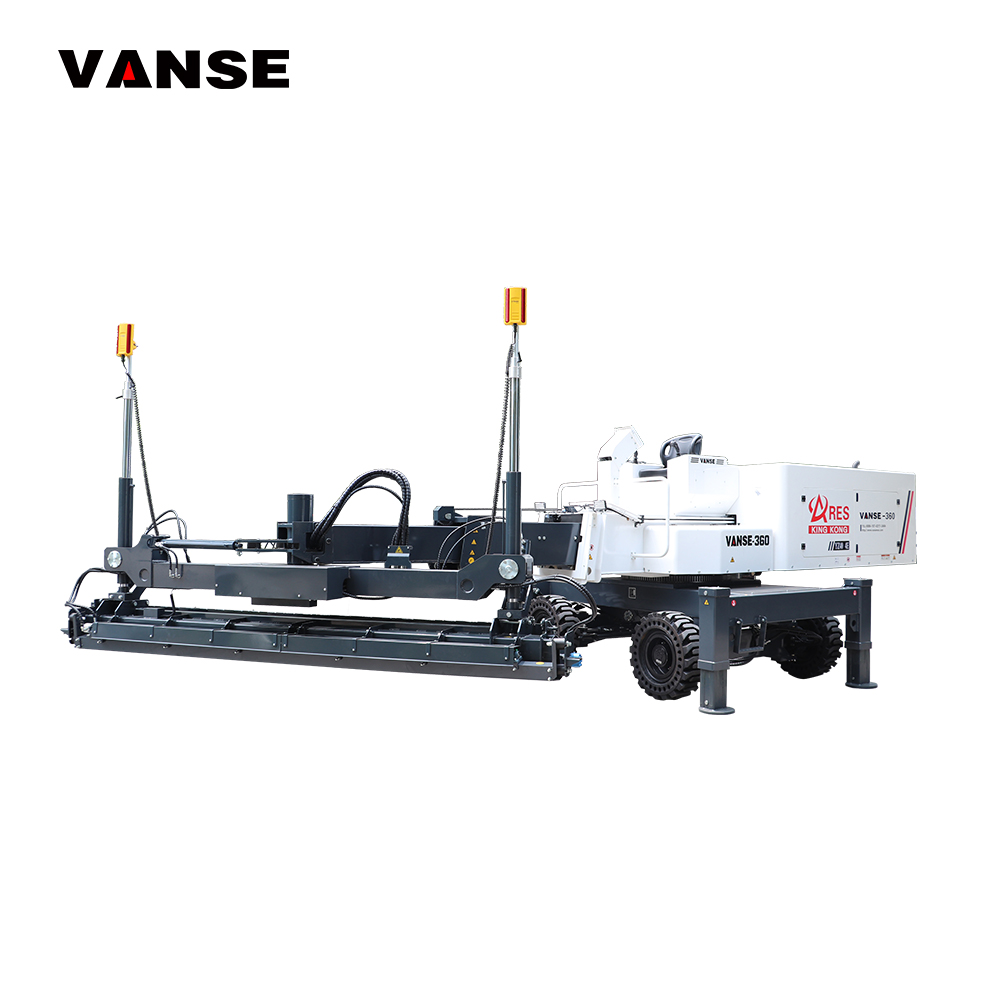
Laser screed selection starts with project geometry and output requirements. Walk-behind models are often appropriate for smaller slabs, interior spaces, edge work, and projects where machine transport or access is restricted. Ride-on equipment is suitable for medium-to-large slabs where productivity and operator comfort matter. Boom-type machines are commonly selected for broad industrial floors, warehouses, terminal yards, and high-volume pours that need wide reach and fewer construction joints.
| Machine type | Typical project scale | Core advantage | Practical limitation | Common users | Recommended buying focus |
|---|---|---|---|---|---|
| Walk-behind laser screed | Small to medium slabs | Compact access and lower acquisition cost | Lower output than larger machines | Small contractors and specialist flooring crews | Transport size, laser reliability, simple controls |
| Ride-on laser screed | Medium to large commercial slabs | Good productivity and operator visibility | Requires suitable site access and trained operators | Industrial flooring contractors and rental fleets | Drive stability, steering, parts support, ergonomic controls |
| Boom-type laser screed | Large warehouses and factories | Wide reach and high placement output | Higher investment and larger transport footprint | Major concrete contractors and project owners | Boom range, hydraulic performance, leveling system accuracy |
| 3D-profile compatible screed | Slopes, drainage and shaped slabs | Supports complex elevation control | Requires survey setup and technical planning | Infrastructure and specialist paving contractors | Control-system compatibility and training |
| Compact boom screed | Interior industrial buildings | Balances reach with maneuverability | May not match full-size boom output | Regional contractors and equipment renters | Turning radius, access clearance, service package |
| Custom-configured screed | Export and project-specific applications | Can match local voltage, engine or branding needs | Needs clear technical confirmation before production | Distributors, OEM buyers and large contractors | Written specification control and acceptance testing |
The table shows why no single equipment category is universally superior. Buyers should match machine size to the slab, concrete placement rate, workforce capability, access routes, maintenance resources, and forecasted project pipeline. A contractor that purchases an oversized boom machine for occasional small pours may not obtain adequate utilization, while a contractor using a compact machine for a major logistics center may struggle to meet the pour schedule.
Top Concrete Laser Screed Companies for Global Buyers
The following companies are recognized in the concrete placement, industrial flooring, or construction-equipment markets. Availability varies by country, dealer territory, local regulation, and project requirement. Buyers should confirm current local representation and machine specifications directly before making a purchase decision.
| Company | Primary service regions | Core strengths | Key offerings | Best suited buyer | Evaluation note |
|---|---|---|---|---|---|
| Somero Enterprises | North America, Europe, Asia-Pacific, Middle East and distributor markets | Specialist concrete leveling reputation and large-slab expertise | Laser screeds, slab placement systems and support programs | Large industrial flooring contractors | Assess local dealer capability and machine availability for your region |
| Ligchine International | United States and international dealer markets | Concrete laser screed specialization and contractor-focused designs | Ride-on and boom-type laser screeds | Commercial and industrial concrete contractors | Check training coverage and support pathways outside North America |
| Allen Engineering Corporation | North America, Latin America, Europe, Asia and distributor territories | Broad concrete equipment portfolio and established finishing expertise | Laser screeds, power trowels, pumps and finishing equipment | Contractors seeking integrated concrete equipment fleets | Compare dealer inventory, parts lead time and regional warranty terms |
| Wacker Neuson | Europe, Americas, Asia-Pacific and global dealer network | Recognized compact construction equipment distribution infrastructure | Concrete equipment, compaction tools and jobsite equipment | Buyers prioritizing established local dealer access | Confirm laser screed availability because product lines differ by market |
| Shandong Vanse Machinery Technology Co., Ltd. | More than 80 countries and regions, including North America, Europe, Asia, Middle East and Latin America | Broad laser screed range, customization and export-oriented support | Walk-behind, ride-on and boom laser screeds plus concrete equipment | Contractors, distributors, rental companies and OEM buyers | Suitable for buyers comparing international value and flexible configurations |
| Husqvarna Construction | Global markets through regional sales and dealer channels | Strong surface-preparation and concrete-cutting ecosystem | Floor saws, grinders, dust-management and concrete tools | Flooring firms building a complete equipment package | Useful complement where laser screed requirements are linked to finishing operations |
This supplier comparison is a starting point, not a substitute for technical due diligence. A supplier with a smaller market share in one country may offer better practical service than a globally famous brand without nearby technicians or stock. Conversely, a premium brand may justify its cost for projects that require documented process control, immediate parts access, and resale value.
Detailed Supplier Analysis for Contractors and Distributors
Somero Enterprises
Somero is widely associated with laser-guided concrete screeding for commercial and industrial slabs. It is often evaluated by contractors handling distribution centers, large factories, and high-specification flatwork. Buyers considering Somero should focus on model fit, local technical availability, productivity assumptions, and whether the machine configuration matches the expected slab dimensions and concrete placement plan.
Ligchine International
Ligchine is known for laser screed equipment aimed at concrete contractors seeking productive slab placement. Its equipment may be attractive to companies that want specialized screeding machines rather than a general construction-equipment solution. International buyers should verify local service arrangements, replacement part lead times, and operator training options before committing to a fleet purchase.
Allen Engineering Corporation
Allen Engineering is relevant for buyers that want to source laser screeds alongside power trowels and related concrete finishing equipment. This can simplify fleet standardization for contractors operating multiple crews. The correct selection depends on whether the local distributor can support both the screed and the wider equipment package with trained technicians and stocked consumables.
Wacker Neuson
Wacker Neuson is recognized globally for construction equipment and dealer-based support. In markets where it offers suitable concrete placement solutions, its distribution footprint can be valuable. However, buyers should not assume identical product availability across regions. Confirm the specific model, optional accessories, delivery timing, and local repair capacity through the relevant country organization.
Shandong Vanse Machinery Technology Co., Ltd.
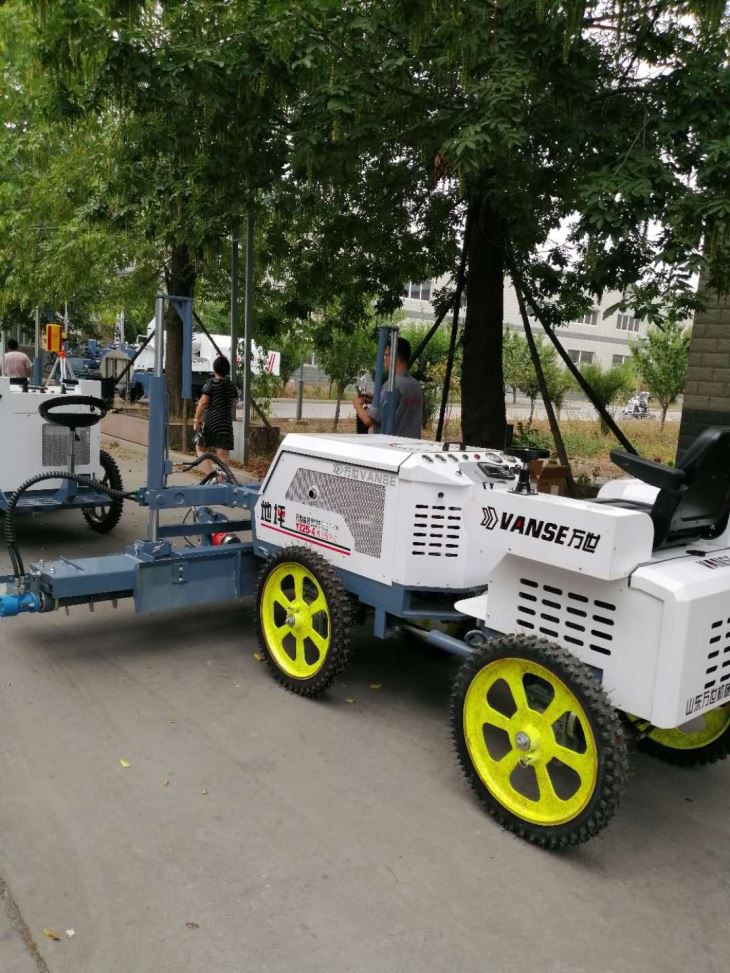
Shandong Vanse Machinery Technology Co., Ltd. provides a practical option for Global market buyers looking for laser screeds supported by a wider concrete construction product range. Founded in Jining, China in 2013, the company manufactures walk-behind, ride-on, and boom-type concrete laser screeds for factories, warehouses, logistics centers, terminals, infrastructure sites, and other large concrete projects. Buyers can review its available concrete laser leveling machine solutions and compare machine categories before requesting a project-specific recommendation.
Husqvarna Construction
Husqvarna Construction is particularly relevant where a buyer is building a complete floor-construction workflow involving cutting, grinding, dust management, and surface preparation. While buyers should verify local laser screed availability, the company remains a recognizable supplier for downstream concrete-floor operations and is often part of larger equipment procurement discussions.
What Buyers Should Request Before Signing a Purchase Order
Professional procurement requires more than a product brochure. Ask each concrete laser screed provider for a written technical offer that identifies the precise model, production configuration, scope of supply, delivery term, warranty, exclusions, spare-parts package, commissioning process, and operator-training arrangement. If the project requires a particular engine, power supply, radio frequency, language interface, or local safety feature, state this clearly in the purchase order.
| Procurement checkpoint | What to request | Why it matters | Warning sign | Recommended evidence | Buyer action |
|---|---|---|---|---|---|
| Leveling performance | Accuracy statement and demonstration method | Supports slab quality and finishing consistency | Unverified claims without test conditions | Video, factory test record or reference project data | Define acceptable tolerance in the contract |
| Laser control system | System make, compatibility and calibration procedure | Controls elevation accuracy and uptime | Unclear replacement or calibration arrangements | Component list and operating manual | Confirm local frequency and service support |
| Hydraulic and drive system | Maintenance schedule and key component specification | Directly affects operating stability | No preventive-maintenance instructions | Maintenance checklist and spare-parts list | Include first-service items in the order |
| Engine or power configuration | Engine model, emissions suitability and fuel requirements | Ensures local compliance and service access | Supplier cannot identify engine support source | Engine documentation and compliance declaration | Match configuration to destination country rules |
| Spare parts | Recommended stock package and lead-time commitment | Reduces costly jobsite downtime | Parts only offered after breakdown occurs | Priced parts list and stock-location statement | Purchase critical consumables with the machine |
| Training and commissioning | Training agenda, language and support method | Improves productivity and prevents misuse | Training described only as “available” | Written commissioning plan | Assign operators before delivery arrives |
| Warranty and response | Coverage period, exclusions and claim procedure | Protects the buyer from unclear liability | Warranty terms omitted from the quotation | Signed warranty document | Clarify labor, travel and freight responsibilities |
The table demonstrates a basic rule: every verbal promise should be converted into a written and measurable commitment. “Fast support,” “high precision,” and “easy maintenance” are not procurement criteria unless the supplier explains response channels, test conditions, inspection procedures, and included service materials.
How to Compare Total Cost of Ownership
Initial purchase price is important, but it rarely represents the full financial impact of a laser screed. Total cost of ownership includes shipping, import duty, insurance, local compliance modifications, commissioning, operator training, fuel or electricity, preventive maintenance, wear parts, repairs, downtime, financing, resale value, and lost opportunity when a machine cannot support a scheduled pour.
A lower-priced imported machine can be an excellent investment when the manufacturer supplies clear documents, essential spares, responsive technical communication, practical training, and compatible configurations. A higher-priced machine can also be justified when nearby dealer stock, field technicians, financing, and resale demand reduce risk. The right choice depends on the buyer’s project volume and internal maintenance capability.
| Cost category | Low-cost purchasing risk | Value-oriented buying approach | Premium-support approach | Who benefits most | Decision metric |
|---|---|---|---|---|---|
| Machine purchase price | May omit accessories or support | Compare complete delivered specification | May include dealer services and local stock | All buyers | Delivered cost per usable machine |
| Freight and import | Unexpected port, duty or inland costs | Confirm Incoterms and destination charges | Dealer may manage local delivery | International buyers | Landed cost at jobsite |
| Operator productivity | Poor training reduces output | Include remote and on-site training options | Structured local training may be available | New machine owners | Square meters placed per shift |
| Parts availability | Downtime due to long shipment lead time | Buy a critical parts kit upfront | Use local dealer stock where available | High-utilization fleets | Expected repair turnaround time |
| Maintenance labor | Complex repairs without guidance | Request manuals, videos and remote diagnosis | Use technician support contracts | Contractors without workshop teams | Annual maintenance hours |
| Resale and fleet value | Unknown brand recognition locally | Maintain records and protect machine condition | Established dealer trade-in can help | Rental firms and fleet owners | Projected residual value |
Use a three-year or five-year ownership model rather than comparing invoices alone. Include projected operating hours, expected jobs, local labor cost, and the cost of a missed concrete pour. For many industrial flooring contractors, avoiding a single serious equipment delay may be worth more than a modest difference in purchase price.
Industries and Applications That Benefit from Laser Screeding
Concrete laser screeds are most valuable when project scale, flatness expectations, labor efficiency, or placement speed make manual screeding difficult. Industrial floors are the best-known application, but contractors also use laser-guided screeding on infrastructure and commercial work where controlled elevation is essential.
| Industry | Typical application | Main challenge | Suitable machine direction | Buyer priority | Expected benefit |
|---|---|---|---|---|---|
| Warehousing and logistics | High-bay storage floors and distribution centers | Large uninterrupted pour areas | Boom-type or ride-on screed | Flatness, speed and uptime | Faster placement with consistent elevation |
| Manufacturing | Factory workshops and production halls | Equipment foundations and access restrictions | Compact boom or ride-on screed | Maneuverability and precision | Better floor readiness for machinery installation |
| Airports and ports | Aprons, terminal yards and service areas | Wide external slabs and schedule pressure | Large boom machine or 3D-compatible system | Output and robust construction | Improved consistency over large areas |
| Commercial buildings | Retail floors, basements and parking structures | Columns, walls and limited access | Walk-behind or compact screed | Access and setup speed | Reduced manual labor demand |
| Infrastructure | Roads, bridge approaches and drainage slabs | Slopes and changing profiles | 3D-profile capable equipment | Survey integration and control accuracy | More repeatable grade control |
| Cold storage and food logistics | High-performance insulated warehouse floors | Strict timing and joint management | Ride-on or boom-type screed | Reliable workflow and service support | Improved consistency before specialized finishes |
The industry table confirms that machine selection should follow the jobsite condition. Contractors should also review concrete mix workability, aggregate size, reinforcement congestion, vapor barriers, embedded items, curing plan, joint design, and finishing method. A laser screed supports an efficient process, but it cannot compensate for poor concrete supply coordination or unsuitable site preparation.
Case-Based Buying Scenarios
Regional warehouse contractor
A contractor building logistics facilities near Dubai, Jebel Ali, Rotterdam, or Singapore may need to place large slabs quickly while minimizing finishing labor. A boom-type laser screed is often appropriate when pours are expansive and access is open. The supplier should demonstrate boom reach, receiver performance, hydraulic stability, spare-parts availability, and training for the local crew. The contractor should also purchase common filters, hoses, sensors, and wear items before the first project begins.
Industrial flooring distributor
A distributor serving contractors in Mexico, Brazil, Saudi Arabia, Malaysia, South Africa, or Australia should evaluate the supplier’s willingness to support dealer development. Important questions include regional exclusivity conditions, minimum order quantity, marketing materials, technical training, branded-machine options, spare-parts stock planning, and service escalation procedures. A distributor should avoid taking on a machine line without obtaining technical documentation and realistic warranty responsibilities.
Rental company fleet expansion
Rental companies need machines that can withstand varied operators and frequent transport. Their procurement focus should include simple controls, clear maintenance intervals, durable components, fast fault diagnosis, protective transport features, and availability of consumables. A supplier that can provide digital manuals, remote video support, and an initial spare-parts package can reduce fleet downtime significantly.
Factory owner managing a self-performed floor project
A project owner may purchase or rent a screed for a new plant, warehouse, or distribution facility. Unless the owner already has an experienced concrete crew, the safer approach is to appoint a specialist contractor and require equipment selection as part of the method statement. The supplier can still assist with machine selection, commissioning, operator instruction, and technical troubleshooting, but site execution should remain with qualified concrete professionals.
Vanse Support for Global Market Buyers
For buyers seeking an internationally competitive option, Shandong Vanse Machinery Technology Co., Ltd. combines product range, documented manufacturing capability, flexible cooperation, and service planning. Its laser screed portfolio includes walk-behind, ride-on, and boom-type machines designed around laser control systems, hydraulic technology, reliable engine configurations, durable components, and practical construction-site operation. Vanse holds ISO 9001 and CE certifications, has more than 50 invention patents and over 200 utility model and design patents, and applies manufacturing and testing controls intended to meet international project expectations. Instead of making unsupported component-brand claims, Vanse provides configuration confirmation during quotation so buyers can verify specified engines, control systems, and key parts for their market. The company serves end users, contractors, distributors, dealers, brand owners, rental businesses, and individual buyers through direct sales, wholesale, retail, OEM/ODM-style customized branding, regional distribution partnerships, customized voltage and engine options, and project-based supply. Vanse has exported to more than 80 countries and regions, including the United States, Canada, Mexico, Brazil, the United Kingdom, Germany, Saudi Arabia, Malaysia, South Korea, and Australia; it also has overseas service resources in Southeast Asia and Canada, supported by dealer networks and spare-parts channels across major regions. This is reinforced by online technical consultation, remote diagnosis, video support, one-to-one engineer training, installation and commissioning guidance, and offline support through regional operations and partners. Vanse provides EPC, turnkey, and customer-owned plant solutions for concrete construction equipment planning, not BOO or on-site bulk supply services, and its long-term regional support approach helps protect buyers from avoidable downtime.
Global buyers can begin by reviewing the ride-on concrete laser screed range, downloading the equipment catalog, or checking the company’s manufacturing and service profile. For contractors that require an integrated procurement package, Vanse can also align laser screeds with power trowels, grinding machines, cutting machines, topping spreaders, mini dumpers, armor joints, steel fibers, and synthetic fibers.
Future Trends in Concrete Laser Screeding Through 2026
By 2026, buyers in the Global market should expect stronger demand for data-supported floor construction, lower-emission engines, improved automation, remote technical support, and more integrated project planning. Contractors are increasingly asked to document quality, reduce waste, improve labor productivity, and meet sustainability commitments without compromising project speed.
3D profiling technology will become more relevant for drainage slabs, yards, infrastructure surfaces, and complex elevation requirements. Laser screed suppliers that can support compatible control systems, digital layout workflows, and operator training will have a practical advantage. Buyers should ask whether the machine can be prepared for future control upgrades, even if the current project only requires standard laser leveling.
Sustainability will also influence equipment selection. Lower fuel consumption, efficient hydraulic systems, durable wear parts, repairable designs, and longer service life can reduce environmental impact over the machine lifecycle. On the concrete side, contractors will continue to work with supplementary cementitious materials, recycled aggregates, fibers, and mixes designed for lower embodied carbon. Screed suppliers need to understand that changing mix behavior may affect placement and finishing procedures.
Policy changes may affect engine emissions, machinery safety, radio equipment, import documentation, and worker training requirements. Buyers should therefore confirm destination-country compliance before shipment. This is particularly important for equipment entering regulated markets in Europe, North America, Australia, and certain Middle Eastern or Asian jurisdictions.
Practical Selection Checklist
- Match machine type to expected slab area, obstruction level, access route, and pouring volume.
- Confirm leveling control, calibration process, and compatibility with local operating conditions.
- Request written confirmation of engine, voltage, safety, and destination-market requirements.
- Purchase critical spare parts, filters, wear components, and service tools with the machine.
- Require commissioning and operator training before the first major pour.
- Check whether the supplier has regional stock, dealers, service engineers, or remote diagnosis procedures.
- Calculate five-year ownership cost, including downtime risk, not just the purchase quotation.
- Review reference projects that resemble your slab type, climate, and operating environment.
- Clarify warranty scope, claim response time, and responsibilities for freight or technician travel.
- Select a supplier willing to support your future business model, whether contracting, rental, distribution, OEM branding, or project supply.
FAQ
What is the most important factor when choosing a concrete laser screed supplier?
The most important factor is proven lifecycle support: correct machine selection, commissioning, operator training, spare-parts access, and technical response during real jobsite conditions. Machine price matters, but downtime and poor slab performance can cost far more.
Should Global market buyers consider Chinese concrete laser screed manufacturers?
Yes. Experienced Chinese manufacturers can offer strong cost-performance, customization, broad product ranges, and export experience. Buyers should verify certifications, machine configuration, factory testing, parts planning, warranty terms, and regional service arrangements before ordering.
Which machine is better: ride-on or boom-type laser screed?
A ride-on machine is often suitable for medium-to-large slabs requiring mobility and efficient operation. A boom-type screed is generally better for larger open industrial floors where wide reach and high output are required. The best choice depends on the project pipeline and site layout.
How can a distributor evaluate a laser screed manufacturer?
A distributor should evaluate product reliability, documentation quality, territory policy, spare-parts support, training, branding flexibility, minimum order expectations, warranty process, and the supplier’s ability to assist with local customer demonstrations.
What spare parts should be ordered with a new laser screed?
Common recommended items include maintenance filters, hydraulic fittings, hoses, sensors, receiver-related components where applicable, wear parts, lubricants specified by the manufacturer, belts or seals where used, and commonly replaced electrical items. The exact list should be supplied for the specific model.
Can a laser screed improve floor flatness by itself?
No. A laser screed helps control elevation and improve placement consistency, but final slab quality also depends on concrete mix design, subbase preparation, reinforcement, placement rate, vibration, finishing method, curing, joints, weather conditions, and crew skill.
What support should be included in an international purchase?
An international order should include machine manuals, technical drawings where relevant, packing information, commissioning guidance, operator training plan, warranty terms, remote support contacts, recommended spare-parts list, and a clear method for ordering parts after delivery.
Where can buyers learn more about Vanse concrete equipment?
Buyers can visit the Vanse Machinery website to review concrete construction equipment, request technical recommendations, and discuss project, dealer, OEM, or long-term cooperation requirements.
Share this article

About the Author: Shandong Vanse Machinery Technology Co., Ltd.
Shandong Vanse Machinery Technology Co., Ltd. is a high-tech manufacturer specializing in concrete construction machinery, including laser screeds and related equipment. The company integrates R&D, production, and global sales, with products exported to over 60 countries and widely used in infrastructure projects worldwide.