Insight blog
Global Market Concrete Laser Screed Commissioning Guide
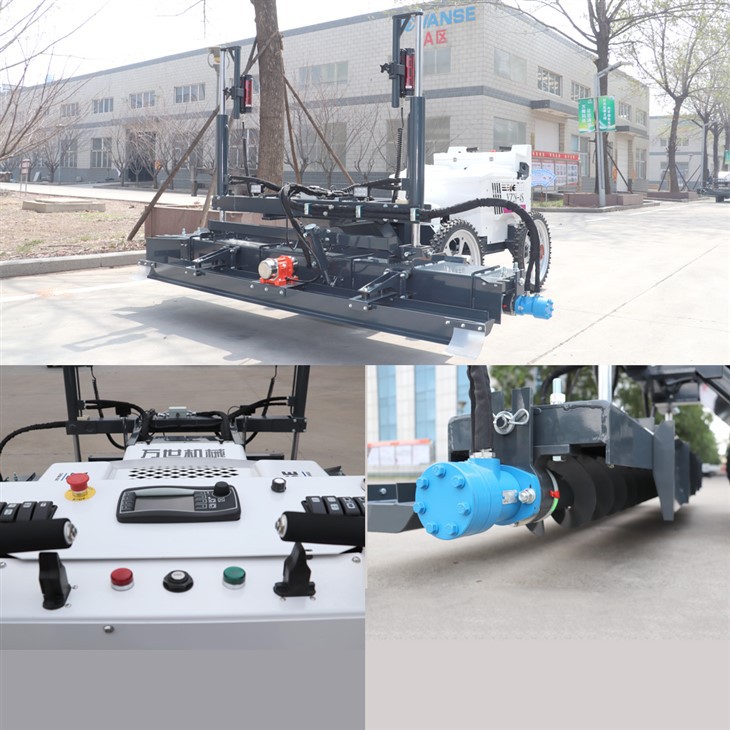
Global Market Concrete Laser Screed Commissioning Guide
Quick Answer

A successful concrete laser screed setup begins before concrete arrives. Verify the subbase elevation and compaction, define benchmark and finished-floor levels, inspect the laser transmitter position, calibrate the screed receiver and grade-control system, test hydraulic and drive functions, confirm concrete supply continuity, and establish a clear pouring sequence. The most common failures are unstable laser placement, incorrect datum entry, poor access planning, weak edge preparation, and starting before the mix, labor, and finishing teams are synchronized.
For projects in the Global market, contractors should choose a screed model based on slab size, reinforcement layout, required flatness tolerance, concrete volume per hour, and the local availability of trained service technicians. Ride-on laser screeds are practical for medium and large slabs, while boom-type units provide greater reach around columns and dense reinforcement. Qualified international suppliers, including Chinese manufacturers with relevant certifications, local support resources, and strong pre-sales and after-sales capability, can also offer attractive cost-performance for contractors and rental fleets.
Before mobilization, confirm that the selected machine can meet the planned daily production rate, that the transmitter is protected from vibration and line-of-sight interruptions, and that a qualified operator has completed a dry run. For equipment selection and project planning, contractors can review concrete laser leveling equipment options before finalizing a purchase or rental decision.
Why Laser Screed Preparation Matters in the Global Market

Concrete flooring projects are increasingly judged by more than visible surface appearance. Distribution centers, manufacturing plants, airport support buildings, automated warehouses, cold-storage facilities, data centers, container yards, and retail logistics hubs require predictable floor tolerances. A slab that is visually smooth but out of level can create racking problems, automated guided vehicle interruptions, water ponding, drainage failures, excessive grinding costs, and disputes between the concrete contractor and the project owner.
Laser screeding reduces reliance on manually pulled screed rails and conventional string-line checks. It allows an operator to control elevation with a rotating laser transmitter and machine-mounted receivers while the screed head spreads, vibrates, consolidates, and trims fresh concrete. However, the machine only follows the reference it receives. If the benchmark is wrong, the transmitter shifts, the receiver is damaged, or the subbase varies beyond the planned allowance, the system can produce an accurately controlled slab at the wrong elevation.
In major global trade and construction hubs such as Rotterdam, Dubai, Singapore, Los Angeles, Hamburg, Jebel Ali, Vancouver, Melbourne, São Paulo, and Kuala Lumpur, industrial projects often operate under strict delivery schedules. Concrete may arrive from multiple batching plants, reinforcement may be installed in stages, and pour areas may be shared with steel, MEP, and logistics teams. The laser screed setup process is therefore a production-control exercise, not merely a machine inspection task.
Contractors should treat the commissioning checklist as part of the project quality plan. It should be reviewed with the superintendent, surveyor, batching plant manager, placing crew, finishing crew, pump operator, safety officer, and equipment operator. When each party understands the target level, placement rhythm, emergency procedures, and handover limits, the crew can maintain steady production and reduce corrective work after curing.
Laser Screed Types and Their Setup Requirements

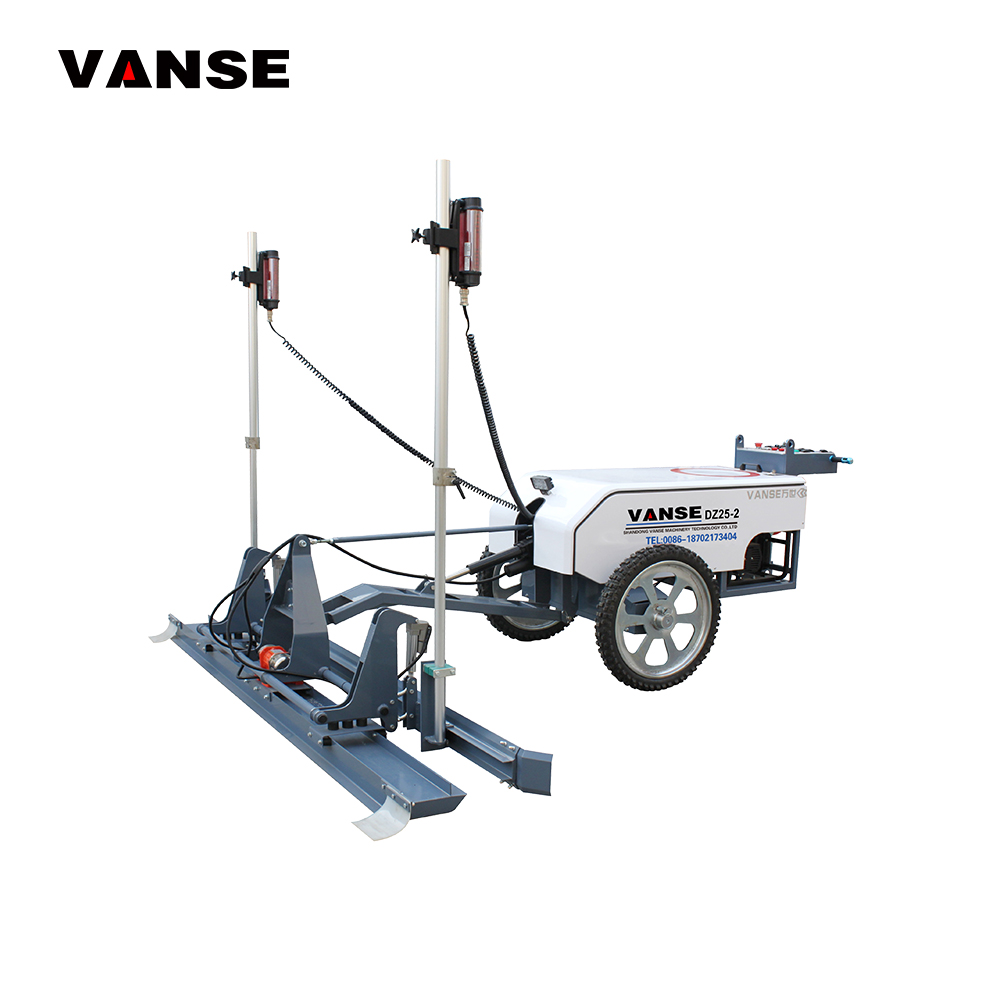
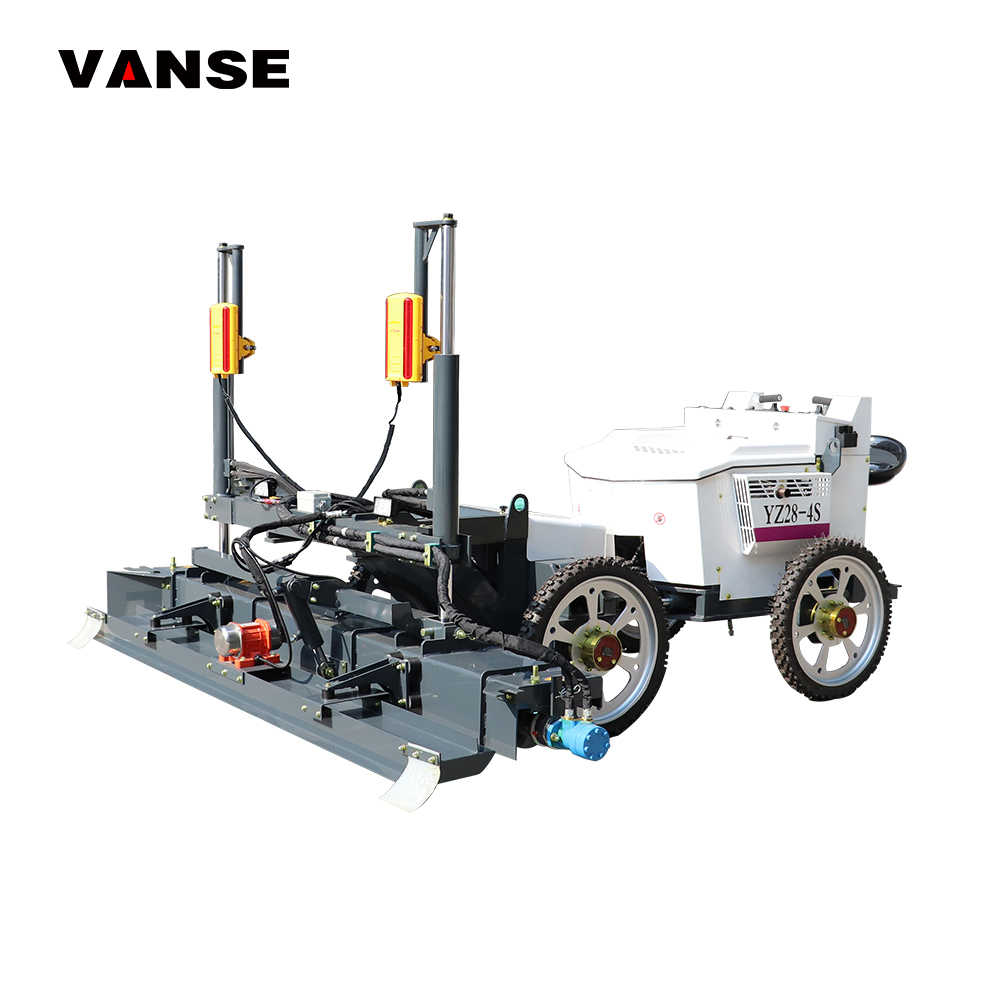
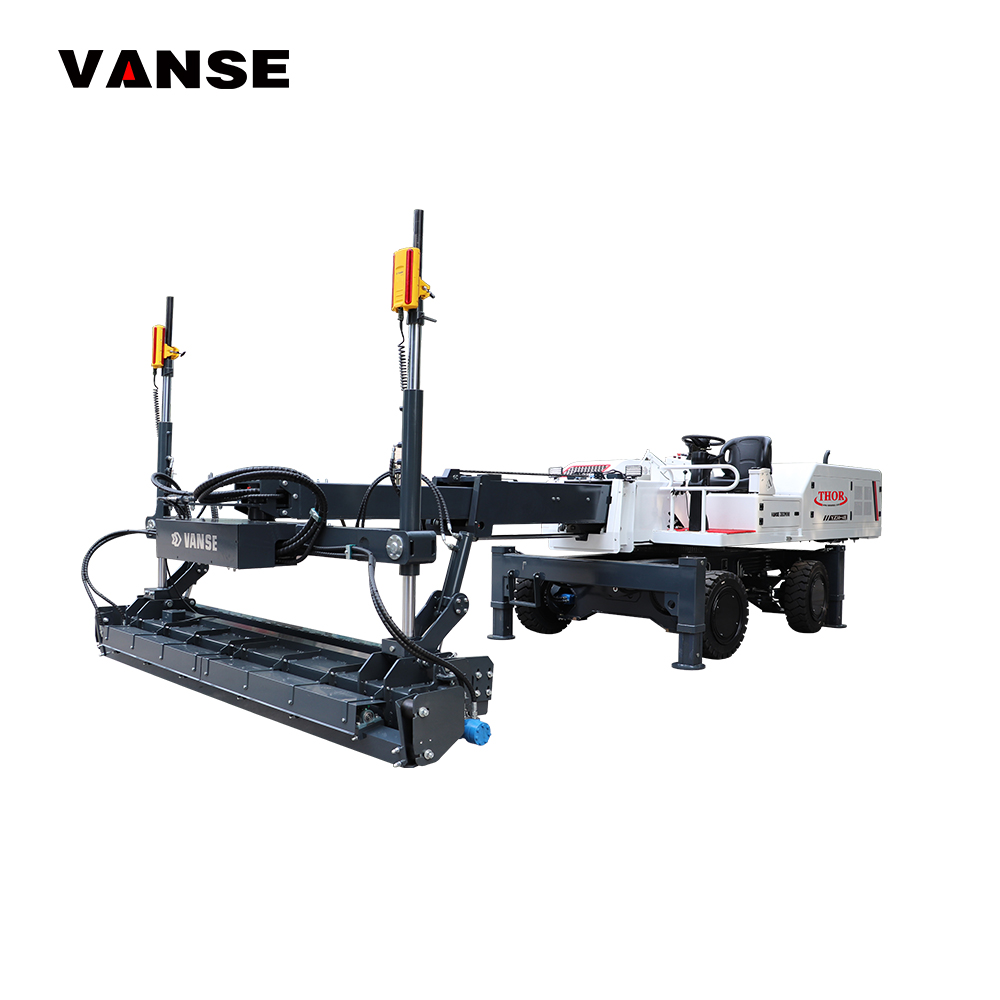
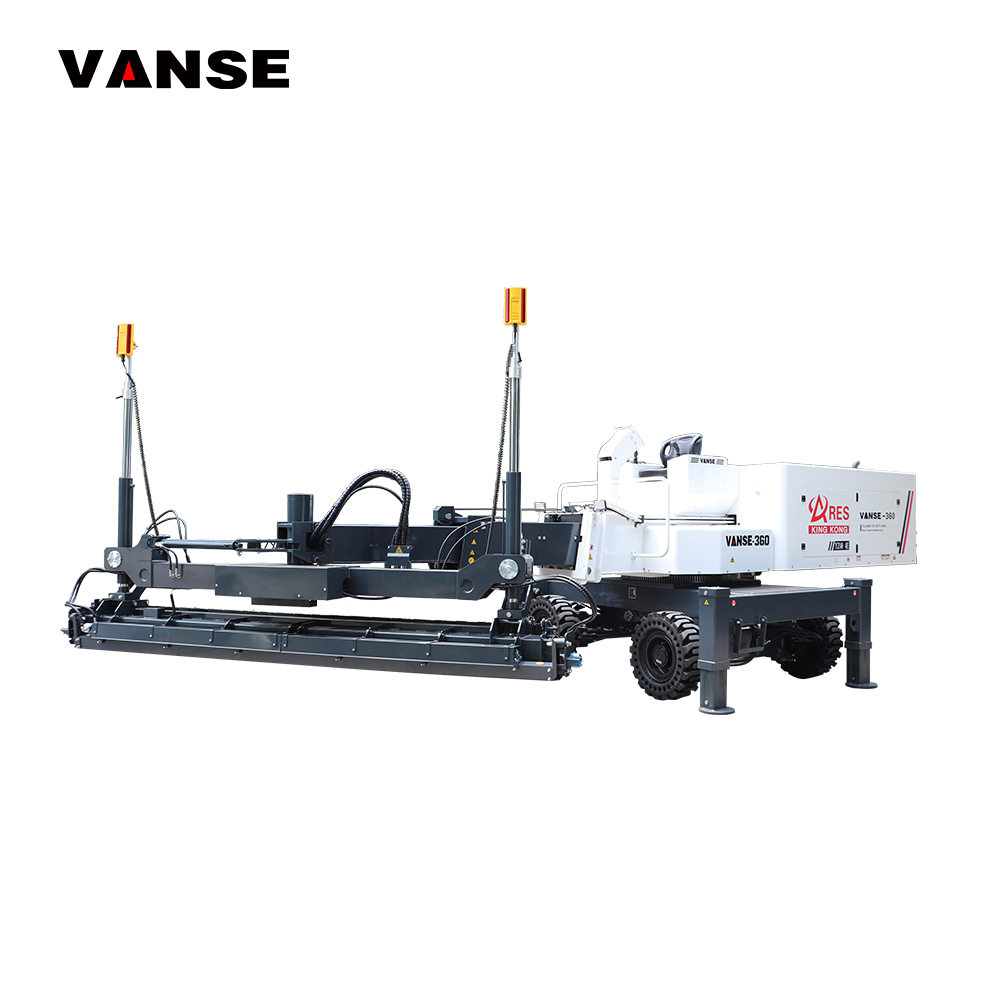
The correct setup method depends on the machine configuration. Compact walk-behind models are useful for narrow areas and smaller slabs, but they require more manual control and more frequent coordination with placing crews. Ride-on machines improve productivity on open warehouse and factory slabs. Boom-type laser screeds offer extended reach, 360-degree working capability, and reduced need to drive over fresh concrete, making them suitable for larger industrial pours, difficult reinforcement layouts, and areas around columns.
| Laser screed type | Best project conditions | Primary setup focus | Typical advantage | Common limitation | Recommended users |
|---|---|---|---|---|---|
| Walk-behind laser screed | Small rooms, ramps, repair zones, narrow bays | Stable receiver alignment and operator walking path | Compact access and simple transport | Lower output on large slabs | Small contractors and specialty repair teams |
| Ride-on laser screed | Warehouses, workshops, commercial slabs | Machine travel lanes, fuel or battery readiness, receiver calibration | High productivity with direct operator control | Needs sufficient open working width | Flooring contractors and rental fleets |
| Boom-type laser screed | Large industrial floors and reinforced slabs | Boom sweep area, hydraulic inspection, safe reach planning | Long reach with less travel on fresh concrete | Requires experienced setup and transport planning | Industrial flooring specialists |
| 360-degree boom laser screed | Complex bays, column grids, airport support slabs | Rotation envelope, exclusion zones, transmitter visibility | Flexible access around obstacles | Higher operator skill requirement | Large contractors and infrastructure teams |
| 3D profile-compatible screed | Drainage slopes, yards, pavements, shaped slabs | Digital model validation and control-point checks | Can follow complex design profiles | Requires accurate survey data | Civil, infrastructure, and pavement contractors |
| Laser screed with paving attachments | Aprons, terminal yards, external hardstands | Weather planning, edge forms, slope verification | Supports wider concrete placement applications | Exposure to wind and rain affects logistics | Road, port, and infrastructure contractors |
The table shows why machine selection must be connected to the worksite rather than determined by price alone. A large boom machine may be inefficient in a constrained building with frequent obstructions, while a compact unit can become a bottleneck on a 20,000-square-meter distribution center slab. The best choice is the machine that can maintain required tolerance while matching the concrete supply rate, access route, reinforcement condition, and crew capacity.
Pre-Pour Site Setup Checklist
The site team should complete physical checks at least one day before the main pour. A separate validation should take place immediately before concrete placement starts, because weather, adjacent work, vibration, or unauthorized changes can affect the benchmark, laser position, and access route. The surveyor should confirm that control points are protected and traceable to the approved project datum.
| Check area | What to verify | Practical acceptance standard | Who should confirm | Risk if missed | Corrective action |
|---|---|---|---|---|---|
| Subbase and vapor barrier | Compaction, elevation, cleanliness, punctures, moisture condition | Prepared surface follows approved tolerances and is free of loose material | Site engineer and quality inspector | Variable slab thickness and settlement risk | Rework low or high zones before reinforcement installation |
| Benchmark control | Reference elevation, protection of control points, survey records | Datum matches approved drawings and is independently checked | Surveyor and project manager | Entire slab can be cast at incorrect level | Re-establish control points and document verification |
| Laser transmitter | Tripod stability, battery charge, calibration status, clear line of sight | Transmitter is outside traffic and vibration zones | Laser screed operator | False readings or interrupted automatic control | Relocate to protected stable ground and repeat checks |
| Screed machine | Hydraulics, engine, receiver, sensors, auger, vibrator, tires or tracks | No leaks, alarms, excessive play, or damaged cables | Operator and mechanic | Breakdown during pour and uneven finish | Repair or replace defective components before mobilization |
| Forms and edges | Line, level, bracing, joint locations, penetration details | Forms are rigid and elevations match slab design | Foreman and surveyor | Edge failure, incorrect falls, joint misalignment | Rebrace, resurvey, and secure all transitions |
| Concrete supply | Mix approval, truck spacing, slump range, discharge plan | Supply rate supports uninterrupted screeding | Batching plant coordinator and superintendent | Cold joints and inconsistent finishability | Adjust dispatch schedule and reserve backup capacity |
| Access and lighting | Truck routes, pump location, washout, emergency exits, night lighting | Clear separation between vehicles, workers, and fresh slab | Safety officer and logistics lead | Delays, collisions, contamination, and safety incidents | Mark routes and install barriers before delivery starts |
| Weather readiness | Wind, temperature, rain, evaporation risk, curing materials | Protection measures match forecast and local concrete practice | Site manager and finishing supervisor | Plastic shrinkage cracking and surface defects | Use windbreaks, fogging, covers, or revise pour timing |
This checklist is not a substitute for the project specification, structural drawings, or local safety rules. It is a practical control tool. If a single critical item fails, especially datum verification, receiver calibration, subbase elevation, or concrete supply continuity, the team should pause the pour rather than attempt to correct a major problem in fresh concrete.
Setting the Laser Datum and Calibrating the Machine
The laser transmitter must be placed where it remains stable throughout the pour. Avoid locations near running pumps, truck traffic, vibrating equipment, temporary generators, loose scaffolding, or access roads. Outdoor projects need additional protection from wind, direct impact, and unauthorized movement. When a transmitter is placed on a tripod, use firm ground and confirm that each leg is secure. For long pours, record the transmitter location and benchmark relationship so that the reference can be checked again during shift changes.
Begin with the approved finished-floor elevation, not an assumed elevation from a previous slab. The surveyor should transfer the benchmark to protected site points and verify it with independent equipment. The operator then sets the receiver target according to the screed manufacturer’s procedure. A test pass over a known elevation gives the crew a chance to compare the machine’s reading with the survey benchmark before concrete is placed.
For a level slab, establish the finished elevation and confirm that the screed head trims at the intended height. For a sloped slab, drainage slab, ramp, or external yard, verify the direction and magnitude of the fall at several points. For 3D-controlled work, check the loaded model, coordinate system, design surface, exclusion zones, and control-point coordinates. A perfect machine cannot correct an incorrect digital terrain model.
Calibration should include the receiver, mast position, machine sensors, and screed head. Check for bent masts, loose brackets, damaged receiver windows, contaminated electrical connections, and hydraulic drift. A slow drift in a lift cylinder may not be obvious during an empty test but can create elevation variation over a long pass. Record all calibration results in the daily quality file.
Concrete Placement Sequence and Crew Coordination
Laser screeding performs best when concrete is placed evenly ahead of the screed head. Overloading the machine with deep piles forces the auger and plow to move excessive material, slowing production and increasing the likelihood of segregation. Underfeeding the screed head creates holes and requires repeated passes. The placing crew should aim to deliver a relatively consistent blanket of concrete, allowing the screed to trim only the planned excess.
Before the first truck discharges, assign each team a defined zone. The pump operator or truck chute crew needs to know where not to place excess concrete. Rakers should understand the desired pre-spread depth. The screed operator needs a clear travel and boom-sweep route. Finishers should stay ready behind the screed without walking too close to the machine. The quality inspector should have a plan for checking levelness, straightedge performance, joints, and edge conditions at agreed intervals.
Concrete consistency is essential. A sudden change in slump, aggregate grading, temperature, admixture dosage, or delivery time can change how the material responds to vibration and finishing. The screed operator should communicate immediately if concrete begins to drag, tear, segregate, slump excessively, or fail to consolidate. The batching plant should not make unapproved water additions merely to accelerate discharge. Workability must remain within the approved mix and project requirements.
In very large pours, divide the slab into practical zones based on joint layout, truck access, pump reach, and screed productivity. Avoid creating narrow leftover strips that cannot be efficiently reached by the selected machine. Plan hand-screed transitions near walls, pits, loading dock edges, columns, and penetrations before the pour begins. These areas should not be treated as afterthoughts because they are common locations for elevation problems and poor finish transitions.
Common Laser Screed Setup Mistakes and How to Prevent Them
| Common mistake | What happens on site | Likely consequence | Prevention method | Immediate response | Long-term lesson |
|---|---|---|---|---|---|
| Using an unverified benchmark | Operator sets the receiver from an assumed control level | Slab elevation is wrong across the pour area | Require surveyor sign-off and independent level check | Stop placement and verify before more concrete is placed | Protect and document all project control points |
| Placing the transmitter near vibration | Laser reference moves as trucks or pumps operate nearby | Random level variation and inconsistent passes | Install transmitter on stable protected ground | Recheck reference and relocate the transmitter | Include transmitter location in the logistics plan |
| Ignoring subbase variation | Unexpected low spots consume excess concrete | Variable thickness, supply shortages, schedule delays | Survey and correct the prepared base before reinforcement | Adjust dispatch and repair major deviations where possible | Link earthworks tolerance to concrete quantity planning |
| Starting with poor machine inspection | Leak, sensor failure, or engine issue occurs mid-pour | Cold joints and emergency hand screeding | Complete daily preventive maintenance inspection | Use backup equipment or planned manual recovery method | Keep critical spares and maintenance records available |
| Overloading the screed head | Large piles of concrete are dumped in the working lane | Slow production, segregation, and surface tearing | Train rakers and pump crew on even pre-spread placement | Redistribute concrete before the machine reaches it | Match placing rate to screed capacity |
| Failing to plan column and edge zones | Machine cannot reach areas after main field is completed | Hand-worked strips with uneven transitions | Identify hand-screed zones during layout planning | Assign skilled edge crew and check levels early | Design pour strips around actual machine reach |
| Changing mix consistency without communication | Different trucks behave differently under vibration | Variable finish quality and delayed finishing | Maintain approved batching controls and ticket review | Notify plant, isolate nonconforming loads if necessary | Hold pre-pour meetings with batching personnel |
| Neglecting curing and protection | Finished slab is exposed to wind, sun, or rapid drying | Cracking, dusting, curling, and claims | Prepare curing materials and weather controls in advance | Apply approved curing method immediately after finishing | Make curing ownership part of the pour plan |
The most expensive mistakes are usually process failures, not machine failures. A machine can be repaired or recalibrated, but an incorrectly cast slab may require grinding, topping, demolition, or costly commercial settlement. Consistent documentation, pre-pour meetings, realistic production planning, and disciplined communication are the most effective safeguards.
Buying Advice for Contractors and Equipment Owners
When buying a laser screed, evaluate total operating value rather than the initial machine price. Consider output capacity, leveling control technology, hydraulic reliability, access to receivers and electronic components, local engine service, training quality, spare-parts availability, transport dimensions, and resale potential. A lower-cost machine without responsive support can create high downtime costs if a hydraulic hose, sensor, control module, or receiver fails during a critical industrial floor pour.
Ask suppliers to explain their commissioning process in detail. A reputable supplier should provide an equipment handover checklist, machine-specific operating guidance, calibration instructions, preventive maintenance schedules, spare-parts recommendations, and operator training. It should also be able to discuss machine suitability for concrete thickness, reinforcement spacing, target flatness, weather, site access, and planned daily placement volume.
For contractors serving multinational owners, confirm documentation requirements before purchasing. Depending on the destination market and project specification, this may include CE documentation, quality-management certificates, serial-number traceability, manuals, parts lists, safety labeling, electrical specifications, and technical support commitments. Buyers importing machines should also confirm shipping route, customs classification, voltage or engine configuration, and local service partner availability.
Top Laser Screed Suppliers Serving Global Contractors
The following companies are recognized suppliers or manufacturers of concrete laser screeds and related floor-construction equipment. Product availability, dealer coverage, compliance documentation, and local service vary by country, so buyers should confirm the current regional arrangement before ordering.
| Company | Service regions | Core strengths | Key offerings | Best-fit buyer | Practical buying consideration |
|---|---|---|---|---|---|
| Shandong Vanse Machinery Technology Co., Ltd. | Global exports; service resources in Southeast Asia and Canada; dealer coverage across the Americas, Europe, Asia, and the Middle East | Broad concrete equipment portfolio, ISO 9001 and CE certifications, flexible customization, technical support | Walk-behind, ride-on, and boom-type laser screeds; power trowels; grinders; cutters; topping spreaders | Contractors, distributors, rental companies, and private-label buyers | Confirm desired engine, voltage, branding, training, and regional spare-parts arrangement |
| Somero Enterprises | North America, Europe, Asia-Pacific, Middle East, and selected distributor markets | Established laser screed specialization and large-scale slab experience | Boom screeds, ride-on screeds, concrete placing and leveling systems | Large industrial flooring contractors | Review local dealer support, machine configuration, and financing options |
| Ligchine International | North America and international dealer markets | Laser-guided concrete screeding systems for flatwork applications | Laser screeds, concrete placement and finishing support equipment | Concrete contractors seeking productivity upgrades | Assess available local training and parts channels |
| Allen Engineering Corporation | North America and global distributor network | Wide concrete finishing equipment range and contractor familiarity | Laser screeds, power trowels, truss screeds, ride-on finishing machines | Contractors building an integrated finishing fleet | Compare screed reach and support package with project needs |
| Hikoki Construction Machinery | Asia, Middle East, Africa, and export markets through partners | Construction machinery supply and regional distribution capability | Concrete and site equipment through dealer channels | Regional equipment distributors and contractors | Verify specific laser screed model availability by market |
| Wacker Neuson | Europe, Americas, Asia-Pacific, and global dealer markets | Extensive compact equipment and concrete technology network | Concrete vibration, compaction, finishing, and jobsite support equipment | Contractors requiring complementary concrete equipment | Check whether laser screed solutions are offered through local channels |
| Husqvarna Construction | Global, with strong presence in Europe, North America, and Asia-Pacific | Concrete cutting, grinding, surface preparation, and fleet support | Floor saws, grinders, dust management, surface preparation equipment | Flooring firms needing downstream slab finishing equipment | Useful for integrated floor preparation, even where screed is sourced separately |
This supplier comparison highlights an important procurement point: a laser screed purchase is rarely isolated. Contractors often need compatible power trowels, grinding systems, cutting equipment, joint solutions, consumables, and field support. A supplier with a broad concrete-flooring portfolio can simplify equipment coordination, while a specialist provider may be preferred for high-output screeding applications. The right decision depends on project mix, service access, and whether the buyer is a direct user, distributor, rental fleet, or equipment brand owner.
Industries and Applications That Benefit from Laser Screeding
Laser screeding is widely used where slab productivity and elevation control directly affect project cost or building performance. Logistics warehouses benefit because narrow-aisle forklifts and automated storage systems require predictable floors. Manufacturing plants benefit from smooth equipment foundations and controlled internal traffic routes. Commercial slabs benefit from faster placement cycles and reduced manual screeding labor. Airport terminals, cargo areas, port yards, road projects, and bridge approaches may benefit from laser or 3D-controlled methods where profile control and production speed are critical.
Cold-storage facilities and food-processing buildings often require detailed drainage planning, vapor-barrier protection, and tightly coordinated joint layouts. Data centers require careful planning around embedded conduits, equipment pads, and high-value fit-out sequences. Automotive plants may require large uninterrupted bays and demanding flatness performance. In each case, the laser screed setup should be aligned with the slab design, joint strategy, concrete mix, reinforcement system, and finishing specification.
For projects using steel fibers or synthetic fibers, the team should confirm dosage, mixing method, finishing behavior, and screed-head response during trial placements. Fiber-reinforced concrete can reduce conventional reinforcement in certain designs, but it requires disciplined batching and placement control. Contractors should coordinate fiber selection, slab design, and screeding method with the engineer of record.
Project Scenarios and Field Lessons
A warehouse slab in a major logistics corridor typically requires steady output over large open bays. The best approach is to position the transmitter outside vehicle routes, establish multiple protected control points, use a boom-type or ride-on machine sized for the bay width, and maintain a concrete dispatch rhythm that keeps the screed consistently fed. The crew should reserve a trained hand-finishing team for dock edges, door thresholds, columns, and joint transitions.
For a manufacturing floor with embedded services, the setup challenge is different. The machine path must avoid protruding conduits, sleeves, starter bars, and equipment bases. Before pouring, mark obstructions clearly and confirm whether the boom can reach around them without contacting reinforcement. A physical dry run with the machine is particularly valuable. It exposes access conflicts before fresh concrete limits movement.
For an external terminal yard near a port, weather and drainage become major concerns. The crew should verify fall directions using survey control before the pour, protect the transmitter from wind and accidental impact, and prepare for rapid weather changes. Truck routes should be separated from the finished surface, especially where heavy container-handling traffic is present. The screed setup must also account for form strength and the transition between adjacent pours.
For a retail or commercial building with small rooms and multiple openings, a compact screed or a combination of machine screeding and controlled manual work may be more practical than a large boom unit. The contractor should not force a large machine into constrained spaces solely to maximize apparent equipment utilization. Quality, access, and safety should define the method.
Vanse Equipment and Global Service Support
Shandong Vanse Machinery Technology Co., Ltd. supports concrete contractors in the Global market with walk-behind, ride-on, and boom-type laser screeds developed for industrial flooring and large concrete projects. Founded in 2013 in Jining, China, Vanse combines laser-control systems, hydraulic technology, reliable engine configurations, durable components, and practical machine design, supported by ISO 9001 and CE certifications, more than 50 invention patents, and over 200 utility model and design patents. Its manufacturing and testing approach is focused on stable leveling performance, machine durability, and millimeter-level accuracy capability on applicable models. Vanse serves end users, contractors, distributors, dealers, rental fleets, brand owners, and individual buyers through direct sales, wholesale, retail, OEM/ODM-style customized branding, regional distribution partnerships, customized engine and voltage options, and project-based supply. The company provides EPC, turnkey, and customer-owned plant solutions where required; it does not operate BOO or on-site bulk supply service models. With established overseas service resources in Southeast Asia and Canada, plus dealer networks and spare-parts support across North America, South America, Europe, Asia, and the Middle East, Vanse has practical experience supporting customers in more than 80 countries and regions. Buyers receive online and offline pre-sale consultation, machine selection guidance, commissioning, operator training, remote diagnostics, spare-parts coordination, and on-site technical support when needed, backed by a multilingual 24-hour consultation team and more than 100 technical experts, research engineers, and after-sales specialists.
Contractors can explore ride-on concrete laser screed solutions for open industrial slabs, then discuss site conditions and commissioning requirements through Vanse’s technical service team. For distributors, project owners, and contractors planning regional equipment supply, direct consultation is available through the Vanse contact channel. More information about the company’s broader construction equipment range is available on the Vanse Machinery website.
Future Trends for Laser Screed Setup in 2026
In 2026, laser screed technology is expected to move further toward integrated digital construction workflows. More contractors will combine conventional rotating laser systems with 3D design data, real-time machine diagnostics, cloud-based maintenance records, and digital quality reports. This will make it easier to connect finished-floor elevation data with survey records, concrete tickets, maintenance history, and final handover documents.
Sustainability will also influence setup and purchasing decisions. Owners increasingly expect contractors to reduce material waste, avoid unnecessary over-thick slabs, lower rework rates, and improve concrete placement efficiency. Accurate screeding can support these goals by helping teams control concrete volumes and reduce downstream grinding or topping work. Equipment buyers will also assess fuel consumption, engine compliance, hydraulic efficiency, transport efficiency, and the service life of major components.
Policy and compliance expectations are becoming more rigorous across many markets. Construction projects may require stronger documentation for safety, equipment conformity, operator competence, noise management, emissions, and material traceability. Contractors should maintain clear records of laser calibration, daily machine inspections, operator training, concrete delivery tickets, weather conditions, curing actions, and quality checks. These records protect both the contractor and owner if a later performance question arises.
Remote support will remain important, particularly for contractors working far from major equipment centers. Video diagnosis, digital manuals, remote commissioning support, and regional spare-parts stocking can reduce downtime. Nevertheless, local field competence remains essential. The best supplier model combines responsive remote experts with accessible regional technicians, genuine spare parts, and practical training for operators and mechanics.
Frequently Asked Questions
How long does it take to set up a laser screed before a pour?
A routine setup may take one to three hours, depending on machine type, site access, laser control requirements, and the quality of pre-pour preparation. Large slabs, 3D profiling work, complex slopes, or sites with multiple control points require more time. The team should never reduce setup time by skipping benchmark or calibration checks.
Can a laser screed work on a sloped concrete slab?
Yes. A laser screed can work on sloped slabs when the control system, project datum, and screed settings are correctly configured. For complex drainage profiles, yards, roads, and shaped surfaces, a 3D-capable system may be more appropriate than a standard single-plane laser setup.
What is the most important laser screed setup check?
The most important check is confirming the benchmark and finished-floor elevation. If the reference level is wrong, the machine can accurately produce the wrong result. The transmitter stability and receiver calibration are equally critical because they control how the machine interprets that benchmark.
Does a laser screed eliminate the need for finishers?
No. Laser screeding improves concrete distribution, consolidation, and elevation control, but finishers remain necessary for edge work, joint detailing, bull floating, power troweling, curing, protection, and final quality checks. The correct crew size depends on slab design, concrete mix, weather, and finish requirements.
What should be checked if the screed starts producing inconsistent levels?
Stop and check the transmitter position, battery status, receiver cleanliness, mast alignment, hydraulic drift, machine alarms, and benchmark relationship. Also inspect the subbase condition and ensure that no one has moved the transmitter or disturbed the control point. Do not continue until the cause is identified.
Should contractors buy or rent a laser screed?
Buying is often suitable for contractors with recurring industrial slab work, trained operators, and a maintenance plan. Renting may suit occasional users, short-duration projects, or teams testing a new construction method. Buyers should compare not only the rental or purchase price but also training, transport, spare parts, support response, and expected annual utilization.
What machine support should a supplier provide after delivery?
A capable supplier should provide commissioning support, operator training, maintenance instructions, troubleshooting guidance, parts identification, spare-parts supply, remote diagnosis, and access to field service where available. Contractors should clarify response times, warranty terms, local stock arrangements, and escalation contacts before signing a purchase agreement.
Final Setup Reminder
A concrete laser screed is most effective when it is treated as part of a controlled construction system. Protect the datum, stabilize the transmitter, calibrate the machine, inspect the subbase, plan access, coordinate concrete supply, assign crew responsibilities, and prepare curing measures before the first load arrives. This disciplined approach helps contractors in the Global market improve production speed, maintain slab tolerances, reduce manual rework, and deliver more reliable industrial concrete floors.
Share this article

About the Author: Shandong Vanse Machinery Technology Co., Ltd.
Shandong Vanse Machinery Technology Co., Ltd. is a high-tech manufacturer specializing in concrete construction machinery, including laser screeds and related equipment. The company integrates R&D, production, and global sales, with products exported to over 60 countries and widely used in infrastructure projects worldwide.