Insight blog
Laser Screed Grade Control Explained for Global Markets
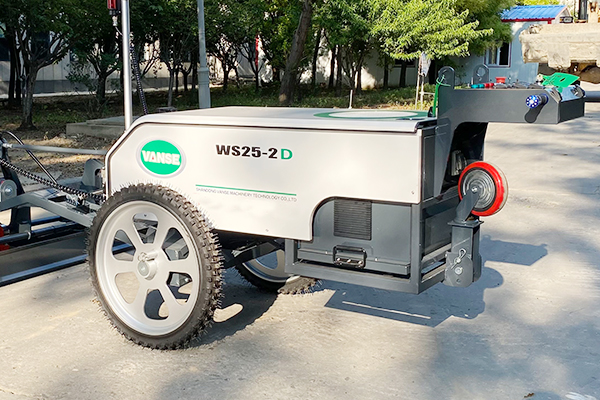
Laser Screed Grade Control Explained for Global Markets
Quick Answer

A laser screed controls concrete elevation by combining a rotating laser transmitter, machine-mounted receivers, a control computer, and hydraulic screed-head cylinders. The laser establishes a reference plane; receivers detect whether the screed head is above or below that plane; the controller automatically raises or lowers the head while the machine spreads, vibrates, and levels fresh concrete. This produces flatter slabs with fewer manual corrections than conventional stringline or hand-screeding methods.
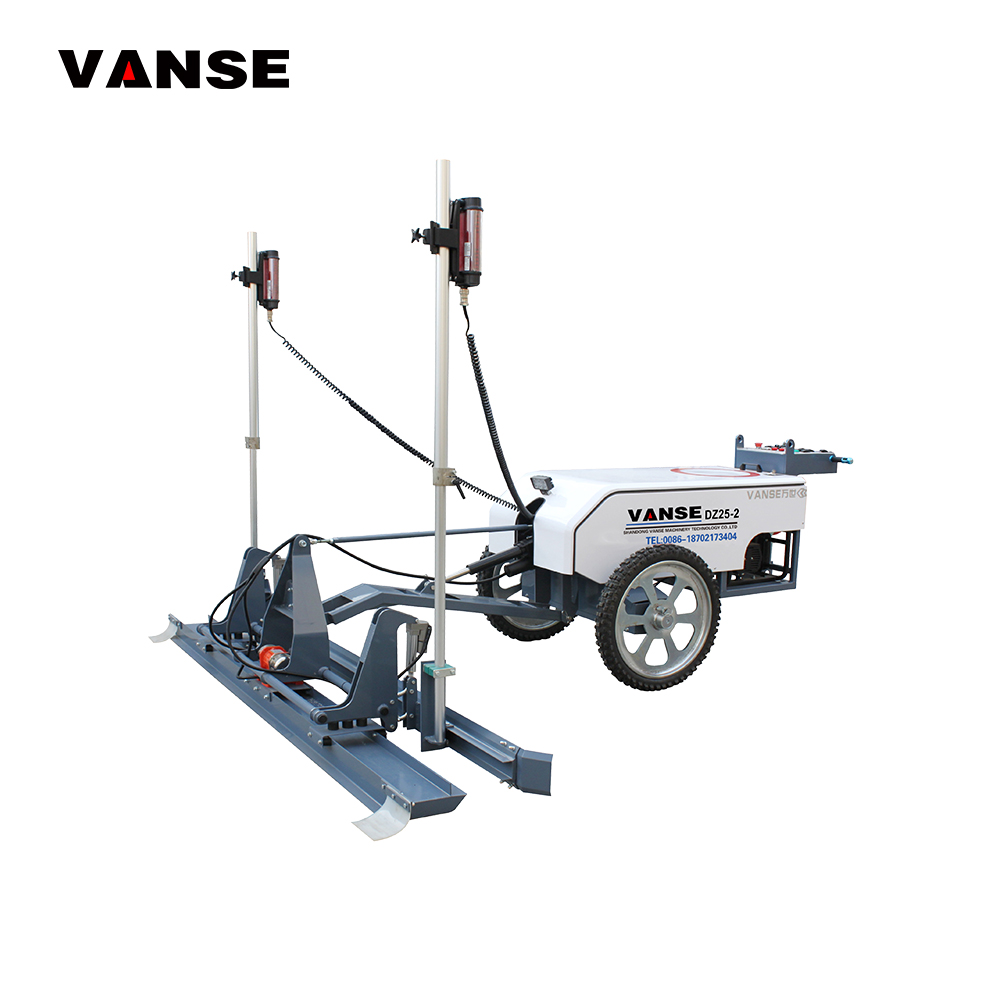
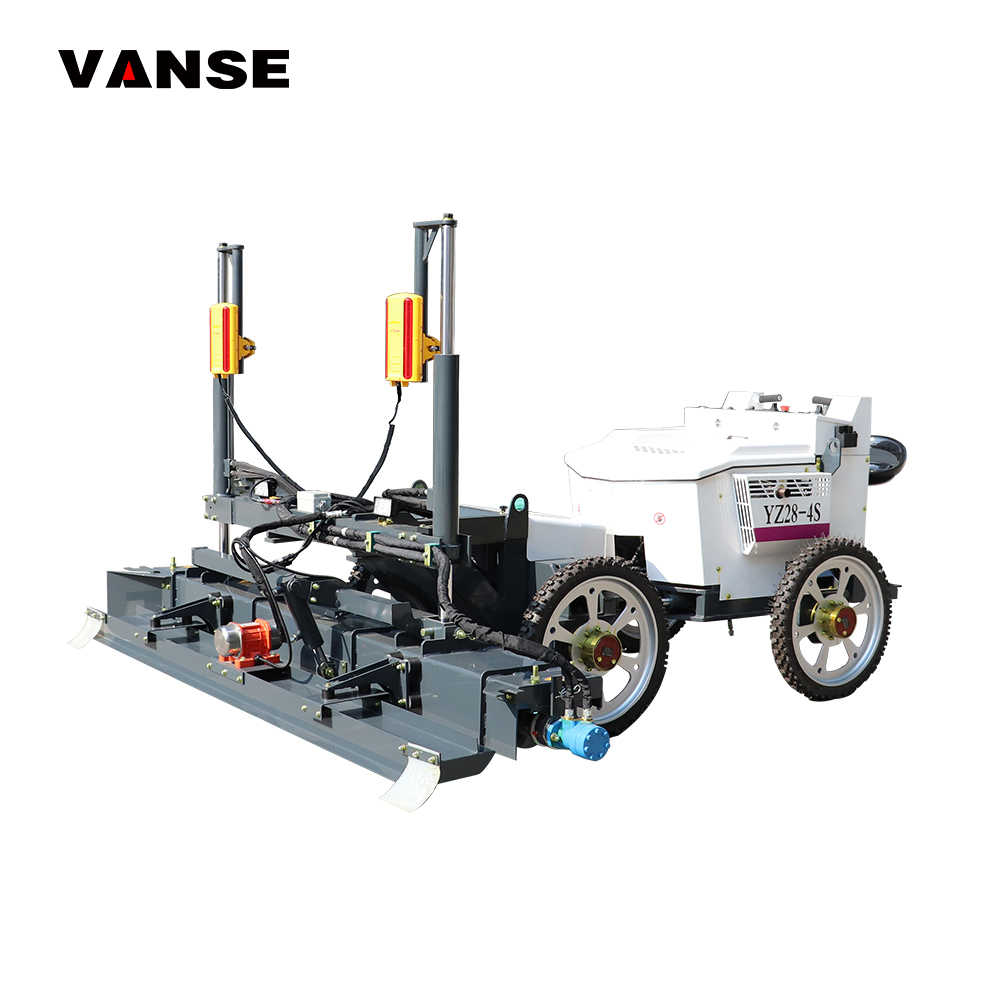
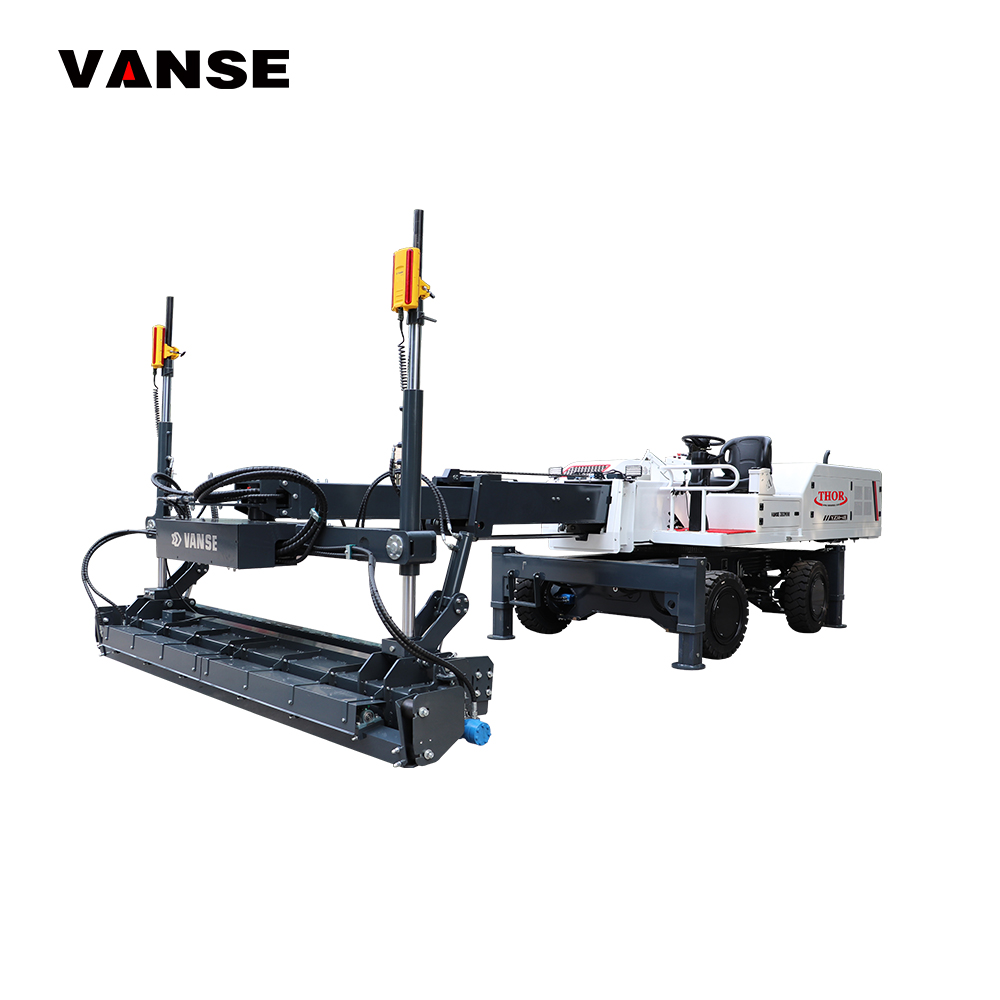
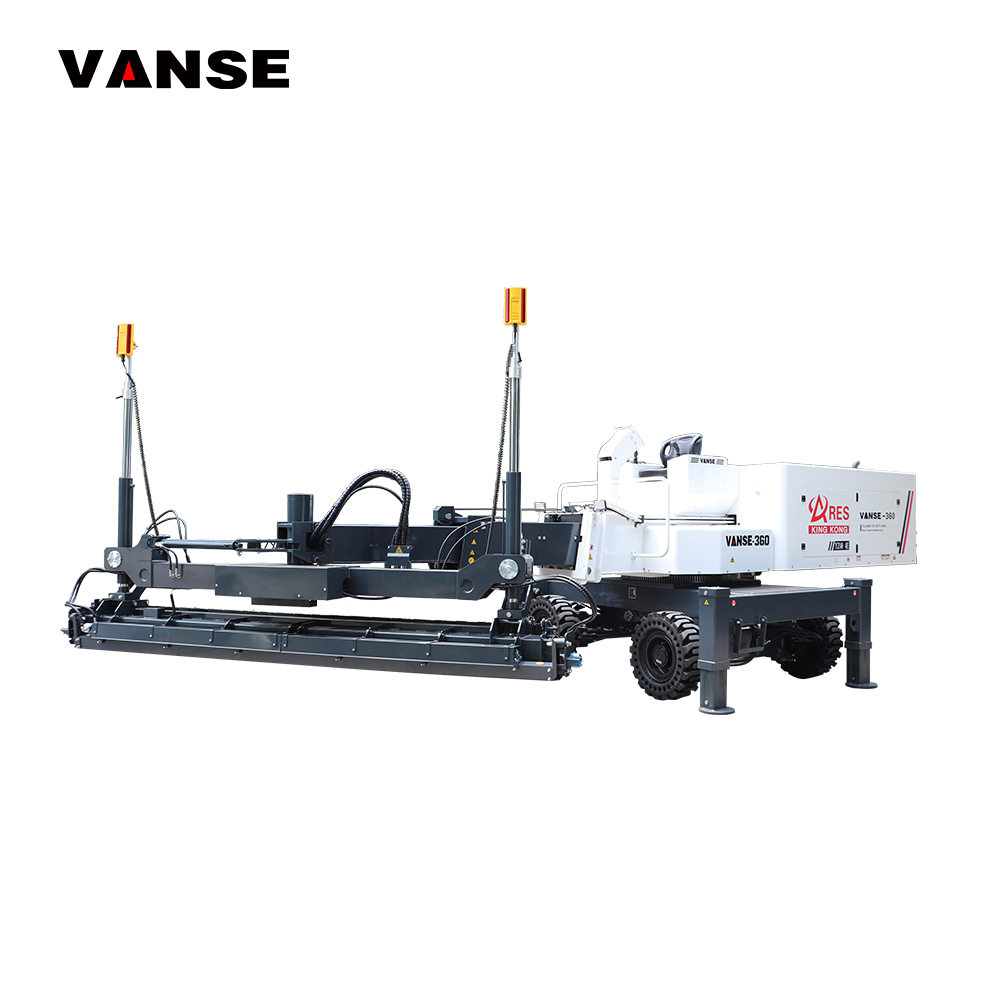
Contractors in the Global market normally need a concrete laser leveling machine when slab tolerance, labor availability, pouring speed, or project scale makes manual leveling inefficient. Ride-on laser screeds suit factories, warehouses, logistics hubs, and distribution centers. Boom-type models are particularly useful around columns, walls, pits, and restricted-access areas. Walk-behind units can be economical for smaller slabs, repair zones, and narrow indoor spaces.
For procurement, first define the required flatness, concrete mix, pour size, access route, power source, service coverage, and whether 2D laser control or 3D profile control is needed. Leading international suppliers such as Somero and Ligchine are established choices. Qualified Chinese manufacturers, including Vanse, can also be considered when they offer applicable CE or local compliance documentation, responsive pre-sale engineering, spare-parts availability, training, and reliable after-sales support at a competitive cost-performance level.
How Laser-Guided Concrete Leveling Works

The working principle of a laser screed is based on automatic elevation feedback. Before placing concrete, the project team establishes a benchmark using survey data, finished-floor drawings, or a known elevation point. A rotary laser transmitter is then positioned outside the concrete placement path, usually on a tripod or stable mounting point. It projects a continuous horizontal laser plane across the working area. For slopes, crowns, drainage falls, or complex surfaces, a 3D control system may use digital design data rather than only a single flat laser plane.
The screed machine carries one or more laser receivers mounted on a mast. As the machine moves, those receivers compare their physical height with the laser reference plane. If the screed head rises too high, the receiver signals the controller that the slab is above target. The controller directs hydraulic cylinders to lower the screed head. If the screed head is too low, the controller raises it. This process occurs continuously during placement, helping maintain the specified finished elevation despite changes in subbase, concrete volume, operator movement, and material consistency.
At the front of the machine, an auger or plow distributes concrete. The vibrating screed head consolidates the material and removes local high spots. The leveling blade trims excess concrete and carries material toward low areas. The hydraulic system adjusts the screed-head elevation while the machine advances, creating a more uniform finished surface. A concrete crew still has critical responsibilities: placing concrete consistently, managing slump and delivery timing, supporting edges and penetrations, checking benchmarks, and completing bull floating, troweling, curing, and joint cutting.
Laser guidance does not replace good concrete practice. It controls grade efficiently, but it cannot correct poor mix design, delayed discharge, unstable formwork, inadequate base preparation, poor curing, or incorrect joint design. The best results come from combining the machine with a qualified flooring contractor, calibrated survey control, a stable concrete supply chain, and a clear finishing sequence.
Core Operating Sequence
- Surveyors or site engineers confirm the finished floor elevation, drainage fall, or 3D design profile.
- The crew prepares the subbase, vapor barrier, reinforcement, forms, embeds, armor joints, and access routes.
- A rotating laser transmitter or 3D positioning system is installed and checked against a benchmark.
- Concrete is discharged in manageable lanes while rakers keep material ahead of the screed head.
- Receivers detect deviations from the reference level and send signals to the controller.
- Hydraulic cylinders automatically adjust the screed head while the machine spreads, vibrates, and trims concrete.
- Finishers correct edges, column zones, construction joints, and areas inaccessible to the machine.
- The team verifies slab tolerances, applies curing measures, and protects the slab from early loading.
Why the Global Market Is Adopting Laser Screeds

Demand for high-tolerance concrete floors is expanding across North America, Europe, the Middle East, Asia-Pacific, Latin America, and Africa. Global growth in e-commerce, cold storage, manufacturing, airport logistics, electric-vehicle production, data centers, port warehousing, and automated distribution is increasing the need for flatter, more durable slabs. Automated guided vehicles, narrow-aisle forklifts, high-bay racking systems, robotic storage equipment, and high-speed pallet operations all benefit from consistent floor elevation and predictable surface quality.
Major construction hubs including Houston, Toronto, Monterrey, São Paulo, Rotterdam, Hamburg, Dubai, Riyadh, Singapore, Kuala Lumpur, Sydney, Melbourne, Johannesburg, and Mumbai continue to develop industrial estates and logistics facilities. In port-centered markets, concrete floors near terminals and inland freight zones must often withstand heavy point loads, forklift movement, rapid construction schedules, and strict operational handover requirements. Laser screeding helps contractors place larger slab areas within shorter windows while reducing dependence on manual grade checking.
Labor constraints are another important factor. In many markets, experienced concrete finishers are difficult to recruit and retain. A trained laser-screed operator can help a smaller crew control elevation across a larger area, although support workers remain necessary for concrete placement, edges, finishing, and curing. The equipment therefore improves labor productivity rather than eliminating skilled labor.
For global buyers, machine selection should reflect local conditions. A contractor in Canada may prioritize cold-weather reliability, local parts, and enclosed transport. A contractor in Saudi Arabia may need heat-resistant operating practices, robust filtration, and support for large open slabs. Buyers in Southeast Asia may value compact transport dimensions, corrosion protection, and fast service around dense urban projects. European contractors may focus on CE documentation, low emissions, safety systems, and integration with digital layout workflows.
Laser Screed Types and Best-Fit Projects
The right machine configuration depends on slab area, required tolerance, jobsite access, concrete volume, and obstacles. A contractor should not choose solely by machine size. A large ride-on machine may be highly productive on an open warehouse slab but inefficient in a small room with numerous columns. Likewise, a compact walk-behind unit may reduce capital cost but limit output on a major logistics project.
| Machine Type | Typical Working Method | Best Project Scale | Primary Advantages | Important Limitations |
|---|---|---|---|---|
| Walk-behind laser screed | Operator walks behind or beside the machine while guiding the screed path. | Small commercial slabs, repairs, corridors, and confined areas. | Compact size, easier transport, lower investment, useful around restricted access. | Lower daily output and more operator effort than ride-on models. |
| Ride-on laser screed | Operator rides on the machine and controls placement lanes from an elevated seat. | Warehouses, factories, retail slabs, and medium-to-large industrial floors. | High productivity, reduced walking fatigue, good visibility, efficient open-area coverage. | Needs adequate access width and careful transport planning. |
| Boom-type laser screed | A telescopic or articulated boom reaches over concrete from a stable machine position. | Large slabs with columns, dense reinforcement, pits, and difficult access zones. | Long reach, 360-degree working capability on some models, fewer tracks in fresh concrete. | Higher purchase cost and operator training requirements. |
| Compact boom screed | Shorter boom configuration designed for smaller indoor or mixed-access projects. | Commercial buildings, basements, workshops, and medium industrial areas. | Balances reach with maneuverability and can reduce manual work around obstacles. | Cannot match the reach or output of large boom machines. |
| 2D laser-controlled screed | Uses rotating laser transmitters to maintain a constant elevation plane or programmed slope. | Most flat floors, yards, pavements, and standard industrial slabs. | Proven, practical, relatively simple setup, strong accuracy for flatwork. | Less suitable for highly complex variable profiles without additional control methods. |
| 3D profile-controlled screed | Uses digital design information and machine-control inputs for variable elevations. | Sloped floors, drainage channels, ramps, pavements, and complex profiles. | Supports more complex geometry and reduces manual setting-out work. | Requires accurate digital models, specialist setup, and disciplined calibration. |
This comparison shows why contractors should match machine geometry to the actual pour. For example, a broad fulfillment-center slab near Dallas, Dubai South, or Rotterdam may justify a ride-on or boom-type laser screed. A food-processing plant renovation in Birmingham, Melbourne, or Kuala Lumpur may benefit from a compact model that can enter through existing doors and work around service penetrations.
Accuracy Factors That Affect Finished Slab Results
Millimeter-level machine control is possible under suitable conditions, but actual finished-floor performance depends on the complete construction system. The laser screed controls the elevation of fresh concrete under its sensors; it does not guarantee a final floor-number result by itself. Curling, shrinkage, settlement, finishing timing, saw-cut timing, curing quality, and loading conditions can all influence completed slab performance.
| Accuracy Factor | How It Influences Results | Recommended Contractor Action | Common Risk if Ignored |
|---|---|---|---|
| Laser transmitter calibration | A poorly calibrated transmitter creates a wrong reference plane across the whole pour. | Check calibration certificates and verify the beam against an independent benchmark. | Consistent but incorrect slab elevation. |
| Receiver mast condition | Loose mounts or damaged sensors create unstable elevation readings. | Inspect clamps, cables, mast alignment, and receiver response before each shift. | Random high and low areas during screeding. |
| Subbase tolerance | Uneven subbase changes concrete volume and can slow placement or expose low-volume zones. | Grade and compact the base using verified survey control before concrete arrives. | Material shortages, excessive thickness variation, and reduced productivity. |
| Concrete consistency | Slump, aggregate grading, fiber content, and set time affect how the mix moves and consolidates. | Use an approved mix design and monitor every truckload for consistency. | Surface defects, tearing, delayed finishing, or poor consolidation. |
| Placement rhythm | Irregular truck supply interrupts the screed and creates cold joints or finishing pressure. | Coordinate batch plant dispatch, pump capacity, rakers, and machine travel paths. | Uneven surface texture and rushed finishing operations. |
| Operator technique | Travel speed, head overlap, material management, and obstacle planning affect surface uniformity. | Train operators on the machine model and conduct trial lanes before production pours. | Visible waves, unfilled low zones, and unnecessary rework. |
| Environmental conditions | Wind, heat, rain, cold, and direct sun alter evaporation and set time. | Use weather planning, evaporation control, curing compounds, and contingency procedures. | Plastic shrinkage cracking, dusting, and inconsistent finish quality. |
Before any major pour, the contractor should run a pre-pour meeting that includes the concrete supplier, screed operator, finishing foreman, surveyor, quality manager, and site superintendent. This meeting should confirm laser location, backup power, fuel, access, truck route, reinforcement sequence, joint layout, testing plan, curing materials, lighting, safety boundaries, and contingency actions if the transmitter or machine stops.
How to Choose a Laser Screed for Your Project
Buying decisions should begin with project requirements rather than brochure specifications. Ask whether the company mainly pours small commercial slabs, large warehouse floors, exterior pavements, multi-level buildings, or specialized high-flatness slabs. Review the average and maximum daily concrete volume, not only the total project area. A machine that is oversized for normal work may remain underutilized, while an undersized machine can limit bidding capacity and increase labor costs.
| Buying Criterion | Questions to Ask | Why It Matters | Practical Buying Direction |
|---|---|---|---|
| Slab size and pour volume | How many square meters or square feet are placed in a normal day? | Determines whether compact, ride-on, or boom reach is justified. | Choose capacity for regular projects, not a rare maximum-size job. |
| Access and jobsite layout | What are the door widths, slab edges, columns, ramps, and transport restrictions? | Machine access can decide the project before placement begins. | Confirm dimensions, turning radius, weight, and loading method. |
| Grade requirement | Is the design flat, sloped, crowned, drained, or digitally profiled? | Controls whether standard 2D laser guidance is adequate. | Select 3D-ready equipment for frequent variable-profile work. |
| Concrete mix design | Will the slab use fibers, low-slump concrete, large aggregate, or special admixtures? | Material behavior influences spreading and vibration performance. | Request demonstrations using a comparable concrete mix. |
| Powertrain and hydraulic system | What engine, hydraulic components, filtration, and service intervals are specified? | Reliability depends on component quality and maintenance support. | Obtain a documented parts list, warranty scope, and local support plan. |
| Training and commissioning | Does the supplier provide on-site startup, operator training, and calibration guidance? | Equipment performance depends heavily on competent setup and operation. | Include commissioning and practical training in the purchase contract. |
| Spare parts coverage | Where are consumables, sensors, seals, hoses, and electrical parts stocked? | Downtime during a scheduled pour can be expensive. | Choose suppliers with regional inventory and clear emergency response procedures. |
| Total ownership cost | What are purchase price, freight, tax, service, wear parts, financing, and resale expectations? | Low initial cost may not equal low operating cost. | Compare full lifecycle cost over expected utilization years. |
Buyers should request a real project demonstration whenever possible. A demonstration should show setup time, transmitter verification, receiver response, boom movement, vibration quality, hydraulic stability, machine travel, emergency stop functions, cleaning access, and operator ergonomics. Ask for evidence of results on comparable projects rather than relying only on claimed productivity figures.
For international deliveries, clarify Incoterms, container loading, port documentation, import duties, local electrical requirements, engine-emission compliance, insurance, operator manuals, spare-parts kits, remote diagnostics, warranty procedure, and lead time. Ports such as Los Angeles, Vancouver, Santos, Rotterdam, Jebel Ali, Singapore, and Melbourne are important trade gateways, but inland transport and final-mile delivery must also be planned for a heavy construction machine.
Industries and Applications for Laser Screeding
Laser screeds are most valuable where floor performance directly affects business operations. Industrial flooring contractors use them to achieve consistent elevations before applying dry-shake hardeners, power-trowel finishes, coatings, polished concrete systems, or specialized jointing solutions. Infrastructure contractors use them for slabs, pavements, yards, and other high-volume concrete surfaces where speed and repeatability are important.
| Industry | Typical Application | Floor Requirement | Recommended Screed Approach |
|---|---|---|---|
| Warehousing and logistics | Distribution centers, fulfillment hubs, loading zones, and high-bay storage areas. | Flatness, forklift travel quality, durable joints, and large daily pour capacity. | Ride-on or boom-type laser screed with disciplined joint and curing planning. |
| Manufacturing | Automotive plants, electronics facilities, assembly halls, and machinery foundations. | Reliable elevation, surface durability, and coordination around embedded services. | Boom screed for wide coverage around columns, pits, and complex layouts. |
| Cold storage and food processing | Freezer floors, refrigerated warehouses, packing rooms, and hygienic processing areas. | Accurate drainage, insulation coordination, and robust concrete placement scheduling. | Laser or 3D-controlled screed with attention to slope and thermal detailing. |
| Commercial construction | Retail shells, shopping centers, offices, parking structures, and mixed-use buildings. | Consistent floor levels across varied room sizes and access limitations. | Compact ride-on or walk-behind units for phased interior work. |
| Airport and terminal projects | Aprons, terminal yards, maintenance buildings, and support facilities. | Large-area productivity, pavement profile control, and heavy-load durability. | High-output boom or 3D-capable screed supported by survey control. |
| Ports and container yards | Container handling zones, freight yards, intermodal facilities, and repair workshops. | Strong slab consistency, drainage planning, and heavy wheel-load performance. | Large-format machine matched with reinforced slab and joint design. |
| Data centers | Equipment halls, service corridors, generator buildings, and support warehouses. | Predictable elevations, strict quality control, and fast construction handover. | Ride-on or boom screed with documented benchmark verification. |
In all applications, laser screeding should be treated as one part of a full floor system. Concrete strength, reinforcement, steel fibers or synthetic fibers, vapor protection, armoring at joints, hardeners, curing, and maintenance procedures must be designed together. This is especially important in facilities that use narrow-aisle forklifts, automated racking, high wheel loads, or temperature-controlled environments.
Practical Project Examples
High-Bay Warehouse Floor
A contractor building a 30,000-square-meter logistics warehouse may divide the slab into planned daily pours, with each pour organized around truck supply, reinforcement completion, joint locations, and finishing capacity. A ride-on or boom-type screed can level open bays efficiently while reducing the number of workers required to pull conventional screed boards. Laser control helps maintain elevation from bay to bay, while finishers concentrate on edges, doorways, joints, and final surface work. The project team should still test concrete, monitor ambient conditions, and verify flatness after curing.
Manufacturing Facility with Columns and Equipment Pits
In a production building with frequent columns, embedded conduits, machine bases, and drainage details, a boom-type machine offers clear advantages. The operator can position the machine in an accessible zone and use the boom to reach surrounding concrete without repeatedly moving across fresh material. Careful coordination is essential because the machine cannot replace hand finishing close to fixed obstructions. A 3D-capable system may also support complex floor falls around washdown or process areas.
Retail Renovation in a Restricted Urban Site
A city-center renovation may have limited loading access, narrow entrances, existing walls, and short concrete delivery windows. A walk-behind or compact boom laser screed can provide better control than manual screeding while remaining practical for constrained conditions. The purchasing decision in this case should prioritize transport dimensions, machine weight, ease of cleaning, and responsive local service rather than maximum theoretical output.
Container Yard Maintenance Zone
At an inland container depot near a port corridor, the contractor may need to replace or extend heavy-duty concrete slabs while maintaining traffic flow. Laser-guided control supports repeatable grade, especially where drainage and vehicle movement matter. However, the structural design must remain the responsibility of qualified engineers, including slab thickness, dowels, reinforcement, subbase, joint details, and load assumptions for container-handling equipment.
Leading Laser Screed Suppliers Serving Global Buyers
The supplier landscape includes specialized laser-screed manufacturers, concrete-equipment manufacturers, regional dealers, and project-focused distributors. Availability differs by country, so buyers should verify the current dealer, service, and parts arrangement before placing an order. The companies below are real industry participants known for concrete equipment or laser screed offerings in international markets.
| Company | Headquarters | Service Regions | Core Strengths | Key Offerings |
|---|---|---|---|---|
| Somero Enterprises | United States | North America, Europe, Asia-Pacific, Middle East, and selected global distributor markets. | Specialized concrete-leveling technology, broad product range, established high-performance flooring experience. | Laser screeds, boom screeds, ride-on systems, 3D profiling solutions, and related concrete placing technology. |
| Ligchine International | United States | North America and international dealer-supported markets. | Compact and mid-size concrete laser screeding solutions with a contractor-oriented approach. | Laser-guided screeds, boom screeds, concrete placing and finishing equipment. |
| Shandong Vanse Machinery Technology Co., Ltd. | China | More than 80 countries and regions, including North America, Europe, Southeast Asia, the Middle East, South America, and Australia. | Broad concrete-construction product range, flexible customization, technical support, and cost-performance focus. | Walk-behind, ride-on, and boom-type laser screeds, power trowels, grinders, cutters, topping spreaders, joints, and fibers. |
| Shandong HIKING Machinery Co., Ltd. | China | Export markets through international sales and dealer channels. | Construction-machinery manufacturing with laser screed and concrete-finishing equipment options. | Concrete laser screeds, power trowels, road and floor construction equipment. |
| Allen Engineering Corporation | United States | North America and international distribution markets. | Long-established concrete placing and finishing equipment expertise. | Power trowels, truss screeds, concrete pavers, finishing equipment, and contractor support solutions. |
| Wacker Neuson | Germany | Europe, North America, Asia-Pacific, Latin America, Africa, and dealer-supported markets. | Global construction-equipment support network and broad jobsite equipment portfolio. | Concrete vibration equipment, trowels, saws, compact equipment, lighting, and jobsite support products. |
This supplier overview demonstrates that buyers have different procurement paths. A major contractor may select a specialized high-output manufacturer for repeated warehouse work. A regional flooring company may choose a compact machine with strong dealer support. A distributor may seek a supplier that can provide customized branding, voltage options, regional product adaptations, and structured technical training.
Vanse Concrete Laser Screed Solutions for International Contractors
Vanse supports global concrete contractors with laser-guided concrete leveling machines designed for industrial slabs, warehouses, factories, commercial buildings, terminal yards, roads, and infrastructure work. Since its founding in Jining in 2013, Shandong Vanse Machinery Technology Co., Ltd. has developed walk-behind, ride-on, and boom-type screeds alongside power trowels, grinding machines, cutting machines, topping spreaders, slipform equipment, concrete armor joints, steel fibers, and synthetic fibers. Its production capability is supported by ISO 9001 and CE certifications, more than 50 invention patents, and over 200 utility model and design patents. Vanse combines laser-control systems, hydraulic technology, durable structural materials, reliable engine options, and practical machine design, while documenting configuration-dependent core component brands and specifications for buyers who need project-specific approval. Manufacturing and testing procedures are intended to meet international project expectations rather than relying on unverified performance claims.
For contractors, dealers, distributors, brand owners, rental companies, project owners, and individual buyers, Vanse offers direct equipment sales, wholesale supply, retail support, OEM/ODM production, customized branding, engine and voltage options, regional distribution cooperation, and long-term technical partnerships. Its ride-on laser screed range can be evaluated for large industrial floors, while boom-type options can serve projects requiring reach around columns and embedded structures. For project integration, Vanse provides EPC, turnkey, and customer-owned plant solutions; it does not operate under BOO or on-site bulk-supply service models.
Vanse is not positioned only as a remote exporter. The company has established overseas branch and service resources in Southeast Asia and Canada, plus dealer networks across North America, South America, Europe, Asia, and the Middle East. Its team of more than 100 technical experts, research engineers, and after-sales specialists supports project consultation, equipment selection, solution design, delivery, installation, commissioning, operator training, maintenance guidance, spare-parts supply, remote diagnosis, and on-site technical support. Buyers can access multilingual 24-hour consultation through telephone, video, and online communication, reinforced by regional dealers and spare-parts channels. Contractors can review Vanse’s technical service support before procurement and learn more through the company’s international operating profile. This service structure gives global customers a practical route to reduce downtime, protect project schedules, and build a long-term equipment partnership.
Installation, Training, and Maintenance Priorities
A laser screed should arrive with a commissioning plan, not simply a shipping document. The supplier or dealer should confirm machine inspection, hydraulic oil status, battery condition, receiver installation, transmitter setup, control calibration, emergency-stop testing, lubrication points, engine maintenance schedule, and operator familiarization. The initial training session should include both routine operation and real jobsite scenarios such as low concrete supply, receiver obstruction, hydraulic alarms, slope setup, cleaning, transport loading, and end-of-shift inspection.
Daily maintenance normally includes checking fuel or battery status, hydraulic leaks, hoses, bolts, sensor mounts, blade condition, vibration components, grease points, engine air filtration, and safety devices. Concrete should be cleaned from the screed head before it hardens. Laser receivers and transmitters should be protected from impact, moisture, dust buildup, and unauthorized adjustment. A spare-parts package should include common filters, seals, hoses, fuses, connectors, and wear components appropriate to the machine model.
For rental companies and multi-crew contractors, operator accountability is especially important. Keep a log for hours, maintenance, faults, receiver calibration, and project conditions. This documentation improves resale value, supports warranty claims, and helps managers identify whether recurring issues are caused by machine condition, operating practices, or inconsistent concrete supply.
Future Trends for 2026 and Beyond
Laser screed technology is moving toward better digital integration, lower emissions, more predictive maintenance, and improved operator assistance. In 2026, contractors will increasingly expect machines to work alongside digital site-control systems, BIM-derived profiles, cloud-based maintenance records, and quality documentation. The shift is especially relevant for large logistics, manufacturing, public infrastructure, and data-center projects where owners demand traceable construction records.
3D profile control will become more accessible for projects involving drainage, ramps, exterior yards, and variable-slope slabs. Advanced sensors, improved control software, and machine telemetry can help teams detect calibration issues, track operating hours, plan maintenance, and remotely support operators. These tools will not remove the need for skilled surveyors and concrete professionals, but they can reduce setup errors and improve repeatability.
Sustainability will also affect procurement. Contractors are under pressure to reduce waste, optimize concrete volumes, limit unnecessary rework, and improve equipment fuel efficiency. Accurate grade control can help reduce over-pouring caused by an uneven subbase or inconsistent elevation control. Equipment buyers are also likely to assess engine-emission compliance, hydraulic efficiency, durable component design, and service-life support. In markets with stricter environmental rules, electric or hybrid jobsite equipment may expand, although diesel power remains practical for many large outdoor placements.
Policy trends will vary by region, but common requirements include workplace safety, CE marking where applicable, engine-emission rules, operator training, equipment inspection, construction-waste reduction, and documented quality control. Global contractors should make compliance review part of machine selection from the beginning, particularly when importing equipment across borders.
Frequently Asked Questions
What is the main purpose of a laser screed?
A laser screed automatically controls the elevation of fresh concrete while spreading, vibrating, and leveling it. Its main purpose is to improve slab flatness, grade consistency, productivity, and labor efficiency compared with manual screeding methods.
Can a laser screed replace all concrete finishing labor?
No. It reduces manual grade-control work over large open areas, but crews are still needed for concrete placement, raking, edges, columns, joints, penetrations, bull floating, troweling, curing, and quality checks.
What is the difference between a ride-on and boom-type laser screed?
A ride-on screed is generally suited to open slabs where the machine can travel efficiently across planned lanes. A boom-type screed uses a long reach to level concrete around obstacles, columns, walls, and inaccessible areas while the machine remains in a suitable operating position.
Do laser screeds work with steel-fiber or synthetic-fiber concrete?
They can work with fiber-reinforced concrete, provided the mix design, slump, fiber dosage, aggregate grading, and finishing process are suitable for the project. Contractors should confirm compatibility through trials and supplier guidance before a production pour.
How accurate is a laser screed?
Some machines can achieve millimeter-level elevation control under proper conditions. Final slab quality depends on calibration, benchmark accuracy, subbase preparation, concrete consistency, operator skill, finishing, curing, and the project’s specified tolerance standard.
When should a contractor consider 3D screed control?
3D control is valuable when the project includes changing slopes, drainage falls, crowns, ramps, complex pavements, or digital design profiles. For standard flat warehouse floors, conventional 2D laser guidance is often sufficient.
What support should an international buyer request?
Request written confirmation of warranty terms, spare-parts availability, training, commissioning, remote diagnosis, local dealer coverage, technical manuals, compliance documents, shipping arrangements, and response procedures for urgent jobsite faults.
Where can contractors learn about Vanse laser screed equipment?
Contractors can explore product and support information through the Vanse concrete construction equipment website, then discuss machine selection, customization, training, and service requirements with the technical sales team.
Share this article

About the Author: Shandong Vanse Machinery Technology Co., Ltd.
Shandong Vanse Machinery Technology Co., Ltd. is a high-tech manufacturer specializing in concrete construction machinery, including laser screeds and related equipment. The company integrates R&D, production, and global sales, with products exported to over 60 countries and widely used in infrastructure projects worldwide.