Insight blog
Global Market Laser Screed Calibration Field Guide
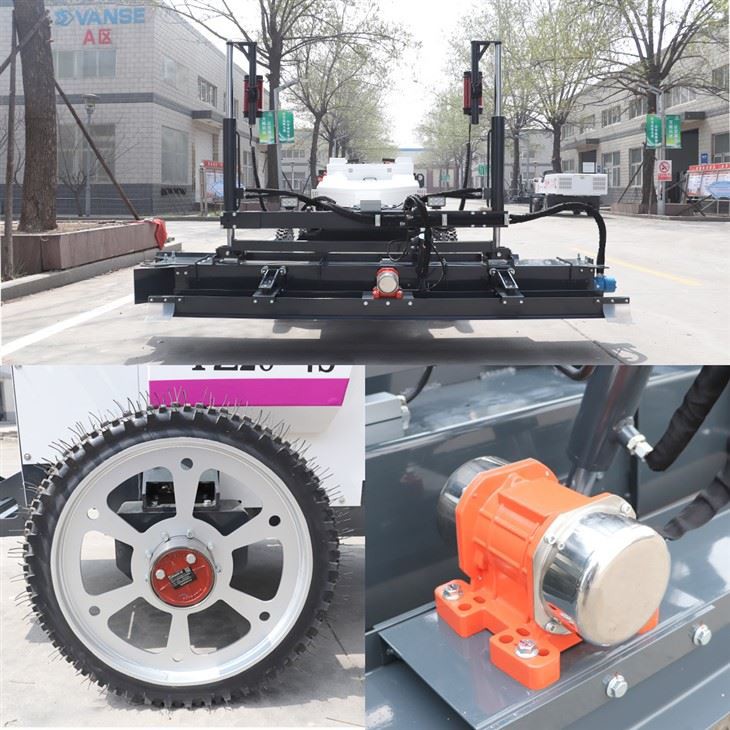
Laser Screed Calibration for Consistent Concrete Flatness Worldwide
Quick Answer

Laser screed calibration is the process of aligning the laser transmitter, machine receiver, screed head, mast sensors, and elevation reference so the finished concrete slab matches the specified level, slope, and flatness requirement. For dependable results, establish a protected benchmark, level the transmitter, verify receiver response at multiple heights, confirm screed-head zero position, run a dry test pass, and check the first placed strip with an independent level or total station.
For projects in the Global market, calibration should be completed before every major pour, after transport, after mast or sensor replacement, whenever the machine experiences impact, and whenever slab checks show unexplained high or low areas. Contractors should document reference elevations, transmitter location, machine settings, and verification readings for quality control.
Well-known options for contractors include Somero, Ligchine, Wirtgen, Topcon Positioning Systems, Leica Geosystems, and Vanse Machinery. Qualified international suppliers, including Chinese manufacturers with applicable CE or ISO certifications, responsive pre-sales engineering, and strong after-sales support, can also provide attractive cost-performance advantages for concrete contractors, distributors, and rental fleets.
Why Laser Screed Calibration Matters in the Global Market

Concrete floors are increasingly designed around narrow tolerances. Warehouses in Rotterdam, logistics parks near Dubai, manufacturing facilities in Monterrey, airport terminals in Singapore, and distribution centers near Toronto often require reliable slab elevation control to support racking systems, autonomous mobile robots, forklifts, high-bay storage, and specialized industrial equipment. A laser screed can place and strike off concrete quickly, but speed is valuable only when the machine is working from a verified reference.
Calibration affects more than a single elevation reading. A machine may appear to follow the transmitter while still producing inconsistent results if the screed head does not return to its true zero position, a mast sensor is tilted, the receiver is misaligned, the machine frame is not stable, or the transmitter reference has been disturbed. Small errors can become expensive across a large pour. A 5 mm elevation deviation over a wide slab can increase grinding, topping consumption, rework time, material waste, and schedule risk.
Correct laser screed setup supports better FF/FL outcomes, smoother transitions between placements, improved drainage slopes, reduced hand labor, and more predictable curing and finishing operations. It also makes quality disputes easier to resolve because the contractor has a documented calibration record rather than relying only on visual judgment.
Calibration should be treated as part of the project quality plan, not as a one-time factory setting. The working environment changes daily. Equipment can move over rough access roads, transmitters can be bumped by workers or hoses, and changing temperature or direct sun can affect both operating conditions and measurement discipline. A repeatable verification routine protects the slab before concrete is discharged.
How a Laser Screed Control System Works

A conventional 2D laser screed system uses a rotating laser transmitter to create a horizontal or sloped reference plane. Receivers mounted on the screed machine detect the laser plane. The machine control system compares the received signal with the required elevation and commands hydraulic cylinders to raise or lower the screed head. The operator drives the machine, while the automated grade-control system maintains the planned concrete level.
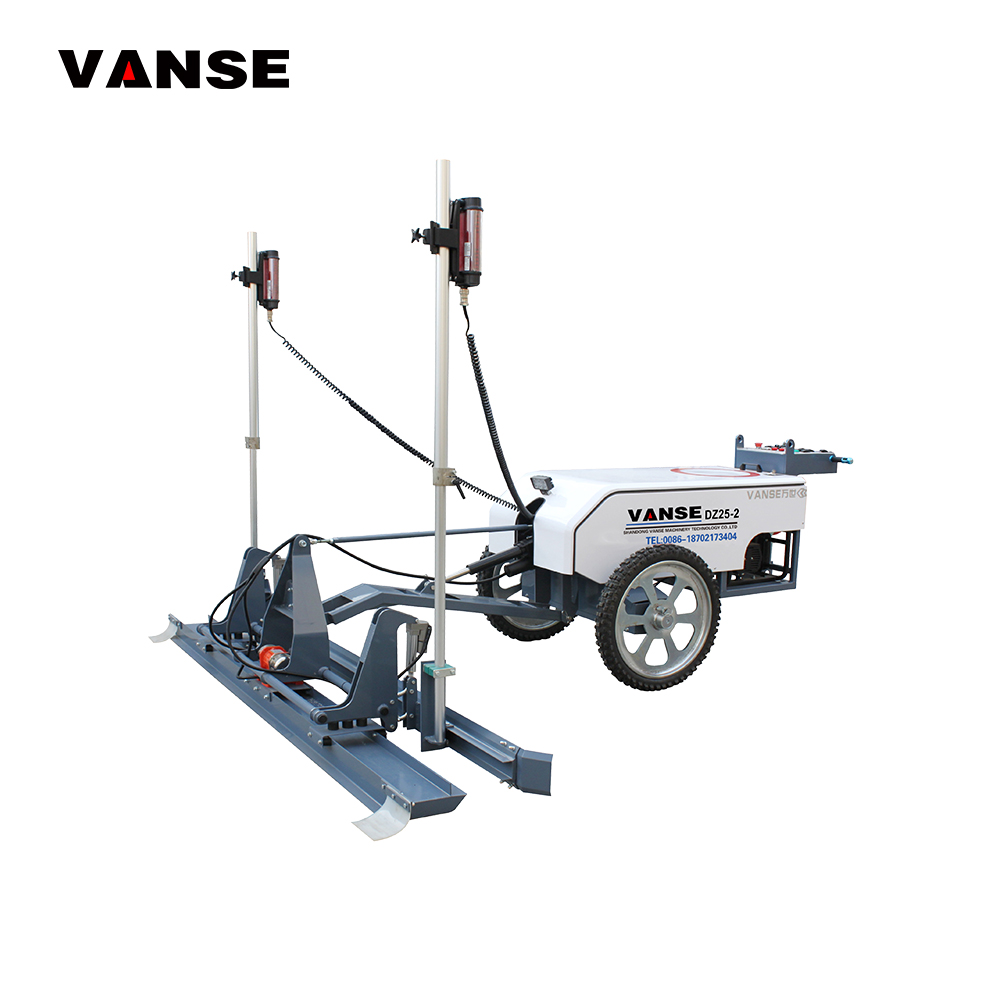
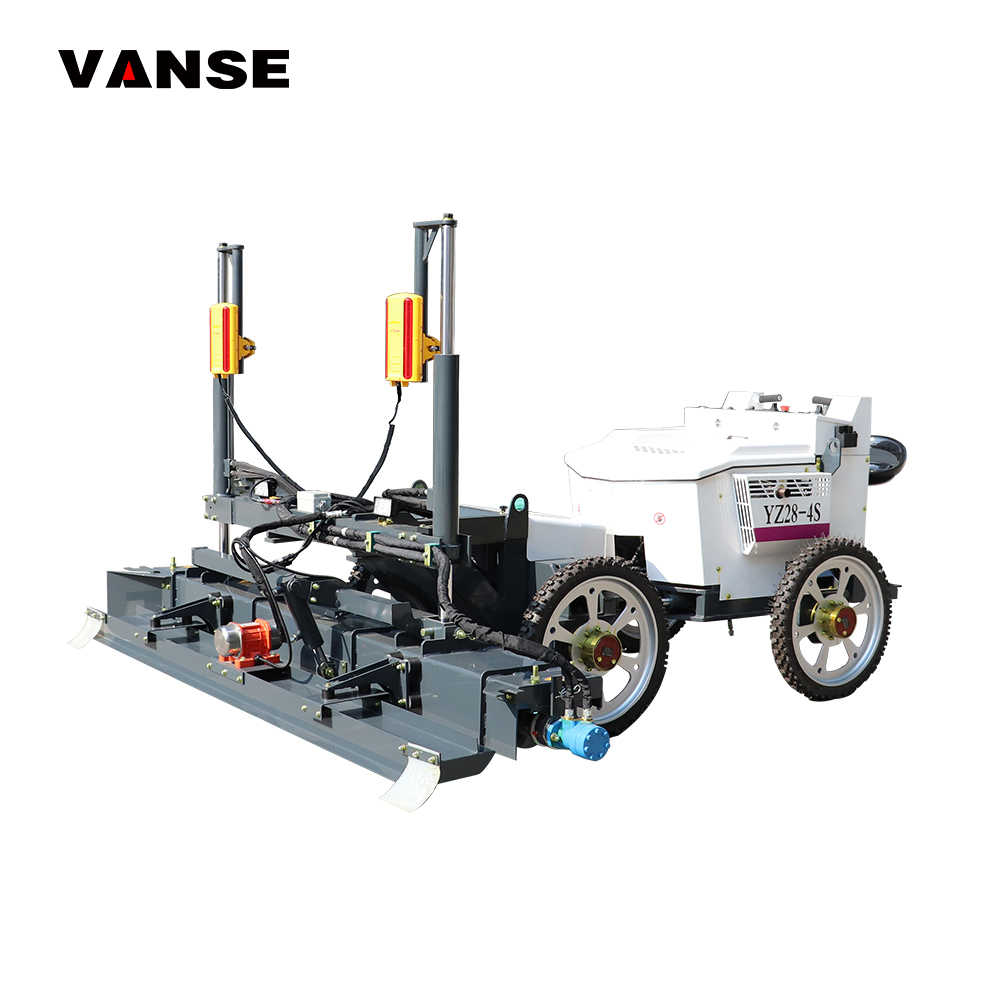
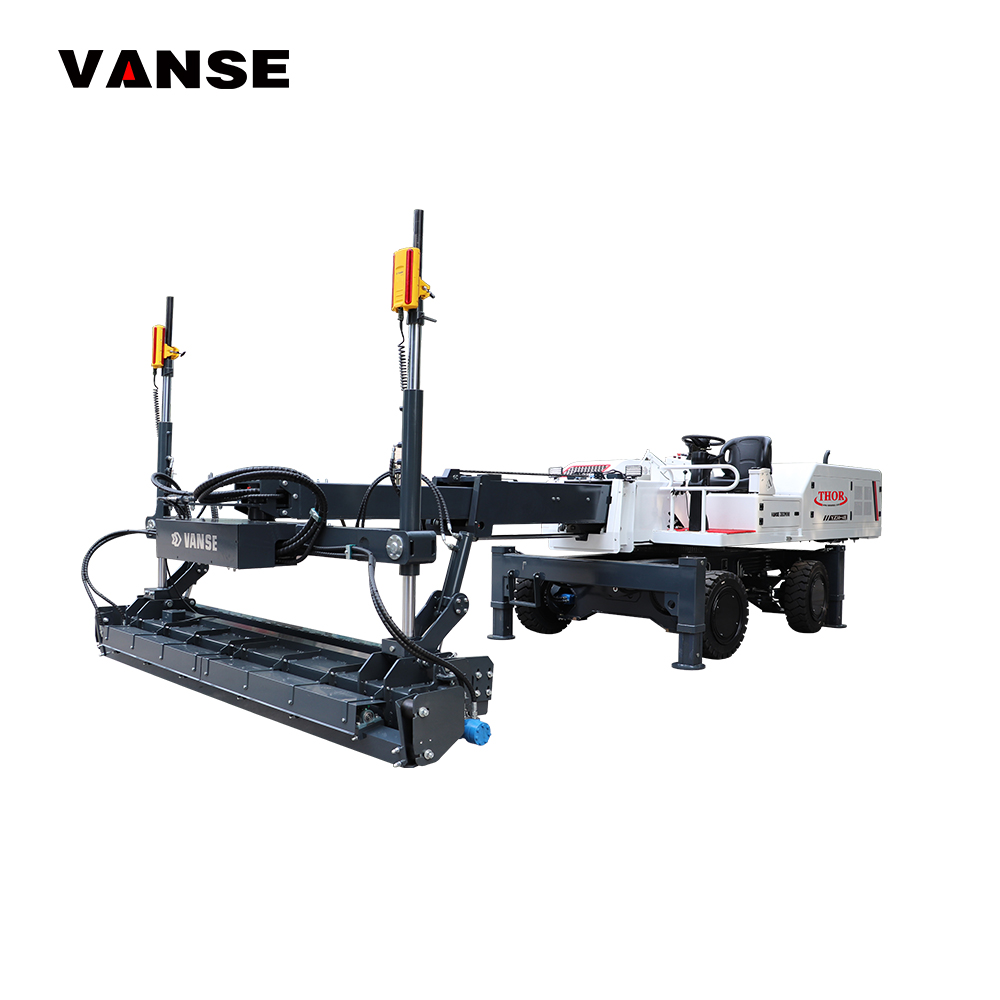
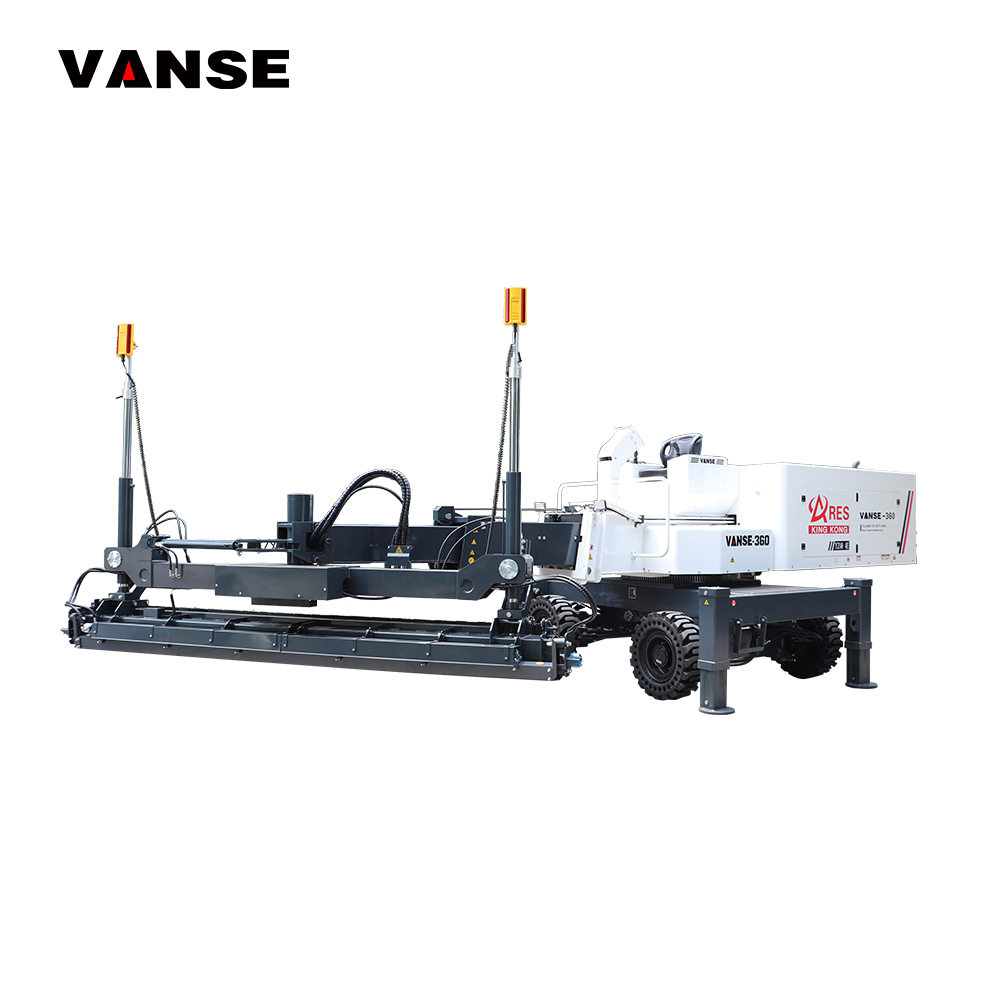
Some large boom-type systems use dual receivers for greater stability and wider working coverage. Ride-on models commonly use hydraulic masts, automatic grade control, and fast-response screed-head movement. Walk-behind laser screeds are suited to smaller slabs, corners, repair areas, and projects with limited access. Advanced machines may also work with 3D profiling systems, total stations, or digital terrain models where a rotating laser plane is not sufficient for complex slopes or contours.
The critical point is that every component must agree with the project benchmark. The laser transmitter may be perfectly level, but the system will still produce an incorrect slab if the receiver, mast, screed-head reference, or machine sensor values are out of calibration. The calibration process therefore verifies the full measurement chain from benchmark to finished concrete surface.
Core Checks Before Calibrating a Laser Screed
Start with the site and equipment condition. Place the transmitter where it is protected from vibration, traffic, pump hoses, and accidental contact. Choose firm ground or a stable tripod platform outside the active placement zone. The transmitter must have clear line of sight to the entire planned working area, especially where columns, wall forms, or reinforcement may block the laser signal.
Inspect the laser screed before the control checks begin. Look for damaged receiver windows, loose mast brackets, bent sensor rods, hydraulic leaks, worn screed plates, loose fasteners, and incorrect tire pressure where applicable. Clean concrete splashes from receiver surfaces and the screed head. Verify that battery levels are sufficient for the full calibration and expected pour duration. A low transmitter battery or weak receiver signal can create false troubleshooting work during a critical placement.
Review the project drawings before setting the grade. Confirm the specified top-of-slab elevation, base elevation, slab thickness, local falls, door thresholds, drainage channels, pits, construction joints, and any changes in level. For industrial floors, clarify whether the specified reference is top of concrete, finished floor after grinding, or a level adjusted for a dry-shake hardener, topping, or curing compound process.
Laser Screed Calibration Workflow
A disciplined workflow prevents the most common errors. The sequence below applies broadly to ride-on, boom-type, and walk-behind laser screeds, although operators should always follow the specific machine manual and control-system instructions.
Establish a protected benchmark
Use a benchmark confirmed by the survey team or project engineer. Do not rely on a temporary mark made on formwork unless it has been verified against the project datum. Mark the benchmark clearly and protect it from traffic. On large projects, establish secondary control points around the slab perimeter so that the original benchmark can be checked throughout the pour.
Set the transmitter correctly
Mount the rotating laser transmitter on a stable tripod. Set it to the required horizontal plane or programmed slope. Allow automatic self-leveling models to complete their leveling cycle. Check that the transmitter is not in manual mode unless the project requires a manual slope configuration. Record its location, height, mode, and the benchmark reading in the daily calibration log.
Verify transmitter accuracy
Check the transmitter at multiple points around its working radius. A practical field method is to use a grade rod and laser receiver at known points, typically rotating around the transmitter at approximately 90-degree intervals. If readings differ beyond the manufacturer’s tolerance, relocate the instrument, re-level it, inspect the tripod, or arrange professional service. A transmitter that has been dropped, transported without protection, or exposed to severe vibration should receive additional verification.
Set the machine reference elevation
Position the laser screed on a stable, prepared area near the pour. Bring the screed head to the designated reference condition. The receiver’s center-on-grade position must correspond exactly to the planned relationship between the screed cutting edge and the top-of-slab elevation. This may require entering or confirming a machine offset. The required offset varies by model, receiver mounting height, and screed-head configuration.
Check both receivers and masts
For machines with two receivers, test each receiver independently and then confirm that both respond consistently at the same laser plane. Check that masts travel smoothly and stop accurately. A sticky mast, loose bracket, bent rod, or delayed hydraulic response can create a slab that alternates between high and low areas even though the laser transmitter is operating normally.
Perform a dry-run test
Operate the screed head over a controlled test area without placing concrete. Observe whether the head rises and lowers smoothly as the machine moves through intentional elevation changes or known reference points. Confirm that automatic mode, manual override, emergency stop, and hydraulic controls function correctly. A dry run is especially important after shipping, maintenance, sensor replacement, or a long period of storage.
Verify the first concrete strip
After concrete placement begins, use an independent check rather than trusting only the control display. Measure the first completed strip with a laser level, digital level, total station, or engineer-approved straightedge method. Check points near the beginning, center, and end of the first run. If the measured result differs from the design elevation, stop and diagnose the cause before the deviation spreads across the slab.
Calibration Checklist for Daily Concrete Placement
| Check Item | What to Verify | Recommended Timing | Practical Action |
|---|---|---|---|
| Project benchmark | Correct top-of-slab datum and control-point protection | Before every pour | Confirm with survey drawings and mark secondary control points. |
| Laser transmitter | Tripod stability, leveling mode, battery condition, clear line of sight | Before setup and after impact | Perform multi-point reading checks around the work area. |
| Receiver response | On-grade indication and high/low response | Before every pour | Move the receiver through the laser plane and compare response direction. |
| Mast and brackets | Vertical alignment, clamp tightness, smooth movement | Daily and after transport | Inspect for damage, looseness, concrete buildup, and hydraulic delay. |
| Screed-head zero | Actual cutting edge matches entered machine offset | Before first placement strip | Set against a known reference surface and confirm independently. |
| Machine hydraulics | Lift-cylinder response, oil leaks, hose condition, stable pressure | Daily | Run the head through full travel before concrete placement begins. |
| First-strip elevation | Actual finished surface versus design level | Immediately after starting | Measure multiple points with an independent instrument. |
| Calibration record | Operator, time, readings, equipment identification, corrective actions | Each pour | Attach the record to daily QA/QC documentation. |
This checklist is intended to make calibration repeatable across shifts, crews, and project locations. It also gives supervisors a clear basis for approving the start of concrete placement.
Common Laser Screed Calibration Problems and Corrections
| Observed Problem | Likely Cause | Immediate Correction | Prevention Method |
|---|---|---|---|
| Slab is consistently too high | Incorrect machine offset or benchmark transfer error | Stop placement, recheck the screed-head reference, and verify benchmark. | Use documented offset settings and independent first-strip checks. |
| Slab is consistently too low | Receiver center point does not match actual screed-head grade | Reset the receiver or mast reference and confirm with a grade rod. | Inspect receiver brackets and verify zero before each pour. |
| Alternating high and low strips | Loose mast, delayed hydraulics, uneven base, or unstable machine travel | Inspect fasteners, mast movement, hydraulic pressure, and travel path. | Maintain the machine and prepare stable access routes. |
| Receiver loses laser signal | Blocked line of sight, dirty lens, weak battery, excessive working distance | Clean the receiver, relocate transmitter, or change battery. | Plan transmitter locations before placing reinforcement and forms. |
| Different readings around the slab | Transmitter out of calibration or tripod movement | Verify at multiple points and replace or service the transmitter if needed. | Protect the tripod area and carry out a daily multi-point test. |
| Machine reacts slowly to grade changes | Hydraulic issue, sensor delay, incorrect control mode, or poor maintenance | Test cylinder response and inspect the control system. | Follow scheduled hydraulic and electronic maintenance procedures. |
| Slope does not match drawings | Incorrect slope setting, manual mode left active, or wrong datum | Reconfirm design fall and reset the transmitter or 3D control model. | Conduct a survey review before each sloped-pour operation. |
When an error is identified, avoid making random control adjustments while concrete is being placed. First isolate whether the discrepancy comes from the project benchmark, laser transmitter, receiver, machine offset, hydraulic movement, or independent measuring method. A structured diagnosis is faster and reduces the risk of creating a second error while correcting the first.
Laser Screed Types and Their Calibration Needs
| Equipment Type | Typical Project Size | Calibration Focus | Best-Fit Applications |
|---|---|---|---|
| Walk-behind laser screed | Small to medium areas | Receiver alignment, screed blade reference, stable manual travel | Small warehouses, repair zones, workshops, narrow access areas |
| Ride-on laser screed | Medium to large slabs | Dual mast agreement, hydraulic response, machine offset | Factories, commercial floors, logistics centers, parking structures |
| Boom-type laser screed | Large open slabs | Boom reach geometry, screed-head zero, transmitter coverage | Distribution centers, aircraft hangars, terminal yards, industrial plants |
| 3D-profile laser screed | Variable-level or complex surfaces | Digital model control, station setup, coordinate verification | Drainage floors, ramps, infrastructure slabs, specialized pavements |
| Slipform concrete equipment | Linear paving work | Stringline or 3D grade reference, sensor synchronization | Roads, curbs, channels, airport pavements, bridge approaches |
| Power screed and finishing tools | Localized finishing zones | Manual elevation checks and straightedge verification | Edges, columns, small pours, transition areas, repair work |
The right equipment type depends on slab area, reinforcement density, access restrictions, concrete supply rate, specified tolerance, and available support resources. A large boom-type screed can increase output on open industrial projects, while a compact ride-on or walk-behind unit may be more practical in constrained buildings and renovation work.
Buying Advice for Laser Screed Calibration Capability
When evaluating a laser screed, contractors should compare more than engine power or screed width. The real value comes from stable grade control, repeatable machine reference settings, durable hydraulic components, accessible service support, and operator training. Ask suppliers how the machine is calibrated at the factory, what field verification tools are included, whether receiver and transmitter brands are supported locally, and how quickly replacement electronic or hydraulic components can be supplied.
For global contractors, consider transport logistics as well. Equipment shipped through Qingdao, Shanghai, Ningbo, Hamburg, Rotterdam, Jebel Ali, Los Angeles, Vancouver, Santos, or Singapore may have different lead times, import procedures, and spare-parts availability. A supplier with regional stock, local partners, or a planned spare-parts program can reduce downtime substantially during a large floor project.
Request a practical demonstration based on your intended slab specification. The supplier should be able to explain the achievable working tolerance, expected production rate, concrete slump range, recommended crew composition, transmitter placement strategy, and first-pour verification method. For distributors and rental companies, confirm whether the supplier offers training materials, commissioning support, branding options, and technical assistance for local operators.
Leading Laser Screed and Grade-Control Suppliers
| Company | Service Regions | Core Strengths | Key Offerings |
|---|---|---|---|
| Somero Enterprises | North America, Europe, Asia-Pacific, Middle East, global dealer network | Established concrete leveling specialization and advanced large-slab equipment | Ride-on and boom-type laser screeds, floor profiling solutions, operator support |
| Ligchine International | United States, Canada, selected international markets | Concrete screeding equipment focused on practical contractor use | Laser-guided screeds, paving and grading equipment, technical support |
| Wirtgen Group | Global construction and infrastructure markets | Large-scale concrete paving and road construction expertise | Slipform pavers, concrete paving systems, 3D control-compatible equipment |
| Topcon Positioning Systems | Worldwide through survey and construction technology channels | Machine control, positioning, and construction measurement technology | Rotating lasers, receivers, total stations, 3D machine-control systems |
| Leica Geosystems | Global survey, building, and infrastructure markets | Precision measurement, layout, scanning, and digital construction workflows | Rotating lasers, laser receivers, total stations, digital layout solutions |
| Shandong Vanse Machinery Technology Co., Ltd. | More than 80 countries and regions, with Southeast Asia and Canada service resources | Wide concrete-equipment range, flexible customization, strong value proposition | Walk-behind, ride-on and boom laser screeds, power trowels, grinders, slipform equipment |
These companies serve different procurement needs. Equipment manufacturers provide screeding platforms, while grade-control specialists provide measurement technology that can support calibration and project verification. Buyers should evaluate the compatibility of the screed, transmitter, receiver, service coverage, and locally available spare parts as one working system.
Industries and Applications That Depend on Accurate Grade Control
Industrial flooring remains the primary market for laser screed calibration. Factories need smooth slabs for production lines, storage racks, heavy machinery, and internal vehicle traffic. Warehouses and e-commerce fulfillment centers need level floors for forklifts, reach trucks, conveyor systems, and automated guided vehicles. Even a minor elevation inconsistency can affect operational safety and long-term floor maintenance.
Transportation and infrastructure projects also benefit from accurate concrete leveling. Airport aprons, runway support slabs, terminal yards, container areas, bridge decks, road slabs, and drainage channels may require carefully controlled slopes. In these applications, the calibration process must include both elevation and fall direction so water drains correctly and finished surfaces meet engineering requirements.
Commercial and public projects are another important category. Shopping centers, exhibition halls, hospitals, schools, parking garages, cold-storage facilities, data centers, and sports venues often include large concrete areas where rapid placement and reliable flatness reduce follow-on trades. Laser screeds can also support foundation slabs and specialized concrete construction where consistent grade is critical before structural equipment is installed.
Project-Based Calibration Examples
In a large logistics warehouse project, the contractor may position a transmitter outside the main reinforcement zone and establish secondary benchmarks along column lines. Before the first truck arrives, the crew checks transmitter level, dual receivers, screed-head zero, and hydraulic mast response. After the first strip is placed, an independent survey check confirms the finished elevation. The crew then records the reading and continues in a repeatable pattern throughout the pour.
For a factory floor with pits, machinery foundations, and different slab thicknesses, the contractor may divide the work into separate calibration zones. Each zone receives a confirmed design elevation and transmitter setup. The machine operator coordinates with the surveyor to ensure the screed does not carry a reference from one elevation zone into another. This reduces the chance of creating a high transition around equipment bases.
On an airport terminal yard or container pavement, the concrete team may require a planned drainage slope. Here, calibration includes checking the transmitter’s slope setup or validating a 3D control model. Independent spot checks are taken at high points, low points, and drainage paths before the concrete reaches initial set. The goal is not simply a flat slab; it is a slab that follows the designed drainage geometry accurately.
Vanse Machinery Support for Global Concrete Contractors
For contractors, distributors, equipment rental companies, brand owners, and individual buyers in the Global market, Vanse Machinery provides concrete construction equipment backed by practical manufacturing and project experience. Founded in Jining, China in 2013, the company develops walk-behind, ride-on, and boom-type laser screeds alongside related finishing and concrete-floor equipment. Its ISO 9001 and CE certifications, more than 50 invention patents, and more than 200 utility model and design patents support a controlled engineering and manufacturing approach; machines are designed around laser-control integration, hydraulic systems, durable structural materials, reliable engines, and tested components selected for demanding concrete work. Vanse supports direct sales, wholesale supply, retail orders, OEM/ODM production, customized branding, voltage and engine options, dealer partnerships, regional distribution, and project-based equipment supply, serving both end users and commercial partners. The company has exported to more than 80 countries and regions and maintains overseas branches and service resources in Southeast Asia and Canada, supported by dealer networks across North America, South America, Europe, Asia, and the Middle East. This gives buyers practical online and offline protection through project consultation, equipment selection, commissioning, one-to-one operator training, multilingual 24-hour remote support, spare-parts coordination, remote diagnosis, and on-site technical assistance where available. Vanse provides EPC, turnkey, and customer-owned plant solutions for relevant concrete construction projects, rather than BOO or on-site bulk supply services, demonstrating a long-term commitment to equipment users rather than operating only as a remote exporter.
Contractors can explore Vanse concrete laser leveling machines when comparing machine configurations for industrial slabs, warehouse floors, and infrastructure applications. For larger placements, the ride-on laser screed range can be assessed according to working area, boom reach, hydraulic response, laser-control requirements, and operator access conditions.
Calibration support should be included in the buying discussion from the start. Vanse technical teams can assist with machine selection, commissioning plans, operator instruction, maintenance guidance, and practical setup questions through its technical service channel. For distributors and project teams planning localized support, site-specific consultation can be arranged through the Vanse contact team.
Future Trends for Laser Screed Calibration in 2026
In 2026, laser screed calibration will increasingly be connected to digital quality management. Contractors are moving from handwritten grade notes toward machine data logs, electronic pour records, cloud-based QA reports, and survey information that can be shared with owners, engineers, and finishing teams. This makes it easier to track who performed calibration, which control settings were used, and whether independent checks were completed.
3D guidance will continue expanding on projects with drainage profiles, ramps, infrastructure geometry, and complex industrial layouts. Rotating lasers remain highly effective for broad flat slabs, but total stations and model-based control can improve flexibility where a single horizontal plane is not enough. The best practice will be to select the simplest control technology that consistently meets the design requirement.
Sustainability will also influence equipment selection. Accurate screeding reduces over-placement, grinding waste, topping consumption, correction work, and unnecessary material transport. Better first-pass accuracy can help contractors reduce concrete waste and energy use while improving delivery schedules. Environmental policies and green-building expectations are making measurable material efficiency more important across Europe, North America, the Middle East, Asia-Pacific, and emerging logistics markets.
Equipment service models are also changing. Buyers increasingly expect remote diagnostics, video-based commissioning, regional spare-parts planning, multilingual operator support, and preventive maintenance schedules. For global projects, the supplier’s ability to provide responsive technical assistance may be as important as the screed machine’s published production capacity.
Frequently Asked Questions
How often should a laser screed be calibrated?
Complete a full setup and verification before each major pour. Recheck the system after machine transport, impact, transmitter movement, receiver replacement, mast maintenance, unusual slab readings, or long work interruptions.
Can a laser screed work accurately without an independent survey check?
No. The machine control system can maintain its reference, but an independent check is needed to confirm that the reference itself matches the project elevation. Verify the first strip and perform periodic spot checks during the pour.
What is the difference between laser screed calibration and flatness testing?
Calibration ensures the machine follows the intended elevation reference during placement. Flatness testing evaluates the finished slab surface after placement and finishing, often using project-specific methods such as FF/FL measurement or straightedge checks.
Why does a laser screed create high and low areas even when the transmitter is level?
Possible causes include an incorrect machine offset, loose receiver brackets, bent or misaligned masts, hydraulic response issues, poor travel stability, damaged screed-head components, or a transmitter that has shifted after initial setup.
Can one laser transmitter cover a large warehouse slab?
It may cover a large open area if line of sight remains clear and the receiver operating range is sufficient. However, columns, reinforcement, equipment, walls, and long distances can block or weaken the signal. Large projects often use planned transmitter locations and secondary checks.
Is a dual-receiver laser screed more accurate?
Dual receivers can improve control stability and help the machine manage wide screed heads or boom configurations. Accuracy still depends on correct alignment, verified offsets, transmitter condition, hydraulic performance, and disciplined quality checks.
What information should be recorded after calibration?
Record the project benchmark, transmitter location, control mode, machine model, receiver settings, screed-head offset, independent verification readings, operator name, time, weather conditions where relevant, and corrective actions taken.
Can international suppliers provide calibration support for local contractors?
Yes. International suppliers with relevant certifications, regional branches, dealer networks, spare-parts resources, remote diagnosis, and operator training can support local contractors effectively. Confirm the actual service route, response time, training scope, and parts availability before purchase.
Share this article

About the Author: Shandong Vanse Machinery Technology Co., Ltd.
Shandong Vanse Machinery Technology Co., Ltd. is a high-tech manufacturer specializing in concrete construction machinery, including laser screeds and related equipment. The company integrates R&D, production, and global sales, with products exported to over 60 countries and widely used in infrastructure projects worldwide.