Insight blog
Global Market Guide to Concrete Laser Screed Prices 2026
Global Market Guide to Concrete Laser Screed Prices 2026
Quick Answer

A concrete laser screed price quote in the Global market commonly ranges from approximately US$18,000 for compact walk-behind equipment to more than US$150,000 for advanced ride-on or boom-type machines with 3D control, larger working widths, premium engines, and comprehensive commissioning support. The correct quotation should include the machine configuration, laser transmitter and receiver package, engine specification, freight terms, spare parts, training, warranty, and local service responsibilities.
For most industrial floor contractors, a ride-on laser screed offers the strongest productivity return on medium and large slabs such as warehouses, factories, logistics parks, airport yards, and distribution centers. Walk-behind models are more practical for confined sites, repair work, and smaller commercial slabs. Boom-type screeds are generally selected for very large pours, long-reach areas, and high-output projects.
Leading suppliers worth comparing include Somero, Ligchine International, Allen Engineering, Wacker Neuson, Shandong Vanse Machinery Technology, and Besser. Buyers in Rotterdam, Hamburg, Dubai, Singapore, Los Angeles, São Paulo, Melbourne, and other global construction hubs should compare delivered cost and service response rather than machine price alone.
Qualified international manufacturers, including Chinese suppliers with CE or applicable local certifications, documented export records, and strong pre-sales and after-sales support, can also be a practical choice because they may offer a favorable cost-performance ratio. Ask for installation support, training plans, local spare-parts access, and clear warranty coverage before placing an order.
How the Global Laser Screed Market Is Changing

The global concrete flooring market continues to demand flatter, more durable, and more productive slab construction. Industrial developers increasingly specify high-tolerance floors for automated warehouses, high-bay storage systems, cold-chain facilities, electric vehicle factories, data centers, port logistics buildings, and e-commerce distribution hubs. These projects require accurate elevation control, repeatable finishing quality, and reduced dependence on large manual screeding crews.
Laser screeds answer this requirement by using a rotating laser transmitter, receiver mast, hydraulic controls, and screed-head feedback to maintain the target elevation during concrete placement. A skilled operator can manage a larger placement area than a conventional hand screeding team, while the resulting slab can require less corrective grinding and fewer material-intensive repairs.
Demand varies by region. North America remains a major market for high-specification warehouse floors and logistics developments. Europe places strong emphasis on CE compliance, operator safety, emissions controls, and long-life components. The Middle East continues to procure equipment for airport terminals, manufacturing zones, warehousing, and mixed-use projects around Dubai, Riyadh, Jeddah, Doha, and Abu Dhabi. Southeast Asia has expanding demand around Singapore, Kuala Lumpur, Bangkok, Ho Chi Minh City, Jakarta, and Manila. Australia, Canada, Brazil, Mexico, and South Africa also present steady opportunities in industrial and infrastructure construction.
When requesting a laser screed quotation, buyers should identify whether they need a machine for a one-time project, a recurring contracting fleet, an equipment rental operation, or a distribution business. The right supplier will quote the machine around the customer’s slab size, concrete mix, access conditions, expected annual pouring volume, regulatory requirements, and service capacity.
Quotation Factors That Influence Final Cost

A machine’s advertised base price is not the same as its project-ready cost. Buyers should ask every supplier to quote using comparable Incoterms, preferably EXW, FOB, CFR, CIF, DAP, or DDP where applicable. A quotation for delivery through Shanghai, Ningbo, Qingdao, Rotterdam, Antwerp, Jebel Ali, Singapore, Santos, Long Beach, or Melbourne should identify freight, insurance, customs documentation, port charges, inland delivery, and destination duties separately.
| Quotation Element | Why It Changes Cost | Buyer Check |
|---|---|---|
| Machine category | Walk-behind, ride-on, and boom-type screeds have very different output and hydraulic complexity. | Match the machine size to slab area and daily pour volume. |
| Laser control package | Single-slope, dual-slope, and 3D-compatible systems have different accuracy and equipment costs. | Confirm transmitter, receiver, mast, control box, and calibration requirements. |
| Engine configuration | Engine brand, emissions tier, fuel type, and local service availability affect acquisition and lifecycle cost. | Request engine model, emissions certificate, and local parts support. |
| Screed head width | Wider heads can raise output but may be unsuitable for narrow or obstructed work areas. | Provide pour drawings and working-zone dimensions. |
| Freight and destination charges | Container size, port congestion, inland transport, insurance, and customs duties change landed cost. | Request a separate logistics breakdown and Incoterm. |
| Commissioning package | Operator training, installation, remote support, and on-site startup reduce early operational risks. | Clarify whether travel, visas, accommodation, and local labor are included. |
| Spare-parts package | Filters, hydraulic hoses, wear plates, sensors, and consumables protect uptime. | Ask for recommended first-year spare parts and pricing. |
| Warranty terms | Warranty duration may differ for the machine, engine, electronics, and consumable parts. | Obtain written exclusions and response procedures. |
This table shows why two quotations with similar machine names may differ substantially. A lower quote can omit the laser package, freight, training, spare parts, or destination service. A higher quote may be more economical if it reduces downtime and eliminates unexpected startup expenses.
Laser Screed Types for Different Projects
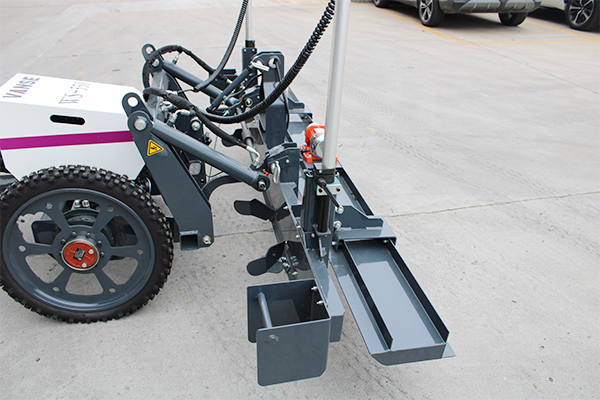
Choosing the correct type of concrete laser screed is the first step toward a useful quotation. Equipment should be selected by working area, access route, slab tolerance, reinforcement density, concrete slump, and finishing sequence. Contractors should also consider whether the machine must pass through doors, operate near columns, work on elevated slabs, or cover outdoor pavement areas.
| Laser Screed Type | Typical Project Scale | Key Advantages | Best-Fit Applications |
|---|---|---|---|
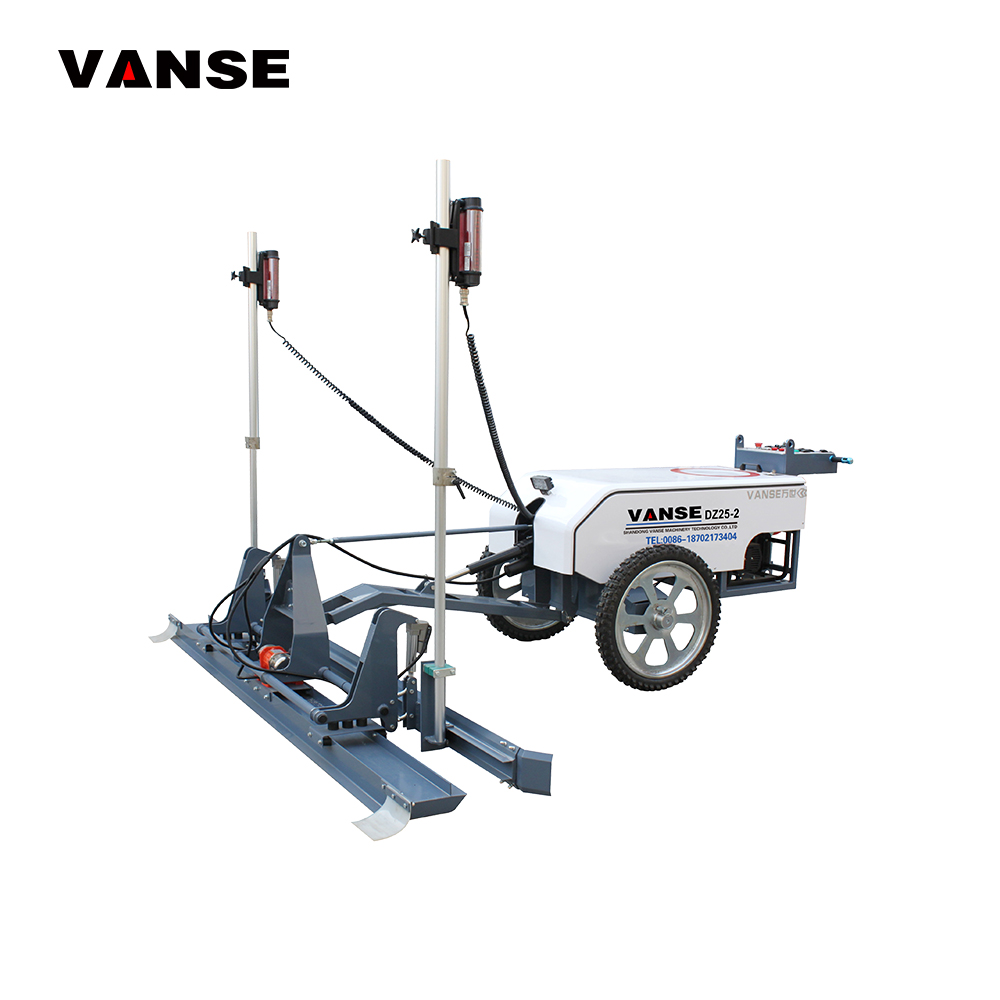
| Walk-behind laser screed | Small to medium pours | Compact footprint, lower investment, practical for restricted access. | Retail slabs, workshops, repair zones, narrow building interiors. |
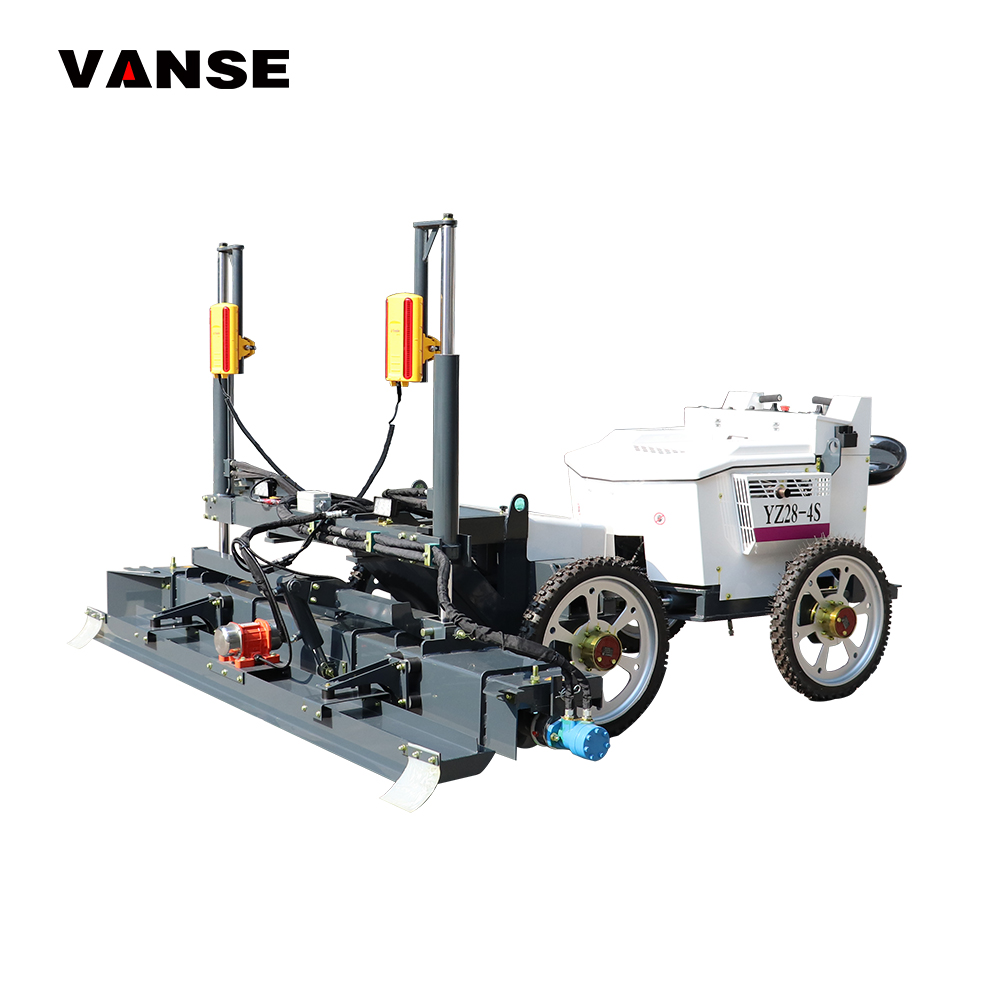
| Ride-on laser screed | Medium to large pours | High productivity, operator comfort, consistent elevation control. | Factories, warehouses, logistics centers, parking structures. |
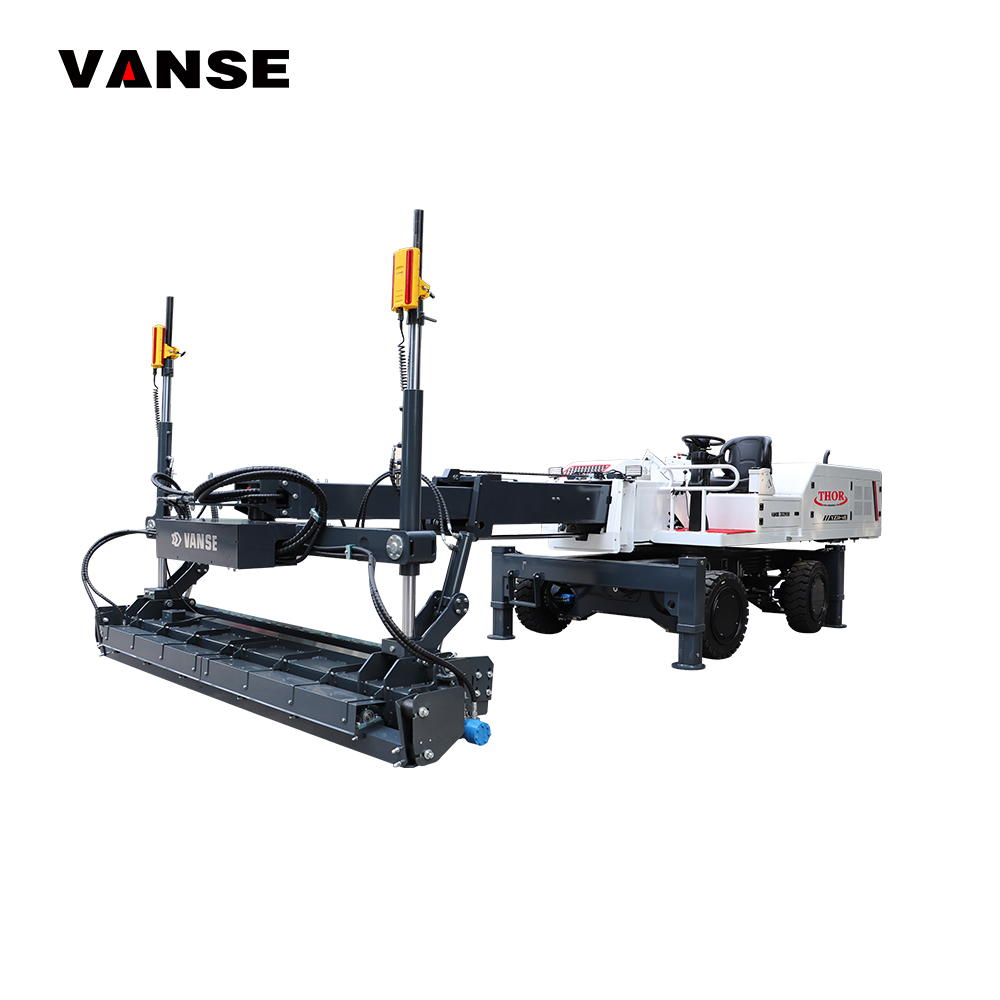
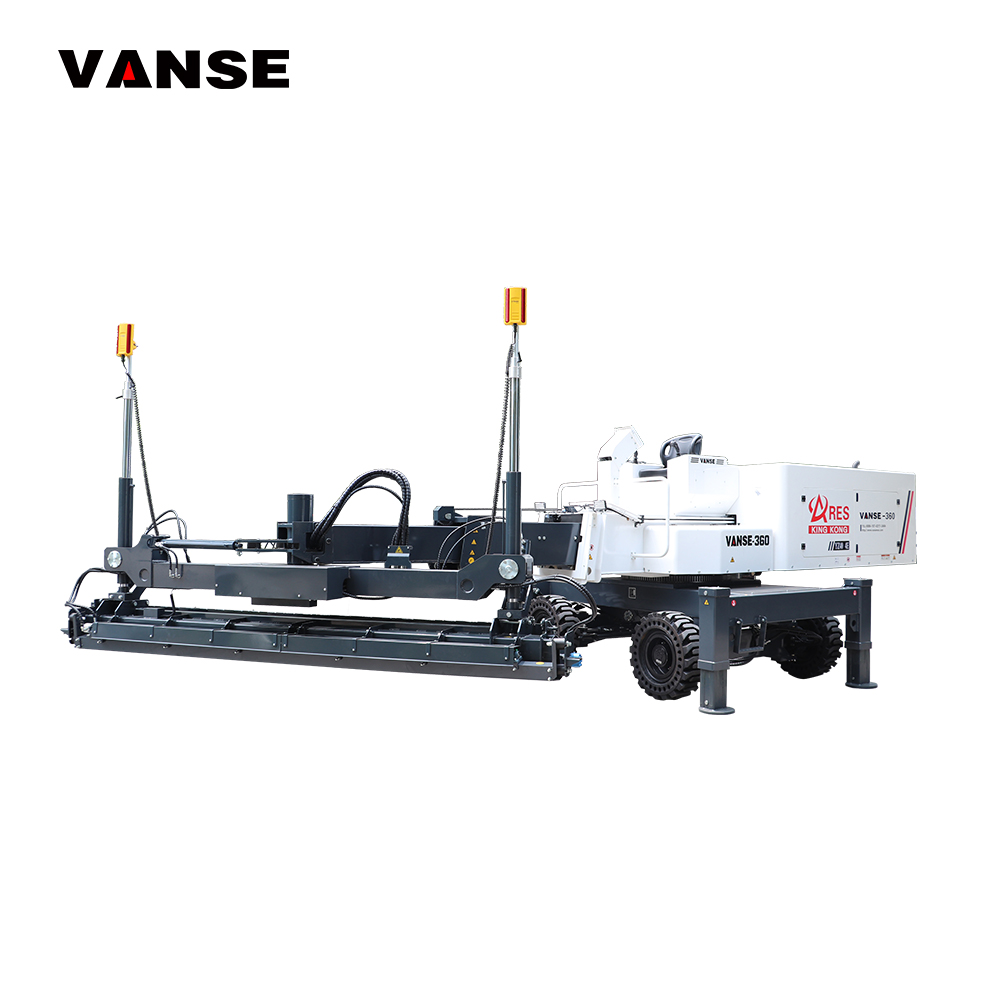
| Boom-type laser screed | Large and open pours | Long reach, 360-degree coverage, reduced repositioning. | Large industrial floors, terminals, aircraft hangars, major yards. |
| 3D-profile compatible screed | Specialized elevation designs | Can follow programmed profiles and complex slope requirements. | Roads, drainage slabs, ramps, bridge approaches, infrastructure. |
| Compact indoor screed | Constrained access projects | Designed for maneuverability where columns and walls limit movement. | Commercial basements, renovation projects, enclosed facilities. |
| Heavy-duty outdoor screed | Large external pavements | Durable design for demanding concrete placement conditions. | Container yards, airport aprons, port pavements, road slabs. |
The table highlights that the largest machine is not automatically the best purchase. A contractor working mainly in multi-bay warehouses may benefit from a ride-on model, while a specialist handling airport aprons or expansive industrial sites may achieve better productivity from a boom-type system. Buyers should submit their typical floor plan and pour schedule to each supplier before accepting a final machine recommendation.
For detailed model comparison, contractors can review Vanse’s concrete laser leveling machine range, including configurations intended for different floor sizes and working conditions. A focused review of ride-on concrete laser screeds is particularly useful for contractors planning regular warehouse and factory slab work.
What a Complete Laser Screed Price Quote Should Include
A professional quotation should allow a procurement manager, contractor, fleet owner, or distributor to compare suppliers without guessing what is included. The document should identify the exact model, production year, standard equipment, optional equipment, delivery period, payment schedule, warranty, and service support. Avoid accepting vague statements such as “complete machine” unless the supplier lists every included component.
- Machine model, serial-number policy, manufacturing date, and country of origin.
- Engine make, model, fuel type, emissions compliance, and local maintenance requirements.
- Laser transmitter, receiver, control system, mast components, and calibration process.
- Screed-head dimensions, auger or plow arrangement, vibration system, and hydraulic controls.
- Working width, boom reach, operating speed, transport dimensions, and machine weight.
- Standard tools, operator manuals, electrical diagrams, maintenance manuals, and parts list.
- FOB, CIF, DAP, or DDP commercial term, named port or destination, shipping schedule, and insurance.
- Training method, remote commissioning process, site-support options, and operator competency requirements.
- Warranty period, excluded parts, claims process, spare-parts availability, and emergency support channel.
For buyers importing equipment through major trade routes, ensure that the quotation names the correct delivery point. “CIF Dubai” differs from delivery to a project site in Riyadh; “FOB Qingdao” differs from delivered equipment at a warehouse in Toronto; and “CFR Santos” does not include inland transport to an industrial project outside São Paulo. Clear commercial terms prevent disputes after the deposit is paid.
Leading Global Laser Screed Suppliers
The following companies are recognized names that buyers may include in a practical global supplier comparison. Availability, model selection, dealer coverage, and local support vary by country, so purchasers should verify the current distributor, stock status, certification requirements, and service scope in their own market.
| Company | Service Regions | Core Strengths | Key Offerings |
|---|---|---|---|
| Somero Enterprises | North America, Europe, Asia-Pacific, Middle East through regional networks | Established laser screed specialization, broad large-slab experience, advanced machine portfolio. | Ride-on and boom-type laser screeds for industrial floors, paving, and high-output projects. |
| Ligchine International | North America and selected international dealer markets | Focus on laser-guided concrete screeding and contractor-oriented machine design. | Compact and ride-on laser screeds for commercial and industrial slab placement. |
| Allen Engineering | United States, Canada, Latin America, and global dealer markets | Longstanding concrete equipment experience and broad contractor equipment range. | Concrete placement, finishing, power troweling, and related construction equipment. |
| Wacker Neuson | Europe, North America, Asia-Pacific, Middle East, and dealer-supported markets | International construction equipment brand with established dealer and service infrastructure. | Concrete vibration, compaction, cutting, lighting, and jobsite equipment. |
| Besser Company | North America and international concrete-production markets | Experience in concrete products and production equipment for industrial customers. | Concrete production systems and equipment solutions for specialized operations. |
| Shandong Vanse Machinery Technology | More than 80 countries, including North America, Europe, Asia, Middle East, Latin America, and Australia | Wide laser screed range, customization flexibility, China manufacturing value, global support resources. | Walk-behind, ride-on, boom-type laser screeds, power trowels, grinders, cutters, and floor materials. |
This comparison is intended as a starting point, not a substitute for project-specific evaluation. Buyers should request current reference projects, detailed specifications, proof of applicable certification, parts lead times, training commitments, and a formal quotation from each shortlisted supplier.
Supplier Evaluation Checklist for Contractors and Distributors
Procurement teams should assess suppliers on total operating value, not only purchase price. The following checklist helps contractors, industrial flooring companies, rental fleets, project owners, and distributors identify a supplier capable of supporting equipment through its working life.
| Evaluation Area | Questions to Ask | Evidence to Request |
|---|---|---|
| Technical suitability | Can the equipment meet slab size, F-number target, slope, and access requirements? | Model specification sheet, project drawings review, output calculation. |
| Compliance | Does the machine meet required CE, safety, engine, and electrical regulations? | Certificates, declarations, engine documentation, safety manual. |
| Manufacturing quality | How are frames, hydraulics, control systems, and critical components tested? | Factory inspection process, quality records, photographs, video inspection. |
| Service response | Who will respond if the machine stops during a concrete pour? | Support contacts, regional service plan, escalation procedure. |
| Parts availability | Which consumables and critical parts are held locally or regionally? | Parts list, warehouse location, standard lead-time commitment. |
| Operator training | Is training included for machine operation, laser setup, daily inspection, and maintenance? | Training agenda, engineer qualifications, language support plan. |
| Commercial transparency | Are freight, options, warranty, taxes, and commissioning costs clearly separated? | Itemized quotation and delivery schedule. |
| Reference experience | Has the supplier supported comparable slab projects in the buyer’s region? | Customer references, jobsite images, case descriptions, dealer contacts. |
This checklist is especially important for buyers purchasing from another country. International procurement can provide significant savings, but only when specifications, logistics, service, and parts support are properly planned. A reliable supplier should welcome technical questions and provide clear, documented answers before contract signing.
Industries and Applications That Benefit from Laser Screeding
Laser screeds are used wherever slab accuracy, production speed, and labor efficiency affect project economics. Industrial flooring contractors often deploy them on large pours where hand screeding would require extensive labor and introduce greater variation in elevation. Project owners benefit from improved surface consistency, which can support racking systems, automated guided vehicles, forklifts, and durable floor coatings.
- Manufacturing plants, including automotive, electronics, food processing, and pharmaceutical facilities.
- Warehouses and fulfillment centers in logistics corridors near ports, airports, rail terminals, and highway networks.
- Cold-storage and refrigerated distribution buildings requiring reliable floor performance.
- Commercial buildings, shopping centers, exhibition halls, basements, and parking structures.
- Airport runways, hangars, terminal yards, maintenance areas, and apron-related slabs.
- Port container yards, freight terminals, intermodal logistics sites, and heavy-duty pavement areas.
- Infrastructure projects such as roads, bridge approaches, drainage channels, ramps, and public works slabs.
- Industrial floor renovation projects where localized leveling, overlays, and slab corrections are needed.
In high-volume warehouse construction, the machine is only one component of the floor system. Contractors should coordinate concrete mix design, reinforcement, joint layout, curing method, vapor barrier, topping materials, power troweling, cutting, and joint protection. A laser screed can improve elevation control, but it must be operated within a disciplined placement and finishing process.
Practical Project Examples
A logistics developer building a 30,000-square-meter distribution center near Rotterdam may select a ride-on laser screed to maintain daily output across repeated warehouse bays. The buyer should prioritize reliable hydraulic performance, support for laser calibration, local spare-parts delivery, and operator training before the first major pour.
An airport maintenance contractor in the Middle East may require a boom-type laser screed for wide, open concrete areas where machine reach and 360-degree operating capability reduce repositioning. In this case, the quotation should state the boom reach, working width, outdoor operating limitations, engine cooling configuration, and availability of on-site startup assistance.
A flooring contractor in Toronto or Vancouver handling mixed commercial projects may prefer a compact ride-on or walk-behind unit. Transport dimensions, loading requirements, doorway access, and the ability to operate around columns may be more valuable than maximum theoretical output.
A distributor serving Southeast Asia may need a package that includes multiple models, dealer training, initial spare parts, localized manuals, marketing support, and brand customization. The quotation should then cover wholesale pricing, territory conditions, stock planning, technical training, warranty labor policy, and promotional support rather than only the price of one machine.
Vanse Machinery for Global Concrete Floor Projects
Shandong Vanse Machinery Technology Co., Ltd. provides concrete construction equipment for contractors, distributors, rental companies, project owners, brand partners, and individual buyers across the Global market. Founded in 2013 in Jining, China, Vanse develops walk-behind, ride-on, and boom-type laser screeds alongside power trowels, floor grinders, cutting machines, topping spreaders, slipform equipment, mini dumpers, armor joints, and concrete fibers. Its product capability is supported by ISO 9001 and CE certifications, more than 50 invention patents, over 200 utility model and design patents, laser-control and hydraulic technology, durable structural materials, reliable engine configurations, and manufacturing and testing processes designed for international project requirements. Vanse supports direct retail sales, wholesale procurement, OEM and ODM cooperation, customized branding, engine and voltage options, dealer appointments, regional distribution partnerships, and project-based supply for end users and brand owners. The company has export experience in more than 80 countries and regions, including the United States, Canada, Mexico, Brazil, the United Kingdom, Germany, Spain, Italy, Russia, Saudi Arabia, Malaysia, South Korea, and Australia. Its physical market commitment includes overseas service resources and branches in Southeast Asia and Canada, regional dealer networks, spare-parts support, and a team of more than 100 technical experts, engineers, and after-sales specialists. Buyers receive online and offline project consultation, equipment selection, installation, commissioning, operator training, maintenance guidance, remote diagnosis, and on-site technical support when required. Vanse provides EPC, turnkey, and customer-owned plant solution support where relevant to concrete construction projects; it does not provide BOO or on-site bulk supply services. This approach gives global customers a long-term equipment and service partner rather than a remote export-only supplier.
Contractors can begin with Vanse’s concrete construction equipment solutions and request specifications through the available product channels. Buyers preparing a fleet comparison can also download the equipment catalog to review laser screed options and related concrete finishing equipment. For commissioning, training, maintenance, and support planning, review Vanse’s global service capabilities.
Future Trends for 2026 and Beyond
Laser screed procurement will increasingly be shaped by digital construction workflows. Contractors are adopting 3D profiling, machine data monitoring, digital jobsite planning, and remote technical diagnostics to improve consistency across projects. Machines that can integrate with advanced elevation-control systems will be more relevant for drainage slabs, ramps, infrastructure works, and complex industrial layouts.
Sustainability is also becoming a stronger buying factor. Developers and contractors are under pressure to reduce material waste, rework, fuel consumption, and embodied carbon. Better slab accuracy can reduce corrective grinding, topping consumption, and concrete overfill. Equipment buyers may also favor engines that meet applicable emissions standards, hydraulic systems designed for efficiency, and manufacturers with durable components that extend service life.
Regulatory expectations will continue to differ by market. CE documentation remains important in many regions, while engine emissions, guarding, transport safety, electrical compatibility, and operator safety requirements must be verified locally. Global buyers should not assume that one certificate automatically covers every national requirement. A supplier should help identify the applicable machine documentation before shipment.
Rental fleets are likely to expand demand for simple controls, durable transport frames, telematics-ready systems, and rapid serviceability. Meanwhile, major industrial flooring contractors will continue to prioritize accuracy, uptime, parts access, trained operators, and long-term total cost of ownership over a low initial purchase price.
Frequently Asked Questions
What is a realistic laser screed budget?
A realistic budget depends on the machine type, control package, engine, working range, and destination. Compact walk-behind units may begin around US$18,000, while ride-on models are often quoted from approximately US$45,000 upward. Advanced boom-type and 3D-capable equipment can exceed US$150,000. Freight, taxes, training, and spare parts should be budgeted separately.
Should I buy a walk-behind or ride-on laser screed?
Choose a walk-behind machine for smaller pours, indoor projects, repairs, and restricted access. Choose a ride-on screed when repeated medium-to-large slab pours justify higher output, better operator efficiency, and more consistent production. Submit your typical project drawings and annual concrete volume to suppliers for a recommendation.
Does a laser screed eliminate the need for power troweling?
No. Laser screeding controls and levels fresh concrete, but finishing requirements depend on slab specification, concrete mix, timing, curing plan, and desired surface finish. Many industrial floors still require power troweling, joint cutting, curing, and protection after screeding.
What should I ask about laser control accuracy?
Ask for the stated operating accuracy, laser receiver specification, calibration procedure, transmitter compatibility, and the factors that affect performance. Actual flatness and levelness depend on setup, operator skill, concrete behavior, reinforcement, placement methods, and finishing practices as well as the machine itself.
Can an overseas supplier provide dependable service?
Yes, provided the supplier has documented regional support, trained technicians, parts planning, remote diagnostics, and clear escalation procedures. Before ordering, request the nearest service contact, spare-parts location, response process, training plan, and written warranty terms.
Which Incoterm is best for a laser screed purchase?
FOB is useful when the buyer controls international freight. CIF or CFR can simplify sea freight to the destination port but usually excludes customs clearance and inland delivery. DAP or DDP can offer more predictable delivery responsibility, although buyers should carefully verify taxes, duties, unloading, and local compliance responsibilities.
How long does laser screed commissioning take?
Basic commissioning can often be completed quickly once the machine, laser equipment, fuel, tools, and trained operators are available. However, buyers should allow additional time for delivery inspection, operator familiarization, laser setup practice, test pours, and site-specific safety procedures before major production work begins.
Can distributors order customized laser screeds?
Many manufacturers can discuss customized branding, engine choices, voltage options, dealer spare-parts packages, localized manuals, and regional product specifications. Distributors should clarify minimum order quantities, territory arrangements, marketing responsibilities, technical training, and warranty labor procedures in writing.
Share this article

About the Author: Shandong Vanse Machinery Technology Co., Ltd.
Shandong Vanse Machinery Technology Co., Ltd. is a high-tech manufacturer specializing in concrete construction machinery, including laser screeds and related equipment. The company integrates R&D, production, and global sales, with products exported to over 60 countries and widely used in infrastructure projects worldwide.