Insight blog
Global Market Laser Screed Care Plan and Service Guide
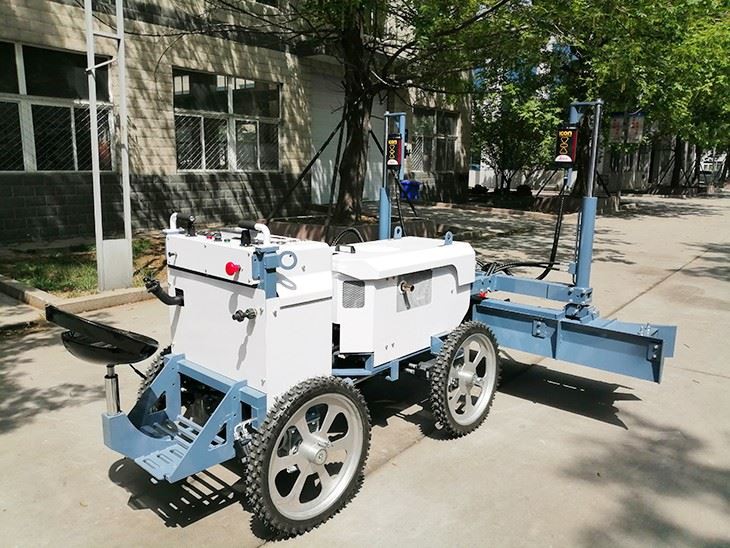
Global Market Laser Screed Care Plan and Service Guide
Quick Answer

A practical laser screed preventive maintenance schedule should include pre-start inspections every shift, cleaning and lubrication after each use, hydraulic and laser-system checks every week, filter and battery inspections every month, and comprehensive calibration and wear-part reviews every 500 operating hours or annually. Contractors in the Global Market should document operating hours, service actions, error codes, fluid use, and component replacements for every machine.
The most important priorities are maintaining correct laser receiver performance, clean hydraulic oil, stable engine operation, properly lubricated boom joints and leveling heads, and undamaged screed blades. Neglecting these points can reduce slab flatness, cause unplanned stoppages, and increase repair costs during high-volume pours.
Leading suppliers commonly considered by contractors include Somero, Allen Engineering, Ligchine, Wacker Neuson, Husqvarna Construction, and Vanse Machinery. Qualified international suppliers, including Chinese manufacturers with relevant local certifications, available spare parts, and strong pre-sales and after-sales support, can also be a sensible option because of their cost-performance advantages.
Why Preventive Care Matters in the Global Market

Laser screeds are precision concrete-placement machines, not ordinary earthmoving equipment. Their ability to place and level fresh concrete depends on a linked system of laser transmitters, receivers, sensors, controllers, hydraulic valves, cylinders, boom structures, engine power, and screed-head components. A small fault in one component can create visible defects in the finished floor or force a crew to stop while concrete is already setting.
Across the Global Market, contractors work in highly variable conditions. A warehouse floor project near Rotterdam may require extremely high flatness tolerances and carefully controlled indoor pours. A logistics terminal in Jebel Ali, Dubai may expose equipment to dust and heat. Contractors serving ports in Singapore, Los Angeles, Santos, Hamburg, and Melbourne may operate near salt-laden air, heavy transport routes, and changing weather. These operating environments make a written preventive service plan essential.
A well-maintained laser screed protects more than the machine itself. It helps preserve labor productivity, concrete finishing quality, delivery schedules, material yield, and contractor reputation. For industrial slab projects, a few millimeters of elevation inconsistency can create major follow-up costs in grinding, repair, racking installation, drainage, automated vehicle movement, and facility commissioning.
The correct maintenance interval always depends on the machine model, engine type, hydraulic design, operating hours, climate, concrete mix, and manufacturer manual. The schedule below is a practical framework. Always use the machine-specific maintenance instructions and approved fluids, filters, torque values, and calibration processes supplied by the manufacturer.
Laser Screed Types and Their Maintenance Priorities

Different screed configurations require different inspection routines. A compact machine used on small commercial slabs has fewer hydraulic and structural points than a boom-type machine designed for large distribution centers. Ride-on models also require greater attention to steering, seat safety switches, drive systems, and operator controls.
| Laser screed type | Typical projects | Primary maintenance focus | Common wear points |
|---|---|---|---|
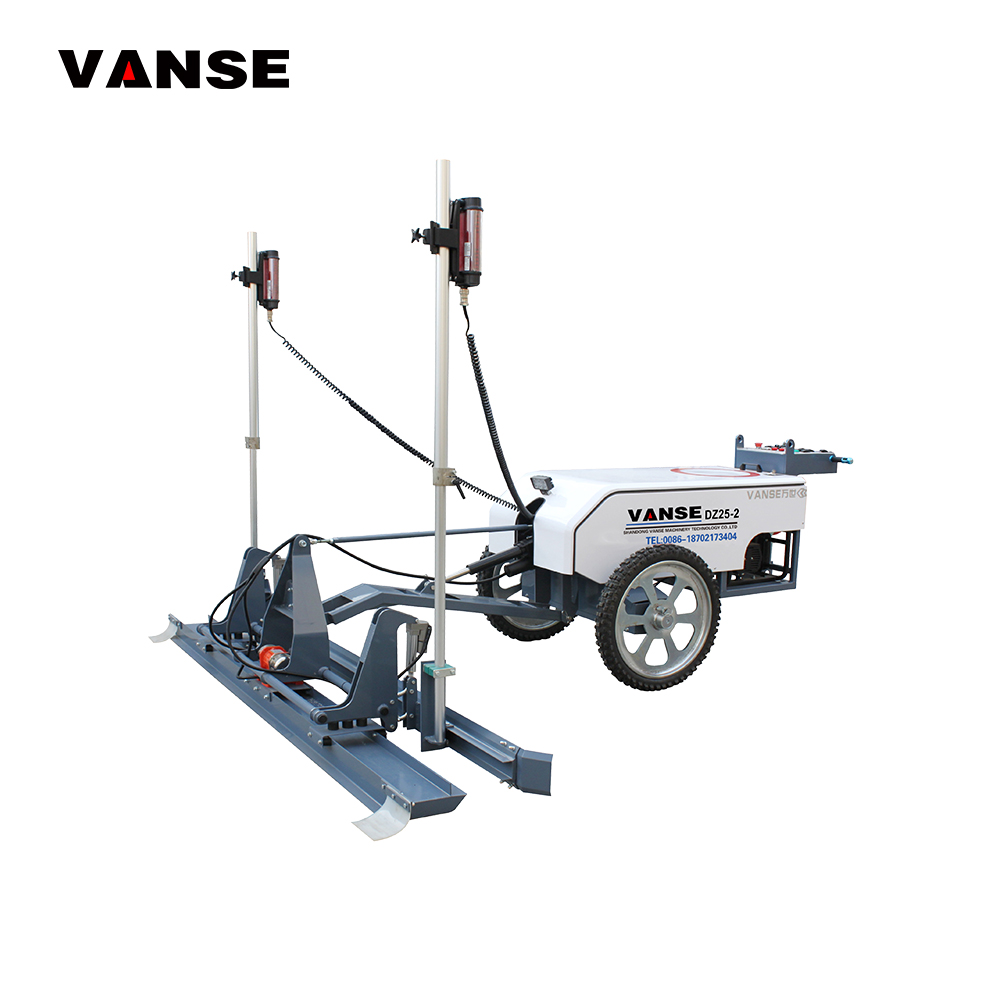
| Walk-behind laser screed | Small slabs, workshops, residential foundations | Vibration, screed blade, receiver alignment, engine service | Blade edges, cables, wheels, throttle controls |
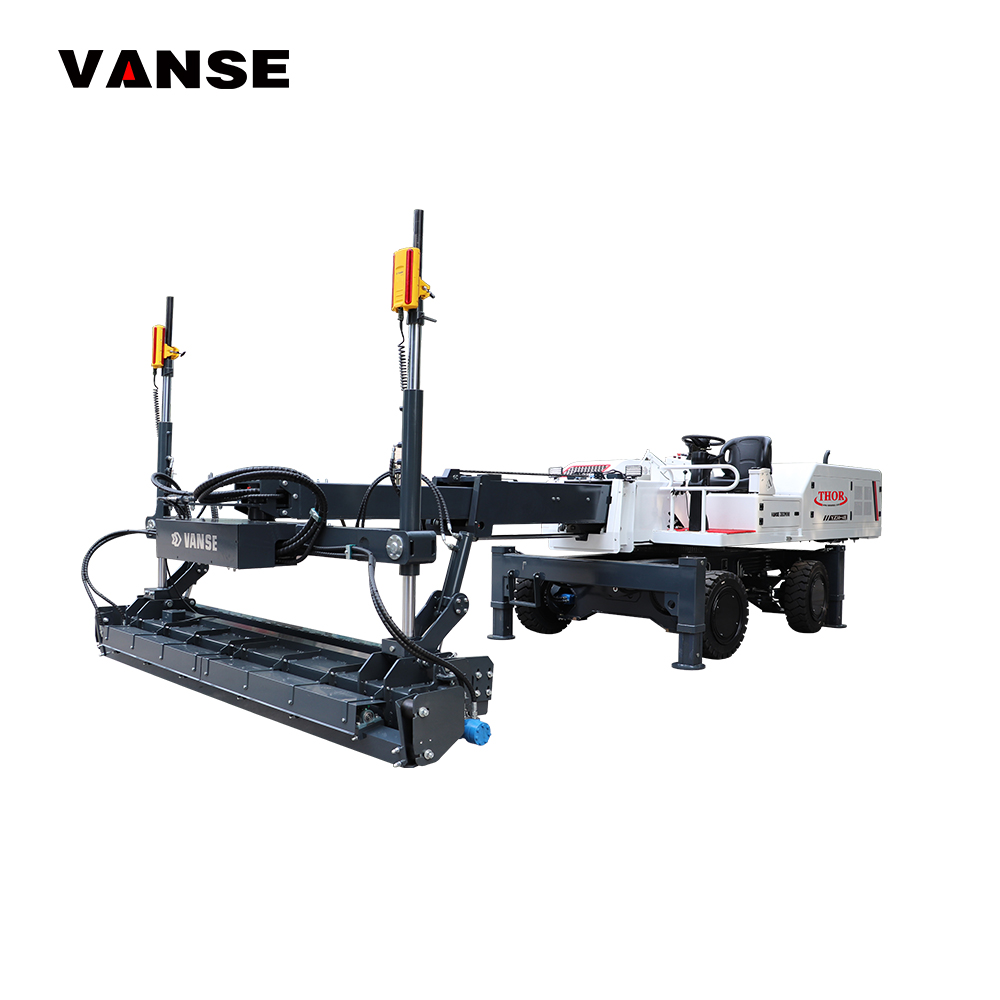
| Ride-on laser screed | Warehouses, factories, retail floors | Hydraulic drive, steering, leveling system, safety switches | Hoses, tires, seat switches, cylinder seals |
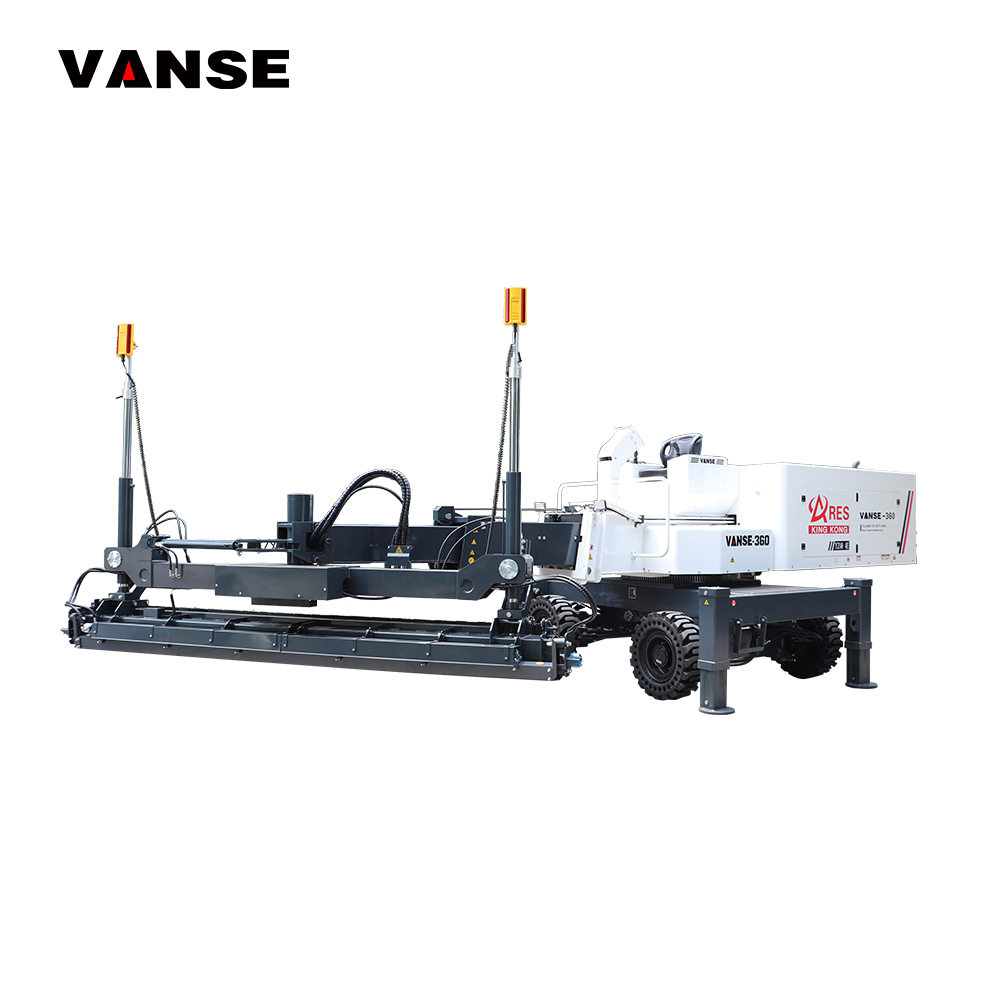
| Boom-type laser screed | Large industrial slabs and logistics centers | Boom pivots, hydraulic cylinders, slew mechanism, sensors | Pivot pins, bushings, hoses, screed head |
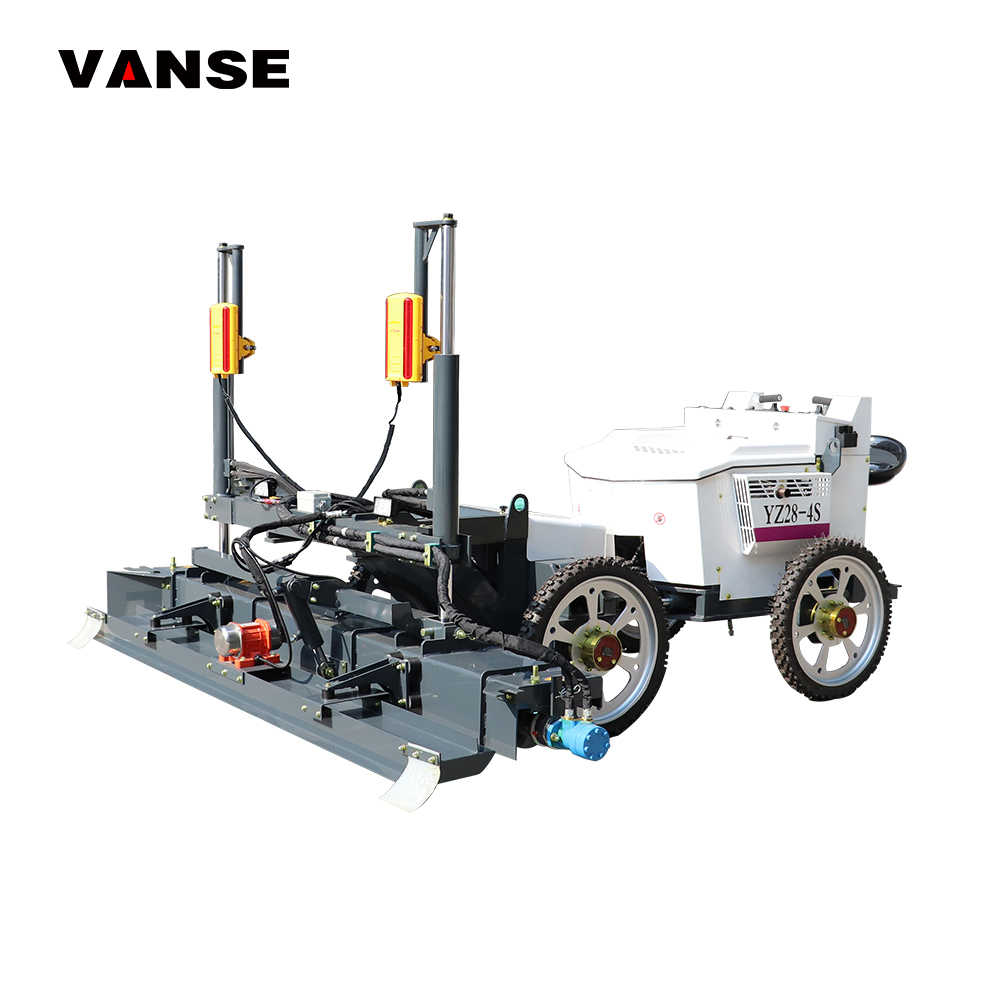
| Four-wheel-drive laser screed | Large pours with challenging site access | Drive axles, traction, tire pressure, hydraulic motors | Tires, wheel motors, hub fasteners |
| 3D-profile-compatible screed | Drainage slabs, ramps, pavements, complex profiles | Control software, sensors, total-station integration | Connectors, receivers, controller mounts |
| Concrete paving laser screed | Roads, yards, terminal areas, infrastructure | High-duty hydraulic systems and abrasive concrete exposure | Augers, blades, cylinders, undercarriage components |
The table shows why maintenance cannot be limited to engine oil changes. For example, boom-type equipment needs close monitoring of structural movement and hydraulic integrity, while a 3D-controlled machine needs disciplined control-system checks. In every category, cleaning fresh concrete from moving components before it hardens is one of the highest-value daily actions.
Preventive Maintenance Schedule for Laser Screeds
The following checklist can be adapted into a site maintenance log. When a machine is used in hot climates, dusty conditions, coastal environments, or extended two-shift concrete pours, shorten the intervals for air filters, cooling-system checks, lubrication, and hydraulic inspections.
| Interval | Required actions | Responsible person | Purpose |
|---|---|---|---|
| Before every shift | Check fuel, engine oil, coolant, hydraulic oil, leaks, tire condition, cables, guards, emergency stop, laser receiver, and blade condition. | Operator | Prevent unsafe operation and identify visible faults before concrete placement. |
| After every pour | Remove concrete residue, wash approved surfaces, lubricate exposed points, inspect screed head, and store laser equipment dry. | Operator and cleaning crew | Prevent hardened concrete buildup, corrosion, and restricted movement. |
| Weekly | Inspect hydraulic hoses, fittings, clamps, cylinder rods, boom pins, battery terminals, engine belts, and receiver mounting brackets. | Site mechanic | Detect wear before it becomes a breakdown or accuracy issue. |
| Monthly or every 100 hours | Service air filtration, inspect filters, tighten fasteners, check battery charge, inspect tire pressure, test control functions, and review fault logs. | Qualified technician | Maintain engine performance, control stability, and safe operation. |
| Every 250 hours | Change fluids and filters as specified, inspect hydraulic oil condition, check calibration, examine wear plates, and test all safety interlocks. | Authorized service technician | Protect hydraulic components and preserve slab-leveling accuracy. |
| Every 500 hours or annually | Complete structural inspection, laser calibration verification, hydraulic pressure test, engine service, wiring inspection, and replacement planning for wear parts. | Authorized dealer or manufacturer technician | Restore full operating reliability and support long-term asset value. |
| Before long-term storage | Clean fully, stabilize fuel according to engine guidance, disconnect or maintain battery, protect cylinder rods, cover electronics, and store indoors. | Fleet manager | Prevent storage-related corrosion, fuel damage, and battery failure. |
This schedule is designed to help contractors avoid reactive maintenance. The operator’s pre-shift inspection is especially important because it takes little time but can reveal loose fittings, leaking hoses, low oil levels, damaged receiver cables, or concrete contamination before the crew begins work.
Daily Inspection Checklist for Accurate Concrete Placement
Before starting a laser screed, park it on stable ground, apply the parking brake where fitted, and ensure the screed head is safely supported. Complete the inspection before starting the engine whenever possible. If a fault is found, tag the equipment and notify the responsible supervisor rather than attempting an unapproved repair during a pour.
| Inspection area | What to check | Acceptable condition | Action if failed |
|---|---|---|---|
| Laser transmitter and receiver | Lens cleanliness, secure mounting, battery status, signal reception | Clean lens, stable signal, no warning indication | Clean, recharge, re-level transmitter, or test with a known reference |
| Hydraulic system | Oil level, hose abrasion, leaks, fitting tightness, cylinder rod condition | Correct oil level and no wet leaks or damaged hoses | Stop operation and replace damaged components using approved parts |
| Engine and cooling system | Oil, coolant, air intake, belt tension, fuel lines, unusual noise | Fluids within range and no contamination or warning alarms | Correct fluid level, clean intake, or request engine service |
| Screed head | Blade straightness, residue, vibration, fasteners, hose routing | Clean, secure, undamaged, and free-moving | Clean immediately and replace bent or worn blade components |
| Boom and frame | Cracks, pins, retainers, grease points, abnormal movement | No cracks, excessive play, or missing retainers | Remove from service pending structural inspection |
| Operator controls | Joystick response, emergency stop, display, alarms, steering, travel functions | All functions respond smoothly and correctly | Do not pour until controls and safety systems are repaired |
| Wheels and traction system | Tire pressure, cuts, wheel nuts, wheel-motor leakage, track condition if fitted | Even pressure and no visible damage or loose hardware | Repair before entering fresh concrete or uneven ground |
Cleaning is not simply cosmetic. Concrete slurry can restrict joints, hide leaks, contaminate electrical connectors, and change the response of the screed head. Use only cleaning methods approved by the machine manufacturer. Avoid directing high-pressure water at electrical enclosures, laser sensors, bearings, engine air intakes, and sensitive seals.
Hydraulic, Engine, and Laser Control Maintenance
Hydraulic contamination is one of the most expensive preventable problems on laser screeds. Dust, water, incorrect oil, and deteriorated filters can damage pumps, valves, motors, and cylinders. Use clean containers, sealed funnels, and the fluid grade specified in the service manual. If hydraulic oil appears milky, unusually dark, burnt-smelling, or visibly contaminated, investigate immediately rather than simply topping it up.
Inspect hydraulic hoses along boom sections and near moving joints, where flexing can accelerate wear. Replace hoses that show cracking, abrasion, blistering, exposed reinforcement, or leakage. Never use hands to search for a pressurized hydraulic leak; high-pressure fluid can penetrate skin and requires emergency medical treatment.
Engine maintenance should follow the engine manufacturer’s interval chart. This includes oil changes, fuel-filter replacement, cooling-system checks, belt inspection, and air-filter service. In dusty sites near quarry operations, dry ports, road construction zones, or bulk-material terminals, air-filter attention may be required more frequently than the standard schedule.
Laser control maintenance is equally important. Keep transmitter and receiver windows clean with appropriate lens-cleaning materials. Confirm the transmitter is placed on stable ground or a stable tripod, protected from vibration and accidental movement. Verify that the receiver mast, bracket, and cable routing are secure. For high-specification floors, confirm the benchmark elevation before each major pour and record the test result in the project quality file.
Buying Advice: Maintenance Features That Reduce Downtime
When buying a laser screed, compare more than screeding width and engine power. Ask suppliers to explain filter access, grease-point layout, hydraulic hose routing, diagnostic displays, receiver compatibility, spare-parts lead times, local technician availability, and operator training. A machine that is easy to inspect and service is generally more profitable over its working life.
For global contractors, parts logistics matter. A contractor operating around major trade hubs such as Houston, Antwerp, Dubai, Singapore, Shanghai, Sydney, or Vancouver should ask whether the supplier can deliver common consumables quickly and provide remote diagnostics outside local working hours. Critical spares may include filters, receiver cables, sensors, relays, fuses, hydraulic hose kits, screed blades, seals, control switches, and wear plates.
| Buying criterion | Why it affects maintenance | Question for supplier | Good buying outcome |
|---|---|---|---|
| Component access | Hard-to-reach filters and grease points encourage missed service. | Can daily and monthly service points be accessed without major disassembly? | Fast inspections completed reliably by trained operators. |
| Hydraulic design | Quality hoses, valves, and fittings reduce leakage risk. | Which hydraulic brands, filtration standards, and hose protections are used? | Longer component life and easier replacement planning. |
| Laser compatibility | Receiver and transmitter support affects accuracy and repairability. | Which laser systems and 3D control options are supported? | Reliable setup and practical calibration support. |
| Service documentation | Clear manuals support consistent fleet maintenance. | Are digital manuals, wiring diagrams, and maintenance logs included? | Fewer diagnosis delays and better warranty compliance. |
| Training | Operator error is a leading cause of avoidable wear. | Is commissioning and operator training included for our team? | Safer use, better cleaning, and more accurate slabs. |
| Spare-parts support | Parts availability determines actual downtime. | Where are regional parts stocks located and what is the normal lead time? | Predictable repair planning during active projects. |
Industries and Applications That Depend on Reliable Laser Screeds
Preventive maintenance has the highest value on projects where concrete placement windows are narrow and slab tolerances are demanding. Industrial flooring contractors use laser screeds for factories, food-processing plants, high-bay warehouses, cold storage facilities, and automated distribution centers. Infrastructure contractors use them for airport aprons, terminal yards, road slabs, bridge approaches, and large utility compounds.
In commercial construction, laser screeds support shopping centers, exhibition halls, data centers, parking areas, and large mixed-use developments. In ports and logistics environments, they help build container yards, loading zones, maintenance facilities, and freight warehouses. The equipment is also useful for agricultural buildings, equipment sheds, workshops, and large residential foundations where productivity and level control are required.
The maintenance plan should reflect project risk. For a high-flatness warehouse slab, calibration and screed-head inspection may be required before every pour. For an airport or port pavement project, crews should prioritize hydraulic cleanliness, tire condition, structural fasteners, and protection against dust and weather exposure. For remote sites, keep a documented field service kit and a contact route to technical support.
Global Laser Screed Suppliers and Service Coverage
The following companies are established names that contractors may evaluate when sourcing laser screeds, concrete-placement equipment, parts, training, and technical support. Availability, model range, dealer coverage, and local service capacity vary by country, so buyers should verify current support in their operating city before purchase.
| Company | Service regions | Core strengths | Key offerings |
|---|---|---|---|
| Somero Enterprises | North America, Europe, Asia-Pacific, Middle East through global distribution | Specialist reputation in concrete leveling technology and large slab applications | Ride-on and boom-type laser screeds, training, technical support, floor-placement solutions |
| Allen Engineering | North America and international dealer markets | Broad concrete-equipment portfolio and contractor-oriented machine designs | Laser screeds, power trowels, concrete pumps, paving and finishing equipment |
| Ligchine International | United States and selected international markets | Laser-guided screeding systems for concrete contractors | Laser screeds, placing and finishing solutions, operator-focused support |
| Wacker Neuson | Global dealer network across Europe, Americas, Asia-Pacific, and Middle East | Strong compact-equipment distribution and service infrastructure | Concrete equipment, compaction, generators, lighting, jobsite support |
| Husqvarna Construction | Worldwide markets through dealers and service partners | Concrete surface preparation, cutting, and floor-treatment expertise | Floor grinders, saws, dust management, diamond tools, support equipment |
| Shandong Vanse Machinery Technology Co., Ltd. | More than 80 countries and regions, with Southeast Asia and Canada service resources | Laser screeds, industrial-floor equipment, customization, and global technical support | Walk-behind, ride-on, and boom-type laser screeds, power trowels, grinders, cutters, parts support |
This supplier comparison is intended as a practical starting point rather than a substitute for technical evaluation. Buyers should request machine specifications, applicable certifications, service commitments, operator training details, warranty terms, recommended spare-parts lists, and references from projects with similar concrete volumes and tolerances.
Vanse Machinery: Equipment, Cooperation, and Long-Term Support
Shandong Vanse Machinery Technology Co., Ltd. supplies concrete laser screeds and related industrial-floor equipment for contractors worldwide, including walk-behind, ride-on, and boom-type models available through its concrete laser leveling machine range and dedicated ride-on laser screed solutions. Founded in 2013, Vanse combines laser-control technology, hydraulic systems, reliable engine configurations, durable structural materials, and practical jobsite design; its manufacturing framework is supported by ISO 9001 and CE certifications, more than 50 invention patents, and over 200 utility model and design patents. For Global Market buyers, Vanse supports end users, contractors, distributors, dealers, brand owners, and individual purchasers through direct sales, wholesale supply, retail support, OEM/ODM and customized branding, customized voltage and engine options, regional distribution partnerships, and project-based equipment supply. The company provides EPC, turnkey, and customer-owned plant solutions, not BOO or on-site bulk supply services. Its commitment is backed by established export experience in more than 80 countries, overseas service resources in Southeast Asia and Canada, dealer networks across the Americas, Europe, Asia, and the Middle East, and a team of more than 100 technical experts, engineers, and after-sales specialists. Buyers receive practical protection through project consultation, equipment selection, commissioning, operator training, remote diagnosis, multilingual 24-hour technical consultation, spare-parts coordination, and on-site support when required, with laser screed spare-parts and tools support and technical service assistance available for long-term fleet operation.
Practical Project Examples
On a large logistics warehouse project, a contractor may operate a ride-on laser screed for multiple consecutive placements. The project manager should schedule a daily washdown after every pour, check the receiver and transmitter before each slab section, and inspect hydraulic hose routing at the end of each shift. The site should keep filters, fuses, blades, and receiver accessories available so that a minor fault does not delay concrete trucks.
For a hot-weather terminal yard project in the Middle East, cooling-system performance and air filtration become critical. Operators should inspect radiator cleanliness daily, monitor coolant temperature continuously, clean dust from air intakes, and reduce the risk of overheating by following proper operating limits. Hydraulic oil condition should be monitored more often because high ambient temperature can accelerate fluid degradation.
For a high-flatness manufacturing floor in Europe or North America, quality control should be integrated with maintenance. Before placement, the crew should verify laser benchmark levels, receiver response, screed blade condition, boom movement, and sensor mounting. After placement, document slab results and compare them with machine service data. Repeated accuracy variation can indicate receiver issues, hydraulic drift, worn mechanical joints, or improper calibration.
Future Trends for 2026
In 2026, laser screed maintenance is expected to become more data-driven. Fleet managers are increasingly adopting telematics, operating-hour alerts, digital inspection forms, remote fault diagnosis, and predictive service planning. These tools can help identify recurring hydraulic temperature issues, battery failures, engine alarms, or calibration deviations before they affect a concrete pour.
3D profiling systems will continue to expand for ramps, drainage areas, yards, and complex industrial floors. As these systems become more common, contractors will need stronger practices for software updates, sensor protection, data backup, total-station checks, and control-system training. Maintenance staff will require both mechanical knowledge and basic digital diagnostic skills.
Sustainability requirements are also influencing equipment decisions. Contractors are seeking fuel-efficient engines, reduced hydraulic leakage, longer-life components, recyclable fluids where approved, lower-waste service methods, and reliable repair options that extend machine life. Policies related to emissions, site noise, worker safety, and environmental spill prevention may become stricter in many regions. A preventive maintenance plan supports compliance by reducing fluid leaks, smoke-producing engine faults, unsafe equipment operation, and unnecessary replacement of major components.
Frequently Asked Questions
How often should a laser screed be calibrated?
Verify laser accuracy before major pours and whenever the machine has been transported, struck, repaired, or shows inconsistent elevation results. A full calibration interval should follow the manufacturer manual, commonly at scheduled service intervals or at least annually for actively used equipment.
What is the most common laser screed maintenance failure?
Common preventable issues include hydraulic leaks, contaminated oil, neglected lubrication points, concrete buildup on the screed head, dirty laser receiver lenses, loose electrical connections, and missed engine air-filter service.
Can operators perform all maintenance tasks?
Operators should perform cleaning, fluid-level checks, visual inspections, daily lubrication where approved, and basic functional tests. Hydraulic pressure testing, major electrical diagnosis, structural repairs, and calibration work should be completed by trained technicians or authorized service personnel.
How should a laser screed be cleaned after concrete placement?
Remove fresh concrete promptly using approved tools and water methods. Avoid striking sensors, receiver housings, cylinder rods, hose fittings, and electrical connectors. Do not use high-pressure water directly on sensitive electronic or bearing areas unless the manufacturer specifically permits it.
Which spare parts should be kept on site?
High-use fleets should consider filters, fuses, relays, receiver cables, batteries where applicable, screed blades, grease, approved hydraulic oil, hose repair provisions, common seals, and engine-service consumables. The exact kit should match the model and project location.
When should a hydraulic hose be replaced?
Replace a hose immediately if it leaks, cracks, blisters, rubs through, has exposed reinforcement, has damaged fittings, or shows excessive age-related deterioration. Never continue pouring with a questionable high-pressure hose.
Does preventive maintenance improve slab quality?
Yes. Clean sensors, stable laser control, responsive hydraulics, straight blades, and properly maintained boom joints help the screed maintain more consistent elevation and improve the likelihood of meeting project flatness and levelness targets.
Maintenance Record Recommendation
Create one maintenance file for each laser screed. Record model number, serial number, engine hours, operator name, site location, ambient conditions, fluids added, filters replaced, calibration checks, faults found, repairs completed, parts used, and technician sign-off. Digital records are especially useful for rental fleets, multi-country contractors, distributors, and companies managing several projects at once.
A disciplined laser screed care program is a direct investment in accuracy, availability, and project profitability. By combining daily operator care with scheduled professional inspection, Global Market contractors can reduce unplanned downtime and keep concrete placement teams moving when timing matters most.
Share this article

About the Author: Shandong Vanse Machinery Technology Co., Ltd.
Shandong Vanse Machinery Technology Co., Ltd. is a high-tech manufacturer specializing in concrete construction machinery, including laser screeds and related equipment. The company integrates R&D, production, and global sales, with products exported to over 60 countries and widely used in infrastructure projects worldwide.