Insight blog
Global Market Guide to Laser Screed Faults and Fixes
Global Market Guide to Laser Screed Faults and Fixes
Quick Answer

Most laser screed problems come from five areas: incorrect transmitter setup, dirty or poorly calibrated receivers, hydraulic instability, boom or screed-head mechanical wear, and unsuitable concrete conditions. The fastest practical response is to stop the pour only when floor elevation is drifting, check the laser reference and receiver signal first, inspect hydraulic oil temperature and leaks, verify screed-head movement, and confirm that slump, aggregate grading, and delivery timing remain consistent.
For contractors in the Global market, the best preventive approach is daily machine inspection, verified benchmark control, operator training, scheduled calibration, and a backup plan for transmitter batteries, hydraulic hoses, sensors, and wear parts. Local suppliers such as Somero, Ligchine, Wacker Neuson, Allen Engineering, GOMACO, and Vanse can be evaluated according to project size, local dealer support, spare-parts access, and training capability.
Qualified international suppliers, including Chinese manufacturers with applicable local certifications, documented testing, and strong pre-sales and after-sales support, can also be practical choices where cost-performance, flexible machine configuration, and responsive technical assistance are important.
Why Laser Screed Failures Matter on Global Projects

Laser screeds are used where contractors need flat, level concrete quickly across large areas. Typical applications include distribution warehouses near Rotterdam, industrial estates in Mexico City, airport service yards in Dubai, manufacturing plants in Ontario, logistics centers around Singapore, and port-side storage facilities in Melbourne. On these sites, a small elevation error can create expensive grinding, topping, drainage, racking, or slab-performance problems.
Laser-controlled concrete placement is highly effective, but it depends on a complete operating system rather than a single machine. The transmitter, receiver, control panel, hydraulic circuit, screed head, boom structure, concrete mix, base preparation, operator technique, and surveying procedure must work together. A machine may appear mechanically sound yet still produce poor floor results if the benchmark is wrong, the transmitter moves, the receiver window is contaminated, or the concrete begins to lose workability.
Common laser screed problems should therefore be diagnosed in a logical order. Start with the project reference level and laser signal. Then inspect electronic controls, hydraulic performance, mechanical movement, concrete behavior, and finishing practice. Replacing parts before identifying the actual cause can delay the pour and increase cost.
Main Types of Laser Screeds and Their Typical Risks

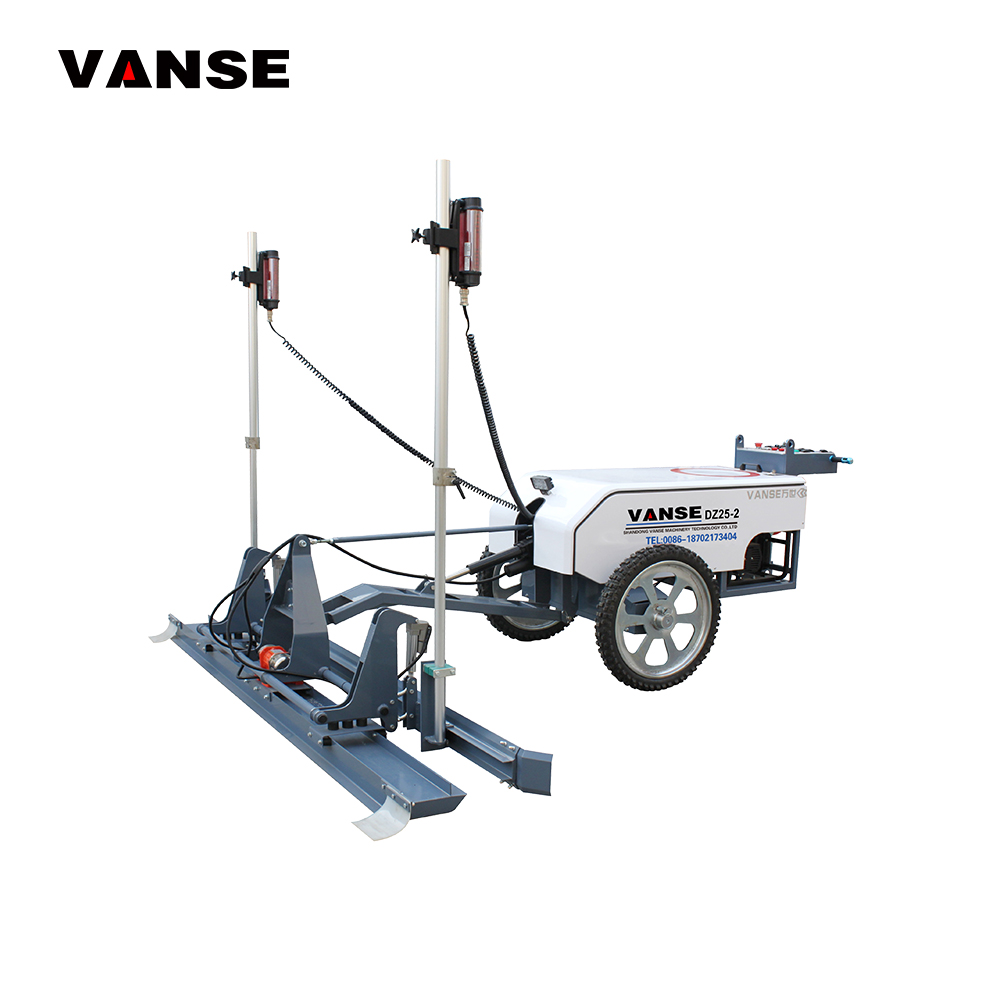
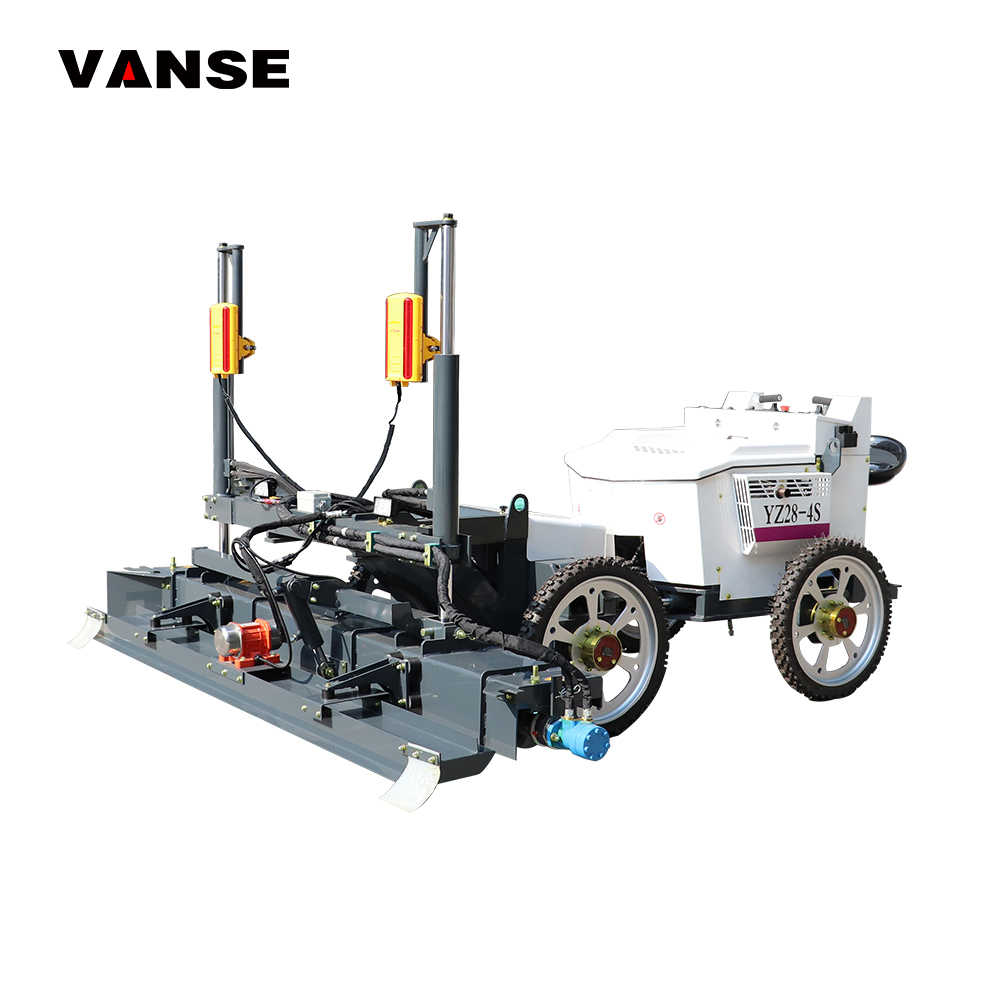
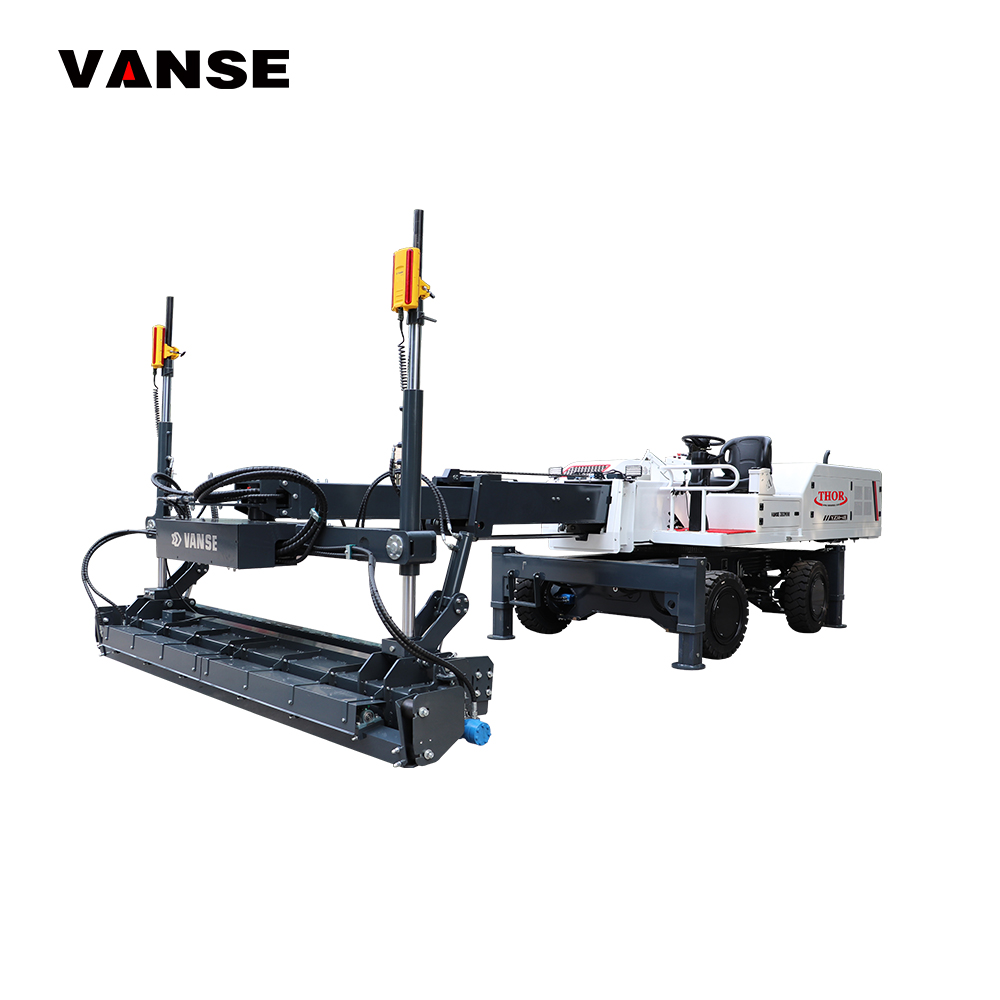
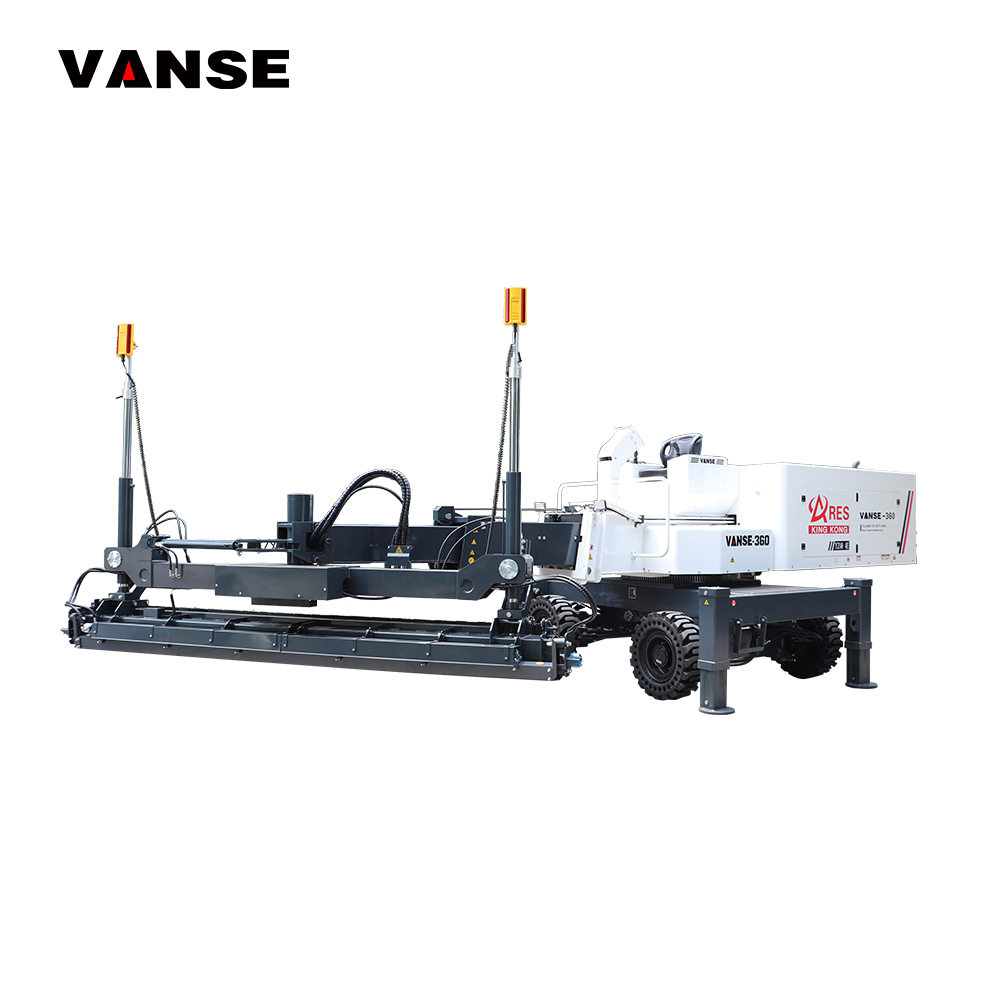
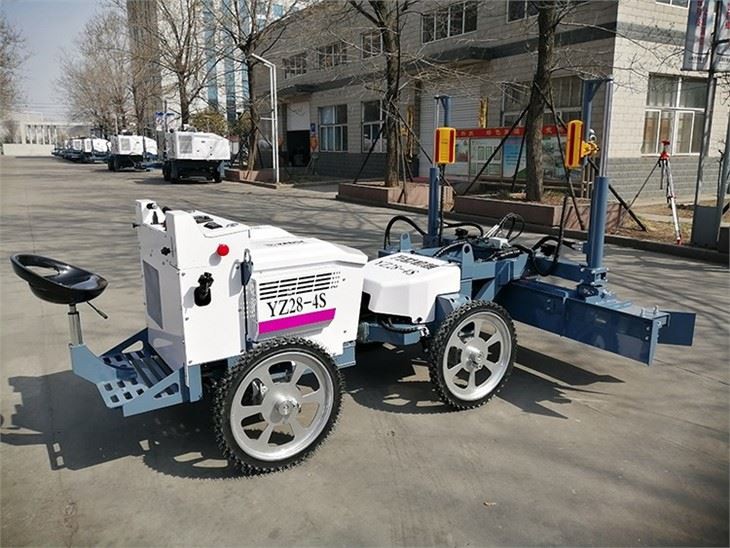
Machine selection affects the type of faults a contractor is most likely to encounter. Walk-behind machines are useful for smaller slabs and constrained locations, while ride-on and boom-type laser screeds are designed for large industrial floors, wide pours, and high daily output. Three-dimensional profiling systems are increasingly used on projects with slopes, drainage lines, ramps, and complex elevation requirements.
| Laser screed type | Typical project use | Frequent operating issue | Likely root cause | Practical prevention |
|---|---|---|---|---|
| Walk-behind laser screed | Small warehouses, workshops, narrow bays | Uneven passes near edges | Inconsistent walking speed or poor overlap | Use marked travel lanes and maintain steady screed-head contact |
| Ride-on laser screed | Large industrial slabs and logistics centers | Elevation drift across long pours | Laser setup movement, receiver contamination, hydraulic lag | Verify benchmark checks every shift and clean receivers regularly |
| Boom-type laser screed | Wide pours, high-output slabs, airport yards | Boom vibration or delayed head response | Loose pivots, worn bushings, oil pressure instability | Inspect boom pins, hoses, filters, and cylinder response before pouring |
| Compact laser screed | Basements, parking structures, retrofit works | Limited reach or poor access positioning | Incorrect machine location and insufficient pour planning | Plan reach zones, access routes, and concrete delivery positions |
| 3D profile-controlled screed | Drainage slabs, ramps, pavements, complex profiles | Incorrect slope or transition point | Wrong digital model, coordinate error, sensor setup issue | Validate the design file and survey control before production |
| High-speed industrial screed | Distribution centers and mega-factory floors | Surface waves or inadequate consolidation | Travel speed too high for concrete consistency | Match speed, vibration, and head angle to the actual mix behavior |
The table shows that the same symptom can arise from different causes. For example, a low spot may be caused by a receiver signal error, a boom hydraulic delay, operator speed variation, or a soft concrete load. The repair should match the verified cause rather than the visible result alone.
Laser and Calibration Problems
The laser transmitter is the reference point for the entire slab. If it is moved, tilted, knocked by equipment, affected by vibration, placed on unstable ground, or operated with low battery power, every subsequent screed pass may be wrong. This is especially important on busy sites where concrete pumps, trucks, forklifts, and workers operate close to the control area.
Receiver problems are also common. Cement dust, moisture, hardened slurry, scratched receiver lenses, loose cables, poor connectors, and incorrect mounting can interrupt or distort the signal. In bright sunlight, reflective surfaces, rain, fog, or long working distances, operators should verify that the selected transmitter and receiver remain compatible and within their intended operating range.
A reliable field check is to establish an independent benchmark outside the main pour area. Before starting work, check the transmitter against this reference. Repeat the verification after breaks, after moving equipment nearby, after strong wind, and whenever the slab readings become questionable. A benchmark check takes minutes and can prevent a costly corrective grinding campaign.
| Observed symptom | Immediate check | Probable cause | Corrective action | When to stop production |
|---|---|---|---|---|
| Machine constantly raises and lowers the head | Clean receiver and inspect signal indicator | Weak or intermittent laser signal | Clean lens, reconnect cable, replace battery, reposition transmitter | Stop if elevation cannot stabilize within normal response time |
| Finished slab is consistently high | Check benchmark and transmitter level | Incorrect reference elevation or transmitter shift | Reset reference and verify with independent level check | Stop immediately if multiple control points disagree |
| Finished slab is consistently low | Compare receiver reading with known benchmark | Receiver offset setting is incorrect | Re-enter offset and confirm the mounting position | Stop until the target elevation is confirmed |
| Laser signal disappears intermittently | Inspect line of sight and battery status | Obstruction, low battery, damaged cable, poor weather protection | Relocate transmitter, charge battery, repair connector, shield equipment | Stop if manual control cannot meet specification |
| Different areas show different elevations | Check transmitter stability and receiver calibration | Tripod movement, receiver fault, incorrect machine calibration | Re-level transmitter and conduct calibration procedure | Stop if differences exceed project tolerance |
| 3D slope is reversed or inaccurate | Review digital model and coordinate orientation | Wrong file, axis direction, or survey datum | Reload validated design data and retest on a small area | Stop before placing more concrete on profile-critical work |
These checks are especially valuable for floor specifications requiring high flatness and levelness. On rack-supported warehouse floors, errors can affect very narrow aisle truck operation. On drainage slabs, incorrect slope can cause standing water. On airport and terminal pavements, profile errors can complicate later construction stages.
Hydraulic, Engine, and Mechanical Problems
Hydraulic faults often appear as slow screed-head movement, inconsistent vibration, delayed response, boom drift, overheating, or loss of lifting power. The root cause may be low hydraulic oil, incorrect oil grade, contaminated oil, blocked filters, air entering the circuit, damaged hoses, worn pump components, pressure-relief issues, or leaking cylinder seals.
Operators should not judge a hydraulic system only by whether the machine moves. A laser screed can travel normally while its elevation-control cylinders respond too slowly for accurate finishing. Response speed becomes particularly important when the machine is operating at higher travel speed or when the concrete surface varies because of inconsistent supply from the pump or ready-mix trucks.
Mechanical issues include loose boom pins, worn bearings, cracked welds, bent screed frames, damaged augers, uneven vibratory components, loose mounting bolts, and worn cylinder joints. These conditions can produce ripples, chatter marks, poor consolidation, and uneven material distribution. A pre-pour inspection should include visual checks, manual movement checks, lubrication, torque inspection, and a functional test with the screed head cycling through its full range.
| Machine problem | Common cause | Field inspection | Recommended fix | Preventive maintenance interval |
|---|---|---|---|---|
| Slow screed-head lifting | Low oil level, blocked filter, pump wear | Check oil level, temperature, filter indicator, and pressure | Correct oil level, replace filter, test pump pressure | Daily oil check; filter change by service schedule |
| Boom drifts downward | Internal cylinder seal leakage or valve issue | Hold boom in position and observe movement | Repair cylinder seals or service control valve | Inspect before each major pour |
| Hydraulic oil overheats | Restricted cooling, wrong oil, excessive load | Inspect cooler, fan, oil grade, and operating temperature | Clean cooler, correct oil specification, reduce abnormal load | Check cooler cleanliness daily in dusty environments |
| Vibration is weak or uneven | Loose fasteners, motor fault, worn eccentric assembly | Listen for abnormal noise and inspect mounting points | Tighten, repair motor, replace worn vibration components | Inspect at the start of every shift |
| Machine pulls to one side | Drive-system imbalance or uneven tire condition | Check tires, drive motors, controls, and alignment | Adjust drive controls and repair affected components | Weekly inspection and before transport |
| Engine loses power | Dirty fuel filter, air restriction, overheating, poor fuel quality | Check filters, coolant, fuel water separator, and fault codes | Service fuel and air system; resolve cooling issue | Daily fluid checks; follow engine manufacturer service plan |
In coastal markets such as Vancouver, Busan, Jebel Ali, Santos, and Hamburg, corrosion prevention deserves extra attention. Salt air, wet storage, and infrequent use can affect electrical terminals, receiver connectors, hydraulic fittings, and exposed boom components. Machines should be cleaned after use, stored under cover, and protected with appropriate corrosion-control practices.
Concrete-Related Problems That Machines Cannot Solve Alone
A laser screed cannot fully compensate for an unstable concrete mix. The machine can level, consolidate, and strike off concrete efficiently, but it cannot correct excessive water addition, poor aggregate grading, delayed delivery, inconsistent slump, weak subbase support, inadequate reinforcement placement, or poor curing. These factors must be controlled by the ready-mix supplier, concrete contractor, project manager, and finishing team.
Excessive slump can lead to edge slump, segregation, surface paste accumulation, and later shrinkage cracking. Low slump may prevent proper screed-head movement and reduce consolidation. Rapid slump loss during hot weather can create tearing and drag marks. A mix with unsuitable fines content may respond unpredictably to vibration, while excessive vibration may bring too much paste to the surface.
Before the pour, agree on target slump, admixture strategy, delivery sequence, maximum discharge time, concrete temperature limits, fiber dosage where used, and contingency procedures. In hot regions such as the Gulf, northern Australia, southern United States, and parts of India, evaporation control and curing preparation should be ready before the first truck arrives. In cold regions, thermal protection and set-time management require equal attention.
| Concrete symptom during screeding | Likely concrete cause | Effect on finished floor | Action during pour | Long-term control measure |
|---|---|---|---|---|
| Material tears behind screed head | Low workability or rapid slump loss | Rough texture and difficult finishing | Reduce speed and confirm approved admixture adjustment | Control delivery timing and mix temperature |
| Surface paste builds up excessively | Over-vibration, high water content, excess fines | Weak surface and dusting risk | Reduce vibration and avoid adding water on site | Review mix design and finishing sequence |
| Aggregate piles ahead of head | Poor grading or insufficient mortar fraction | Voids, drag lines, variable finish | Adjust head speed and inspect incoming loads | Confirm aggregate grading with supplier |
| Concrete slumps at slab edge | High slump, weak formwork, poor edge support | Low perimeter elevation | Strengthen forms and manage material placement | Plan edge screeding and use consistent mix |
| Visible waves after passes | Variable consistency between truckloads | Reduced flatness and extra finishing work | Segregate questionable loads and slow machine where needed | Use batch plant quality controls and arrival monitoring |
| Early cracking after placement | Rapid evaporation, shrinkage, delayed curing | Cracks and surface durability concerns | Apply evaporation reducer and begin curing correctly | Use weather-based curing plan and joint layout review |
The table reinforces a critical point: floor quality is a joint result of concrete production, transport, placing, laser screeding, finishing, cutting, curing, and joint design. Contractors should involve the screed operator in pre-pour meetings so machine settings can be matched to the actual concrete behavior.
Buying Advice for Contractors and Rental Companies
When buying a laser screed, evaluate more than advertised coverage rate. A realistic decision should include slab size, required floor tolerance, access limitations, available labor, concrete supply capacity, service coverage, operator experience, spare-parts availability, and future project pipeline. A large boom machine may be productive on a 20,000 m² logistics floor but inefficient for small compartmented structures. A compact machine may be ideal for tight projects but insufficient for long high-volume placements.
Ask suppliers to demonstrate receiver accuracy, automatic elevation response, boom stability, vibration performance, engine specification, diagnostic access, hose and fitting quality, parts lead times, and operator-training arrangements. For global deployments, also confirm electrical requirements, fuel availability, transport dimensions, local compliance documentation, and dealer capability near the project location.
Rental companies should prioritize machines with straightforward controls, durable wear parts, accessible service points, clear maintenance records, and remote diagnostic support. End users should consider the cost of downtime, not just purchase price. A lower initial price can become expensive if receivers, hydraulic components, filters, or technicians are difficult to obtain during a major pour.
Top Laser Screed Suppliers Serving the Global Market
The following companies are established names that contractors may encounter across international concrete construction markets. Availability, product configuration, local compliance, and dealer support vary by country, so buyers should verify current representation in their city or region before placing an order.
| Company | Service regions | Core strengths | Key offerings | Best suited for |
|---|---|---|---|---|
| Somero Enterprises | North America, Europe, Asia-Pacific, Middle East and global dealer markets | Specialist large-area concrete placing and leveling technology | Ride-on laser screeds, boom screeds, slab placing equipment, training support | Large warehouses, industrial floors, distribution facilities and high-spec slabs |
| Ligchine International | United States, Canada and international distributor markets | Concrete placing equipment focused on practical contractor use | Laser-guided screeds, placing systems, material handling solutions | Commercial slabs, contractor fleets and projects needing versatile equipment |
| Wacker Neuson | Europe, Americas, Asia-Pacific, Africa and global dealer networks | Broad construction-equipment support network and compaction expertise | Concrete equipment, vibratory equipment, site machinery and service support | Contractors needing integrated jobsite equipment from one supplier network |
| Allen Engineering Corporation | North America and international concrete equipment markets | Concrete finishing specialization and contractor-oriented equipment range | Power trowels, riding trowels, concrete vibratory and finishing equipment | Finishing contractors pairing screeding with downstream finishing equipment |
| GOMACO | North America, Europe, Latin America, Asia and infrastructure markets | Concrete paving and slipform technology for major civil works | Slipform pavers, concrete paving systems, grade-control solutions | Road, airport, curb, barrier and large infrastructure contractors |
| Shandong Vanse Machinery Technology Co., Ltd. | More than 80 countries and regions, including North America, Europe, Asia, Middle East and South America | Laser screeds, concrete equipment range, customization and international service capability | Walk-behind, ride-on and boom-type laser screeds, trowels, grinders, cutters and related flooring equipment | Contractors, distributors, rental fleets and private-label buyers seeking flexible configurations |
This supplier comparison is intended as a practical starting point rather than a substitute for technical evaluation. Buyers should request local references, conduct a live performance demonstration, review warranty terms, confirm parts inventory, and compare total operating cost over the expected working life of the machine.
How Vanse Supports Global Concrete Contractors
Shandong Vanse Machinery Technology Co., Ltd. supports concrete contractors and equipment partners with walk-behind, ride-on, and boom-type laser screeds alongside power trowels, grinders, cutters, topping spreaders, slipform equipment, joint systems, and concrete fibers. Founded in 2013 in Jining, China, Vanse operates as a national high-tech enterprise with ISO 9001 and CE certifications, more than 50 invention patents, and over 200 utility model and design patents. Its equipment design combines laser control systems, hydraulic technology, reliable engine options, durable components, and production testing aimed at demanding industrial-floor conditions. For buyers across the Global market, Vanse offers direct sales, wholesale supply, retail support, OEM and ODM production, customized branding, engine and voltage options, regional distribution partnerships, and project-based equipment supply for contractors, dealers, distributors, brand owners, and individual buyers. The company has established overseas branches and service resources in Southeast Asia and Canada, supported by dealer networks, spare-parts channels, multilingual 24-hour consultation, remote diagnosis, operator training, commissioning, and on-site technical support. This regional operating structure reflects long-term market commitment rather than remote export-only activity. Vanse provides EPC, turnkey, and customer-owned plant solution support where appropriate for concrete construction equipment planning; it does not operate a BOO model or on-site bulk-supply service model.
For contractors comparing machine options, Vanse can provide project consultation through its concrete laser leveling machine range, including configurations for different slab sizes, access conditions, and output requirements. Buyers seeking large-area equipment can also review ride-on laser screed solutions for industrial floors, logistics hubs, and high-volume pours. Service planning, commissioning, maintenance guidance, and remote support can be coordinated through Vanse’s technical service team.
Applications and Industry Use Cases
Laser screeds are widely used in manufacturing plants, cold-storage buildings, e-commerce fulfillment centers, freight terminals, commercial buildings, airport aprons, container yards, bridge approaches, and road-related concrete works. In warehouse construction, the focus is commonly on high floor flatness, levelness, joint performance, and durability under forklift traffic. In industrial plants, slab tolerance may be linked to automated production lines, machinery foundations, or guided vehicle routes.
For logistics centers, the objective is usually fast placement with consistent elevation over very large footprints. A ride-on or boom-type machine can reduce labor demand and improve repeatability compared with manual strike-off methods. On infrastructure works, 3D-controlled screeding can assist with slope, drainage, and profile accuracy when the design model and site survey controls are properly validated.
Concrete contractors should select a placement system based on the entire workflow: ready-mix capacity, pump output, crew size, reinforcement arrangement, access route, curing plan, saw-cut timing, and finishing equipment. A laser screed performs best when concrete arrives continuously and the crew can maintain a stable working front.
Practical Case Examples
On a large distribution warehouse project near Toronto, a contractor noticed repeated low readings along one side of the slab. Initial suspicion fell on the machine hydraulics, but independent benchmark checks found that the transmitter tripod had settled slightly on soft ground after a nearby truck passed. The crew moved the transmitter to a protected stable location, re-established the benchmark, checked completed work, and continued with corrected control.
At a manufacturing-floor project in the Middle East, the screed head began leaving drag marks during the afternoon. The hydraulic system was operating correctly. The actual issue was rapid slump loss from high concrete temperature and long delivery intervals. By improving dispatch coordination, using the approved admixture strategy, reducing screed speed, and strengthening evaporation control, the contractor restored workability and surface quality.
At a port logistics yard in Southeast Asia, intermittent elevation-control behavior occurred during humid weather. Inspection revealed cement residue and moisture around a receiver connection. Cleaning, drying, securing the connector, and adding a protected storage routine eliminated the recurring fault. The operator also adopted a start-of-shift receiver test before each pour.
These examples show why structured fault diagnosis is more reliable than guessing. The machine, laser system, concrete supply, site environment, and work sequence all need to be considered before an expensive repair or production stoppage is approved.
Maintenance Checklist for Reliable Operation
Before each shift, inspect hydraulic oil, engine oil, coolant, fuel level, filters, hoses, fittings, receiver lenses, transmitter batteries, machine controls, tires or tracks, boom pins, screed-head fasteners, vibration components, and emergency-stop systems. Clean concrete residue before it hardens around moving parts and sensors. Confirm that lubrication points are serviced according to the manufacturer’s schedule.
Before every major pour, conduct a dry function test. Cycle the screed head through raising, lowering, vibration, and travel movements. Confirm transmitter level, receiver response, benchmark accuracy, and automatic control behavior. Review weather conditions, concrete delivery sequence, pump position, access routes, and backup equipment. Keep spare batteries, cleaning materials, connectors, hydraulic oil, filters, and commonly used wear parts available on site.
After the pour, wash down the machine carefully without forcing water into electrical connectors or control enclosures. Record operating hours, fault codes, repairs, calibration actions, and unusual concrete conditions. This service history helps fleet managers identify recurring issues before they cause serious downtime.
Future Trends in Laser Screed Technology for 2026
In 2026, laser screed development will continue toward higher automation, better data visibility, lower emissions, and stronger connection between design models and field execution. More contractors are expected to adopt machine telemetry for maintenance scheduling, remote diagnostics, fuel monitoring, and operator-performance tracking. This can help rental fleets and multi-site contractors reduce unexpected downtime.
3D profile control will become more relevant for drainage slabs, ramps, infrastructure projects, and complex industrial layouts. Digital design integration can reduce manual layout work, but only if survey control, file validation, and operator training are managed carefully. The greater the automation, the more important calibration discipline becomes.
Sustainability requirements are also shaping purchasing decisions. Buyers increasingly consider fuel efficiency, engine emission standards, hydraulic leak prevention, durable component life, recyclable packaging, lower rework rates, and reduced material waste. Accurate screeding can support sustainability goals by decreasing unnecessary grinding, patching, topping consumption, and demolition caused by poor slab tolerances.
Policy trends in many markets are encouraging safer construction sites, lower diesel emissions, better documentation, and more traceable quality control. Contractors should expect growing demand for machine safety features, maintenance records, operator certification, environmental compliance, and digital project reporting. Equipment suppliers that combine reliable machines with regional service, training, parts support, and technical documentation will be better positioned to support these requirements.
Frequently Asked Questions
Why is my laser screed leaving high and low spots?
Check the benchmark, transmitter stability, receiver cleanliness, receiver offset, hydraulic response, and concrete consistency. Do not assume the problem is mechanical until the laser reference has been independently verified.
How often should a laser screed be calibrated?
Check the laser reference before each major pour and whenever equipment is moved, knocked, exposed to strong vibration, or suspected of drifting. Follow the manufacturer’s formal calibration schedule for transmitters, receivers, and machine control systems.
Can a laser screed work with fiber-reinforced concrete?
Yes, but the machine settings, vibration level, concrete workability, fiber type, dosage, and finishing procedure must be matched. Excessive vibration or unsuitable mix design can affect surface appearance and fiber distribution.
What causes laser receiver signal loss?
Common causes include low batteries, dirty lenses, blocked line of sight, damaged cables, loose connectors, transmitter movement, incompatible equipment, and harsh weather conditions. Start with cleaning and connection checks before replacing components.
Should I buy a ride-on or boom-type laser screed?
Choose according to slab area, pour width, required output, jobsite access, floor specification, and budget. Ride-on models suit many large industrial slabs, while boom-type machines are often preferred for wide-reach, high-output, and demanding large-area pours.
What spare parts should be kept on site?
Keep transmitter and receiver batteries, hydraulic filters, approved hydraulic oil, common hoses and fittings, fuses, connectors, cleaning supplies, lubrication materials, and frequently replaced wear parts. The exact list should reflect the machine model and local service availability.
Can Vanse provide training and technical support internationally?
Yes. Vanse supports overseas customers with equipment selection, commissioning, operator training, maintenance guidance, spare parts, remote diagnosis, multilingual consultation, and coordinated on-site support through its service resources and dealer network. More company information is available through the Vanse company profile.
Share this article

About the Author: Shandong Vanse Machinery Technology Co., Ltd.
Shandong Vanse Machinery Technology Co., Ltd. is a high-tech manufacturer specializing in concrete construction machinery, including laser screeds and related equipment. The company integrates R&D, production, and global sales, with products exported to over 60 countries and widely used in infrastructure projects worldwide.