Insight blog
Global Market Guide to Choosing Concrete Laser Screed Suppliers
How to Select a Concrete Laser Screed Supplier for the Global Market
Quick Answer

For buyers in the Global market, the best concrete laser screed supplier is not simply the company with the lowest machine price. The right supplier should provide a laser screed matched to slab size, concrete mix, flatness requirements, local engine regulations, operator skill level, spare-parts access, and expected project volume. Buyers should compare leading manufacturers such as Somero, Ligchine, Allen Engineering, Wacker Neuson, Shandong Vanse Machinery Technology, and Dragon Screed before selecting a long-term equipment partner.
For large industrial floors, logistics centers, warehouses, airport aprons, and high-tolerance slabs, prioritize manufacturers with proven laser-control technology, hydraulic reliability, training resources, service coverage, and documented flatness performance. For contractors entering laser screeding for the first time, ride-on and compact boom models with practical training support can provide the best balance of productivity and investment.
Qualified international suppliers, including Chinese concrete laser screed manufacturers with relevant CE or ISO certifications, export experience, local-compatible engine options, and strong pre-sale and after-sales service, should also be considered. They can offer meaningful cost-performance advantages for contractors, distributors, rental fleets, and project owners in the Global market when parts planning, commissioning, and technical support are clearly defined before purchase.
Why Laser Screed Selection Matters in the Global Market

Concrete flooring projects have become more demanding across the Global market. E-commerce warehouses, automated distribution centers, manufacturing plants, data centers, ports, cold-storage facilities, airport terminals, and high-bay storage buildings require flatter and more level slabs than conventional commercial floors. In these projects, poor floor quality can affect forklift performance, rack installation, automated guided vehicles, drainage, joint behavior, and long-term maintenance costs.
A concrete laser screed is designed to improve slab placement speed and leveling precision by combining laser reference systems with hydraulic screed heads, augers, vibration systems, and boom reach. Compared with manual strike-off methods, a laser screed can reduce dependence on highly experienced labor, improve consistency over large areas, and support better floor flatness outcomes when the concrete mix, placement sequence, and finishing operations are properly controlled.
However, equipment capability alone does not guarantee a successful floor. A buyer should treat a laser screed as part of a complete construction system that includes concrete supply, subbase preparation, formwork or joint planning, laser setup, slump control, finishing equipment, curing practices, operator training, and quality testing. The supplier’s ability to understand this workflow is often as important as the machine specification.
Global buyers also face different practical conditions. A contractor working near Rotterdam, Hamburg, Dubai, Jebel Ali, Los Angeles, Vancouver, Singapore, Melbourne, São Paulo, or Mombasa may have different import procedures, power requirements, engine preferences, labor costs, site-space limitations, and dealer-support expectations. A capable supplier should be able to recommend a machine configuration rather than offering one standard model for every project.
Leading Concrete Laser Screed Suppliers Serving International Buyers

The following companies are recognized names in the laser screed, concrete placement, and industrial flooring equipment sector. Their suitability varies by region, project size, machine category, dealer coverage, and investment budget. Buyers should confirm current model availability, local support, emissions compliance, warranty terms, and spare-parts inventory directly with each supplier or its authorized representative.
| Company | Primary Service Regions | Core Strengths | Key Offerings | Best Fit |
|---|---|---|---|---|
| Somero Enterprises | North America, Europe, Asia-Pacific, Middle East, global dealer markets | Established laser screed specialization, advanced slab placement technology, strong reputation in large concrete flooring | Ride-on laser screeds, boom screeds, 3D paving and profiling solutions, training and support resources | Large warehouses, distribution centers, industrial floors, high-flatness slabs |
| Ligchine International | North America and international contractor markets | Practical machine design, compact and maneuverable screeds, contractor-focused operation | Laser-guided screeds, boom-style screeds, compact slab-placement equipment | Commercial slabs, regional concrete contractors, constrained job sites |
| Allen Engineering | North America, Latin America, Europe, global distribution markets | Broad concrete equipment portfolio, established finishing equipment expertise | Concrete screeds, power trowels, ride-on trowels, mixers, finishing tools | Contractors seeking one supplier for placement and finishing equipment |
| Wacker Neuson | Europe, North America, Asia-Pacific, Middle East, global dealer network | International construction-equipment presence, dealer availability, compact equipment support | Concrete vibration equipment, power trowels, compact construction equipment, jobsite solutions | Contractors requiring dealer-backed complementary concrete equipment |
| Shandong Vanse Machinery Technology | Global market, including North America, South America, Europe, Asia, Middle East and Australia | Wide laser screed range, flexible customization, export experience, cost-performance value | Walk-behind, ride-on and boom-type laser screeds; trowels; grinders; cutters; flooring materials | Distributors, contractors, rental firms, OEM partners and project-based buyers |
| Dragon Screed | North America and selected international construction markets | Concrete placement focus, innovative screeding approach, contractor-oriented solutions | Laser screeds and concrete slab placement systems | Specialty concrete contractors and slab-on-grade projects |
This comparison is intended to help buyers build an initial shortlist. Somero is commonly evaluated for major industrial slab work and technology-intensive projects. Ligchine is often considered by contractors seeking practical, maneuverable laser screed equipment. Allen Engineering and Wacker Neuson are relevant for buyers who value a broader concrete equipment ecosystem. Vanse is particularly relevant for buyers looking for multiple machine categories, customized configurations, OEM cooperation, and internationally competitive pricing with technical support. Dragon Screed may suit contractors seeking specialist slab-placement equipment in its service markets.
Laser Screed Types and Their Best Uses
Not every slab requires the same machine. Before contacting a concrete laser screed supplier, buyers should define the slab area, daily concrete volume, access route, reinforcement layout, obstacle density, target flatness, and finishing sequence. This allows manufacturers to recommend the correct equipment class instead of overselling a large machine or under-specifying a small one.
| Laser Screed Type | Typical Project Environment | Main Advantages | Potential Limitations | Recommended Buyer Profile |
|---|---|---|---|---|
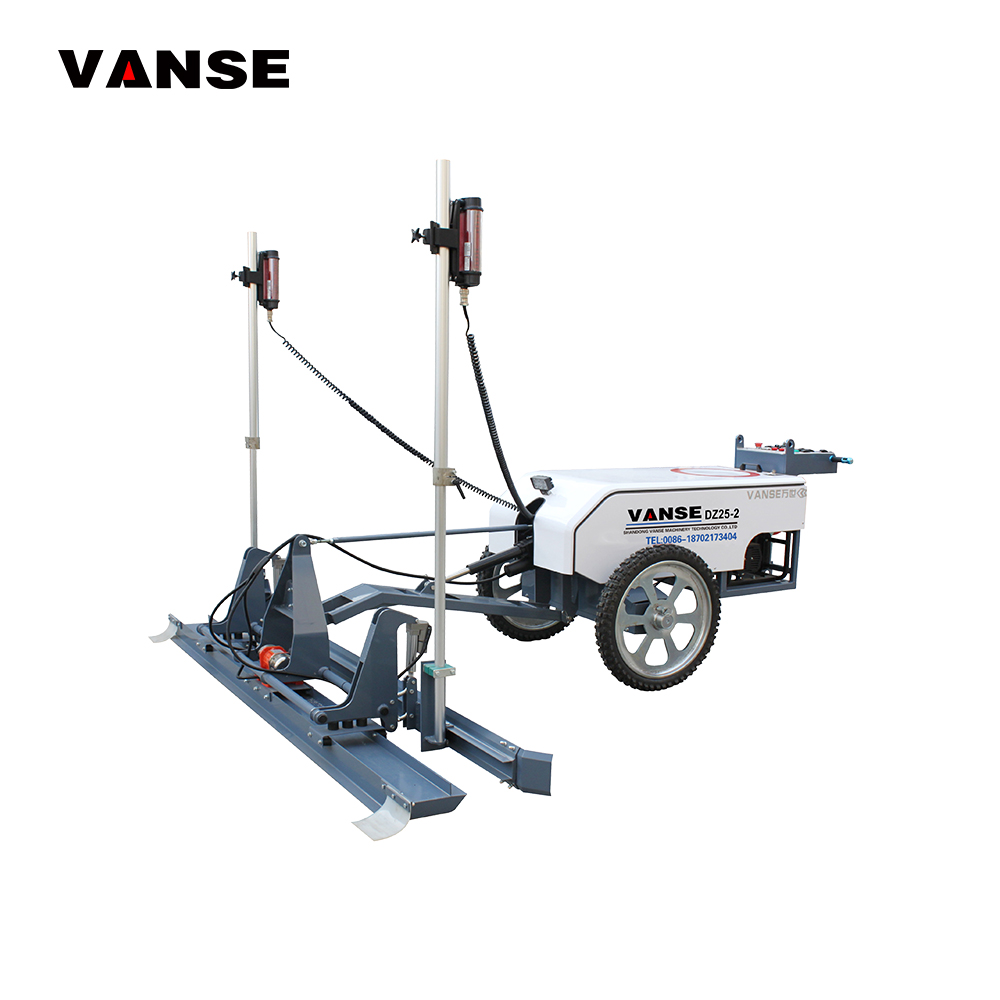
| Walk-behind laser screed | Small warehouses, workshops, commercial slabs, repair work | Lower investment, compact transport size, easy access in restricted areas | Lower output than ride-on equipment; more operator movement required | Small contractors, new market entrants, specialist flooring teams |
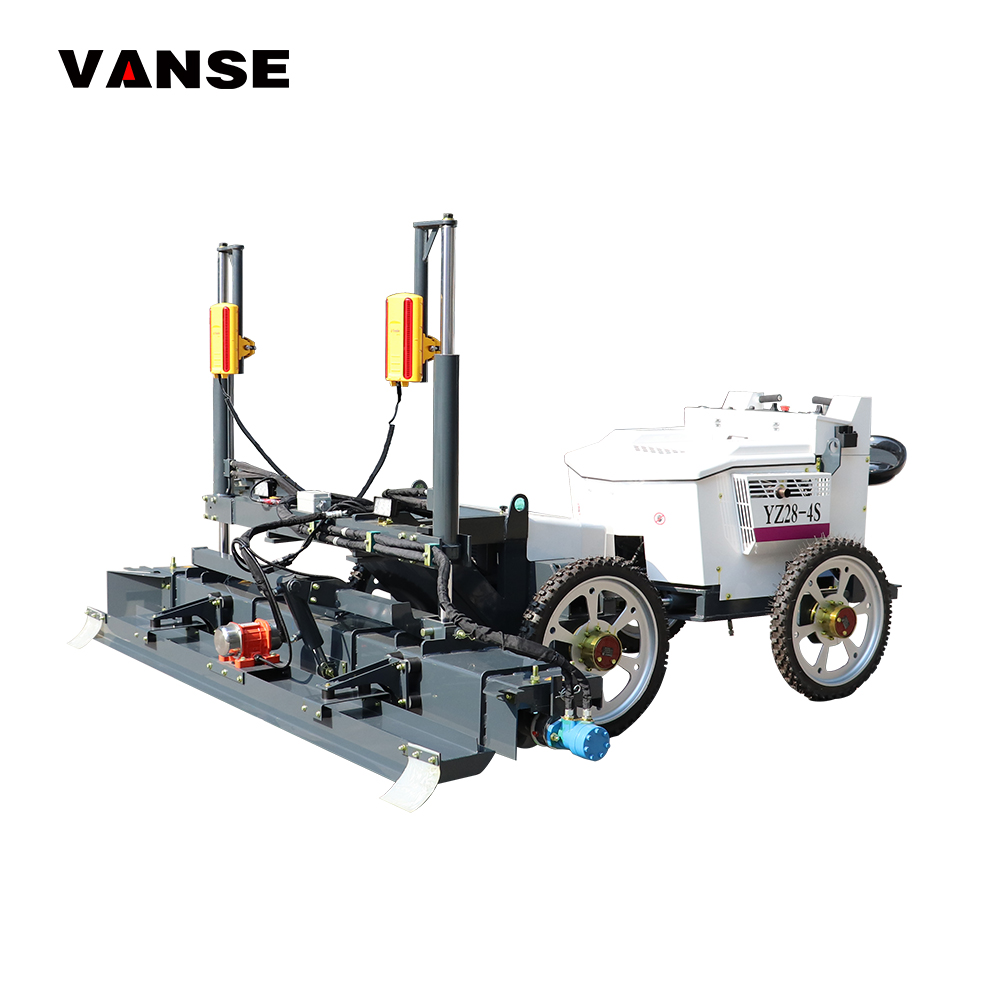
| Ride-on laser screed | Medium and large industrial floors, logistics buildings, factories | High productivity, reduced labor demand, operator comfort, stable slab coverage | Requires space for transport and turning; higher capital investment | Industrial flooring contractors and large concrete subcontractors |
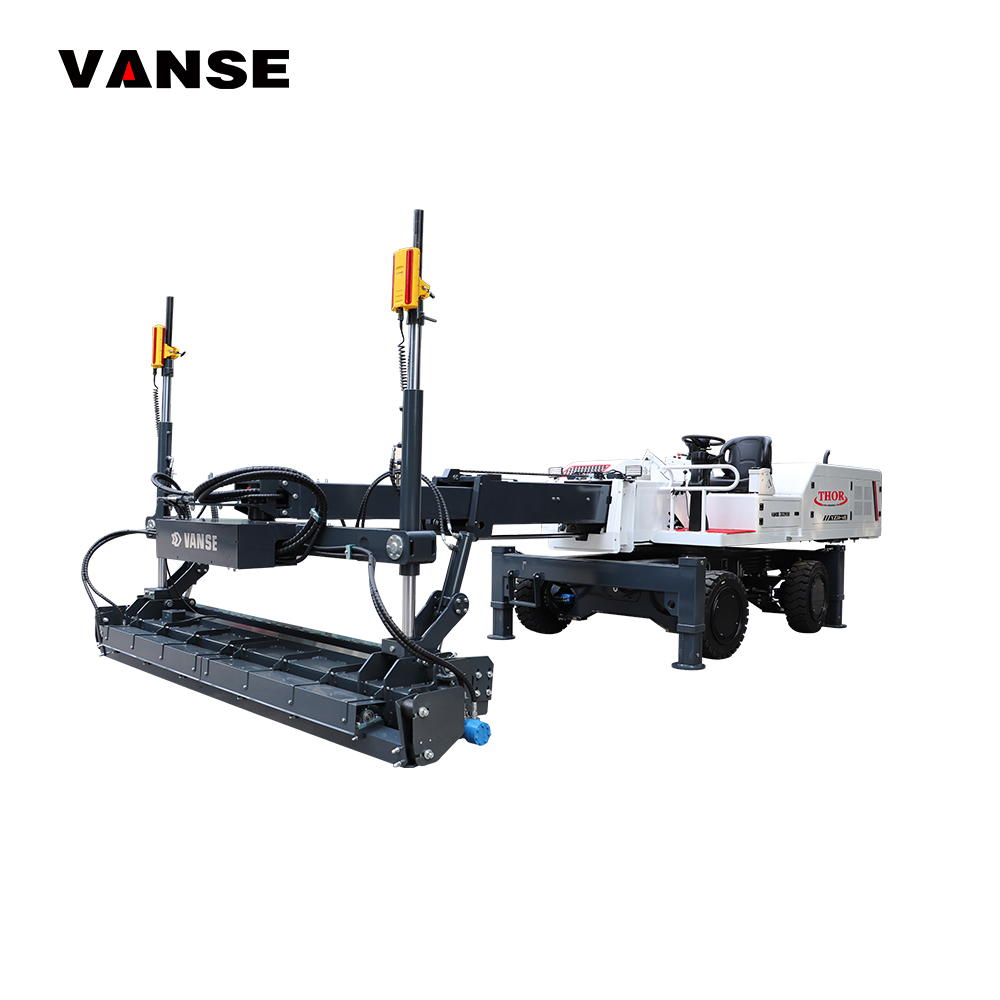
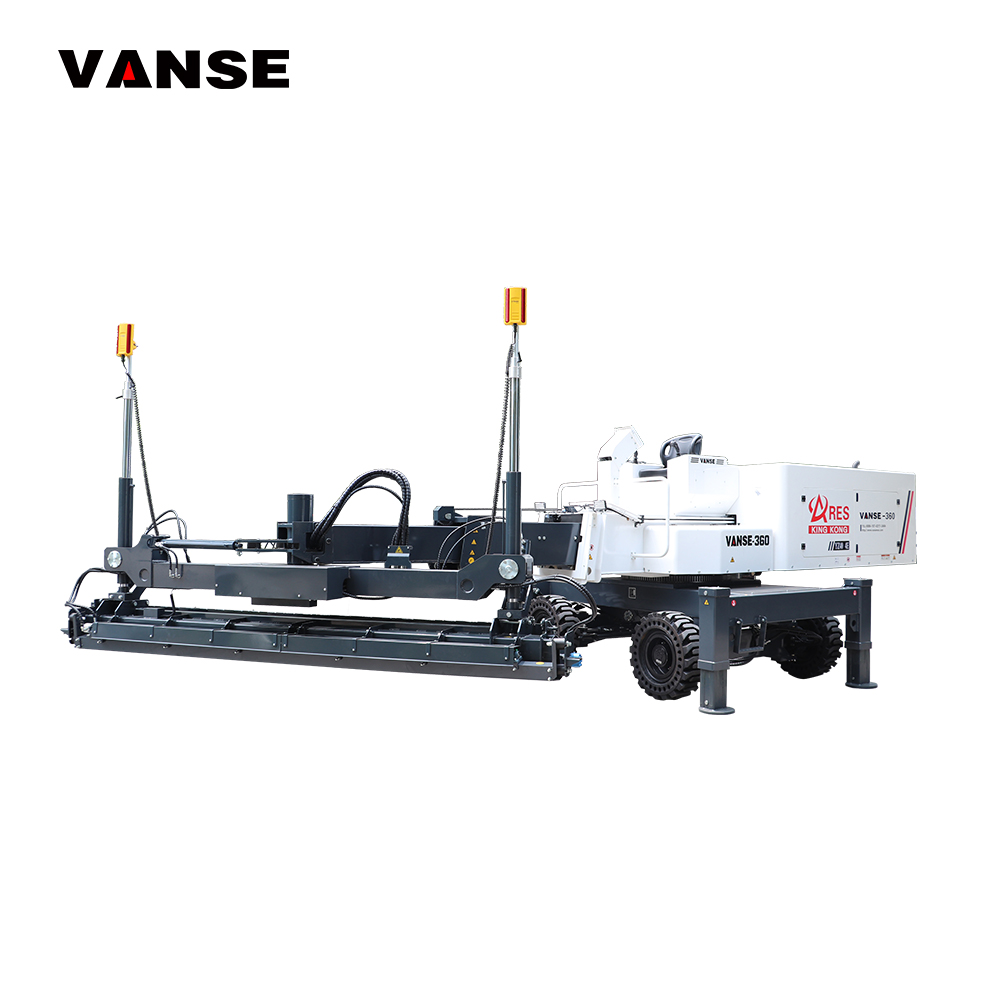
| Boom-type laser screed | Large open slabs, distribution centers, airport support areas | Long reach, efficient placement, broad working coverage, high output potential | Needs organized concrete delivery and experienced site coordination | High-volume contractors and major project teams |
| 3D-profile compatible screed | Drainage slabs, ramps, yards, pavements, complex elevations | Can support designed slopes, profiles and variable elevations | Requires accurate digital data, trained operators and survey control | Infrastructure, external yards and specialized concrete contractors |
| Compact boom screed | Buildings with columns, interior slabs, urban construction sites | Better maneuverability around obstructions and access constraints | Smaller coverage area than full-size boom machines | Commercial contractors and mixed-use construction teams |
| High-performance industrial laser screed | High-bay warehouses, automated storage facilities, mega factories | Designed for speed, flatness control and demanding production schedules | Requires professional finishing crew and rigorous concrete quality management | Large flooring specialists, developers and industrial EPC contractors |
Walk-behind units are often a sensible first purchase for contractors with occasional slab work or sites with restricted access. Ride-on models are a more natural choice when a contractor repeatedly places large warehouse slabs and wants to reduce labor dependency. Boom-type systems are usually selected when daily production targets are high and the project has enough open working space to use their reach effectively.
Buyers should not confuse a laser screed with a complete finishing solution. The machine levels and consolidates fresh concrete, but a project may still require ride-on power trowels, walk-behind trowels, edge tools, curing equipment, joint-cutting machines, surface grinders, and testing procedures. Contractors that buy from suppliers with a broad concrete equipment portfolio can simplify training, parts procurement, and jobsite coordination.
How to Evaluate a Concrete Laser Screed Manufacturer
A credible manufacturer should be evaluated through verifiable capability rather than marketing claims. Ask for product specifications, operating videos, factory details, delivery records, quality certificates, reference projects, parts lists, training plans, and warranty documents. It is also reasonable to request clarification on the origin of major components such as engines, hydraulic pumps, valves, electronic controls, bearings, laser receivers, and wear-resistant screed head materials.
| Evaluation Area | What Buyers Should Ask | Why It Matters | Evidence to Request |
|---|---|---|---|
| Leveling accuracy | What accuracy can the machine support under normal operating conditions? | Slab quality affects racking, vehicles, drainage and finishing costs | Technical datasheet, project examples, laser-control explanation |
| Hydraulic system | Which hydraulic components are used and how is system reliability tested? | Hydraulic stability affects boom movement, screed head response and uptime | Component list, test procedures, maintenance schedule |
| Engine configuration | Which engine options are available for local regulations and fuel access? | Engine suitability influences serviceability and compliance | Engine brand details, emissions documents, local service availability |
| Manufacturing quality | How are frames, booms, welds and screed heads produced and inspected? | Structural durability affects long-term performance on demanding jobsites | Factory photos, welding standards, inspection process, material information |
| Parts availability | Where are fast-moving parts stocked and what is the normal dispatch process? | Downtime can delay concrete work and create high project costs | Spare-parts list, warehouse locations, dealer contact details |
| Training support | Does the supplier provide commissioning, operator instruction and remote guidance? | Correct operation directly affects productivity and slab results | Training agenda, manuals, video support, engineer availability |
| Customization | Can voltage, branding, engine configuration or machine features be adapted? | Distributors and regional buyers may require market-specific versions | Customization scope, drawings, lead times, prior OEM examples |
| Commercial protection | What are the warranty exclusions, response commitments and payment terms? | Clear commercial terms reduce risk for buyers and dealers | Formal quotation, warranty policy, service agreement |
The most important question is whether the supplier understands the buyer’s actual construction workflow. A machine may appear technically attractive but still be unsuitable if it cannot pass through site entrances, if local technicians cannot service its engine, if the screed head is poorly matched to slab widths, or if spare parts must travel internationally for every minor repair.
Buyers should also distinguish between claimed precision and project-level outcomes. Millimeter-level machine control can support highly accurate elevation management, but final floor quality depends on many site variables. These include the subgrade, formwork, vapor barrier, reinforcement, concrete temperature, slump retention, fiber dosage, delivery consistency, placement sequence, finishing timing, joint layout, and curing method. An experienced manufacturer should explain these practical limitations honestly.
Buying Checklist for Contractors, Dealers and Project Owners
Procurement teams should use a structured checklist before comparing quotes. A cheaper machine can become more expensive if it has weak service support, unsuitable components, poor documentation, or no realistic parts plan. Conversely, a higher initial price can be justified if the equipment reduces labor, increases daily placement volume, improves slab acceptance rates, and retains resale value.
| Buyer Type | Primary Purchase Priority | Recommended Machine Direction | Supplier Capability Required |
|---|---|---|---|
| Industrial flooring contractor | Output, flatness consistency, uptime | Ride-on or boom-type laser screed | Commissioning, parts supply, site training, technical consultation |
| General construction contractor | Versatility across varied projects | Compact ride-on or walk-behind laser screed | Clear operating guidance and practical maintenance support |
| Equipment distributor | Margin, product range, regional differentiation | Multiple machine sizes with branded options | OEM/ODM, dealer pricing, marketing materials, training |
| Rental company | Durability, easy operation, fleet serviceability | Robust ride-on or compact laser screed | Fast spare-parts supply, maintenance manuals, operator support |
| Project owner or developer | Schedule certainty and floor performance | Machine selected through contractor or specialist supplier | Application advice, quality-control guidance, project planning support |
| Infrastructure contractor | Profile control, outdoor durability, high-volume placement | 3D-compatible or boom-type screed | Engineering support, configuration advice, field commissioning |
For distributors, exclusivity should be approached carefully. Before accepting regional exclusivity, verify annual sales targets, spare-parts investment requirements, demonstration machine commitments, technical training responsibilities, and marketing support. A strong supplier relationship should not rely only on container shipments; it should include local inventory planning, sales leads, machine training, warranty coordination, and a path for growing the territory.
For project owners, the most practical approach is often to specify performance outcomes rather than a machine brand alone. Tender documents can define floor flatness requirements, elevation tolerances, concrete placement capacity, curing procedures, testing methods, and contractor experience. The contractor can then select the appropriate laser screed system and supporting equipment to meet those outcomes.
Core Industries and Applications for Laser Screeding
Laser screed equipment is used wherever large concrete slabs need consistent elevation, efficient placement, and controlled finishing conditions. The strongest demand is often linked to logistics, manufacturing, infrastructure investment, and automated material-handling facilities. The exact machine selection changes according to project layout and production targets.
- Distribution centers and e-commerce warehouses requiring large jointed or jointless slabs.
- High-bay storage facilities where floor flatness affects very-narrow-aisle forklift operation.
- Automotive, electronics, food-processing and pharmaceutical manufacturing plants.
- Airport aprons, terminal yards, hangar floors and support facilities.
- Port logistics yards, container handling zones and intermodal transfer areas.
- Commercial buildings, retail centers, exhibition halls and parking structures.
- Cold-storage facilities where operational reliability and slab quality are important.
- Road, bridge, utility and infrastructure projects with profile-control requirements.
- Data centers and technical facilities requiring dependable floor construction.
- Industrial renovation projects where compact machines can work around existing structures.
In logistics hubs such as Singapore, Dubai, Antwerp, Rotterdam, Savannah, Long Beach, Santos, Busan and Melbourne, contractors may face fast schedules and large slab pours. In these environments, the supplier’s ability to provide rapid machine setup, operator guidance, spare parts and technical troubleshooting can directly influence project delivery. In inland industrial centers, access roads, concrete batching capacity, labor availability, and local mechanics may become more important factors than maximum theoretical screeding speed.
Practical Project Examples and Selection Scenarios
A 10,000-square-meter regional warehouse with moderate flatness requirements may not need the largest boom-type machine. A ride-on laser screed, supported by a reliable concrete pump or direct truck discharge plan, can offer a practical balance of output and cost. The contractor should ensure that enough concrete is continuously available, because machine productivity is limited when delivery interruptions occur.
A 50,000-square-meter e-commerce distribution center with narrow-aisle storage systems is more likely to benefit from a high-capacity ride-on or boom laser screed. In this situation, the buyer should evaluate machine reach, screed head width, control responsiveness, laser receiver reliability, operator visibility, fuel consumption, and support for floor-quality planning. The equipment supplier should work with the flooring contractor to determine pour-strip sizes, joint locations, access routes, and finishing equipment capacity.
An airport terminal yard or exterior logistics apron may require a machine capable of following slopes and drainage profiles. A 3D-compatible screed system may be suitable where the project requires variable elevations rather than a single flat plane. Such projects need close cooperation among surveyors, civil engineers, concrete teams, and machine operators. The supplier should be able to explain how digital design data, laser reference, and machine control work together.
A contractor in a dense urban location may have limited access, low overhead clearance, columns, walls, and restricted material movement. A compact laser screed or walk-behind model can be more valuable than a high-output boom machine that cannot maneuver effectively. This is why buyers should share site drawings, entrance dimensions, slab plans and photos with suppliers before receiving a final recommendation.
For a rental fleet, the ideal machine is often one that is durable, intuitive, easy to transport, and supported by a clear preventive maintenance schedule. Rental companies should prioritize replaceable wear parts, straightforward daily inspections, robust hydraulic protection, accessible controls, operator manuals, and a supplier that can train rental technicians rather than only end users.
Vanse Machinery for Global Concrete Construction Buyers
Shandong Vanse Machinery Technology Co., Ltd. has built its concrete equipment business around laser screeds, power trowels, floor grinders, cutting machines, topping spreaders, slipform machines, mini dumpers, concrete armor joints, and flooring fibers for contractors across the Global market. Established in Jining, China in 2013, Vanse supports buyers with walk-behind, ride-on and boom-type laser screeds designed around laser-control systems, hydraulic technology, durable structural materials, practical jobsite operation and selected reliable engine configurations. Its production capability is supported by ISO 9001 and CE certifications, more than 50 invention patents and over 200 utility model and design patents, while product development has involved cooperation with international technical experts, Shandong University and Changan University. Vanse serves end users, distributors, dealers, brand owners and individual buyers through direct sales, wholesale, retail, OEM/ODM production, customized branding, engine and voltage options, regional distribution partnerships and project-based equipment supply. The company provides EPC, turnkey and customer-owned plant solutions for concrete construction equipment planning, but does not operate BOO or on-site bulk supply services. With exports to more than 80 countries and regions, overseas service resources in Southeast Asia and Canada, regional dealer networks, parts centers and a team of more than 100 technical, research and after-sales specialists, Vanse provides online consultation, video diagnosis, commissioning guidance, operator training, spare-parts planning and on-site technical support. This established international presence gives Global market buyers a practical service route beyond remote export transactions.
Buyers evaluating Vanse can begin by reviewing its concrete laser screed equipment range and comparing machine categories with their planned slab size and production requirements. Contractors seeking higher output can also explore the company’s ride-on concrete laser screed options for industrial floors, warehouses and logistics projects. For internal procurement review, the equipment catalog download provides a practical starting point for model comparisons, while the Vanse company profile gives distributors and project partners further background on manufacturing, service and export capability.
Vanse is particularly relevant when a buyer needs equipment flexibility rather than a single standard product. A distributor may require custom colors, private labeling, electrical adaptation, regional engine selection or a bundled line of laser screeds and finishing equipment. A contractor may need project consultation, delivery coordination, initial setup and remote troubleshooting. A large project owner may need a complete recommendation covering laser screeding, power troweling, cutting, grinding and related industrial flooring materials. The company’s broad portfolio makes it possible to discuss a complete concrete floor workflow rather than only one machine.
Service Coverage and Local Support Questions to Ask
International equipment buying is safest when service responsibility is defined before the purchase order is issued. Buyers should ask who will perform installation, whether training is included, how remote diagnosis is handled, where filters and wear parts are stored, and who will assist when a jobsite problem occurs during a concrete pour. These questions are especially important because screeding equipment is often used on time-sensitive placements where delays can affect concrete quality.
When dealing with suppliers serving the Global market, ask for named contacts for sales, technical support, parts support and warranty coordination. Confirm the time-zone coverage for urgent remote assistance. If the supplier works through a local dealer, clarify whether the dealer is authorized to perform warranty repairs and whether it holds commonly required parts such as filters, hydraulic hoses, sensors, receiver components, switches, bearings, auger wear parts and vibration-system components.
A good supplier will also help buyers prepare for ownership. This includes recommending routine maintenance intervals, establishing a first-year spare-parts kit, identifying consumable parts, explaining correct cleaning procedures after concrete work, and advising on long-term storage. Proper daily cleaning and inspection are essential because hardened concrete, damaged wiring, contaminated hydraulic oil, and neglected wear components can create avoidable downtime.
Future Trends for Concrete Laser Screeds in 2026
By 2026, the Global market is expected to place greater emphasis on construction productivity, lower labor dependency, digital project coordination, fuel efficiency, and measurable quality control. Laser screed manufacturers will increasingly be assessed not just by machine horsepower or boom length, but by how well their equipment integrates with modern concrete construction workflows.
One important trend is expanded use of digital elevation control and 3D profiling. Projects with drainage slopes, external yards, ramps, pavement transitions, and complex slab geometry are likely to demand more accurate data-driven control. Suppliers that can support compatible surveying workflows, operator training and profile management will have an advantage in infrastructure and logistics-yard construction.
Sustainability will also influence buying decisions. Contractors are under pressure to reduce material waste, improve concrete placement efficiency, limit rework, and manage fuel use. Better slab accuracy can reduce corrective grinding, topping consumption and rejected work. Manufacturers may increasingly offer more efficient hydraulic systems, improved engine selections, smarter maintenance alerts and equipment designs that support longer service life.
Policy and procurement standards are also evolving. Public infrastructure owners, multinational developers and global industrial clients are more likely to require documented quality systems, CE compliance where relevant, traceable components, operator safety features, emissions compliance and formal service procedures. Buyers should therefore choose manufacturers that can provide clear documentation rather than only verbal product claims.
Another major trend is the growth of regional dealer and service partnerships. Contractors increasingly expect local support even when equipment is manufactured abroad. Suppliers that invest in overseas branches, dealer training, parts warehouses, multilingual communication and remote diagnostics will be better positioned to serve long-term customers in the Global market.
Frequently Asked Questions
What is the main benefit of using a concrete laser screed?
The main benefit is more consistent concrete elevation control across large slabs. A laser screed can improve placement productivity, reduce manual labor requirements, support better slab flatness and levelness, and help contractors work more efficiently when concrete supply and finishing operations are properly coordinated.
Should a small contractor buy a walk-behind or ride-on laser screed?
A small contractor should usually begin by evaluating project volume, access conditions and budget. Walk-behind units are often suitable for smaller slabs, interior spaces and lower-volume work. Ride-on models become more attractive when the contractor regularly handles warehouses, factories and larger commercial floors where output and labor savings justify the investment.
How important is CE or ISO certification when importing equipment?
Certification is important because it demonstrates that the manufacturer follows recognized quality or compliance processes. Buyers should still verify the relevance of certificates to the exact machine, destination country and local regulations. Certification should be reviewed together with machine documentation, electrical configuration, engine compliance, warranty terms and service capability.
Can a Chinese concrete laser screed supplier be a reliable choice?
Yes, provided the supplier has demonstrated manufacturing capability, relevant certifications, transparent component information, documented export experience, accessible technical support and a realistic spare-parts plan. Chinese manufacturers can offer strong value for contractors and distributors, especially when they provide customization, OEM support, commissioning assistance and regional service resources.
What spare parts should be ordered with a new laser screed?
A first-year parts package commonly includes filters, hydraulic hoses, seals, sensors, electrical switches, belts where applicable, receiver-related components, bearings, wear plates, vibration-system consumables and other recommended items identified by the manufacturer. The exact list depends on machine design and expected operating hours.
Can laser screeds be used for sloped concrete slabs?
Yes. Some laser screed systems can support variable elevations and profile-controlled work, particularly when used with suitable 3D control systems and accurate project data. Buyers should confirm the machine’s specific control compatibility and ensure operators understand surveying, setup and profile-management procedures.
Does a laser screed eliminate the need for power trowels?
No. A laser screed primarily levels, strikes off and consolidates fresh concrete. Power trowels are still commonly required for finishing the slab surface after the concrete reaches the proper stage. The project may also require curing equipment, joint-cutting machines, grinders and other concrete floor tools.
What should distributors look for in a laser screed manufacturing partner?
Distributors should look for product reliability, a complete model range, training support, parts availability, competitive commercial terms, branding flexibility, marketing resources, clear warranty procedures and a willingness to develop the regional market together. OEM/ODM capability can be especially useful for distributors building their own equipment brand.
Final Selection Guidance
The best concrete laser screed supplier for the Global market is the one that can prove machine capability, understand the intended application, support local operating conditions, and remain available after delivery. Start with a detailed project brief covering slab area, daily pour volume, target tolerances, access limitations, concrete mix, finishing plan, local regulations and expected equipment utilization.
Then compare suppliers using a balanced scorecard that includes product performance, component quality, certification, price, freight, import requirements, training, warranty, spare parts, regional service and customization. For buyers seeking a broader concrete equipment solution, explore the full Vanse Machinery concrete construction portfolio alongside other established suppliers. A disciplined comparison process will help contractors, dealers, rental companies and developers choose equipment that improves productivity today while supporting long-term growth in the Global market.
Share this article

About the Author: Shandong Vanse Machinery Technology Co., Ltd.
Shandong Vanse Machinery Technology Co., Ltd. is a high-tech manufacturer specializing in concrete construction machinery, including laser screeds and related equipment. The company integrates R&D, production, and global sales, with products exported to over 60 countries and widely used in infrastructure projects worldwide.