Insight blog
Concrete Laser Screed Pricing Guide for Global Market
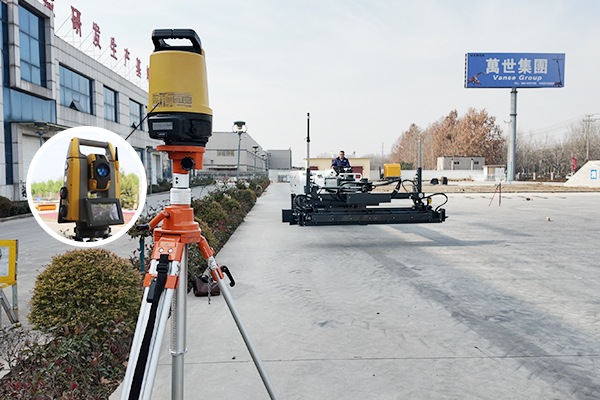
Concrete Laser Screed Pricing in the Global Market
Quick Answer

Concrete laser screed pricing in the Global market typically ranges from about US$12,000 for compact walk-behind equipment to more than US$250,000 for high-output boom-type or premium ride-on systems. Most contractors buying a new ride-on concrete laser screed should budget approximately US$45,000–US$130,000 before freight, taxes, training, spare parts, and site-support costs.
The right budget depends on slab area, required flatness, concrete volume per pour, project access, operator availability, local service coverage, and whether the machine needs 3D profiling capability. For warehouse floors, logistics facilities, factories, airports, terminal yards, and large industrial slabs, a ride-on or boom-type screed often produces a stronger return than manual leveling because it reduces labor demand and improves consistency.
Leading options in the Global market include Somero, Ligchine, Vanse, Furuide, Topcon Positioning Systems, and Trimble. Contractors should compare complete ownership cost rather than only the quoted machine price. Qualified international suppliers, including Chinese manufacturers with applicable CE certification, documented quality systems, local technical support, and responsive after-sales service, can also be practical choices because of their cost-performance advantages.
Before ordering, request a written quotation showing machine configuration, laser receiver and transmitter scope, engine specification, shipping terms, spare-parts package, commissioning plan, warranty, operator training, and service response commitment. Buyers who need support for upcoming floor projects can begin by reviewing Vanse’s concrete laser leveling machine range.
What Drives Concrete Laser Screed Pricing?

A laser screed is a concrete placement and leveling machine that uses a rotating laser transmitter, receiver, hydraulic controls, and a vibrating screed head to establish a specified slab elevation. It does not simply replace a vibrating beam. A well-matched machine can combine concrete strike-off, elevation control, vibration, and surface preparation into a repeatable workflow. This is why the price difference between a basic compact system and a high-production boom screed can be substantial.
In the Global market, machine cost is shaped by production capacity, boom reach, working width, hydraulic design, control accuracy, engine power, optional 3D systems, transport dimensions, local certifications, and the supplier’s ability to provide parts and technical support. A low initial price may be attractive for a one-time job, but a contractor placing thousands of square meters every month should also calculate downtime risk, crew savings, finishing quality, and resale value.
Port logistics affect delivered costs. Buyers importing into Rotterdam, Hamburg, Jebel Ali, Singapore, Santos, Durban, Los Angeles, Vancouver, Melbourne, or major African and Latin American gateway ports should request Incoterms clearly. Freight, cargo insurance, inland transport, customs duty, value-added tax, crane unloading, and pre-delivery inspection can materially change the final project budget.
| Laser Screed Category | Indicative Equipment Price | Typical Project Scale | Primary Cost Drivers | Best-Fit Buyer |
|---|---|---|---|---|
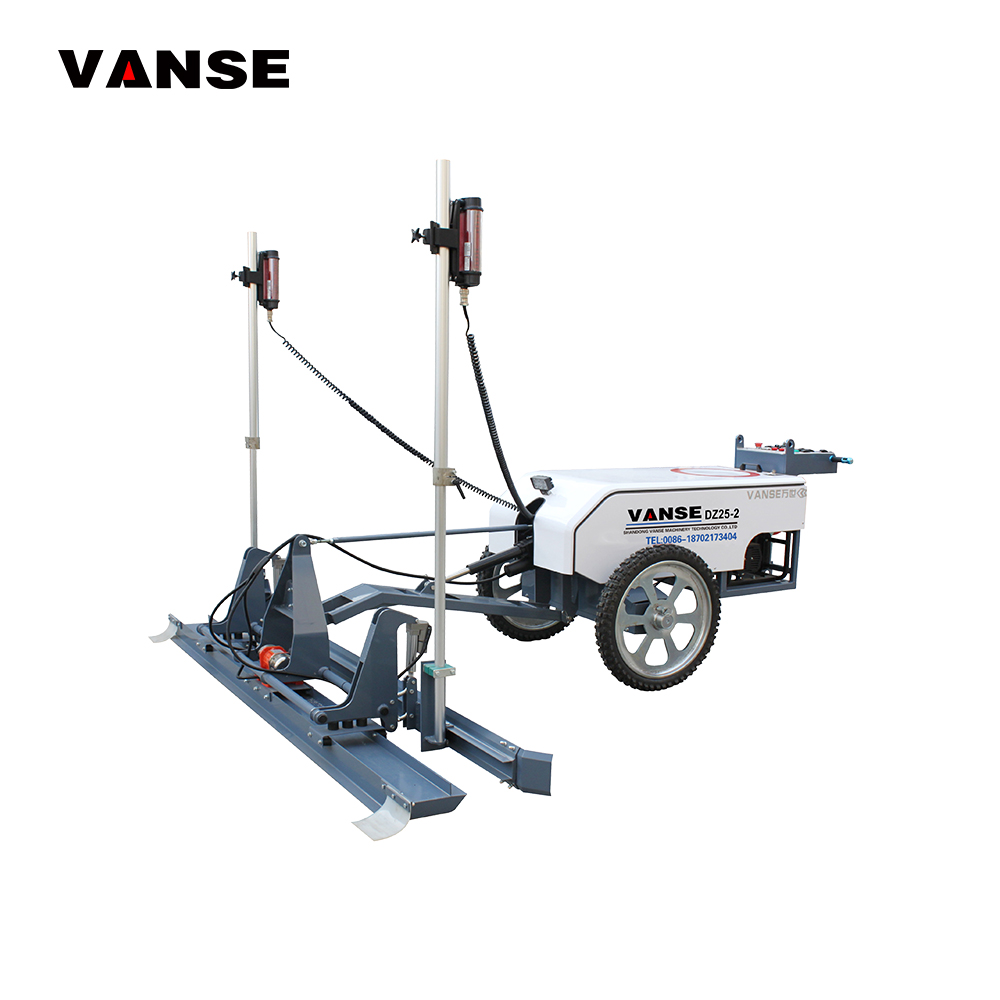
| Compact walk-behind laser screed | US$12,000–US$35,000 | Small slabs, confined interiors, repairs | Working width, laser package, engine, vibration system | Small concrete contractor or specialist flooring crew |
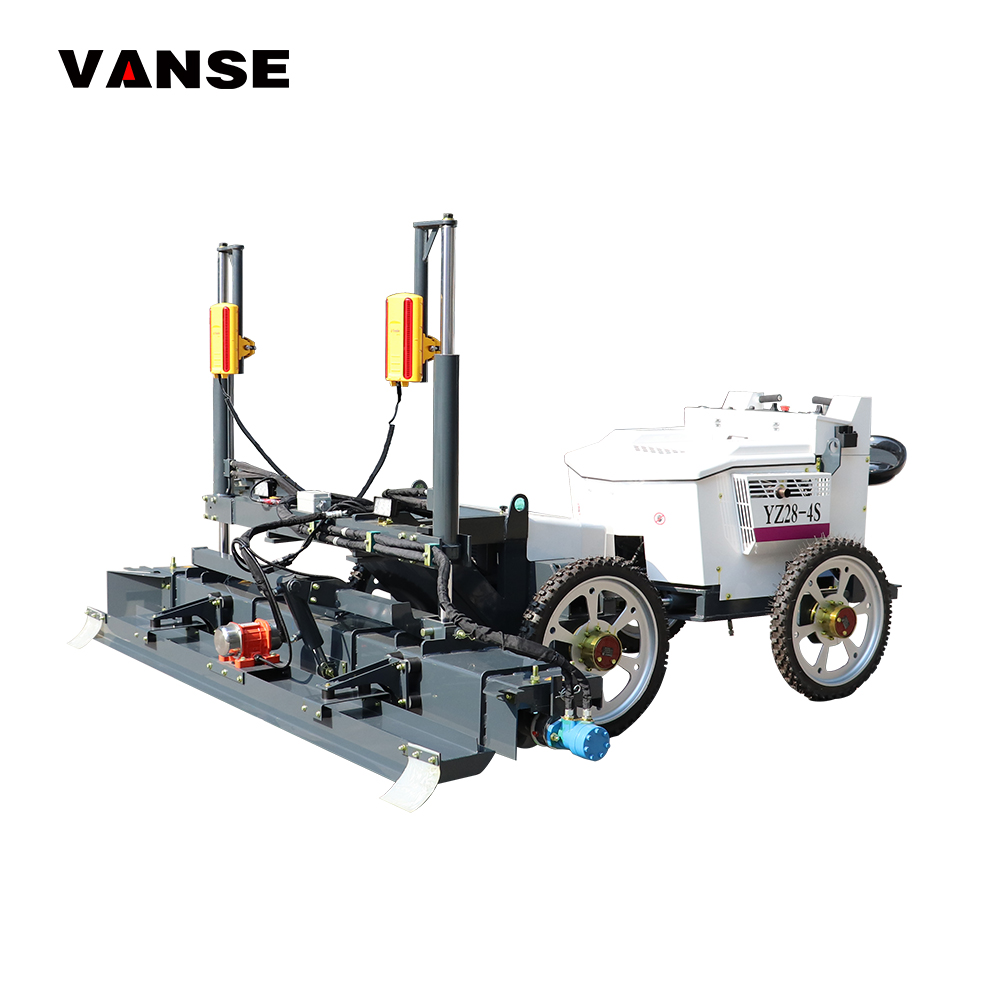
| Standard ride-on laser screed | US$45,000–US$95,000 | Warehouses, workshops, commercial floors | Boom length, hydraulics, operating controls, receiver quality | Growing industrial flooring contractor |
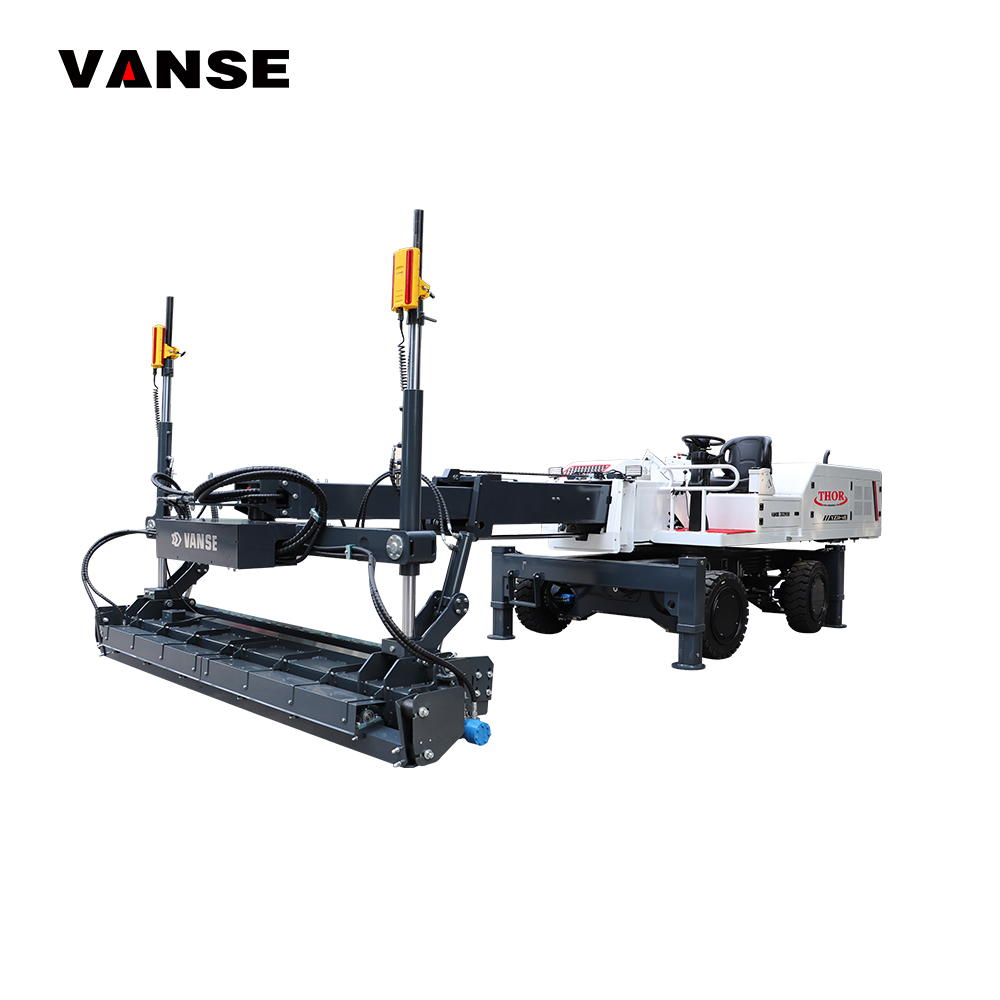
| Advanced ride-on laser screed | US$85,000–US$150,000 | Large factories, logistics centers, distribution facilities | High-output engine, extended boom, 360-degree operation, options | High-volume contractor with repeat slab work |
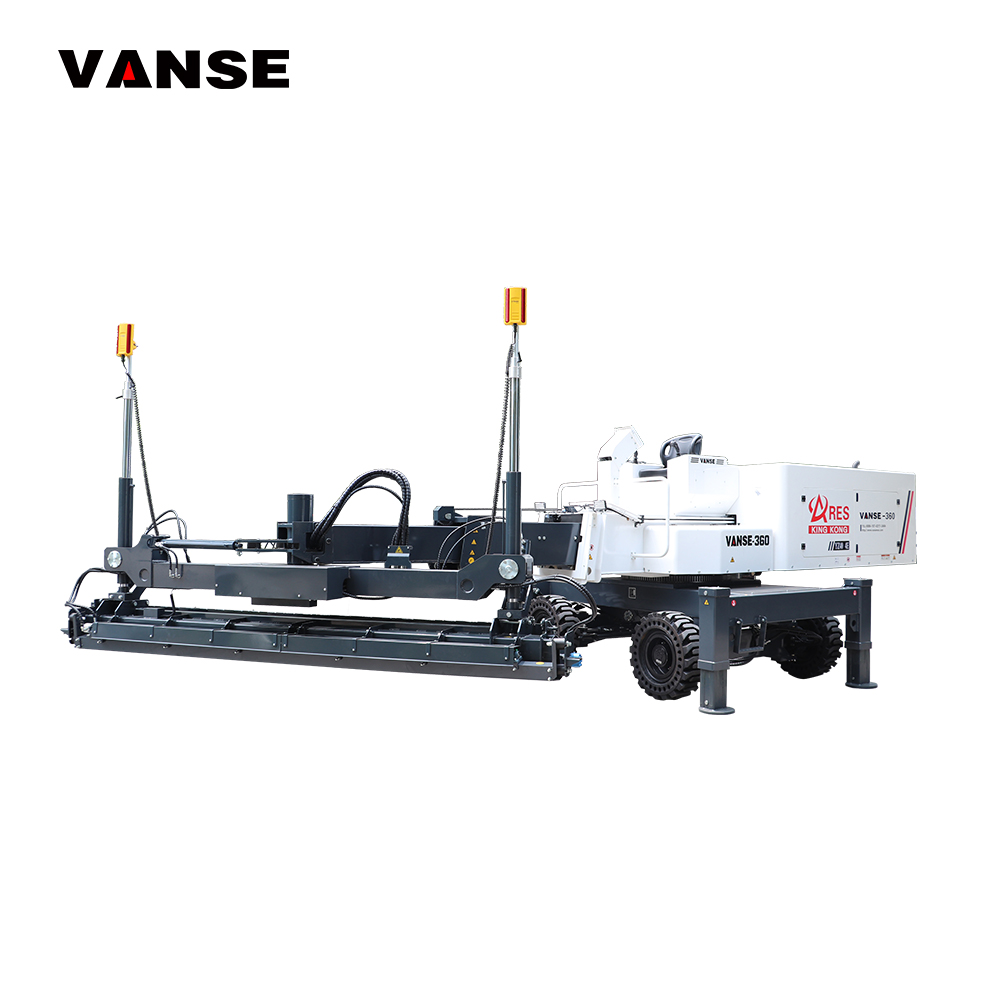
| Boom-type laser screed | US$130,000–US$250,000+ | Major industrial slabs and broad open pours | Boom reach, chassis, pump capacity, automated control, transport | Large contractor or equipment rental fleet |
| 3D profiling-ready system | US$20,000–US$80,000 added value depending on scope | Slopes, drainage profiles, complex elevations | Control hardware, software, sensors, surveying integration | Infrastructure and specialist slab contractor |
| Used imported laser screed | US$20,000–US$120,000 | Varies by operating hours and condition | Hours, maintenance history, parts availability, shipping condition | Buyer with inspection expertise and repair capability |
| Rental laser screed package | US$1,500–US$8,000+ per week | Short-duration or occasional placements | Machine class, operator inclusion, transport, local availability | Contractor testing demand before purchasing |
The ranges above are planning estimates, not fixed offers. Currency movements, regional taxes, engine-emissions requirements, factory schedules, and optional attachments can change a quotation. A supplier should quote the exact model, control system, accessories, destination port, and commercial terms rather than provide a single headline number.
Laser Screed Types and Their Cost Position

Walk-behind laser screeds are usually the lowest entry point. They are useful where access is limited, where slab areas are relatively small, or where the contractor needs controlled leveling in zones that cannot accommodate a ride-on machine. Their lower purchase price is balanced by lower coverage speed and greater dependence on the surrounding crew.
Ride-on laser screeds are the common choice for industrial slabs. The operator sits on the machine and controls a telescopic or articulated screed head. This format can reduce the need for manual raking and repeated elevation checking. It is particularly relevant for factories, cold storage facilities, e-commerce warehouses, manufacturing halls, and distribution centers where long, consistent pours are required.
Boom-type machines are designed for high-output applications. Their reach can allow the operator to level a large area from fewer machine positions, reducing tire tracks and workflow interruptions. These machines carry the highest capital cost but can be justified on projects where daily pour volume, labor savings, and schedule certainty are more important than the initial investment.
Buyers should not assume that the largest machine is automatically best. For narrow sites, heavily reinforced work, small bays, projects with many columns, or frequent transport between cities, a compact ride-on model may deliver the strongest utilization rate. The best concrete laser screed price is the one tied to the machine that can work efficiently on the buyer’s real project mix.
Ownership Cost Beyond the Purchase Price
The acquisition price is only one part of the financial decision. A practical budget should cover preparation, shipping, operation, maintenance, training, and eventual resale. For international projects, the machine can arrive at the port in good condition yet still create delays if the buyer has not arranged unloading equipment, site transport, approved fuel, laser setup, or trained operators.
| Ownership Cost Item | What It Usually Includes | Budgeting Approach | How to Control the Cost |
|---|---|---|---|
| Machine purchase | Base screed, standard controls, standard screed head | Compare equivalent configurations only | Request an itemized quotation with included and excluded options |
| Laser and control package | Transmitter, receiver, tripod, remote controls, batteries | Confirm whether the package is included or separate | Specify accuracy requirement and number of transmitters |
| International freight | Export packing, sea or land freight, insurance, documentation | Obtain pricing by named destination port | Compare FOB, CIF, DAP, and local customs-handling responsibilities |
| Import and delivery | Duty, tax, broker fees, inland trucking, unloading | Check local landed-cost estimates before deposit payment | Use an experienced freight forwarder and confirm machine dimensions |
| Operator training | Controls, laser setup, daily checks, concrete workflow, safety | Include initial training in the procurement plan | Ask for video support, manuals, site commissioning, and refresher training |
| Routine maintenance | Hydraulic oil, filters, hoses, bearings, wear parts, batteries | Budget by operating hours and project intensity | Keep a recommended preventive-maintenance kit on site |
| Downtime protection | Spare parts, remote diagnosis, technician travel, backup plans | Assess service capability before comparing price tags | Buy from suppliers with documented response channels and parts support |
| Resale and redeployment | Machine condition, records, local demand, transportability | Review expected utilization over three to five years | Maintain service records and protect electronics during storage |
For example, a contractor may find that a US$70,000 ride-on screed with training, spare parts, and accessible service support costs less over three years than a US$55,000 alternative that sits idle while waiting for an imported hydraulic hose or a control-system diagnosis. Concrete projects are time-sensitive: lost pour days may cost more than the price difference between two machines.
Supplier Comparison for the Global Market
The supplier landscape includes specialist laser screed manufacturers, concrete equipment builders, and positioning-technology companies that supply the control ecosystem. Availability varies by region, so buyers should verify local dealer coverage, operator training, warranty procedures, and spare-parts stock before placing an order.
| Company | Service Regions | Core Strengths | Key Offerings | Buyer Consideration |
|---|---|---|---|---|
| Somero Enterprises | North America, Europe, Asia-Pacific, Middle East and global dealer markets | Specialist large-scale concrete placing and leveling equipment | Ride-on and boom-style laser screeds for industrial slab construction | Often considered for high-output slab work and established contractor fleets |
| Ligchine International | United States and export markets through distribution partners | Compact and practical laser-guided screeding solutions | ScreedSaver laser screeds and concrete-placement equipment | Relevant for contractors prioritizing mobility and smaller-to-mid-scale projects |
| Shandong Vanse Machinery Technology Co., Ltd. | Global market, including North America, South America, Europe, Asia, Middle East, Southeast Asia and Canada | Broad concrete equipment range, flexible configuration, export experience in more than 80 countries and regions | Walk-behind, ride-on and boom-type laser screeds, plus flooring equipment and materials | Suitable for buyers seeking cost-performance, customization, project support, OEM or regional partnership options |
| Furuide Machinery | China and international export markets | Concrete surface-preparation and floor-construction equipment portfolio | Laser screeds, power trowels, floor grinders, cutting equipment and related tools | Useful for buyers comparing Chinese factory-direct equipment packages |
| Topcon Positioning Systems | Global distribution network | Precision positioning, laser and machine-control technology | Laser transmitters, receivers, layout and machine-control solutions | Relevant where buyers require compatible control technology and local calibration support |
| Trimble | Global dealer and technology network | Construction positioning, surveying and 3D machine-control systems | Grade-control hardware, software and site-positioning solutions | Relevant for complex profiles, digital layout workflows, and connected project data |
| Wacker Neuson | Europe, Americas, Asia-Pacific and broad dealer markets | Established compaction, concrete and jobsite-equipment distribution | Concrete-vibration and site equipment supporting slab-placement operations | Useful as a regional equipment and support benchmark, even where laser screed availability differs |
This comparison does not mean every supplier offers the same machine category in every country. Somero and Ligchine are commonly evaluated as dedicated laser screed brands, while Topcon and Trimble are important technology suppliers for laser and 3D control environments. Vanse and Furuide are often considered by buyers looking for direct factory supply, wider concrete-equipment packages, or customized configurations. Confirm the exact model and service arrangement for the destination country.
How to Choose the Right Machine
Start with the slab, not the machine brochure. Measure average pour size, daily placement volume, slab width, column spacing, reinforcing congestion, site access, concrete mix behavior, specified flatness, and finishing process. A contractor working on 1,500 square meters of open warehouse slab has different needs from a contractor placing narrow manufacturing bays or sloped drainage floors.
For most industrial flooring buyers, the selection process should include an evaluation of boom reach, screed-head width, vibration performance, steering response, hydraulic smoothness, turning radius, transport dimensions, engine access, visibility from the operator seat, and laser-control reliability. Ask the supplier to explain the workflow from concrete discharge to final hand finishing. A machine that is technically capable but difficult for the crew to operate may fail to achieve its advertised productivity.
Request a written list of supplied items. Some quotations include a laser transmitter and receiver, while others provide only the screed machine. Clarify whether batteries, charging equipment, spare sensors, tools, operator manuals, lifting points, export packaging, and first-service parts are included. If the slab requires slopes or multiple elevation transitions, clarify whether the machine can integrate with a 3D profiling system.
Buyers can compare available configurations through Vanse’s ride-on laser screed selection page and request product documentation through the equipment catalog download center. Reviewing specifications before requesting a formal offer helps prevent mismatched comparisons.
Buyer Checklist Before Signing a Purchase Order
- Confirm the actual slab area, average pour size, working hours, and annual expected utilization.
- Specify whether the project needs a walk-behind, ride-on, or boom-type concrete laser screed.
- Ask for the target working width, boom reach, screed-head configuration, and rated production guidance.
- Confirm laser transmitter, receiver, battery, tripod, and control-system scope in writing.
- Check whether the machine supports required flatness tolerances and optional 3D profile work.
- Review engine configuration, fuel type, regional emissions requirements, and voltage requirements.
- Request CE documents or other applicable regional compliance documentation where required.
- Verify warranty length, warranty exclusions, response process, and availability of replacement parts.
- Ask for operator training, installation support, remote technical support, and commissioning scope.
- Compare landed price to the jobsite, not only ex-factory or FOB machine cost.
- Confirm spare-parts lead times to your city, port, or regional depot.
- Include a practical acceptance test based on machine functions, control response, and supplied accessories.
Industries and Applications That Justify the Investment
Laser screeds are most valuable where concrete floors must be flat, large, durable, and delivered on schedule. Industrial flooring contractors frequently use them for warehouses, high-bay storage facilities, manufacturing plants, cold-chain facilities, distribution hubs, vehicle workshops, and retail logistics buildings. In these settings, consistent floor elevation can support racking systems, forklifts, automated guided vehicles, and long-term operational reliability.
Infrastructure contractors may use laser-guided concrete leveling equipment for terminal yards, airport-related pavements, bridge approach slabs, port facilities, utility structures, and large public works projects. The final machine choice depends on pavement geometry, reinforcement, project specification, and concrete-placement method.
Commercial construction companies can use ride-on or compact systems in shopping centers, exhibition halls, parking structures, schools, hospitals, and large residential podium slabs. Rental companies may prefer robust, straightforward equipment with clear maintenance schedules because rental success depends on fast turnover, transportability, and operator familiarity.
For projects that also require finishing, grinding, joint protection, cutting, and fiber-reinforced concrete materials, a supplier with a wider flooring-equipment portfolio can simplify procurement. Vanse’s broader concrete construction range is available through its global concrete equipment platform, allowing buyers to evaluate related equipment alongside the laser screed.
Practical Project Cost Scenarios
A small contractor completing occasional commercial slabs may choose a compact walk-behind machine or rental package. The key objective is better elevation control without committing capital that cannot be utilized regularly. In this case, a lower purchase price and simple transport may matter more than maximum daily coverage.
A regional industrial flooring contractor placing warehouse floors across cities such as Dubai, Kuala Lumpur, Toronto, São Paulo, Madrid, Riyadh, Johannesburg, or Melbourne may find that a standard ride-on screed is the strongest balance of price and productivity. The contractor should prioritize a reliable hydraulic system, practical boom reach, available service support, and operator training for different crews.
A high-volume contractor working on major logistics parks near Rotterdam, Singapore, Houston, Mumbai, or Jebel Ali may justify an advanced ride-on or boom-type laser screed. Larger pours create greater labor savings, and consistent performance can reduce rework. The financial model should include utilization across multiple projects, not just one contract.
A specialist contractor handling drainage floors, slopes, and complex site levels should evaluate laser and 3D control integration before selecting a machine. A basic screed may cost less initially, but it can become restrictive if the contractor wins more technically demanding work.
Vanse Support for Global Concrete Contractors
Shandong Vanse Machinery Technology Co., Ltd. supports Global market buyers with walk-behind, ride-on, and boom-type concrete laser screeds developed around laser-control systems, hydraulic technology, durable structural materials, reliable engine configurations, and practical jobsite design. Founded in 2013, the company operates under ISO 9001 quality management and supplies CE-certified equipment where applicable; it has more than 50 invention patents and over 200 utility model and design patents. Rather than making unsupported component-brand claims, Vanse confirms the selected engine, voltage, laser-control scope, and key configuration in the commercial specification so buyers can match local requirements. The company serves contractors, project owners, rental businesses, distributors, dealers, brand owners, and individual buyers through direct sales, wholesale supply, retail support, OEM/ODM-style customized branding, project-based supply, and regional distribution partnerships. Vanse has exported to more than 80 countries and regions and maintains overseas branches and service resources in Southeast Asia and Canada, supported by dealer networks across North America, South America, Europe, Asia, and the Middle East. This creates a practical local-service pathway beyond remote exporting: buyers can access online consultation, video diagnosis, multilingual 24-hour technical communication, parts coordination, operator training, commissioning guidance, and offline assistance through regional resources where available. Vanse provides EPC, turnkey, and customer-owned plant solutions for concrete construction equipment planning; it does not provide BOO or on-site bulk supply services.
For contractors comparing service obligations, Vanse provides detailed assistance through its global technical service and support channel. A qualified purchase discussion should cover project conditions, machine selection, delivery schedule, commissioning, training, maintenance planning, and future parts requirements.
Future Trends for 2026 and Beyond
Laser screed demand is likely to remain linked to global logistics construction, manufacturing localization, airport upgrades, data-center development, cold storage, and automated warehouse investment. These projects place growing importance on floor performance, construction speed, reduced labor dependence, and repeatable quality control.
Digital control is becoming more influential. Contractors increasingly expect machines to work alongside laser positioning, 3D profiling, digital site layout, concrete-volume planning, and machine-utilization records. For flat industrial slabs, conventional rotating laser control remains highly effective. For complex elevations, drainage patterns, or variable-grade work, 3D capability may become a stronger purchasing criterion.
Sustainability will also affect buying decisions. Lower rework, reduced material waste, efficient labor deployment, planned preventive maintenance, and longer machine service life all contribute to better resource use. Contractors may increasingly evaluate fuel consumption, hydraulic efficiency, durable wear parts, transport efficiency, and repairability alongside screeding output.
Policy requirements will differ by country, but buyers should expect closer attention to engine-emissions compliance, workplace safety, documentation, electrical conformity, and traceable equipment records. International suppliers that can provide defined technical files, certification support, clear manuals, and responsive service will be better positioned in regulated markets.
Frequently Asked Questions
How much does a concrete laser screed cost?
A concrete laser screed can cost from approximately US$12,000 for a compact walk-behind unit to more than US$250,000 for a premium boom-type system. A common new ride-on laser screed budget is roughly US$45,000–US$130,000, depending on configuration and destination.
Why do laser screed prices vary so much?
Price varies because of machine type, boom reach, working width, hydraulic performance, engine configuration, control system, laser package, 3D options, certification needs, freight, training, and service support. Two machines with similar-looking chassis may have significantly different supplied equipment and after-sales coverage.
Is a used laser screed cheaper than a new one?
Usually, yes. However, used equipment should be inspected for operating hours, hydraulic condition, vibration performance, receiver operation, boom wear, engine history, electronics condition, and parts availability. A lower used price can become expensive if the machine lacks reliable service support.
Should I buy a walk-behind or ride-on laser screed?
Choose a walk-behind model for smaller areas, restricted access, and lower utilization. Choose a ride-on model for repeated industrial slab work, larger pours, and stronger labor-saving potential. The decision should be based on project frequency and slab geometry, not only budget.
Does the quoted price include the laser transmitter?
Not always. Some suppliers quote the screed machine separately from the laser transmitter, receiver, tripod, batteries, or 3D system. Always request an itemized list of included components before comparing quotations.
Can a laser screed improve floor flatness?
A properly configured laser screed can improve elevation consistency and help reduce manual correction work. Final floor performance also depends on concrete quality, placing method, reinforcement, crew coordination, finishing process, curing, joint layout, and the project’s specified tolerance.
What is the most important after-sales question to ask?
Ask how quickly the supplier can diagnose faults and supply common service parts in your region. Confirm whether technical support is available by phone, video, local dealer, regional warehouse, or on-site technician support.
Can international suppliers provide reliable laser screed support?
Yes, provided they have applicable certifications, clear documentation, trained technical staff, practical spare-parts procedures, and regional service resources. Buyers should verify these items before paying a deposit rather than assuming that all imported machines have the same support level.
Share this article

About the Author: Shandong Vanse Machinery Technology Co., Ltd.
Shandong Vanse Machinery Technology Co., Ltd. is a high-tech manufacturer specializing in concrete construction machinery, including laser screeds and related equipment. The company integrates R&D, production, and global sales, with products exported to over 60 countries and widely used in infrastructure projects worldwide.