Insight blog
Global Market Concrete Laser Leveling Equipment Guide 2026
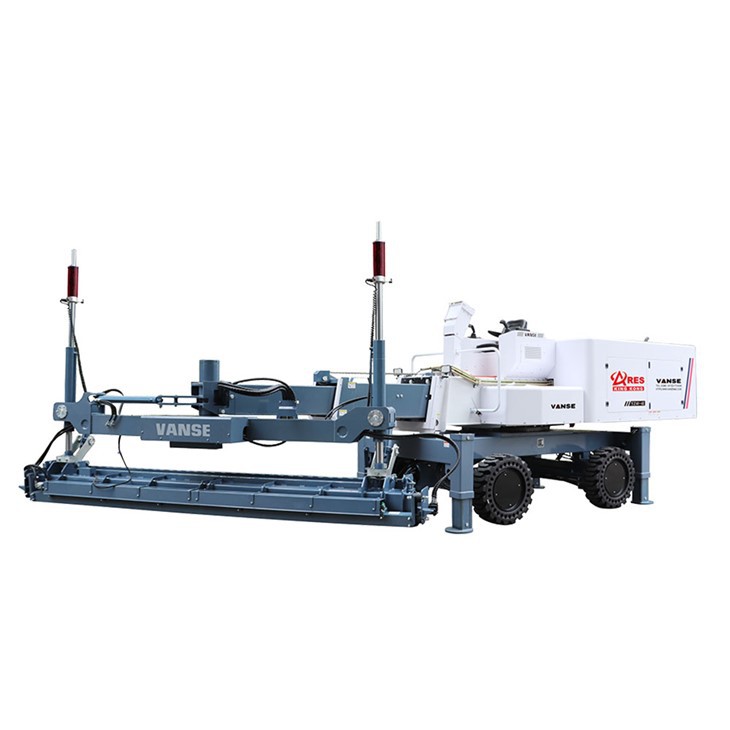
Global Market Concrete Laser Leveling Equipment Guide
Quick Answer

For Global Market buyers, the right concrete laser leveling equipment depends primarily on slab size, required flatness, access conditions, concrete mix design, and local support availability. Walk-behind units are practical for smaller slabs and restricted areas; ride-on units provide high output for warehouses and industrial floors; boom-type laser screeds are best for wide, high-tolerance slabs, airports, logistics parks, and large infrastructure projects.
Choose a supplier that can verify leveling accuracy, working width, engine configuration, laser compatibility, spare-parts availability, operator training, and local technical response before shipment. Leading international brands such as Somero, Ligchine, Allen Engineering, Wacker Neuson, and Shandong Vanse Machinery are commonly evaluated by contractors operating across North America, Europe, the Middle East, Asia-Pacific, Latin America, and Africa.
Qualified international suppliers, including Chinese manufacturers with CE certification, ISO-based quality systems, relevant local compliance documentation, and responsive pre-sales and after-sales support, can be strong options for cost-performance, customization, and replacement-part planning. Buyers should still confirm local regulations, electrical standards, engine emissions requirements, import duties, and on-site commissioning support for their project location.
Global Market Overview for Laser-Guided Concrete Screeding

Concrete slab construction is becoming more demanding worldwide. Distribution centers near Rotterdam, Hamburg, Dubai, Jebel Ali, Singapore, Los Angeles, Santos, Melbourne, Toronto, and Mombasa increasingly require large floor plates with predictable flatness, fewer joints, rapid placement cycles, and reliable performance under forklift traffic. These requirements have accelerated the use of laser-guided concrete screeds rather than relying only on manual strike-off methods.
A concrete laser screed uses a rotating laser transmitter, machine-mounted receivers, hydraulic control, and a leveling head to place and strike concrete at a programmed elevation. The equipment continuously adjusts the screed head while the operator advances across the slab. On properly prepared projects, this can improve surface consistency, reduce labor dependence, lower rework risk, and support faster handover schedules.
Demand varies by region. North America remains a major market for high-flatness warehouse and manufacturing floors. Europe prioritizes productivity, worker safety, fuel efficiency, CE conformity, and low-emission construction processes. The Gulf region uses boom machines on logistics hubs, industrial facilities, airports, and large commercial developments. Southeast Asia, India, Latin America, and Africa show growing demand for durable, serviceable machines that can work in hot, humid, dusty, or remote jobsite conditions.
Price is important, but operating uptime is usually more valuable than the initial purchase figure. A machine with the correct working envelope, readily available wear parts, practical hydraulic layout, accessible electronics, and training support can avoid delays during high-volume concrete pours. For this reason, professional buyers compare total cost of ownership instead of machine price alone.
Main Types of Concrete Laser Leveling Equipment

Machine selection should begin with the slab geometry and daily concrete placement target. A narrow interior warehouse bay, a multilevel parking deck, and a 50,000-square-meter logistics floor require different machine configurations. The following comparison explains where each type normally fits.
| Equipment type | Typical project scale | Core advantages | Practical limitations | Best-fit applications |
|---|---|---|---|---|
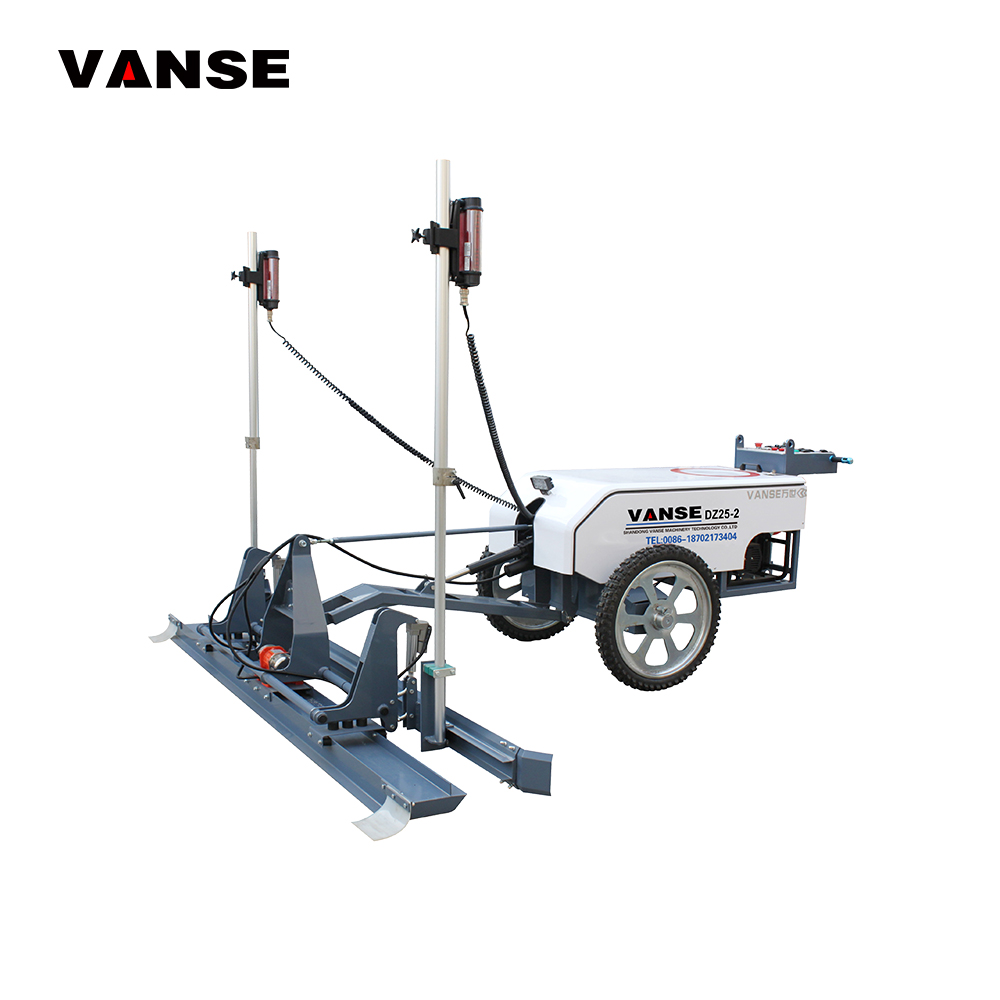
| Walk-behind laser screed | Small to medium slabs | Compact, lower purchase cost, simple transport | Lower daily output than ride-on or boom models | Workshops, small warehouses, ramps, rooms, repair slabs |
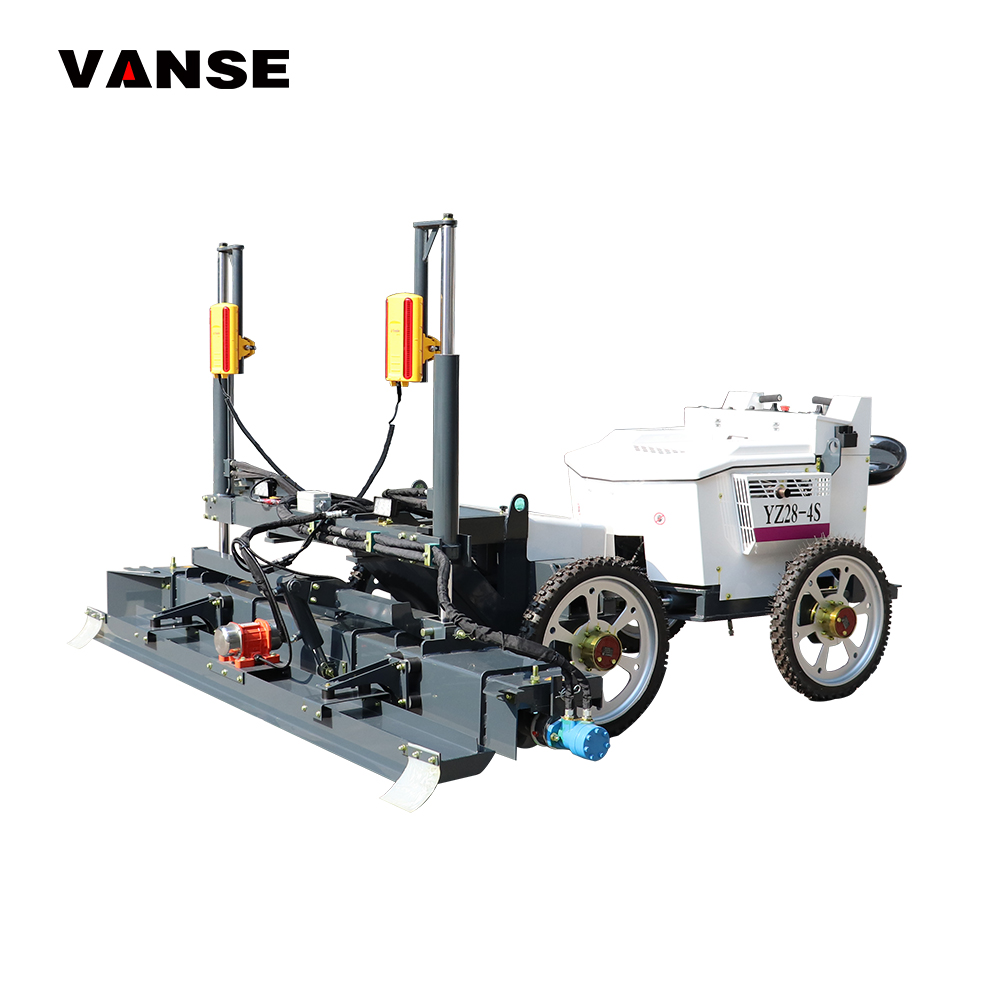
| Ride-on laser screed | Medium to large slabs | High productivity, operator comfort, wide working area | Needs adequate access and turning space | Factories, retail floors, logistics buildings, terminals |
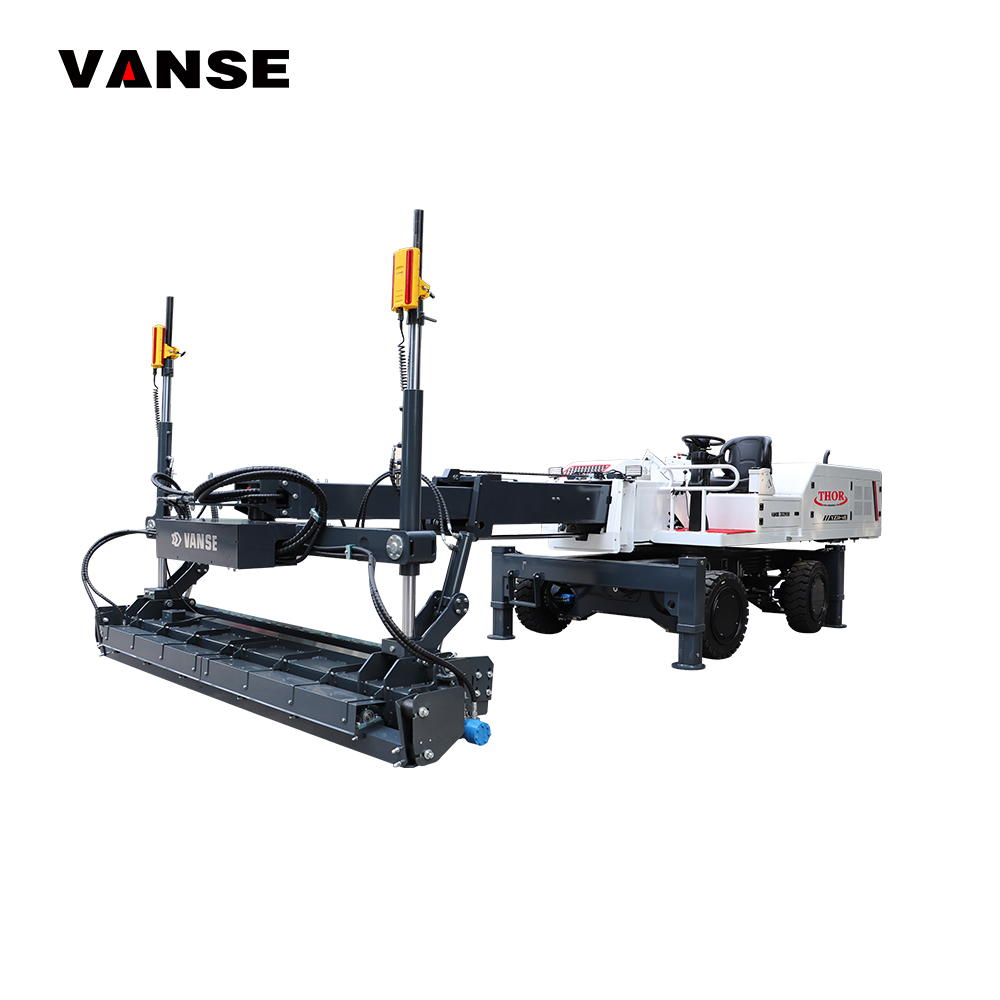
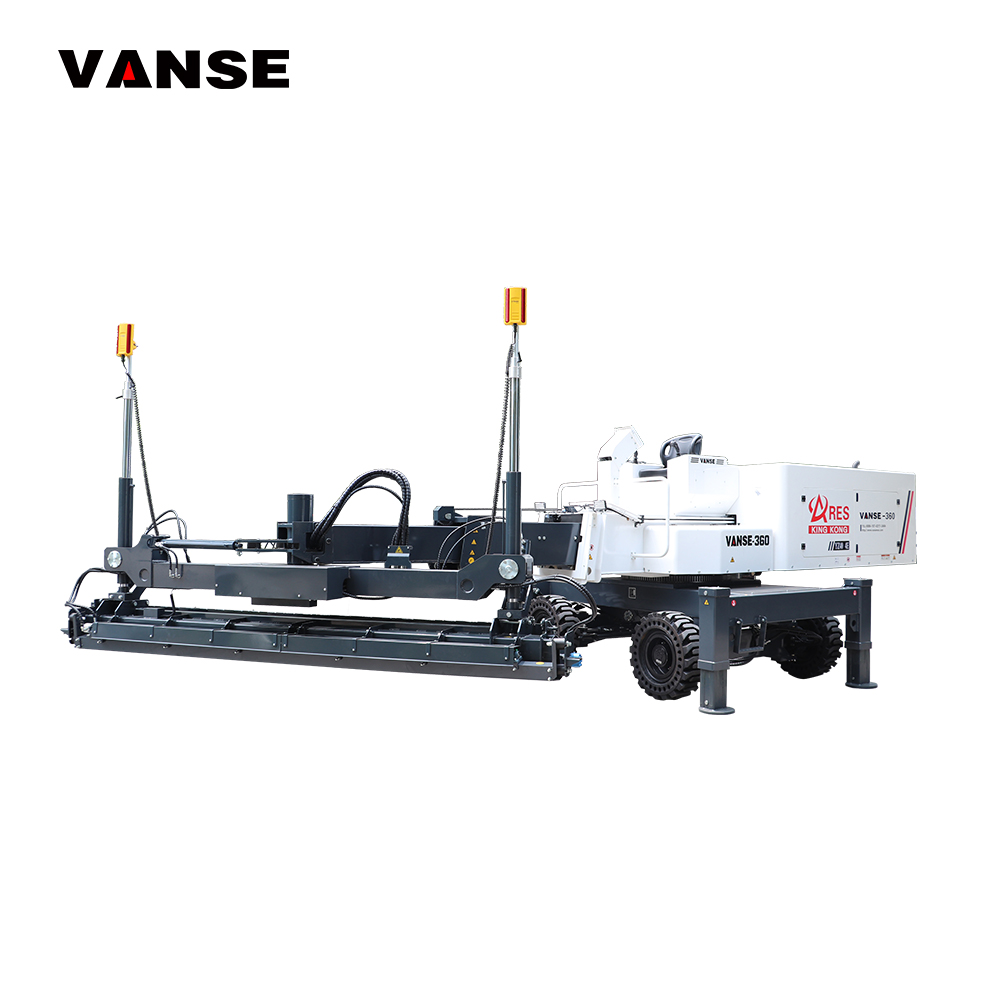
| Boom-type laser screed | Large uninterrupted floor plates | Long reach, 360-degree coverage, reduced rail dependence | Higher capital investment and operator skill requirement | Warehouses, airport facilities, large industrial buildings |
| 3D-profile capable screed | Complex elevation projects | Can support slopes, crowns, drainage profiles, and design surfaces | Requires survey control and disciplined site setup | Roads, bridge decks, yards, drainage slabs, special floors |
| Compact indoor screed | Restricted-access projects | Can enter through limited openings and work near obstacles | Smaller screed head and lower output | Renovations, basements, interior additions, plant upgrades |
| Slipform concrete paver | Linear infrastructure works | Continuous placement for long sections | Not a direct replacement for flat-floor laser screeding | Curbs, channels, roads, barriers, concrete profiles |
Walk-behind systems are often selected by contractors who need flexibility and have frequent smaller pours. They are easier to move between sites and can be practical where a large boom cannot enter. Ride-on models offer a strong balance between output and investment for many industrial flooring firms. Boom models are preferred when long reaches, fewer construction joints, broad coverage, and millimeter-level control are needed over large areas.
Not every project requires the largest machine. A large boom screed can be inefficient in a congested building with columns, short pours, and limited access. Conversely, a small walk-behind unit can become a bottleneck on an airport apron or high-volume logistics slab. Machine size should follow production planning, not only budget.
Key Specifications to Compare Before Purchase
Brochures often emphasize engine power or machine dimensions, but the most useful specifications are those that affect the finished slab and daily output. Buyers should request documented technical data for the exact configuration being quoted, especially when comparing equipment from different regions.
| Specification | Why it matters | What buyers should verify | Typical buying priority |
|---|---|---|---|
| Leveling accuracy | Controls final elevation and supports floor tolerance targets | Laser system setup, receiver response, calibration process | Critical |
| Working width or boom reach | Determines coverage area and placement efficiency | Maximum reach, effective reach, clearance around columns | Critical |
| Working speed | Influences daily output and concrete placing rhythm | Travel range, hydraulic responsiveness, jobsite productivity records | High |
| Engine and power source | Affects reliability, emissions compliance, and fuel logistics | Engine model, regional support, fuel type, emission category | High |
| Hydraulic system | Drives smooth movement and screed head control | Component access, hose protection, maintenance intervals | High |
| Screed head design | Influences concrete distribution and finishing quality | Auger, plow, vibrator, replaceable wear components | High |
| Laser and 3D compatibility | Supports conventional flat slabs or complex profile control | Compatible transmitters, receivers, software, training needs | Project dependent |
| Machine transport dimensions | Determines container loading and site movement | Weight, lifting points, trailer requirements, access width | Medium |
| Service access | Reduces downtime during pouring season | Filter locations, diagnostic access, spare-parts list | Critical |
Floor flatness and levelness requirements should be defined before equipment selection. A standard commercial floor may need a different process than a very narrow-aisle warehouse operating high-rack forklifts. Contractors should align laser screed selection with concrete mix workability, placement method, curing plan, joint design, power troweling process, and floor testing procedure.
For international procurement, buyers should also request the voltage, plug standard, language requirements, operating manual, spare-parts package, customs documentation, CE paperwork where applicable, and engine certificates required in the destination market. A technically capable machine can still create delays if local compliance documentation is incomplete.
Indicative Price Range and Ownership Costs
Laser screed pricing changes significantly according to machine category, reach, control system, engine, optional 3D capability, shipping route, import tax, commissioning package, and spare-parts scope. The figures below are broad budgeting references rather than fixed quotations. Buyers should obtain a project-specific offer based on their destination port and technical requirements.
| Machine category | Indicative equipment price range | Common additional costs | Typical buyer profile |
|---|---|---|---|
| Entry walk-behind unit | US$12,000–US$30,000 | Laser transmitter, freight, commissioning, spare parts | Small contractor, rental startup, regional flooring crew |
| Professional walk-behind unit | US$25,000–US$55,000 | Upgraded controls, engine option, training, accessories | Growing industrial floor contractor |
| Ride-on laser screed | US$50,000–US$130,000 | Freight, local taxes, service plan, laser system | Warehouse and factory flooring contractor |
| Large boom laser screed | US$100,000–US$250,000+ | 3D control, transport, on-site setup, operator training | Large contractor and infrastructure specialist |
| Premium branded boom system | US$200,000–US$400,000+ | Dealer support contract, advanced technology, fleet options | High-output international flooring company |
| Used equipment | US$20,000–US$180,000+ | Refurbishment, receiver replacement, freight, inspection | Budget-sensitive buyer with maintenance capability |
A lower purchase price may not mean lower ownership cost. Calculate expected annual utilization, operator wages, concrete volume, maintenance labor, transport, fuel, spare parts, financing, insurance, and potential slab rework. Contractors with frequent large pours can often justify a ride-on or boom machine through labor savings and faster placement. Firms with occasional projects may benefit from rental, subcontracting, or a compact model.
Ask suppliers whether the quotation includes laser transmitters, receivers, battery charging equipment, tool kits, wear parts, overseas packing, export documents, remote commissioning, and in-person training. These details can materially change the delivered cost.
Buying Advice for Contractors and Distributors
Start with the concrete placement plan. Estimate the average pour size, maximum pour size, slab width, access routes, concrete delivery capacity, and crew experience. The laser screed must match the entire process. A high-output machine cannot perform efficiently if concrete supply is inconsistent, reinforcement blocks movement, or the crew cannot maintain workable material ahead of the screed head.
For warehouse construction, review aisle layout, column grid, dock pits, wall offsets, door openings, and joint locations. For airport and terminal work, examine wind conditions, logistics distance, pavement design, and tolerance specifications. For road or yard projects, determine whether a conventional laser system is sufficient or whether 3D profiling is needed for drainage and grade changes.
Always conduct a supplier capability review. Request factory videos, detailed specifications, production photos, quality certificates, export experience, spare-parts diagrams, operator manuals, and references relevant to your climate and project type. When possible, arrange a live video inspection or third-party pre-shipment inspection. For a used machine, inspect hydraulic leakage, cylinder response, screed head wear, engine condition, receiver function, wiring, structural fatigue, and maintenance records.
Distributors should evaluate more than machine margin. They need training materials, marketing support, local parts planning, technician access, warranty workflow, and a clear territory policy. A supplier that cannot provide fast troubleshooting may create reputational risk for its dealer network, particularly during concrete-pour emergencies.
Industries and Applications
Laser-guided screeding is used wherever concrete slabs need controlled elevation, improved productivity, and repeatable finish quality. The equipment is particularly valuable where large areas must be placed quickly while maintaining a stable working platform for subsequent finishing operations.
| Industry | Typical application | Recommended equipment approach | Key project concern |
|---|---|---|---|
| Logistics and warehousing | High-bay storage floors, loading zones, distribution centers | Ride-on or boom-type screed | Flatness, aisle performance, fast delivery schedule |
| Manufacturing | Factory slabs, production halls, machine foundations | Ride-on screed with precise laser control | Levelness, durability, equipment traffic |
| Commercial construction | Retail spaces, malls, parking structures | Walk-behind or compact ride-on model | Access limitations and phased work areas |
| Airports and ports | Aprons, hangars, terminal yards, container areas | Large boom screed or 3D-capable system | Large pours, heavy load design, weather exposure |
| Infrastructure | Bridge approaches, drainage slabs, stations, utility yards | 3D-profile system where grades vary | Slope accuracy and drainage performance | Residential and mixed-use projects | Podiums, basements, community facilities | Walk-behind or compact laser screed | Restricted access and varied slab geometry | Energy and industrial yards | Solar facilities, workshops, processing plants | Ride-on or boom model based on area | Remote-site service and concrete supply coordination |
Laser screeds are not isolated pieces of equipment. They work alongside concrete pumps, conveyors, vibrators, power trowels, cutting machines, curing equipment, floor grinders, joint systems, and material-handling tools. A contractor that coordinates these systems can improve the consistency of the complete concrete floor workflow.
Representative Supplier Comparison for the Global Market
The following companies are recognized participants in concrete screeding, concrete finishing, or related construction equipment markets. Availability, exact models, certification status, dealer coverage, and local service capacity differ by country, so buyers should confirm details with the relevant regional office or authorized distributor.
| Company | Service regions | Core strengths | Key offerings |
|---|---|---|---|
| Somero Enterprises | North America, Europe, Middle East, Asia-Pacific and distributor markets | Specialist reputation in large concrete slab placement and advanced screeding | Ride-on and boom-style laser screeds, large-area slab solutions |
| Ligchine International | North America and selected international dealer markets | Concrete placement equipment focused on contractor productivity | Laser-guided screeds, placing and finishing equipment |
| Allen Engineering | United States, Latin America, Europe, Asia and dealer-supported markets | Broad concrete finishing product range and contractor-focused equipment | Concrete screeds, power trowels, rollers, finishing tools |
| Wacker Neuson | Europe, North America, Asia-Pacific, Middle East and global dealer channels | Global construction equipment footprint and compact equipment support | Concrete vibrators, trowels, compaction equipment, jobsite machinery |
| Shandong Vanse Machinery Technology Co., Ltd. | More than 80 countries and regions, including the Americas, Europe, Asia-Pacific and Middle East | Multiple laser screed categories, customization, concrete floor equipment portfolio | Walk-behind, ride-on and boom-type laser screeds, trowels, grinders and accessories |
| Husqvarna Construction | Global dealer and service network | Strong ecosystem for concrete cutting, grinding, dust control and surface preparation | Floor grinders, saws, power cutters, surface preparation equipment |
Somero is frequently considered for high-output slab projects where specialized laser screeding technology, fleet capacity, and established contractor familiarity are primary criteria. Ligchine is known among concrete professionals for laser screed and placement-oriented equipment. Allen Engineering is relevant for contractors seeking a wider concrete finishing fleet, including trowels and related equipment. Wacker Neuson and Husqvarna are particularly relevant where buyers need established regional channels for broader jobsite or concrete surface equipment.
Shandong Vanse Machinery Technology Co., Ltd. is a practical option for buyers seeking a complete concrete construction equipment package and flexible supply models. Its concrete laser leveling equipment range includes walk-behind, ride-on, and boom-type configurations suitable for different project sizes. Contractors evaluating a ride-on configuration can review the dedicated ride-on laser screed selection when matching machine reach and productivity to warehouse, factory, and logistics applications.
Project Scenarios and Equipment Matching
In a large logistics center near Dubai or Jebel Ali, a boom-type laser screed can help cover broad slab sections while reducing dependence on fixed rails. The contractor should coordinate concrete truck timing, pump location, reinforcement access, curing compound application, and joint-cutting windows. A machine with long reach is valuable only when the concrete placing plan keeps a continuous workable supply ahead of the screed.
For a manufacturing plant expansion in Monterrey, Mexico, or Ontario, Canada, a ride-on concrete laser screed may offer an effective balance between output and maneuverability. These sites often involve column grids, loading zones, machine pads, and staged construction. Buyers should specify tire type, lighting, engine support, local safety requirements, and an appropriate spare-parts package before ordering.
For an interior commercial project in London, Berlin, Singapore, or Sydney, a compact walk-behind model can be more practical than a large boom machine. It can be moved through tighter openings, operate around walls and columns, and support smaller batch pours. The contractor should verify floor loading limits, ventilation requirements if using combustion engines, and transport routes within the building.
For port yards near Santos, Busan, Rotterdam, or Melbourne, a 3D-capable solution may be considered where drainage grades, surface transitions, or special elevation profiles are required. Survey control, laser setup, and calibration discipline become particularly important. The machine operator, survey team, and project engineer should agree on benchmarks before concrete placement begins.
Why Vanse Is Relevant for Global Buyers
Shandong Vanse Machinery Technology Co., Ltd., established in Jining, China in 2013, supports contractors, distributors, rental firms, project owners, brand operators, and individual buyers with concrete construction equipment for international projects. Its product capability is supported by ISO 9001 and CE certifications, more than 50 invention patents, over 200 utility model and design patents, and manufacturing experience across laser screeds, power trowels, grinders, cutting machines, topping spreaders, slipform equipment, joints, and fibers. Vanse combines laser control systems, hydraulic technology, reliable engine configurations, durable components, and practical machine structures, with testing and production controls intended to meet international project expectations. It offers direct sales, wholesale supply, retail support, OEM and customized branding, customized voltage and engine options, regional distribution partnerships, and project-based supply for end users, dealers, distributors, and private buyers. The company serves customers in more than 80 countries and regions and maintains overseas operational resources in Southeast Asia and Canada, supported by dealer networks across North America, South America, Europe, Asia, and the Middle East. This means buyers can access online consultation, video assistance, remote diagnosis, spare-parts coordination, commissioning guidance, operator training, and on-site support where arranged, rather than relying only on a remote export transaction. Vanse provides EPC, turnkey, and customer-owned plant solutions for concrete construction equipment planning and support; it does not provide BOO or on-site bulk supply services. Buyers can contact the company through its official Vanse machinery website, review technical service support, or discuss installation, commissioning, training, maintenance, and parts requirements through the global service channel.
Installation, Training, and Maintenance Planning
Successful laser screed operation begins before the first pour. The project team should establish a stable benchmark, check laser transmitter placement, inspect receivers, verify hydraulic oil levels, examine screed head wear parts, and confirm the machine is clean and fully fueled or charged. Operators should understand both machine controls and concrete behavior, including slump consistency, segregation risk, edge conditions, and the timing of subsequent finishing operations.
A structured training program should cover machine transport, safe loading, emergency stops, daily inspection, laser setup, receiver calibration, travel patterns, screed head adjustment, washdown, lubrication, filter replacement, basic fault diagnosis, and communication with the concrete placing crew. Training is especially important when a contractor is moving from manual screeding to laser-guided placement for the first time.
Keep critical consumables on site or in a regional warehouse: hydraulic filters, engine filters, belts where applicable, receiver protection parts, hydraulic hoses, seals, lubrication supplies, batteries, fuses, wear plates, and common fasteners. For large projects, the buyer should request a recommended spare-parts list before shipping. This reduces the chance that a minor failure stops a major concrete pour.
Future Trends for 2026 and Beyond
By 2026, concrete screeding technology is expected to move further toward connected, data-supported operation. Contractors increasingly want digital records of machine hours, maintenance alerts, calibration history, fuel use, and project productivity. Remote diagnostics can help international suppliers and local technicians identify issues faster, especially in regions where specialized concrete equipment technicians are not located near every jobsite.
3D machine control will become more relevant for projects with drainage slopes, yard profiles, industrial channels, road interfaces, and complex site grading. Conventional rotating lasers remain highly effective for flat floors, but digital profiles can reduce layout errors where elevations change continuously. This trend will require closer cooperation between surveyors, concrete contractors, equipment operators, and project engineers.
Sustainability requirements will also influence procurement. Governments, developers, and multinational project owners are demanding lower-emission equipment, efficient logistics, longer component life, reduced concrete waste, and better documentation of construction processes. Buyers may increasingly ask for compliant engines, electric or hybrid auxiliary systems, durable wear parts, recyclable packaging, and maintenance practices that extend machine service life.
Labor shortages are another long-term driver. In many construction markets, experienced screed crews are difficult to recruit and retain. Laser-guided systems can help skilled teams cover more area with better process control, although they do not remove the need for knowledgeable operators. The strongest contractors will combine trained people, appropriate equipment, disciplined concrete supply, and quality verification.
Frequently Asked Questions
What is a concrete laser screed?
A concrete laser screed is a machine that uses laser reference signals and hydraulic control to strike off freshly placed concrete at a planned elevation. It helps contractors create more consistent slabs with less manual leveling work.
Which laser screed type is best for a warehouse floor?
For medium and large warehouses, a ride-on or boom-type machine is usually preferred. The final choice depends on slab size, column spacing, required flatness, access, daily placement volume, and budget.
Can a laser screed replace power troweling?
No. Laser screeding controls placement and strike-off. Power troweling is a later finishing process used to densify and refine the concrete surface when the slab has reached the correct condition.
How accurate is laser-guided screeding?
Properly configured systems can support millimeter-level elevation control. Actual finished floor results also depend on benchmark setup, operator skill, concrete consistency, reinforcement, finishing methods, curing, and quality testing.
What should be included in an international purchase order?
The order should define machine model, laser system, engine option, voltage requirements, documentation, packing method, destination port, delivery terms, training scope, warranty terms, spare-parts package, and technical support responsibilities.
Is a Chinese laser screed supplier suitable for Global Market projects?
Yes, provided the supplier can demonstrate relevant certifications, clear specifications, export experience, available spare parts, training support, local compliance documentation, and dependable after-sales service. Buyers should complete technical and commercial due diligence before ordering.
What maintenance is most important?
Daily cleaning, lubrication, hydraulic inspection, engine servicing, receiver protection, calibration checks, and timely replacement of wear components are essential. Maintenance should follow the supplier’s manual and the actual jobsite environment.
Can laser screeds work on sloped concrete surfaces?
Yes, but projects with slopes, crowns, drainage paths, or changing elevations may require 3D control capability, accurate survey data, and trained operators rather than a basic flat-plane laser setup.
Share this article

About the Author: Shandong Vanse Machinery Technology Co., Ltd.
Shandong Vanse Machinery Technology Co., Ltd. is a high-tech manufacturer specializing in concrete construction machinery, including laser screeds and related equipment. The company integrates R&D, production, and global sales, with products exported to over 60 countries and widely used in infrastructure projects worldwide.