Insight blog
Global Market Laser Screed Selection and Buying Guide
Laser Screed Buying Guide for the Global Market
Quick Answer

A laser screed is the best choice for contractors who need faster concrete placement, tighter floor flatness, lower labor demand, and consistent elevation control on medium to large slabs. For the Global market, select a walk-behind model for confined or smaller pours, a ride-on laser screed for warehouses and logistics floors, and a boom-type laser screed for large, high-output industrial slabs, airport pavements, and complex-profile projects.
Start by matching the machine to slab area, concrete volume per shift, reinforcement congestion, access width, required FF/FL or levelness tolerance, and availability of local service. Established suppliers such as Somero, Ligchine, Allen Engineering, Husqvarna Construction, Wirtgen Group, and Shandong Vanse Machinery Technology offer different coverage levels and machine configurations. Qualified international suppliers, including Chinese manufacturers with relevant local certifications, responsive pre-sales engineering, spare-parts access, and strong after-sales support, should also be considered because they can provide favorable cost-performance for contractors, distributors, and rental fleets.
For most industrial floor contractors, the practical purchasing path is to request a site-based production estimate, verify laser and hydraulic component specifications, confirm operator training, secure critical spare parts, and compare total ownership cost rather than purchase price alone.
Why Laser Screeds Matter in the Global Market

Industrial concrete construction is increasingly shaped by larger warehouse footprints, automated logistics facilities, manufacturing expansion, cold-storage projects, data centers, airport upgrades, terminal yards, and infrastructure investment. From Rotterdam and Hamburg to Dubai, Singapore, Los Angeles, São Paulo, Mumbai, Johannesburg, and Melbourne, contractors are under pressure to place more concrete per shift while meeting increasingly strict elevation, drainage, flatness, and joint-performance requirements.
A concrete laser leveling machine combines a rotating laser reference with a receiver, control system, hydraulic actuators, leveling head, auger, vibrator, and screed blade. During operation, the receiver detects elevation differences relative to the laser plane. The control system adjusts the screed head automatically, helping the operator spread, vibrate, consolidate, strike off, and level fresh concrete with reduced reliance on manual grade stakes and hand screeding.
The productivity benefit is especially meaningful where skilled finishing labor is scarce or expensive. A well-planned laser screed pour can reduce dependence on large hand crews, improve consistency between bays, reduce rework caused by uneven levels, and support better flooring outcomes before power troweling, saw cutting, joint installation, grinding, coatings, or racking installation. However, a laser screed is not a substitute for correct mix design, accurate subbase preparation, formwork control, curing discipline, reinforcement placement, or trained finishing teams.
Laser Screed Types and Project Fit

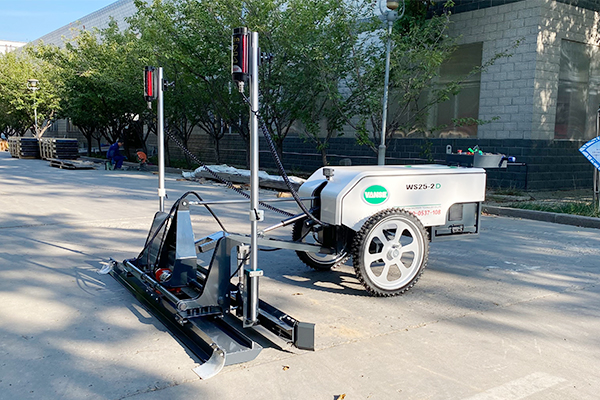
The main types are defined by mobility, head reach, operating position, and production capacity. The right choice depends on more than square meters. Access points, columns, embedded services, edge details, slab thickness, joint layout, concrete delivery rhythm, and jobsite terrain can change the recommended machine.
| Laser screed type | Typical working environment | Core strengths | Limitations | Best buyer profile |
|---|---|---|---|---|
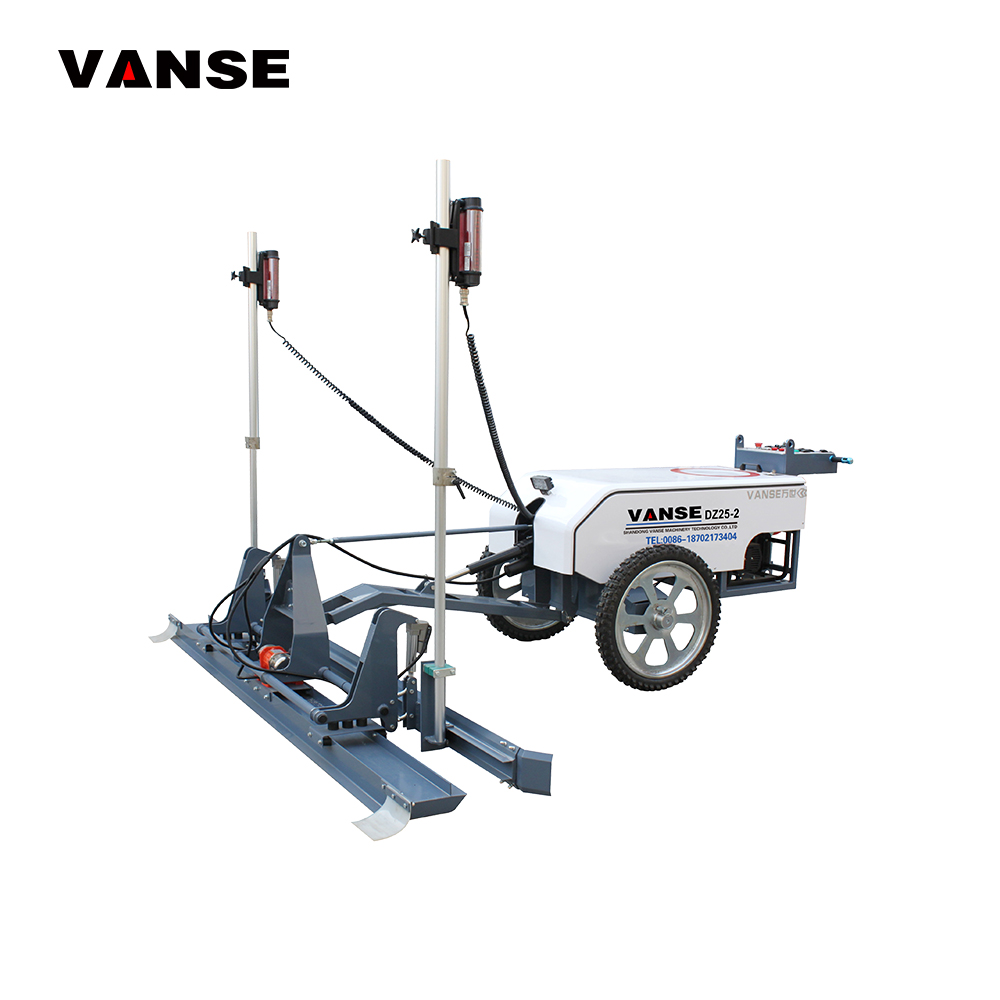
| Walk-behind laser screed | Small warehouses, workshops, basement slabs, narrow-access sites | Compact footprint, comparatively lower investment, easier transport | Lower output and shorter reach than ride-on equipment | Small contractors, specialty flooring crews, rental companies |
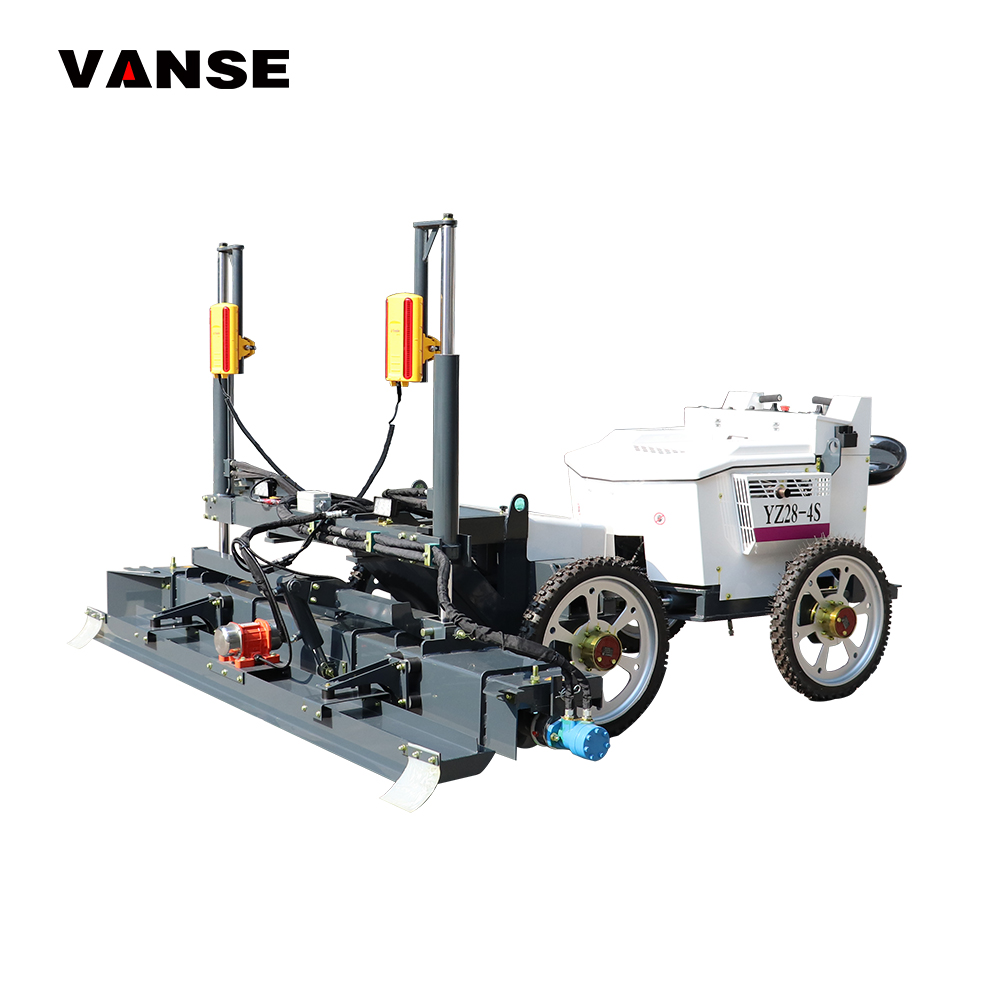
| Ride-on laser screed | Warehouses, factories, logistics buildings, retail distribution floors | High daily output, operator comfort, strong vibration and spreading performance | Needs sufficient access, turning area, and coordinated concrete supply | Industrial flooring contractors and general contractors |
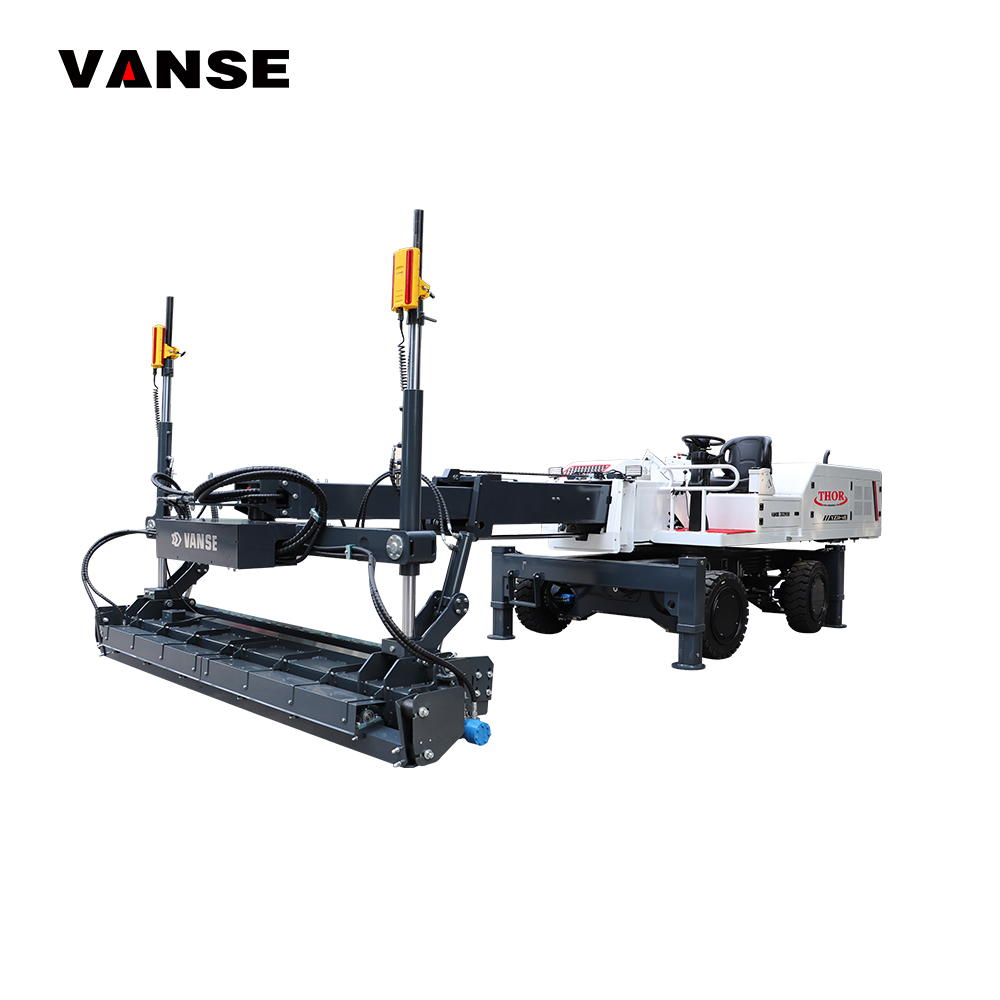
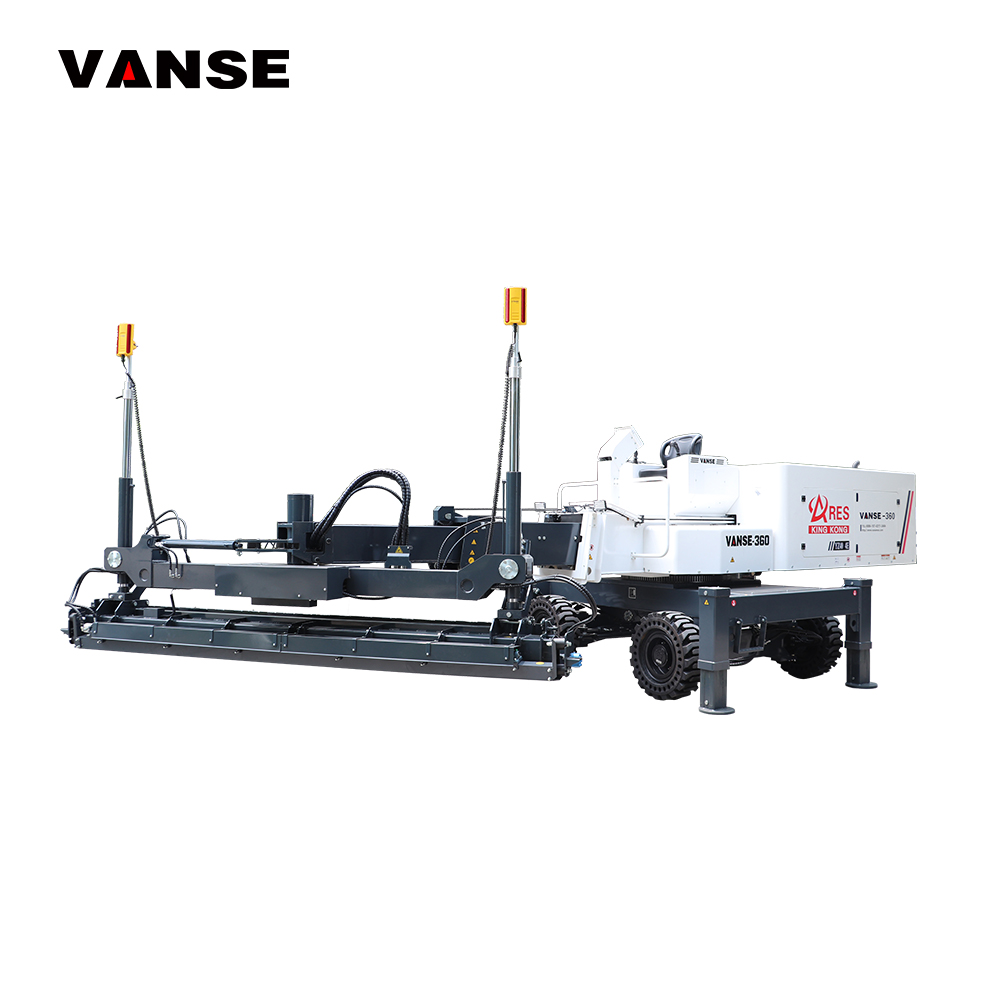
| Boom-type laser screed | Large slabs, high-bay warehouses, airport and terminal projects | Long reach, 360-degree operation, high productivity, reduced relocation | Higher purchase price and more advanced operator training required | Large contractors and infrastructure specialists |
| Telescopic boom laser screed | Variable-bay projects, wide slabs, complicated access conditions | Flexible reach and coverage without frequent machine movement | Requires careful maintenance of boom and hydraulic systems | Contractors handling diverse industrial projects |
| 3D-profile compatible screed | Drainage floors, ramps, yards, pavements, complex-profile concrete | Supports planned slopes, contours, and profile control | Requires accurate digital design data and survey setup | Infrastructure, paving, airport, and civil contractors |
| Special compact laser screed | Rooms, elevated slabs, restricted interiors, retrofit works | Useful where full-size equipment cannot enter | Limited output compared with large boom models | Urban contractors and concrete repair specialists |
Walk-behind equipment is often selected when mobility and budget are more important than maximum output. Ride-on units are a common choice for flat industrial floors because they combine practical maneuverability with strong production capacity. Boom-type machines become attractive when the cost of labor, delays, and inconsistent hand screeding exceeds the higher machine investment. For very large slabs, the ability to cover a broad radius from one operating position can reduce traffic over fresh concrete and simplify pour logistics.
Specifications That Affect Real Performance
Manufacturer brochures may emphasize engine power or nominal working width, but buyers should review the complete system. A reliable floor result depends on laser control response, leveling head geometry, vibration quality, hydraulic stability, structural rigidity, machine traction, operator visibility, and serviceability. Ask suppliers to document actual specifications for the model proposed rather than accepting general product-family claims.
| Specification | Why it matters | Questions to ask suppliers | Practical buying guidance |
|---|---|---|---|
| Working width and head reach | Determines coverage per pass and suitability for bays or columns | What is the maximum and effective working width? | Match reach to bay design, not only total slab size |
| Leveling accuracy | Influences slab tolerance and finishing workload | What accuracy is achievable under normal site conditions? | Request realistic site-based tolerances, not laboratory claims |
| Laser control system | Controls elevation response and operational reliability | Which receiver and transmitter system is supplied? | Confirm local support, calibration, and replacement availability |
| Engine configuration | Determines fuel availability, emissions compliance, and service access | Which engine option is offered in my country? | Select an engine with established local parts and dealer coverage |
| Hydraulic system | Drives boom, screed head, steering, and leveling response | What filters, hoses, pumps, and maintenance intervals apply? | Prioritize accessible filters and clearly labeled service points |
| Vibration and auger system | Supports consolidation, material movement, and uniform strike-off | Can vibration settings suit the proposed concrete mix? | Test with local aggregates, slump, fibers, and admixtures |
| Machine dimensions and weight | Affects transport permits, site access, and slab loading plans | What transport dimensions and lifting points are provided? | Check container, trailer, gate, and elevator restrictions early |
| 3D control readiness | Relevant for slopes, drainage, roads, and complex geometry | Is the machine prepared for 3D profiling integration? | Buy only if survey workflows and project demand justify it |
Concrete mix compatibility deserves special attention. Fibers, low-slump mixes, high-performance admixtures, large aggregate, and rapid-setting formulations can affect material flow and consolidation. A supplier should be willing to discuss your expected slump range, aggregate size, slab thickness, steel or synthetic fiber dosage, and finishing sequence. The goal is not merely to buy a machine but to build a repeatable placement system.
Typical Laser Screed Price Factors
Laser screed pricing varies substantially by machine type, boom reach, engine, control package, transport equipment, optional 3D system, and regional compliance requirements. A compact walk-behind model generally requires a lower initial investment than a ride-on or long-boom machine. Yet the cheaper option may be costly if it cannot meet the required daily pour volume or forces the contractor to maintain a large manual crew.
When evaluating quotations, compare delivered cost to the jobsite or port, including export packing, inland transport, marine freight where applicable, customs procedures, commissioning, operator training, initial spare parts, warranty terms, and local taxes. Buyers importing through ports such as Rotterdam, Antwerp, Jebel Ali, Singapore, Santos, Durban, Long Beach, or Melbourne should request clear Incoterms and responsibility boundaries.
| Cost category | What it can include | Why buyers overlook it | How to control the cost |
|---|---|---|---|
| Base machine price | Screed, engine, control system, standard tools | Quotes may exclude optional equipment | Request a line-by-line configuration sheet |
| Laser equipment | Transmitter, receiver, tripod, batteries, accessories | Some quotes specify machine only | Confirm complete operating package contents |
| Freight and handling | Container loading, port handling, inland delivery | Distance and seasonal shipping volatility | Compare CIF, FOB, DAP, and local-delivery options |
| Commissioning | Installation, hydraulic inspection, machine setup | Often treated as an optional service | Include commissioning in the contract |
| Training | Operator, mechanic, survey, and daily-inspection instruction | Buyers focus on machine delivery date | Specify training hours, language, and attendance |
| Spare parts package | Filters, hoses, sensors, wear parts, seals, service kits | Urgent parts are expensive after a breakdown | Buy recommended start-up inventory with the machine |
| Downtime exposure | Lost pour capacity, labor, concrete delays, schedule penalties | Not shown on the invoice | Assess supplier response time and regional parts availability |
The strongest business case is usually measured in total cost per square meter placed. Consider labor reduction, achievable production rate, rework reduction, finishing quality, schedule compression, equipment utilization, resale value, and service access. Rental companies should additionally assess fleet standardization, transport durability, ease of training, and the likelihood of operator misuse.
Leading Laser Screed Suppliers Serving Global Projects
The following companies are recognized participants in concrete placement, floor construction, or related equipment markets. Availability, local dealership support, exact model range, and certification suitability differ by country, so buyers should verify the current regional offering before procurement.
| Company | Service regions | Core strengths | Key offerings |
|---|---|---|---|
| Somero Enterprises | North America, Europe, Asia-Pacific, Middle East, global dealer network | Established laser screed specialization and broad industrial-floor experience | Ride-on and boom laser screeds, slab placement technology, training support |
| Ligchine International | North America and international construction markets | Laser-guided concrete screeding focus and contractor-oriented machine designs | Ride-on laser screeds, boom screeds, concrete placing solutions |
| Allen Engineering Corporation | North America, Latin America, Europe, Middle East, dealer markets | Well-known concrete equipment portfolio and contractor support ecosystem | Laser screeds, power trowels, pavers, concrete finishing equipment |
| Husqvarna Construction | Global distribution network across developed and emerging markets | Broad concrete equipment support and established local dealer presence | Floor preparation, cutting, demolition, dust control, finishing-related equipment |
| Wirtgen Group | Global infrastructure and road-construction markets | Large-scale pavement technology and international service structure | Concrete paving systems and related road-construction equipment |
| Shandong Vanse Machinery Technology | More than 80 countries and regions, with Southeast Asia and Canada service resources | Broad concrete construction range, flexible customization, export experience | Walk-behind, ride-on, boom-type laser screeds and industrial flooring equipment |
| GOMACO | North America and international infrastructure markets | Concrete paving engineering for civil and transport projects | Slipform pavers, curb-and-gutter equipment, concrete paving solutions |
For warehouse floors and industrial slabs, prioritize suppliers that can demonstrate floor-placement experience and provide an operator training plan. For airport, road, bridge, and drainage-profile work, assess 3D control compatibility, survey coordination, pavement references, and engineering support. A supplier’s ability to support the first major pour is often more valuable than a small difference in initial purchase price.
How to Buy the Right Concrete Laser Leveling Machine
Begin with a project audit. Record average pour size, largest anticipated slab, daily concrete supply, slab thickness, access dimensions, required floor tolerance, reinforcement density, fiber type, local fuel rules, climate, and crew skill level. Then request a supplier recommendation based on these inputs. A credible supplier should explain why a particular machine fits the work rather than automatically recommending its largest model.
Ask for a demonstration using conditions similar to your projects. If physical testing is not possible, request detailed operating videos, machine inspection records, configuration documents, training materials, and contacts for appropriate local references where available. Confirm whether the quoted laser screed is new, demonstration stock, rebuilt, or used. Also verify the warranty start date and the procedures for remote diagnostics and replacement parts.
For distributors, review commercial protection terms, territory expectations, demo-machine support, marketing assets, technician training, spare-parts stocking requirements, and lead times. For end users, focus on uptime protection: local technician access, stock of filters and wear items, troubleshooting response, and formal commissioning. For individual buyers and smaller contractors, compact models with simple controls and practical service access may offer better returns than an oversized machine.
Industries and Applications
Laser screeds are widely used in manufacturing plants, e-commerce warehouses, logistics centers, cold storage facilities, distribution hubs, parking structures, commercial buildings, large retail floors, workshops, container yards, airport runways, terminal pavements, roads, bridges, and municipal infrastructure projects. The equipment is particularly useful where slab flatness affects forklift travel, automated storage systems, racking performance, drainage, machinery installation, or finished-floor coatings.
In a high-bay logistics facility, a ride-on or boom screed can help maintain consistent slab elevation before final power troweling and joint cutting. In an airport apron or terminal yard, a laser or 3D-controlled system can support planned surface geometry and drainage requirements. In manufacturing buildings with dense columns and embedded items, the machine’s reach and maneuverability must be balanced against the need to finish edges, penetrations, and restricted zones manually.
Project Scenarios and Practical Lessons
On a large warehouse project near a major port logistics district, the contractor’s main challenge is often maintaining a continuous concrete supply. A high-capacity screed cannot deliver its value if mixers arrive inconsistently. The project team should coordinate batch plant output, truck routes, pump placement, labor breaks, and finishing crews before the first production pour. A trial panel is useful for confirming screed settings, vibration response, edge treatment, and curing procedures.
For a cold-storage slab, the contractor should evaluate vapor barriers, insulation, joints, reinforcement, mix temperature, curing, and later coating requirements alongside screed selection. For a terminal yard, the team should check subgrade quality, drainage fall, heavy-load design, and survey control. For a factory expansion in an urban location, machine access through gates and interior openings may determine whether a compact ride-on machine or walk-behind laser screed is the better solution.
Vanse Laser Screed Solutions and Service Support
Shandong Vanse Machinery Technology Co., Ltd. supports Global market contractors with walk-behind, ride-on, and boom-type concrete laser screeds designed for industrial flooring and large concrete placement applications. Founded in 2013 in Jining, China, Vanse is a national high-tech enterprise with more than 50 invention patents and over 200 utility model and design patents, while its ISO 9001 and CE certifications support structured manufacturing quality control. Its machines combine laser control systems, hydraulic technology, durable components, reliable engine options, and practical structural design; buyers can review the available concrete laser screed range and compare ride-on configurations through the ride-on laser screed collection. Vanse serves end users, equipment dealers, distributors, rental companies, brand owners, contractors, and individual buyers through direct sales, wholesale, retail, OEM/ODM production, customized branding, customized voltage and engine choices, project-based supply, and regional distribution partnerships. Rather than operating only as a remote exporter, Vanse has delivered equipment to more than 80 countries and regions and maintains overseas branches and service resources in Southeast Asia and Canada, supported by dealer networks across North America, South America, Europe, Asia, and the Middle East. Customers can access project consultation, machine selection, solution design, delivery coordination, commissioning, operator training, spare parts, remote diagnosis, and on-site technical assistance through its technical service team. Vanse provides EPC, turnkey, and customer-owned plant solutions for concrete construction equipment requirements, not BOO or on-site bulk supply services, creating a clear ownership and support model for long-term buyers.
Future Trends for 2026 and Beyond
Laser screed technology will continue to move toward digital integration, faster setup, improved automation, and more data-driven quality control. Contractors increasingly expect compatibility with digital site plans, 3D profiling workflows, machine telematics, remote diagnostics, and maintenance scheduling. These capabilities can help fleet managers monitor utilization, identify service needs earlier, and standardize operating practices across multiple job sites.
Sustainability will also influence buying decisions. Construction clients are demanding lower waste, reduced rework, efficient fuel use, longer-lasting slabs, and better management of dust and emissions. More accurate concrete placement can reduce corrective grinding, material waste, and schedule disruption. Depending on regional policy, buyers may need engines that comply with local emissions rules and may favor suppliers capable of offering appropriate engine, voltage, and documentation configurations.
Labor shortages will remain a major adoption driver. Contractors that invest in machine-assisted placement, operator training, and repeatable quality procedures can strengthen competitiveness in markets where experienced concrete finishing teams are difficult to recruit. The most successful investments will combine equipment, skilled operators, preventive maintenance, realistic concrete logistics, and disciplined quality checks.
Frequently Asked Questions
What is a laser screed used for?
A laser screed is used to spread, vibrate, consolidate, strike off, and level fresh concrete slabs using laser-guided elevation control. It is commonly used for industrial floors, warehouses, factories, logistics centers, terminals, and large paving projects.
Is a laser screed better than manual screeding?
For medium and large slabs, a laser screed can usually improve productivity and level consistency while reducing dependence on large manual crews. Manual screeding can still be appropriate for small pours, edges, irregular areas, repairs, and locations where equipment access is restricted.
What is the difference between a ride-on and boom-type laser screed?
A ride-on laser screed is driven by an operator and is well suited to many warehouse and factory slabs. A boom-type machine has a longer articulated or telescopic reach, making it more suitable for larger placement areas and high-output projects where reduced relocation is valuable.
Can laser screeds work with steel fibers or synthetic fibers?
Yes, but machine settings and concrete mix behavior should be evaluated before production. Fiber dosage, aggregate size, slump, admixtures, and required finishing quality can affect spreading and vibration performance.
How important is operator training?
Operator training is essential. The operator must understand laser setup, daily inspection, hydraulic controls, concrete flow, screed-head adjustment, safe movement, cleaning, and coordination with placing and finishing crews.
Should I buy locally or import a laser screed?
Both options can work. Local suppliers may offer immediate access to parts and technicians, while qualified international suppliers can offer strong value and customization. Compare certification suitability, shipping terms, commissioning, training, spare parts, warranty, and regional service capacity before deciding.
What spare parts should be purchased with a new machine?
Ask for a start-up parts package containing recommended filters, hydraulic hoses, seals, sensor-related items, wear parts, belts where applicable, lubricants, and service tools. The exact package should match the selected model and expected operating hours.
Final Buying Recommendation
Choose a laser screed based on production needs, floor tolerance, access, concrete supply, and local support—not on headline price alone. Walk-behind machines are practical for compact work; ride-on machines suit many industrial projects; and boom-type systems offer strong advantages for large, demanding pours. Require documented specifications, practical training, commissioning support, a spare-parts plan, and a realistic service commitment.
For contractors and distributors seeking flexible configuration, global project experience, and a broad range of concrete construction equipment, review the Vanse machinery website and its company capabilities before requesting a project-specific proposal.
Share this article

About the Author: Shandong Vanse Machinery Technology Co., Ltd.
Shandong Vanse Machinery Technology Co., Ltd. is a high-tech manufacturer specializing in concrete construction machinery, including laser screeds and related equipment. The company integrates R&D, production, and global sales, with products exported to over 60 countries and widely used in infrastructure projects worldwide.