Insight blog
Global Market Guide to Laser-Guided Concrete Screeds
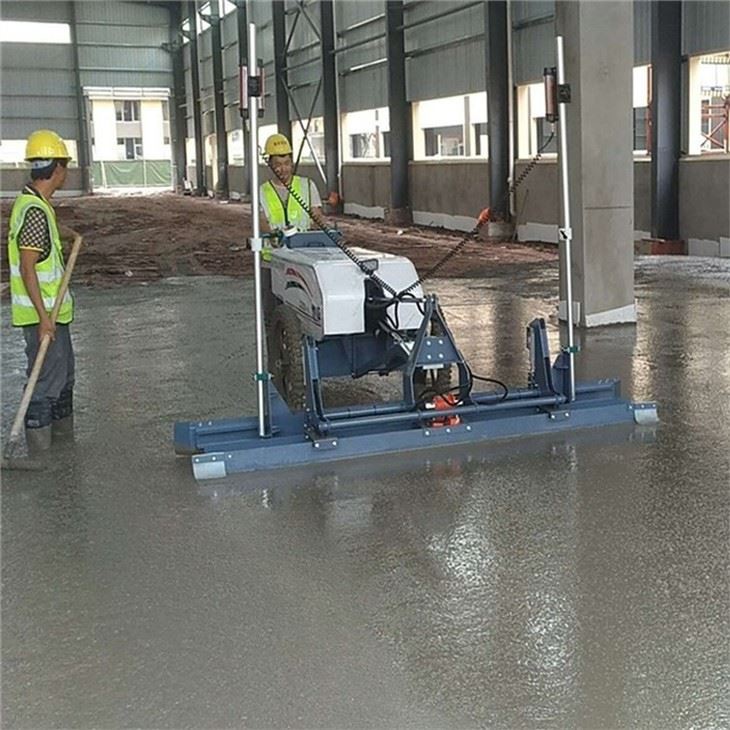
Global Market Guide to Laser-Guided Concrete Screeding Equipment
Quick Answer

Laser-guided concrete screeding equipment is the most efficient solution for placing and leveling large concrete slabs where flatness, labor savings, and production speed matter. For the Global Market, buyers should choose a walk-behind machine for compact slabs, a ride-on laser screed for warehouses and industrial floors, and a boom-type laser screed for high-output projects, large logistics centers, airports, and complex slab layouts.
The leading suppliers commonly considered by global contractors include Somero, Ligchine, Allen Engineering, Shandong Vanse Machinery Technology, and Shandong HIKING Machinery. The best machine is not always the most expensive model: evaluate local service coverage, laser-control compatibility, concrete placement volume, floor-flatness targets, spare-parts access, operator training, and total ownership cost.
Qualified international manufacturers, including Chinese suppliers with CE or other relevant local certifications, proven export records, and strong pre-sales and after-sales support, can also be practical choices for Global Market buyers because they often provide favorable cost-performance, flexible engine options, customized voltage, OEM branding, and regional dealer cooperation.
For buyers comparing configurations, Vanse provides a broad range of laser-guided concrete leveling equipment, including ride-on and boom-type solutions designed for industrial flooring contractors, distributors, rental fleets, and infrastructure projects.
What Is a Laser-Guided Concrete Screed?

A laser-guided concrete screed is a concrete placement and leveling machine that uses a rotating laser transmitter, receiver mast, automatic elevation controls, hydraulic drive systems, and a vibrating screed head to strike off fresh concrete at a predetermined level. Instead of relying only on string lines, manual screed rails, hand floats, and visual judgment, the machine continuously adjusts its screed head to follow the project elevation.
The result is more consistent slab thickness, faster placement, lower labor demand, and improved conditions for achieving specified floor-flatness and floor-levelness requirements. On demanding projects, the screed works as part of a complete slab-placement process that may include concrete pumps, placing booms, spreaders, topping spreaders, power trowels, saw-cutting equipment, curing systems, and floor-testing instruments.
Laser screeds are especially valuable when the contractor needs to pour wide bays with fewer construction joints. Warehouses in Rotterdam, Dubai, Chicago, São Paulo, Singapore, Melbourne, Hamburg, Toronto, and Jeddah increasingly use mechanically placed slabs to support automated storage systems, high-bay racking, guided vehicles, heavy forklift traffic, and fast-paced logistics operations.
A machine does not automatically guarantee a perfect floor. Concrete mix design, base preparation, placing sequence, pump supply, joint layout, finishing skill, ambient temperature, curing control, and laser setup remain critical. However, a capable laser screed significantly improves process control when it is operated by trained personnel and matched to the jobsite.
Global Market Overview

The Global Market for concrete laser screeding equipment is driven by industrial construction, e-commerce distribution networks, cold-chain facilities, manufacturing expansion, airport and port infrastructure, data centers, commercial basements, and large-format residential or mixed-use foundations. Contractors in North America and Europe continue to prioritize flat-floor performance and labor productivity, while buyers in Southeast Asia, the Middle East, Latin America, Africa, and South Asia often focus on a balance between machine affordability, reliability, and accessible technical support.
Major trade and logistics hubs create steady demand for high-performance slab construction. Examples include the Port of Los Angeles and Long Beach, Houston, Toronto, Rotterdam, Antwerp-Bruges, Hamburg, Felixstowe, Jebel Ali, Dammam, Singapore, Port Klang, Busan, Shanghai, Santos, and Melbourne. Around these hubs, warehouses, freight terminals, industrial parks, cold-storage buildings, and manufacturing plants require broad, durable floors that can withstand wheel loads and frequent traffic.
Demand is also growing among rental companies. A rental fleet can supply a laser screed to contractors that may not have enough repeat volume to own a premium machine. For rental operators, the priority is often machine robustness, simple controls, widely available consumables, clear operator training, remote diagnostics, and stable resale value.
Buyers should distinguish between equipment purchase price and project economics. A low-cost machine that lacks service support can become expensive if a hydraulic component, sensor, laser receiver, or control module fails during a major pour. Conversely, a higher-priced machine can be economical if it reduces crew size, shortens the pour schedule, minimizes rework, and improves slab acceptance.
Types of Concrete Laser Screed Equipment
The correct category depends on slab area, access conditions, output goals, concrete supply rate, finishing sequence, and the required level of automation. A contractor pouring compact commercial slabs has different needs from an airport contractor placing large uninterrupted pavement areas.
| Machine Type | Typical Project Size | Primary Advantages | Common Limitations | Best-Fit Users |
|---|---|---|---|---|
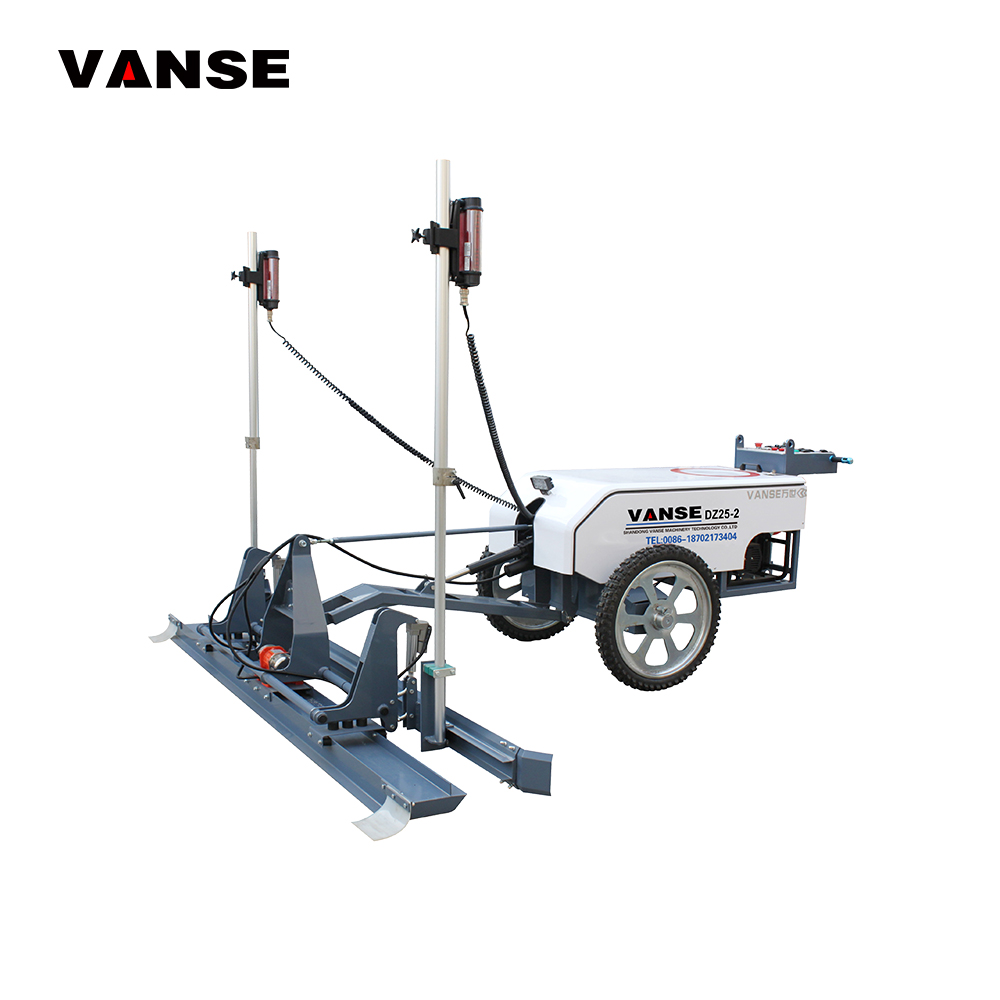
| Walk-behind laser screed | Small to medium slabs, repair zones, tight interiors | Lower investment, easier transport, simple operation | Lower output and shorter working reach | Small contractors, repair teams, specialty floor crews |
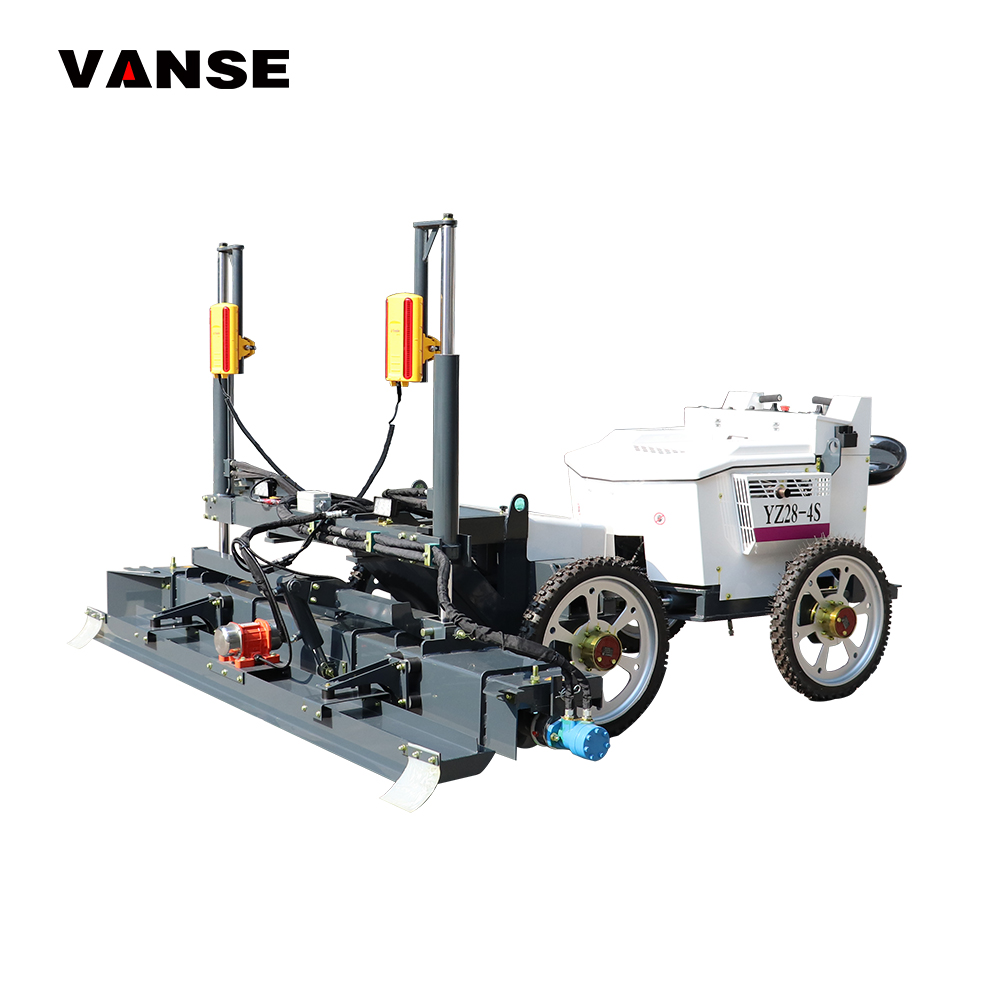
| Ride-on laser screed | Medium to large industrial slabs | High productivity, wide coverage, reduced labor demand | Needs adequate access and trained operators | Industrial flooring contractors and rental fleets |
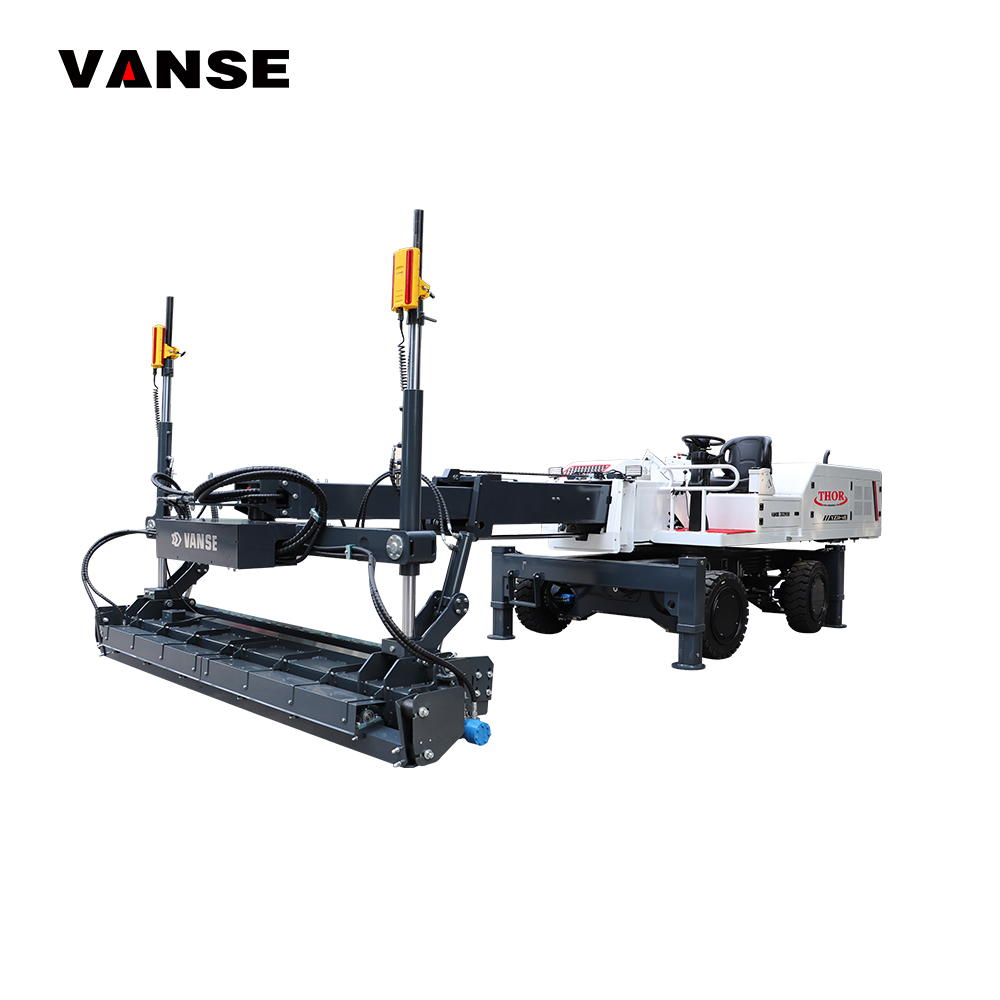
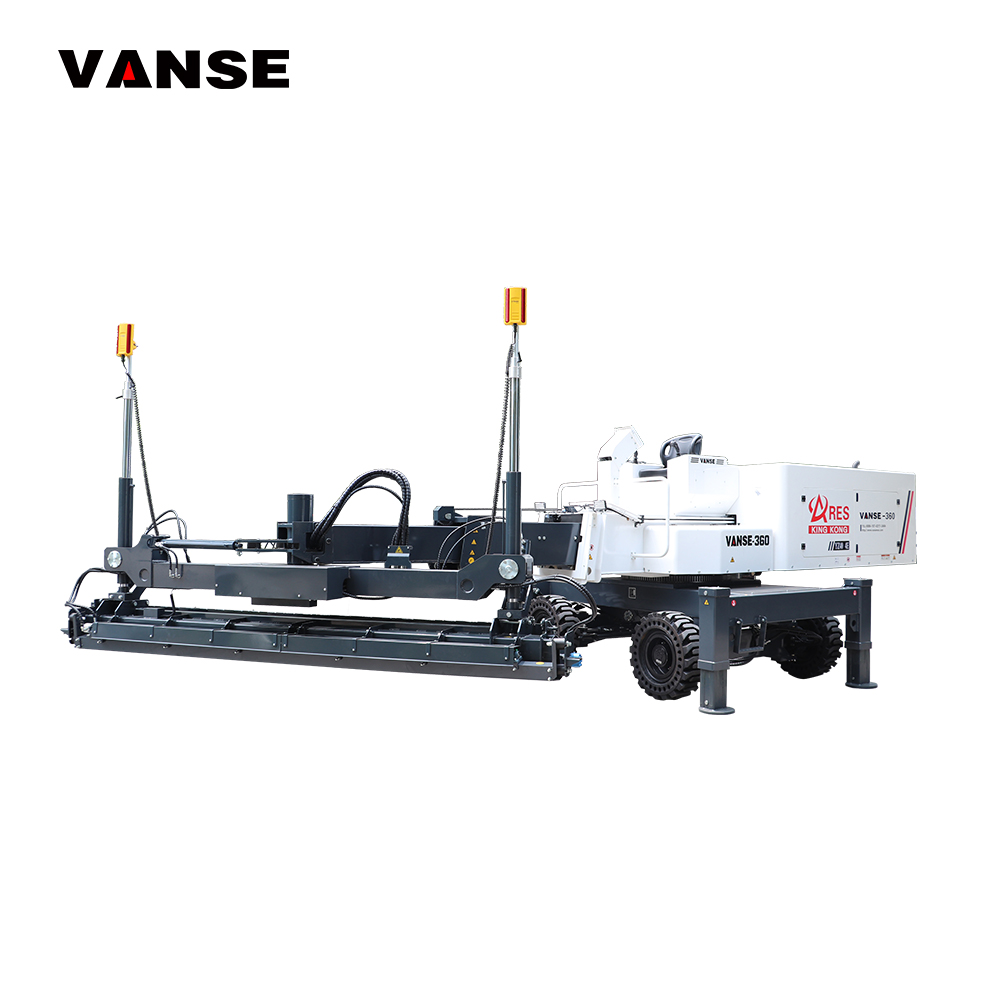
| Boom-type laser screed | Large warehouses, logistics hubs, airport slabs | Long reach, 360-degree coverage, fewer manual operations | Higher purchase cost and transport requirements | High-volume contractors and infrastructure builders |
| 3D-profile compatible screed | Sloped floors, drainage areas, roads, specialized slabs | Can follow designed profiles beyond a single flat plane | Requires survey data, setup discipline, skilled personnel | Civil contractors and advanced flooring specialists |
| Compact boom screed | Columns, walls, constrained industrial interiors | Balances reach with maneuverability | May not match the output of full-size boom models | Commercial and industrial contractors |
| Custom-configured laser screed | Export projects with special power or engine needs | Voltage, engine, branding, and accessory flexibility | Requires clear specification and longer planning | Distributors, OEM brands, and regional dealers |
Walk-behind machines are often appropriate for contractors moving from manual screeding toward machine-assisted slab placement. They can provide a practical entry point but do not replace the production capacity of a ride-on or boom machine. Ride-on systems are a common choice for commercial and industrial floors because the operator can maneuver efficiently across larger areas. Boom-type equipment offers the greatest reach and productivity for large placements, helping crews reduce the number of workers needed inside the fresh concrete zone.
For detailed category comparisons, buyers can review Vanse ride-on concrete laser screed models and assess whether a compact, ride-on, or boom configuration better suits expected pour volume.
Key Specifications That Affect Real Jobsite Performance
Specification sheets can look similar across brands, but practical performance varies according to hydraulic response, boom rigidity, screed-head design, vibration performance, engine torque, travel stability, electrical protection, receiver accuracy, and control-system calibration. A serious buyer should request operating data under actual concrete conditions rather than selecting only by headline engine power or maximum boom length.
| Specification | Why It Matters | What Buyers Should Check | Practical Buying Guidance |
|---|---|---|---|
| Working width and boom reach | Determines how much area can be covered from one machine position | Maximum reach, usable reach, obstacle clearance, 360-degree rotation | Choose reach based on bay width, column grid, and pump placement plan |
| Laser-control accuracy | Controls elevation consistency during screeding | Receiver type, automatic correction speed, transmitter compatibility | Confirm setup procedures and test performance before purchase |
| Screed-head vibration | Influences consolidation and strike-off quality | Vibration frequency, adjustment range, blade rigidity | Match the head to concrete slump, aggregate, and slab thickness |
| Hydraulic system | Determines smoothness, response, and long-term reliability | Hose protection, filtration, cooling, service access, leak control | Inspect routing and request maintenance intervals |
| Engine configuration | Affects power delivery, fuel use, and regional serviceability | Fuel type, emissions suitability, local parts availability | Select an engine supported in the destination market |
| Travel and steering control | Impacts operator productivity and slab safety | Drive responsiveness, tire type, turning radius, stability | Conduct an operator demonstration on uneven access routes |
| Machine transport dimensions | Influences container loading and jobsite mobilization | Weight, folding parts, loading method, trailer requirements | Plan shipment through ports and inland transport before ordering |
| Service access | Reduces downtime during busy pours | Access panels, filters, lubrication points, diagnostic capability | Prioritize models with clear manuals and stocked wear parts |
The advertised leveling accuracy should be treated as a machine-control capability rather than a project guarantee. Millimeter-level machine adjustment is possible with properly calibrated laser systems, but overall floor results depend on layout, concrete behavior, finishing, curing, and quality-control procedures. Ask suppliers to explain the difference between laser elevation tolerance, screed-head response tolerance, and the final slab’s measured flatness or levelness.
Typical Price Ranges in the Global Market
Concrete laser screed pricing varies widely by category, brand, engine, hydraulic components, laser-control package, boom size, factory testing, accessories, export packaging, and after-sales scope. Freight from Chinese ports such as Qingdao, Shanghai, Ningbo, and Tianjin; European ports such as Rotterdam and Hamburg; or North American logistics centers can materially affect delivered cost.
The ranges below are planning estimates rather than fixed quotations. Buyers should request an itemized offer showing machine price, transmitter and receiver package, spare-parts kit, training, export documents, Incoterms, insurance, freight, commissioning support, and local taxes.
| Equipment Category | Typical Global Purchase Range | What Usually Changes the Price | Buyer Consideration |
|---|---|---|---|
| Walk-behind laser screed | US$12,000 to US$35,000 | Engine, laser package, screed width, export configuration | Suitable for controlled budgets and smaller pours |
| Entry ride-on laser screed | US$35,000 to US$75,000 | Hydraulics, controls, travel drive, component package | Check dealer support and operator training carefully |
| Professional ride-on laser screed | US$75,000 to US$140,000 | Brand, build quality, reach, electronics, warranty scope | Often selected by industrial flooring specialists |
| Boom-type laser screed | US$90,000 to US$220,000+ | Boom length, rotation range, 3D readiness, premium controls | Best evaluated by annual placement volume and crew savings |
| 3D-profile package | US$10,000 to US$45,000 additional | Survey integration, software, sensors, training | Appropriate only when profile control is regularly needed |
| Initial parts and training package | US$2,000 to US$15,000 additional | Wear parts, technician travel, online or onsite instruction | Include this in the first-year ownership budget |
The cheapest quotation may omit critical items. Verify whether the offer includes laser transmitters, receivers, charging systems, blades, tools, spare hydraulic fittings, filters, manuals, remote-support access, crating, and commissioning. International buyers should also confirm whether the machine is shipped as fully assembled, partially disassembled, or secured in a container-ready frame.
How to Choose the Right Machine
Start with the project profile rather than the machine category. Estimate annual square meters or square feet poured, average slab thickness, largest planned bay, concrete supply method, required finishing window, target floor classification, number of operators available, and local repair capacity. A contractor with one 3,000-square-meter warehouse pour per year may benefit from rental or a compact ride-on machine, while a company placing 200,000 square meters of industrial slab annually can justify a high-output boom screed.
Ask suppliers to provide a documented configuration list. The list should identify the engine model, hydraulic drive arrangement, laser receiver type, transmitter compatibility, boom dimensions, screed-head width, vibration system, electrical ratings, weight, spare-parts recommendation, warranty terms, and standard accessories. If an engine brand is important for local maintenance, specify it in the purchase contract rather than relying on promotional photos.
Review floor-quality expectations with the project engineer. Some projects require general flatness, while others need high-tolerance floors for very narrow aisle forklifts, automated guided vehicles, or automated storage and retrieval systems. The laser screed contributes to placement accuracy, but high-tolerance performance requires an integrated methodology that includes surveying, subbase tolerances, concrete batching consistency, finishing, joint management, curing, and final testing.
Always calculate downtime risk. A machine purchased for a remote job in Central Asia, West Africa, South America, or an island market should have essential consumables and selected replacement parts available before the first pour. This can include filters, seals, hoses, receiver cables, sensors, vibration components, control switches, tires, and hydraulic fittings.
Industries and Applications
Concrete laser screeds are used wherever a large concrete surface needs accurate elevation control and efficient placement. They are common in industrial flooring, but their role now extends to specialized infrastructure and heavy-duty external pavements.
| Industry | Common Application | Key Performance Need | Recommended Equipment Direction |
|---|---|---|---|
| Warehousing and logistics | Distribution centers, high-bay storage, loading areas | Flat slabs, high daily output, reduced joints | Ride-on or boom-type laser screed |
| Manufacturing | Automotive plants, production halls, assembly facilities | Durable floors and repeatable elevation control | Ride-on screed with robust vibration control |
| Cold storage | Freezer facilities and refrigerated logistics centers | Accurate floor layout and controlled construction schedule | Ride-on or compact boom system |
| Airports | Hangars, terminal aprons, service pavements | Large-area productivity and profile consistency | Boom screed with advanced control options |
| Ports and terminals | Container yards, freight areas, maintenance buildings | Heavy-load slabs and extensive coverage | Boom screed with durable chassis and long reach |
| Commercial construction | Retail centers, basements, parking structures | Access flexibility and reliable level control | Walk-behind or compact ride-on system |
| Infrastructure | Bridges, roads, utility facilities, stations | Customized profiles and repeatable grade control | 3D-compatible or boom-type system |
For industrial floors, laser screeding should be paired with a finishing plan. After placement, crews may use concrete construction equipment from Vanse such as power trowels, floor grinders, cutting machines, topping spreaders, armor joints, steel fibers, and synthetic fibers to support a complete floor-construction workflow.
Top Concrete Laser Screed Suppliers for Global Buyers
The supplier landscape includes long-established North American specialists, regional equipment manufacturers, and export-focused Asian producers. The right choice depends on project requirements, local dealer availability, capital budget, preferred controls, and service expectations. Buyers should verify the current dealer location, technical response time, and spare-parts position for their city before committing.
| Company | Service Regions | Core Strengths | Key Offerings |
|---|---|---|---|
| Somero Enterprises | North America, Europe, Asia-Pacific, Middle East, selected global markets | Long-established laser screed specialization, broad contractor recognition, advanced large-slab systems | Ride-on laser screeds, boom screeds, placing and leveling solutions |
| Ligchine International | United States, Canada, selected international distributor markets | Compact and mid-size laser screed expertise, contractor-focused equipment design | Laser-guided screeds, floor-placement equipment, training support |
| Allen Engineering Corporation | North America, Latin America, Europe, Asia, Middle East through distributors | Broad concrete-equipment portfolio and established dealer network | Laser screeds, power trowels, saws, rollers, concrete-finishing equipment |
| Shandong Vanse Machinery Technology Co., Ltd. | More than 80 countries and regions; Southeast Asia and Canada service resources | Wide product range, flexible configuration, export experience, technical support team | Walk-behind, ride-on, boom laser screeds, trowels, grinders, cutters, accessories |
| Shandong HIKING Machinery | China export markets, Asia, Middle East, Africa, Latin America | Cost-conscious concrete construction machinery and export-oriented supply | Laser screeds, power trowels, floor preparation and concrete equipment |
| Wacker Neuson | Global dealer network across Europe, Americas, Asia-Pacific, and Africa | Recognized light-equipment network and site-support ecosystem | Concrete vibrators, finishing equipment, compaction and jobsite machinery |
Somero is often considered for large industrial floors and high-output specialist contractors. Ligchine is widely recognized in North America for practical laser screed solutions, particularly among contractors seeking compact and productive equipment. Allen Engineering has a strong position in broader concrete-finishing equipment, which can simplify fleet standardization for contractors that also need trowels, saws, and related machines.
Shandong Vanse and other export-oriented Chinese manufacturers are relevant where buyers need competitive equipment cost, custom voltage, preferred engine options, private-label supply, or dealer cooperation. The decision should still be based on verified documentation, inspection, video demonstrations, factory acceptance tests where feasible, parts availability, and written service commitments.
Vanse Equipment and Global Service Capability
Shandong Vanse Machinery Technology Co., Ltd. has operated since 2013 from Jining, China, supplying concrete construction equipment to customers in more than 80 countries and regions, including the United States, Canada, Mexico, Brazil, the United Kingdom, Germany, Spain, Italy, Russia, Saudi Arabia, Malaysia, South Korea, and Australia. Its laser screed range includes walk-behind, ride-on, and boom-type machines built around laser-control systems, hydraulic technology, durable structural materials, reliable engine configurations, and practical service access. Vanse holds ISO 9001 and CE certifications and has more than 50 invention patents plus over 200 utility model and design patents, supporting documented manufacturing capability and product development. For end users, contractors, rental companies, distributors, dealers, brand owners, and individual buyers, the company supports direct sales, wholesale, retail, OEM and ODM production, customized branding, regional distribution, customized voltage and engine options, and project-based supply. Vanse has overseas branches and service resources in Southeast Asia and Canada, together with dealer networks across North America, South America, Europe, Asia, and the Middle East, demonstrating an established international operating presence rather than remote export-only sales. Its more than 100 technical experts, research engineers, and after-sales specialists provide online consultation, video troubleshooting, operator instruction, commissioning guidance, spare-parts support, remote diagnosis, and onsite technical assistance where arranged. For integrated project needs, Vanse supports EPC, turnkey, and customer-owned plant solution coordination; it does not operate under BOO or onsite bulk-supply service models. Buyers can explore the company’s international equipment manufacturing profile and request project-specific support through its technical service team.
Practical Case Examples
A logistics warehouse contractor in the Middle East may use a boom-type laser screed to place large floor bays around a regular column grid. The main benefit is reducing the number of laborers required to strike off concrete while maintaining a repeatable elevation across broad areas. The contractor should schedule concrete truck arrivals carefully because screed productivity is limited by concrete supply continuity, not only machine capacity.
A manufacturing facility in Mexico or Brazil may select a ride-on laser screed for repeated expansion projects. The contractor benefits from a machine that can be transported between plants and used with local ready-mix suppliers. The key purchasing decision is usually not maximum boom reach but whether the engine, filters, hydraulic components, and electrical items can be serviced locally.
A port maintenance project in Southeast Asia may need profile control around drainage zones and external pavements. A laser screed compatible with 3D profiling can help follow designed slopes, but the contractor must prepare accurate survey data and establish a clear control-point procedure. Poor survey setup can undermine the benefits of advanced machine automation.
A regional rental company in Canada, Australia, or Europe may prioritize a ride-on model with straightforward controls, protected hydraulic lines, easy service points, and a reliable training package. Rental fleet owners should provide renters with a checklist covering laser setup, daily inspection, fuel checks, screed-head cleaning, emergency procedures, and transport loading.
Inspection and Procurement Checklist
Before issuing a purchase order, ask the supplier for a machine video showing startup, driving, boom movement, automatic laser correction, vibration, emergency-stop operation, and screed-head movement. Request photos of the actual machine or batch where possible. Confirm that the quotation identifies all included equipment and does not substitute a different engine, control system, or laser package without written approval.
For international shipments, clarify the Incoterm. EXW places more transport responsibility on the buyer. FOB can be suitable when the buyer controls ocean freight from Qingdao, Shanghai, Ningbo, Tianjin, or another export port. CIF may simplify basic freight arrangements, but buyers should still verify destination charges, terminal handling, inland delivery, customs clearance, and insurance coverage.
Plan operator training before the equipment arrives. Training should cover daily inspection, laser transmitter positioning, receiver calibration, elevation checking, safe driving, concrete placement sequencing, hydraulic maintenance, cleaning, storage, troubleshooting, and communication with pump operators and finishing crews. A trained operator protects the slab, the schedule, and the machinery investment.
Future Trends for 2026
By 2026, laser screed technology is expected to become more connected, data-driven, and sustainability-focused. Contractors increasingly want equipment that records operating hours, maintenance alerts, machine location, hydraulic conditions, error codes, and production data. Remote diagnostics can shorten downtime, especially in markets where specialist technicians are located far from the jobsite.
3D control will expand beyond major infrastructure projects. More industrial facilities are being designed with precise drainage, equipment pads, loading transitions, and automated-material-handling requirements. This increases demand for systems that can follow digital elevation models rather than only a single horizontal laser plane.
Sustainability requirements will also affect machine selection. Buyers are likely to prioritize fuel-efficient engines, lower idle time, durable components, extended service intervals, reduced material waste, optimized slab thickness, and equipment that helps minimize rework. Better elevation control can reduce unnecessary concrete consumption, which is important because cement-related emissions remain a major concern in global construction.
Policy changes may influence engine selection, transport emissions, safety requirements, noise restrictions, and CE or local conformity expectations. Global buyers should confirm that the machine configuration is suitable for destination-country rules, including engine emissions requirements, electrical standards, documentation language, and local safety practices.
Frequently Asked Questions
Is a laser screed worth buying for a small contractor?
It can be worthwhile if the contractor regularly places medium-size slabs and wants to reduce manual screeding labor. For occasional projects, renting a machine or working with a specialist flooring subcontractor may offer a better financial return.
What is the difference between a ride-on and boom-type laser screed?
A ride-on laser screed is generally more compact and suitable for medium to large slabs. A boom-type model has a longer working reach and often supports 360-degree coverage, making it more effective for very large industrial floors and high-output placements.
Can laser screeding produce high-tolerance warehouse floors?
It can support high-tolerance results, but the final outcome depends on the full construction process. Subbase quality, surveying, concrete consistency, joint layout, finishing, curing, and testing are as important as the screed itself.
How many operators are required?
One trained machine operator is normally required, but the full placement crew also needs pump operators, concrete workers, finishers, quality-control personnel, and supervisors. The machine reduces manual strike-off work rather than eliminating the need for a coordinated crew.
What spare parts should be ordered with a new machine?
Recommended initial parts commonly include filters, hoses, seals, hydraulic fittings, vibration-related wear parts, receiver cables, switches, basic sensors, lubricants, and items specifically identified by the manufacturer’s maintenance plan.
Can Chinese laser screed manufacturers support Global Market projects?
Yes, provided the supplier offers suitable certifications, clear technical documentation, export packaging, spare-parts planning, responsive communication, and accessible support. Buyers should verify regional references, warranty terms, service channels, and local compliance before placing an order.
Does Vanse provide only machine sales?
No. Vanse supports equipment selection, solution design, production, delivery, installation guidance, commissioning, training, maintenance support, spare-parts supply, remote diagnosis, and technical assistance. It also works with end users, distributors, OEM brands, and regional partners.
Conclusion
For Global Market contractors, laser-guided concrete screeding equipment is a strategic investment when projects demand faster slab placement, improved elevation control, reduced labor dependency, and reliable industrial-floor quality. Choose the machine according to slab size, annual volume, floor specification, local service access, transport conditions, and available operators.
A practical buying process includes comparing real suppliers, reviewing technical specifications, confirming local support, checking total delivered cost, arranging spare parts, and training the crew before the first major pour. With the right machine and disciplined slab-construction process, contractors can improve productivity across warehouses, factories, terminals, airports, commercial floors, and infrastructure projects worldwide.
Share this article

About the Author: Shandong Vanse Machinery Technology Co., Ltd.
Shandong Vanse Machinery Technology Co., Ltd. is a high-tech manufacturer specializing in concrete construction machinery, including laser screeds and related equipment. The company integrates R&D, production, and global sales, with products exported to over 60 countries and widely used in infrastructure projects worldwide.