Insight blog
Global Laser Screed Cost Guide for Smarter Floor Buying
Global Laser Screed Cost Guide for Smarter Floor Buying
Quick Answer

In the Global market, a practical laser screed cost can range from approximately US$15,000 for compact walk-behind equipment to more than US$250,000 for advanced boom-type or 3D-profiled ride-on machines. Most contractors purchasing a standard ride-on laser screed for warehouse, factory, and logistics-floor work should budget roughly US$55,000–US$140,000 before freight, import duties, optional 3D control, operator training, spare parts, and local commissioning.
The right machine depends less on the sticker price than on slab size, daily pour volume, flatness requirements, local concrete availability, access conditions, and the cost of labor and rework. A contractor pouring large industrial slabs regularly can often recover the investment through faster placement, reduced manual leveling, improved floor tolerance, and lower finishing corrections.
Established suppliers worth comparing include Somero, Ligchine, Allen Engineering, Wacker Neuson, Husqvarna Construction, and Shandong Vanse Machinery Technology. Qualified international suppliers, including Chinese manufacturers with relevant local certifications, proven export experience, spare-parts availability, and strong pre-sales and after-sales support, can be a sensible option where cost-performance is important.
For a faster comparison, buyers should request an itemized quotation covering the machine, laser transmitter and receiver, engine or power package, shipping terms, startup parts, warranty, training, commissioning, and optional accessories. Explore Vanse equipment options through its concrete laser leveling machine range before comparing specifications line by line.
How Much Does a Laser Screed Cost in the Global Market?

Laser screed pricing varies substantially because the term covers several types of concrete leveling equipment. A compact walk-behind screed designed for small commercial slabs is fundamentally different from a high-output ride-on unit used for a distribution center in Rotterdam, a factory extension in Monterrey, a logistics warehouse in Dubai, or an airport apron in Melbourne.
For global buyers, the equipment purchase price is only one part of the project budget. Freight from manufacturing centers such as Jining, Shanghai, Hamburg, Houston, or Osaka can change the landed cost considerably. Buyers importing through major gateways including Los Angeles, Vancouver, Santos, Jebel Ali, Singapore, Antwerp, and Durban should also account for port handling, inland transport, customs procedures, insurance, and local compliance documentation.
A lower-priced machine can become expensive if it lacks remote troubleshooting, locally stocked consumables, hydraulic service support, operator instruction, or compatible replacement parts. Conversely, a higher initial investment can be commercially justified when the machine consistently delivers flatter slabs, reduces finishing labor, and avoids schedule delays on repeat industrial projects.
| Laser screed category | Typical equipment price range | Best-fit projects | Typical output expectation | Key cost drivers |
|---|---|---|---|---|
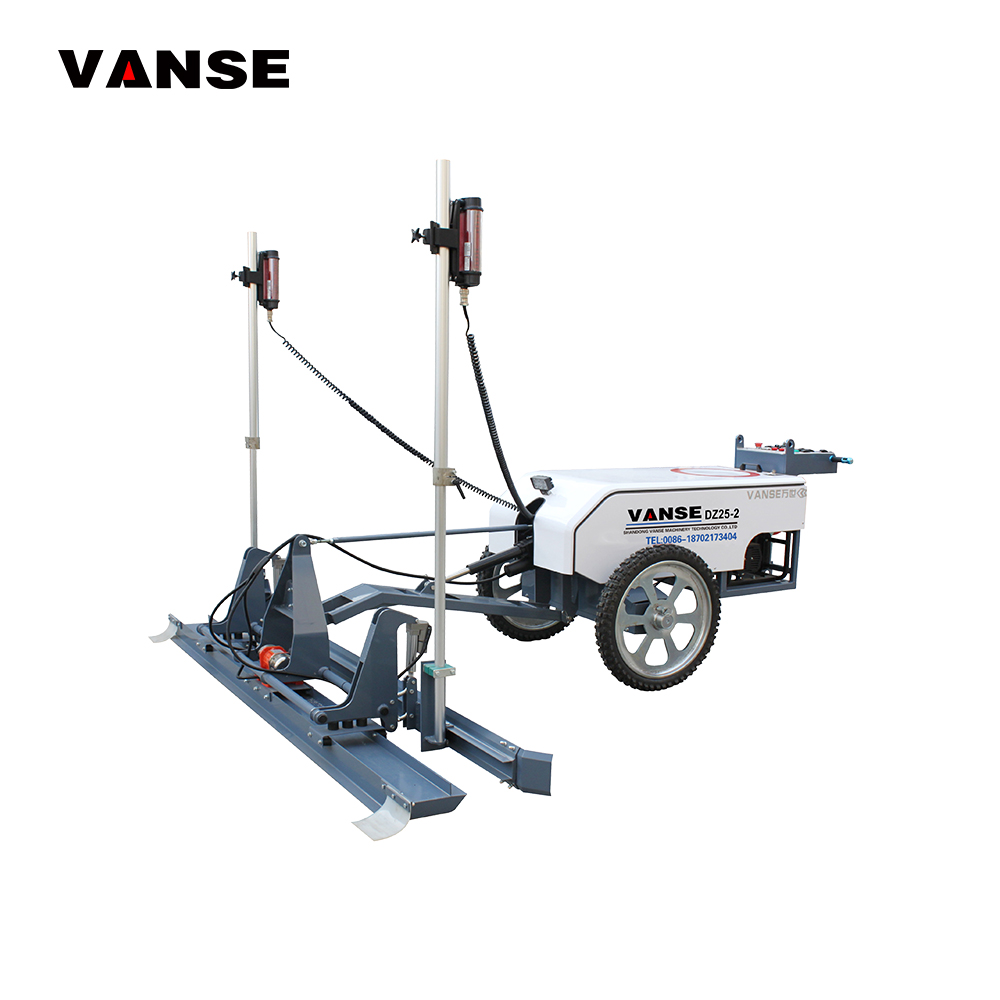
| Walk-behind laser screed | US$15,000–US$45,000 | Small warehouses, workshops, commercial slabs | Lower-to-medium daily placement volume | Laser package, screed width, engine brand, hydraulic configuration |
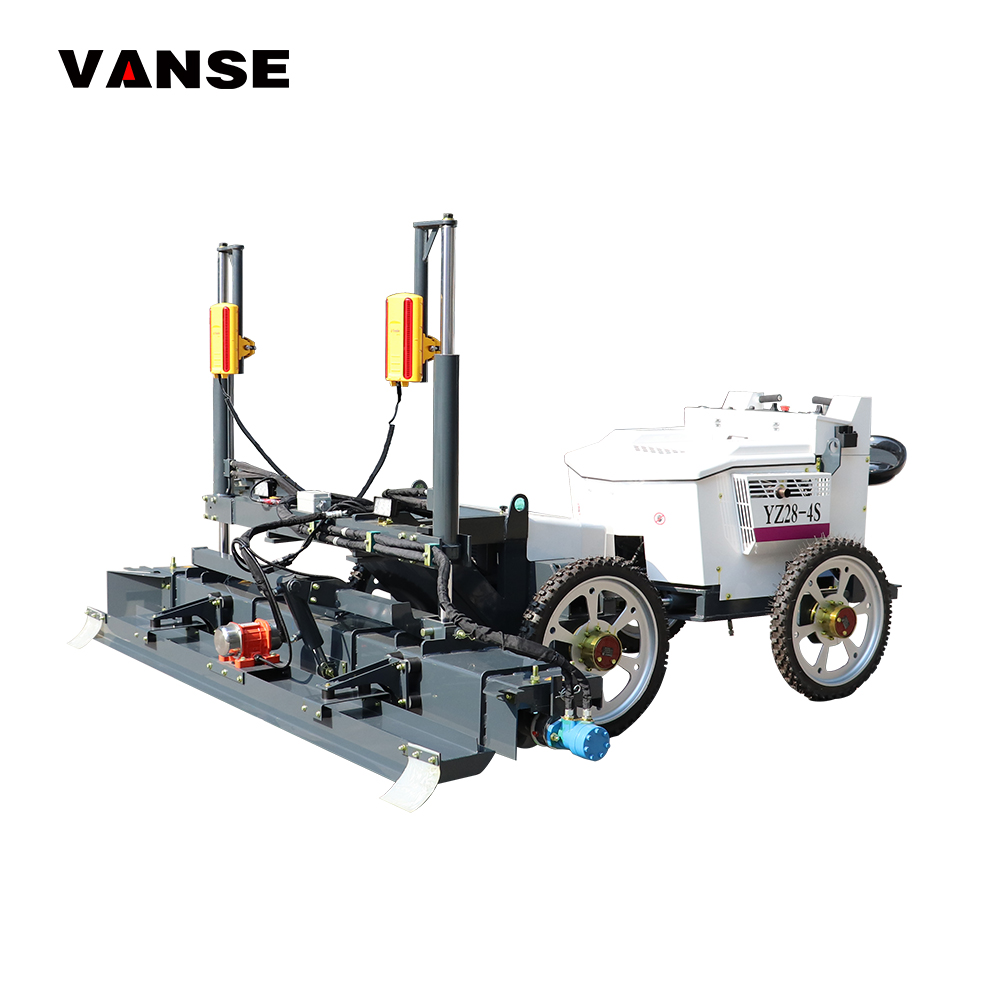
| Compact ride-on laser screed | US$45,000–US$85,000 | Medium industrial floors and local contractor fleets | Medium output with reduced manual labor | Drive system, boom reach, controller type, transport size |
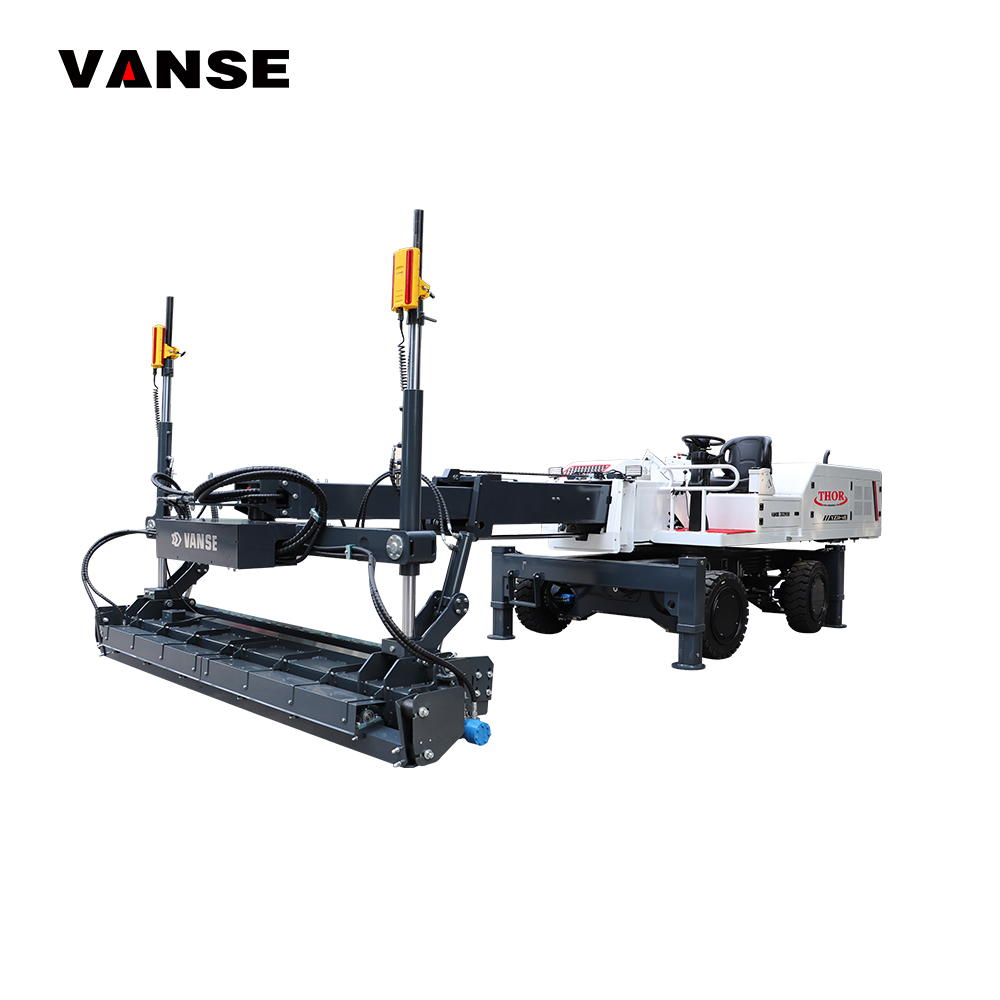
| Standard ride-on laser screed | US$70,000–US$140,000 | Warehouses, factories, logistics centers | High-output flatwork production | Hydraulics, engine, laser receivers, finishing head, warranty |
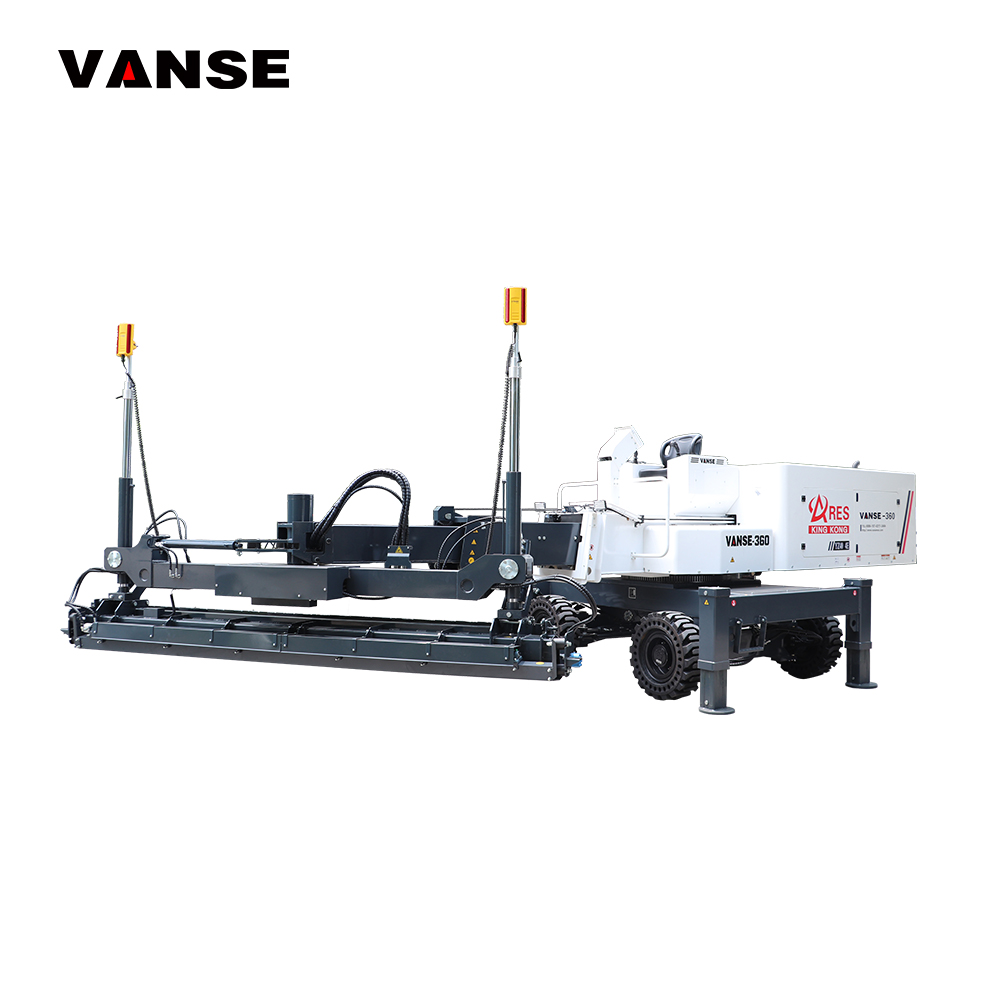
| Large boom-type laser screed | US$120,000–US$220,000 | Large slabs, terminal yards, high-spec industrial floors | High coverage across broad placement areas | Boom length, 360-degree capability, chassis, automation options |
| 3D-profiled or GPS-compatible screed | US$160,000–US$300,000+ | Roads, ramps, complex drainage, infrastructure | High productivity on variable elevation designs | 3D controls, sensors, software, survey integration, training |
| Used or refurbished laser screed | US$20,000–US$120,000 | Budget-sensitive buyers with technical inspection capacity | Dependent on maintenance history | Hours, hydraulic condition, laser system age, parts availability |
The ranges above are planning figures rather than fixed offers. They help buyers separate equipment classes before requesting formal quotations. Currency movement, engine-emissions regulations, local taxes, freight capacity, and included accessories can alter the final figure materially.
What Changes the Final Equipment Budget?

When evaluating laser screed pricing, do not compare only the base machine figure. Suppliers may quote different combinations of transmitter, receivers, control displays, screed heads, transport packaging, spare parts, and technical support. A complete comparison requires a common specification sheet.
| Budget factor | Why it changes price | Buyer action | Potential project impact |
|---|---|---|---|
| Machine configuration | Ride-on, boom-type, 360-degree, and 3D systems require more components | Define slab size, access route, and required reach before requesting quotes | Avoids paying for unnecessary capacity or buying an undersized machine |
| Laser control package | Receivers, transmitters, mast controls, and 3D systems vary widely | Confirm included brands, quantities, calibration process, and replacement cost | Protects leveling accuracy and future serviceability |
| Powertrain and hydraulics | Recognized engines and robust hydraulic components can raise the purchase cost | Ask for engine model, hydraulic pump information, filter intervals, and local support | Influences uptime, fuel use, and resale value |
| Freight and delivery terms | Container loading, insurance, port charges, and inland haulage differ by destination | Request EXW, FOB, CIF, and delivered-price comparisons where practical | Prevents unexpected landed-cost gaps |
| Training and commissioning | Proper setup requires instruction on lasers, concrete timing, and machine operation | Include remote and on-site training options in the contract | Reduces early-stage mistakes and slab rejection risk |
| Parts and warranty support | Initial spare kits and service coverage differ among suppliers | Require a recommended two-year critical spares list and warranty scope | Reduces downtime during high-value pours |
| Local regulatory compliance | CE, electrical standards, emissions rules, and safety requirements may apply | Verify required certifications before shipping | Avoids customs delays and compliance exposure |
Buyers should also calculate the ownership cost over three to five years. Include scheduled maintenance, operator wages, fuel or electricity, transport between sites, laser calibration, wear parts, insurance, finance charges, and expected resale value. Contractors operating in high-labor-cost cities often see the strongest return because laser-guided placement reduces the number of workers required for manual strike-off and checking.
Laser Screed Types and Where Each One Fits
Walk-behind laser screeds are commonly selected by contractors serving smaller retail, workshop, agricultural, and residential-commercial projects. They are usually simpler to transport and can be an efficient first step for companies moving away from manual screeding. Their limitations are coverage width, travel speed, and performance on very large pours.
Ride-on laser screeds are the standard choice for professional industrial-floor contractors. An operator controls the machine from an onboard platform while a laser-guided screed head places concrete to the designed elevation. These machines are widely used on warehouses, manufacturing facilities, e-commerce fulfillment centers, cold storage buildings, and large commercial floors.
Boom-type and 360-degree machines are intended for major slab areas where the machine can cover a large radius without frequent repositioning. They suit high-volume placements, especially when construction programs demand predictable daily output. For sloped floors, drainage channels, ramps, road works, and other changing-grade applications, 3D profiling may be a more important investment than maximum boom reach.
| Project condition | Recommended screed approach | Why it fits | Important specification to check |
|---|---|---|---|
| Small enclosed floor with tight access | Walk-behind laser screed | Compact dimensions and simpler transport | Machine width, turning area, door clearance |
| Warehouse slab of regular geometry | Standard ride-on laser screed | Strong balance of output, accuracy, and maneuverability | Daily output, screed head width, service support |
| Large logistics hub or industrial campus | Boom-type ride-on laser screed | Broad working radius reduces setup and repositioning | Boom reach, 360-degree operation, transport weight |
| Factory with high flatness requirements | Ride-on screed with advanced laser control | Improves consistency before power troweling and testing | Leveling control precision and finishing workflow |
| Road, ramp, or drainage-profile work | 3D-controlled screed system | Follows changing elevations and designed profiles | Survey-file compatibility, software, field support |
| Equipment rental fleet | Durable compact or standard ride-on model | Supports repeat use across varied contractor sites | Controls durability, easy service access, operator protection |
Before selecting a model, review the broader machine family rather than focusing on one listing. Vanse presents walk-behind, ride-on, and boom configurations in its ride-on concrete laser screed collection, helping contractors compare reach, working efficiency, control design, and project suitability.
Buyer Checklist for Comparing Quotes
A well-prepared purchase inquiry saves time and produces more comparable offers. Send suppliers a short project brief that identifies the average pour area, slab thickness, reinforcement arrangement, target flatness, concrete slump range, site access, expected annual concrete volume, destination port, local voltage requirements, and whether the buyer needs training or local service support.
- Request the exact model number and a full equipment specification.
- Confirm whether laser transmitters, receivers, tripods, and batteries are included.
- Ask which engine, hydraulic pumps, valves, sensors, and electronic control components are fitted.
- Verify production lead time, container loading method, shipping dimensions, and machine weight.
- Ask for an initial spare-parts kit, recommended consumables, and maintenance intervals.
- Clarify warranty duration, exclusions, remote diagnostic support, and response procedures.
- Request operator training content covering setup, concrete placement coordination, leveling, cleaning, and daily inspection.
- Compare local dealer support against direct factory technical support.
- Confirm whether the machine can be upgraded for 3D profiling or specialized screed heads.
- Evaluate finance, leasing, rental, and resale options where these are available locally.
For buyers who need to prepare a detailed technical comparison or procurement file, the equipment catalog download center can help identify relevant machine configurations and supporting concrete-construction equipment.
Where Laser Screeds Deliver the Best Return
Laser screeds are most valuable when concrete placement is repeated, floor performance matters, or labor availability is limited. They do not remove the need for professional batch control, reinforcement preparation, joint planning, curing, power troweling, and testing. Instead, they make the leveling stage more controlled and productive.
Industrial-floor contractors frequently use laser screeds for high-bay warehouses, manufacturing plants, automotive facilities, retail distribution centers, food-processing buildings, pharmaceutical facilities, aviation support structures, and cold-storage floors. Infrastructure contractors may use specialized configurations for terminal yards, roads, bridge approaches, pavement areas, and large-scale hardstand projects.
In regions with expanding logistics and manufacturing investment, the business case is especially strong. Warehouse development around Dallas, Toronto, São Paulo, Frankfurt, Warsaw, Riyadh, Bangkok, Jakarta, Ho Chi Minh City, Johannesburg, and Sydney continues to increase demand for accurate, durable, and rapid concrete slab construction. Project owners increasingly specify floor performance requirements that are difficult to meet consistently through manual screeding alone.
Global Laser Screed Suppliers to Compare
The following companies represent practical comparison points for buyers in the Global market. Availability, local dealer coverage, product range, and final pricing vary by country, so buyers should verify current representation and technical support in their city or region before placing an order.
| Company | Primary service regions | Core strengths | Key offerings |
|---|---|---|---|
| Somero Enterprises | North America, Europe, Asia-Pacific, Middle East, selected global markets | Specialist focus on concrete placing and laser screeding for major slab projects | Ride-on, boom-type, high-output, and advanced concrete placing systems |
| Ligchine International | North America and distributor-supported international markets | Practical laser-guided screeding solutions and contractor-focused equipment design | Ride-on laser screeds, compact systems, support for commercial and industrial flatwork |
| Allen Engineering Corporation | North America, Latin America, Europe, Middle East, Asia through distribution partners | Broad concrete finishing equipment portfolio and established contractor recognition | Laser screeds, power trowels, truss screeds, ride-on finishing equipment |
| Wacker Neuson | Global dealer network across Europe, Americas, Asia-Pacific, and Africa | Wide construction-equipment distribution footprint and local service capability | Concrete vibration, finishing, compaction, cutting, and site equipment |
| Husqvarna Construction | Global markets with strong presence in Europe, Americas, and Asia-Pacific | Concrete surface preparation, cutting, drilling, and professional contractor tools | Floor grinders, saws, dust control systems, surface-preparation equipment |
| Shandong Vanse Machinery Technology | More than 80 countries and regions, with Southeast Asia and Canada service resources | Cost-performance-focused concrete equipment range, customization, global export support | Walk-behind, ride-on, boom laser screeds, power trowels, grinders, cutters, accessories |
Somero is often included in premium equipment comparisons where high output, established industry specialization, and large-project capability are central requirements. Ligchine is frequently considered by contractors seeking a focused laser screed solution with contractor-oriented equipment design. Allen Engineering is relevant for buyers who prefer to source laser screeding and concrete finishing machines through a single established concrete-equipment provider.
Wacker Neuson and Husqvarna Construction may not be direct like-for-like alternatives for every laser screed model, but they are important suppliers in the wider concrete construction workflow. A contractor purchasing a screed also needs reliable vibration, cutting, power troweling, grinding, dust control, and maintenance support. Comparing the total site-equipment ecosystem can be more valuable than comparing one machine in isolation.
Detailed Supplier Evaluation Criteria
Rather than selecting a supplier solely by brand recognition, assess every supplier against the requirements of the actual project portfolio. A local dealer with stocked parts may be the best option for a rental fleet, while a direct manufacturer with flexible design and engineering support may offer better value for an expanding industrial-floor contractor.
| Evaluation area | Questions to ask the supplier | Strong answer looks like | Warning sign |
|---|---|---|---|
| Machine suitability | Which model fits my average pour size and access conditions? | Recommendation based on slab dimensions, output target, and working geometry | Only one model is promoted without project review |
| Component transparency | Which engine, hydraulics, laser controls, and electrical parts are installed? | Named components, maintenance data, and replacement-part information are provided | Supplier cannot provide a clear bill of major components |
| Technical training | How will operators learn setup and daily operation? | Remote instruction, manuals, video support, and on-site options are defined | Training is treated as an informal afterthought |
| Parts response | Where are critical components stocked and how are urgent orders handled? | Regional stock plan, courier process, and recommended critical parts list | No defined parts procedure after payment |
| Warranty handling | What is covered and who authorizes repairs? | Written warranty scope, response timeline, and claim procedure | Broad verbal promises with no written coverage |
| Export documentation | Can you support destination requirements and shipping paperwork? | Clear packing list, invoice, certificates, manuals, and shipping coordination | Documentation is incomplete or prepared only after shipment |
| Long-term partnership | Can you support dealerships, fleet expansion, or customized branding? | Defined distribution, OEM/ODM, technical, and commercial cooperation options | Supplier only focuses on a one-time machine sale |
This structured review is particularly useful for buyers purchasing from outside their home country. It reduces the risk of comparing an incomplete factory quote with a fully supported local package. It also helps project owners determine whether a contractor has selected equipment that can be reliably maintained for the duration of a multi-phase development.
Practical Project Examples
A logistics contractor building a 30,000-square-meter distribution center may choose a ride-on or boom-type laser screed to support long daily pours. The key commercial objective is not simply faster concrete placement; it is maintaining a predictable construction sequence so joint cutting, curing, finishing, racking installation, and handover can remain on schedule. In this situation, downtime support and operator training may be worth more than a small difference in purchase price.
A regional flooring contractor working on 2,000–8,000-square-meter factory and warehouse projects may prefer a standard ride-on model. This category can provide a strong balance between purchase budget, transport practicality, and professional productivity. The contractor should prioritize easy service access, stable hydraulics, durable screed components, reliable laser controls, and parts that can be delivered quickly.
An infrastructure contractor constructing ramps, drainage zones, terminal surfaces, or road-adjacent slabs may require 3D control. Here, the cost of software, surveying, and setup is higher, but the system can reduce the risk of inaccurate profiles and manual rework. A 3D machine should be selected only when the contractor has a clear process for digital design files, site calibration, and qualified operators.
A dealer or rental company should prioritize durable chassis construction, straightforward operator controls, clear maintenance procedures, and a starter inventory of filters, sensors, hoses, wear parts, and laser accessories. Rental users may have different experience levels, so simple daily inspections and responsive technical assistance are important commercial protections.
Vanse Support for Global Concrete Contractors
Shandong Vanse Machinery Technology Co., Ltd. has manufactured concrete construction equipment since 2013 and serves contractors, flooring companies, distributors, rental fleets, project owners, and equipment brands across more than 80 countries and regions. Its laser screed portfolio includes walk-behind, ride-on, and boom-type models developed around laser control, hydraulic performance, durable working components, and practical field operation. Vanse holds ISO 9001 and CE certifications, has more than 50 invention patents and over 200 utility model and design patents, and works with technical experts as well as Shandong University and Changan University to improve equipment for varied site conditions. The company supports end users, dealers, distributors, brand owners, and individual buyers through direct sales, wholesale, retail, OEM/ODM production, customized branding, engine and voltage options, regional distribution partnerships, and long-term technical cooperation. With overseas branch and service resources in Southeast Asia and Canada, dealer coverage across North America, South America, Europe, Asia, and the Middle East, plus multilingual 24-hour remote consultation, Vanse provides practical online and offline pre-sale and after-sales protection rather than operating as a remote exporter. Its more than 100 technical specialists, engineers, and after-sales personnel support equipment selection, delivery, installation, commissioning, operator training, spare parts, remote diagnosis, and on-site assistance. For project delivery, Vanse provides EPC, turnkey, and customer-owned plant solutions where applicable; it does not operate a BOO or on-site bulk supply model.
For contractors comparing models, Vanse concrete construction equipment solutions provide a starting point for matching screeds with power trowels, floor grinders, cutting machines, topping spreaders, concrete joints, and fiber materials. Company background, manufacturing capability, and international service information are available through the Vanse company profile.
Future Trends Affecting Laser Screed Investment in 2026
In 2026, buyers in the Global market will increasingly evaluate laser screeds as part of a connected concrete-placement system. Digital project controls, 3D profile management, machine telemetry, remote diagnostics, and more detailed maintenance records are becoming more relevant on large industrial and infrastructure projects. Contractors are under pressure to provide better documentation of slab quality, productivity, and equipment uptime.
Sustainability will also influence purchasing decisions. Better leveling accuracy can reduce concrete over-placement and decrease material waste. More efficient work cycles can reduce unnecessary engine hours, site congestion, and rework. In markets with stricter environmental requirements, buyers may favor machines with compliant engines, lower fuel consumption, improved hydraulic efficiency, and maintenance systems that reduce leaks and premature component replacement.
Labor shortages will remain a major driver. Skilled finishers and experienced concrete crews are limited in many regions, making equipment that improves consistency and reduces manual leveling increasingly attractive. However, automation does not replace good project management. Successful users will invest in operator training, concrete supply coordination, finishing teams, curing plans, and preventive maintenance.
Another important trend is the growth of regional service expectations. Buyers increasingly expect fast parts delivery, video diagnostics, local commissioning support, and multilingual assistance. This makes suppliers with real distribution relationships, overseas service resources, and defined support procedures more competitive than suppliers that offer only a low export price.
Frequently Asked Questions
What is a realistic laser screed cost for a warehouse contractor?
A warehouse contractor should generally expect a compact ride-on unit to start around US$45,000, while a more capable standard ride-on machine may range from US$70,000 to US$140,000. The exact budget depends on output requirements, laser controls, engine choice, included accessories, freight, and service coverage.
Is a Chinese laser screed a good option for international buyers?
It can be a strong option when the supplier provides transparent specifications, appropriate certifications, reliable components, export documentation, operator training, warranty support, and a clear spare-parts plan. Buyers should assess the full landed and operating cost rather than judging only the factory price.
How do I compare two laser screed quotations fairly?
Use the same project brief and request identical commercial terms. Compare machine type, boom reach, screed head, laser system, engine, hydraulic components, included tools, shipping basis, commissioning, training, warranty, and spare-parts package. A cheaper quote may exclude important items.
Can a laser screed improve floor flatness?
Yes. Laser-guided leveling can improve consistency during concrete placement and reduce reliance on manual checking. Final floor performance still depends on mix design, placement timing, finishing practice, joint layout, curing, and quality-control testing.
Should I buy or rent a laser screed?
Buying is often suitable for contractors with regular industrial-floor work, a trained crew, and enough annual pour volume. Renting can be practical for occasional projects, first-time users, or contractors testing demand before committing capital. Compare rental availability, delivery fees, operator requirements, and scheduling flexibility.
What spare parts should be purchased with a new machine?
A startup kit commonly includes filters, hydraulic hoses, seals, sensors, switches, belts where applicable, laser-system consumables, lubrication supplies, and common wear parts. The exact list should be prepared by the supplier according to the machine model and destination service conditions.
Do boom-type laser screeds justify their higher price?
They can justify the investment on large, open, repetitive slab pours where broader reach reduces repositioning and supports high daily output. For smaller buildings or congested interiors, a standard ride-on machine may provide better value and easier transport.
What should I confirm before importing a laser screed?
Confirm destination compliance requirements, import duties, emissions rules, electrical specifications, shipping dimensions, insurance, unloading arrangements, local service contacts, training format, warranty procedure, and availability of critical spare parts. Obtain all commercial and technical terms in writing before shipment.
Make the Purchase Decision Around Total Project Value
The best laser screed is not automatically the most expensive or the lowest-priced model. It is the machine that matches the contractor’s average slab type, production schedule, labor structure, service access, and growth plan. A disciplined comparison of specification, landed cost, training, support, and expected productivity will produce a better investment decision than a base-price comparison alone.
For Global market buyers, the most practical approach is to shortlist at least three suppliers, issue the same technical inquiry, inspect available references or demonstrations, verify service commitments, and include a startup spare-parts package in the order. This creates a stronger foundation for accurate floors, reliable equipment uptime, and profitable concrete construction operations.
Share this article

About the Author: Shandong Vanse Machinery Technology Co., Ltd.
Shandong Vanse Machinery Technology Co., Ltd. is a high-tech manufacturer specializing in concrete construction machinery, including laser screeds and related equipment. The company integrates R&D, production, and global sales, with products exported to over 60 countries and widely used in infrastructure projects worldwide.