Insight blog
Selecting a Laser Screed for Global Market Projects
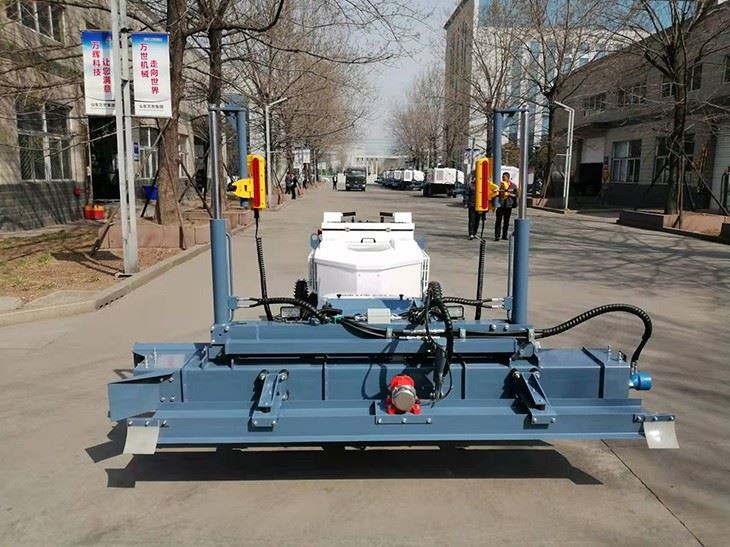
Selecting a Laser Screed for Global Market Projects
Quick Answer

To choose a laser screed, first match the machine type to your slab size, access conditions, concrete volume, required flatness, and available operators. Walk-behind laser screeds suit smaller rooms and constrained sites; ride-on models are usually the best choice for warehouses, factories, logistics centers, and large commercial slabs; boom-type units offer the greatest reach and flexibility for wide pours, dense reinforcement, and difficult layouts.
For Global market buyers, prioritize proven laser-control accuracy, hydraulic reliability, engine and electrical support in your region, local spare-parts access, operator training, and a realistic total cost of ownership. Do not select only by purchase price or stated square-meter output. Ask suppliers to demonstrate leveling performance on a real pour, explain calibration procedures, confirm lead times for wearing parts, and provide written service commitments.
Leading suppliers to compare include Somero, Ligchine International, Allen Engineering, Wacker Neuson, Shandong Vanse Machinery Technology, and regional equipment dealers serving your project location. Qualified international suppliers, including Chinese manufacturers with applicable CE or local certifications and strong pre-sales and after-sales support, can also be a practical choice because they may offer attractive cost-performance, configuration flexibility, and faster access to customized equipment.
Why Laser Screed Selection Matters in the Global Market

A laser screed is not simply a faster replacement for manual strike-off work. It is a concrete placement and leveling system that affects slab tolerance, finishing productivity, material consumption, joint performance, long-term floor behavior, and project schedule. On industrial flooring projects, a poor equipment decision can create costly downstream problems: excessive grinding, uneven racking aisles, ponding water, premature joint damage, finishing delays, and disputes over floor-flatness results.
Across the Global market, laser screeds are increasingly used in distribution centers, e-commerce warehouses, manufacturing plants, cold stores, airport support facilities, container yards, workshops, commercial buildings, bridges, terminals, and infrastructure slabs. Major trade hubs such as Rotterdam, Hamburg, Dubai, Singapore, Los Angeles, Shanghai, Melbourne, Toronto, São Paulo, and Jeddah continue to support logistics and industrial construction activity. These projects often demand consistent slab tolerances over large areas, making mechanized leveling more important than ever.
The correct machine depends on much more than project area. A 4,000 m² warehouse may need a different configuration from a 4,000 m² airport support slab because the reinforcement density, concrete mix, pour sequence, access route, column grid, specified floor class, and finishing crew capabilities are different. The right purchase process begins with the slab design and placement plan, not a machine brochure.
When evaluating equipment, contractors should look at the entire concrete workflow: batch plant coordination, delivery intervals, pumping or direct discharge, spreading, laser screeding, vibrating, bull floating, joint cutting, curing, protection, and final testing. A laser screed produces value when it fits this workflow and reduces bottlenecks rather than creating a new one.
How to Choose a Laser Screed by Project Requirement

The most effective way to choose a concrete laser screed is to define measurable project conditions before contacting suppliers. Record the average daily pour area, slab thickness, reinforcement type, concrete slump or workability range, expected flatness and levelness requirements, working hours, travel distance between pours, climate, power availability, operator experience, and service expectations. These details allow suppliers to recommend the correct chassis, screed head, boom reach, laser system, and support package.
| Selection Factor | Questions to Ask | Recommended Direction | Why It Matters |
|---|---|---|---|
| Daily pour area | How many square meters must be placed and leveled per shift? | Walk-behind for modest pours; ride-on or boom-type for larger daily output. | Machine capacity must match concrete supply and finishing capacity. |
| Slab tolerance | What FF/FL or local flatness specification is required? | Choose stable laser control, rigid screed head, and repeatable hydraulic response. | Higher tolerance floors require more consistent elevation control. |
| Site access | Are there doors, ramps, columns, walls, or low-clearance zones? | Use compact walk-behind units or machines with suitable transport dimensions. | Oversized equipment can lose productivity if it cannot enter the work zone. |
| Reinforcement density | Will the slab include mesh, rebar, dowels, fibers, or embedded services? | Select a machine with adequate clearance, traction, and boom flexibility. | Dense reinforcement can restrict movement and affect screed-head performance. |
| Concrete supply rate | Can trucks, pumps, or batch plants maintain steady delivery? | Size equipment to actual concrete availability, not maximum catalog output. | A high-capacity screed cannot recover time lost to interrupted concrete supply. |
| Surface geometry | Is the slab flat, sloped, crowned, or designed with drainage falls? | Consider 3D profiling compatibility for controlled slopes and complex geometry. | Laser-only flat-plane control may not meet complex profile requirements. |
| Service location | Where will maintenance, repairs, and operator training occur? | Select suppliers with documented regional support and spare-parts channels. | Downtime during a pour can be more expensive than a lower initial purchase price. |
This comparison shows why there is no single “best” laser screed for every contractor. A machine selected for a broad, open logistics floor may be inefficient inside a multistory commercial building. Conversely, a compact unit may be too slow to keep up with a high-volume warehouse pour. The selection process should balance output, access, finish quality, transport, and service capacity.
Define the Slab Specification Before Comparing Machines
Start with the engineer’s drawings and the floor specification. Confirm slab thickness, reinforcement, vapor barrier details, joint layout, fibers, hardener use, curing method, drainage slopes, and target floor tolerance. For high-bay warehouses, narrow-aisle racking, robotic logistics centers, and automated manufacturing facilities, flatness requirements can be stricter than for ordinary commercial slabs. In those cases, screed selection must be coordinated with concrete mix design, placing sequence, and finishing practice.
Also identify whether the project requires random traffic flatness, defined traffic flatness, conventional floor flatness, or another locally specified standard. The laser screed helps establish elevation and reduces variation, but final results also depend on subbase preparation, concrete behavior, placing consistency, finishing timing, joint cutting, and curing discipline.
Calculate Realistic Production Capacity
Suppliers may state theoretical coverage rates, but actual output varies widely. A machine may cover a large area per hour on an open slab with continuous concrete delivery, experienced operators, a workable mix, and minimal interruptions. Productivity drops when trucks are late, pump hoses need repositioning, reinforcement is congested, weather changes rapidly, or crews must work around columns and penetrations.
Use your own placement rate as the baseline. If the batch plant can reliably supply 70 m³ per hour and the slab is 180 mm thick, the theoretical daily area is limited by available concrete, not by a screed capable of more output. In this situation, spending on a very large machine may not improve project performance unless supply logistics are upgraded as well.
Laser Screed Types and Their Best Uses
Laser screeds are generally grouped into walk-behind, ride-on, and boom-type systems. Each design solves a different jobsite problem. Understanding the trade-offs will prevent buying a machine that is either under-capacity or unnecessarily complex.
| Machine Type | Best-Fit Projects | Main Advantages | Limitations to Check |
|---|---|---|---|
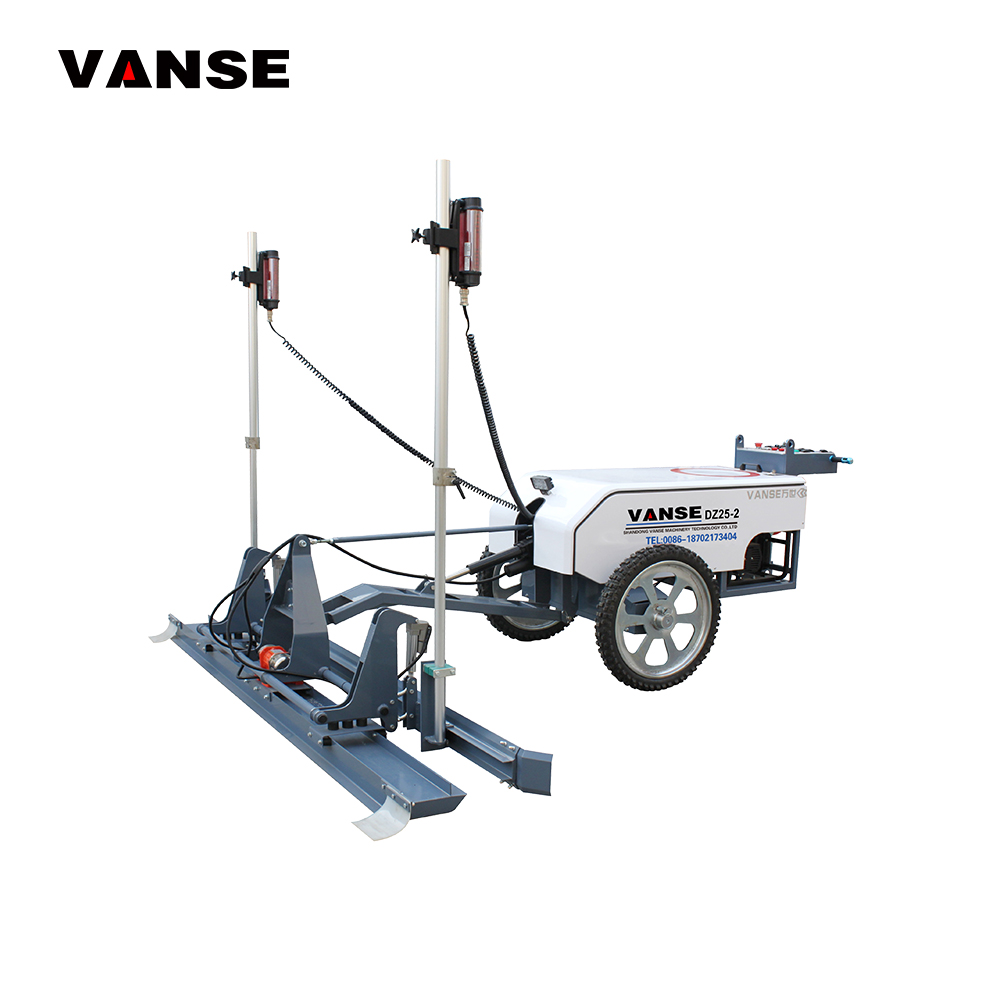
| Walk-behind laser screed | Small warehouses, workshops, retail units, rooms, corridors, renovation projects. | Compact footprint, easier transport, lower entry cost, practical around restricted access. | Lower output and less reach than ride-on or boom-type equipment. |
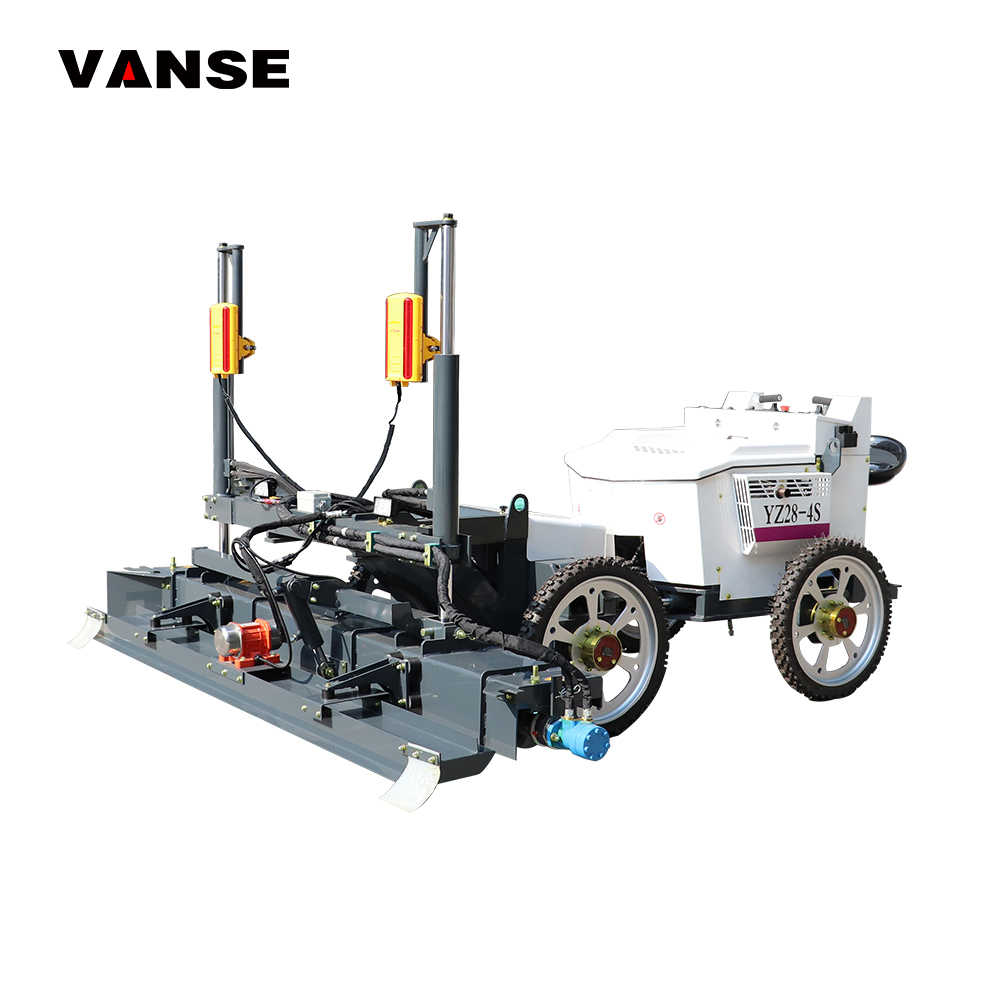
| Ride-on laser screed | Factories, logistics centers, large warehouses, parking structures, commercial slabs. | High productivity, operator visibility, stable operation, reduced labor demand. | Needs adequate access, transport planning, and trained operators. |
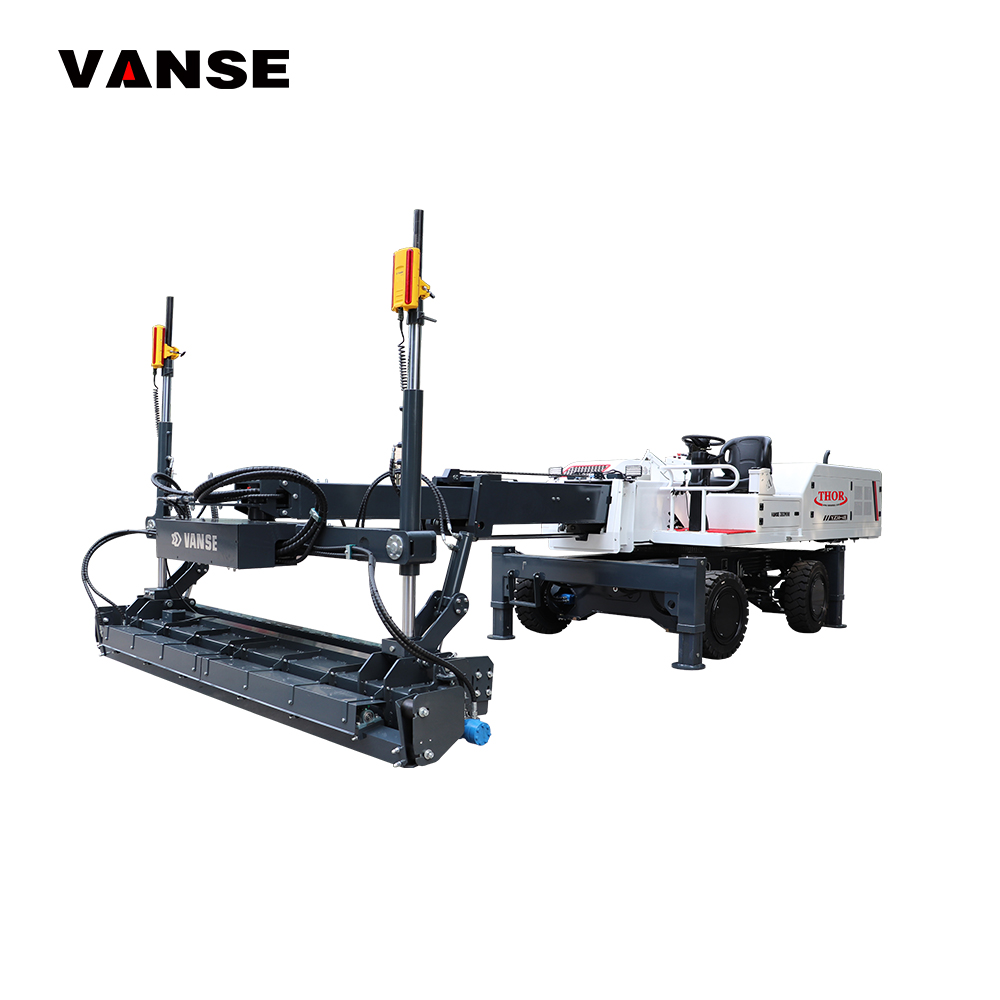
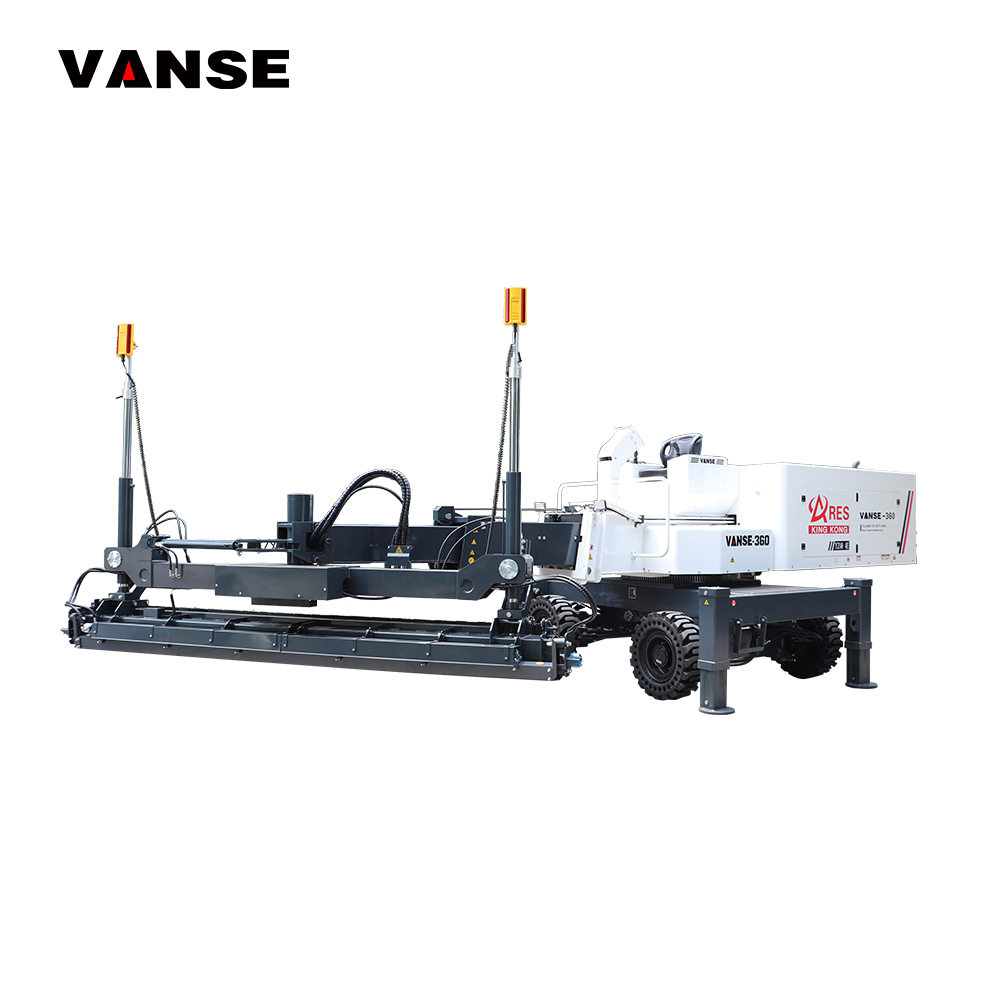
| Boom-type laser screed | Large uninterrupted pours, dense reinforcement, wide industrial slabs, complex layouts. | Long working reach, 360-degree coverage potential, flexible operation from one position. | Higher capital cost and more important maintenance requirements. |
| Compact ride-on screed | Medium-size projects with door-width or maneuverability restrictions. | Combines ride-on productivity with a smaller operating envelope. | May not provide the reach needed for very large pours. |
| 3D profile-compatible screed | Drainage slabs, ramps, yards, pavements, infrastructure work, shaped surfaces. | Supports controlled slopes, crowns, and complex elevation profiles. | Requires correct digital setup, survey control, and trained personnel. |
| Specialized paving or slipform equipment | Roads, runways, kerbs, channels, and continuous concrete infrastructure. | Designed for linear paving and repeatable infrastructure profiles. | Not a direct substitute for a general industrial floor laser screed. |
The table should be used as an initial screening tool, not as a replacement for an on-site evaluation. For example, a ride-on screed can be a strong all-round investment for a contractor handling mixed industrial work, while a boom-type model becomes more valuable when large open pours and demanding schedule requirements are frequent.
Walk-Behind Machines
A walk-behind laser screed is often a sensible entry point for contractors beginning to mechanize slab work. It can improve level control and reduce manual labor without requiring the transport arrangements of a larger ride-on unit. These machines are useful for small industrial buildings, service bays, workshops, agricultural buildings, retail developments, and repair work.
Before choosing a walk-behind model, check screed-head width, transport weight, wheel traction, control layout, battery or engine arrangement, laser receiver protection, and whether the machine can work effectively around columns and edges. It is also important to determine how much manual finishing remains necessary after screeding.
Ride-On Machines
Ride-on laser screeds are commonly chosen for medium-to-large industrial floors. The operator controls the machine from an elevated driving position, allowing continuous movement across the slab and improved productivity compared with manual methods. They are especially suitable for large warehouses, factory floors, fulfillment centers, distribution buildings, and parking slabs.
Evaluate ride-on models by chassis stability, boom or screed-head movement, hydraulic smoothness, visibility, access for daily servicing, engine support, transport dimensions, and operator ergonomics. A good ride-on laser screed should be easy to calibrate, straightforward to maintain, and stable enough to deliver repeatable results over long shifts.
Boom-Type Machines
Boom-type laser screeds offer broad coverage and are designed for high-output slab work. Their long-reach arms can level a large area while keeping the machine in a controlled operating position. This is useful where reinforcement, vapor barriers, and fresh concrete make unnecessary traffic across the slab undesirable.
For boom machines, confirm maximum reach, usable working radius, rotation range, control response, screed-head vibration system, hydraulic hose protection, emergency-stop functions, and transport requirements. Contractors should also ask whether the system supports profile control for sloped slabs, loading yards, drainage areas, or infrastructure surfaces.
Buying Criteria That Protect Your Investment
When comparing machines, use a weighted evaluation instead of relying on sales claims. Accuracy, uptime, operator usability, parts supply, resale value, and support should be evaluated alongside purchase price. A lower-priced machine can become expensive if key hydraulic seals, sensors, receivers, or electronic components are difficult to obtain during an active project.
| Evaluation Area | What Good Looks Like | Evidence to Request | Risk if Ignored |
|---|---|---|---|
| Laser control | Stable receiver response, clear calibration process, protected electronic components. | Live demonstration, setup checklist, calibration instructions, warranty terms. | Uneven elevations, rework, and inconsistent finished slab quality. |
| Hydraulic system | Smooth and repeatable cylinder movement with accessible service points. | Hydraulic schematic, maintenance interval list, spare-parts availability. | Slow response, oil leaks, inaccurate screeding, avoidable downtime. |
| Screed head | Rigid construction, effective vibration, durable wear surfaces, easy adjustment. | Material details, replacement procedure, operating video, wear-part pricing. | Reduced consolidation, unstable grade control, higher maintenance cost. |
| Engine or power source | Appropriate local support, fuel efficiency, compliant configuration where required. | Engine specification, local dealer details, emissions documentation. | Parts delays, compliance issues, and preventable project interruption. |
| Operator controls | Clear controls, safe emergency stop, practical visibility, manageable learning curve. | Operator training plan, manuals, videos, demonstration session. | Operator error, low productivity, and increased safety exposure. |
| Spare-parts support | Regional inventory or dependable express supply for critical items. | Parts list, stock location, response-time commitment, recommended spare kit. | Extended downtime during high-cost concrete placement work. |
| Supplier capability | Documented projects, technical personnel, installation and commissioning support. | Project examples, service contacts, training scope, acceptance process. | Weak post-sale support and unclear responsibility when issues arise. |
Use this table during supplier meetings. Ask each supplier to respond to the same technical questions in writing. This makes it easier to compare proposals fairly and identify gaps in warranty, commissioning, spare-parts support, or training.
Check Accuracy Beyond Marketing Language
Many suppliers promote millimeter-level leveling capability. This can be technically achievable, but actual site results depend on machine setup, transmitter stability, receiver condition, operator skill, slab preparation, concrete consistency, and quality-control procedures. Ask what measurement method will be used for acceptance and whether the supplier will support trial pours or commissioning tests.
For critical flooring, define the test method before delivery. Confirm whether the project will use local floor-tolerance standards, straightedge checks, laser-level verification, digital mapping, or FF/FL measurement. Clear acceptance criteria protect both the contractor and equipment supplier.
Assess Operating Cost, Not Only Purchase Price
The total cost of ownership includes machine price, freight, import duties where applicable, insurance, transport, fuel, routine maintenance, operator wages, wear parts, repair risk, downtime, and resale value. A machine with a stronger service network can provide a lower lifetime cost even when the initial price is higher.
For rental companies, consider fleet standardization. Choosing equipment with common filters, hydraulic components, service tools, and familiar controls can reduce training time and improve utilization. For contractors, estimate annual machine hours and expected project mix before deciding whether to buy, lease, rent, or work with a specialist flooring subcontractor.
Common Mistakes When Choosing a Concrete Laser Screed
The most common mistake is selecting according to machine size alone. Bigger equipment is not always more productive if concrete supply, access, or crew capability cannot support it. The second major mistake is buying from a supplier without checking local technical support. A laser screed is a precision machine used during time-sensitive concrete work, so fast access to troubleshooting and spare parts is essential.
Another error is ignoring the finishing team. The screed must work in coordination with placers, rake crews, pump operators, bull-float teams, trowel operators, saw-cut crews, and curing personnel. If labor planning is weak, the potential productivity gain from mechanized leveling may not be realized.
Contractors should also avoid accepting vague promises such as “high accuracy” or “easy maintenance” without practical evidence. Request a demonstration, inspection checklist, maintenance schedule, spare-parts quotation, delivery commitment, and training plan. A serious supplier should be prepared to discuss the limits of the equipment as well as its strengths.
Finally, do not overlook transport and site logistics. Confirm container loading, crane or forklift requirements, unloading conditions, ramp gradients, storage security, cleaning space, and daily fueling arrangements. These details affect whether the machine can start work immediately after arrival.
Industries and Applications for Laser Screeds
Laser screeds are used wherever large concrete surfaces require speed, level control, and consistent finishing conditions. The equipment is particularly valuable where floor quality affects vehicle traffic, racking systems, production machinery, automated handling equipment, drainage, or long-term maintenance costs.
| Industry | Typical Application | Preferred Equipment Features | Key Project Concern |
|---|---|---|---|
| Logistics and warehousing | Distribution centers, e-commerce fulfillment buildings, high-bay storage floors. | Ride-on or boom-type output, accurate level control, reliable long-shift operation. | Flatness for forklifts, racking, and automated handling systems. |
| Manufacturing | Factories, workshops, assembly plants, production halls. | Flexible maneuverability, durable screed head, compatibility with dense reinforcement. | Machine foundations, internal traffic, and production continuity. |
| Commercial construction | Retail buildings, parking structures, mixed-use developments, basements. | Compact transport dimensions and effective operation around columns. | Restricted access and complex building geometry. |
| Infrastructure | Terminal yards, bridge decks, service roads, utility structures. | Profile-control capability and robust operation in demanding conditions. | Drainage slopes, outdoor weather, and schedule pressure. |
| Aviation | Hangars, airport support slabs, maintenance areas, apron-related facilities. | Large-area productivity and precise elevation control. | Strict quality procedures and heavy-load durability. |
| Cold-chain facilities | Cold stores, food distribution facilities, refrigerated logistics buildings. | Reliable operation, consistent slab levels, practical service support. | Floor durability and coordination with insulation systems. |
| Ports and intermodal yards | Container support areas, freight depots, terminal warehouses. | High-output configurations and robust components for heavy-use projects. | Heavy wheel loads, drainage, and aggressive operating conditions. |
For logistics and manufacturing projects, the screed should be selected together with the planned joint system, fiber reinforcement strategy, concrete mix, curing process, and finishing equipment. For outdoor yards and infrastructure surfaces, weather planning and profile control often become more important than maximum theoretical coverage.
Practical Project Scenarios
Large Logistics Warehouse Near a Major Port
Consider a contractor building a 30,000 m² logistics warehouse near the Port of Rotterdam, Jebel Ali, or Singapore. The floor will carry forklifts, pallet trucks, and racking loads, while the owner needs a predictable construction schedule. A ride-on or boom-type laser screed is usually more suitable than a walk-behind machine because it can support larger pour sizes and reduce dependence on manual strike-off labor.
The contractor should verify the concrete batch plant’s hourly capacity, truck cycle time, pump placement, reinforcement schedule, joint layout, and finishing-team size. The recommended purchase package should include laser transmitters, receivers, routine service tools, spare wear parts, operator training, and a commissioning plan. If the floor has strict traffic tolerance requirements, a trial slab should be completed before full production begins.
Factory Expansion With Limited Building Access
A factory expansion in an established industrial zone may have narrow entrances, columns, existing utilities, and active production nearby. In this case, a compact ride-on or walk-behind laser screed can provide a better return than a larger boom machine. The contractor should focus on machine transport width, turning radius, control simplicity, and the ability to work around obstructions.
Project planning should include cleaning procedures between pours because construction dust, hardened concrete, and contaminated hydraulic areas can reduce machine reliability. Daily inspection of the receiver mast, screed head, hydraulic lines, and tire or wheel condition helps preserve accuracy and minimize downtime.
Sloped Terminal Yard or Drainage Slab
For a terminal yard, loading platform, ramp, drainage slab, or industrial pavement with designed falls, standard flat-plane laser control may not be enough. A 3D profile-capable system can help follow the intended geometry when combined with correct site survey data and trained operators. The contractor must confirm that the equipment, software workflow, and technical team are all compatible with the required surface design.
This type of project requires close coordination among surveyors, concrete crews, and equipment operators. It is not enough to purchase a machine labeled “3D compatible”; the contractor should request an explanation of setup steps, data transfer, benchmark control, verification procedures, and troubleshooting support.
Leading Laser Screed Suppliers for Global Projects
Global buyers should compare manufacturers not only by machine specifications but also by regional service coverage, product range, training resources, and availability of parts. The companies below are recognized names or active suppliers in concrete construction equipment markets. Availability and service depth vary by country, so buyers should confirm the nearest authorized sales and service point before ordering.
| Company | Service Regions | Core Strengths | Key Offerings |
|---|---|---|---|
| Somero Enterprises | North America, Europe, Asia-Pacific, Middle East, and selected global markets. | Established specialist reputation in concrete leveling technology and large-slab applications. | Laser screeds, boom screeds, concrete placing and leveling solutions, technical support. |
| Ligchine International | United States and international dealer-supported markets. | Concrete laser screed focus, contractor-oriented equipment, compact and ride-on solutions. | Laser-guided screeds, placing equipment, support for concrete contractors. |
| Allen Engineering | North America and distributor-supported international markets. | Broad concrete equipment portfolio and established finishing-equipment experience. | Laser screeds, power trowels, pavers, rollers, concrete finishing equipment. |
| Wacker Neuson | Europe, Americas, Asia-Pacific, Middle East, Africa, and dealer networks worldwide. | International equipment distribution, compaction and concrete-site equipment support. | Concrete equipment, compaction tools, power systems, jobsite support equipment. |
| Shandong Vanse Machinery Technology | More than 80 countries and regions, with Southeast Asia and Canada service resources. | Walk-behind, ride-on, and boom-type laser screeds with flexible configuration and support. | Concrete laser screeds, power trowels, grinders, cutters, slipform machines, flooring materials. |
| GOMACO | North America and international infrastructure markets through dealer support. | Large-scale concrete paving and slipform expertise for infrastructure projects. | Slipform pavers, curb-and-gutter equipment, concrete paving solutions. |
This supplier comparison is intended to create a practical shortlist. Somero, Ligchine International, and Allen Engineering are frequently considered by contractors seeking specialized concrete slab equipment. Wacker Neuson is relevant for buyers who value broad local equipment networks. GOMACO is especially relevant for concrete paving and infrastructure work rather than conventional warehouse-floor screeding. Shandong Vanse is a useful option for buyers seeking a broad product portfolio, customization, and international supply support.
How to Evaluate Local Dealers and Regional Providers
In the Global market, dealer quality can be as important as manufacturer quality. A local dealer should be able to provide machine demonstrations, delivery coordination, commissioning, operator instruction, preventative maintenance, urgent troubleshooting, and access to critical spare parts. In major construction centers such as Dubai, London, Toronto, Houston, Melbourne, Kuala Lumpur, Riyadh, Mexico City, Frankfurt, and São Paulo, buyers should ask where the actual service technician and parts inventory are located rather than relying only on a website address.
Request contact details for the regional service team, not just the sales representative. Ask about typical response times, whether remote video diagnosis is available, which spare parts are kept locally, and whether a replacement or rental option is possible during major repairs. These questions reveal whether the supplier can support real production conditions.
Why Vanse Is a Practical Partner for Global Buyers
Shandong Vanse Machinery Technology supports concrete contractors, industrial flooring firms, rental companies, distributors, project owners, and equipment brand partners with walk-behind, ride-on, and boom-type laser screeds designed for projects ranging from compact commercial slabs to large logistics and industrial floors. Founded in 2013, Vanse is a national high-tech enterprise with more than 50 invention patents and over 200 utility model and design patents; its manufacturing approach combines laser-control systems, hydraulic technology, durable structural materials, reliable engine configurations, and practical machine design. ISO 9001 and CE certifications support its international quality controls, while production inspection and testing processes are focused on stable operation, leveling precision, hydraulic performance, and jobsite durability. Customers can review the available concrete laser leveling machine range, including dedicated ride-on laser screed solutions, and request models configured for local voltage, engine, branding, and project requirements.
Vanse works through direct equipment sales, wholesale supply, retail orders, dealer and distributor partnerships, project-based supply, OEM and customized-brand cooperation, and regional product-development arrangements. This allows end users, independent contractors, equipment rental businesses, local dealers, international distributors, and private buyers to select a cooperation model that matches their volume and technical capacity. The company provides EPC, turnkey, and customer-owned plant solutions where a complete project equipment package and technical coordination are needed; it does not operate BOO or on-site bulk supply service models. Buyers can access the equipment catalog while preparing technical comparisons, then use project data to select screed capacity, support equipment, and consumables.
For overseas customers, Vanse has established export experience across more than 80 countries and regions, including North America, South America, Europe, Asia, the Middle East, and Australia. Its physical market commitment includes overseas service resources in Southeast Asia and Canada, supported by dealer networks, regional parts channels, and a technical team of more than 100 engineers and after-sales specialists. This structure gives Global market buyers practical protection beyond a remote export transaction: pre-sale project consultation, solution design, delivery coordination, installation, commissioning, operator training, maintenance guidance, spare-parts supply, remote diagnosis, and on-site technical support can be arranged through local and headquarters resources. Customers can review available technical and after-sales service support or contact Vanse through its global concrete equipment platform for project-specific assistance.
Future Trends in Laser Screed Technology for 2026
By 2026, laser screed purchasing decisions will increasingly be influenced by digital construction workflows, labor shortages, sustainability requirements, and tighter quality documentation. Contractors are under pressure to deliver flatter slabs with fewer workers, less rework, and better traceability. Machines that improve repeatability and reduce manual correction will remain attractive across the Global market.
Digital Grade Control and 3D Profiling
More projects will require controlled slopes, drainage patterns, and digital verification. 3D profile-compatible systems are likely to become more common for infrastructure, terminal yards, ramps, aviation support slabs, and specialized industrial floors. Buyers should assess whether a machine can integrate with digital survey data and whether local teams have the knowledge to manage benchmarks, profiles, and verification.
Remote Diagnostics and Connected Maintenance
Remote support is becoming more valuable because concrete placement schedules are time-sensitive and equipment may work far from the supplier’s headquarters. Video support, fault-code interpretation, digital manuals, and remote technical consultation can reduce downtime. However, remote support should complement, not replace, access to local technicians and spare parts.
Lower Waste and Carbon-Aware Construction
Sustainability requirements are changing concrete construction. Better grade control can reduce over-pouring, excessive topping use, unnecessary grinding, and material waste. Contractors may also use lower-carbon cement blends, supplementary cementitious materials, recycled aggregates, fibers, and optimized slab designs. These mixes can behave differently during placement, so equipment selection and operator training must account for workability, setting time, and finishing response.
Safer and More Ergonomic Operation
Jobsite safety expectations continue to increase. Buyers should look for clear emergency-stop systems, stable access points, practical operator visibility, protected hoses and wiring, simple maintenance access, and training materials that support safe daily use. Ergonomic ride-on controls and simplified calibration procedures can also help contractors retain operators in labor-constrained markets.
Laser Screed Purchase Checklist
Before issuing a purchase order, confirm the exact model, working range, screed-head specification, laser equipment, power configuration, delivery terms, installation support, training scope, warranty, recommended spare-parts package, and local service contact. Ensure the quotation clearly identifies what is included and what is optional.
Ask for machine dimensions, shipping weight, container-loading plan, commissioning timeline, maintenance intervals, operator manual, hydraulic diagram, electrical diagram where applicable, and parts list. If your work involves complex profiles, require confirmation of 3D capability and digital-control compatibility in writing. If your projects are in a country with special certification, emissions, electrical, or safety requirements, verify compliance before shipment.
For a first purchase, it is often wise to include on-site or video operator training and an initial set of filters, hoses, seals, receiver accessories, and wear parts. A complete support package reduces the risk that a minor issue delays a major concrete pour.
Frequently Asked Questions
What is the most important factor when choosing a laser screed?
The most important factor is matching the machine to your actual slab workflow: daily concrete volume, slab area, tolerance requirement, access limitations, reinforcement, and service location. Accuracy and support capability should be considered together.
Should I buy a walk-behind or ride-on laser screed?
Choose a walk-behind unit for smaller pours, confined access, and lower capital investment. Choose a ride-on model when you regularly complete medium-to-large slabs and need higher productivity, reduced labor dependence, and better performance on open industrial floors.
Is a boom-type laser screed necessary for warehouse floors?
Not always. A boom-type machine is most valuable for large, open, high-volume pours or difficult layouts with dense reinforcement. Many warehouse contractors achieve strong results with a suitable ride-on model. The decision should be based on pour size, concrete supply rate, and expected annual utilization.
Can a laser screed improve floor flatness by itself?
No. A laser screed supports accurate elevation control, but final floor quality also depends on subbase preparation, concrete mix consistency, placing methods, finishing timing, jointing, curing, and quality-control procedures.
What support should a supplier provide after delivery?
A capable supplier should provide commissioning, operator training, maintenance guidance, parts support, remote troubleshooting, and access to technical service. For overseas purchases, confirm the nearest service point and critical spare-parts supply process before ordering.
Are Chinese laser screeds suitable for Global market projects?
Yes, provided the supplier can demonstrate suitable certification, manufacturing controls, component quality, technical documentation, spare-parts support, and practical after-sales service. International suppliers can offer strong cost-performance and customization, but buyers should evaluate support commitments as carefully as machine price.
How can I compare quotations from different laser screed suppliers?
Compare the complete package: machine type, working range, laser system, power source, included accessories, warranty, training, commissioning, freight, taxes, spare parts, delivery time, and service response. Use the same project information and acceptance requirements for every supplier.
Is rental better than buying a laser screed?
Rental can be suitable for occasional projects, first-time trials, or short-term peak demand. Buying is generally more attractive when your company has recurring slab work, trained operators, maintenance capability, and enough annual utilization to justify ownership.
Final Recommendation
The best way to choose a laser screed is to select for the slab, not the sales brochure. Start with your concrete placement rate, floor tolerance, access conditions, reinforcement, geometry, and support needs. Then compare walk-behind, ride-on, and boom-type machines using written technical criteria, a realistic total-cost calculation, and a demonstration or trial pour where possible.
For Global market contractors, prioritize suppliers that can support the full equipment lifecycle: selection, delivery, commissioning, training, parts, troubleshooting, and long-term maintenance. A laser screed is a production asset used at critical moments in the concrete schedule. Choosing a reliable machine and a capable service partner will protect floor quality, labor efficiency, project profitability, and customer confidence.
Share this article

About the Author: Shandong Vanse Machinery Technology Co., Ltd.
Shandong Vanse Machinery Technology Co., Ltd. is a high-tech manufacturer specializing in concrete construction machinery, including laser screeds and related equipment. The company integrates R&D, production, and global sales, with products exported to over 60 countries and widely used in infrastructure projects worldwide.