Insight blog
Global Market Guide: How to Use a Laser Screed Well
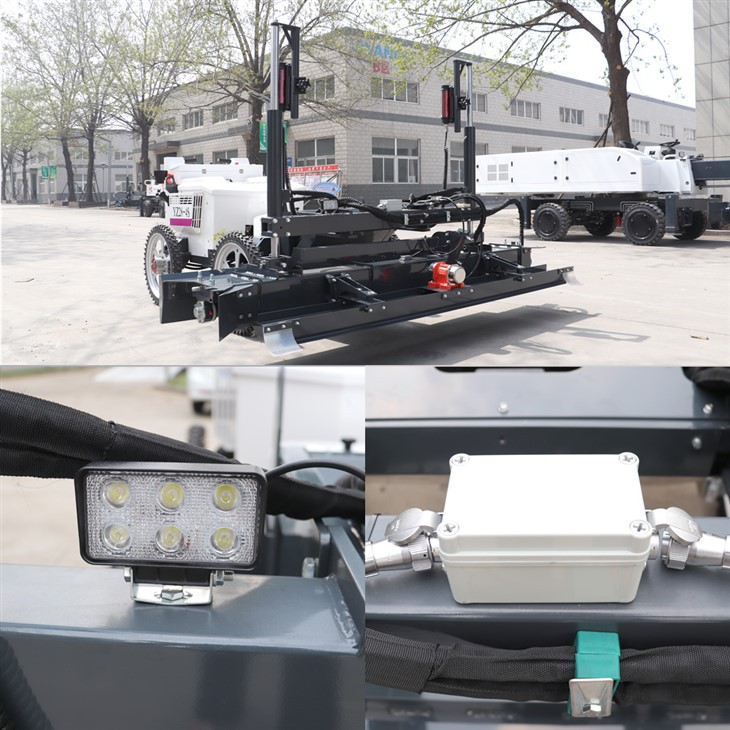
How to Use a Laser Screed for Accurate Concrete Floors in the Global Market
Quick Answer

To use a laser screed correctly, prepare a stable base, set the design elevation, position and level the laser transmitter, establish a reliable benchmark, place concrete evenly, and let the screed head automatically strike off material to the laser-controlled height. The operator must overlap passes, avoid overloading the screed head, check elevation frequently, and coordinate closely with the concrete placing and finishing crews.
For most industrial slabs, the practical workflow is: inspect the subbase, place side forms or control points, calibrate the laser system, pour concrete slightly above target grade, move the screed in planned lanes, fill low areas immediately, check flatness, and begin bull floating or power trowelling at the correct time. A laser screed improves productivity only when concrete supply, site access, reinforcement placement, and finishing labor are organized before the pour begins.
In the Global market, contractors can compare established local and international providers such as Somero, Ligchine, Allen Engineering, Wirtgen, Shandong Vanse Machinery Technology, and regional equipment dealers near major construction hubs including Dubai, Singapore, Rotterdam, Houston, Toronto, Sydney, and São Paulo. Qualified international suppliers, including Chinese manufacturers with relevant local certifications, responsive pre-sales support, operator training, spare-parts access, and after-sales service, can also offer strong cost-performance advantages for contractors and distributors.
Why Laser Screeding Matters in the Global Concrete Market

Laser screeding has become a standard method for large flatwork projects because industrial floor owners increasingly expect measurable levelness, faster completion, reduced manual labor, and lower rework risk. Warehouses, e-commerce fulfillment centers, production plants, airport terminals, cold-storage facilities, logistics yards, data centers, and commercial slabs all benefit from more consistent concrete elevation control.
Traditional hand screeding depends heavily on skilled labor, string lines, guide rails, and repeated manual checking. A concrete laser screed replaces much of that repetitive work with a laser transmitter, machine receiver, automatic hydraulic control, and a screed head that adjusts to the specified elevation. This does not remove the need for trained people; instead, it gives the team a more repeatable process. The operator controls travel, placement sequence, head movement, overlap, and material management while the automatic system protects elevation accuracy.
The Global market includes regions with very different concrete supply chains, labor costs, climate conditions, electrical standards, and project specifications. Contractors working in North America may focus on warehouse floor flatness and joint performance. In the Middle East, large logistics parks and airport-related projects may require reliable operation in heat and dust. In Southeast Asia, fast-moving factory and commercial construction often requires compact equipment, flexible transport, and rapid commissioning. In Europe and Australia, owners may place extra emphasis on machine compliance, operator safety, emissions, and long-term serviceability.
For these reasons, learning how to operate a laser screed is not only a machine skill. It is a project-control skill involving concrete consistency, survey checks, work-zone planning, finishing timing, safety, machine maintenance, and communication between the batch plant, placing crew, laser screed operator, and floor-finishing team.
Laser Screed Types and Where They Fit

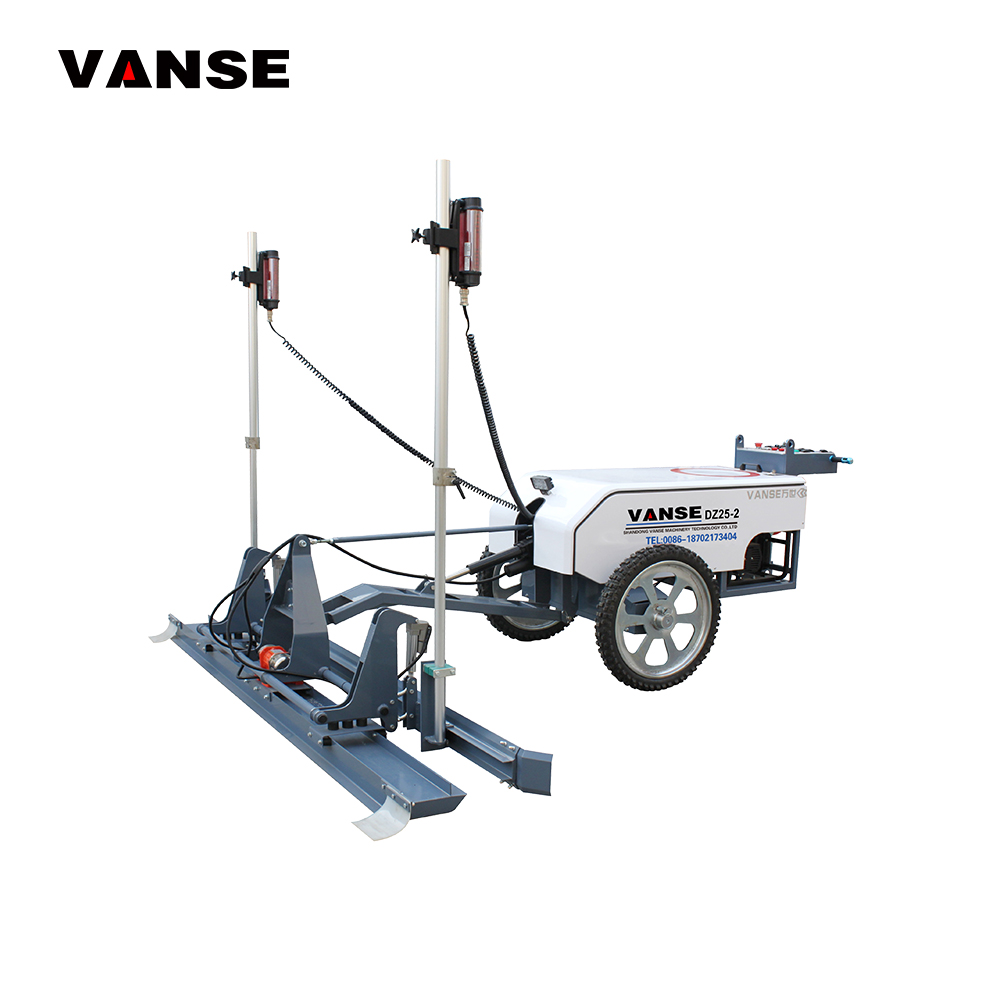
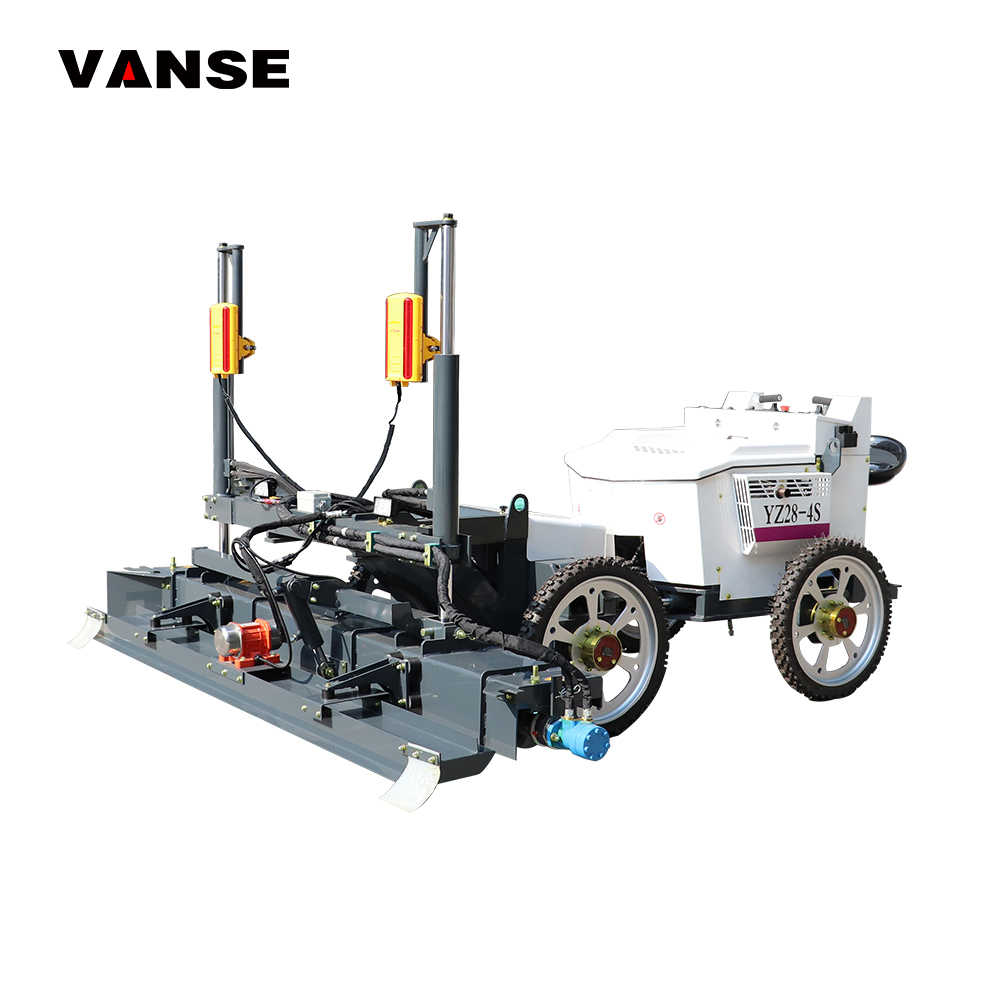
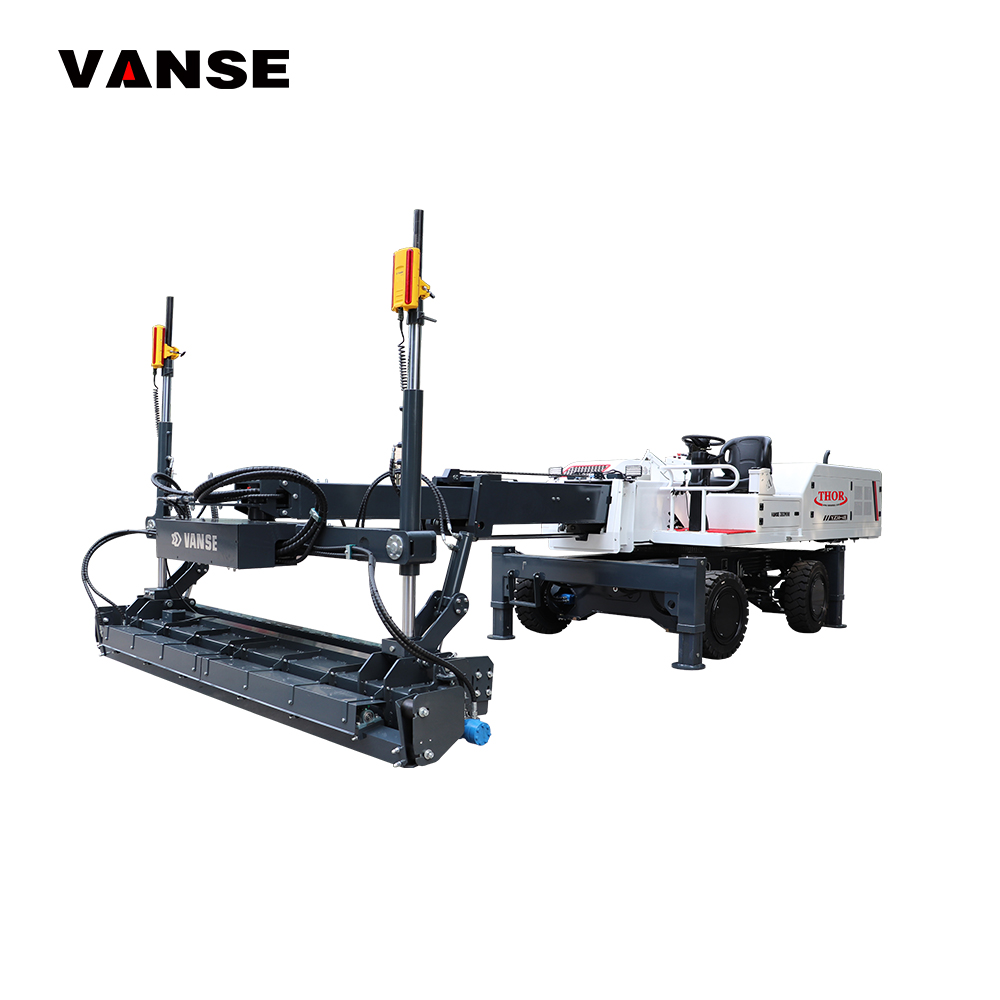
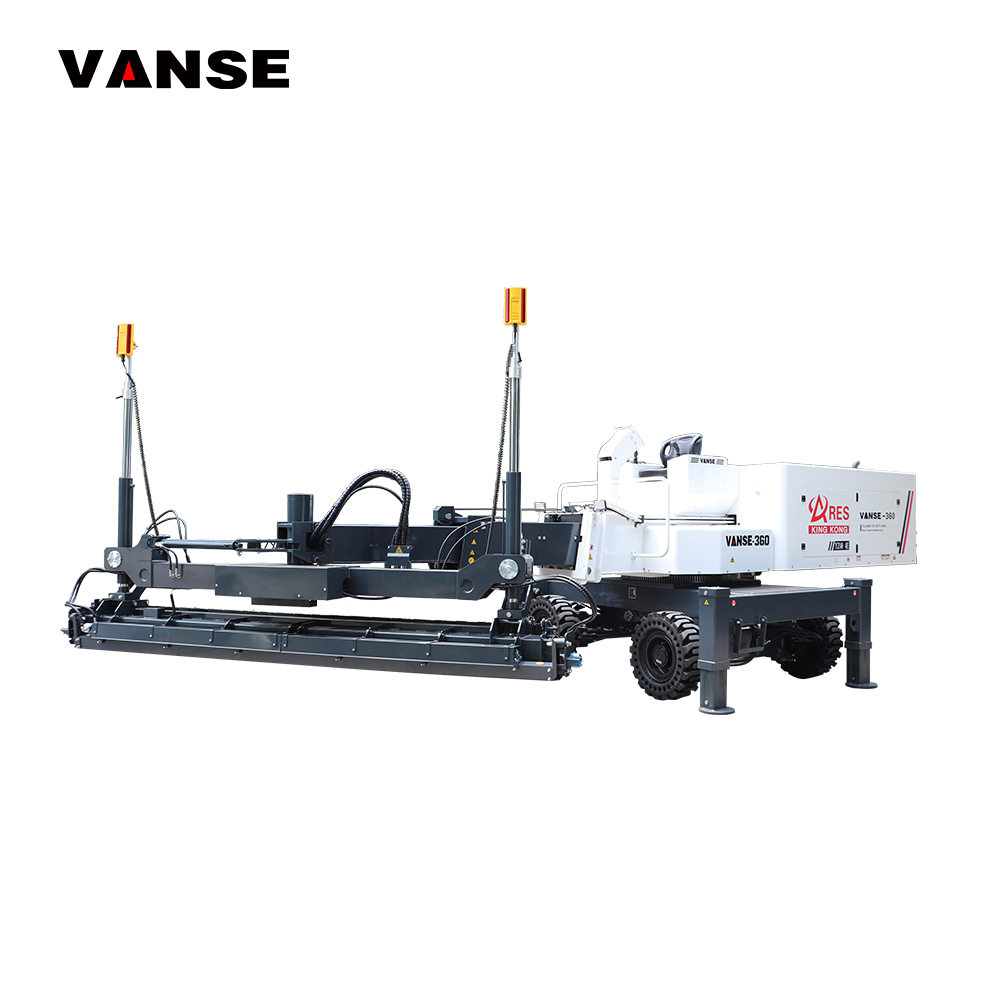
Choose the screed type according to slab size, access conditions, reinforcement density, project geometry, and expected production rate. A small building slab may need a compact walk-behind machine, while a large distribution center may justify a ride-on or boom-type system with broad reach and automatic elevation control.
| Laser screed type | Best project environment | Main operating benefit | Typical limitations |
|---|---|---|---|
| Walk-behind laser screed | Small slabs, confined interiors, repair zones, residential and light commercial work | Compact transport, lower initial investment, easier access through narrow openings | Lower output than ride-on equipment and greater operator walking demand |
| Ride-on laser screed | Warehouses, factories, logistics centers, retail slabs, parking structures | High daily production, operator comfort, broad screed-head reach, efficient coverage | Needs adequate site access, turning area, and organized concrete placement |
| Boom-type laser screed | Large open industrial floors, airport buildings, terminal yards, major infrastructure slabs | Long reach, 360-degree coverage, reduced need to drive over fresh concrete | Requires experienced setup, firm support conditions, and accurate work planning |
| 3D-profile capable screed | Sloped slabs, drainage areas, ramps, roads, specialized paving geometry | Can follow programmed profiles beyond a single flat elevation | Requires accurate digital design data and skilled surveying coordination |
| Compact boom screed | Medium industrial projects, tight warehouse bays, retrofit facilities | Balances reach with maneuverability and can work around columns efficiently | May not match the output of large boom models on extensive open pours |
| Specialized paving or slipform system | Roads, bridges, curbs, channels, runway paving, infrastructure projects | Continuous placement for linear concrete work and profile-controlled paving | Not a direct substitute for general indoor flat-floor laser screeding |
The table shows that there is no single “best” laser screed. The correct choice depends on the area to be poured per shift, the target flatness, the amount of reinforcement, access through doors or ramps, the concrete mix, and whether the project needs a flat slab or a programmed slope. A contractor that frequently builds large warehouses near ports such as Rotterdam, Jebel Ali, Los Angeles, Singapore, or Santos often gains the most value from ride-on or boom equipment because large floor areas must be completed quickly and consistently.
Site Preparation Before Operating a Laser Screed
Laser screeding starts long before the machine enters fresh concrete. Poor preparation can cause elevation errors, slow movement, excessive material drag, finishing problems, and unplanned downtime. The subbase must be compacted and tested according to the project specification. Vapor barriers, insulation, reinforcement, dowels, armor joints, embedded services, and forms should be fixed securely so they do not shift under worker traffic or concrete pressure.
Confirm the pour boundaries and calculate volume before delivery trucks arrive. The team should know the designed slab thickness, top-of-slab elevation, expected concrete yield, truck sequence, pump or chute position, screed travel lanes, finishing access, and emergency route. For high-specification slabs, establish survey control points outside the active pour area so they remain undisturbed.
Good housekeeping is essential. Remove loose tie wire, packaging, standing water, damaged stakes, and items that may obstruct the machine. Mark electrical conduits, drain boxes, sleeves, openings, pits, column bases, and changes in slab thickness. If the screed must work around reinforcement, make sure the bars are placed at the specified height and supported adequately. A laser screed is not designed to correct a badly installed reinforcement mat or unstable base.
| Pre-pour checkpoint | What to verify | Why it affects screeding | Responsible team |
|---|---|---|---|
| Subbase readiness | Compaction, bearing condition, cleanliness, design elevation, moisture condition | Uneven or soft support can affect slab thickness and long-term floor performance | Earthworks and quality-control team |
| Forms and edge details | Line, elevation, rigidity, seals, openings, and corner protection | Forms establish the perimeter reference and prevent loss of concrete | Formwork and survey team |
| Reinforcement and dowels | Spacing, cover, chairs, lap locations, joint alignment, and stability | Improperly supported steel can be displaced during concrete placement | Steel-fixing and inspection team |
| Laser transmitter location | Stable tripod position, unobstructed beam path, protected access area | Movement or obstruction of the transmitter can create elevation errors | Laser screed operator and surveyor |
| Concrete delivery plan | Truck intervals, discharge location, slump control, backup supply, washout area | Interrupted supply can cause cold joints and inconsistent finishing timing | Project manager and concrete supplier |
| Finishing readiness | Bull floats, power trowels, edging tools, curing materials, lighting, labor | Screeded concrete must transition smoothly into finishing and curing operations | Finishing superintendent |
This checklist should be reviewed in a pre-pour meeting. On large projects, the meeting should include the general contractor, floor contractor, ready-mix supplier, pump contractor, surveyor, safety officer, screed operator, and finishing supervisor. A ten-minute coordination meeting can prevent hours of lost production after the first truck arrives.
How to Set Up the Laser Control System
Start by reading the machine-specific operator manual and confirming local safety requirements. Park the laser screed on stable ground, inspect hydraulic hoses, fuel or battery condition, engine oil, coolant, emergency stop, receiver mast, screed head, auger or plow, vibrator, and travel controls. Never begin a pour with a known hydraulic leak, damaged electrical connection, worn cutting edge, or unreliable receiver.
Set the laser transmitter on a stable tripod outside the expected travel path. The transmitter should have a clear line of sight to the machine receiver across the work zone. Avoid locations exposed to vibration from trucks, pumps, compactors, or foot traffic. Where the site is large, dusty, or visually obstructed, protect the transmitter with barriers and assign a crew member to monitor it.
Use a benchmark from the survey team to establish the required slab elevation. The operator then sets the receiver and screed-head relationship so the cutting edge reaches the finished floor level when the automatic system is engaged. Check the system at more than one point. If readings differ unexpectedly, stop and identify whether the benchmark, transmitter, receiver, machine level, or setup procedure is at fault.
For a flat floor, the laser plane normally represents a constant design elevation. For drainage falls, ramps, or complex profiles, a 3D control system may be required. Do not assume a standard rotating laser can accurately replace a properly programmed 3D profile system. The project surveyor should verify all grades before concrete placement starts.
Operating Sequence for Fresh Concrete
Once concrete placement begins, keep material slightly above the required finished level without creating large piles. Excessive piles make the screed work harder, increase travel resistance, and can leave aggregate-rich or paste-rich areas if handled poorly. The placing crew should distribute concrete in front of the screed head rather than dumping directly against sensitive components or forcing the machine to push unnecessary volume.
Move the machine in planned lanes. Each pass should overlap the prior pass enough to prevent ridges and missed strips. The exact overlap depends on the screed head, concrete consistency, and slab specification, but operators should maintain a visible, controlled overlap instead of guessing. Travel speed must match the rate at which concrete is supplied and the screed head can process material.
During operation, the laser receiver continuously detects the transmitter’s reference plane. The machine’s hydraulic system adjusts the screed head to cut high concrete and fill low areas. The operator should watch the machine movement, the concrete flow in front of the head, reinforcement clearance, receiver visibility, and the quality of the struck-off surface. Automatic control supports accuracy, but it does not replace operator judgment.
After each work zone is screeded, inspect the surface promptly. Fill depressions while the concrete is still workable. Do not wait until finishing begins to repair broad low areas, because late additions can affect color, strength, surface quality, and curing behavior. For specified flatness projects, use the required measurement method and document results according to the contract.
| Operating stage | Operator action | Expected result | Common warning sign |
|---|---|---|---|
| Concrete placement | Direct the crew to spread material evenly ahead of the screed head | Consistent material depth with manageable head loading | Large piles, segregated concrete, or empty areas in the travel lane |
| Initial machine pass | Engage laser control and move at a steady, planned speed | Uniform strike-off near the target elevation | Head bouncing, receiver signal loss, or irregular surface ridges |
| Pass overlap | Overlap adjacent lanes consistently and monitor the transition line | No unscreeded strips or raised seams between lanes | Visible ridges, holes, or inconsistent texture at lane edges |
| Low-area correction | Add concrete immediately and rework the area with the screed or hand tools | Continuous surface before bleed water and setting begin | Late patches with different moisture, texture, or aggregate distribution |
| Elevation verification | Check control points with approved measuring tools during the pour | Documented confidence in slab elevation and tolerance | Repeated readings outside tolerance or unexplained machine correction |
| Transition to finishing | Release the area to bull floating and finishing crews at the right time | Orderly finishing without damaging the screeded profile | Workers entering too early, excessive reworking, or delayed finishing |
The table is a working guide rather than a substitute for the project specification. Concrete temperature, admixtures, aggregate shape, ambient humidity, wind, and finishing requirements all affect the pace of work. Hot conditions in Riyadh, Dubai, Perth, or inland Australia may require more aggressive evaporation control and closer coordination with the ready-mix supplier. Cold-weather placements in Canada, Northern Europe, or parts of the United States require attention to temperature protection and finishing timing.
Best Practices for Flatness, Safety, and Productivity
Maintain a consistent concrete mix. A laser screed cannot compensate for every variation in slump, aggregate grading, delayed truck, or excessive water addition. The batch plant should follow an approved mix design, and the site team should verify delivery tickets, temperature, slump or flow requirements, admixture use, and truck arrival sequence. Avoid adding water on site unless it is permitted by the mix design and quality procedures.
Keep the transmitter protected and the receiver clean. Dust, slurry, impact, damaged cables, or a blocked beam can interrupt automatic elevation control. Before the pour, confirm the machine’s manual mode works as a backup. If the laser signal fails during placement, stop the automatic screeding operation, protect the unfinished concrete, diagnose the problem, and use approved manual methods only if the project team accepts the resulting control method.
Separate pedestrian traffic from machine movement. Operators should have clear communication with spotters, pump crews, truck drivers, and finishers. Use radios or agreed hand signals, especially on noisy sites. Never allow workers to stand in the boom swing area, travel path, or directly in front of the screed head. Follow local requirements for personal protective equipment, including boots, eye protection, gloves, hearing protection, high-visibility clothing, and suitable respiratory protection when working around cement dust.
Plan maintenance around actual operating hours. Clean concrete residue from the screed head at the end of every shift, inspect wear components, lubricate specified points, check hydraulic connections, and recharge or maintain laser-system batteries. Preventive maintenance is less costly than an unplanned stoppage in the middle of a high-volume industrial slab pour.
Common Mistakes When Using a Laser Screed
The most common mistake is treating the laser screed as a machine that can rescue poor site preparation. If the base is unstable, forms are inaccurate, reinforcement is loose, concrete supply is unreliable, or the transmitter is poorly placed, the machine cannot deliver a high-quality floor consistently. Another frequent error is allowing uncontrolled concrete heaps in front of the screed head. This slows production and can create inconsistent surface conditions.
Operators also make mistakes by moving too quickly, using insufficient overlap, ignoring receiver warnings, or failing to recheck elevation after the transmitter has been bumped. On large sites, truck traffic and pump hoses can obstruct the laser beam unexpectedly. A protected transmitter location and regular benchmark checks prevent small setup issues from becoming expensive floor defects.
Finishing errors matter as much as screeding errors. Overworking concrete, adding dry cement to the surface, finishing bleed water into the slab, or beginning power trowelling at the wrong time can reduce surface durability. The screed provides the profile; the finishing team protects the final surface performance.
| Common mistake | Likely consequence | Practical prevention | Corrective response |
|---|---|---|---|
| Laser transmitter placed on unstable ground | Incorrect elevation across the slab | Use a protected tripod location away from traffic and vibration | Stop work, re-establish benchmark, recalibrate, and inspect completed work |
| Concrete dumped in excessive piles | Slow travel, poor material distribution, inconsistent surface | Use a planned discharge pattern and trained placing crew | Redistribute material before the screed makes the next pass |
| Insufficient pass overlap | Ridges, missed strips, and uneven lane transitions | Mark lanes where useful and maintain a consistent operator pattern | Rework the transition while concrete remains workable |
| Ignoring changing concrete consistency | Variable screed performance and finishing difficulties | Monitor each load and communicate with the batch plant | Adjust placement sequence and reject nonconforming loads when required |
| Operating near unprotected workers | Crush, strike, trip, and boom-swing hazards | Create exclusion zones and use spotters and clear signals | Stop the machine and restore site control before continuing |
| Skipping daily cleaning and inspection | Wear, hydraulic faults, downtime, and inaccurate operation | Use a documented daily maintenance routine | Repair before the next pour and keep critical consumables available |
The explanation behind these mistakes is simple: accurate floors come from a controlled system, not a single piece of equipment. The best operators continuously observe the slab, machine, laser reference, and workforce instead of focusing only on driving the screed.
Industries and Applications That Benefit Most
Laser screeding is particularly valuable where floor quality affects operations after construction. In logistics warehouses, a flatter slab supports safer forklift travel, racking installation, automated guided vehicles, and reduced wheel wear. In manufacturing plants, level floors improve installation of production lines, machine bases, and material-handling systems. In retail and commercial buildings, laser screeding helps create a consistent substrate for coatings, tiles, epoxy, vinyl, or polished concrete.
Infrastructure projects also use laser-controlled concrete equipment for bridge decks, transit facilities, terminal yards, airport support buildings, roadway slabs, utility structures, and large public works. For projects with drainage slopes or complex alignment, contractors should evaluate 3D profile control instead of relying only on a flat rotating laser.
Typical applications include factory floors, distribution centers, cold-storage warehouses, pharmaceutical facilities, automotive plants, ports, container yards, aircraft hangars, airport terminals, data centers, parking structures, schools, hospitals, shopping centers, and large residential podium slabs. In each case, the right screed choice depends on access, pour size, concrete volume, and performance specification.
Global Laser Screed Suppliers and Service Coverage
Supplier selection should include more than machine price. Contractors need to compare training availability, spare-parts lead time, local service capability, operator documentation, financing or rental options, machine compatibility with local fuel and voltage requirements, and the supplier’s ability to support urgent project schedules. The companies below are recognized names or active manufacturers in concrete placement equipment, with different market positions and product scopes.
| Company | Primary service regions | Core strengths | Key offerings |
|---|---|---|---|
| Somero Enterprises | North America, Europe, Asia-Pacific, Middle East, global dealer markets | Specialized concrete leveling technology and broad experience in large flat-floor projects | Ride-on and boom laser screeds, floor-leveling systems, training and support networks |
| Ligchine International | United States and international contractor markets | Compact and practical laser-guided screeding solutions for concrete contractors | Laser screeds, concrete placing and finishing support equipment, dealer-led service |
| Allen Engineering Corporation | North America, Latin America, Europe, Middle East, Asia through distributors | Broad concrete-equipment portfolio and established contractor familiarity | Concrete pavers, finishing equipment, ride-on trowels, screeding-related machinery |
| Wirtgen Group | Global infrastructure and road-construction markets | Large-scale concrete paving, road equipment, and international service infrastructure | Slipform pavers, concrete paving systems, road construction equipment |
| Shandong Vanse Machinery Technology | Global market, including North America, South America, Europe, Southeast Asia, Middle East, and Australia | Concrete laser screeds, industrial-floor equipment, customization, export experience, technical support | Walk-behind, ride-on, boom-type laser screeds, power trowels, grinders, cutters, topping spreaders |
| Shantui Construction Machinery | Asia, Africa, Middle East, Latin America, and international distributor markets | Broad construction-equipment manufacturing capability and dealer distribution | Road machinery, earthmoving equipment, concrete-related construction equipment categories |
This supplier comparison is intended to help buyers build a shortlist. Before purchasing, request the exact model specification, output capacity, laser-control configuration, engine option, hydraulic-system details, freight terms, commissioning plan, spare-parts list, warranty conditions, and local certification documents required in the destination country. For buyers importing through ports such as Vancouver, Hamburg, Jebel Ali, Durban, Singapore, Melbourne, or Long Beach, freight planning and customs documentation should be arranged before the equipment is dispatched.
Buying Advice for Contractors, Dealers, and Rental Companies
End users should start with their annual concrete volume and typical project type. A contractor pouring occasional medium-sized slabs may prefer a compact machine with simple operation and low transport cost. A flooring company that regularly completes large warehouses may need a ride-on or boom-type screed with higher reach and productivity. Rental companies should prioritize durable components, simple operator controls, easy servicing, and models that can serve multiple contractor segments.
Distributors should assess whether the manufacturer can provide technical documentation, parts support, branded marketing materials, training, machine configuration for local regulations, and realistic lead times. In the Global market, a dealer relationship succeeds when the supplier helps the local partner solve real jobsite issues rather than simply shipping a machine.
Ask for a practical demonstration or video of the same machine type working in comparable concrete conditions. Review the screed head, control system, hydraulic layout, service access, transport dimensions, boom reach, wheel or track configuration, and available wear parts. A low purchase price can become expensive if the supplier cannot provide parts, remote diagnostics, or operator support during the first major pour.
Vanse Support for Global Concrete Contractors
Shandong Vanse Machinery Technology Co., Ltd. supports concrete contractors, distributors, rental companies, brand owners, and project buyers with walk-behind, ride-on, and boom-type laser screeds developed alongside power trowels, grinding machines, cutting machines, topping spreaders, slipform equipment, concrete armor joints, and concrete fibers. Founded in 2013 in Jining, China, Vanse is a national high-tech enterprise with more than 50 invention patents and over 200 utility model and design patents; ISO 9001 and CE certifications support its manufacturing and quality-management approach. Its laser screeds combine laser control, hydraulic technology, reliable engine options, durable components, and practical machine designs, with selected models designed for millimeter-level leveling accuracy, 360-degree operation, high working speed, and 3D profiling compatibility. For Global market customers, Vanse provides direct sales, wholesale supply, retail support, OEM/ODM and customized branding, regional distribution partnerships, customized voltage and engine options, and project-based equipment supply for end users, dealers, distributors, and individual buyers. The company provides EPC, turnkey, and customer-owned plant solutions where required; it does not operate BOO or on-site bulk supply services. Vanse has established export experience in more than 80 countries and regions, including the United States, Canada, Mexico, Brazil, the United Kingdom, Germany, Spain, Italy, Russia, Saudi Arabia, Malaysia, South Korea, and Australia, while overseas branches and service resources in Southeast Asia and Canada reinforce its physical commitment beyond remote exporting. Customers receive online consultation, video support, remote diagnosis, installation and commissioning guidance, operator training, spare-parts support, and on-site technical assistance when needed through regional operations, dealers, spare-parts channels, and a technical team of more than 100 specialists. Explore the company’s concrete construction equipment solutions, compare its laser leveling machine range, review ride-on laser screed options, arrange operator and customer training, or contact the global technical service team for project-specific support.
Example Project Scenarios
A logistics warehouse project near Toronto may require a ride-on laser screed for a large reinforced slab with tight flatness expectations. The contractor should coordinate truck scheduling around local traffic restrictions, protect the laser transmitter from forklift and delivery routes, and ensure cold-weather contingency measures are available during shoulder seasons.
A distribution center near Dubai may require long daily pours in high temperatures. The project team should focus on evaporation control, concrete temperature, crew hydration, transmitter protection from dust and wind, and a reliable backup plan for mechanical service. A boom-type screed can reduce labor inside wide open bays, but only if the concrete supply keeps pace with the machine.
A manufacturing extension near Ho Chi Minh City or Jakarta may have limited access and frequent rain interruptions. A compact ride-on or walk-behind laser screed may be more practical than a large boom machine. Covered material storage, drainage planning, equipment cleaning, and spare-parts availability are particularly important in humid environments.
An airport terminal support slab near Sydney, Frankfurt, or São Paulo may involve strict project documentation and multiple contractors. In this situation, the laser screed operator should work under a clear quality plan with verified benchmarks, daily calibration checks, concrete test records, and signed handover points between screeding and finishing teams.
Future Trends for Laser Screeding in 2026
In 2026, laser screeding is expected to become more connected, data-driven, and sustainability-focused. Contractors increasingly want equipment that records operating hours, maintenance needs, machine location, and production performance. Remote diagnostics can help service teams identify electrical, hydraulic, or sensor issues before a technician travels to site. This is especially useful for contractors operating across large regions or remote infrastructure locations.
3D machine control will continue expanding for projects with drainage falls, complex floor geometry, ramps, infrastructure slabs, and pavement applications. Integration between survey data, BIM workflows, and machine control can reduce manual layout work, but it also increases the importance of accurate digital models and trained personnel.
Environmental policy is also influencing equipment selection. Construction firms are under pressure to reduce material waste, limit rework, control fuel consumption, and improve concrete durability. Accurate leveling can reduce unnecessary grinding, patching, topping consumption, and premature floor repairs. Manufacturers are likely to offer more efficient hydraulic systems, cleaner engine options, improved battery-supported electronics, and equipment designs that simplify maintenance and extend service life.
Labor shortages remain a major factor in many markets. Laser screeds will not eliminate skilled concrete workers, but they can help smaller teams achieve consistent output when supported by training, clear operating procedures, and reliable service. Companies that invest in operator development, preventive maintenance, and digital quality records will be better positioned for high-specification industrial flooring work.
Frequently Asked Questions
| Question | Answer |
|---|---|
| Can a laser screed replace all manual finishing work? | No. It controls concrete elevation and strike-off efficiently, but bull floating, edging, joint work, curing, and final power trowelling still require trained finishing personnel. |
| How accurate is a laser screed? | Accuracy depends on the model, setup, calibration, site conditions, and operator skill. Some advanced systems are designed for millimeter-level leveling accuracy when used correctly. |
| Can a laser screed work on reinforced concrete slabs? | Yes, provided reinforcement, dowels, chairs, and embedded items are installed securely and the machine can move safely within the planned work area. |
| What concrete slump is best for laser screeding? | Use the approved project mix and follow the concrete supplier’s specifications. Consistency is more important than selecting a generic slump value because mixes vary by aggregate, admixture, climate, and finishing requirements. |
| Is a boom laser screed suitable for small projects? | Usually not unless the project geometry and production requirements justify it. Compact walk-behind or ride-on machines are often more economical for smaller or restricted sites. |
| How often should laser screed calibration be checked? | Check before every major pour, after the transmitter or machine is moved, whenever the laser system is disturbed, and whenever quality-control readings suggest a possible elevation issue. |
| What support should an international supplier provide? | Look for commissioning guidance, operator training, spare-parts support, remote diagnosis, warranty clarity, local or regional service access, and documentation suitable for the destination market. |
A laser screed delivers its best results when the machine is part of a complete floor-construction process. Prepare the site carefully, establish dependable elevation control, keep concrete supply steady, train the operator, inspect the slab continuously, and work with a supplier capable of supporting the equipment throughout its operating life.
Share this article

About the Author: Shandong Vanse Machinery Technology Co., Ltd.
Shandong Vanse Machinery Technology Co., Ltd. is a high-tech manufacturer specializing in concrete construction machinery, including laser screeds and related equipment. The company integrates R&D, production, and global sales, with products exported to over 60 countries and widely used in infrastructure projects worldwide.