Insight blog
How Laser Screeds Level Concrete Across the Global Market
How Does a Laser Screed Work for Concrete Floor Construction?
Quick Answer

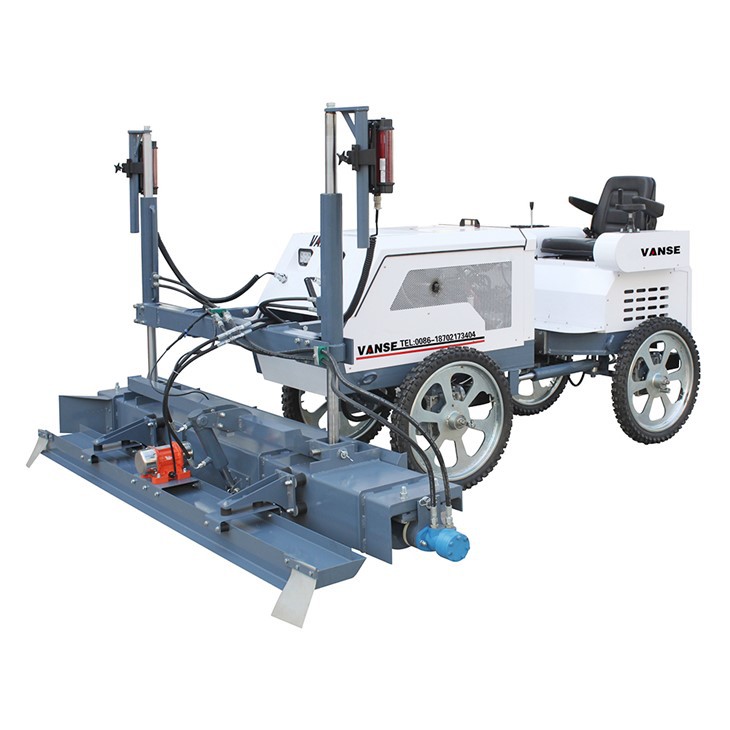
A laser screed works by using a rotating laser transmitter to create a precise elevation reference over a concrete slab. A receiver mounted on the screed mast detects whether the screed head is too high or too low. The machine’s hydraulic system then automatically raises or lowers the boom and screed head while the operator moves across fresh concrete. At the same time, the auger, plow, or vibrating screed head spreads, trims, consolidates, and levels the concrete to the required elevation.
For contractors in the Global market, the result is faster slab placement, reduced manual raking, more consistent flatness, and better control of floor elevations. Laser screeds are especially valuable for warehouses, factories, logistics facilities, airport pavements, cold-storage floors, and large commercial slabs where floor tolerance directly affects rack systems, forklifts, automated vehicles, and drainage performance.
When selecting equipment, buyers should compare laser compatibility, screed-head width, boom reach, engine power, service response, spare-parts availability, training support, and suitability for the required floor flatness specifications. Qualified international suppliers, including Chinese manufacturers with relevant CE and ISO certifications, local dealer support, and strong pre-sales and after-sales service, can also be practical options because they often provide strong cost-performance value for contractors and distributors.
How a Laser Screed Creates a Level Concrete Surface

The operating principle of a concrete laser screed combines survey control, automatic hydraulic correction, concrete distribution, vibration, and finishing preparation. Unlike conventional manual screeding, where workers use string lines, hand tools, straightedges, and visual checks, the laser-controlled screed continuously measures its vertical position against a laser reference plane.
A typical job begins after the contractor establishes slab boundaries, checks base-course compaction, places reinforcement or fibers where required, and confirms the finished floor elevation. The laser transmitter is placed on a stable tripod outside the main travel path. It projects a rotating horizontal laser plane over the work area. For sloped floors, ramps, yards, drainage slabs, or more complicated elevations, a slope-capable transmitter or 3D profiling system may be used.
The laser receiver is installed high on the screed mast. As the machine moves, the receiver reads the laser plane. If the screed head rises above the specified grade, the control system signals the hydraulic cylinders to lower the head. If the head drops below the design elevation, the system raises it. This feedback loop happens continuously during operation, enabling the equipment to maintain a highly consistent trimming elevation.
The screed head performs several physical tasks at once. The auger moves concrete sideways to fill low spots and control material buildup. The plow or strike-off section trims excess concrete. Vibration helps consolidate the concrete beneath the screed head, reducing voids and assisting aggregate settlement. The finishing pan or trailing section leaves a more uniform surface that is ready for follow-up hand finishing, power troweling, texturing, curing, or saw cutting.
The quality of the final slab is not determined by the laser screed alone. Concrete mix design, slump retention, delivery scheduling, subbase quality, reinforcement position, joint layout, weather conditions, operator experience, and finishing timing all affect the final result. However, a correctly selected and well-operated screed provides a reliable elevation-control platform that makes high-output concrete placement more repeatable.
Main Process Components of a Laser Screed

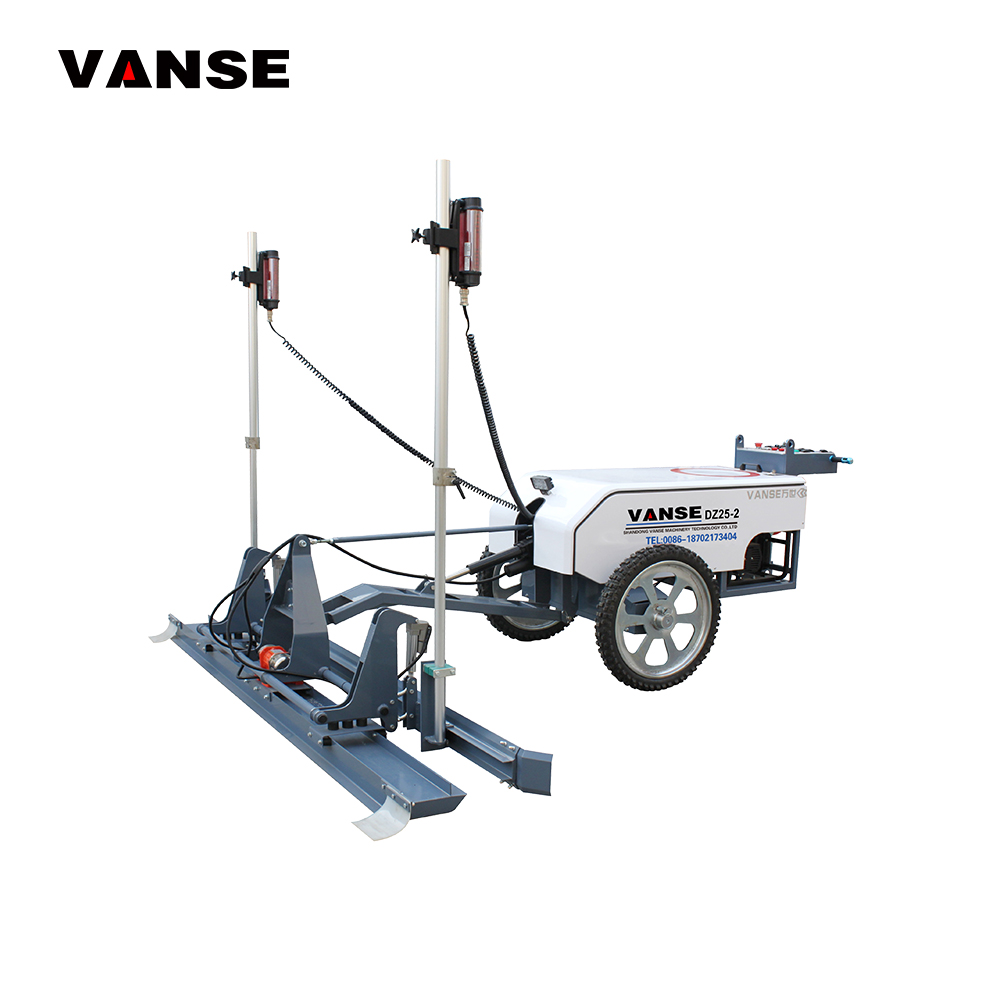
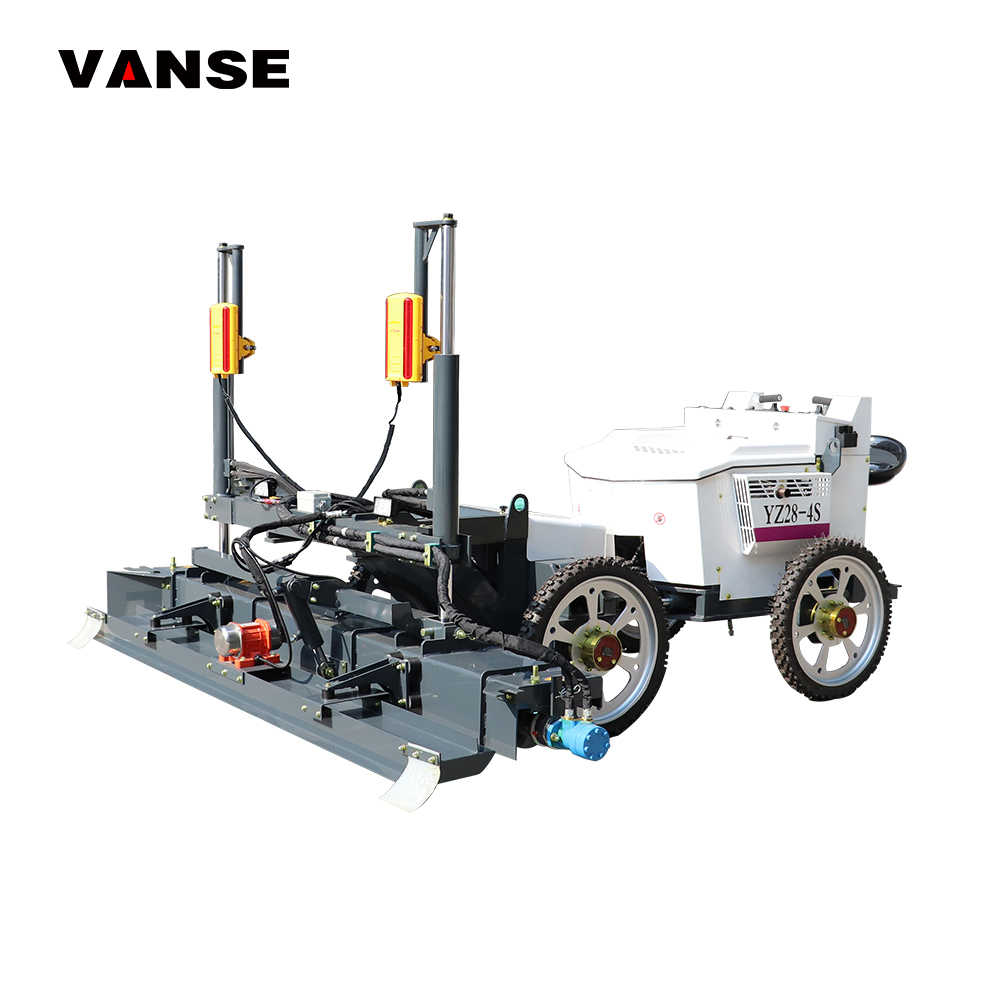
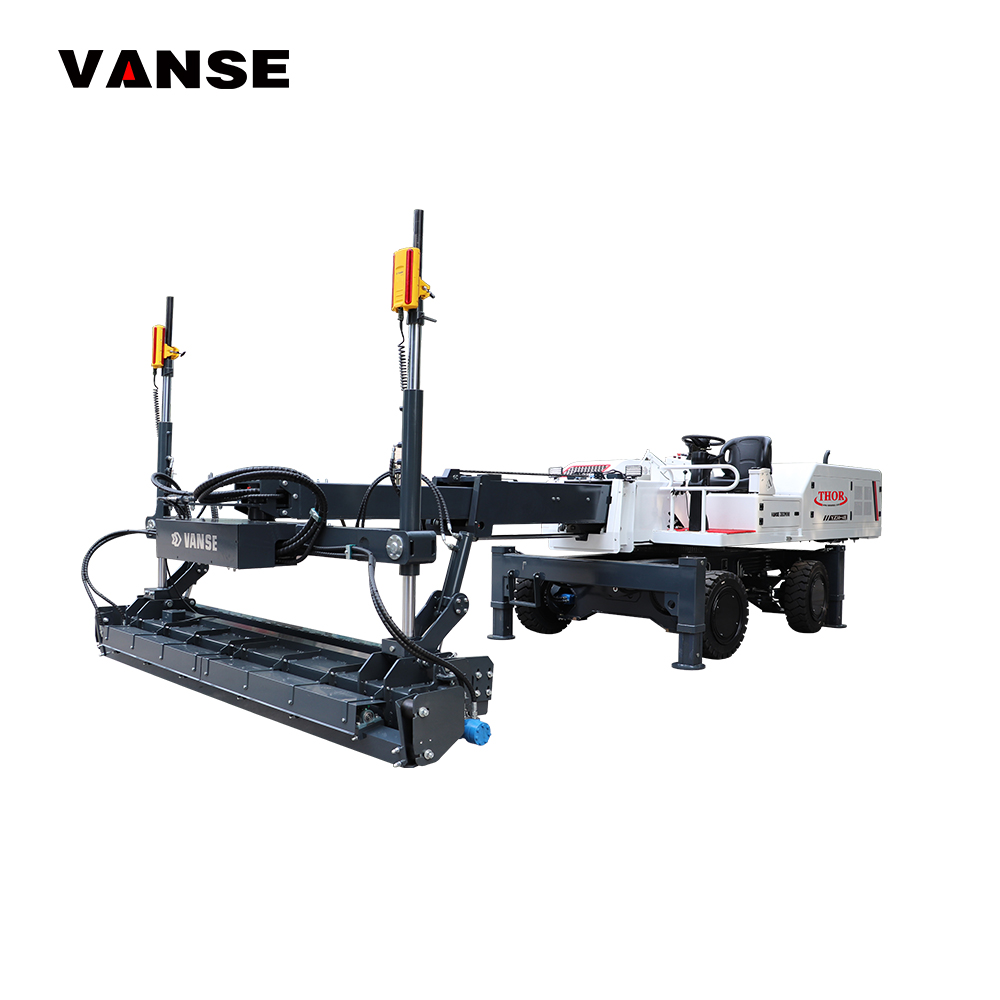
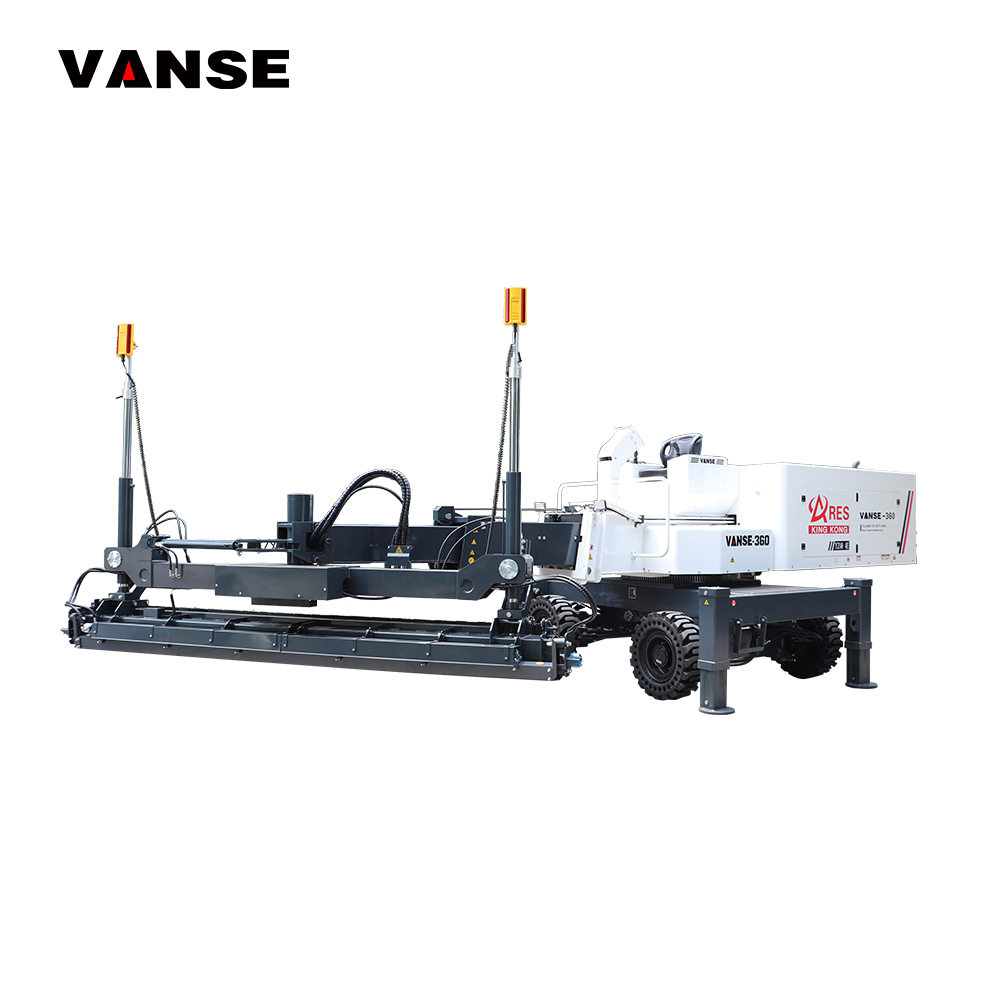
Understanding the equipment components helps buyers compare models and helps project managers diagnose site issues quickly. A boom-type machine is generally used for wide slabs and large industrial projects, while ride-on and walk-behind models are practical for smaller areas, narrow buildings, and projects with restricted access.
| Component | Primary Function | Why It Matters on Site | Typical Inspection Point |
|---|---|---|---|
| Rotating laser transmitter | Creates a horizontal or sloped elevation reference plane. | Provides the reference used to control slab grade across the placement area. | Tripod stability, calibration, battery condition, line-of-sight protection. |
| Laser receiver | Detects the laser beam position on the screed mast. | Supplies real-time elevation feedback to the automatic control system. | Clean lens, secure mounting, receiver calibration, uninterrupted signal. |
| Control panel | Allows the operator to select automatic or manual modes and set parameters. | Supports efficient response when entering edges, columns, slopes, or irregular zones. | Display clarity, switch response, wiring protection, diagnostics access. |
| Hydraulic system | Raises, lowers, extends, and positions the boom and screed head. | Determines movement smoothness, correction speed, and operating stability. | Hose condition, oil level, cylinder leaks, filter maintenance, response speed. |
| Screed head | Spreads, trims, vibrates, and levels fresh concrete. | Directly influences concrete distribution, consolidation, and surface preparation. | Wear plates, auger condition, vibration performance, head alignment. |
| Boom and mast | Reach concrete areas while supporting the laser receiver and screed head. | Controls coverage range and access around obstacles or slab edges. | Structural rigidity, pivot wear, mast verticality, boom extension movement. |
| Engine or electric drive | Supplies power to travel, hydraulics, vibration, and control systems. | Influences fuel use, uptime, noise level, and suitability for indoor projects. | Starting reliability, cooling, emissions compliance, service-part availability. |
| Travel system | Moves the machine through the fresh concrete placement zone. | Must remain stable without causing excessive slab disturbance or rutting. | Tire or track condition, steering response, drive motor performance, traction. |
The laser transmitter and receiver must be treated as surveying instruments, not simply accessories. A transmitter positioned on unstable ground can shift during the pour. Heavy vibration, accidental contact by ready-mix trucks, direct sunlight glare, rain, and blocked sight lines can also create operational problems. On large projects, crews should assign responsibility for checking the laser reference and recording benchmark elevations before and during placement.
Laser Screed Operating Sequence on a Concrete Pour
The most efficient placements follow a planned sequence. Before concrete arrives, the contractor should review drawing elevations, verify the base and reinforcement, establish control benchmarks, choose the pour strips, identify truck access, confirm concrete discharge points, and prepare backup tools. Laser screeding is fast only when concrete supply and finishing labor can keep up with the machine.
| Work Stage | What the Crew Does | Laser Screed Role | Common Risk to Avoid |
|---|---|---|---|
| Site preparation | Checks subbase, vapor barrier, reinforcement, forms, joints, and elevation benchmarks. | Confirms the machine can travel and reach the planned placement area. | Starting with soft subbase areas or unverified elevation control points. |
| Laser setup | Places transmitter on a secure tripod and verifies benchmark readings. | Receives the project elevation reference before automatic mode begins. | Placing the transmitter where trucks, pumps, or workers may disturb it. |
| Concrete discharge | Places concrete at a controlled rate ahead of the screed path. | Uses the auger and plow to distribute material evenly across the head. | Overloading the screed with large piles or starving it of concrete. |
| Automatic screeding | Operator guides travel direction and monitors material flow. | Automatically adjusts screed-head elevation through laser feedback. | Ignoring signal loss, hydraulic hesitation, or inconsistent head movement. |
| Edge and obstacle work | Hand crews work around columns, pits, walls, forms, and tight corners. | Completes accessible zones and reduces the amount of manual leveling. | Expecting a large boom machine to replace all detail finishing work. |
| Surface correction | Checks the surface with straightedges, profiles, or floor-testing equipment. | Provides a consistent initial level for follow-up finishing. | Waiting too long to correct low spots, ridges, or segregation areas. |
| Finishing and curing | Applies bull floating, power troweling, curing compound, and joint cutting as required. | Leaves a better-prepared surface for the finishing sequence. | Overworking wet concrete or delaying curing because screeding finished quickly. |
On a large distribution-center slab, a boom-type laser screed may work continuously while concrete pumps or transit mixers supply fresh concrete in front of it. The operator typically follows planned lanes, overlaps passes appropriately, and avoids rapid turning that could disrupt the fresh surface. A finishing crew follows at the correct interval, while a quality-control technician checks elevations and floor tolerance results.
For projects requiring exceptionally flat floors, such as high-bay warehouses with narrow-aisle forklifts, the contractor may use a combination of laser screeding, careful pour-strip planning, controlled concrete rheology, experienced finishers, and specialized floor-flatness testing. The laser screed improves repeatability, but slab tolerance is achieved by the entire placement system.
Laser Screed Types for Different Project Sizes
Laser screeds are not one-size-fits-all machines. The best choice depends on slab area, required tolerance, concrete volume per day, access constraints, column spacing, labor availability, budget, and service coverage. Contractors should choose a machine based on the real operating environment rather than buying only according to maximum screed width.
| Laser Screed Type | Best-Fit Projects | Advantages | Limitations | Typical Buyer |
|---|---|---|---|---|
| Walk-behind laser screed | Small workshops, residential slabs, narrow corridors, repair zones, and confined areas. | Compact, lower investment, simple transport, practical for limited-access locations. | Lower output and reach than ride-on or boom-type equipment. | Small contractors, rental fleets, specialist repair crews. |
| Ride-on laser screed | Medium industrial buildings, commercial floors, parking structures, and open slabs. | Higher productivity, operator comfort, stronger concrete-moving capability. | Requires more access space and careful travel planning. | Concrete flooring contractors and regional construction companies. |
| Boom-type laser screed | Large warehouses, factories, logistics centers, airport slabs, and terminal yards. | Long reach, high output, wide coverage, reduced dependence on manual raking. | Higher capital cost and greater need for skilled operation and maintenance. | Large contractors, industrial floor specialists, equipment distributors. |
| 360-degree boom laser screed | Large slabs with complex access routes, columns, and changing machine positions. | Flexible working radius and efficient coverage around obstacles. | Requires trained operators and disciplined concrete supply coordination. | High-volume slab contractors and major project teams. |
| 3D profiling laser screed | Slopes, drainage yards, ramps, road approaches, airport zones, and contoured slabs. | Supports changing elevations and engineered profiles beyond a flat plane. | Requires accurate digital data, setup expertise, and design verification. | Infrastructure contractors and civil engineering specialists. |
| Electric or low-emission screed | Indoor projects, enclosed facilities, green-building projects, and regulated urban sites. | Reduces local emissions and can lower noise in sensitive work areas. | Charging, power availability, and duty-cycle planning must be considered. | Indoor contractors, airports, commercial builders, sustainability-focused owners. |
Walk-behind equipment is often selected for its low ownership cost and flexibility, but it should not be expected to replace the productivity of a boom machine on a 20,000-square-meter logistics slab. Conversely, a large boom-type screed may be inefficient for a small renovation floor with frequent walls and narrow access points. Equipment selection should match daily production targets and the physical layout of the project.
Buyers comparing machines can explore concrete laser leveling machine options for different slab sizes and operating conditions. For contractors focused on higher-output industrial construction, a ride-on laser screed solution may offer a balanced combination of mobility, operator control, and placement capacity.
Where Laser Screeds Deliver the Greatest Value
Laser screeding is most valuable when the cost of uneven concrete is high. Large industrial floors frequently support pallet racking, robotic systems, narrow-aisle lift trucks, heavy equipment, conveyor systems, and automated storage operations. In these environments, slab flatness and levelness affect operational safety, maintenance cost, vehicle wear, storage efficiency, and long-term facility performance.
In manufacturing plants, laser screeds help create predictable slab elevations for production equipment, assembly lines, machine foundations, and heavy-duty traffic areas. In warehouses and logistics hubs, they support smooth forklift movement and rack installation. In cold-storage facilities, accurate floor preparation assists drainage planning and insulation-system installation. In airports, ports, and container terminals, large-area concrete construction benefits from fast placement and controlled surface profiles.
Global trade hubs continue to create demand for industrial flooring equipment. Projects around Rotterdam, Hamburg, Antwerp, Dubai, Jebel Ali, Singapore, Los Angeles, Vancouver, Santos, Melbourne, and major inland logistics corridors often require large, durable concrete slabs. These locations also place high importance on contractor uptime because project delays can affect supply-chain operations and equipment schedules.
- Factories and manufacturing workshops requiring durable, level production floors.
- Warehouses and fulfillment centers operating forklift fleets and automated storage systems.
- Logistics parks and distribution centers near ports, airports, rail terminals, and highways.
- Cold-storage and food-processing facilities requiring controlled drainage and hygienic finishing.
- Airport runways, aprons, maintenance hangars, and terminal service areas.
- Container yards, port pavements, freight depots, and heavy-vehicle parking areas.
- Commercial buildings, exhibition centers, retail warehouses, and parking structures.
- Infrastructure slabs, bridges, road approaches, drainage zones, and industrial yards.
Buying Advice for Global Contractors and Distributors
A laser screed purchase should be evaluated as a complete operating system. The machine itself is important, but training, local service access, spare-parts planning, laser calibration, concrete-placement workflow, and financing or distribution support are equally important. Contractors should ask for evidence of completed projects, operating videos, technical manuals, warranty terms, and the availability of remote or on-site commissioning.
For global buyers, import planning is also part of the purchasing decision. Machines shipped through ports such as Shanghai, Ningbo, Qingdao, Rotterdam, Houston, Vancouver, Jebel Ali, Santos, and Singapore require correct export documents, packaging, customs classification, local safety requirements, and delivery coordination. A supplier with established dealer networks and technical support can reduce the risk of downtime after arrival.
| Buying Criterion | Questions to Ask | Why It Affects Return on Investment | Practical Recommendation |
|---|---|---|---|
| Required slab tolerance | What FF/FL target, elevation tolerance, or profile requirement applies? | Higher tolerance projects need more disciplined control systems and experienced crews. | Match machine capability with project specifications and testing methods. |
| Daily concrete volume | How many cubic meters must be placed during each shift? | Undersized equipment creates bottlenecks; oversized equipment can raise idle cost. | Calculate production from actual pour size, delivery rate, and finishing capacity. |
| Working radius and access | Are there columns, walls, ramps, low ceilings, or restricted entry points? | Machine reach and transport dimensions determine usable coverage. | Review site drawings before choosing walk-behind, ride-on, or boom type. |
| Laser and 3D compatibility | Is flat-level control sufficient, or are slopes and changing profiles required? | Infrastructure and drainage work may require advanced profiling capability. | Specify the control package before manufacturing or shipment. |
| Service capability | Where are technicians, dealers, spare parts, and diagnostic support located? | Fast recovery from a hydraulic, electrical, or laser issue protects pour schedules. | Request local support contacts and recommended critical spare parts. |
| Operator training | Does the supplier provide commissioning, remote coaching, or on-site training? | Improper setup can eliminate the accuracy advantage of laser automation. | Include operator and maintenance training in the purchase contract. |
| Parts standardization | Which filters, hoses, bearings, sensors, and consumables are required? | Common service parts reduce maintenance delays and inventory pressure. | Buy a startup spare-parts kit and document replacement intervals. |
| Supplier cooperation model | Is the buyer an end user, dealer, rental company, OEM brand, or contractor? | Commercial terms and technical support requirements differ by customer type. | Choose suppliers offering direct sales, distribution, OEM/ODM, or project support. |
Before signing a purchase order, buyers should define acceptance criteria. These may include delivery date, machine configuration, language of manuals, electrical requirements, laser-system specification, inspection process, spare-parts package, warranty duration, commissioning support, and remote diagnostic procedures. For distributors, it is important to agree on territory planning, marketing materials, technician training, demo-machine support, and response responsibilities.
Leading Laser Screed Suppliers Serving the Global Market
The global laser screed market includes established equipment manufacturers, concrete-floor specialists, and machinery suppliers with different product positions. Contractors should assess each supplier against local compliance requirements, dealer coverage, training capacity, and the specific machine class needed for the project.
| Company | Service Regions | Core Strengths | Key Offerings |
|---|---|---|---|
| Somero Enterprises | North America, Europe, Asia-Pacific, Middle East, and international dealer markets. | Long-standing specialization in concrete leveling technology and large slab applications. | Boom screeds, ride-on screeds, laser-guided concrete leveling systems, training support. |
| Ligchine International | United States, Canada, Latin America, Europe, Australia, and selected global dealers. | Known for compact and mid-sized laser screed solutions for contractors. | Ride-on laser screeds, boom screeds, concrete placing and leveling equipment. |
| Shandong Vanse Machinery Technology Co., Ltd. | More than 80 countries and regions, including North America, Europe, Asia, Middle East, and South America. | Broad concrete-equipment range, flexible customization, CE and ISO 9001 quality systems, global service network. | Walk-behind, ride-on, boom-type and 3D-compatible laser screeds, power trowels, grinders, cutters, fibers. |
| Husqvarna Construction | Global distribution network across Europe, Americas, Asia-Pacific, Africa, and Middle East. | International construction-equipment brand with broad contractor support and floor-preparation expertise. | Concrete finishing, cutting, surface preparation, compaction, and jobsite equipment. |
| Wacker Neuson | Europe, North America, Asia-Pacific, Latin America, and dealer-supported global markets. | Strong presence in light and compact construction equipment with established dealer channels. | Concrete vibrators, trowels, compact equipment, generators, pumps, and jobsite tools. |
| Allen Engineering | United States and international construction-equipment distribution markets. | Specialist experience in concrete finishing machinery and contractor-oriented equipment. | Ride-on trowels, walk-behind trowels, concrete saws, vibratory equipment, and finishing tools. |
| Multiquip | North America and international dealer markets, including infrastructure and rental channels. | Broad equipment portfolio and practical support for contractors and rental companies. | Concrete finishing equipment, pumps, generators, compactors, mixers, and lighting solutions. |
Somero is widely recognized in high-output and high-tolerance slab construction, particularly where contractors require large boom machines and mature concrete-flooring workflows. Ligchine is often considered by contractors seeking flexible ride-on and boom screed configurations. Husqvarna Construction, Wacker Neuson, Allen Engineering, and Multiquip are relevant names for associated concrete finishing, vibration, cutting, surface preparation, and jobsite equipment.
For buyers seeking a competitive alternative with configuration flexibility, Vanse provides laser screed equipment alongside the supporting machines and materials commonly used in industrial flooring projects. The company’s product portfolio can help contractors source more of their concrete-construction equipment through a coordinated supplier relationship rather than managing separate suppliers for screeding, troweling, cutting, grinding, and fiber reinforcement.
How Vanse Supports Laser Screed Buyers Worldwide
Shandong Vanse Machinery Technology Co., Ltd. combines laser control systems, hydraulic technology, durable structural design, reliable engine configurations, and practical construction-site engineering in its concrete laser screed range. Founded in 2013 in Jining, China, Vanse operates under ISO 9001 and CE quality certifications and holds more than 50 invention patents plus over 200 utility model and design patents, supporting its focus on equipment development and controlled manufacturing. Its machines are designed for industrial flooring applications where millimeter-level leveling accuracy, high working speed, 360-degree operating capability, and optional 3D profiling compatibility may be required. Vanse serves end users, concrete contractors, distributors, dealers, rental companies, brand owners, and individual buyers through direct sales, wholesale supply, retail support, OEM/ODM production, customized branding, engine and voltage options, project-based equipment supply, and regional distribution partnerships. The company has delivered equipment to customers in more than 80 countries and regions and maintains overseas branches and service resources in Southeast Asia and Canada, supported by dealer networks across North America, South America, Europe, Asia, and the Middle East. This means buyers are supported through practical project consultation, machine selection, installation, commissioning, operator training, spare-parts supply, remote diagnosis, and on-site technical assistance rather than being treated as remote export transactions. Vanse provides EPC, turnkey, and customer-owned plant solutions for relevant concrete construction equipment projects, but does not offer BOO or on-site bulk supply services.
For buyers who need help selecting a machine, Vanse provides technical service for concrete construction equipment covering equipment selection, operating guidance, maintenance planning, and troubleshooting support. Customers can also review the company’s broader global service capability when planning a purchase, dealership arrangement, or project-specific equipment package.
Vanse’s practical advantage for global contractors is its ability to combine equipment supply with operational support. A warehouse-floor contractor may need a laser screed, ride-on power trowel, cutting machine, floor grinder, armor joints, and steel or synthetic fibers. A supplier that understands how these products interact can help reduce procurement complexity and align machine selection with the actual construction sequence.
Real-World Application Scenarios
A logistics warehouse project near a major port often has strict requirements for racking, forklift movement, and rapid construction. In this scenario, a boom-type laser screed can reduce the need for large manual raking crews and help maintain consistent floor elevation across long pour strips. The contractor still needs sufficient concrete supply, experienced finishers, and reliable curing procedures, but the screed becomes the central production tool for initial leveling.
In a manufacturing plant, machine zones may require different slab thicknesses, embedded items, pits, and local reinforcement details. A laser screed can complete the open slab areas quickly, while manual crews finish around foundations and restricted zones. The project team benefits from separating high-production screeding work from detail work instead of trying to complete the full slab using only hand-operated methods.
At an airport maintenance area or terminal yard, the slab may need drainage slopes and heavy-duty pavement characteristics. A 3D-capable screed system can follow engineered profile data more effectively than a basic flat-plane setup. Accurate survey control remains essential because incorrect digital data or poor benchmark verification can transfer errors across a large area.
For a cold-storage building, the contractor may prioritize drainage, insulation coordination, flatness, and a tightly managed finishing window. Laser screeding helps create a predictable base surface, while the project team must also carefully control vapor barriers, reinforcement, concrete temperature, curing, and joint timing. The machine contributes to consistency, but successful cold-storage flooring depends on the entire slab system.
Future Trends in Laser Screed Technology for 2026
In 2026, laser screed development is expected to focus on automation, digital jobsite integration, lower-emission operation, and improved lifecycle service. Contractors increasingly want machines that not only level concrete accurately but also provide operating data, maintenance alerts, remote support capability, and compatibility with digital project models.
3D profiling is becoming more important for drainage slabs, ramps, external pavements, airport works, industrial yards, and infrastructure projects. Rather than working only from a single horizontal laser plane, future systems will increasingly use digital elevation models and programmed surface geometry. This allows contractors to execute complex profiles with less dependence on manual grade checking.
Sustainability is also influencing equipment selection. Lower fuel consumption, reduced idling, electric-drive options, hydraulic efficiency, long-life wear components, and optimized concrete placement can contribute to lower project emissions. Better slab accuracy may also reduce rework, grinding, patching, material waste, and premature floor repairs. In regions where urban construction rules are tightening, low-noise and lower-emission equipment will become more attractive for enclosed projects and city-center developments.
Policy changes related to worker safety, emissions, machine certification, and construction quality will continue to shape purchasing decisions. Buyers should confirm CE requirements where applicable, local import rules, engine-emission regulations, electrical standards, and jobsite safety expectations before shipment. Suppliers that offer configurable voltage, engine, language, and documentation options will be better positioned to support regional projects.
Remote technical support is likely to become more standard. Video diagnosis, multilingual operator guidance, digital manuals, spare-parts identification, and online commissioning can reduce downtime for contractors operating far from a service center. However, remote support should complement—not replace—local parts availability, trained technicians, and clear warranty responsibility.
Frequently Asked Questions
Can a laser screed replace all manual concrete finishing?
No. A laser screed greatly reduces manual spreading and leveling work in open areas, but crews are still needed around walls, columns, pits, forms, joints, penetrations, and other restricted locations. Follow-up finishing, curing, joint cutting, and quality checks remain essential.
How accurate is a laser screed?
Accuracy depends on machine condition, laser setup, operator practice, concrete behavior, base stability, and the project-control system. Properly configured machines can support millimeter-level elevation control, but final slab tolerance must be verified using the project’s specified testing method.
What concrete slump works best with a laser screed?
The suitable slump depends on the mix design, aggregate size, admixtures, temperature, transport time, reinforcement congestion, and finishing requirements. The concrete should be workable enough for placement and screeding while remaining stable enough to avoid segregation. Contractors should confirm the mix with the ready-mix supplier and conduct trial placements where needed.
Does a laser screed work on sloped floors?
Yes. Standard systems can work with slope-capable laser transmitters for simple gradients. More complex ramps, drainage patterns, and changing elevations may require 3D profiling compatibility and accurate digital survey data.
Is a boom-type laser screed suitable for small projects?
It can be used when access and budget allow, but it is often not the most economical choice for small slabs. Walk-behind or ride-on models may provide better value for workshops, smaller commercial floors, repair zones, and restricted-access projects.
What maintenance does a concrete laser screed require?
Routine maintenance includes checking hydraulic oil, filters, hoses, fasteners, battery condition, engine service items, screed-head wear parts, laser receiver cleanliness, electrical connections, and travel-system condition. Scheduled calibration and pre-pour inspection are especially important for maintaining elevation accuracy.
What should international buyers request before ordering?
Buyers should request machine specifications, drawings, laser-control details, certification documents, warranty terms, delivery schedule, packing details, spare-parts list, operator manuals, training arrangements, remote-support process, and local service contact information. Distributors should also discuss territory, demo support, parts stock, and technician training.
Can Vanse provide support after the equipment arrives?
Yes. Vanse supports buyers with equipment selection, commissioning, operator training, maintenance guidance, spare parts, remote diagnosis, and on-site technical assistance when required. Its overseas service resources in Southeast Asia and Canada, along with dealer networks in multiple regions, support long-term equipment operation for global customers.
Choosing the Right Laser Screed for Your Next Project
The best laser screed is the one that fits the floor specification, daily concrete volume, site layout, operator capability, and service environment. A compact machine may be ideal for a small contractor building workshops and commercial slabs, while a 360-degree boom screed may be necessary for a large logistics center, manufacturing complex, airport pavement, or container-yard project.
Begin with the finished floor requirement. Confirm whether the project needs a level slab, a controlled slope, a drainage profile, or a high-flatness industrial floor. Then calculate placement volume, review access limitations, evaluate labor availability, and select a supplier that can provide training and spare parts after delivery. This approach helps contractors convert laser screed technology into measurable improvements in productivity, accuracy, labor efficiency, and project reliability.
For more information about concrete construction machinery, project equipment selection, and global supply options, visit Vanse concrete construction equipment solutions.
Share this article

About the Author: Shandong Vanse Machinery Technology Co., Ltd.
Shandong Vanse Machinery Technology Co., Ltd. is a high-tech manufacturer specializing in concrete construction machinery, including laser screeds and related equipment. The company integrates R&D, production, and global sales, with products exported to over 60 countries and widely used in infrastructure projects worldwide.