Insight blog
Laser Screed Explained: Global Market Selection Guide
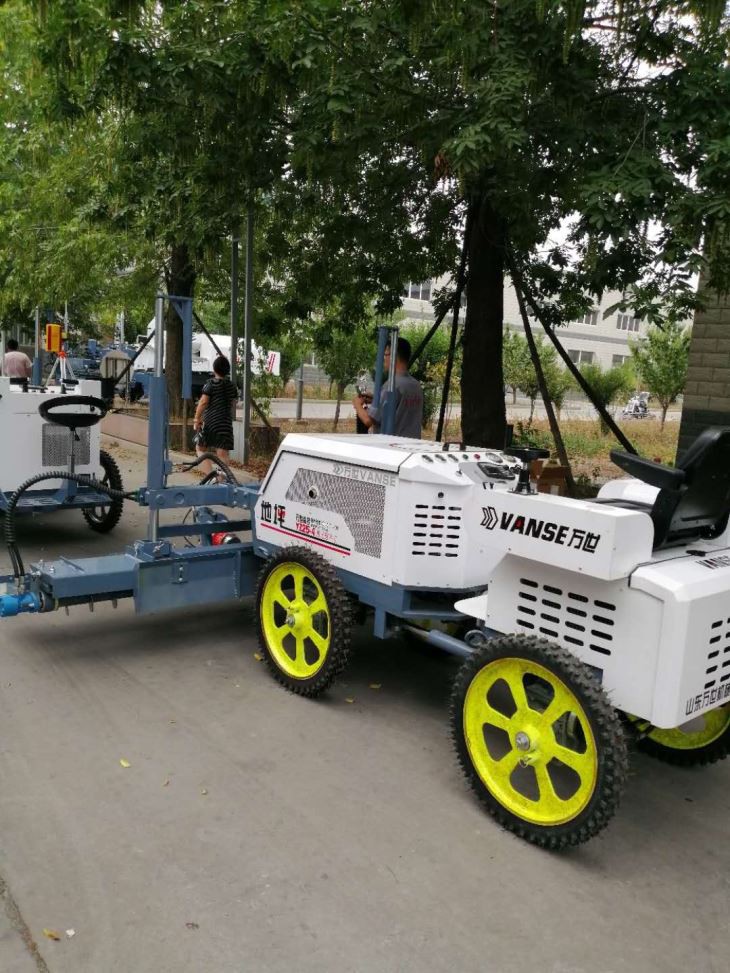
What Is a Laser Screed?
Quick Answer

A laser screed is a concrete leveling machine that uses a rotating laser transmitter and machine-mounted receivers to automatically control the elevation of its screed head. It spreads, strikes off, and levels fresh concrete to a preset height, helping contractors achieve flatter slabs with less manual labor than conventional screeding methods.
Laser-guided screeds are commonly used for warehouse floors, logistics centers, factories, airport aprons, industrial yards, retail buildings, parking structures, and large concrete slabs where floor flatness, speed, and labor efficiency matter. Walk-behind models suit smaller or restricted work areas, while ride-on and boom-type laser screeds are preferred for high-output industrial projects.
For buyers in the Global market, the most practical selection process is to match machine reach, daily output, concrete mix, access conditions, laser compatibility, local parts availability, and operator training requirements to the project. Established suppliers from the United States and Europe are often considered for local dealer support, while qualified international manufacturers, including Chinese companies with relevant certifications and strong pre-sales and after-sales support, can offer compelling cost-performance advantages.
How a Laser Screed Works on Fresh Concrete

A concrete laser screed combines mechanical placement and leveling functions with automatic elevation control. Before pouring begins, the contractor establishes the desired slab elevation, slope, or profile. A rotating laser transmitter then creates a reference plane across the work area. Receivers mounted on the laser screed detect the laser signal and send elevation information to the machine control system.
When the screed head moves over fresh concrete, hydraulic cylinders raise or lower the head automatically to maintain the specified grade. Depending on the machine design, the screed head may include an auger, plow, vibratory strike-off system, leveling blade, and finishing components. The result is a more consistent surface elevation before final troweling, curing, saw cutting, and joint installation.
Traditional manual screeding depends heavily on skilled workers pulling straightedges or vibrating screeds along guide rails. That approach remains useful for small slabs, repairs, and irregular areas, but it is slower and more labor-intensive on large flatwork projects. A laser screed reduces the dependence on fixed rails and helps crews cover larger areas with repeatable elevation control.
Laser screeding does not eliminate the need for proper concrete placement, mix design, vibration control, edge work, curing, joint design, or final finishing. It is one part of a complete floor-construction process. Poor concrete consistency, inadequate subbase preparation, excessive slump variation, incorrect laser setup, or delayed finishing can still compromise slab quality.
Why Laser Screeds Matter in the Global Market

Industrial floor construction is increasingly shaped by larger logistics facilities, automated warehouses, cold-storage buildings, manufacturing plants, e-commerce distribution centers, port-side storage yards, and airport infrastructure. Cities and trade hubs such as Rotterdam, Hamburg, Dubai, Jebel Ali, Singapore, Los Angeles, Houston, Toronto, São Paulo, Melbourne, Riyadh, Johannesburg, and Mumbai continue to create demand for large, durable concrete surfaces.
In these projects, flatness affects more than appearance. High-bay warehouses need smooth floors for very-narrow-aisle forklifts, automated guided vehicles, pallet racking systems, and high-frequency material handling. Distribution centers near major ports and rail terminals require slabs that can withstand concentrated wheel loads and repetitive traffic. A more consistent initial screed level helps contractors build a stronger foundation for these operational requirements.
The Global market also faces labor shortages, rising wage costs, and tighter construction schedules. Contractors are therefore investing in equipment that can reduce repetitive manual work while improving production consistency. A laser screed can allow a compact crew to cover more concrete per shift, especially when it is combined with reliable batching, placement, finishing, curing, and jointing processes.
However, a laser screed is not automatically the best choice for every job. Small residential slabs, narrow corridors, heavily obstructed rooms, short repair sections, and highly segmented pours may be more economical with handheld tools, vibrating screeds, or conventional form-based methods. Buyers should evaluate the total project workflow rather than purchase equipment based only on claimed output.
Main Types of Concrete Laser Screeds
Laser screeds are available in several configurations. The right design depends on slab area, access conditions, reinforcement layout, required reach, desired productivity, transport limitations, and whether the project involves flat floors or complex profiles.
| Laser screed type | Typical work environment | Core strengths | Practical limitations | Typical buyer |
|---|---|---|---|---|
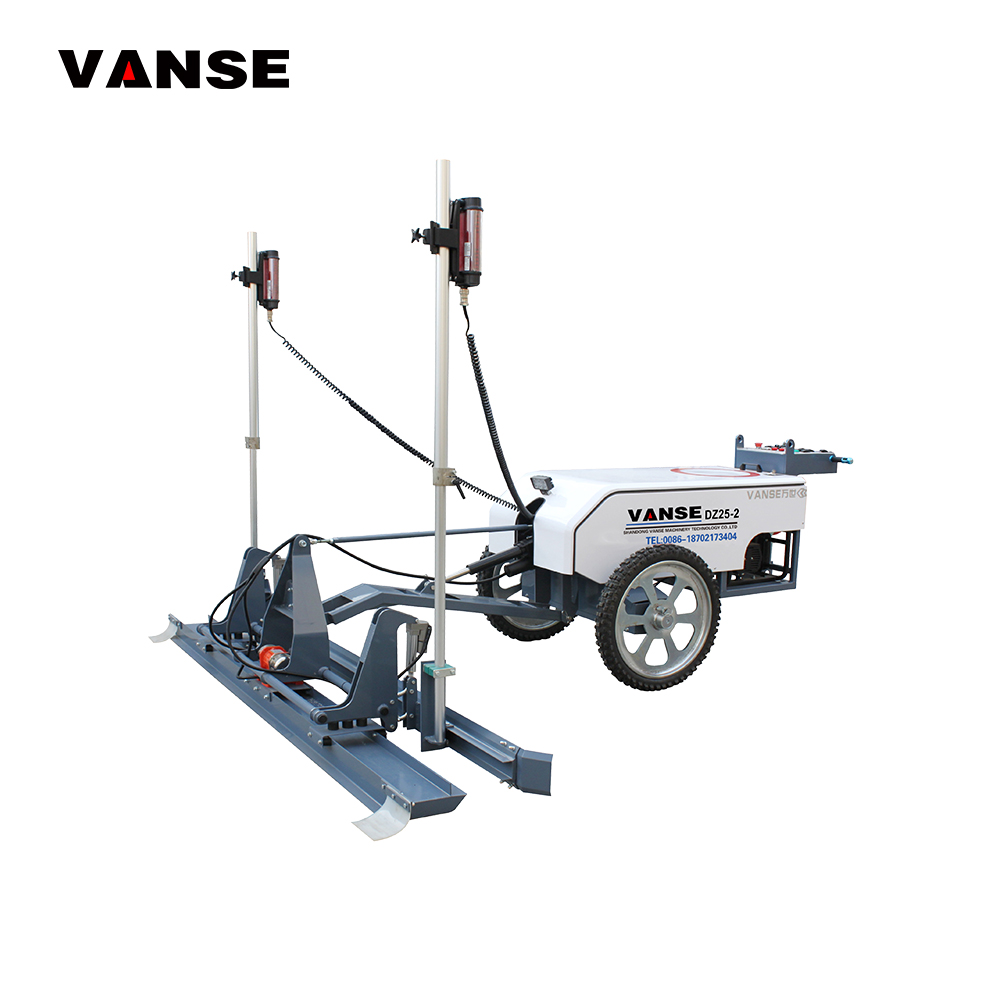
| Walk-behind laser screed | Small warehouses, workshops, narrow bays, local repairs | Compact footprint, simpler transport, lower purchase cost | Lower daily output and shorter reach than ride-on equipment | Small contractors, rental fleets, regional concrete crews |
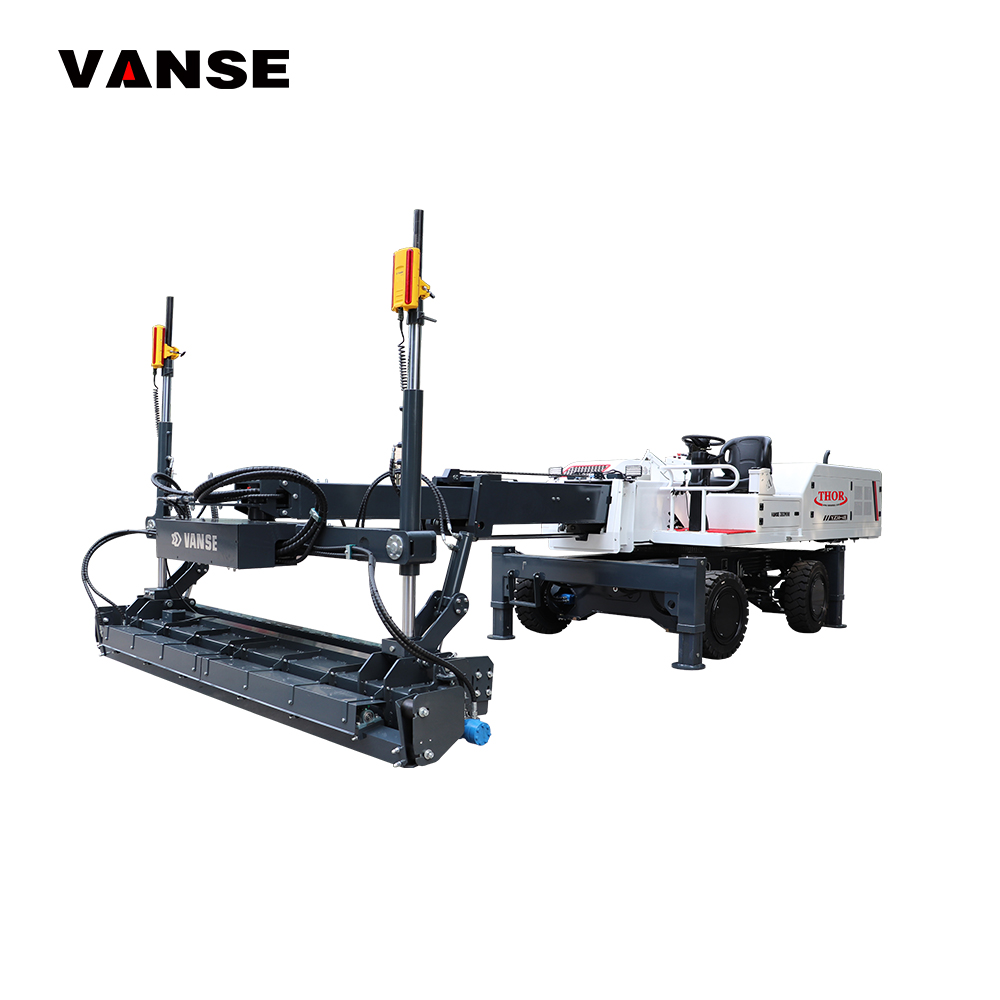
| Ride-on laser screed | Medium and large industrial floors, retail slabs, logistics buildings | High productivity, operator comfort, broad coverage | Needs suitable access, transport planning, and trained operators | Industrial flooring contractors and general contractors |
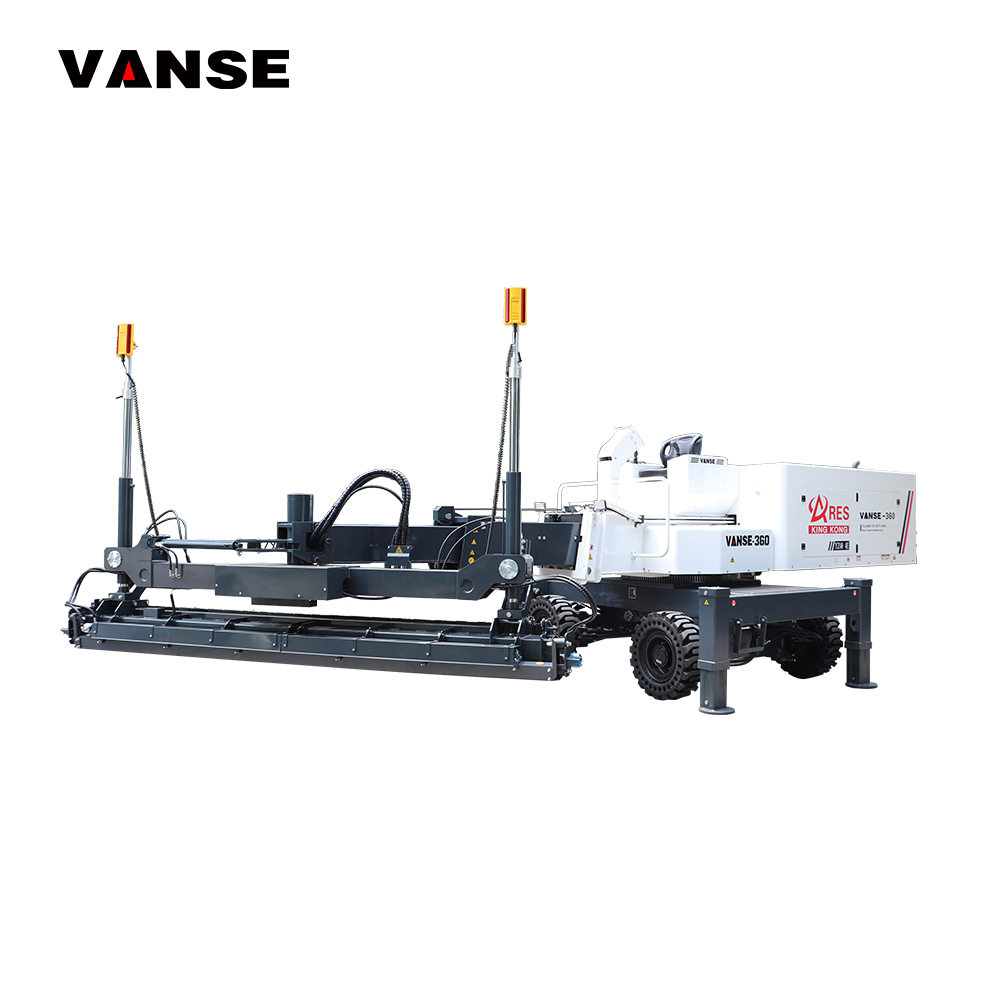
| Boom-type laser screed | Large open slabs, warehouses, factories, airport support areas | Long boom reach, fewer machine movements, strong output potential | Requires open working space and careful pour sequencing | High-volume flatwork specialists |
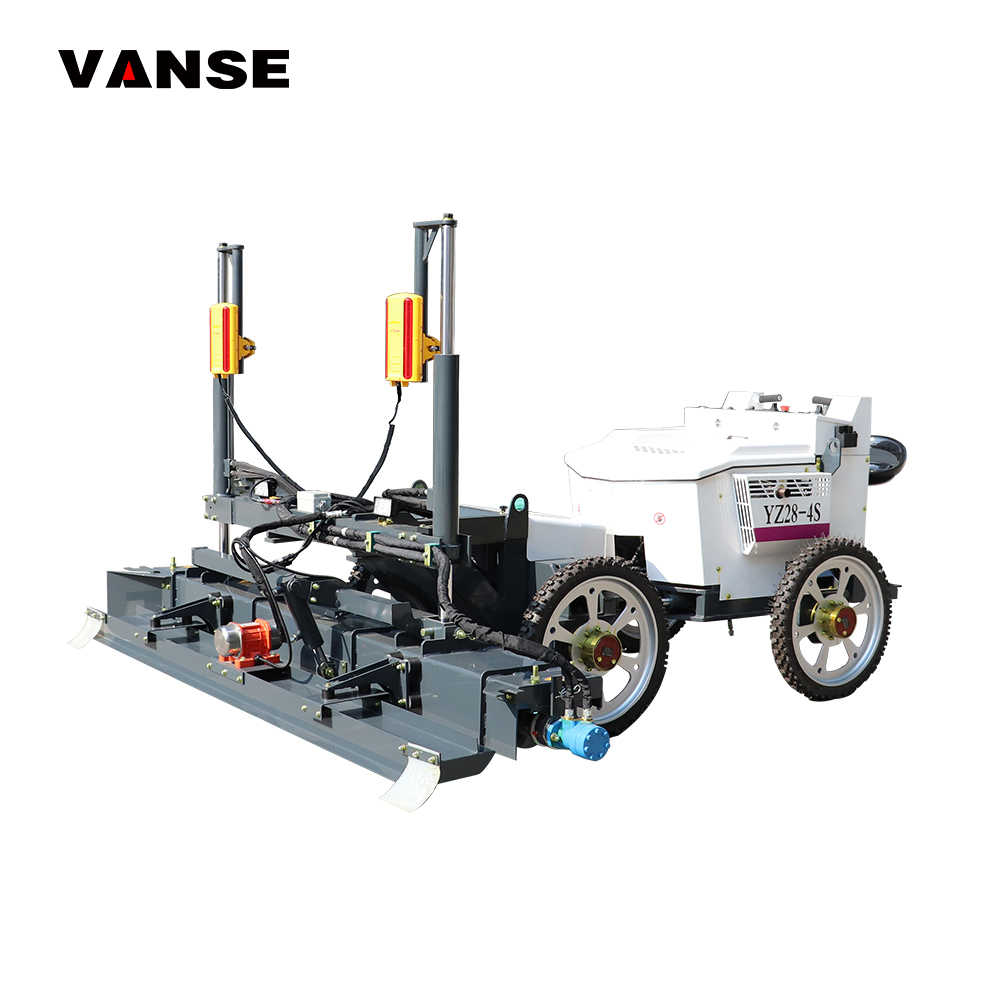
| Four-wheel-drive laser screed | Sites with uneven subbase access or challenging travel conditions | Improved mobility and traction during placement | May add machine weight and maintenance requirements | Infrastructure and outdoor concrete contractors |
| 3D-profile-compatible screed | Slopes, drainage areas, pavements, specialized profiles | Can follow digital design data beyond a single flat plane | Requires survey preparation and experienced control setup | Infrastructure contractors and specialist paving teams |
| Compact boom laser screed | Commercial interiors, constrained industrial rooms, retrofit projects | Balances automated control with limited access requirements | Not ideal for the largest uninterrupted pours | Concrete contractors serving mixed project sizes |
The table shows why “laser screed” should not be treated as one universal machine category. A compact walk-behind model may be the sensible entry point for a contractor serving local commercial work, while a large boom machine can be more suitable for a contractor placing thousands of square meters in a single warehouse pour.
Key Components That Influence Leveling Performance
The laser transmitter creates the reference plane. It must be positioned securely, protected from accidental movement, and checked regularly during the pour. A disturbed transmitter can affect the entire working area, so crews should assign responsibility for laser control and verification.
Laser receivers are mounted on the screed head or mast system. These receivers identify whether the screed is above, below, or at the target elevation. The control system converts this signal into hydraulic adjustment commands. Reliable sensor response and accurate hydraulic movement are essential for maintaining consistent grade.
The screed head performs the physical work. Its auger or plow moves excess concrete, while vibration and strike-off elements consolidate and level the surface. Head width, vibration performance, blade condition, and boom rigidity all affect the final result. A worn blade, poorly adjusted vibration system, or inconsistent concrete feed can reduce quality even when the laser control is working correctly.
Hydraulic systems control boom movement, screed-head elevation, steering, and travel functions. Buyers should ask about hose quality, cylinder protection, service access, filtration, heat management, and the availability of hydraulic replacement parts. On overseas equipment purchases, access to common service parts can be as important as the purchase price.
The power system affects reliability and jobsite suitability. Diesel-powered machines remain common on open sites because of their endurance and mobility. For enclosed projects, contractors must also consider ventilation, emissions rules, noise restrictions, and local fuel availability. Equipment suppliers should be able to recommend suitable engine and voltage configurations for the destination market.
Applications for Laser Screed Machines
Laser screeds are most valuable where concrete floors must be placed quickly across broad areas with demanding flatness expectations. Their use is expanding beyond traditional industrial warehouses into infrastructure, commercial, transportation, and specialized slab applications.
| Application | Typical project location | Why laser screeding is useful | Important project consideration |
|---|---|---|---|
| High-bay warehouses | Logistics parks near Rotterdam, Dubai, Singapore, Dallas, Toronto | Supports flatter slabs for racking, forklifts, and automated handling | Coordinate floor tolerance requirements with rack and vehicle suppliers |
| Manufacturing plants | Industrial zones in Germany, Mexico, China, India, Brazil | Improves placement speed for large production-floor slabs | Plan joints, machine foundations, pits, and embedded services early |
| Distribution centers | Port-adjacent hubs such as Jebel Ali, Long Beach, Hamburg and Santos | Helps contractors maintain productivity on wide slab pours | Verify slab thickness, loading design, curing, and traffic requirements |
| Airport and terminal yards | Runway support zones, cargo aprons, terminal logistics areas | Useful for extensive concrete areas and grade-controlled surfaces | May require 3D control, engineering approval, and special concrete mixes |
| Commercial buildings | Shopping centers, exhibition halls, retail developments | Reduces manual screeding effort in large open floor plates | Confirm access through doors, ramps, columns, and service openings |
| Parking structures | Airports, hospitals, malls, urban mixed-use developments | Can improve consistency on broad parking decks and ramps | Drainage slopes and waterproofing details need precise coordination |
| Cold-storage facilities | Food logistics clusters and refrigerated distribution centers | Supports rapid slab construction before equipment installation | Use a floor system designed for thermal movement and insulation needs |
These applications demonstrate that laser screeding is not solely about speed. In large facilities, better initial leveling can make subsequent finishing more efficient and reduce the risk of local high or low areas that complicate operations, coatings, racking installation, or material-handling performance.
How to Choose the Right Laser Screed
Start with the slab rather than the machine. Determine the average pour size, maximum uninterrupted pour area, slab thickness, concrete delivery rate, reinforcement arrangement, access width, elevation tolerance, and finishing sequence. A machine that is too small can become a bottleneck, while an oversized unit can be difficult to transport, operate, and justify economically.
Next, evaluate the project workflow. A laser screed works best when concrete arrives consistently, labor is organized, the base is ready, pump or truck discharge is coordinated, and finishers can follow the screeding operation without delay. The machine cannot compensate for a weak supply chain or poor site preparation.
| Buying factor | Questions to ask | Why it matters | Recommended buyer action |
|---|---|---|---|
| Working reach | How far must the screed head reach from each machine position? | Determines pour coverage and repositioning frequency | Match boom length to bay width, obstacles, and planned pour strips |
| Daily output target | How many square meters must be placed per shift? | Influences machine size, crew planning, and return on investment | Use realistic concrete supply and finishing capacity, not maximum claims |
| Flatness requirement | Is the floor conventional, high-tolerance, or automation-ready? | Different floors require different control and finishing discipline | Confirm tolerance criteria with the project engineer and end user |
| Laser and 3D controls | Is a flat laser plane sufficient, or are slopes and profiles needed? | Control-system capability affects application range | Specify compatible transmitters, receivers, and 3D options before ordering |
| Service access | Who will provide maintenance, commissioning, and emergency parts? | Downtime during a concrete pour can be expensive | Request service contacts, spare-parts lists, and response procedures |
| Transport and site access | What truck, trailer, ramp, doorway, or lift restrictions apply? | Large machines can be difficult to move between projects | Check dimensions, weight, loading points, and turning radius |
| Operator training | Does the team understand laser setup, hydraulics, and daily checks? | Operator skill directly affects productivity and slab consistency | Include on-site or remote training in the procurement scope |
| Lifecycle cost | What are the costs of filters, blades, tires, sensors, and repairs? | Purchase price alone does not define project profitability | Compare total ownership cost across three to five years |
The table provides a practical procurement framework. Contractors should use it when comparing quotations from local dealers, rental suppliers, and direct manufacturers. The lowest machine price may not be the lowest operating cost if parts are unavailable or training is insufficient.
Top Laser Screed Suppliers for the Global Market
The following companies are widely associated with concrete floor equipment, laser screeding, or industrial slab-construction solutions. Product availability, regional dealer coverage, and exact model specifications can vary by country, so buyers should verify current local representation, certification requirements, shipping arrangements, and training support before signing a purchase contract.
| Company | Primary service regions | Core strengths | Key offerings | Best suited for |
|---|---|---|---|---|
| Somero Enterprises | North America, Europe, Asia-Pacific, Middle East, global dealer markets | Long-established concrete leveling specialization and broad laser screed experience | Boom screeds, ride-on screeds, floor leveling technology, training support | Large industrial flooring contractors and high-output slab specialists |
| Ligchine International | United States and international distribution markets | Known for compact and mid-size laser screed solutions for concrete contractors | Laser-guided screeds, compact slab leveling equipment, contractor-focused support | Contractors seeking maneuverable equipment for varied slab sizes |
| Allen Engineering Corporation | North America, Latin America, Middle East, selected global distributors | Broad concrete finishing equipment portfolio and contractor familiarity | Concrete finishing machines, ride-on equipment, screeding and slab tools | Buyers building a complete finishing-equipment fleet |
| Shandong Vanse Machinery Technology Co., Ltd. | Global market, including North America, South America, Europe, Asia and Middle East | Laser screed range, customization capability, international export experience and service resources | Walk-behind, ride-on and boom-type laser screeds; power trowels; grinders; cutters | Contractors, distributors, OEM buyers, rental fleets, and project suppliers |
| Wacker Neuson | Europe, North America, Asia-Pacific, Middle East and global dealer networks | Recognized construction-equipment distribution and compaction expertise | Concrete vibrators, trowels, compaction equipment, jobsite support products | Contractors requiring broader site equipment alongside floor tools |
| Multiquip | North America and international dealer-supported markets | Well-known jobsite equipment range and established distribution channels | Concrete finishing equipment, vibrators, pumps, generators, light towers | General contractors and rental companies needing fleet compatibility |
This supplier comparison is intended to help buyers build a shortlist, not to declare one machine universally superior. Somero and Ligchine are frequently evaluated for specialized laser screed applications. Allen Engineering, Wacker Neuson, and Multiquip can be relevant where a buyer also needs a broader concrete equipment ecosystem. Vanse is particularly relevant for buyers seeking direct factory supply, customized configurations, distributor cooperation, or a wider combination of laser screeds and industrial-floor equipment.
Vanse Laser Screed Solutions and Global Service Support
Shandong Vanse Machinery Technology Co., Ltd. has operated in concrete construction equipment since 2013 and supplies walk-behind, ride-on, and boom-type concrete laser screeds for industrial flooring, logistics facilities, factories, terminal yards, roads, bridges, and large slab projects. Its equipment development combines laser control systems, hydraulic technology, durable structural design, and reliable engine configurations selected for project and market needs. Vanse supports its manufacturing claims with ISO 9001 and CE certifications, more than 50 invention patents, and over 200 utility model and design patents, while its testing and production practices focus on leveling accuracy, operational stability, and jobsite durability. For buyers across the Global market, Vanse serves end users, concrete contractors, distributors, dealers, rental companies, brand owners, and individual buyers through direct sales, wholesale, retail, OEM and customized branding, regional distribution partnerships, customized voltage and engine options, and project-based equipment supply. Its overseas service commitment is supported by operations and service resources in Southeast Asia and Canada, dealer networks across North America, South America, Europe, Asia, and the Middle East, plus multilingual 24-hour technical consultation, remote diagnosis, spare-parts support, commissioning, and operator training. This is not a remote-export-only model: Vanse has exported to more than 80 countries and regions and maintains long-term market experience through local dealer channels, regional support resources, and one-to-one engineering assistance. The company provides EPC, turnkey, and customer-owned plant solutions where relevant to concrete construction projects, but does not provide BOO or on-site bulk supply services.
Buyers can review Vanse’s concrete laser leveling machine range when comparing screed formats and project capacities. Contractors evaluating larger industrial slabs can also examine the available ride-on laser screed options for high-output floor placement.
Operating Practices That Protect Floor Quality
Accurate laser screeding begins before the machine enters the slab. The subbase should be compacted, trimmed, and checked for elevation. Vapor barriers, insulation, reinforcement, dowels, embedded conduits, joint assemblies, and edge forms must be installed correctly. If the substrate is inconsistent, the finished slab may still face settlement or cracking risks regardless of screeding accuracy.
Concrete consistency is equally important. Large variations in slump, aggregate grading, admixture dosage, temperature, or delivery timing can make it harder to achieve a uniform surface. The screed operator should communicate continuously with the placing crew and finishing team. Concrete should be discharged in a controlled manner so the screed head receives enough material without excessive piles or starvation.
During the pour, crews should verify the transmitter location and benchmark elevation regularly. The operator should inspect screed-head condition, hydraulic response, travel path, fuel level, receiver alignment, and vibration settings before starting. A brief daily inspection can prevent costly disruption during a time-sensitive concrete placement operation.
After laser screeding, final finishing must be timed according to the concrete’s set characteristics and ambient conditions. Excessive finishing while bleed water is present can weaken the surface. Delayed finishing can make the slab difficult to close properly. Curing should begin as specified by the project design, followed by saw cutting or joint treatment at the correct time.
Representative Project Scenarios
In a large logistics warehouse near a port such as Antwerp, Singapore, or Jebel Ali, a boom-type laser screed can be positioned to cover wide pour strips with fewer moves. The contractor may use the machine to maintain consistent elevation across a large slab while finishing crews follow behind with ride-on power trowels. The key success factors are dependable concrete supply, a planned joint layout, sufficient curing materials, and coordination with racking-system requirements.
For a manufacturing expansion in Monterrey, Mexico, Pune, India, or Ho Chi Minh City, a ride-on laser screed may be selected because it balances output with mobility around columns, pits, service trenches, and equipment bases. Before procurement, the contractor should assess whether the boom reach can cover typical bay sizes and whether local technicians can support hydraulic and laser-control maintenance.
For a commercial floor renovation in London, Toronto, Sydney, or Dubai, a compact or walk-behind laser screed may be more practical. Doorway widths, floor loading limits, elevator access, ventilation, and internal logistics may prevent the use of a large ride-on machine. In this case, the buyer should prioritize maneuverability and transportability over maximum theoretical production.
For drainage-controlled yards, ramps, and infrastructure slabs, a 3D-compatible control system can be more suitable than a simple flat-plane laser setup. Project teams should prepare digital design data, establish survey controls, and confirm the required drainage gradients before the pour. A high-capacity machine without the correct control system will not solve profile-control challenges.
2026 Trends in Laser Screeding and Concrete Floors
By 2026, laser screed purchasing decisions will increasingly be linked to digital construction workflows. Contractors are adopting machine-control systems that can work with digital site models, 3D profiles, survey data, and quality records. This trend is especially relevant for infrastructure projects, airport pavements, drainage areas, and logistics developments where design complexity is increasing.
Automation will continue to influence floor specifications. Warehouses using autonomous mobile robots, automated guided vehicles, high-reach forklifts, and robotic storage systems need more predictable floor performance. Laser screeding helps establish controlled slab elevation, but it must be combined with proper floor design, curing, joint planning, and post-construction measurement to meet the needs of automated operations.
Sustainability is also becoming a procurement factor. Contractors are exploring lower-carbon concrete mixes, supplementary cementitious materials, recycled aggregates, optimized slab thicknesses, and longer-lasting joint systems. These mixes can behave differently during placing and finishing, making machine adjustment and operator experience more important. Efficient laser screeding can help reduce rework, improve placement efficiency, and support more controlled material use.
Policy trends may affect equipment selection through diesel emissions standards, workplace noise rules, safety requirements, import documentation, CE-related expectations, and local training obligations. Buyers should confirm whether a machine’s engine configuration, safety guarding, electrical components, and documentation are suitable for the destination country before shipment.
Another 2026 trend is the growing expectation of responsive technical support. Contractors increasingly want video troubleshooting, remote diagnosis, fast spare-parts dispatch, local dealer inventory, and documented maintenance plans. A machine supplier should be evaluated as a long-term service partner rather than only a one-time equipment seller.
Questions to Ask Before You Buy
Ask the supplier for a clear description of the machine’s working reach, screed-head width, control system, travel system, engine configuration, overall dimensions, weight, shipping method, and recommended daily maintenance. Request demonstration videos or live video inspections showing elevation-control response, boom movement, screed-head operation, and access to service points.
Ask whether the quoted package includes a laser transmitter, receivers, spare sensors, tool kit, operator manual, initial filters, wearable parts, and commissioning support. Some quotations cover only the base machine, while others include a more complete operating package. Comparing incomplete and complete quotations can lead to misleading price conclusions.
Ask for the spare-parts list most likely to be needed during the first two years of operation. This should include filters, hydraulic hoses, seals, blades, vibration-related wear parts, sensor components, electrical relays, and control-system accessories. Contractors operating in remote regions should consider ordering a recommended parts package with the machine.
Ask how training will be delivered. The best training covers machine operation, laser setup, calibration checks, daily inspection, safe transport, hydraulic troubleshooting, concrete placement coordination, and shutdown procedures. Buyers can learn more about available support through Vanse’s technical service resources.
FAQ
Is a laser screed the same as a power trowel?
No. A laser screed levels and strikes off fresh concrete to a target elevation. A power trowel is used later in the finishing process to float and finish the concrete surface. Large industrial floor projects often use both types of equipment in sequence.
Can a laser screed improve floor flatness?
Yes, it can improve consistency in initial slab elevation and reduce reliance on manual screeding. Final floor flatness still depends on concrete quality, placing methods, finishing, curing, jointing, slab design, and operator skill.
What size project justifies buying a laser screed?
There is no fixed project size. Purchase decisions should be based on annual concrete volume, average slab area, labor costs, rental availability, required tolerances, and expected utilization. Rental may be appropriate for occasional work, while ownership can be justified for frequent industrial floor projects.
Can laser screeds work on sloped slabs?
Yes, but the required control method matters. A basic rotating laser is suitable for a flat reference plane. Slopes, drainage profiles, and more complex elevations may require advanced control systems or 3D profiling compatibility.
Do laser screeds reduce labor requirements?
They can reduce the number of workers needed for repetitive manual screeding and improve crew productivity. They do not eliminate the need for concrete placers, finishers, laser-control personnel, quality inspectors, and curing crews.
What maintenance does a laser screed need?
Routine maintenance generally includes cleaning concrete residue, inspecting blades and wear parts, checking hydraulic oil and hoses, servicing filters, verifying receiver alignment, inspecting electrical connections, lubricating moving points, and following engine-service intervals.
Are Chinese laser screeds suitable for international projects?
They can be suitable when the manufacturer provides relevant certifications, clear technical documentation, compatible components, spare-parts support, operator training, and responsive after-sales service. Buyers should assess the supplier’s export experience and regional service capability, not only the quoted price.
Where can I learn more about Vanse equipment?
Visit the Vanse machinery website for product information, or review the company’s company profile and international support background when evaluating a supplier for concrete construction equipment.
Final Buying Perspective
A laser screed is an automated concrete leveling machine designed to help contractors place flatter, more consistent slabs with higher efficiency. It is most valuable on industrial floors and large concrete projects where labor savings, productivity, and elevation control have measurable commercial value.
For Global market buyers, the best purchase decision comes from matching machine type to real project conditions, confirming local service and spare-parts access, verifying certifications and control compatibility, and including training in the supply package. Whether sourcing from a local dealer, a recognized international brand, or a direct manufacturer such as Vanse, buyers should evaluate the full operating solution rather than the equipment price alone.
Share this article

About the Author: Shandong Vanse Machinery Technology Co., Ltd.
Shandong Vanse Machinery Technology Co., Ltd. is a high-tech manufacturer specializing in concrete construction machinery, including laser screeds and related equipment. The company integrates R&D, production, and global sales, with products exported to over 60 countries and widely used in infrastructure projects worldwide.