Insight blog
Global Market Concrete Laser Screed Cost Buying Guide
Global Market Concrete Laser Screed Cost Buying Guide
Quick Answer

Concrete laser screed cost in the Global market typically ranges from approximately US$12,000 for compact walk-behind units to US$180,000+ for large boom-type or 3D-profile-compatible machines. Most contractors purchasing a standard ride-on laser screed should budget around US$45,000 to US$110,000 before freight, import duties, training, accessories, and local taxes.
The right budget depends on slab area, required flatness, concrete volume, access restrictions, engine preference, laser-control configuration, and service availability. For warehouse, factory, logistics-center, and airport-apron work, a ride-on or boom-type machine often delivers the fastest return because it reduces labor and rework while improving floor tolerance consistency.
Leading choices include Somero, Ligchine, Allen Engineering, Wacker Neuson, Shandong Vanse Machinery Technology, and Putzmeister. Buyers should compare delivered price rather than factory price alone, verify laser-system compatibility, request a live operating demonstration, and confirm local spare-parts support. Qualified international suppliers, including Chinese manufacturers with applicable certifications and reliable pre-sales and after-sales support, can be strong options for cost-performance value in the Global market.
Concrete Laser Screed Price Overview in the Global Market

A laser screed is a concrete placing and leveling machine that uses a laser transmitter, receiver, automatic hydraulic controls, and a screed head to establish accurate slab elevation. It is commonly used for industrial floors, distribution centers, manufacturing plants, parking structures, terminals, airports, data centers, and large commercial projects.
In the Global market, laser screed pricing varies substantially because machines are not identical products. One machine may include a conventional two-dimensional laser-control package, while another may have all-wheel drive, a high-output hydraulic system, a boom reach suitable for slab interiors, a reputable diesel engine, a 3D profiling interface, and a manufacturer-backed commissioning program. A low initial quotation can therefore become expensive if it excludes essential components, shipping protection, spare parts, or jobsite support.
International demand is particularly strong around major logistics and construction hubs such as Rotterdam, Hamburg, Dubai, Jebel Ali, Singapore, Houston, Los Angeles, Toronto, São Paulo, Melbourne, Riyadh, and Johannesburg. In these markets, contractors are under growing pressure to complete larger slabs faster, use fewer workers, control concrete waste, and meet increasingly demanding flatness requirements.
For an initial comparison, buyers should separate machine price into four layers: base equipment, required operational accessories, delivered-and-landed costs, and lifetime operating costs. This approach prevents an apparently inexpensive laser leveler from being compared unfairly with a fully equipped machine that includes training, transmitter equipment, spare blades, service access, and warranty coverage.
| Laser Screed Category | Typical Global Price Range | Typical Working Area | Best-Fit Projects | Main Cost Drivers |
|---|---|---|---|---|
| Walk-behind laser screed | US$12,000–US$35,000 | Small to medium slabs | Retail floors, workshops, repair projects | Laser package, engine type, screed width |
| Compact ride-on laser screed | US$35,000–US$70,000 | Medium industrial slabs | Warehouses, cold stores, commercial buildings | Drive system, hydraulic controls, receiver system |
| Standard ride-on laser screed | US$60,000–US$120,000 | Large floor pours | Factories, logistics parks, fulfillment centers | Boom configuration, engine brand, stability features |
| Boom-type laser screed | US$90,000–US$180,000+ | Large open slabs and hard-to-reach areas | Airports, terminals, distribution centers | Boom reach, machine size, automation functions |
| 3D-profile-compatible screed | US$120,000–US$250,000+ | Complex elevations and slopes | Roads, drainage areas, ramps, infrastructure | 3D controls, sensors, software integration |
| Used or refurbished laser screed | US$20,000–US$95,000 | Depends on condition | Budget-sensitive contractors and rentals | Operating hours, maintenance history, parts availability |
The ranges above are planning estimates, not fixed quotations. Currency movement, regional certification requirements, shipping routes, local dealer margins, engine emissions regulations, and project-specific options can change the delivered price. Buyers in remote regions should also account for container freight, inland trucking from ports, customs clearance, insurance, and the time required for commissioning.
What Determines Concrete Laser Screed Cost?

The largest price difference usually comes from machine architecture. Walk-behind models are compact and economical, but they require more operator involvement and are best suited to constrained or lower-volume work. Ride-on models allow an operator to control travel and screeding from the machine, making them better for repetitive high-volume industrial slabs. Boom-type machines offer wider reach, helping contractors place concrete around columns, reinforcement, edge forms, and slab interiors without constructing excessive access routes.
Laser-control components also matter. Buyers should ask which transmitter, receiver, mast, control box, and calibration process are included. A machine with stable automatic elevation correction can reduce manual checking and help contractors achieve a more uniform finished surface before troweling. However, laser equipment must be protected, maintained, and calibrated properly; it should not be treated as a maintenance-free accessory.
Engine selection affects both price and long-term support. Diesel engines from recognized suppliers may cost more initially but can be easier to service internationally. Hydraulic pumps, hoses, valves, bearings, and steel fabrication quality also influence uptime. In high-volume concrete operations, a low-cost hydraulic failure can delay a pour, waste ready-mix concrete, and create expensive slab repair exposure.
Factory testing, CE documentation where required, ISO-based quality management, safety guards, electrical specifications, and operator-seat design all contribute to the final price. Buyers should request a detailed configuration sheet rather than accepting an unlabeled “laser screed machine” quotation.
| Price Factor | Why It Matters | Questions to Ask Before Buying | Potential Budget Effect |
|---|---|---|---|
| Machine type | Defines productivity, maneuverability, and reach | Walk-behind, ride-on, or boom-type? | High |
| Laser-control package | Controls slab elevation and leveling consistency | Which transmitter and receiver are supplied? | Medium to high |
| Engine and emissions package | Impacts fuel use, compliance, and local service access | Which engine brand and local emissions standard apply? | Medium |
| Hydraulic system | Determines smoothness, response speed, and durability | Which pumps, valves, filters, and hose standards are used? | Medium to high |
| Boom length and screed-head size | Changes reach and concrete coverage per pass | What is the working radius and effective screed width? | High |
| 3D profiling capability | Supports complex grades, slopes, and infrastructure work | Is 3D hardware included, optional, or compatible? | High |
| Training and commissioning | Reduces misuse, poor setup, and startup delays | Is onsite or remote training included in the proposal? | Medium |
| Spare-parts package | Protects uptime during the first operating period | Which critical wear and service parts are supplied? | Low to medium |
The practical lesson is simple: compare like for like. If one supplier includes a laser transmitter, spare wear parts, export packaging, operator training, and remote technical support while another quotes only the base machine, their prices should not be treated as directly comparable.
Laser Screed Types and Their Best Uses
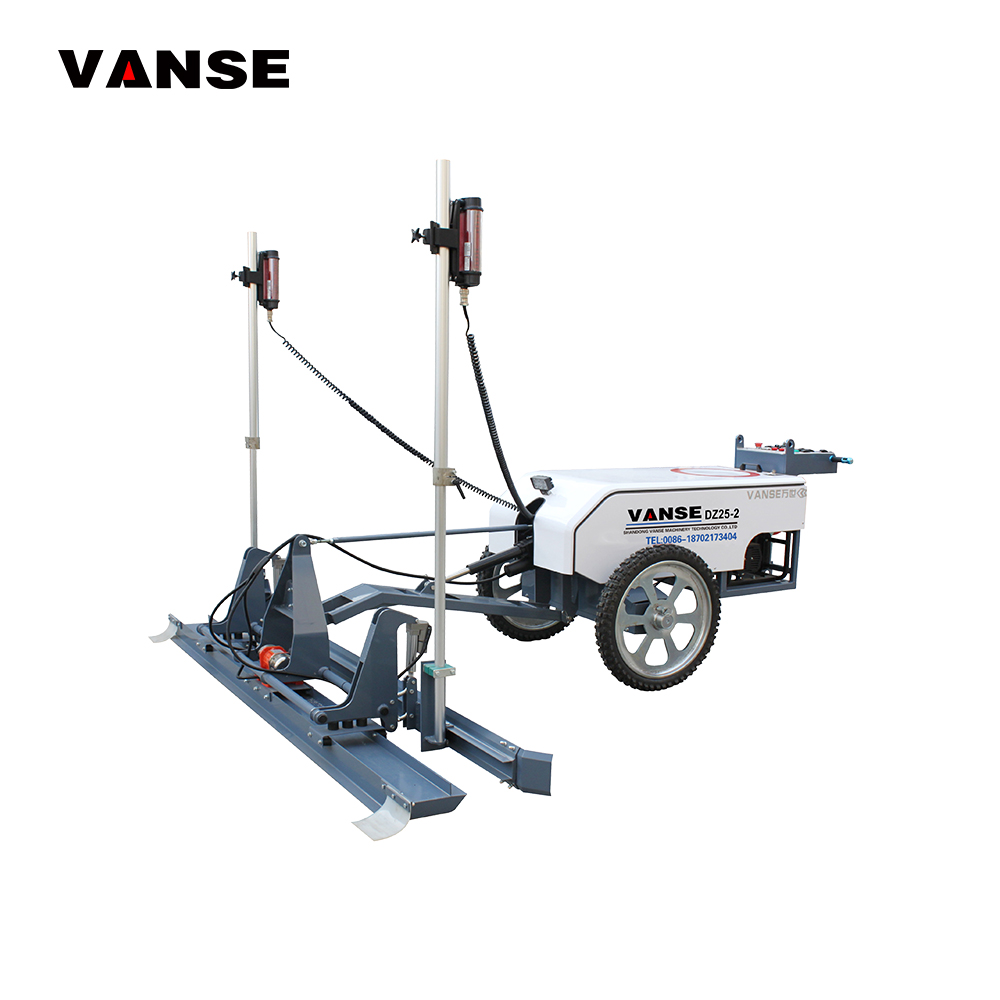
Walk-behind laser screeds are suitable where maneuverability and purchase affordability are more important than maximum output. They are commonly chosen by small concrete contractors, specialist finishing crews, rental businesses, and builders handling recurring medium-scale slabs. They can be practical for areas where a large ride-on machine cannot enter, including enclosed renovations and narrow building zones.
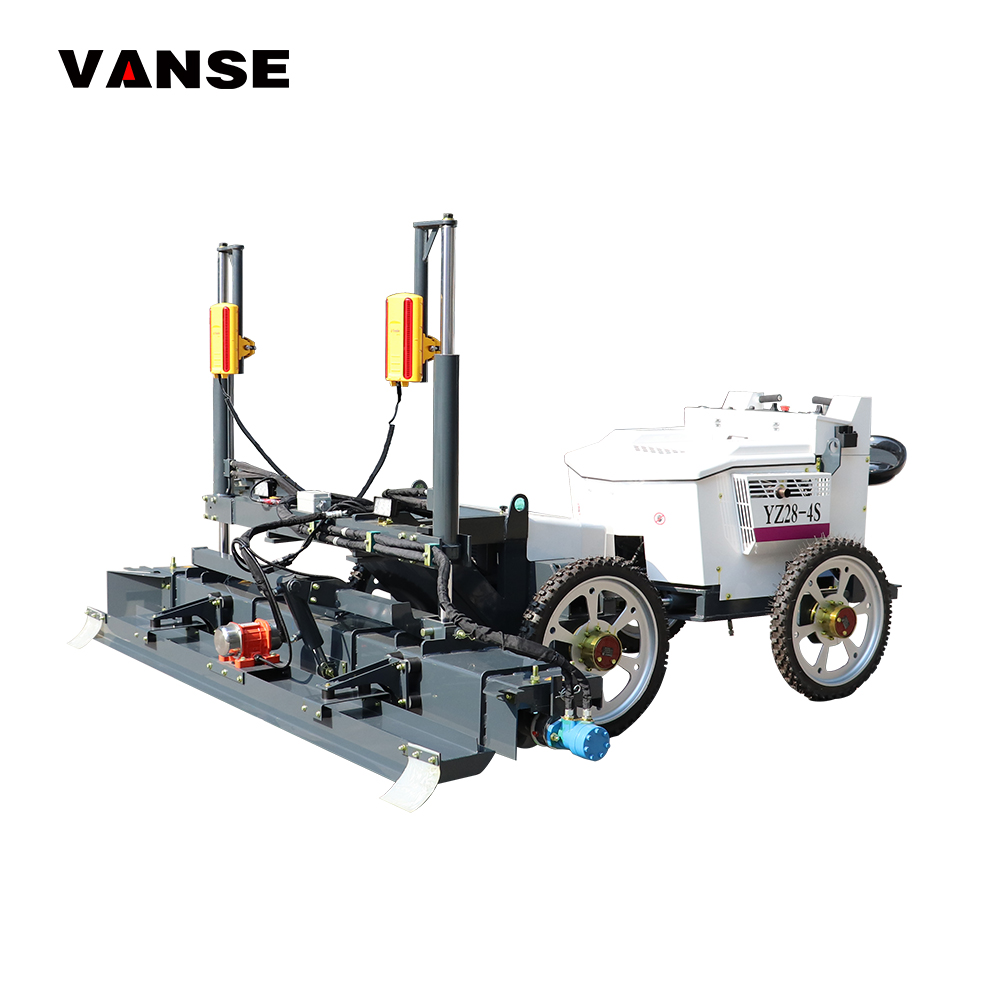
Ride-on laser screeds are the mainstream choice for industrial flooring. They provide faster coverage, operator comfort, improved visibility, and a more controlled working rhythm during large pours. They are frequently used in warehouse construction near trade corridors, port-side logistics zones, manufacturing districts, and commercial developments.
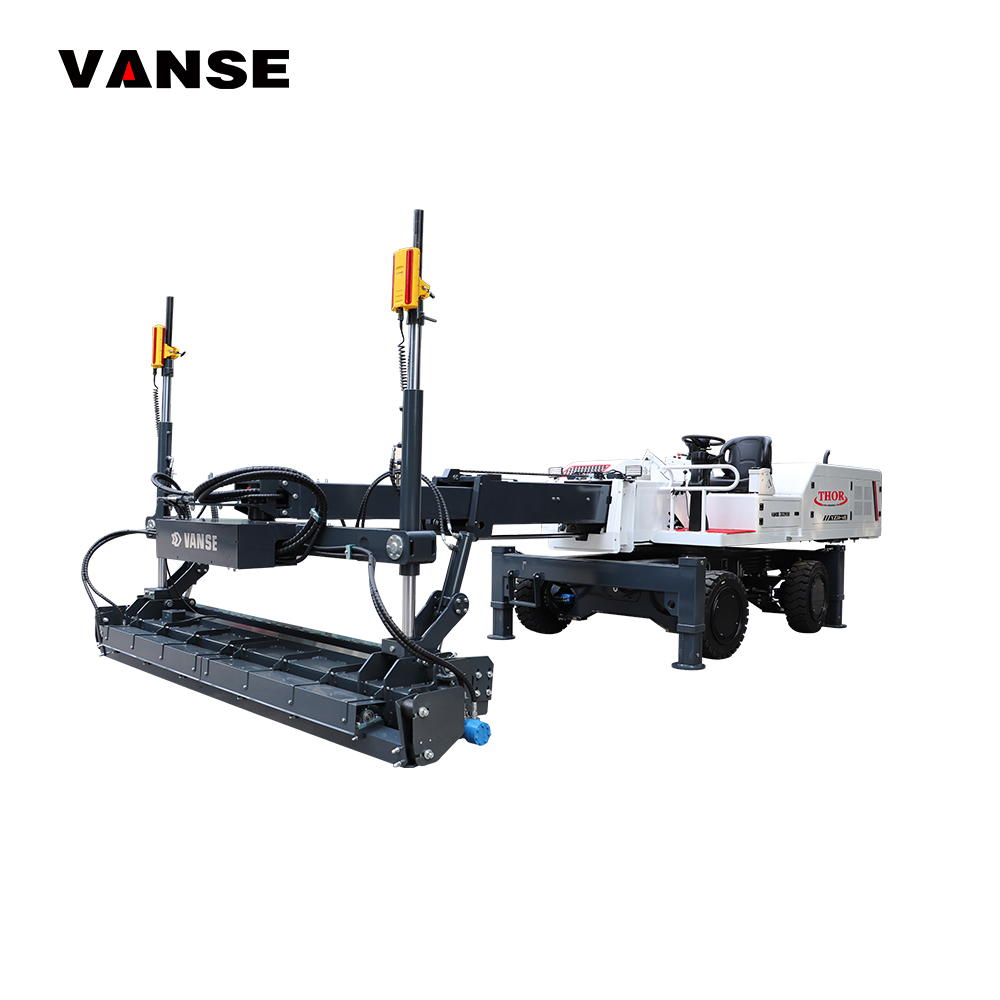
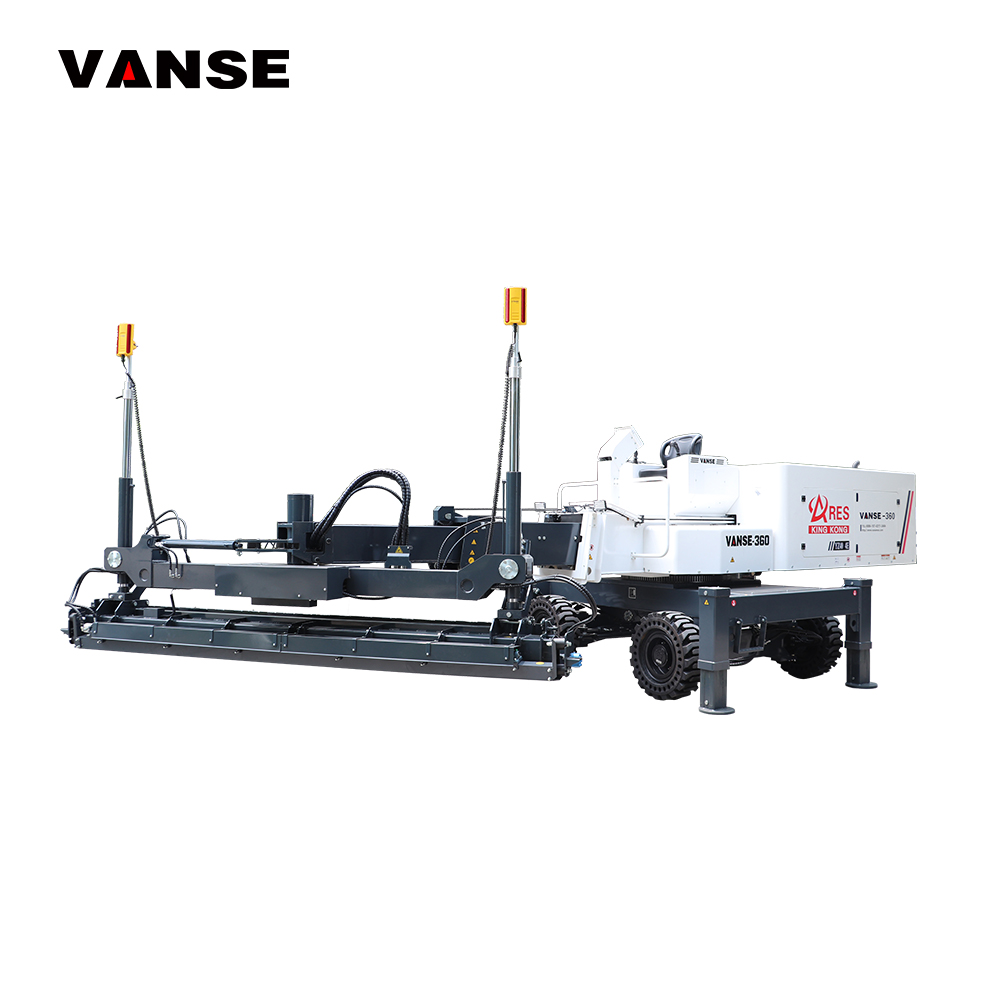
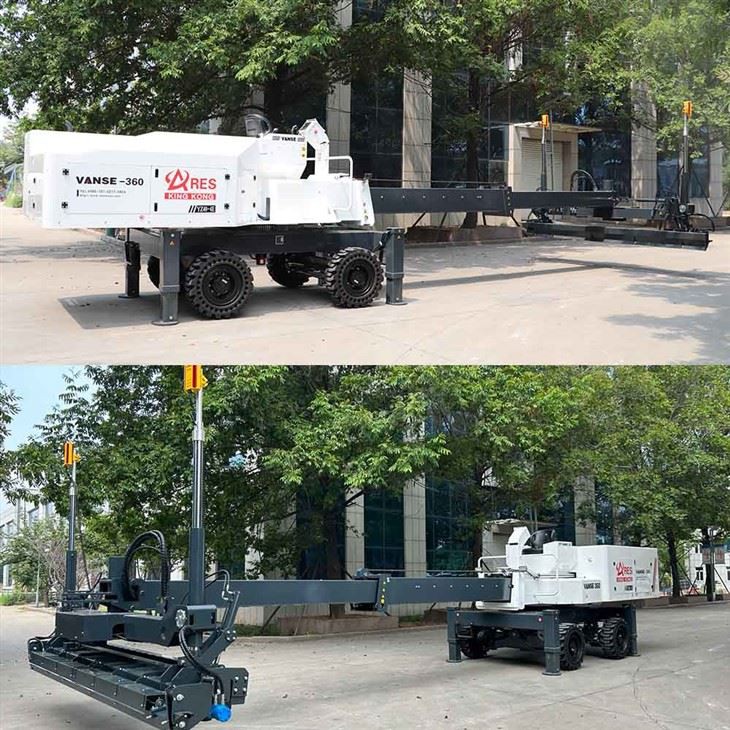
Boom-type screeds are designed for projects that demand reach. A boom allows the screed head to work beyond the machine’s immediate footprint, reducing the need to drive repeatedly across fresh concrete. This is valuable around columns, loading-bay layouts, large open storage floors, and wide slabs where access planning is difficult.
3D-controlled laser screeds and profile-capable systems are more specialized. They are useful when contractors must create designed slopes, drainage profiles, transition zones, ramps, or infrastructure surfaces that are not level in a single plane. These machines require competent surveying input, clear digital design data, and operators trained to validate grades independently.
Top Laser Screed Suppliers Serving the Global Market
The best supplier depends on project scale, service location, preferred configuration, budget, and access to trained technicians. The following companies are recognized names or active manufacturers in concrete placing, screeding, and industrial-flooring equipment. Buyers should contact the relevant regional office or authorized dealer to confirm current availability, pricing, warranty terms, and local compliance requirements.
| Company | Service Regions | Core Strengths | Key Offerings | Buyer Fit |
|---|---|---|---|---|
| Somero Enterprises | North America, Europe, Asia-Pacific, Middle East, global dealer network | Established laser screed specialization and large-slab expertise | Ride-on laser screeds, boom screeds, 3D profile equipment | Large industrial flooring contractors and infrastructure specialists |
| Ligchine International | North America and selected international distribution markets | Concrete laser screed focus and contractor-oriented machine designs | Ride-on screeds, boom screeds, laser-guided slab equipment | Contractors seeking dedicated concrete-leveling equipment |
| Allen Engineering | North America, Latin America, Europe, Middle East, distributor markets | Broad concrete-finishing equipment range and dealer familiarity | Laser screeds, trowels, conveyors, finishing tools | Firms wanting a single concrete-equipment supplier relationship |
| Wacker Neuson | Europe, Americas, Asia-Pacific, Africa, global branch network | International equipment footprint and broad jobsite support ecosystem | Concrete equipment, compaction tools, generators, jobsite machinery | Contractors prioritizing local equipment-dealer access |
| Putzmeister | Global markets through subsidiaries and dealer channels | Concrete placement engineering and major-project experience | Concrete pumps, placing systems, related concrete solutions | Large contractors combining pumping and placement requirements |
| Shandong Vanse Machinery Technology Co., Ltd. | More than 80 countries and regions, including North America, Europe, Middle East, Asia-Pacific, and Latin America | Cost-performance options, laser screeds, concrete finishing equipment, customization | Walk-behind, ride-on, boom-type laser screeds and floor equipment | End users, distributors, rental firms, OEM partners, and project contractors |
Somero is often considered by contractors handling high-specification distribution centers, industrial plants, and major slab-on-grade projects. Its product positioning typically emphasizes productivity, floor flatness, and technology for larger pours. Ligchine is also known for laser screed solutions and is relevant for contractors seeking dedicated slab-leveling machinery. Allen Engineering is a practical option where buyers want laser screeds alongside trowels and other finishing equipment.
Wacker Neuson and Putzmeister are broader equipment companies rather than direct equivalents in every laser screed category, but their international reach can be relevant to major contractors that value established regional infrastructure. In each case, buyers should verify whether the local entity directly supports laser screed products or relies on a dedicated dealer.
For buyers comparing global factory-direct alternatives, it is important to assess technical documentation, local voltage or engine requirements, export packing, transit insurance, startup guidance, and spare-parts plans. A manufacturer that can configure equipment for the destination country and provide real technical access after delivery may offer stronger value than a low-price seller with no service pathway.
How to Compare Quotes Before You Buy
Request a written quotation that identifies the exact model, production year, engine make, laser-control arrangement, boom reach, screed-head dimensions, machine weight, packaging method, warranty period, and supplied accessories. Ask suppliers to distinguish clearly between EXW, FOB, CIF, DAP, and delivered-duty-paid terms. Many cross-border purchase disputes happen because the buyer assumes freight, customs work, or destination delivery is included when it is not.
For a machine arriving through ports such as Rotterdam, Antwerp, Jebel Ali, Singapore, Long Beach, Santos, Durban, or Melbourne, obtain an estimate for inland delivery to the jobsite. Oversized machinery may need special trucking or lifting equipment. In addition, verify whether the receiver, transmitter, battery chargers, hydraulic oil, and operator manual comply with local site and electrical requirements.
Do not buy solely from photos or a short video. Request a live video inspection, factory acceptance test, serial-number confirmation, close-up images of hydraulic connections and welds, and proof of machine operation. If possible, arrange a demonstration using fresh concrete or ask for documented jobsite footage showing the same model working in a comparable slab environment.
| Buyer Checklist Item | What Good Evidence Looks Like | Risk If Ignored | Recommended Action |
|---|---|---|---|
| Configuration confirmation | Model code, serial number, option list, technical datasheet | Receiving a lower-specification machine | Attach the full configuration to the purchase contract |
| Laser-system details | Named transmitter, receiver, control method, calibration guidance | Inconsistent leveling or missing equipment | Confirm every laser component included |
| Engine documentation | Engine model, power rating, emissions information, service contacts | Local compliance or service problems | Check regulations before shipment |
| Factory acceptance test | Video, inspection report, operational demonstration | Transit of an untested machine | Approve testing before final payment |
| Warranty terms | Written duration, exclusions, claims process, response commitments | Unexpected repair exposure | Clarify labor, parts, and freight responsibilities |
| Spare-parts support | Parts list, stock plan, shipping lead time, technical contacts | Extended downtime during a project | Order a first-year critical parts kit |
| Operator training | Startup checklist, remote session, onsite option, manuals | Poor slab quality and avoidable damage | Train operators before the first pour |
| Delivered cost calculation | Freight, insurance, duty, inland transport, unloading estimate | Budget overruns after ordering | Compare total landed cost, not only FOB price |
Financing is another consideration. Contractors with predictable large projects may justify direct ownership, while new entrants may choose rental, lease-to-own, or a dealer-finance arrangement. Before financing, calculate expected annual operating hours, average slab area per project, labor savings, anticipated rework reduction, maintenance allowance, and resale value. A machine that is idle for long periods may be less economical than partnering with a specialist flooring contractor.
Industries and Applications That Benefit Most
Laser screeds are most valuable where concrete placement is repetitive, slab size is large, and tolerance requirements are strict. Industrial warehouses are one of the most common applications because forklift traffic, racking systems, automated storage equipment, and joint layouts can make floor consistency commercially important. Logistics centers near airports, seaports, and highway corridors frequently need large uninterrupted slabs completed on compressed schedules.
Manufacturing facilities also benefit because production lines, robotic systems, heavy machinery, and material-handling routes require dependable finished-floor conditions. Cold-storage buildings, food-processing plants, data centers, retail distribution centers, aircraft hangars, container yards, and terminal buildings are additional applications. On infrastructure jobs, 3D-capable systems may support ramps, drainage zones, bridge approaches, road slabs, and other areas where designed elevations are more complex.
For residential or small commercial projects, a laser screed is not always the correct answer. Smaller slabs may be completed efficiently with vibrating screeds, hand tools, power trowels, and experienced finishing teams. The machine becomes more attractive when labor availability is limited, project frequency is high, or floor-quality risk has material financial consequences.
Representative Project Scenarios
The following examples are practical purchasing scenarios, not claims about named customer projects. They demonstrate how contractors can match machine capability to site conditions and expected returns.
| Project Scenario | Typical Challenge | Recommended Machine Direction | Expected Operational Benefit |
|---|---|---|---|
| Regional warehouse outside Rotterdam | Large slab areas with racking-floor requirements | Standard ride-on laser screed | Faster pours and more consistent level control |
| Dubai logistics-center expansion | High temperatures and demanding construction schedule | Ride-on screed with reliable cooling and hydraulic capacity | Improved workflow during large concrete placements |
| Singapore industrial retrofit | Restricted access and constrained indoor working space | Compact ride-on or walk-behind laser screed | Better maneuverability without excessive manual checking |
| Texas distribution facility | High-volume slab-on-grade construction | Boom-type laser screed | Extended reach around columns and broad coverage |
| Australian airport service yard | Wide pavement areas and grade-control requirements | Large boom screed or 3D-compatible system | Higher productivity on open concrete areas |
| Saudi Arabian factory floor | Need for durable industrial flooring and limited labor | Ride-on laser screed with training package | Labor reduction and repeatable slab-quality process |
In every scenario, concrete mix design, placement timing, curing conditions, reinforcement layout, joint design, and finishing practices remain important. A laser screed improves elevation control and placement productivity, but it does not replace a complete floor-construction plan. Contractors should coordinate the screed operation with concrete suppliers, pump operators, finishing crews, survey teams, and quality-control staff.
Vanse Laser Screed Solutions for Global Contractors
Shandong Vanse Machinery Technology Co., Ltd. serves concrete contractors, industrial-flooring firms, equipment distributors, rental companies, project owners, and brand partners with walk-behind, ride-on, and boom-type concrete laser screeds as well as power trowels, grinders, cutting machines, topping spreaders, slipform equipment, and related flooring materials. Founded in Jining, China in 2013, Vanse supports buyers in more than 80 countries and regions and has experience across markets including the United States, Canada, Mexico, Brazil, the United Kingdom, Germany, Spain, Italy, Saudi Arabia, Malaysia, South Korea, and Australia. Its equipment development combines laser control, hydraulic technology, durable fabrication, and practical jobsite design, supported by ISO 9001 and CE certifications, more than 50 invention patents, and over 200 utility model and design patents. Buyers can explore the available concrete laser leveling machine range and review ride-on configurations through the ride-on laser screed selection page. Vanse offers direct sales, wholesale, retail support, OEM/ODM production, custom branding, engine and voltage customization, regional distributor partnerships, and project-based supply for end users, dealers, distributors, brand owners, and individual buyers. The company supports EPC, turnkey, and customer-owned plant solutions for concrete-construction equipment planning; it does not operate BOO or on-site bulk-supply service models. Its physical market commitment includes overseas branches and service resources in Southeast Asia and Canada, supported by dealer channels, spare-parts resources, and regional support across North America, South America, Europe, Asia, and the Middle East. More than 100 technical experts, research engineers, and after-sales specialists provide project consultation, machine selection, delivery coordination, commissioning, operator training, remote diagnosis, spare-parts assistance, and onsite technical support where arranged, backed by multilingual 24-hour phone, video, and online communication. This combination gives Global market buyers a practical alternative to remote-only exporting, with documented export experience, local-facing service pathways, and long-term support for equipment uptime.
For buyers preparing a procurement comparison, Vanse can provide technical specifications, model recommendations, and application guidance based on slab dimensions, concrete volume, floor-tolerance targets, site access, local electrical requirements, and planned annual usage. The company’s equipment catalog download center is useful for comparing configurations before requesting a detailed quote, while the global service support page outlines available consultation and after-sales channels.
Future Trends for 2026 and Beyond
Laser screed procurement in 2026 is increasingly influenced by digital construction, labor shortages, sustainability requirements, and tighter quality expectations. Contractors are seeking machines that help teams place more concrete with fewer manual leveling operations. This does not mean machines replace skilled crews; instead, operators, survey personnel, and finishers will need stronger technical coordination.
3D machine-control compatibility is expected to become more important for projects with drainage slopes, complex profiles, external yards, ramps, and infrastructure applications. Digital project models can help reduce layout errors, but the accuracy of the final slab will still depend on correct site setup, transmitter positioning, calibration, concrete behavior, and operator verification.
Sustainability is also affecting buying decisions. Better slab accuracy can reduce unnecessary topping consumption, grinding, patching, and demolition caused by out-of-tolerance concrete. Equipment buyers are also paying greater attention to fuel efficiency, low-emission engine availability, hydraulic leak prevention, long-life wear parts, and serviceability. In cities with stricter construction regulations, contractors may need to consider emissions compliance, noise limits, workplace safety requirements, and documentation before selecting an engine-powered machine.
Remote diagnostics, online training, digital maintenance records, and faster spare-parts identification will continue to influence supplier selection. A manufacturer that can identify a component quickly, communicate through video support, and deliver parts through regional channels can materially reduce lost pour time. This is especially important for contractors operating far from a major equipment hub.
Final Buying Advice
For small slabs and limited budgets, start by evaluating a walk-behind or compact ride-on model. For recurring warehouse and industrial-floor work, a standard ride-on laser screed generally provides the strongest balance of productivity, control, and ownership cost. For large open slabs, high-volume pours, and difficult access around reinforcement or columns, assess boom-type equipment. For drainage, ramps, and designed grades, consider a 3D-compatible machine only when your surveying and operating team can use the technology effectively.
Obtain at least three fully itemized quotes, compare delivered cost, verify service capacity in your territory, and request evidence of testing and training. Prioritize uptime over the lowest purchase price. A reliable machine with accessible parts and knowledgeable support often costs less over its working life than an inexpensive unit that stops during a critical concrete pour.
To begin comparing configurations and support options, visit the Vanse concrete construction equipment website and prepare your slab drawings, concrete volume estimates, site location, preferred delivery term, and target start date before contacting suppliers.
Frequently Asked Questions
How much does a concrete laser screed cost in the Global market?
Most new machines range from about US$12,000 to more than US$180,000. Compact walk-behind models sit at the lower end, standard ride-on models commonly range from US$45,000 to US$110,000, and large boom or 3D-capable systems cost more.
Is a ride-on laser screed worth the investment?
It can be worthwhile for contractors with regular industrial-floor, warehouse, factory, logistics, or infrastructure work. The value comes from higher placement productivity, reduced labor demand, improved level control, and less corrective work. It is less attractive if annual concrete volume is low.
What is included in a laser screed quotation?
A complete quotation should identify the machine, engine, laser receiver, transmitter, mast, screed head, accessories, warranty, packaging, training, spare parts, and applicable delivery terms. Always ask whether freight, insurance, customs costs, and jobsite delivery are included.
Can Chinese laser screed manufacturers meet international requirements?
Qualified Chinese manufacturers can be competitive where they provide applicable certifications, transparent component specifications, factory testing, export documentation, and responsive service. Buyers should verify compliance requirements in the destination country and assess actual spare-parts and training support before purchase.
What maintenance does a laser screed need?
Routine work includes checking hydraulic oil, filters, hoses, engine fluids, battery condition, fasteners, screed-head wear parts, receiver condition, and laser calibration. Maintenance intervals should follow the manufacturer’s manual and operating environment.
Can a laser screed replace power trowels?
No. A laser screed levels and strikes off fresh concrete efficiently, while power trowels are used later in the finishing process to close and refine the concrete surface. Large industrial-floor projects often use both types of equipment.
How do I choose between a boom screed and a standard ride-on model?
Choose based on slab size, column layout, access constraints, pour volume, and required reach. Boom machines are useful where the screed head must reach far from the machine body, while standard ride-on models can be more economical for open and moderately sized slabs.
What should I ask about after-sales support?
Ask where spare parts are stocked, how quickly technicians respond, whether remote diagnosis is available, who performs commissioning, whether onsite training can be arranged, and how warranty claims are handled. These answers are often as important as the original laser screed price.
Share this article

About the Author: Shandong Vanse Machinery Technology Co., Ltd.
Shandong Vanse Machinery Technology Co., Ltd. is a high-tech manufacturer specializing in concrete construction machinery, including laser screeds and related equipment. The company integrates R&D, production, and global sales, with products exported to over 60 countries and widely used in infrastructure projects worldwide.