Insight blog
Global Market Laser-Controlled Concrete Screed Guide
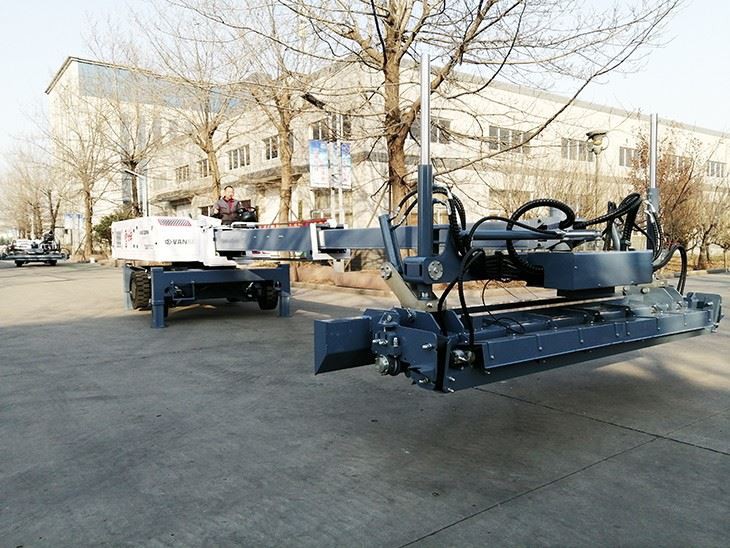
Laser-Controlled Concrete Screed Guide for the Global Market
Quick Answer

A laser-controlled concrete screed is a concrete placing and leveling machine that uses rotating laser transmitters, receivers, hydraulic actuators, and a screed head to place slab-on-ground concrete at a controlled elevation. For industrial floors, warehouses, logistics centers, terminal yards, and large commercial slabs, it can reduce surveying work, labor dependence, rework, and flatness variation compared with manual screeding methods.
For most contractors in the Global market, the right choice depends on slab size, access conditions, required flatness, concrete volume per day, and service coverage. Walk-behind units fit smaller interiors and repair work. Ride-on machines suit medium and large warehouses. Boom-type laser screeds are usually the strongest choice for wide industrial floors, airport-related pavements, and high-output projects.
Leading options include Somero, Ligchine, Shandong Vanse Machinery Technology, Allen Engineering, GOMACO, and Wacker Neuson. Buyers should compare actual placement width, boom reach, receiver technology, engine support, hydraulic reliability, local parts access, operator training, and total ownership cost rather than purchase price alone.
Qualified international manufacturers, including established Chinese suppliers, can also be practical choices when they provide relevant CE or ISO certification, verified installation references, accessible spare parts, and responsive pre-sales and after-sales support. Their cost-performance advantage can be especially attractive for contractors, rental fleets, and distributors expanding across price-sensitive markets.
Why Laser-Controlled Screeding Matters in the Global Market

Concrete flatness has become more important as the Global market expands warehouse automation, e-commerce fulfillment, battery manufacturing, cold-chain logistics, data centers, port-side distribution, airport cargo facilities, and advanced industrial production. Modern facilities often require flatter slabs to support very-narrow-aisle forklifts, automated guided vehicles, high-rack storage, robotic systems, and fast-moving material-handling equipment. A conventional hand-screeded floor can perform adequately in many applications, but it typically requires more grade checking, more labor at the strike-off stage, and greater correction effort after curing.
A laser-controlled concrete screed combines a rotating laser plane with a receiving system mounted on the screed machine. The receiver continuously measures its position relative to the laser reference, while the hydraulic system raises or lowers the screed head to maintain the programmed slab elevation. The machine spreads, strikes off, consolidates, and levels fresh concrete in one coordinated process. Depending on the equipment type and site controls, the system can support millimeter-level elevation control, but the final result still depends on concrete consistency, subbase preparation, laser setup, operator skill, joint layout, finishing, curing, and quality verification.
Demand is strongest around global trade and construction hubs where large slabs are common. Examples include logistics corridors near Rotterdam and Antwerp in Europe, Jebel Ali in Dubai, Port Klang in Malaysia, Los Angeles and Savannah in the United States, Vancouver in Canada, Santos in Brazil, Busan in South Korea, Melbourne in Australia, and industrial zones surrounding Mexico City, Monterrey, Riyadh, Shanghai, and Singapore. In these markets, contractors often need a repeatable way to place large areas quickly while documenting slab quality for developers, general contractors, and facility owners.
The business case is not only about speed. A capable concrete laser leveling machine can reduce the number of workers needed at the placement front, lower exposure to labor shortages, support more consistent grades over large pours, and improve schedule predictability. It also allows contractors to compete for projects that specify F-number targets, tighter elevation tolerances, or demanding floor-system requirements.
How a Laser-Controlled Concrete Screed Works

The basic operating principle is simple, although successful use requires disciplined site preparation. A laser transmitter creates a level or sloped reference plane over the work area. One or more receivers on the machine detect the laser beam. The control system compares the receiver position against the desired grade and commands hydraulic cylinders to adjust the screed head. As the machine moves across fresh concrete, the auger or plow distributes material, the screed head cuts high spots and fills low areas, and vibration helps consolidate the surface layer.
Most systems are configured for one of three operating modes: level slab placement, programmed slope placement, or 3D profile control. Level placement is common for warehouses, factories, retail slabs, and interior floors. Dual-slope configuration is used for drainage areas, loading yards, ramps, and exterior pavements. 3D control can be useful for more complex profiles where elevation changes cannot be represented by a single flat or sloped laser plane.
Laser guidance does not replace all construction controls. Contractors still need to establish benchmarks, verify the subgrade and base, confirm form elevations, check concrete slump or workability, manage delivery timing, maintain correct joint positions, and test finished flatness where required. The laser system improves the strike-off operation; it is one component within a complete concrete floor production process.
Laser Screed Types and Selection Priorities
Equipment category is the first major purchase decision. Machine size, chassis layout, placement reach, transport requirements, and operator position all affect productivity and suitability. A contractor pouring narrow interior bays has different needs from a specialist placing 15,000-square-meter logistics slabs or a civil contractor constructing an airport hardstand.
| Machine type | Typical work environment | Main strengths | Key limitations | Recommended buyer |
|---|---|---|---|---|
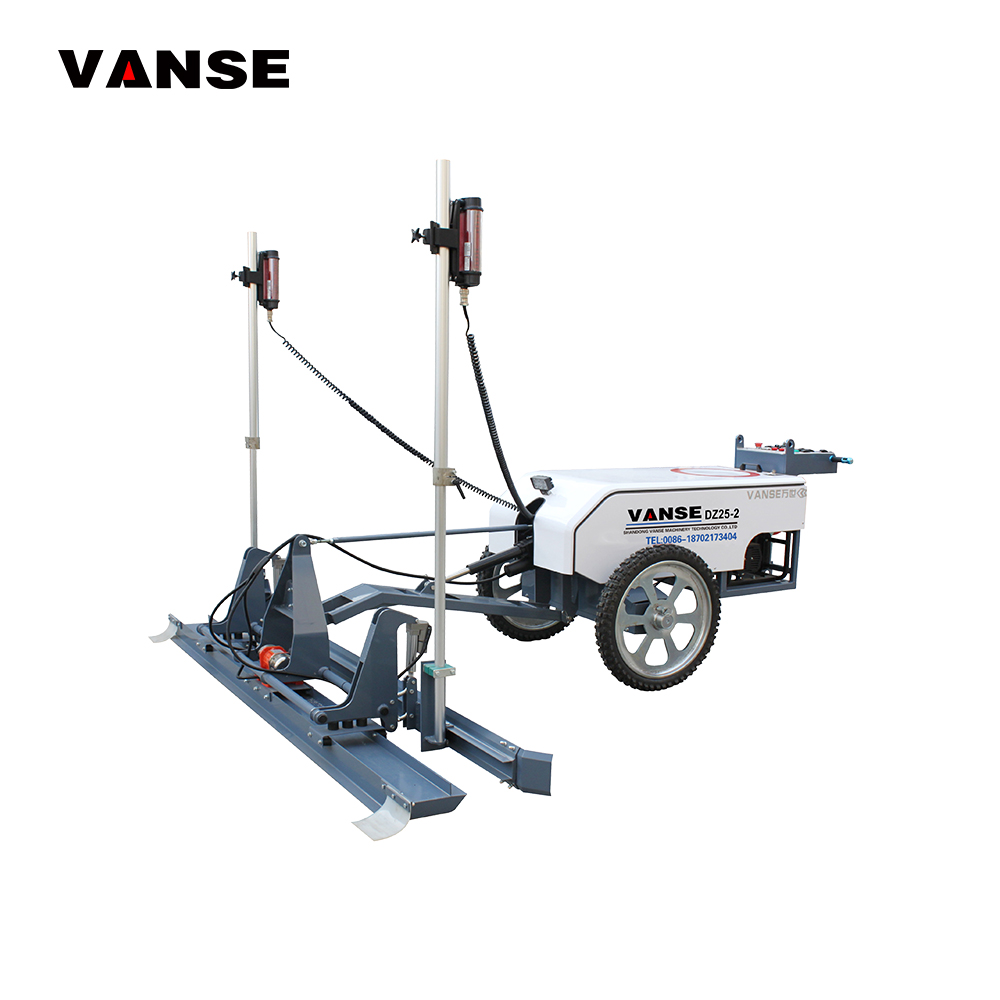
| Walk-behind laser screed | Small warehouses, residential slabs, repair areas, confined interior spaces | Compact transport, lower entry cost, simple operation, easier access through doors | Lower daily output and shorter placing width than ride-on or boom models | Small concrete contractors and specialized floor repair teams |
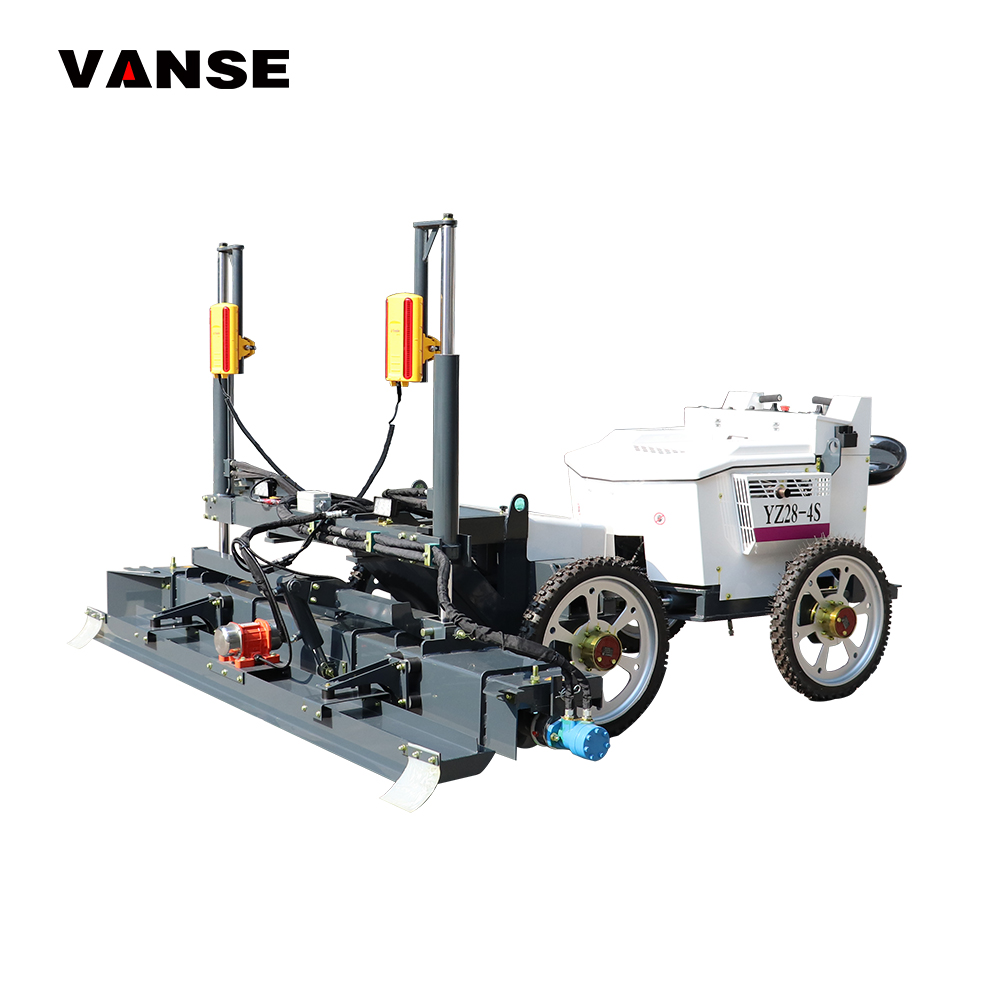
| Ride-on laser screed | Medium industrial floors, commercial projects, warehouse expansions | Good productivity, improved operator comfort, strong maneuverability | Needs sufficient access space and planned concrete supply | General contractors, industrial flooring companies, rental fleets |
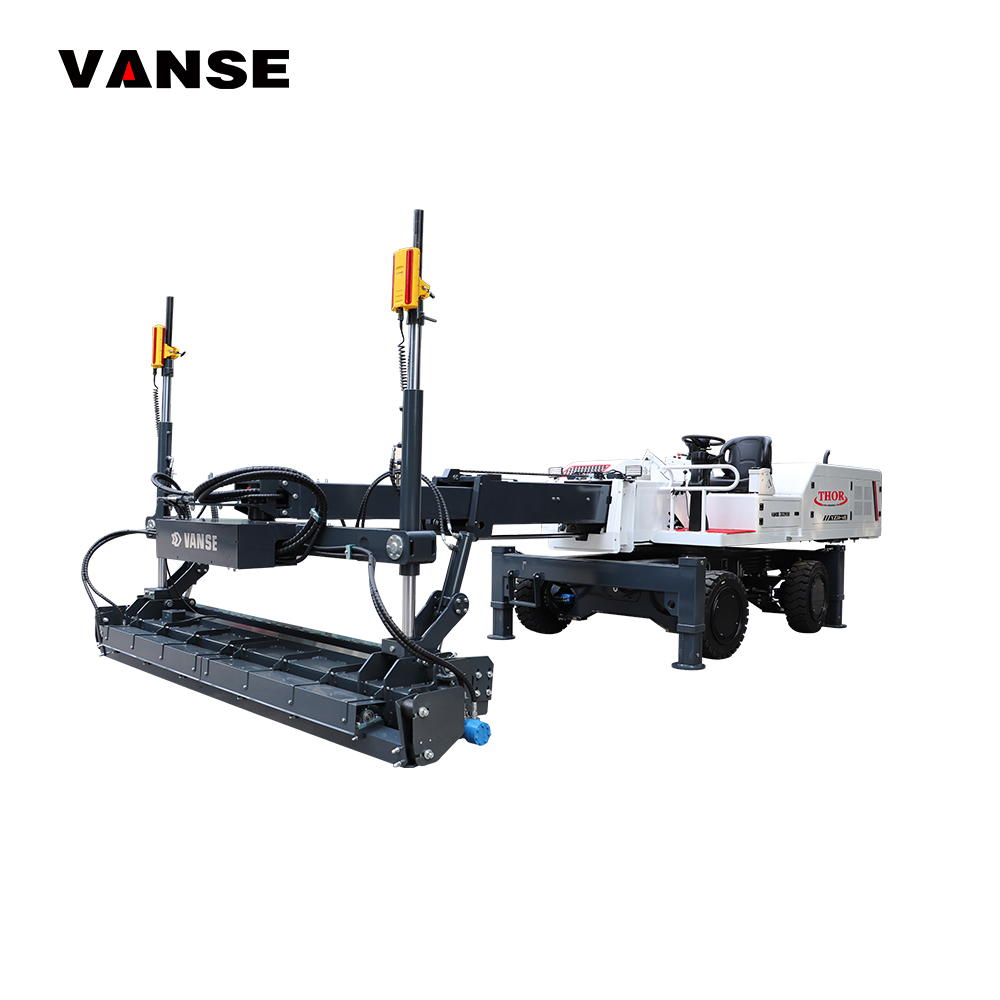
| Boom-type laser screed | Large warehouses, factories, distribution centers, airport support areas | Long reach, high output, reduced need to drive over fresh concrete | Higher investment, more complex transport and operator training needs | High-volume flooring contractors and large project owners |
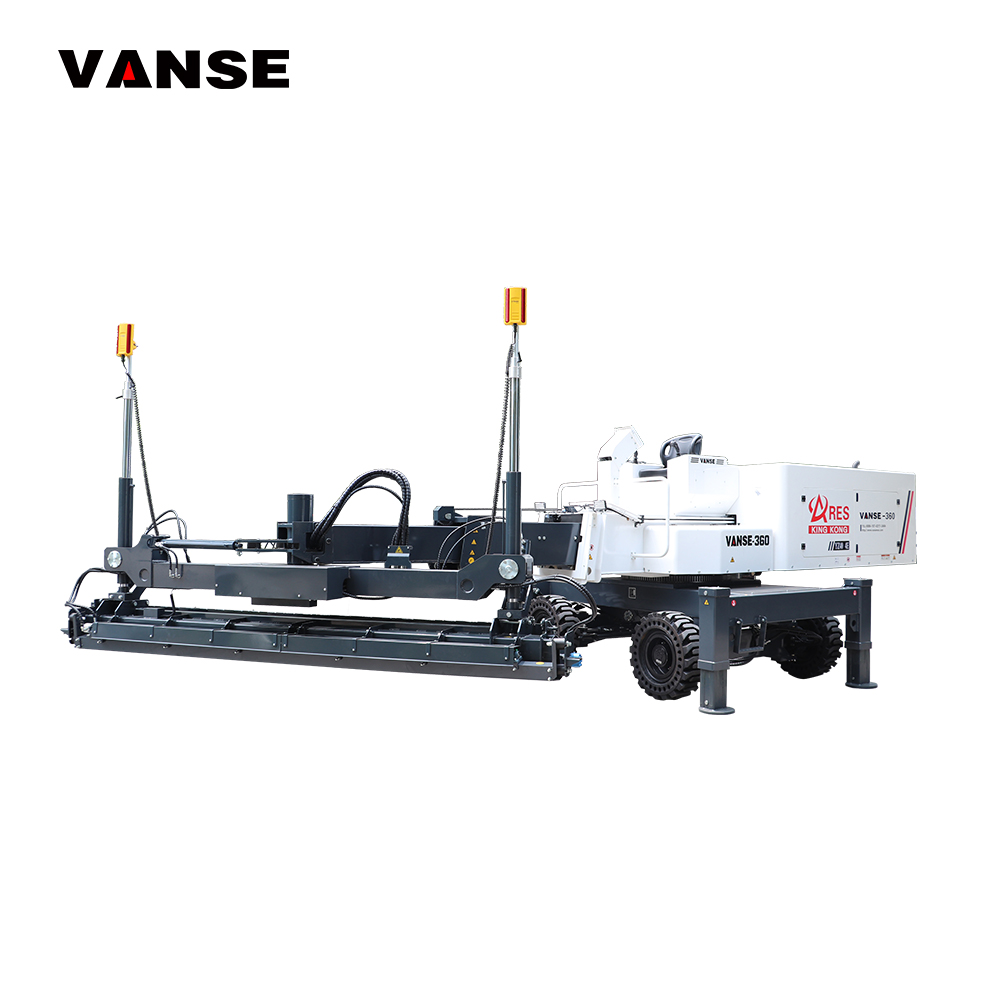
| Four-wheel-drive boom screed | Outdoor slabs, yards, uneven working platforms, infrastructure areas | Improved travel traction and access on more demanding job sites | May be larger and less convenient for narrow interior work | Civil contractors and mixed industrial-infrastructure fleets |
| Telescopic boom screed | Wide pours with obstructions, large column grids, broad warehouse bays | Flexible reach and positioning without frequent machine moves | Requires careful maintenance of boom and hydraulic components | Contractors prioritizing wide daily coverage |
| 3D-profile-compatible screed | Drainage slabs, ramps, external pavements, complex elevation projects | Supports changing grade geometry and digital project coordination | Higher setup complexity and a greater need for trained survey personnel | Infrastructure and technically demanding concrete contractors |
The table shows why “best machine” is not a universal category. A small contractor may receive better returns from a compact walk-behind screed that can be moved between projects in a light trailer. A contractor working near large ports, industrial parks, or logistics developments may justify a boom-type machine because its reach and output reduce labor at the pour front. Buyers should identify their most common project profile before comparing brochures.
Specifications That Affect Productivity and Floor Quality
Specifications should be reviewed in relation to actual operating conditions rather than in isolation. A long boom may look attractive, but its value depends on pour layout, truck access, concrete placement method, slab thickness, reinforcement congestion, and clearance around columns or walls. Similarly, a powerful engine matters only if the machine’s hydraulic system, screed head design, receiver accuracy, and operator controls can turn that power into consistent work.
| Specification | Why it matters | What buyers should verify | Practical effect on site |
|---|---|---|---|
| Maximum boom reach | Determines how much slab can be reached from one machine position | Horizontal reach, vertical range, working envelope, clearance requirements | Can reduce moves and improve continuity during large pours |
| Screed head width | Influences coverage rate and finish consistency | Standard width, optional widths, replacement blade availability | Wider heads improve coverage but require adequate concrete supply |
| Laser receiver system | Controls elevation response and grade consistency | Compatibility with common transmitters, receiver protection, calibration procedure | Reliable signal reception reduces grade corrections and downtime |
| Hydraulic system | Drives boom, leveling cylinders, steering, vibration, and screed movement | Component quality, hose routing, filtration, cooling, service access | Stable hydraulics support smooth control and reduce failure risk |
| Engine and power source | Affects mobility, operating cost, emissions compliance, and local service | Engine brand support, emission tier, fuel use, local parts availability | Locally supported engines simplify maintenance in remote projects |
| Machine weight and dimensions | Determines transport method, slab loading considerations, and site access | Transport width, height, lifting points, trailer requirements | Improves planning for urban sites, basements, and cross-border shipping |
| Control interface | Influences operator learning curve and repeatability | Display clarity, diagnostics, joystick response, language options | Simple controls shorten training time and reduce operating errors |
| Vibration system | Helps consolidate fresh concrete during strike-off | Frequency control, vibration consistency, service life of components | Supports proper surface density when matched to the concrete mix design |
Always request a machine-specific specification sheet, not only a product-family brochure. Confirm the standard configuration included in the quotation: laser receiver, transmitter, spare blades, tool kit, operator seat, lights, remote support capability, shipping package, commissioning support, and warranty coverage. A lower quotation can become more expensive if necessary operating accessories are excluded.
Buyer Guide: How to Choose the Right Machine
Start with a project audit. Review the average slab area per pour, annual concrete volume, usual slab thickness, required floor tolerance, construction access, and available crew. A screed machine should fit the contractor’s concrete placing method. If concrete is delivered by pump and placed continuously, a high-output boom screed can be highly effective. If concrete arrives intermittently by ready-mix truck and the site is congested, a smaller, more maneuverable machine may produce better results.
Next, calculate total cost of ownership. Include purchase price, freight, import duty where applicable, insurance, operator training, annual maintenance, replacement wear parts, laser calibration, engine service, fuel, transport, and resale value. Contractors working across regions should also check electrical requirements for chargers and diagnostic equipment, fuel quality tolerance, and emissions regulations in their operating markets.
Service planning deserves the same weight as machine capacity. A high-output machine can become a costly idle asset if a receiver, hydraulic hose, sensor, engine part, or control module cannot be supplied quickly. Ask suppliers where they keep parts, whether they offer video diagnostics, how commissioning is handled, and whether trained technicians can attend a project when needed. Buyers near major commercial routes should seek realistic support commitments for locations such as Dubai, Toronto, São Paulo, Hamburg, Kuala Lumpur, Sydney, and Mexico City rather than accepting vague global-service statements.
Finally, request evidence. This can include factory videos, machine serial-number records, acceptance testing procedures, export documentation, customer references where appropriate, training plans, warranty terms, and a spare parts recommendation list. A professional supplier should be able to explain the difference between standard maintenance items and critical emergency spares.
Supplier Comparison for the Global Market
The following suppliers are recognized names associated with laser-guided concrete placement, floor construction equipment, or related concrete paving technology. Availability varies by country, dealer coverage, machine series, local regulations, and project requirements. Buyers should confirm current authorized representation before ordering.
| Company | Service regions | Core strengths | Key offerings | Best fit |
|---|---|---|---|---|
| Somero Enterprises | North America, Europe, Asia-Pacific, Middle East, distributor-supported global markets | Long-established laser screed specialization, broad portfolio, strong brand recognition in industrial flooring | Ride-on and boom-type laser screeds, concrete placing and floor-leveling solutions | Large industrial flooring contractors and high-specification slab projects |
| Ligchine International | United States and international dealer markets | Compact and mid-size laser screed solutions, contractor-focused machine designs | Laser-guided screeds, placing and finishing equipment | Contractors seeking maneuverable equipment for commercial and industrial pours |
| Shandong Vanse Machinery Technology Co., Ltd. | More than 80 countries and regions, with Southeast Asia and Canada service resources | Walk-behind, ride-on, and boom-type range; flexible customization; global export experience | Concrete laser screeds, power trowels, grinders, cutters, topping spreaders, fibers, joints | Contractors, distributors, rental companies, and OEM partners seeking value and range |
| Allen Engineering Corporation | United States and global distributor markets | Concrete finishing heritage, equipment ecosystem, contractor familiarity | Power trowels, riding trowels, concrete placing and finishing equipment | Buyers building a broader concrete finishing fleet |
| GOMACO Corporation | Global infrastructure, paving, and airport construction markets | Advanced concrete paving systems and automated grade-control experience | Slipform pavers, placer-spreaders, curb-and-gutter and paving equipment | Infrastructure contractors with complex pavement applications |
| Wacker Neuson | Europe, North America, Asia-Pacific, and global dealer territories | Wide construction equipment dealer network and compact equipment support | Concrete vibrators, trowels, compacting equipment, job-site machinery | Contractors requiring complementary concrete equipment and local dealer support |
This comparison is intended to structure due diligence, not replace a project-specific evaluation. Somero is often considered for large laser screeding operations and established industrial flooring fleets. Ligchine can be relevant for contractors wanting a compact laser-guided approach. GOMACO is especially relevant where concrete paving and profile-controlled infrastructure work overlap. Allen Engineering and Wacker Neuson are important broader equipment brands for buyers building complete concrete placement and finishing fleets. Shandong Vanse is relevant for purchasers seeking a broad equipment package, flexible specifications, and direct factory cooperation.
Local Supplier and Dealer Evaluation Checklist
In the Global market, local support is often delivered through a mix of direct offices, distributors, independent dealers, rental companies, and service partners. A supplier may have a strong factory but weak local response capacity, or a capable dealer but limited technical depth for laser control. Buyers should interview both the machine manufacturer and the actual regional support organization.
| Evaluation area | Questions to ask | Evidence to request | Risk if ignored |
|---|---|---|---|
| Regional parts inventory | Where are filters, hoses, sensors, blades, and control parts stocked? | Parts list, warehouse location, normal delivery times | Long machine downtime during active pours |
| Technical support coverage | Who answers urgent hydraulic, laser, and engine questions? | Service contact list, support hours, escalation procedure | Slow diagnosis and project schedule disruption |
| Operator training | Is training provided on laser setup, calibration, operation, cleaning, and shutdown? | Training agenda, language support, attendance record template | Poor grade control and avoidable equipment damage |
| Commissioning service | Can the supplier support first-job commissioning on site or remotely? | Commissioning checklist and technician availability | Delayed mobilization and reduced first-project productivity |
| Warranty clarity | What is covered, excluded, and required for warranty compliance? | Written warranty terms and maintenance schedule | Unexpected repair cost and disputes |
| Local compliance | Does the machine meet the destination market’s safety and emissions expectations? | CE documents, engine records, customs and electrical information | Import delays, registration issues, or site rejection |
| Reference projects | Has the supplier supported similar slab sizes and concrete conditions? | Project photos, customer testimonials, machine operation records | Buying equipment unproven for the required application |
For international purchases, the commercial terms should state Incoterms, port of loading, destination port, packing method, insurance responsibilities, customs documentation, commissioning scope, and spare parts package. Common trade gateways may include Qingdao and Shanghai for China-origin equipment, Rotterdam for continental Europe, Jebel Ali for the Gulf, Singapore for Southeast Asia, and Vancouver, Long Beach, or Savannah for North American distribution. Planning these details early prevents expensive delays after the machine reaches port.
Industries and Applications
Laser-guided screeding is used wherever a broad concrete slab needs controlled elevation and efficient placement. Industrial flooring is the most visible application, but the technology has broader value. Manufacturing plants need durable floors beneath heavy machines. E-commerce fulfillment centers need predictable slab performance for storage racking and automated systems. Cold-storage facilities need smooth, durable slabs that integrate with insulation and joint systems. Airport terminal yards and logistics yards may need controlled slopes for drainage and equipment movement.
Commercial projects are also relevant. Large retail units, convention centers, exhibition halls, parking structures, schools, hospitals, and mixed-use developments frequently include sizable concrete floor areas. In infrastructure work, profile-control requirements may point contractors toward specialized 3D guidance, slipform paving, or laser-controlled screeding depending on geometry and specifications.
| Industry | Typical application | Why laser guidance helps | Preferred machine approach |
|---|---|---|---|
| Warehousing and logistics | High-bay storage floors, sorting hubs, fulfillment centers | Supports consistent elevation across large bays and repeated pours | Ride-on or boom-type screed |
| Manufacturing | Factory floors, assembly halls, heavy equipment areas | Helps meet floor specifications and reduces manual strike-off labor | Ride-on or boom-type screed |
| Cold-chain construction | Refrigerated warehouses, food distribution facilities | Improves slab consistency before specialist finishing and joint installation | Boom-type screed with trained finishing crew |
| Commercial building | Retail slabs, malls, large indoor public spaces | Provides efficient placement where access and scheduling are constrained | Walk-behind or ride-on screed |
| Airport and transport | Aprons, hangar floors, terminal support yards | Supports high-output placement and grade discipline over broad areas | Boom screed or profile-control equipment |
| Port and terminal facilities | Container support areas, warehouses, equipment maintenance slabs | Assists drainage-grade control and durable slab construction | Four-wheel-drive boom screed |
| Infrastructure | Roadside slabs, bridge approaches, drainage channels, utility platforms | Useful for slope control and coordinated digital layout | 3D-compatible screed or paving system |
Machine selection should also account for the concrete design. Fiber-reinforced concrete, low-shrinkage mixes, high-strength concrete, and mixes with supplementary cementitious materials may behave differently during placement and finishing. The screed operator, batch plant, pump crew, and finishing team need an agreed plan for slump retention, delivery intervals, vibration, curing, and joint timing.
Representative Project Scenarios
The following scenarios illustrate how buyers can match equipment strategy to project conditions. They are planning examples rather than claims about specific customer installations.
For a 20,000-square-meter distribution center near Rotterdam, a contractor may select a boom-type laser screed to cover long warehouse bays while limiting travel over fresh concrete. The project plan should include a stable prepared base, calibrated rotating lasers, continuous concrete supply, backup generator arrangements, a joint plan, and F-number testing after placement. In this scenario, the machine’s reach and reliable parts access can be more valuable than the lowest initial purchase price.
For a manufacturing extension in Monterrey, a ride-on concrete laser leveling machine may be the practical balance between productivity and site maneuverability. The contractor should verify engine support in Mexico, Spanish-language training availability, receiver calibration procedures, and spare blade supply before mobilization. A smaller machine may offer stronger utilization if the contractor also works on retail and medium-sized industrial slabs.
For a terminal-yard maintenance slab near Jebel Ali, a four-wheel-drive or robust boom-type platform may be preferred because outdoor site conditions, drainage slope, and access routes can be more demanding. The team should confirm slope-control capability, corrosion protection practices, hydraulic hose protection, and the ability to support operations in high ambient temperatures.
For a cold-storage project outside Kuala Lumpur, the concrete contractor should coordinate the laser screed process with vapor barriers, insulation details, freezer-room joint systems, and curing requirements. The objective is not simply a visually smooth surface; it is a slab that performs with the complete floor system under temperature cycling and heavy materials handling.
For a regional contractor serving smaller commercial projects around Toronto or Vancouver, a walk-behind or compact ride-on screed may generate better annual utilization than a large boom machine. The business case should consider trailer transport, indoor access, winter storage, engine emissions requirements, and rapid maintenance support through the local service network.
Vanse Laser Screed Solutions and Global Service Support
Shandong Vanse Machinery Technology Co., Ltd. provides concrete laser screeds for contractors working across the Global market, including walk-behind, ride-on, and boom-type configurations for small slabs through large industrial-floor projects. Founded in Jining, China in 2013, Vanse supports its equipment range with ISO 9001 and CE certifications, more than 50 invention patents and more than 200 utility model and design patents, laser-control and hydraulic engineering, durable construction-oriented components, and production testing practices designed for international project conditions. Its equipment portfolio also includes power trowels, floor grinders, cutting machines, topping spreaders, slipform machines, concrete armor joints, and concrete fibers, allowing buyers to coordinate more of the floor-construction package through one technical source. Vanse serves end users, concrete contractors, distributors, dealers, rental fleets, brand owners, and individual buyers through direct sales, wholesale, retail, OEM/ODM production, customized branding, regional distribution partnerships, customized voltage and engine options, and project-based supply. The company provides EPC, turnkey, and customer-owned plant solutions where applicable; it does not operate BOO or on-site bulk supply services. With exports to more than 80 countries and regions, overseas branches and service resources in Southeast Asia and Canada, dealer coverage across North America, South America, Europe, Asia, and the Middle East, and a technical team of more than 100 specialists, Vanse provides practical local-market assurance rather than acting only as a remote exporter. Buyers can access project consultation, model selection, installation, commissioning, one-to-one engineer training, multilingual 24-hour remote consultation, spare-parts support, remote diagnosis, and on-site technical assistance through regional operations, dealers, parts centers, and headquarters coordination.
Buyers can review Vanse’s concrete laser leveling machine range when comparing machine configurations for warehouses, factories, and infrastructure slabs. Contractors focusing on larger projects can also examine the available ride-on laser screed solutions to compare operator-platform layouts and placement requirements. For project planning, commissioning, and maintenance expectations, Vanse’s technical service support and broader global service resources help buyers define a practical support plan before shipment. More company and product information is available through the Vanse machinery website.
Pricing Factors and Budget Planning
Laser-controlled concrete screed pricing varies substantially by category, working reach, engine, control system, hydraulic configuration, transport package, optional accessories, and supplier support scope. A compact walk-behind unit is generally the lowest-cost entry point, while large telescopic boom machines with advanced control packages command higher capital investment. Buyers should avoid treating quoted machine price as the final project cost.
Budget planning should include shipping from the origin port, destination handling, inland transportation, customs clearance, import taxes, insurance, commissioning, training, laser transmitter purchase, spare parts, operator wages, preventive maintenance, and financing. For distributors, a first order may also require showroom preparation, demonstration inventory, trained service staff, and regional spare-parts stock.
A good quotation separates standard equipment from options. Clarify whether the offer includes laser receivers, transmitter, tripod, battery charger, spare screed blades, protective covers, tools, manuals, export crate, remote diagnostics access, and initial service support. For a fleet purchase, request tiered pricing for machines, wear parts, and dealer stock rather than negotiating only a single unit price.
Future Trends for 2026
In 2026, the Global market for laser-guided screeding will continue moving toward data-enabled concrete construction. Contractors increasingly expect equipment that can work alongside digital layout tools, 3D models, machine diagnostics, and traceable quality documentation. Laser systems remain highly effective for level and simple-slope slabs, while 3D control is becoming more relevant for drainage profiles, infrastructure surfaces, and complex external works.
Sustainability requirements will also influence purchase decisions. Developers and public agencies are increasingly evaluating embodied carbon, material efficiency, fuel consumption, emissions compliance, and long-life floor performance. A screed machine can support sustainability goals indirectly by reducing rework, minimizing over-placement, improving material control, and supporting durable slab construction. However, sustainability performance must be assessed across the full project: cement replacement strategy, local aggregate supply, optimized mix design, curing methods, joint design, maintenance planning, and equipment fuel use.
Policy trends may include tighter diesel-emission rules, stronger job-site safety expectations, digital documentation requirements, and stricter standards for industrial-floor performance. Buyers should ask whether engine options are suitable for their destination country and whether the supplier can support local documentation. Urban projects may increasingly prefer low-emission equipment options, while remote infrastructure projects will continue to prioritize robust diesel power, serviceability, and reliable fuel tolerance.
Labor shortages will remain a major driver. Contractors in North America, Europe, Australia, the Middle East, and parts of Asia are seeking machines that allow smaller skilled crews to place larger areas consistently. This will increase demand for intuitive controls, multilingual training, remote support, and standardized operating procedures. The best equipment suppliers will combine machine engineering with practical operator education and responsive service.
Frequently Asked Questions
What is the main difference between a laser screed and a traditional vibrating screed?
A traditional vibrating screed generally depends more heavily on manually established rails, forms, stringlines, and operator judgment. A laser-controlled concrete screed uses laser receivers and hydraulic adjustment to maintain the screed head at the programmed elevation. It can improve speed and grade consistency over large slabs, provided the site setup and concrete process are properly managed.
Can a laser-guided screed create a sloped concrete floor?
Yes. Many systems can operate with a sloped laser reference or programmed grade arrangement. For complicated profiles, changing drainage lines, ramps, or infrastructure geometry, buyers may need 3D-compatible control equipment and trained survey support.
Is a boom-type machine always better than a ride-on model?
No. Boom-type machines are usually better for large, open slabs where reach and output are important. Ride-on machines can be more suitable for medium-sized projects, tighter interior spaces, and contractors needing a more versatile machine across different job types.
What floor accuracy can be expected?
Laser systems can support millimeter-level elevation control, but final floor quality is influenced by many factors beyond the machine. Subbase condition, benchmark accuracy, concrete mix consistency, delivery continuity, operator skill, finishing procedure, joints, curing, and quality testing all affect the finished slab.
What maintenance is required for a concrete laser screed?
Routine work normally includes daily cleaning, checking hydraulic oil and hoses, lubricating moving points, inspecting screed blades, maintaining the engine, checking receiver mounts, protecting electronic controls, and following the manufacturer’s scheduled service intervals. Laser transmitters and receivers should also be checked and calibrated according to supplier recommendations.
Should rental companies buy laser screeds?
Rental companies can benefit when they have customers with recurring industrial-floor demand and can provide qualified operator support or require trained operators. They should prioritize durable construction, straightforward controls, locally stocked wear parts, transport practicality, and a supplier able to support rapid repairs.
What should distributors look for before representing a laser screed brand?
Distributors should assess machine quality, certification documents, commercial territory terms, dealer margins, OEM/branding flexibility, initial spare-parts requirements, technical training, marketing support, delivery lead times, and manufacturer responsiveness. A strong regional partnership requires service capability, not only sales volume.
How can contractors reduce risk when importing from another country?
Use a detailed purchase contract, verify technical specifications, confirm certifications, define Incoterms, obtain a packing list and serial-number documentation, plan customs clearance, order recommended spares, arrange training, and establish a service escalation process before shipment. Choosing a supplier with regional branches, dealer support, and remote diagnostic capability further reduces operational risk.
Share this article

About the Author: Shandong Vanse Machinery Technology Co., Ltd.
Shandong Vanse Machinery Technology Co., Ltd. is a high-tech manufacturer specializing in concrete construction machinery, including laser screeds and related equipment. The company integrates R&D, production, and global sales, with products exported to over 60 countries and widely used in infrastructure projects worldwide.