Insight blog
Global Market Guide to Concrete Slab Leveling Equipment
Global Market Guide to Concrete Slab Leveling Equipment
Quick Answer

A concrete slab leveling machine is used to strike off, level, and finish fresh concrete with greater speed and consistency than manual screeding. For small slabs, contractors usually choose vibrating screeds or walk-behind laser screeds. For warehouses, factories, logistics hubs, airport pavements, and large industrial floors, ride-on or boom-type laser screeds are generally the most productive option because they can maintain accurate elevations while reducing labor demand.
For buyers in the Global market, the best choice depends on slab area, specified floor flatness, concrete mix, site access, available labor, and service coverage. Leading suppliers commonly considered include Somero, Ligchine, Allen Engineering, Wacker Neuson, Husqvarna Construction, and Shandong Vanse Machinery Technology. Qualified international suppliers, including Chinese manufacturers with relevant certifications, proven export records, local technical support, and strong pre-sales and after-sales service, can also offer significant cost-performance advantages for contractors, distributors, and rental fleets.
Before purchasing, request a live demonstration or project video using a comparable concrete mix, verify laser-system accuracy, check spare-parts availability, confirm operator training, and compare total ownership cost rather than machine price alone.
Concrete Floor Construction Equipment Market Overview

The Global market for concrete slab leveling equipment is supported by continued investment in industrial buildings, warehousing, cold storage, ports, transport corridors, manufacturing plants, commercial property, and infrastructure. Large-format concrete slabs are increasingly specified in logistics facilities near Rotterdam, Hamburg, Dubai, Singapore, Los Angeles, Santos, Melbourne, and inland trade hubs throughout North America, Europe, Asia, the Middle East, Africa, and Latin America.
Floor owners are demanding tighter tolerances because modern warehouses use high-bay racking, narrow-aisle forklifts, automated guided vehicles, robotic storage systems, and high-load material-handling equipment. A slab with unevenness, poor joints, variable thickness, or weak finishing can create costly operational problems long after construction is complete. This makes screeding accuracy important not only for appearance but also for long-term traffic performance and maintenance costs.
Manual screeding remains common on smaller projects and in regions where skilled labor is readily available. However, contractor shortages, rising wage costs, tighter project schedules, and higher quality expectations are accelerating adoption of mechanized screeding. Laser-guided systems can help contractors keep a planned elevation while improving production speed, especially on broad, uninterrupted pours. Equipment selection should always be linked to the placing method, concrete supply rate, reinforcement arrangement, joint layout, curing strategy, and final floor specification.
In practical terms, buyers should separate equipment into two groups: compact machines for narrow slabs and general construction work, and high-output systems for industrial floors. A lower purchase price can be attractive, but a machine that cannot match the concrete delivery rate or flatness requirement may increase finishing labor, rework, and schedule risk.
How Concrete Slab Leveling Machines Work

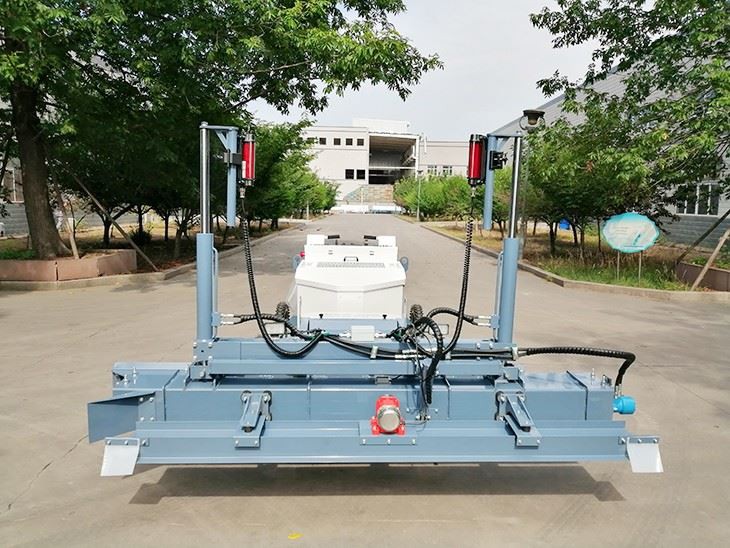
A screeding machine receives fresh concrete after placement, spreads material across the working width, removes excess concrete, and leaves the surface near the required elevation before floating and finishing. Basic vibrating screeds use vibration to consolidate and level concrete across a straight blade. Laser screeds add automated elevation control through laser transmitters, receivers, sensors, hydraulic actuators, and a screed head.
On laser-guided equipment, the laser transmitter establishes a reference plane. Receivers mounted on the machine detect the reference position and send information to the control system. The machine adjusts the screed head elevation during operation to follow the set level. Advanced models may use 3D machine-control technology where a digital model, total station, or positioning system guides the machine across slopes, drainage falls, ramps, and complex profiles.
The screed head usually combines an auger, plow, roller, or vibrating strike-off arrangement. The correct head configuration depends on concrete slump, aggregate size, fiber content, reinforcement density, and required finish. For example, stiff industrial concrete may require a robust auger and high-torque hydraulic response, while a high-flow mix needs controlled material management to avoid excessive paste accumulation.
Main Types of Concrete Slab Leveling Equipment
Equipment categories overlap in some projects, but each type serves a distinct production range. Buyers should match the machine to their normal job profile instead of choosing solely based on the largest project they may occasionally receive.
| Machine Type | Typical Project Scale | Operating Method | Main Strength | Best Applications | Buyer Consideration |
|---|---|---|---|---|---|
| Vibrating screed | Small to medium slabs | Hand-guided or rail-supported | Simple, portable, lower entry cost | Sidewalks, small pads, residential and repair work | Requires skilled workers to maintain elevation |
| Truss screed | Medium-width pours | Rail or form-supported | Long working width and reliable straightedge action | Road slabs, bridge decks, open construction areas | Set-up time and rail alignment affect accuracy |
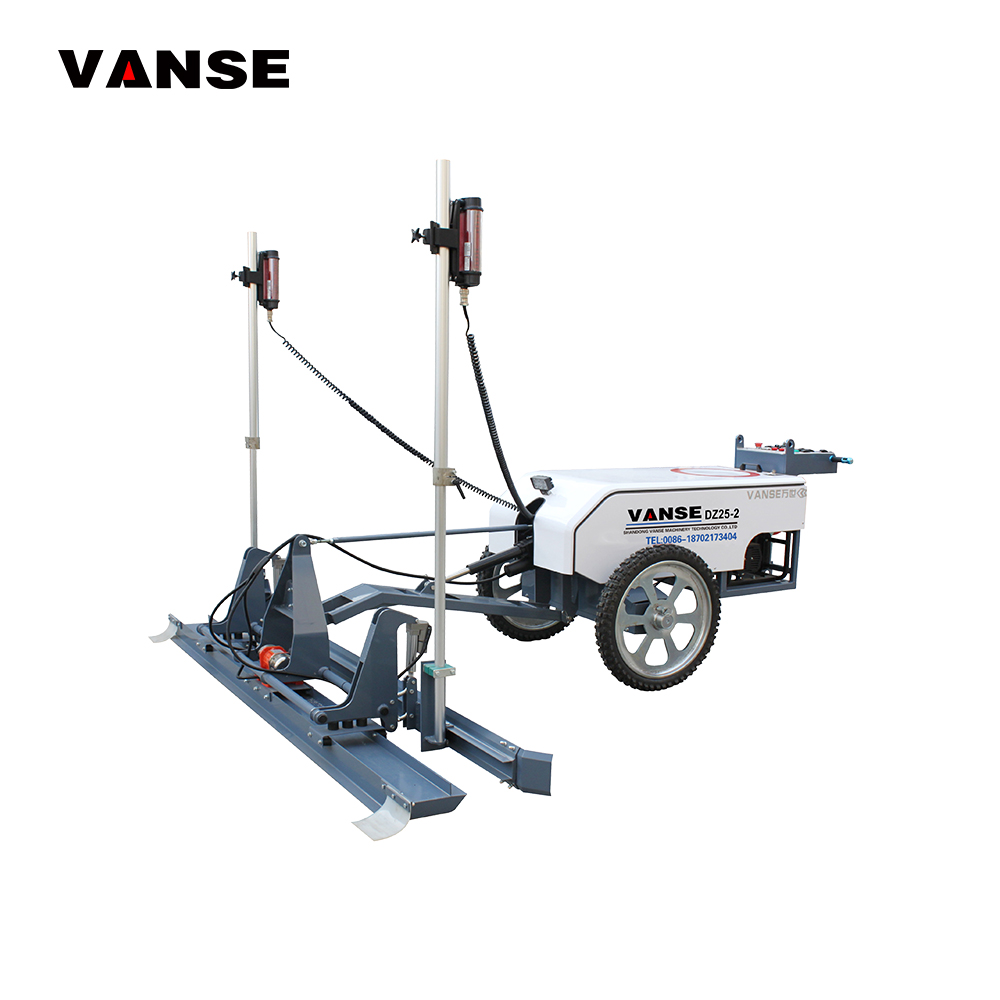
| Walk-behind laser screed | Small industrial and commercial floors | Operator walks behind machine | Laser-controlled elevation with compact access | Retail units, workshops, parking areas, confined projects | Production is lower than ride-on systems |
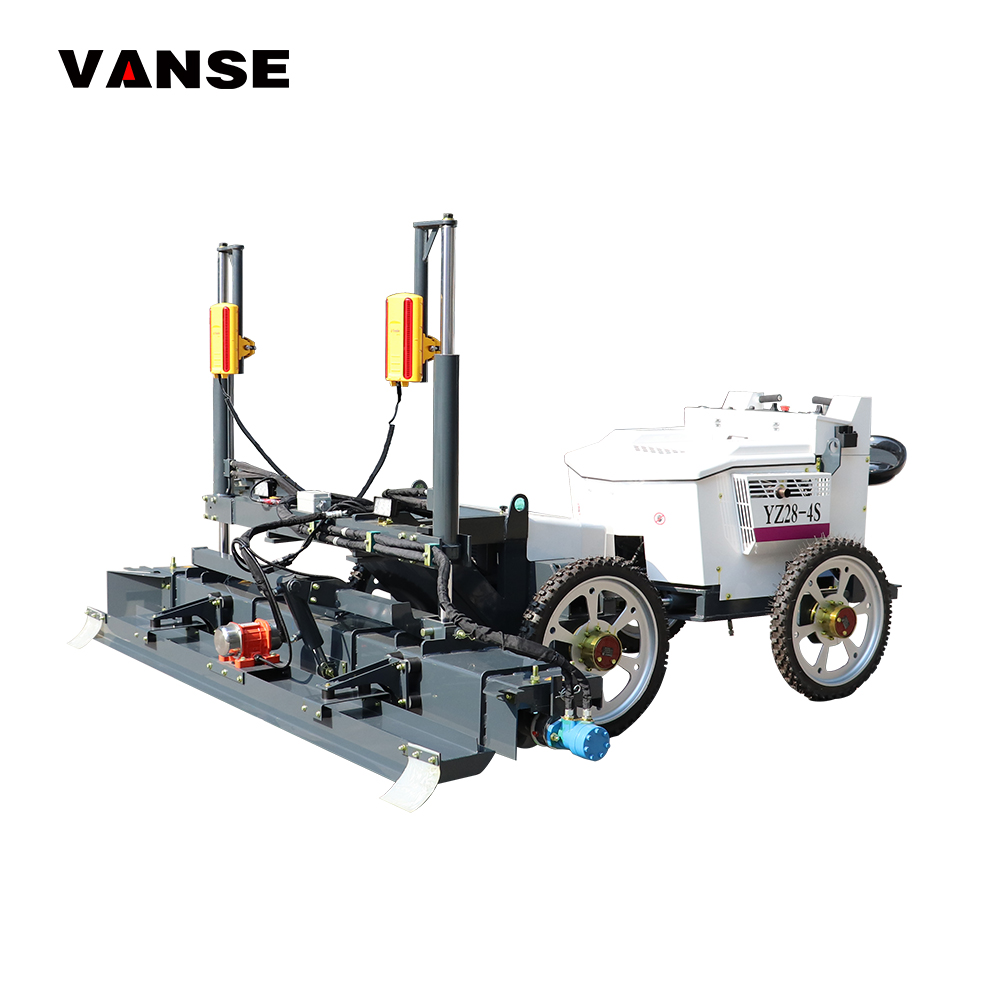
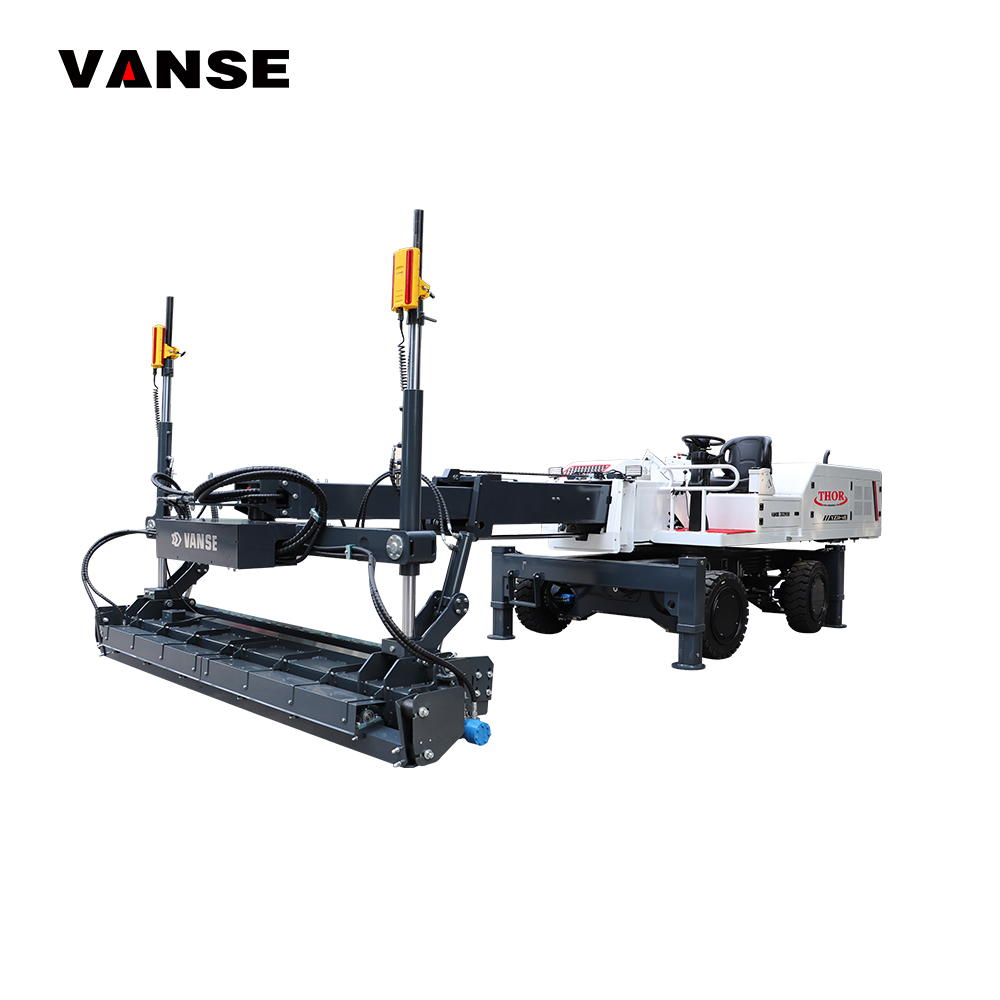
| Ride-on laser screed | Large industrial pours | Seated operator drives machine | High productivity and reduced labor dependence | Warehouses, factories, distribution centers | Needs adequate access, staging space, and trained operators |
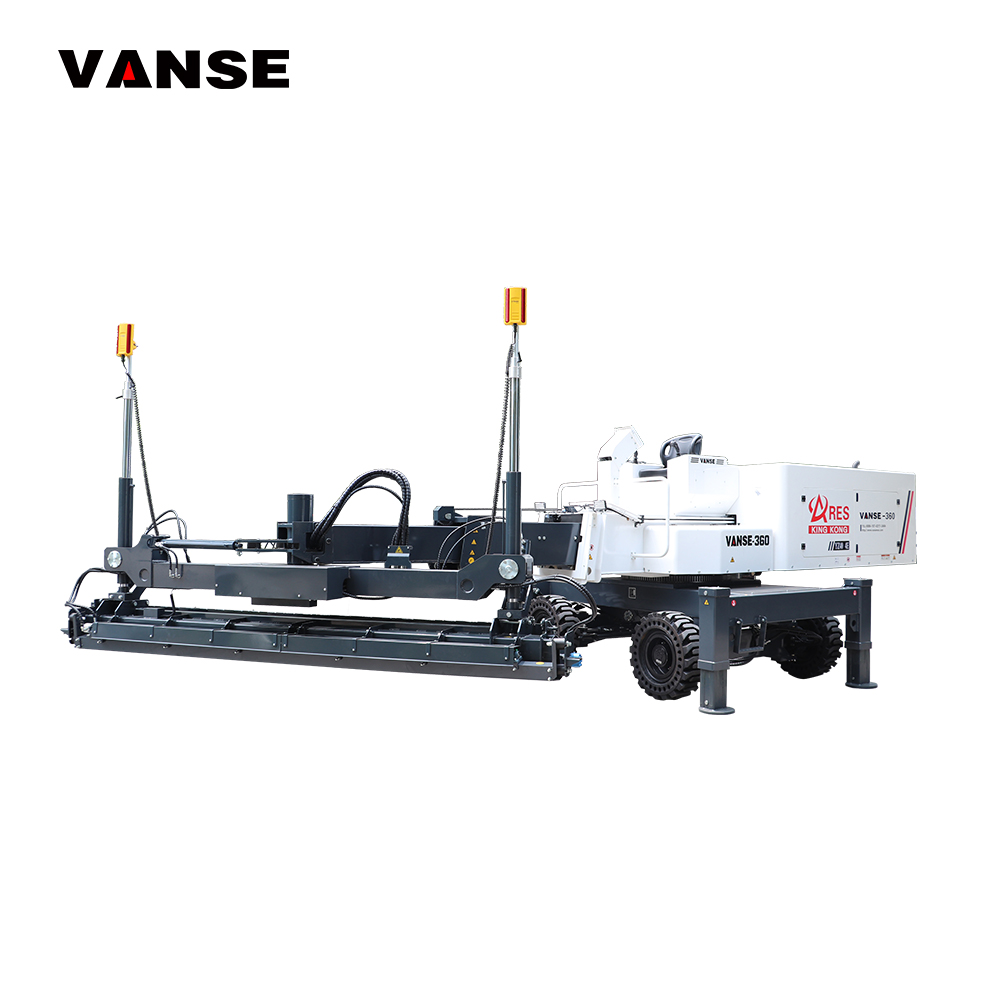
| Boom-type laser screed | Large uninterrupted slabs | Long boom reaches around the machine | Wide coverage and efficient work around reinforcement | Logistics buildings, airport areas, heavy-duty floors | Higher investment and careful transport planning required |
| 3D-profile screed system | Complex elevation work | Digital design or 3D control guidance | Controls slopes, crowns, ramps, and drainage geometry | Roads, terminals, drainage slabs, infrastructure | Requires survey data and experienced control setup |
The table shows why a single machine category does not suit every contractor. Vibrating and truss screeds are economical for small and repetitive work, while laser screeds become more compelling when pours are larger, labor is expensive, and floor tolerance is commercially important. Boom machines are especially valuable where high daily placement volumes justify the investment.
Specifications That Matter When Comparing Machines
Specification sheets can look similar, yet performance in wet concrete is shaped by the entire machine system. Compare working width, screed-head reach, engine or electric power, hydraulic capacity, travel speed, machine dimensions, machine weight, transport requirements, control technology, and supported concrete mix designs. Ask suppliers to explain how each specification affects your intended projects.
Leveling accuracy should be understood carefully. A laser system can provide millimeter-level elevation control under appropriate conditions, but final slab results also depend on subbase preparation, formwork, concrete placement consistency, laser setup, operator practice, weather, vibration, finishing timing, and curing. Machine accuracy is not the same as the final FF/FL floor number. Contractors should coordinate with the floor designer and test according to the relevant project standard.
| Specification | Why It Matters | Questions to Ask | Preferred Evidence | Risk if Ignored | Typical Buyer |
|---|---|---|---|---|---|
| Working width or boom reach | Determines coverage per pass and output potential | How much area can be covered without repositioning? | Demonstration data on comparable slab layouts | Slow production and excessive overlap | Industrial flooring contractors |
| Laser-control system | Controls elevation consistency | Which transmitter and receiver configuration is included? | Calibration procedure and operating manual | Unstable elevations and difficult troubleshooting | Warehouse and factory builders |
| Hydraulic system | Drives travel, steering, boom, and screed functions | How are hoses, valves, and filters protected? | Component list, maintenance plan, and warranty terms | Downtime during high-volume pours | Rental companies and large contractors |
| Power configuration | Affects torque, fuel use, emissions, and local support | Are engine, voltage, and emissions options available? | Local compliance documents and service coverage | Import delays or inadequate local maintenance | International buyers |
| Screed-head design | Influences material distribution and finish readiness | Can it handle fibers, low slump, or high aggregate mixes? | Video from comparable concrete applications | Segregation, ridges, or extra handwork | Specialist concrete contractors |
| Transport dimensions | Determines site access and shipping practicality | What trailer, container, or lifting method is required? | Shipping drawing and loading plan | Unexpected logistics cost and restricted access | Export buyers and fleet managers |
This comparison framework helps procurement teams move beyond headline capacity. A machine should be evaluated as part of a working system that includes batching plant consistency, concrete delivery, placing crew, power trowels, saw cutting, curing materials, joint protection, and quality verification.
Price Range and Total Cost of Ownership
Prices vary widely by category, geographic market, control system, power source, boom length, customization, shipping distance, service package, and optional equipment. Compact vibrating screeds are generally the lowest-cost option. Walk-behind laser screeds occupy a middle range, while ride-on and boom-type laser screeds are major capital investments intended for high-output professional flooring work.
Instead of comparing only the factory quotation, buyers should calculate landed cost and life-cycle cost. Landed cost may include export packaging, ocean or inland freight, insurance, import clearance, taxes, local transport, commissioning, training, spare parts, and optional accessories. Life-cycle cost includes fuel, wear parts, maintenance labor, calibration, operator time, resale value, financing, and lost productivity caused by machine downtime.
| Cost Category | Entry-Level Equipment | Professional Industrial Equipment | What Changes the Cost | Practical Buying Advice | Cost-Control Method |
|---|---|---|---|---|---|
| Initial purchase price | Lower for vibrating and basic screeds | Higher for ride-on and boom laser systems | Automation, reach, engine, hydraulics, controls | Match capacity to annual concrete volume | Compare equivalent configurations |
| Freight and import cost | Usually lower due to compact dimensions | Can be significant for large machines | Container loading, port route, destination handling | Request CIF, FOB, and local-delivery comparisons | Plan through major ports and local agents |
| Operator training | Shorter learning curve | More important for laser and 3D systems | Control technology and floor-tolerance demand | Include training in the purchase agreement | Train at least two operators per machine |
| Routine maintenance | Simple mechanical servicing | Hydraulic, electronic, and calibration checks | Duty cycle, site conditions, preventive care | Check scheduled-service requirements before ordering | Stock filters, hoses, sensors, and seals |
| Labor requirement | Higher dependence on manual crew skill | Reduced screeding labor on broad pours | Machine type and slab geometry | Calculate labor savings per square meter | Use output records from real projects |
| Downtime exposure | Lower electronics complexity but limited capacity | High cost if critical systems stop during a pour | Parts access and local technician availability | Prioritize supplier response commitments | Purchase recommended critical spare kit |
The table demonstrates that a more expensive machine may still be the lower-cost choice over several years if it reduces labor, shortens pours, improves finishing consistency, and helps a contractor win higher-value industrial projects. Conversely, a high-capacity boom screed can be uneconomical for a contractor whose normal work consists of small pads and residential slabs.
Buying Advice for Global Contractors and Distributors
Start with a clear project profile. List typical slab size, largest planned pour, daily concrete volume, average slab thickness, reinforcement type, fiber usage, target flatness, access restrictions, climate conditions, and available finishing crew. If your jobs commonly include narrow bays, columns, ramps, or dense reinforcement, include site drawings when requesting proposals.
Ask each supplier for a configuration sheet showing what is standard and what is optional. Key inclusions may involve laser transmitters, receivers, control panels, spare sensors, work lights, transport brackets, hydraulic tools, maintenance kits, operator manuals, and remote technical support. A quotation without these details can be difficult to compare fairly.
For distributors, evaluate more than product margin. Confirm regional territory terms, minimum order requirements, training support, spare-parts stocking policy, marketing materials, technical manuals, warranty responsibility, and lead times. A distributor should be able to support machine commissioning and basic troubleshooting locally rather than simply forwarding all requests to the factory.
For contractors purchasing directly, verify whether the supplier can provide remote commissioning, video troubleshooting, digital manuals, parts identification, and emergency support during local working hours. Major concrete pours often happen outside normal office schedules, so access to qualified help matters.
Industries That Benefit Most
Industrial floor contractors are the primary users of ride-on and boom laser screeds, but the equipment is valuable across many concrete construction sectors. Warehouse developers need smooth, durable slabs for racking and material handling. Manufacturing plants need reliable floors for machinery, forklifts, and production lines. Airport and terminal projects require broad concrete paving areas with consistent profiles. Commercial projects benefit from efficient placement where schedule pressure is high.
Infrastructure contractors may use screeding technology for bridge approaches, road slabs, toll plazas, port yards, container terminals, rail facilities, drainage channels, and energy projects. In regions with high temperatures, strong winds, or rapid evaporation, mechanized screeding can help the crew complete leveling quickly, although finishing and curing procedures must still be carefully controlled.
| Industry | Typical Concrete Area | Recommended Equipment Direction | Main Quality Priority | Operational Benefit | Common Location Example |
|---|---|---|---|---|---|
| Logistics and warehousing | Large flat slabs with rack aisles | Ride-on or boom laser screed | Flatness and elevation consistency | Fast coverage with lower labor demand | Distribution hubs near major ports and highways |
| Manufacturing plants | Production floors and equipment zones | Ride-on laser screed | Durability and machine-ready surface | Consistent placement across large bays | Industrial parks in Asia, Europe, and North America |
| Commercial construction | Retail, parking, mixed-use buildings | Walk-behind or ride-on system | Schedule control and access flexibility | Reduced manual screeding effort | Urban construction districts |
| Airport and terminal paving | Aprons, yards, pavement sections | Boom screed or 3D-profile system | Profile accuracy and output | Efficient work over broad open areas | Airport expansion and port terminals |
| Roads and bridge works | Slabs, ramps, deck approaches | Truss screed or 3D-controlled equipment | Slope control and drainage | More repeatable geometry | Transport corridors and interchanges |
| Data centers and cold storage | High-load internal slabs | Ride-on laser screed | Precision and long-term traffic performance | Supports demanding operating environments | Technology and food logistics hubs |
The industry comparison confirms that floor equipment should be selected according to operating requirements after the building is handed over. A warehouse floor, for example, should be designed and constructed around vehicle traffic, racking layout, joints, load transfer, and maintenance expectations rather than only the initial pour speed.
Applications and Project Planning
A concrete slab leveling machine can be used for warehouse floors, factory floors, logistics centers, distribution buildings, parking decks, workshops, airport aprons, terminal yards, road slabs, bridge surfaces, commercial slabs, and large hardstand areas. The best results come from planning the entire pour sequence before the first truck arrives.
Pre-pour planning should cover laser transmitter locations, working lanes, concrete truck access, pump placement, reinforcement preparation, edge-form verification, pour strip sequence, labor assignments, backup equipment, lighting, communications, weather response, curing materials, and saw-cut timing. The screed machine should have a clear path and should not be forced to work over unstable subbase areas or poorly supported reinforcement.
Concrete consistency is particularly important. Sudden changes in slump, aggregate grading, admixture dosage, or delivery interval can affect how material moves ahead of the screed head. The concrete supplier, placing crew, screed operator, finishers, and quality-control personnel should communicate continuously during large pours.
Representative Project Scenarios
In a regional logistics center, a contractor may use a ride-on laser screed to place large bays between structural grid lines. The value comes from maintaining elevation across wide slabs, limiting the number of workers needed for strike-off, and allowing finishers to focus on pan floating, troweling, edges, and joints. The contractor should still measure floor tolerance after curing and adapt subsequent pours as needed.
For an airport cargo yard or container terminal, a boom-type screed may be preferred because its reach can cover broad areas while the machine operates from a planned travel zone. These projects often require careful drainage control, strong base preparation, joint design, and coordination with pavement engineers. Where crossfalls or complex grades are involved, a 3D-capable control solution may be more suitable than a basic level-plane system.
On a commercial renovation project in a constrained city center, a walk-behind laser screed can be practical. It provides guided elevation control while fitting through tighter access routes than a large ride-on machine. Buyers should check door widths, elevator capacity where relevant, slab loading limits, ventilation needs, and equipment transport paths before committing.
For a flooring contractor serving multiple smaller jobs, a compact screed and a reliable power trowel package may offer a better return than a large boom machine. Fleet planning should be based on utilization. Machines that remain idle for long periods create financing, storage, and maintenance costs without generating revenue.
Leading Suppliers for the Global Market
The following suppliers are widely recognized in concrete placement, industrial flooring, or surface preparation markets. Availability, product range, dealer support, and configuration differ by country, so buyers should confirm current local representation, warranty terms, and parts channels before ordering.
| Company | Service Regions | Core Strengths | Key Offerings | Suitable Buyer | Practical Procurement Note |
|---|---|---|---|---|---|
| Somero Enterprises | Global distribution with strong presence in industrial flooring markets | Specialist laser screeding technology and high-output slab placement | Ride-on laser screeds, boom screeds, floor placement solutions | Large industrial flooring contractors | Evaluate local training and dealer service capacity |
| Ligchine International | North America and international contractor markets | Laser-guided screeding systems for professional concrete work | Laser screeds and concrete placement equipment | Contractors seeking automated slab leveling | Check model availability and regional support channels |
| Allen Engineering | North America, Latin America, Europe, Asia, and dealer markets | Broad concrete finishing equipment portfolio | Laser screeds, power trowels, vibratory screeds, finishing tools | Contractors and rental fleets | Useful for buyers seeking a multi-product concrete fleet |
| Wacker Neuson | Global dealer and rental network | Recognized light equipment and compaction expertise | Vibrating screeds, concrete vibration, power trowels, site equipment | General contractors and rental companies | Confirm specific screed model availability by country |
| Husqvarna Construction | Global construction equipment markets | Concrete cutting, grinding, dust control, and surface preparation | Floor saws, grinders, trowels, surface preparation systems | Flooring specialists needing downstream equipment | Best considered as part of a complete floor-work package |
| Shandong Vanse Machinery Technology | More than 80 countries and regions, with Southeast Asia and Canada service resources | Laser screeds, industrial flooring equipment, flexible customization | Walk-behind, ride-on, boom laser screeds, trowels, grinders, cutters | Contractors, distributors, OEM partners, project buyers | Request machine configuration, training plan, and local parts support |
This supplier table is intended as a practical starting point rather than a ranking. Buyers should compare machine performance on the same basis: working reach, control system, project output, support response time, warranty, critical spare parts, operator training, and local compliance requirements. In the Global market, the best supplier is often the one that can support the machine throughout its operating life, not merely deliver it at the lowest initial price.
Why Vanse Is Relevant for Global Buyers
Shandong Vanse Machinery Technology Co., Ltd. is relevant to contractors and channel partners seeking concrete slab leveling equipment with an international service perspective. Founded in 2013 in Jining, China, Vanse develops walk-behind, ride-on, and boom-type laser screeds alongside power trowels, floor grinders, cutting machines, topping spreaders, slipform equipment, joints, and concrete fibers. Its equipment portfolio is supported by ISO 9001 and CE certifications, more than 50 invention patents, and over 200 utility model and design patents. Vanse combines laser control systems, hydraulic technology, durable structural materials, reliable engine configuration options, and strict production and testing processes intended to meet international project requirements. For end users, dealers, distributors, brand owners, and individual buyers, the company supports direct sales, wholesale supply, retail supply, OEM and ODM branding, customized voltage and engine options, project-based supply, and regional distribution cooperation. Vanse has established overseas branches and service resources in Southeast Asia and Canada, supported by dealer networks across North America, South America, Europe, Asia, and the Middle East, demonstrating an ongoing market commitment beyond remote exporting. Customers can access project consultation, machine selection, solution design, delivery, installation, commissioning, operator training, spare-parts supply, remote diagnosis, and on-site technical support. Vanse provides EPC, turnkey, and customer-owned plant solutions for concrete construction equipment needs; it does not operate BOO or on-site bulk supply service models. Buyers can explore its concrete laser leveling equipment, review its ride-on screed range, or contact its technical service team for project-specific support.
Maintenance and Operator Best Practices
Preventive maintenance is essential because screeding equipment often operates during time-sensitive concrete pours. Before each shift, inspect hydraulic oil level, hoses, fittings, fasteners, screed-head wear parts, engine fluids, battery condition, receiver mounts, cables, emergency-stop functions, tires or tracks, and control calibration. Clean hardened concrete from the machine before it can damage moving components or interfere with sensor operation.
Laser transmitters should be mounted on stable tripods away from vibration, vehicle traffic, and accidental disturbance. Operators should recheck reference elevation after significant site activity, impact, or suspected movement. Keep a backup plan for unexpected weather, delayed concrete trucks, laser battery failure, hydraulic leaks, and machine access problems.
After the pour, record output area, concrete volume, crew size, machine settings, weather, slab results, and any issues encountered. These records help contractors improve bid accuracy, schedule planning, and machine utilization. They are also useful when discussing warranty or technical support with suppliers.
Future Trends for 2026 and Beyond
By 2026, concrete floor construction is expected to become more data-driven, energy-conscious, and labor-efficient. Digital elevation control, 3D profiling, telematics, remote diagnostics, machine usage tracking, and faster hydraulic response are likely to become more common across higher-capacity screeding systems. Contractors will increasingly want machines that can document operating conditions and help managers monitor utilization across multiple projects.
Sustainability will also influence equipment selection. Developers are seeking lower-carbon concrete mixes, supplementary cementitious materials, recycled aggregates, optimized slab thicknesses, and longer-lasting floors. These changes can affect workability and finishing behavior, making machine adaptability important. Equipment suppliers will need to provide practical guidance on screeding mixes containing fibers, slag, fly ash alternatives, calcined clays, and other lower-carbon binder systems.
Policy trends may include tighter engine-emissions requirements, occupational safety rules, dust-control expectations, digital documentation requirements, and stricter quality standards for industrial facilities. Buyers should choose equipment with configurable power options, clear certification documentation, accessible maintenance information, and suppliers capable of supporting local regulatory requirements.
Labor shortages will remain a major driver. Automated and laser-guided screeding can help contractors complete larger pours with more controlled staffing, but trained operators will remain essential. The most successful companies will combine machine automation with formal operator development, quality-control procedures, and dependable preventive maintenance.
Frequently Asked Questions
What is the difference between a vibrating screed and a laser screed?
A vibrating screed uses a blade and vibration to level fresh concrete, usually with more reliance on manual guidance and formwork. A laser screed uses elevation-control technology to automatically adjust the screed head relative to a laser reference plane. Laser systems are generally better suited to larger slabs and tighter floor requirements.
Can a laser screed replace finishing equipment?
No. A laser screed levels and strikes off fresh concrete, but most slabs still require floating, troweling, edging, joint cutting, curing, and quality checks. The final finish process depends on the specified floor system and concrete mix.
Which machine is best for a warehouse floor?
A ride-on or boom-type laser screed is commonly selected for large warehouse floors because it can cover wide areas efficiently. The final decision should consider floor flatness requirements, pour size, building access, reinforcement, and available concrete supply.
How accurate is a concrete slab leveling machine?
Modern laser-controlled machines can support millimeter-level elevation control under proper setup and operating conditions. Final slab accuracy depends on many factors, including subbase quality, concrete consistency, operator skill, laser calibration, weather, finishing practices, and curing.
What spare parts should be purchased with a new screed machine?
Recommended initial parts commonly include filters, hoses, seals, hydraulic fittings, receiver accessories, sensors where appropriate, wear parts for the screed head, engine service items, electrical connectors, and essential tools. The exact kit should be confirmed with the supplier.
Can international buyers obtain customized machine configurations?
Many manufacturers can provide customized voltage, engine, branding, language, accessory, and equipment configurations. Buyers should confirm certifications, delivery times, warranty coverage, local regulations, and parts support before finalizing an export order.
Final Buying Checklist
Choose a concrete slab leveling machine based on real project requirements rather than the lowest quotation. Confirm machine type, working reach, control technology, concrete compatibility, transport access, operator training, service response, spare-parts availability, warranty terms, and total ownership cost. For high-volume warehouse, factory, logistics, airport, terminal, and infrastructure projects, laser-guided screeding can deliver major gains in productivity and consistency when the complete concrete placement process is properly planned.
For buyers seeking a complete equipment partner, review the broader range of solutions available from Vanse concrete construction equipment, learn more through the Vanse company profile, and select a support package aligned with your local project conditions, maintenance capability, and future business growth.
Share this article

About the Author: Shandong Vanse Machinery Technology Co., Ltd.
Shandong Vanse Machinery Technology Co., Ltd. is a high-tech manufacturer specializing in concrete construction machinery, including laser screeds and related equipment. The company integrates R&D, production, and global sales, with products exported to over 60 countries and widely used in infrastructure projects worldwide.