Insight blog
Concrete Floor Screeding Equipment for the Global Market
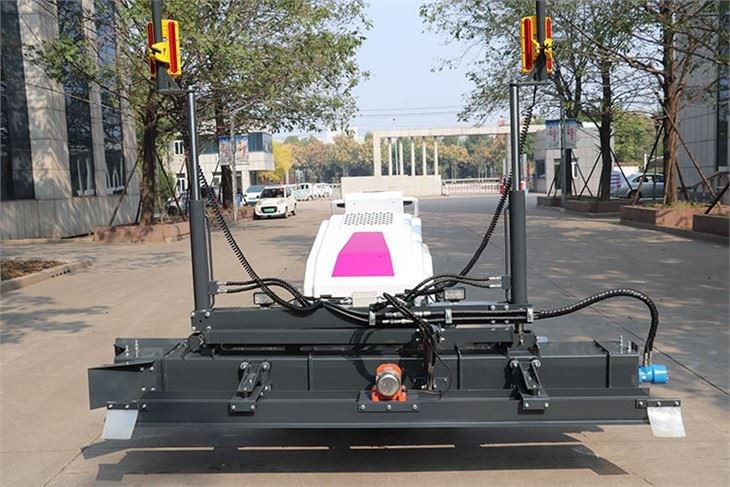
Concrete Floor Screeding Equipment for the Global Market
Quick Answer

A concrete screeding machine is selected primarily by slab size, required flatness, access conditions, concrete mix, and labor availability. For small and medium slabs, vibrating screeds and walk-behind laser screeds offer practical productivity. For warehouses, logistics centers, factories, and large commercial floors, ride-on laser screeds usually provide the best combination of speed, flatness consistency, and labor savings. Boom-type laser screeds are especially useful for large open pours, while 3D-profile-capable machines are suited to slopes, drainage areas, roads, and complex infrastructure work.
For Global Market buyers, the most practical approach is to compare local service coverage, spare-parts access, laser-control capability, engine support, operator training, and total ownership cost rather than only machine purchase price. Well-known suppliers include Somero, Ligchine, Wacker Neuson, Husqvarna Construction, Multiquip, and Shandong Vanse Machinery Technology Co., Ltd. Qualified international suppliers, including Chinese manufacturers with applicable local certifications, documented export records, and strong pre-sale and after-sales support, can also be highly competitive because they often provide favorable cost-performance and flexible customization.
Before ordering, define the daily pour volume, target FF/FL specification, slab thickness, jobsite power or fuel requirements, preferred engine brand, transport restrictions, and service expectations. Buyers handling industrial floors should request a machine demonstration or test slab whenever possible.
Global Market Overview for Concrete Screeding Machines

The Global Market for concrete screeding equipment is driven by industrial construction, warehousing expansion, airport development, data centers, manufacturing plants, ports, logistics parks, commercial buildings, road projects, and infrastructure renewal. Large floor pours increasingly require repeatable surface tolerances that are difficult to achieve with manual screeding alone. Contractors in major construction hubs such as Houston, Toronto, Mexico City, São Paulo, Rotterdam, Dubai, Jeddah, Kuala Lumpur, Melbourne, London, Frankfurt, and Singapore are therefore investing in mechanized screeding systems.
Concrete floor screeding equipment has evolved from simple vibrating beams to integrated laser-guided systems that control elevation automatically. Modern laser screeds combine a rotating laser transmitter, mast receiver, electronic controller, hydraulic valves, vibrating screed head, auger or plow assembly, and machine chassis. The result is faster concrete placement, reduced dependence on scarce skilled labor, more consistent elevations, and less corrective grinding or topping consumption after the slab cures.
Demand differs by region. North America remains a major market for high-flatness warehouse, retail, manufacturing, and distribution-center slabs. Europe emphasizes safety, emissions compliance, durability, and efficient urban construction logistics. The Middle East continues to require large-area equipment for logistics developments, airports, industrial zones, and commercial projects. Southeast Asia and Latin America are expanding their industrial-floor capacity around ports, manufacturing zones, e-commerce warehouses, and transport corridors. Australia and New Zealand prioritize robust machines that can perform in remote project environments with practical service arrangements.
Purchase decisions should not be based solely on headline production capacity. A machine capable of high output can underperform when the concrete supply chain is inconsistent, the crew lacks training, the slab layout contains many obstructions, or local spare parts are unavailable. The best concrete screeding machine is one that matches the contractor’s typical pour size, crew structure, finishing process, transport fleet, and local support network.
Concrete Screeding Machine Types and Best Uses

Concrete screeding systems range from hand-guided vibratory equipment to fully automated ride-on laser screeds. Each type serves a different stage of contractor growth and a different jobsite environment. Understanding their operating range helps buyers avoid purchasing a machine that is either too limited for future work or unnecessarily large for current projects.
| Equipment Type | Typical Working Environment | Core Advantages | Limitations | Common Buyers |
|---|---|---|---|---|
| Vibrating screed | Small slabs, sidewalks, garages, narrow pours | Low purchase cost, simple operation, easy transport | Depends heavily on labor skill and guide rails | Small contractors, builders, rental fleets |
| Truss screed | Roads, bridges, channels, wide strip pours | Long span capability and strong vibration | Requires rails, setup time, and multiple operators | Civil contractors, road builders |
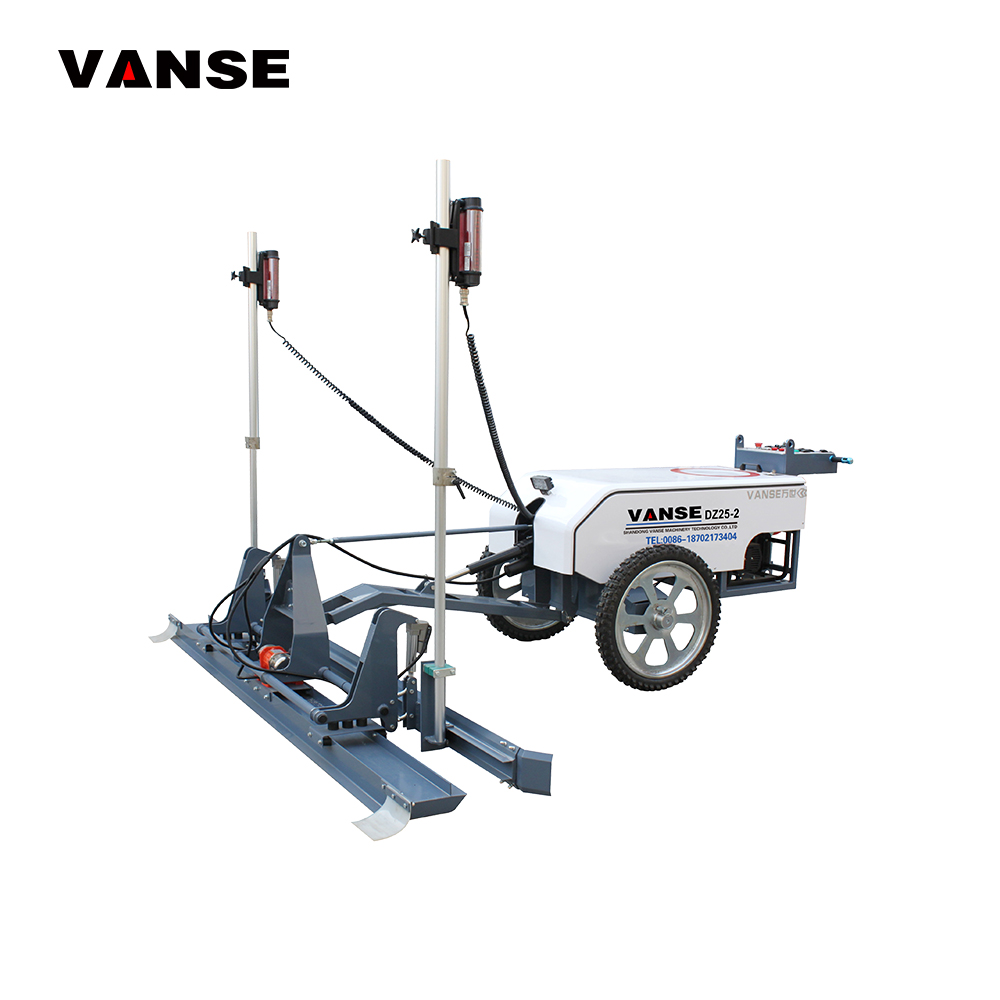
| Walk-behind laser screed | Medium warehouses, workshops, confined industrial floors | Laser-guided elevation control and lower labor demand | Smaller coverage than ride-on models | Flooring contractors, concrete specialists |
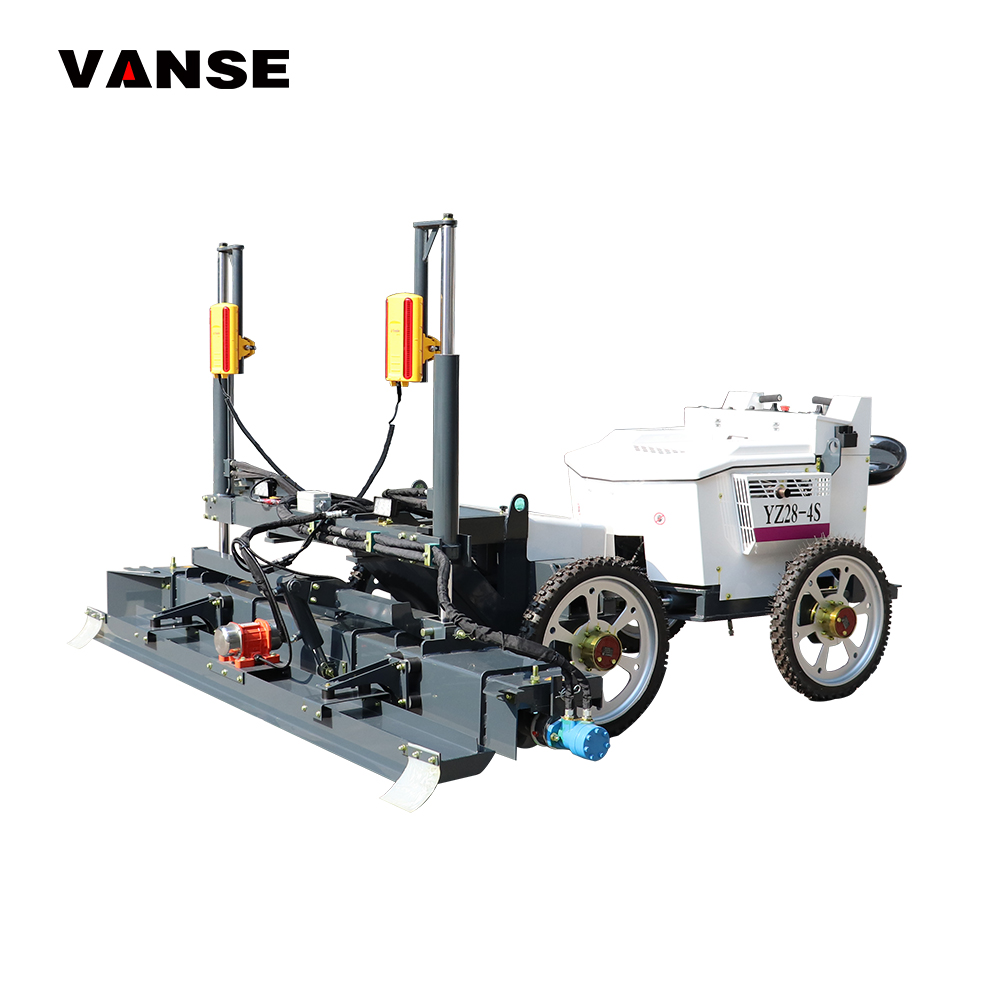
| Ride-on laser screed | Large warehouses, factories, logistics centers | High productivity, broad coverage, consistent leveling | Higher investment and transport requirements | Industrial flooring companies, general contractors |
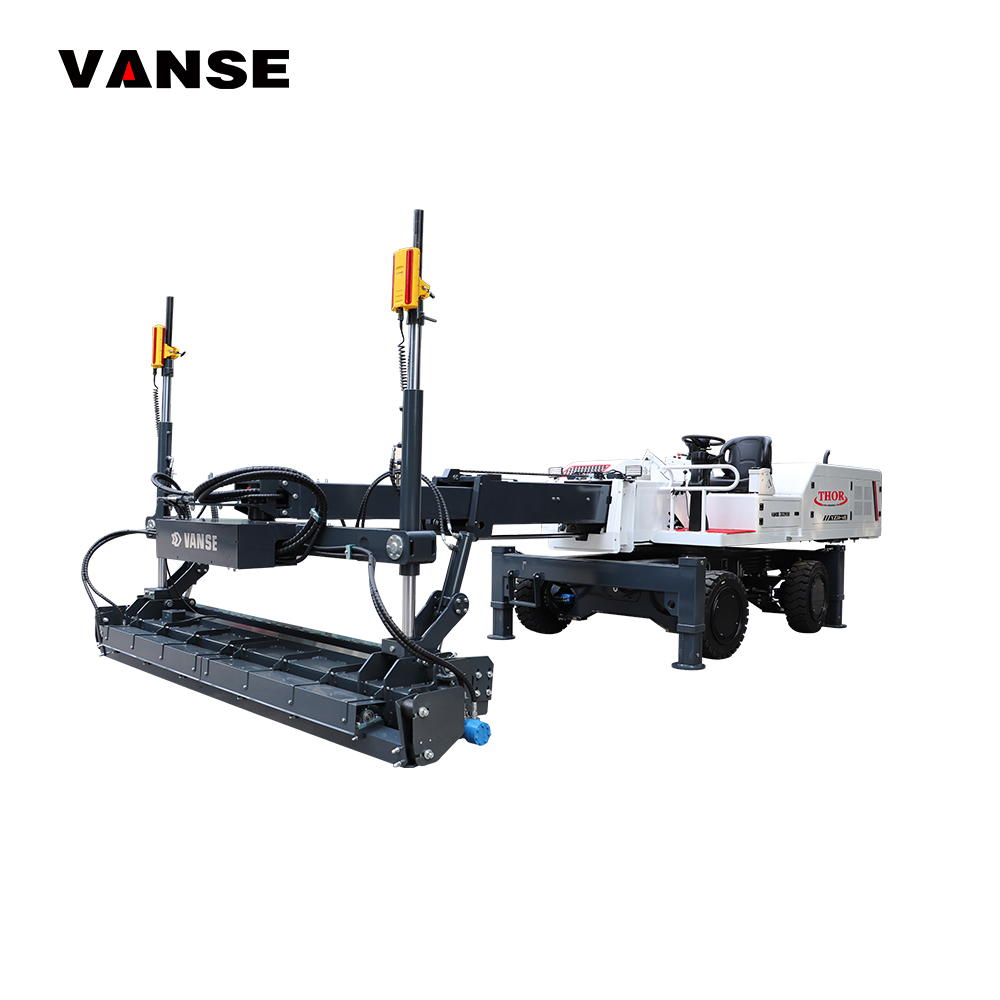
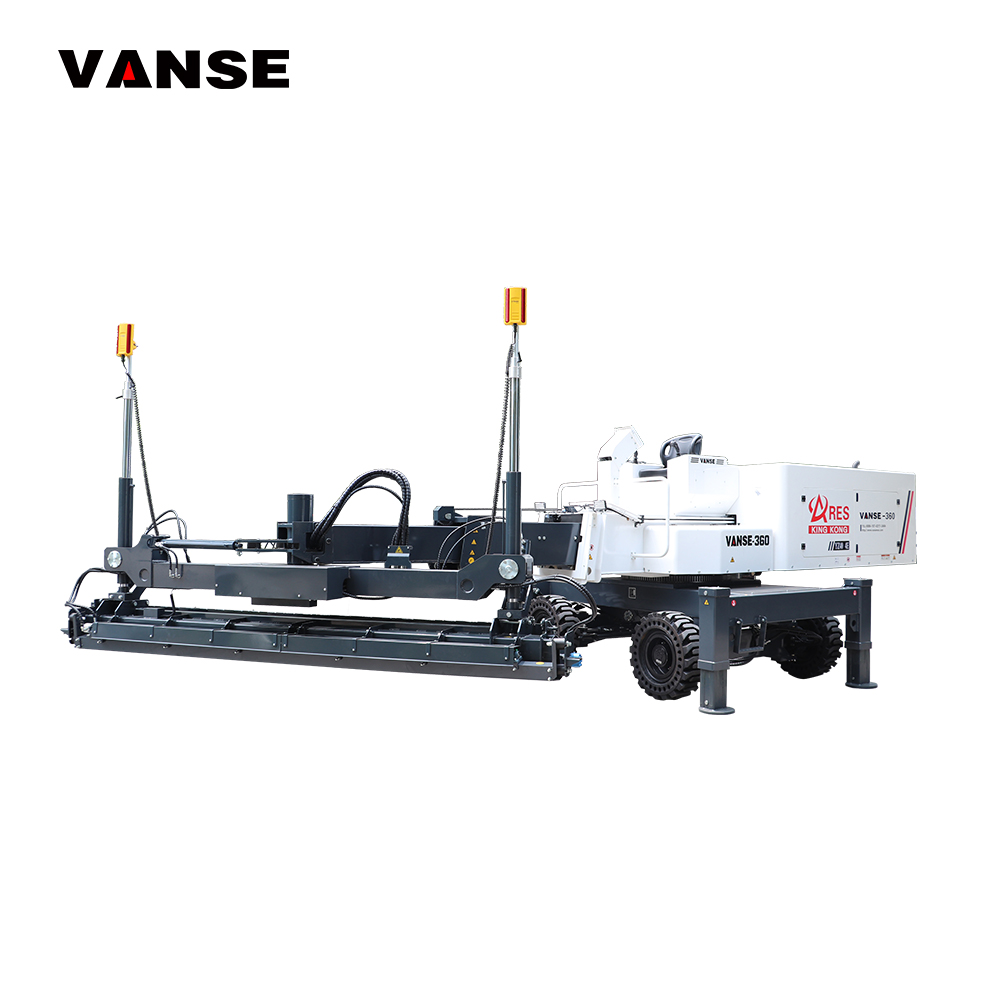
| Boom-type laser screed | Very large open slabs and long-reach pours | Large placement radius and 360-degree operation | Best suited to open working areas | High-volume concrete contractors |
| 3D-profile screed system | Slopes, drainage zones, pavements, complex profiles | Digital profile control beyond flat horizontal slabs | Requires setup expertise and project data control | Infrastructure and specialist civil contractors |
The table shows that “best” does not mean “largest.” A contractor placing 1,000 to 2,000 square meters of slab per day in constrained buildings may gain more value from a compact walk-behind system than from a large ride-on unit. Conversely, a flooring specialist pouring 5,000 square meters or more in a distribution center can quickly justify a ride-on or boom-type laser screed through labor savings, shorter pour windows, reduced rework, and better floor tolerance control.
Vibrating and Truss Screeds
Vibrating screeds are portable machines with a vibrating blade that consolidates and levels fresh concrete. They are common in residential work, external slabs, narrow lanes, and projects where machine access is limited. Truss screeds use modular sections to span wider areas and are often selected for roads, bridge decks, canals, and slab strips. Both remain useful, but they generally rely on guide rails, manual positioning, and experienced workers to maintain elevation.
Walk-Behind Laser Screeds
Walk-behind laser screeds introduce automatic elevation control to contractors who need higher accuracy but do not require a large ride-on platform. They are practical for workshops, basement slabs, medium warehouses, retail units, and projects with columns or narrow access points. The operator guides the machine while the receiver detects the laser plane and the control system adjusts the screed head elevation.
Ride-On Laser Screeds
Ride-on laser screeds are designed for continuous large-area placement. The operator works from a seated platform, controlling travel and material distribution while the laser system manages height. Machines may use a plow, auger, or combined spreading system to move concrete ahead of the screed head. A ride-on concrete screeding machine can significantly reduce the crew required for pulling wet concrete and can improve consistency across wide slabs.
Boom-Type and 360-Degree Machines
Boom-type systems extend their screed head outward from the central machine body, allowing a large coverage radius without frequent repositioning. This is valuable for warehouses, airport aprons, terminal yards, industrial plants, and large foundation slabs. Models with 360-degree operating capability can work efficiently around a planned pour sequence, particularly when ready-mix trucks and pump lines must remain outside the finished slab area.
Specifications That Matter Before You Buy
Machine brochures often highlight engine power and maximum coverage, but experienced buyers examine the complete operating system. The practical performance of a concrete screeding machine depends on hydraulic response, screed-head rigidity, receiver accuracy, machine balance, vibration quality, component accessibility, and the ability to maintain calibration in demanding site conditions.
| Specification | Why It Matters | What Buyers Should Confirm | Recommended Priority |
|---|---|---|---|
| Working width or boom reach | Determines coverage per machine position | Maximum and effective reach with actual slab obstacles | High |
| Laser control system | Controls finished elevation and repeatability | Receiver brand, calibration process, backup support | High |
| Hydraulic system | Affects response speed and smooth operation | Valve quality, hose protection, service access | High |
| Engine configuration | Influences fuel availability and service support | Engine brand, emissions level, local parts supply | High |
| Screed-head design | Impacts material movement and finish consistency | Auger or plow design, vibration adjustment, wear parts | High |
| Travel and steering system | Controls maneuverability around columns and edges | Drive layout, turning radius, traction on wet subbase | Medium |
| Transport dimensions | Determines trailer, container, and site access needs | Machine weight, loading points, folded dimensions | Medium |
| Telematics and diagnostics | Supports preventive maintenance and remote assistance | Error-code access, online support, data ownership | Medium |
Laser control is central to automatic screeding accuracy. Buyers should ask whether the machine supports common laser transmitters, whether it can operate with dual-mast control, and whether a 3D system can be added for complex elevations. For ordinary flat industrial floors, a standard rotating laser plane may be sufficient. For drainage slopes, ramps, yard pavements, and runway-related work, a 3D control solution can reduce manual layout work and improve profile consistency.
Engine selection must reflect the local market. A globally recognized diesel engine can simplify maintenance in regions with mature dealer support, while gasoline engines may be preferred for specific compact equipment categories. Check emissions requirements in the intended destination, especially for Europe, North America, Australia, and major metropolitan construction zones. Ask suppliers to confirm the exact engine model, emissions documentation, and available service route before signing a purchase order.
Durability depends on more than steel thickness. Inspect the quality of structural welding, hydraulic hose routing, protection for electronic components, access to grease points, wear-resistant materials in the screed assembly, and the availability of replacement blades, bearings, sensors, and filters. A lower-cost machine becomes expensive if basic service parts require long international lead times during an active project.
Pricing and Total Cost of Ownership
Concrete screeding machine prices vary widely because machine architecture, automation level, engine selection, control package, shipping route, certification, and after-sales scope all affect the final cost. Portable vibrating screeds are usually the entry-level option. Walk-behind laser screeds require a higher investment due to their electronic and hydraulic systems. Ride-on and boom-type laser screeds are capital equipment purchases that should be evaluated against labor savings, daily concrete volume, finishing quality, and project pipeline.
Rather than asking only for an ex-works price, Global Market buyers should request a complete commercial comparison. Include machine price, spare-parts kit, freight to the nearest practical port, inland transport, insurance, commissioning, operator training, warranty terms, optional laser equipment, and estimated annual maintenance. Contractors importing to Port of Houston, Port of Rotterdam, Jebel Ali, Port Klang, Port of Melbourne, Santos, Vancouver, or major regional logistics hubs should also calculate customs clearance and local delivery costs.
| Cost Category | Typical Impact on Ownership Cost | Buyer Action | Common Oversight |
|---|---|---|---|
| Machine purchase price | Initial capital expenditure | Compare like-for-like specifications | Comparing different control or engine packages |
| Laser and control accessories | Can materially change package cost | Confirm transmitter, receiver, tripod, and accessories | Assuming all control parts are included |
| Freight and inland delivery | Varies by port, container type, and destination | Request Incoterms and packing dimensions | Ignoring oversize or final-mile transport |
| Operator training | Protects productivity and slab quality | Include site or remote commissioning plan | Training only one operator without backup staff |
| Wear parts and consumables | Recurring maintenance expense | Order a starter parts kit with the machine | Waiting for a failure before ordering parts |
| Downtime risk | Can exceed direct repair cost on large pours | Evaluate local technical response time | Choosing a supplier with no support pathway |
| Resale value | Influences lifecycle economics | Buy documented equipment with service history | Neglecting maintenance records and training |
A contractor that uses a laser screed only a few times each year may prefer rental, subcontracting, or a compact model. A contractor with a regular industrial-floor pipeline should calculate payback from reduced manual labor, faster placement, lower finishing corrections, improved productivity, and the capacity to bid larger projects. In many markets, the value of avoiding one delayed warehouse pour can outweigh a meaningful portion of annual equipment financing costs.
Top Concrete Screeding Machine Suppliers for Global Buyers
The following suppliers are recognized in different areas of concrete placement and floor construction. Buyers should contact each company or its local dealer to confirm current product availability, regional certification, warranty coverage, and training arrangements. The most suitable supplier depends on job type, budget, desired machine class, and local service requirements.
| Company | Service Regions | Core Strengths | Key Offerings |
|---|---|---|---|
| Somero Enterprises | North America, Europe, Asia-Pacific, Middle East, global dealer network | Established laser screed specialization and high-flatness slab expertise | Ride-on laser screeds, boom screeds, 3D profile systems |
| Ligchine International | North America and international contractor markets | Laser-guided concrete screed solutions for industrial flooring | Ride-on laser screeds and slab placement equipment |
| Wacker Neuson | Europe, North America, Asia-Pacific, Latin America, global dealers | Broad compact construction equipment portfolio and dealer support | Vibrating screeds, concrete consolidation and finishing equipment |
| Husqvarna Construction | Global distribution through regional sales and dealer networks | Concrete surface preparation and finishing ecosystem | Vibratory screeds, power trowels, cutting and grinding equipment |
| Multiquip | North America, Latin America, selected international markets | Construction equipment distribution and contractor-focused support | Vibratory screeds, power trowels, concrete saws, pumps |
| Shandong Vanse Machinery Technology Co., Ltd. | Global Market, including North America, Europe, Asia, Middle East, Latin America and Australia | Laser screed range, customization, competitive equipment packages, global export experience | Walk-behind, ride-on and boom-type laser screeds; trowels and floor equipment |
Somero is commonly considered by contractors seeking established laser screed technology for demanding industrial floors, large distribution centers, and high-tolerance work. Its equipment is widely associated with large-scale slab placement, and local dealer availability should be checked country by country.
Ligchine is known for laser-guided concrete screeding equipment and is often evaluated by contractors looking for productive ride-on systems. Its suitability depends on regional access to sales, parts, and training resources.
Wacker Neuson, Husqvarna Construction, and Multiquip are important choices for contractors seeking complementary concrete equipment such as vibratory screeds, trowels, saws, compactors, and surface-preparation tools. They may be especially relevant where a contractor needs a complete equipment fleet rather than only a large laser screed.
Shandong Vanse Machinery Technology Co., Ltd. is a practical option for buyers comparing international laser screed suppliers and seeking configurable equipment, including engine, voltage, branding, and regional specification options. Its product portfolio also allows contractors to source related concrete-floor equipment from one manufacturer, improving consistency in purchasing and after-sales coordination.
How to Choose the Right Machine for Your Project
Start with a project profile. Record the average and maximum slab area, daily concrete placement volume, thickness range, reinforcement conditions, number of columns, expected flatness requirements, and typical access route. A procurement team should also involve the concrete placement superintendent and finishing foreman because they understand real jobsite constraints that are not visible in a basic quantity schedule.
Match Machine Size to Pour Volume
For small pours, a portable vibrating screed remains cost-effective and easy to mobilize. For recurring medium-sized slabs, a walk-behind laser screed can reduce dependence on string lines and manual leveling. For industrial projects with large uninterrupted pours, a ride-on machine offers stronger productivity. For huge open areas, a boom screed may reduce repositioning and support a more efficient truck or pump sequence.
Check Floor Tolerance Requirements
High-rack warehouses, automated storage facilities, forklift traffic zones, cold storage facilities, and precision manufacturing plants can require stricter floor tolerances than ordinary slabs. Discuss the required FF/FL values, joint layout, finishing system, and curing plan with the project consultant. A screeding machine is one part of a complete floor-quality process; concrete mix consistency, placement timing, vibration, finishing, curing, saw cutting, and joint protection all influence the final result.
Evaluate Local Service Before Purchase
Ask suppliers where spare parts are stocked, who performs warranty work, how quickly technical staff respond, and whether remote diagnosis is available. Request a recommended spare-parts list based on the intended operating hours. For remote projects in Western Australia, Northern Canada, the Gulf region, island markets, or inland infrastructure sites, an onboard maintenance kit and clear troubleshooting process are particularly valuable.
Review Shipping and Commissioning Requirements
International buyers should confirm container loading, machine dimensions, protective packaging, port documentation, delivery terms, and local lifting requirements. Commissioning should include hydraulic inspection, laser setup, control calibration, operating demonstration, daily checks, cleaning procedures, and emergency fault response. An untrained operator can lose much of the productivity benefit of an advanced screed system.
Industries and Applications
Concrete screeding machines serve any project where a large concrete surface needs controlled elevation and efficient placement. The highest-value applications are typically those where schedule pressure, floor flatness, labor shortage, or repeated large pours make manual methods costly.
| Industry | Typical Application | Recommended Equipment Direction | Key Performance Focus |
|---|---|---|---|
| Warehousing and logistics | Distribution centers, fulfillment hubs, loading areas | Ride-on or boom-type laser screed | Flatness, speed, forklift performance |
| Manufacturing | Factory floors, assembly areas, heavy equipment bases | Ride-on laser screed with controlled elevation | Durability, tolerance, joint planning |
| Commercial construction | Retail slabs, parking structures, mixed-use buildings | Walk-behind or ride-on depending on access | Maneuverability and schedule control |
| Airports and terminals | Aprons, terminal yards, service roads | Boom-type or 3D-capable screed system | Large coverage and profile accuracy |
| Road and bridge work | Pavements, bridge decks, drainage channels | Truss screed or 3D-profile system | Crossfall, slope, and line control |
| Data centers | Equipment rooms, raised-floor bases, service corridors | Laser screed with precise level management | Surface consistency and installation readiness |
| Ports and industrial yards | Container yards, loading zones, maintenance slabs | Large ride-on or boom system | Heavy-duty slab geometry and productivity |
In logistics developments near major freight corridors and ports, slab construction schedules are commonly compressed because racking, automation, and tenant fit-out depend on floor completion. A reliable screeding system can help the concrete contractor hand over a more consistent slab to the finishing team. In manufacturing projects, the machine must work alongside reinforcement, embedded services, forms, and equipment foundations, so maneuverability and crew coordination become as important as theoretical coverage.
Practical Project Examples
Large Warehouse Slab in North America
A contractor constructing a regional e-commerce warehouse may face a 20,000-square-meter slab divided into several large pours. A ride-on laser screed helps the crew maintain elevation across broad bays while concrete is supplied by multiple ready-mix trucks. The contractor should coordinate the screed travel pattern with pump placement, truck access, joints, and finishing lanes. The machine choice should include a local spare-parts plan because lost production during a large pour can affect the entire project schedule.
Manufacturing Floor in Europe
For a manufacturing plant near Rotterdam, Hamburg, Milan, or Birmingham, contractors often work under strict safety and emissions requirements with limited storage space on site. A compact laser screed may be selected where columns, loading doors, and staged pours limit access. The buyer should verify emissions compliance, CE documentation where applicable, service availability, and transport dimensions for urban delivery routes.
Logistics Yard in the Middle East
In Dubai, Abu Dhabi, Riyadh, Jeddah, or Doha, industrial yard and logistics projects can involve high temperatures, long hauling distances, and large open placement zones. Contractors should evaluate cooling and maintenance requirements, dust protection, concrete supply reliability, and the availability of trained local mechanics. A boom-type screed can be productive when the layout allows wide unobstructed coverage.
Industrial Expansion in Southeast Asia
For factory and warehouse projects in Ho Chi Minh City, Bangkok, Jakarta, Kuala Lumpur, or Manila, buyers often need equipment that can be shipped efficiently through regional ports and supported by responsive technical communication. A supplier with multilingual remote support, clear commissioning procedures, and regional parts arrangements can reduce operational risk. Contractors should also select engines and electrical configurations that match local fuel, voltage, and maintenance conditions.
Why Vanse Is Considered by International Concrete Contractors
Shandong Vanse Machinery Technology Co., Ltd. has operated in concrete construction equipment since 2013 and serves contractors, industrial flooring companies, distributors, rental businesses, project owners, brand owners, and individual buyers across more than 80 countries and regions. Its laser screed portfolio includes walk-behind, ride-on, and boom-type machines designed around laser control, hydraulic systems, durable structural materials, practical service access, and configurable engine options; the company holds ISO 9001 and CE certifications, more than 50 invention patents, and over 200 utility model and design patents, while its equipment development is supported by cooperation with technical experts, Shandong University, and Changan University. Vanse supports direct sales, wholesale purchasing, retail requirements, OEM/ODM production, customized branding, regional distribution partnerships, and dealer cooperation rather than offering BOO or on-site bulk supply services; for project clients, it provides EPC, turnkey, and customer-owned plant solutions where applicable. Its commitment to Global Market customers is supported by overseas operations and service resources in Southeast Asia and Canada, dealer coverage across North America, South America, Europe, Asia, and the Middle East, and a technical team of more than 100 engineers and after-sales specialists. Buyers can receive project consultation, equipment selection, delivery coordination, installation, commissioning, operator training, remote diagnosis, spare-parts support, and on-site technical assistance, making Vanse a long-term service partner rather than a remote exporter. Contractors can review its concrete laser leveling equipment, explore the ride-on laser screed range, and arrange support through its technical service team.
Vanse also supplies complementary equipment for concrete-floor projects, including power trowels, floor grinders, concrete cutting machines, topping spreaders, slipform machines, mini dumpers, armor joints, steel fibers, and synthetic fibers. This broader range is useful for contractors who prefer integrated procurement for slab placement, surface finishing, joint protection, and floor-reinforcement materials. For global buyers, the company can discuss equipment selection according to project size, target flatness, shipping route, engine preference, local regulations, and dealer requirements through its global equipment service channel.
2026 Trends in Concrete Screeding Technology
By 2026, the concrete screeding equipment market is expected to place greater emphasis on digital control, labor efficiency, lower emissions, predictive maintenance, and verifiable slab quality. Contractors are under pressure to complete larger floors with fewer skilled workers while meeting tighter project schedules. Laser screeds, 3D profiling, and connected diagnostics will therefore become more common in both developed and emerging construction markets.
More 3D and Digital Grade Control
3D systems will increasingly be used for ramps, drainage falls, external pavements, industrial yards, and infrastructure surfaces. Digital project files can reduce manual setting-out work and help crews replicate designed profiles more consistently. Contractors should still retain trained personnel who can verify benchmarks, check the slab during placement, and manage changes in field conditions.
Lower-Emission Equipment Choices
Environmental regulations and client sustainability targets are affecting equipment procurement. Buyers will increasingly consider fuel efficiency, engine emissions, hydraulic leak prevention, noise control, and machine longevity. Equipment with durable components and repairable designs can reduce lifecycle environmental impact by extending useful service life.
Integrated Quality Documentation
Large project owners are demanding clearer documentation of construction quality. Digital machine data, laser calibration records, maintenance logs, and slab testing information may become more valuable during handover. This trend supports contractors that maintain disciplined operating procedures rather than relying only on operator experience.
Service Speed as a Procurement Criterion
As project timelines tighten, buyers will give more weight to spare-parts availability, remote diagnostics, and regional technical coverage. A supplier’s ability to respond through local dealers, overseas branches, online video support, and stocked components can be as important as the machine’s initial specification. This is particularly relevant for global projects that depend on imported equipment.
Frequently Asked Questions
What is the difference between a concrete screeding machine and a power trowel?
A concrete screeding machine levels fresh concrete to the required elevation and helps distribute material during placement. A power trowel is used later in the process to close, smooth, and finish the surface after screeding and initial setting. Large industrial slabs often require both machine categories.
Can a laser screed replace all manual labor?
No. A laser screed reduces manual leveling and pulling work, but concrete placement still requires a coordinated crew for pump handling, edge work, vibration where needed, finishing, curing, joint cutting, quality checks, and machine guidance. The goal is to improve productivity and consistency, not eliminate skilled workers.
Which concrete screeding machine is best for a warehouse?
A ride-on laser screed is often the preferred choice for large warehouse slabs because it offers strong daily productivity and automatic elevation control. For smaller warehouses, phased pours, or restricted access, a walk-behind laser screed may be more appropriate.
How accurate is a laser screed?
Accuracy depends on machine condition, receiver calibration, laser setup, operator skill, concrete behavior, and overall project control. Properly configured laser screed systems can support millimeter-level elevation control, but final floor performance also depends on finishing, curing, joint layout, and quality management.
Should buyers choose a local brand or an international supplier?
Buyers should choose the supplier that offers the best combination of suitable machine specifications, documented certifications, local or regional service access, operator training, spare-parts support, and total ownership value. International suppliers can be attractive when they offer qualified equipment, customization, and dependable local support arrangements.
What spare parts should be ordered with a new screeding machine?
A starter package should normally include filters, belts where applicable, hydraulic seals, common hoses, receiver-related consumables, wear components for the screed head, sensors or connectors recommended by the supplier, and routine maintenance items. The exact list should be matched to the machine model and expected working hours.
Can laser screeds be used for sloped slabs?
Yes. Standard laser systems are suitable for many flat slabs, while 3D profile control systems are more suitable for designed slopes, drainage patterns, ramps, and complex elevations. Confirm software compatibility, setup requirements, and operator training before purchasing a 3D-capable system.
Final Buying Checklist
Before purchasing concrete floor screeding equipment for the Global Market, confirm the expected slab area per pour, required floor tolerance, access width, engine preference, control system, machine reach, transport plan, operator training, warranty scope, spare-parts package, and local technical response procedure. Compare suppliers using a complete package price rather than an isolated equipment quotation. A well-matched concrete screeding machine can improve placement speed, reduce labor pressure, support more consistent floors, and help contractors compete for larger industrial and infrastructure projects.
For contractors seeking a configurable laser screed package with global project experience, Vanse can provide machine selection, delivery planning, commissioning support, and ongoing technical assistance through its concrete construction equipment platform.
Share this article

About the Author: Shandong Vanse Machinery Technology Co., Ltd.
Shandong Vanse Machinery Technology Co., Ltd. is a high-tech manufacturer specializing in concrete construction machinery, including laser screeds and related equipment. The company integrates R&D, production, and global sales, with products exported to over 60 countries and widely used in infrastructure projects worldwide.