Technical Knowledge
Precision Control Principle of Laser Leveling Machine in Superflat Floor Construction
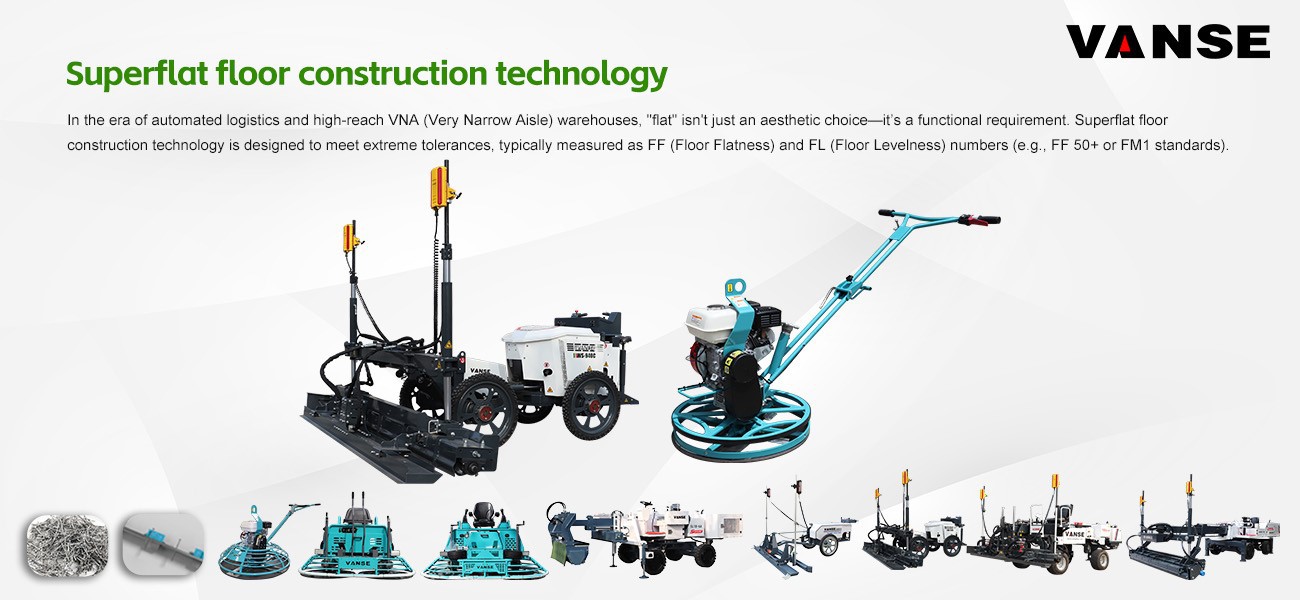
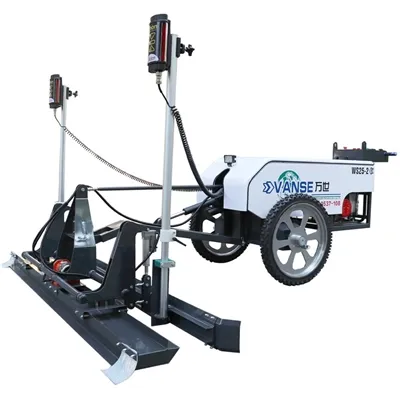
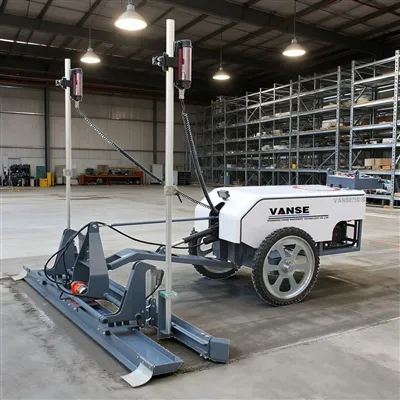
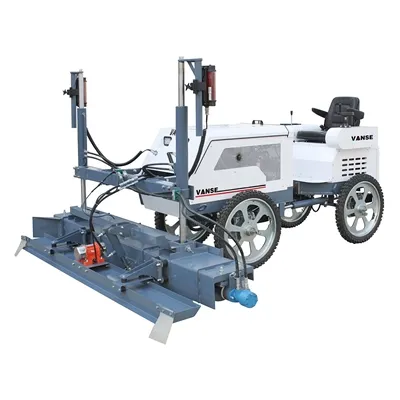
Achieving a Superflat floor (FM1/FM2 or FF 50+) isn't just about having a steady hand; it’s about high-speed physics and real-time data. If you’re a contractor looking to bid on high-spec logistics hubs or robotic warehouses, you need to understand the Precision Control Principle that makes a Concrete Laser Leveling Machine the undisputed king of the job site.
Here is the "under-the-hood" breakdown of how this technology works, and how the Vanse professional fleet turns these principles into flawless results.
1. The "Benchmark": Constant Laser Reference
The heart of the system is the Laser Transmitter. It sends out a 360-degree rotating beam that creates a perfectly horizontal (or sloped) reference plane over the entire work area.
The Vanse Advantage: Most Vanse machines, are designed to work with world-class laser systems (Leica/Trimble). This transmitter stays stationary, ensuring that the "zero point" never shifts, regardless of the terrain or machine movement.
2. The "Eyes": High-Frequency Receivers
Mounted on both sides of the machine's leveling head are the Laser Receivers.
The Principle: These receivers detect the laser beam and send height data to the on-board computer 10 times every second. This is far faster and more accurate than any human eye could ever hope to be.
The Vanse Workflow: Because the Vanse YZ30-4E Telescopic Boomed Laser leveling has such a long reach (6 meters), the receivers can maintain a "clean" signal without the interference of moving wheels on wet concrete, which is a major factor in hitting those ultra-high FL (Levelness) numbers.
3. The "Muscle": Instant Hydraulic Feedback
This is where the magic happens. The computer compares the data from the receivers to the benchmark. If the head is even 1mm too high or low, it sends an immediate command to the Hydraulic System.
The Principle: The hydraulic actuators make micro-adjustments to the leveling head's elevation in real-time. This ensures that the auger (which removes excess concrete) and the vibrator (which consolidates the slab) are always at the exact elevation required.
Vanse Integration: To make this process smoother, it helps if the concrete is placed evenly first. Using a Vanse Concrete Distributor or a Mini Dumper to place the mix prevents the laser leveling from "fighting" massive piles of concrete, allowing the hydraulic system to focus on precision rather than heavy lifting.
4. Consolidated Finishing: Preserving the Level
The precision control doesn't stop once the leveling passes. The surface must be finished without losing that laser-perfect flatness.
The Principle: You need to densify the slab without creating new "waves."
The Vanse Workflow:
Use a Vanse Automatic Topping Spreader to apply hardener uniformly. Manual throwing creates "hills" that ruin FF scores.
Follow up with a Vanse Ride-on Power Trowel. With its high-torque engine and precision pitch control, it burnishes the floor to a mirror finish while maintaining the flatness established by the laser leveling.
Finally, use a Vanse Concrete Cutting Machine (Floor Saw) for crisp contraction joints that won't spall or lift, preserving the floor's long-term FF/FL integrity.
Why "The Vanse System" Wins the FF/FL Game
Foreign buyers and engineers don't just look for a "smoothing tool"; they look for a System of Precision. Here is the ROI for your business:
| Control Element | Traditional Manual Result | Vanse Laser Control Result |
| Reaction Speed | Slow (Human observation) | Instant (10x per second) |
| Leveling Accuracy | ±5-10mm over 3m | ±1mm over 3m (Superflat) |
| Surface Density | Uneven (Manual vibration) | Uniform (High-frequency vibration) |
| Joint Quality | Ragged (Hand-tooling) | Clean & Straight (Floor Saw) |
| Labor Cost | High (12+ man crew) | Low (4-6 man crew) |
Final Thought
Precision control isn't a "feature"-it’s a requirement. If you are bidding on modern industrial projects, you aren't just competing on price; you are competing on accuracy. By utilizing a complete fleet from Vanse Machinery (www.vansemac.com), you are guaranteeing that every square meter of your floor meets the highest international standards.
Ready to hit those FM1 numbers? Explore the full technical breakdown at Vanse and see how our laser leveling technology can revolutionize your business.
Note: The parameters provided in this document are for reference only and are not mandatory. Due to differences in technical characteristics between different brands and models of laser levelers, please consult the manufacturer for a suitable solution before actual operation. This reference document assumes no responsibility for any issues arising from failure to follow the manufacturer's instructions.
Thanks to All the Friends Who Support and Trust Shandong Vanse Machinery Technology Co., Ltd.
If you want to know more about Shandong Vanse Machinery Technology Co., Ltd. or have any questions, please feel free to contact us:
Our Factory
Shandong Vanse Machinery Technology Co., Ltd.








Share this article

About the Author: Shandong Vanse Machinery Technology Co., Ltd.
Shandong Vanse Machinery Technology Co., Ltd. is a high-tech manufacturer specializing in concrete construction machinery, including laser screeds and related equipment. The company integrates R&D, production, and global sales, with products exported to over 60 countries and widely used in infrastructure projects worldwide.
Previous Post
Next Post
Related Articles
You Might Also Like
What special attention should be paid to the maintenance and care of concrete laser leveling machines under different climatic conditions?
– Under high temperature environment, the engine (if it is a fuel laser leveler) and hydraulic system are prone to overheating. For the engine, make sure that the coolant in the radiator is sufficient and clean. The coolant level should be checked regularly, generally every 8-10 hours of work, and the coolant should be replaced regularly according to the requirements of the equipment manual. It is usually recommended to replace it once a year. – Clean the dust and debris on the surface of the radiator, as these will affect the heat dissipation effect. You can use a compressed air can or a soft brush to gently clean it to avoid damaging the radiator fins. – For the hydraulic system, some laser levelers are equipped with a hydraulic oil cooler. Also ensure that its surface is clean and pay attention to the temperature of the hydraulic oil. If the hydraulic oil temperature is too high, it may cause the performance of the hydraulic system to decline or even damage. – Try to avoid using the equipment for a long time when the temperature is highest during the day (usually 12 noon-3 pm). Because during the high temperature period, the operating temperature of each component of the equipment is already high, and long-term continuous operation will further aggravate heat accumulation and increase the risk of equipment failure. – The working time can be adjusted to the early morning or evening, when the ambient temperature is relatively low, which is conducive to the normal operation of the equipment. If it is unavoidable to work during high temperature periods, the rest frequency of the equipment should be increased. After every 1-2 hours of work, the equipment should be allowed to rest for 15-20 minutes to allow the various parts of the equipment to fully dissipate heat. – High temperature will accelerate the evaporation and aging of lubricating oil (grease), so the lubrication of the equipment should be checked more frequently. For example, for the bearings, chains and other parts of the equipment, lubrication may be performed once every 50-100 hours of work. In a high temperature environment, it is necessary to check and add grease every 30-50 hours of work. – At the same time, check the seals of the equipment, such as the seals at the joints of the hydraulic pipes and the engine oil seals. High temperature may cause the seals to age and deform, resulting in leakage. If the seals show signs of damage, they should be replaced in time to avoid leakage of hydraulic oil or coolant, which will affect the normal operation of the equipment. – For fuel-type laser levelers, use fuel suitable for low temperature environments. In cold weather, diesel may wax, which will affect the start and normal operation of the engine. You can add anticoagulants or use low-grade winter diesel to solve this problem. – Battery performance will decrease at low temperatures, so make sure the battery is fully charged. When the equipment is not in use, the battery can be removed and placed in a warm room for charging and storage. In addition, before starting the equipment, the battery can be preheated, such as using a battery heater, which can improve the battery's starting ability. – The engine should be fully preheated before starting. According to the requirements of the equipment manual, use a preheating device to preheat the engine. The preheating time is generally determined by the ambient temperature. For example, in an environment of about minus 10℃, the preheating time may take 10-15 minutes. – For the hydraulic system and working parts, do not let the equipment work at full load immediately after starting. Let the equipment run at no load for 5-10 minutes to gradually heat up the hydraulic oil and various components. After reaching the normal working temperature, start construction. – If the equipment is not used for a long time, it should be stored indoors or in a place with insulation measures to avoid exposure to cold outdoor environments. If it can only be stored outdoors, the equipment should be properly covered to prevent damage to the equipment caused by snow and ice. – Antifreeze can be added to the water tank and hydraulic oil tank of the equipment to prevent the water tank and oil tank from freezing and cracking at low temperatures. The amount of antifreeze added should be in accordance with the requirements of the equipment manual. Generally, the concentration of antifreeze should be ensured to effectively prevent freezing at the expected minimum temperature. – Check the electrical system of the equipment to ensure that all electrical components (such as motors, controllers, sensors, etc.) have good waterproof seals. For wire connectors exposed to the outside, waterproof tape or sealant can be used to wrap them to prevent moisture from entering and causing short circuits. – The laser transmitter and receiver of the laser leveling machine should also be waterproof. In humid weather, if these precision components are damp, it may affect the transmission and reception of laser signals, thereby affecting the construction accuracy. You can use a special waterproof cover to protect it. When the equipment is not in use, store these parts in a dry place. – Humid air can easily cause equipment to rust, especially the metal parts of the equipment. Anti-rust oil or anti-rust paint can be applied to the surface of the equipment, and the parts that are prone to rust (such as chassis, scrapers, screws, etc.) should be protected. – Regularly check whether the equipment has signs of rust. For rusted parts, rust removal should be carried out in time. You can use sandpaper or rust remover to remove the rust, and then apply anti-rust oil or touch-up paint. – After working in humid weather, the equipment should be cleaned and dried in time. Use a clean rag to wipe off the moisture on the surface of the equipment. For parts inside the equipment that may be damp (such as the cab, electrical control cabinet, etc.), a hair dryer or dehumidifier can be used to dry them. – At the same time, the working parts of the equipment (such as scrapers, spiral distributors, etc.) should be cleaned to prevent concrete residues and moisture from mixing and solidifying on the parts, affecting the next use of the equipment.How does the concrete laser leveling’s high-frequency vibration system affect the quality and density of the concrete slab?
Excellent question. The high-frequency vibration system in a laser leveling is the core technology that directly addresses your inquiries about strength, compaction, and surface defects. Its impact is profound and multifaceted. Here's a detailed breakdown of how it affects concrete slab quality and density: The system uses rapidly vibrating (high-frequency, typically 3,500 – 6,000+ VPM) blades or pans. This vibration is transmitted directly into the concrete mass, momentarily liquefying the cement paste. This reduces internal friction, allowing aggregate particles to settle and rearrange under gravity into a denser, more efficient packing arrangement. Achieving Higher Strength Reduced Void Ratio: The primary driver of increased compressive and flexural strength is the reduction of entrapped air voids. Less air means more solid material per unit volume, allowing the concrete to bear higher loads. Improved Cement Paste Contact: Better particle packing brings aggregate surfaces into more intimate contact with the cement paste, enhancing the bond and the efficiency of the hydration process. Homogeneity: Vibration eliminates pockets of weak, aggregate-deficient mortar or paste, creating a uniformly strong matrix throughout the slab. Achieving Better Compaction Consolidation from Bottom-Up: Unlike hand-held vibrators that work from the top down, the laser leveling's vibrating pan acts across the entire surface area, consolidating the entire lift (up to its design depth, typically 10-12 inches) uniformly and simultaneously. Elimination of Entrapped Air: The high-frequency waves effectively force entrapped air bubbles to rise to the surface. This is critical for density. The result is a specific gravity much closer to the theoretical maximum of the mix design. Handles Stiff Mixes: It allows the use of lower slump (stiffer) concrete mixes, which have higher potential strength and reduced shrinkage, by providing the energy needed to consolidate them properly-a task difficult with manual methods. Reducing Surface Defects (Honeycombing, etc.) Prevents Honeycombing: Honeycombing is the direct result of inadequate consolidation, where aggregate pockets form without surrounding mortar. The laser leveling's comprehensive vibration ensures mortar completely fills all spaces between aggregates. Minimizes Bug Holes: While not eliminating all surface air voids (which often requires surface vibration or finishing techniques), the system dramatically reduces the larger bug holes caused by poor consolidation. Creates a Level, Closed Surface: The combination of vibration and precise strike-off creates a densified, uniform surface that is ideal for subsequent finishing operations. This reduces the likelihood of surface defects like scaling or crusting later on. The vibration system doesn't work in isolation; its effectiveness is magnified by the laser-guided automation: Speed and Consistency: The machine moves steadily and quickly. The concrete is vibrated and struck off immediately upon placement, before any initial set can begin. This eliminates the variability and delays of manual methods. Optimal Vibration Duration: The machine applies vibration for a consistent, appropriate time as it passes-neither under-vibrating (causing defects) nor over-vibrating (which can cause aggregate segregation or bleed water channels). Perfect Flatness on a Dense Base: It achieves exceptional flatness (FF/FL numbers) on top of a fully consolidated substrate. A flat but poorly compacted slab is a future failure waiting to happen. To achieve the stated benefits, the system must be used correctly: Lift Thickness: It is designed for specific depths. Placing concrete too deep in a single lift will result in inadequate consolidation at the bottom. Concrete Mix Design: The mix must have a cohesive aggregate gradation and appropriate admixtures to respond well to vibration without segregating. Operator Skill: The operator must manage the head speed and ensure adequate overlap between passes. High-Frequency Vibration → Fluidizes the concrete mix → Forces entrapped air out and particles into dense packing → Results in: Increased Density (lower porosity, higher specific gravity). Higher Strength (direct result of increased density and better bond). Reduced Permeability (denser matrix resists water and chloride ingress, improving durability). Elimination of Consolidation Defects (no honeycombing, reduced bug holes). Superior Surface for Finishing (uniformly dense, flat, and closed surface). In essence, the laser leveling's vibration system is a controlled, consistent, and powerful consolidation method that ensures the as-placed concrete slab achieves the maximum potential density and integrity inherent in its mix design. This directly translates to the higher strength, durability, and surface quality you are inquiring about. Note: The parameters provided in this document are for reference only and are not mandatory. Due to differences in technical characteristics between different brands and models of laser levelers, please consult the manufacturer for a suitable solution before actual operation. This reference document assumes no responsibility for any issues arising from failure to follow the manufacturer's instructions.One-step forming construction method of high-precision wear-resistant floor without cutting based on concrete laser leveling technology
– Using laser leveling technology, the laser transmitter generates a precise and stable plane reference. The laser receiver is installed on the leveling machine to sense the deviation in real time, so that the leveling machine automatically adjusts the scraper height to ensure that the floor flatness error is extremely small, which can generally be controlled within ±1.5mm, and can meet the needs of high-end industrial plants, electronic chip manufacturing workshops and other places with strict requirements on flatness. – Optimize the concrete mix ratio, add appropriate amounts of expansion agents, fibers and other admixtures, reduce the shrinkage stress during the hardening process of concrete, and cooperate with the carefully designed construction process, so that the floor does not need to set expansion joints in a large area, which is not only beautiful but also reduces the later maintenance cost, and avoids the accumulation of dust and debris caused by cutting seams. – In the initial setting stage of concrete, wear-resistant materials such as corundum and metal aggregates are evenly spread, and a special trowel is used to closely combine with the floor to form a hard and wear-resistant surface layer. The wear resistance can be several times higher than that of ordinary concrete floors. It is suitable for places with frequent wear and tear such as heavy traffic areas, warehouses, and logistics centers. – From base treatment, concrete pouring, leveling to wear-resistant material spreading, troweling and finishing, the processes are closely connected and completed in one go, avoiding the problem of poor interlayer bonding caused by layered construction, improving the overall strength and durability of the floor, and reducing the construction period. It can usually shorten the construction period by 1/3 – 1/2 compared with traditional processes. Applicable to indoor and outdoor concrete floor projects with large areas and high requirements for flatness and wear resistance, such as various large industrial plants, logistics storage centers, airport terminals, exhibition halls, parking lots, etc., especially suitable for places where obvious expansion joints are not expected to affect the appearance or use function. – The laser transmitter emits a rotating laser beam to form a high-precision horizontal control surface. The laser receiver installed on the leveling machine continuously captures the laser signal, compares the actual elevation of the floor with the laser plane benchmark, and transmits the generated deviation signal to the control system. The control system drives the hydraulic actuator of the leveling machine to adjust the scraper, vibrator and other components in real time to accurately level and vibrate the concrete to achieve high-precision leveling. – On the one hand, by optimizing the concrete mix ratio, selecting low-hydration hot cement, adding an appropriate amount of expansion agent (such as calcium sulfoaluminate expansion agent) to compensate for concrete shrinkage, adding polypropylene fiber to enhance concrete toughness and inhibit the generation of microcracks; on the other hand, during the construction process, strictly control the concrete pouring temperature, vibration method and curing conditions, reasonably arrange the construction sequence, reduce the temperature difference between the inside and outside of the concrete and stress concentration, so that the floor itself has the ability to resist shrinkage and deformation, thereby meeting the requirements of no seam cutting. – The surface of concrete in the initial setting stage has a certain viscosity. At this time, the spread wear-resistant material can be embedded in the surface of the concrete. With the subsequent leveling and finishing operations, the wear-resistant material and the concrete form a solid whole. Wear-resistant materials such as corundum and metal aggregates have high hardness and strong wear resistance, forming a wear-resistant protective layer on the surface to protect the main concrete of the floor from wear. – Technical preparation: Familiar with the construction drawings and technical specifications, formulate detailed construction plans, and conduct technical briefings. – Site preparation: Clean up the site debris and accumulated water, level the base layer, and if the base layer is soft soil, it needs to be reinforced; set up a temporary drainage system for construction; plan the concrete pouring and leveling route according to the site area and shape. – Material preparation: Purchase high-quality cement, sand, gravel, admixtures, wear-resistant materials, etc. according to the design requirements, inspect the raw materials to ensure that they meet the quality standards; prepare sufficient construction water and electricity. – Equipment preparation: Debug concrete laser leveling machine, concrete mixing equipment, transportation equipment, wear-resistant material spreader, trowel, etc. to ensure the normal operation of the equipment; calibrate the laser system so that the laser plane it emits is consistent with the designed elevation of the floor. – Thoroughly clean the surface of the base to remove pollutants such as dust and oil; compact the base with a roller or tamping machine to achieve a compaction degree of more than 90%; repair and fill local low-lying areas and potholes with concrete or mortar to ensure that the flatness error of the base does not exceed ±10mm. – Accurately weigh the raw materials according to the designed mix ratio, use a forced mixer to mix the concrete, and the mixing time is not less than 90 seconds to ensure the uniformity of the concrete; transport the concrete to the construction area by pumping or unloading, control the pouring speed, avoid concrete segregation, and the pouring thickness is slightly higher than the designed floor elevation by 10-20mm to reserve space for leveling. – Start the laser leveling machine and make it move forward at a uniform speed of 1-2m/min; the operator adjusts the scraper height and vibration frequency of the leveling machine in real time according to the feedback signal of the laser receiver to ensure that the concrete surface is flat and compacted; the leveling work of adjacent areas should be completed before the initial setting of the concrete, and the overlapping construction width should not be less than 10cm to ensure the integrity of the floor. – When the concrete is initially set (generally there are slight footprints when stepping on it, and the sinking depth is about 3-5mm), use a special spreader to evenly spread the wear-resistant materials on the floor surface according to the specified amount, and the spreading thickness is generally 3-5mm; during the spreading process, pay attention to controlling the spreading speed and direction to avoid accumulation or leakage of wear-resistant materials, and ensure that the spreading uniformity reaches more than 90%. – After spreading the wear-resistant material, use a trowel to smooth it immediately. The trowel should run in a crisscross pattern to fully blend the wear-resistant material with the concrete. The number of smoothing passes should be no less than 3 times. As the concrete continues to harden, when there is no water stain on the surface and it feels slightly hard when pressed with fingers, it should be smoothed manually. Aluminum alloy rulers, trowels and other tools should be used to make the floor surface bright and smooth. – After smoothing and finishing, the floor should be maintained in time by covering with plastic film, spraying curing agent or laying water straw mats. The maintenance time should be no less than 7 days. During this period, the concrete surface should be kept moist to avoid water loss and cracks. Warning signs should be set up during the maintenance period to prohibit vehicles and pedestrians from passing on floors that do not meet the strength requirements. – Calibrate the laser system before construction to ensure the accuracy of the laser plane; regularly check the flatness with a 2m ruler and a feeler gauge during construction, at least once every 100-200 square meters, and adjust the leveler in time if deviation is found; use a laser flatness meter to fully test the flatness of the floor after finishing to ensure that it meets the design requirements. – Strictly select wear-resistant materials according to design requirements and check the quality certification documents of wear-resistant materials; supervise the spreading amount and uniformity during spreading to ensure that the specified requirements are met; after maintenance, on-site wear resistance tests can be carried out, such as grinding a certain area with a grinding wheel, observing the wear condition, and judging whether the wear resistance meets the standard. – Optimize the concrete mix ratio, control the cement dosage and water-cement ratio; monitor the concrete pouring temperature to avoid high-temperature pouring; strengthen maintenance and control the temperature difference between the inside and outside of the concrete; regularly inspect the floor, and if fine cracks are found, use epoxy resin and other materials to repair them in time. 1. Provide safety training to construction personnel to familiarize them with the operation methods and safety precautions of construction equipment, such as the safety operating procedures of laser levelers, concrete mixers and other equipment. 2. Set up obvious safety warning signs at the construction site to divide the construction area and non-construction area to prevent unrelated personnel from entering the construction danger zone. 3. Regularly check the safety performance of construction equipment, such as electrical insulation, mechanical protection devices, etc., to ensure the normal operation of the equipment and avoid safety accidents caused by equipment failure. 4. Provide construction personnel with necessary personal protective equipment, such as safety helmets, safety shoes, gloves, etc., to ensure the personal safety of construction personnel. 1. Classify and collect solid waste such as concrete residues and discarded wear-resistant material packaging bags generated during the construction process, and transport them to designated garbage disposal sites regularly. 2. Reasonably arrange construction time to avoid high-noise concrete mixing, equipment operation and other operations during residents' rest time. If necessary, take noise reduction measures, such as installing silencers on equipment. 3. Control dust on the construction site, such as covering the material storage area, closing the transport vehicles, regularly sprinkling water to reduce dust, and keeping the construction site clean. – The one-time molding process shortens the construction period, reduces labor costs, equipment rental costs, etc.; no cutting reduces the later maintenance costs, such as cutting, caulking material costs and labor maintenance costs; wear-resistant flooring increases the service life of the flooring, reduces the frequency of flooring replacement, and the overall economic benefits are significant. – It provides high-quality flooring solutions for various large-scale projects, meeting the needs of rapid development of modern industry, logistics and other industries; it reduces noise, dust and other pollution during construction, which is conducive to environmental protection and sustainable development of urban construction. In a large electronic chip manufacturing plant construction project, this construction method was used to successfully create a high-precision, no-cutting, wear-resistant factory floor. The construction area reached 50,000 square meters, and the flatness error was controlled within ±1mm, meeting the stringent requirements of chip manufacturing equipment for floor flatness. In the subsequent years of use, the floor had good wear resistance and no obvious cracks appeared, providing a solid guarantee for the efficient production of the factory. For example, in a certain international logistics and warehousing center project, this construction method also performed well, and a large area of floor was built quickly and efficiently. The seam-free design improved the aesthetics and practicality of the warehouse and was highly recognized by the owner.