Technical Knowledge
What are the specific requirements for the environmental protection indicators of concrete laser leveling in green building projects?
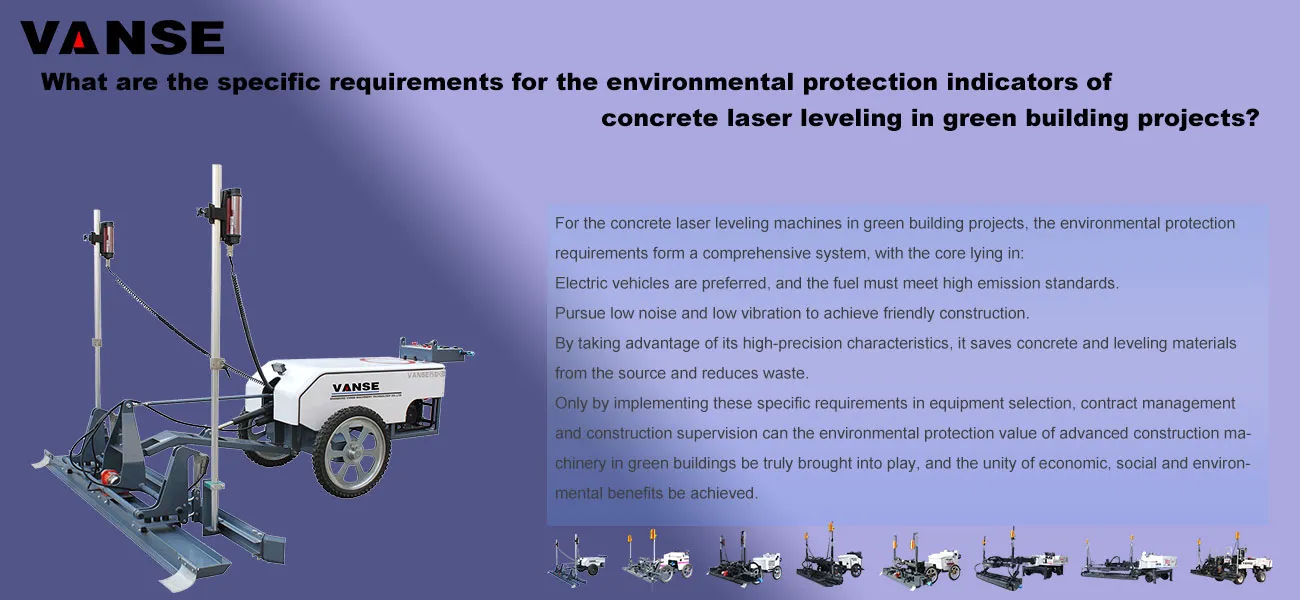
In green building projects, the environmental protection requirements for concrete laser leveling machines have gone beyond the traditional scope of "construction efficiency", and more emphasis is placed on their comprehensive performance in energy conservation, emission reduction, noise reduction, and consumption reduction.
These requirements are not a single standard but run through all aspects of equipment selection, construction process and management, aiming to minimize the negative impact of construction activities on the environment and personnel health. The following is a detailed breakdown of the specific requirements:
Ⅰ. Core Environmental Protection Indicators and Specific Requirements
1. Exhaust gas emissions and energy types
This is the most crucial environmental protection indicator, directly related to the air quality at the construction site.
Type of power source
Priority electric type: When conditions permit, electric laser levelings should be given priority. Electric equipment achieves zero on-site emissions during operation and does not produce harmful gases such as carbon monoxide (CO), hydrocarbons (HC), nitrogen oxides (NOx), and particulate matter (PM), greatly improving the construction environment in underground Spaces or poorly ventilated areas.
Clean fuel engines: If fuel power must be used, equipment that meets the emission standards for non-road mobile machinery at Stage IIIA or higher (such as Stage IV) should be selected. These engines adopt advanced electronic fuel injection and exhaust after-treatment technologies (such as diesel particulate filters (DPF) and selective catalytic reduction (SCR)), which can significantly reduce pollutant emissions.
Specific requirements: In the tender documents or construction specifications of green building projects, the emission standards for levelings should be clearly stipulated, and the use of electric equipment should be encouraged.
2. Energy efficiency and energy conservation
Pay attention to the energy consumed by the equipment to complete a unit of work.
High-efficiency hydraulic system: The leveling machine equipped with high-efficiency hydraulic systems such as load-sensitive and variable pumps can automatically adjust the power output according to the actual working conditions, reduce reactive power loss, and lower fuel or electricity consumption.
Intelligent control and standby function: The equipment should be equipped with an automatic idle speed or automatic shutdown function. When not in operation for a long time, it can reduce the engine speed or automatically shut off the engine to avoid unnecessary fuel waste and emissions.
Although it is difficult to set a uniform energy consumption figure, when selecting equipment, you can ask the manufacturer to provide the energy consumption data of their products and compare them with other models to choose the one with higher energy efficiency.
3. Noise and Vibration Control
Construction noise is the main factor disturbing residents and also an important assessment point for green construction.
Low-noise design: The equipment should adopt low-noise engines, optimized mufflers, noise control for the hydraulic system, and sound insulation covers, etc.
Operating noise limit: Within a certain range from the equipment (such as 7 meters), the operating noise should be lower than 80 decibels (dB), or even lower. This is particularly important for construction near hospitals, schools and residential areas.
Vibration control: A good vibration damping design not only enhances operational comfort but also reduces the vibration impact on surrounding precision instruments and building structures.
Specific requirements: Clearly define the construction period in the construction plan and stipulate the on-site noise monitoring values. Selecting equipment that meets the low-noise standards is a prerequisite for achieving this goal.
4. Material conservation and concrete utilization rate
One of the core advantages of the laser leveling itself is to enhance the efficiency of material utilization.
High flatness and high marking accuracy: The laser control system can ensure extremely high levelness and marking accuracy of the floor. This means:
Reduce excessive concrete consumption: Avoid concrete waste caused by elevation errors.
Reduce the materials of the leveling layer: Excellent flatness can eliminate or minimize the need for subsequent cement mortar leveling layers, saving materials such as cement and sand and gravel.
The flatness of the floor constructed by laser leveling (usually measured by FF/FL value) should meet the design requirements, thereby indirectly achieving material savings. This is an important indirect indicator for evaluating its environmental benefits.
5. Waste prevention
Reducing corrections and rework: High-precision construction avoids chiseling and rework caused by substandard flatness from the source, thereby reducing the generation of construction waste.
6. Prevention of oil leakage
Sealing and Maintenance: The equipment should have a good hydraulic system sealing performance. Regular inspection and maintenance should be carried out to prevent hydraulic oil leakage from contaminating soil and groundwater.
Specific requirements: The construction site should establish equipment maintenance and inspection systems to ensure there is no oil leakage. In the event of a leakage, there should be an emergency response plan and collection measures.
Ⅱ. How to implement these requirements in green building projects?
Specify environmental protection specifications in the tender documents: When purchasing or leasing equipment, include the above-mentioned environmental protection indicators (such as "must be electric or fuel engine meeting National IV emission standards", "operating noise ≤80dB") as mandatory or bonus technical requirements in the contract.
Select green construction contractors: Prioritize those that possess modern, low-emission fleet equipment and have mature experience in green construction management.
Supervision and monitoring during the construction process
Conduct noise and air quality monitoring at the construction site.
Check the maintenance records of the equipment to ensure that it is always in good environmental protection working condition.
Record the actual usage of concrete, compare it with the designed usage, and evaluate the effect of material savings.
Refer to green building evaluation standards: such as China's "Green Building Evaluation Standard" (GB/T 50378), the United States' LEED certification, etc., all of which have corresponding provisions for environmental protection, energy conservation and material resource utilization during the construction process. Using environmentally friendly construction equipment is one of the specific measures to meet the requirements of these terms.
Summary
For the concrete laser leveling machines in green building projects, the environmental protection requirements form a comprehensive system, with the core lying in:
Electric vehicles are preferred, and the fuel must meet high emission standards.
Pursue low noise and low vibration to achieve friendly construction.
By taking advantage of its high-precision characteristics, it saves concrete and leveling materials from the source and reduces waste.
Only by implementing these specific requirements in equipment selection, contract management and construction supervision can the environmental protection value of advanced construction machinery in green buildings be truly brought into play, and the unity of economic, social and environmental benefits be achieved.
Note: The parameters provided in this document are for reference only and are not mandatory. Due to differences in technical characteristics between different brands and models of laser levelers, please consult the manufacturer for a suitable solution before actual operation. This reference document assumes no responsibility for any issues arising from failure to follow the manufacturer's instructions.
Thanks to All the Friends Who Support and Trust Shandong Vanse Machinery Technology Co., Ltd.
If you want to know more about Shandong Vanse Machinery Technology Co., Ltd. or have any questions, please feel free to contact us:
Our Factory
Shandong Vanse Machinery Technology Co., Ltd.








Share this article

About the Author: Shandong Vanse Machinery Technology Co., Ltd.
Shandong Vanse Machinery Technology Co., Ltd. is a high-tech manufacturer specializing in concrete construction machinery, including laser screeds and related equipment. The company integrates R&D, production, and global sales, with products exported to over 60 countries and widely used in infrastructure projects worldwide.
Previous Post
Next Post
Related Articles
You Might Also Like
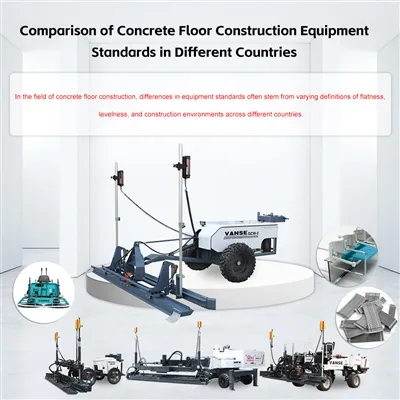
Comparison of Concrete Floor Construction Equipment Standards in Different Countries
In the field of concrete floor construction, differences in equipment standards often stem from varying definitions of flatness, levelness, and construction environments across different countries. Currently, there are three main standard systems globally: the United States (ACI/ASTM), Europe (EN/TR34), and China (GB/JGJ). The following is a detailed comparative analysis of construction equipment and technical standards: The selection of construction equipment directly depends on how the country evaluates the quality of the flooring. Features American Standards (ACI/ASTM) European Standard (EN/TR34) Chinese Standards (GB/JGJ) Main Measurement System F-Number (FF/FL) FM/DM (TR34) Straightedge Method (2m/3m) Evaluation Dimensions Emphasizes flatness (FF) and levelness (FL) for random traffic areas. Distinguishes between free movement (FM) and defined movement (DM) Measuring surface flatness and perpendicularity deviations Trends in Mainstream Equipment Laser Leveling, digital measuring instrument High-precision laser leveling and grinding correction equipment Laser leveling machine, traditional Leveling, straightedge US Standards: ACI 302.1R strongly promotes large-area automated paving. Due to high labor costs and emphasis on the FF / FL index in the US, their equipment is typically equipped with high-frequency vibration and laser feedback systems to correct flatness in real time.European Standards: Especially in the UK and Germany, for very narrow aisle (VNA) warehouses, the equipment focuses more on lateral tilt control. The TR34 standard has very high requirements for "directional travel," so European floor finishing equipment often combines this with a "grinding and thinning" process. Chinese Standards: Early practices favored traditional construction methods, but with the popularization of standards such as the "Code for Construction and Quality Acceptance of Floor Engineering," large-area laser Leveling have become mainstream. However, the requirements for automated data analysis in equipment are slightly lower than in Europe and the US. United States (CPAA/ASCC): Emphasizes dry grinding and dust collection (OSHA silica dust standards). Equipment often features high power and multi-planetary grinding heads.Europe (CE Standards): Mandatory requirement for equipment to comply with CE safety certification, with a strong emphasis on low noise and low energy consumption during operation. China: Emphasizes efficiency and cost-effectiveness. Currently, domestically produced polishing machines have reached international standards in terms of weight and pressure adjustment, but there is still a gap compared to top European and American brands in terms of operational comfort (ergonomics) and intelligent control. This is the most significant "hard barrier" when using equipment across borders: USA: Commonly 110V/240V, 60Hz. Europe/China: 220V/380V, 50Hz. This means that the specifications for frequency converters and motors must be different. Europe (CE): Mandates emergency stop switches, protective guards, and strict electromagnetic compatibility (EMC) testing. USA (UL/OSHA): Places greater emphasis on fire risk prevention and operator dust protection. American System: The core principle is "data-driven." Equipment often requires the use of laser measuring instruments (such as Dipstick or FloorPro) to provide real-time FF values. European System: The core principle is "application-oriented." Floor surfaces are classified into FM (Free Movement) and DM (Defined Movement), and equipment requires more complex track or laser guidance systems during construction. Chinese System: The core principle is "acceptance-based." Although it is rapidly aligning with European and American standards, there is still greater diversity in the standardized interfaces of construction equipment (such as grinding head fixing methods). If you are planning to procure construction equipment internationally or need to develop construction plans based on specific national standards, I can assist you with: A detailed explanation of the calculation formula for the FF / FL value and equipment requirements; Providing construction process flowcharts for specific countries (such as German DIN or British TR34 standards). Which part would you like to learn more about? Contact us NOW Note: The parameters provided in this document are for reference only and are not mandatory. Due to differences in technical characteristics between different brands and models of laser levelers, please consult the manufacturer for a suitable solution before actual operation. This reference document assumes no responsibility for any issues arising from failure to follow the manufacturer's instructions.How to optimize the use environment of concrete laser leveling machine in the project?
In the field of construction, concrete laser levelers (concrete laser leveling machines or concrete laser levelers) have become key equipment for improving the efficiency and quality of concrete construction. With the continuous advancement of global infrastructure construction and the growing demand for high-precision construction in the construction industry, the market size of concrete laser levelers continues to expand. According to market research reports, the global market size of concrete laser levelers is expected to reach US$1.76 billion in 2025, with an annual growth rate of approximately 11.4%. In order to give full play to the effectiveness of concrete laser levelers and extend their service life, it is crucial to optimize the use environment. Before the operation of the concrete laser leveler, it is crucial to ensure that the construction site is clean and free of debris. Stones, wood, metal scraps and other debris in the site will not only hinder the normal operation of the equipment, but may also damage key components of the equipment, such as the leveling work head and walking tires. For example, if sharp stones remaining in the site are drawn into the walking mechanism of the laser leveler, it may cause the tires to be scratched and deviate, affecting the stability and walking accuracy of the equipment. At the same time, the construction site should be initially leveled so that the ground slope and undulation are within the range that the equipment can adapt to. Generally speaking, the concrete laser leveling machine is suitable for slopes within a certain range. If the site slope exceeds the specified range, it may cause the center of gravity of the equipment to be unstable, affect the leveling accuracy, and even cause safety accidents. In order to ensure the safety of construction personnel and equipment, a clear safety warning area should be set up around the concrete laser leveling machine operation area. Set up warning signs, such as "Construction site, no entry for idle people" and "Pay attention to equipment operation", and set up warning tapes to clearly divide the equipment operation range. Especially in construction sites where multiple types of work are cross-operated, prevent other personnel or equipment from mistakenly entering the operation path of the laser leveling machine to avoid collision accidents. For example, in the construction of basement floors in large commercial complexes, due to the complex construction space and frequent exchanges between personnel and equipment, a clear safety warning area can effectively reduce the probability of accidents. At the same time, arrange special personnel to be responsible for safety inspections to ensure the effectiveness of the warning area and promptly dissuade personnel and equipment from entering illegally. Response to high temperature environment: In high temperature environment, the engine of the concrete laser leveler is prone to overheating, resulting in power reduction and increased wear of parts. When the ambient temperature exceeds 35℃, the load of the engine cooling system increases significantly. At this time, the maintenance of the engine cooling system should be strengthened, and the coolant level should be checked before daily operation. If it is insufficient, add coolant that meets the specifications in time. Clean the dust and debris on the surface of the radiator regularly to ensure that the heat dissipation air duct is unobstructed. Compressed air or high-pressure water gun (pay attention to moderate water pressure to avoid damage to the radiator fins) can be used for cleaning. For example, when constructing in an open-air parking lot with high temperature in summer, if the engine temperature is found to be too high, the equipment should be immediately moved to a cool place to shut down and cool down, and never force operation under high temperature. At the same time, consider installing a sunshade for the equipment to reduce the impact of direct sunlight on the equipment and reduce heat accumulation in the engine compartment. Response to low temperature environment: In a low temperature environment (such as an ambient temperature below 5℃), the viscosity of the lubricating oil of the concrete laser leveler increases and the fluidity becomes poor, which will make it difficult to start the equipment and increase the wear of various moving parts. Therefore, before construction in a low-temperature environment, lubricating oil and hydraulic oil suitable for low-temperature working conditions should be replaced, such as using low-freezing point engine oil and hydraulic oil. Before starting the equipment, a preheating device can be used to preheat the engine, such as an electric heating water jacket, a fuel heater, etc., to improve the starting performance of the engine. At the same time, the battery of the equipment should be kept warm and protected, and a battery warming sleeve can be installed to prevent the battery from degrading due to low temperature and affecting the start of the equipment. For example, in the construction of industrial plant floors in the northern winter, taking good low-temperature protection measures for the equipment can ensure the normal operation of the concrete laser leveling machine and improve construction efficiency. High humidity environment protection: High humidity environment can easily cause the metal parts of the concrete laser leveling machine to rust and corrode, especially when constructing in coastal areas or rainy seasons. In order to cope with high humidity environments, the equipment should be parked in a dry place, and try to choose indoors or in a place with a rain shelter. If it is unavoidable to work in a humid environment, anti-rust oil can be applied to the surface of the equipment, especially parts that are prone to rust, such as the frame, chassis, and walking mechanism. Check the electrical circuits regularly to prevent short circuits caused by moisture. Use an insulation resistance tester to detect the insulation performance of the electrical circuits and deal with problems in a timely manner. For the battery of the equipment, keep it clean and dry, check the electrolyte level and density regularly, and add distilled water in time to ensure good battery performance. For example, if the laser leveling machine used for a long time in a high humidity environment does not pay attention to rust prevention, the frame may rust and reduce strength in a short time, affecting the safety and service life of the equipment. Moisture-proof measures: When the concrete laser leveling machine is idle, effective moisture-proof measures should be taken. Desiccant, such as quicklime, silica gel desiccant, etc., can be placed at the equipment parking place to absorb moisture in the surrounding air and reduce humidity. For key components of the equipment, such as laser transmitting and receiving devices, electrical control cabinets, etc., moisture-proof covers can be used for protection to prevent moisture intrusion. During construction in the rainy season, if the equipment is exposed to rain for a long time, the moisture on the surface of the equipment should be wiped dry with a dry cloth in time after the operation, and the equipment should be fully inspected to ensure that no moisture enters the equipment. For example, in the construction site in the rainy season in the south, doing a good job of moisture-proofing the equipment can effectively reduce equipment failures caused by moisture. Concrete laser leveling machines usually operate at construction sites with a lot of dust, and a large amount of dust can damage the key components of the equipment. To reduce the impact of dust, a high-efficiency air filter can be installed at the air inlet of the equipment to filter dust particles in the air and ensure that the air entering the engine and hydraulic system is clean. Clean the air filter regularly. Depending on the dust concentration at the construction site, generally clean or replace the filter element every 50-100 hours of work. At the same time, protect the laser transmitting and receiving devices of the equipment to prevent dust from adhering to the lens and affecting the transmission of the laser signal. A dust cover can be installed or the lens can be wiped regularly with a clean soft cloth. In addition, when the equipment is operating, try to avoid staying in areas with severe dust for a long time to reduce the erosion of dust on the equipment. For example, in the floor construction of a cement plant, the dust concentration is extremely high. Strengthening dust protection measures can effectively extend the service life of the concrete laser leveling machine. For electric concrete laser levelers, stable power supply is the key to the normal operation of the equipment. Before connecting to the power supply, check whether the power supply voltage meets the equipment requirements. The rated voltage fluctuation range of general equipment should be controlled within ±10%. If the voltage is too high or too low, it will affect the performance of the equipment motor and even burn the motor. You can use a voltmeter to regularly check the power supply voltage to ensure that the voltage is stable. At the same time, ensure that the capacity of the power supply line is sufficient to avoid safety accidents caused by voltage drop or line heating due to line overload. For temporary electricity use at the construction site, wiring should be carried out in accordance with relevant specifications, using a three-phase five-wire system and equipped with a leakage protector to ensure safe electricity use. For example, in the indoor floor construction of large shopping malls, if the power supply is unstable, the motor speed of the laser leveler may be uneven, affecting the leveling accuracy. Fuel-fired concrete laser levelers need to use high-quality fuel to ensure the normal operation of the engine. You should choose fuel that meets the equipment's required grades. For example, diesel engines generally use 0 or -10 diesel, and lower grades of diesel should be used in low temperature environments. Poor-quality fuel may contain impurities and moisture, which can cause the engine's fuel injectors to become clogged, combustion to be incomplete, reduce engine power, increase fuel consumption, and even damage the engine. Purchase fuel from regular gas stations and clean the fuel tank regularly to prevent impurities precipitated at the bottom of the tank from entering the fuel system. At the same time, before adding fuel to the equipment, you can use a fuel filter for secondary filtration to ensure fuel cleanliness. For example, in highway construction in remote areas, if non-standard fuel is used, the engine of the concrete laser leveler may frequently malfunction, affecting the construction progress. If conditions permit, the concrete laser leveler should be stored indoors as much as possible. Indoor storage can effectively prevent the equipment from being eroded by natural factors such as wind, sun, and rain, and reduce the risk of paint damage on the surface of the equipment and rust on metal parts. The indoor storage environment should be kept dry, well ventilated, and at a suitable temperature. The general temperature should be controlled between 5℃ – 35℃, and the relative humidity should be controlled between 40% – 70%. When storing indoors, the equipment can be parked on a dedicated bracket to avoid direct contact between the equipment and the ground, and to prevent the bottom parts from getting damp and rusting. At the same time, the equipment should be inspected and maintained regularly, such as checking the lubrication of the equipment, the connection of the electrical circuits, etc., to ensure that the equipment is in good standby condition. If the concrete laser leveling machine can only be stored outdoors, strict protective measures must be taken. First, build a rain shelter to ensure that the equipment is not directly exposed to rain. The material of the rain shelter should have good waterproof and sun-proof properties, such as color steel plates, canvas, etc. Cover the surface of the equipment with sun-proof and waterproof tarpaulin, and fix it firmly with ropes to prevent the tarpaulin from being blown away by the wind. At the same time, additional protection should be provided for key parts of the equipment, such as the engine, electrical control cabinet, laser transmitting and receiving devices, etc., which can be wrapped with a dedicated protective cover. During outdoor storage, the equipment should be inspected regularly, dust and debris on the surface of the equipment should be cleaned, and problems should be dealt with promptly. For example, in long-term outdoor construction sites, good storage protection of the equipment can effectively extend the service life of the equipment and reduce the occurrence of equipment failures. Click the below to jump immediately!!! ARMOUR JOINT CONCRETE LEVELING MACHINE LIGHT TOWER POWER TROWEL SLIPFORM MACHINE STEEL FIBER TOPPING SPREADER TRACKED MINI DUMPERWhat are the safety operating procedures for concrete laser leveling machines?
Safety operating procedures for concrete laser leveling machines ◆◆◆◆Preparation before operation◆◆◆◆ 1. Operators should be familiar with the performance, principles and operating methods of the machine, and operate it correctly in accordance with the requirements of the instruction manual. 2. Check whether all parts of the machine are intact, without damage or missing, and ensure that the machine is in normal working condition. 3. Ensure the safety and cleanliness of the construction site, clean up the surrounding debris and obstacles, and ensure the smooth progress of the construction. ◆◆◆◆Work environment inspection◆◆◆◆ 1. Check whether the work area is safe and free of potential safety hazards. 2. Confirm that there are no oil stains, water stains or other impurities on the concrete surface, so as not to affect the normal operation and leveling effect of the machine. 3. Check whether the laser measurement and control system is working properly to ensure the accuracy and stability of the machine. ◆◆◆◆Equipment startup and shutdown◆◆◆◆ 1. Turn on the power switch, start the machine, and check whether the machine is working normally. 2. After the leveling work is completed, the laser measurement and control system should be turned off first, and then the power switch is turned off to ensure the normal service life of the machine. 3. When the machine fails, it should be stopped immediately for inspection, and the work should be carried out after troubleshooting. ◆◆◆◆Machine debugging◆◆◆◆ 1. According to work needs, adjust the height, angle and other parameters of the machine to ensure the leveling effect and quality: 2. During the debugging process, attention should be paid to the surrounding environment and personnel safety to avoid accidents. ◆◆◆◆Calibration of laser measurement and control system◆◆◆◆ 1. The laser measurement and control system should be calibrated regularly before and after use to ensure the accuracy and stability of the machine. 2. During the calibration process, attention should be paid to the surrounding environment and personnel safety to avoid accidents. ◆◆◆◆Leveling operation◆◆◆◆ 1. According to the work needs, select appropriate leveling tools and parameters to perform leveling work. 2. During the leveling process, attention should be paid to the surrounding environment and personnel safety to avoid accidents. 3. After leveling is completed, the leveling effect and quality should be checked and any problems found should be dealt with in a timely manner. ◆◆◆◆Exception handling◆◆◆◆ During use, if any abnormality or malfunction is found in the machine, it should be stopped immediately for inspection and the fault should be eliminated before starting work.