Technical Knowledge
What is the future development direction of concrete laser leveling machine?
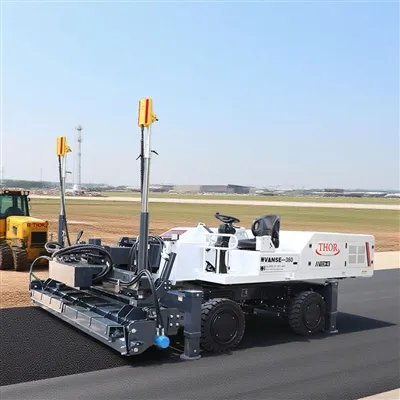
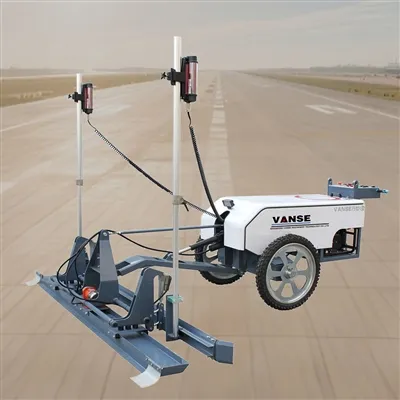
Concrete laser leveling machine is a high-tech equipment commonly used in construction engineering. It uses laser technology to achieve automatic leveling and leveling of concrete. In the future, the development direction of concrete laser leveling machine includes the following aspects:
Improve construction efficiency
With the acceleration of the urbanization process, the requirements for the construction period of building construction are becoming more and more stringent. The concrete laser leveling machine has played an important role in shortening the construction period and improving construction efficiency. In the future, by further optimizing the equipment structure and control system, the construction efficiency of the concrete laser leveling machine will be further improved to better meet the construction schedule requirements.
Realize intelligent construction
With the continuous development of technologies such as artificial intelligence and the Internet of Things, concrete laser leveling machines will gradually have more intelligent functions. For example, by combining with building information modeling (BIM) technology, real-time monitoring and data management of the construction process can be realized, the construction process can be further optimized, and construction quality and efficiency can be improved. At the same time, through the combination with intelligent equipment such as robots and drones, more automatic and intelligent construction methods can be realized, human intervention can be reduced, and construction costs can be reduced.
Multifunctional development
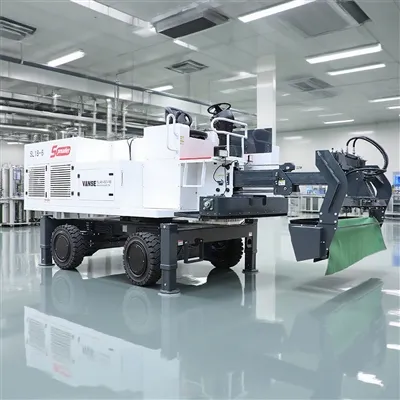
At present, the concrete laser leveling machine is mainly used for leveling and leveling concrete, but it will have more functions in the future. For example, by adding additional equipment, operations such as automatic concrete distribution, finishing, and compaction can be realized, realizing one-stop concrete construction. In addition, with appropriate sensors and testing equipment, quality testing such as concrete strength testing and crack testing can be carried out, providing a more comprehensive guarantee for construction quality.
Expand the scope of application
At present, the concrete laser leveling machine is mainly used in the construction of concrete structures such as buildings, bridges, and tunnels, but its application range will be expanded to more fields in the future. For example, in road construction, operations such as automatic leveling and compaction of the road surface can be realized; in the field of agriculture, operations such as leveling and compaction of farmland can be realized to improve the efficiency and quality of agricultural production.
In short, the future concrete laser leveling machine will develop in a more efficient, intelligent, and multi-functional direction, providing more high-quality, efficient, and intelligent solutions for construction. With the continuous advancement of technology and the expansion of the scope of application, concrete laser leveling machines will play an important role in more fields and make greater contributions to the modernization of the construction industry.

Thanks to All the Friends Who Support and Trust Shandong Vanse Machinery Technology Co., Ltd.
If you want to know more about Shandong Vanse Machinery Technology Co., Ltd. or have any questions, please feel free to contact us:
Our Factory
Shandong Vanse Machinery Technology Co., Ltd.








Share this article

About the Author: Shandong Vanse Machinery Technology Co., Ltd.
Shandong Vanse Machinery Technology Co., Ltd. is a high-tech manufacturer specializing in concrete construction machinery, including laser screeds and related equipment. The company integrates R&D, production, and global sales, with products exported to over 60 countries and widely used in infrastructure projects worldwide.
Previous Post
Next Post
Related Articles
You Might Also Like
What are the tips for successfully using a concrete laser leveling over chaired reinforcement (rebar or wire mesh) without disrupting the subbase?
Excellent and highly practical question. Successfully using a laser leveling over chaired reinforcement is a critical skill that balances achieving superior slab quality with protecting the subbase. Here are the key tips, organized into a systematic approach: The goal is to use the laser leveling's power to consolidate concrete around and through the reinforcement, not to use it as a bulldozer that pushes rebar into the subgrade. Robust Chairs & Secure Tying: Use heavy-duty, high-load-capacity chairs (e.g., #5 or higher for rebar) with wide bases to resist punching into the subgrade. Tie all intersections securely. A wobbly, unsecured mat will move as a unit when hit by the concrete wave, increasing subbase disruption risk. Double-check chair spacing to prevent sagging between supports. For wire mesh, ensure adequate support (e.g., rebar chairs under intersections) to prevent it from being pushed down ("walked on"). Subbase Integrity: Ensure the subbase (granular fill or stabilized earth) is properly compacted and "hard." A soft, loose subbase is easily indented. Consider a light misting of water just before the pour (if allowed) to prevent the dry subbase from sucking moisture from the concrete, but avoid puddles. Concrete Mix Design: Opt for a medium slump mix (4-5 inches). A mix that is too stiff will require excessive force from the leveling to move, transferring more load to the rebar. A mix that is too wet is more likely to segregate when vibrated and offers less resistance to rebar displacement. Consider a self-consolidating concrete (SCC) or highly workable mix with superplasticizers. This mix flows easily around reinforcement with less external force, reducing the load on the chairs. Adequate Concrete Cover: NEVER let the laser leveling pan ride directly on the reinforcement. There must be a minimum "head" of concrete (3-4 inches) above the rebar before the leveling head passes over. This concrete layer acts as a buffer, distributing the leveling's weight and vibration pressure more evenly. Use shovels or rakes to ensure concrete is placed over the bars before the leveling arrives. Direction of Travel: Drive the leveling in the direction that minimizes "plowing." Often, this means driving perpendicular to the main reinforcement runs. This allows the leveling to bridge between bars rather than catching and pushing a continuous line of them. For a typical two-layer mat, there may not be a perfect direction. The priority is maintaining that concrete buffer. Technique: The "Float & Consolidate" Method: Do Not "Bulldoze": Operate the leveling with a mindset of consolidating and striking off, not pushing vast amounts of concrete. Use the machine's power to pull concrete forward gently. Lift the Head at the End of a Pass: When finishing a pass and turning, slightly lift the vibrating head to prevent it from dragging and catching on exposed rebar at the edge of the placed area. Manage the Head of Concrete: Maintain a consistent, adequate amount of concrete in front of the leveling pan. An inconsistent head leads to "digging" which transfers force downward. Vibration Usage: Keep the vibration ON while moving. The purpose is to fluidize the concrete so it settles around the rebar, not to use the pan as a static plow. Avoid using the vibration as a hammer while the machine is stationary over rebar. Speed & Consistency: Maintain a slow, steady, and consistent forward speed. Jerky movements or sudden stops increase point loads. Let the machine's weight and vibration do the work at a controlled pace. Pre-Pour Inspection: Walk the grid. Stomp on chairs. If they rock or sink, fix them now. Spot Checks During the Pour: After the first few passes, have a finisher carefully pull back some concrete in a non-critical area to check for: Rebar Depth: Is it maintaining proper cover? Chair Integrity: Are any chairs bent or punched in? The "Probe" Test: Use a steel rod or piece of rebar to probe beside chairs in finished areas to feel for subbase depressions. If you notice rebar being pushed down (e.g., laser receiver hitting exposed bar): Immediately stop the leveling in that area. Have workers use pry bars or lifting tools to carefully raise the rebar mat back to the proper elevation from below, adding new chairs or supports as needed. Shovel additional concrete underneath the rebar to fill the void created in the subbase. Resume leveling only after the mat is fully re-supported and covered with concrete. Subbase: Hard, compact, and level. Rebar: Heavy-duty chairs, securely tied, correct spacing. Concrete Buffer: Maintain 3-4" of concrete over rebar before the leveling pan arrives. Mix Design: Medium slump or highly workable. Machine Operation: Steady speed, vibration on, perpendicular travel where possible. Vigilance: Monitor during initial passes and adjust technique if needed. By focusing on preparation, maintaining a concrete buffer, and using a deliberate consolidation technique, you leverage the laser leveling's immense power to create a perfectly flat, dense slab on top of a perfectly positioned reinforcement mat, without compromising the subbase. Relevant Video Resource: This video demonstrates a boom-operated laser leveling (Vanse) specifically handling chaired rebar and mesh without driving on it, illustrating the "reach and retract" method described above. The video is relevant because it visually demonstrates the specific boom-extension technique required to leveling over Note: The parameters provided in this document are for reference only and are not mandatory. Due to differences in technical characteristics between different brands and models of laser levelers, please consult the manufacturer for a suitable solution before actual operation. This reference document assumes no responsibility for any issues arising from failure to follow the manufacturer's instructions.How can maintenance of a concrete laser leveling machine extend its service life?
As high-precision, high-load engineering equipment, the core goal of maintenance for concrete laser leveling is to reduce component wear, prevent potential failures, and maintain stable performance, thereby fundamentally extending the equipment's service life. The following details key maintenance measures and their mechanisms for extending service life from four perspectives: daily, regular, specialized, and long-term. Daily maintenance is the first line of defense for equipment life and must be rigorously performed before, during, and after each operation. Focusing on inspecting components prone to wear and high-frequency operation, this ensures that operating with defects exacerbates component degradation. Maintenance phase Core inspection items Specific operations Effect on life extension Before the working 1. Powertrain (Engine/Motor) 1. Check the engine oil level (must be within the dipstick range), coolant/antifreeze level, and motor wiring for security and damage. 1. Prevents engine seizure due to lack of oil or coolant, and motor burnout due to wiring problems. 2. Hydraulic System 2. Check the hydraulic oil tank level (must meet the "operating fluid level" indicated on the equipment), hydraulic pipe joints for leaks, and hydraulic oil for emulsification/discoloration. 2. Prevents insufficient pressure in the hydraulic system due to lack of oil or leakage, which can cause stalling in the travel or leveling motion and increase wear on the hydraulic pump. 3. Laser System 3. Clean the laser transmitter/receiver lens (use a soft cloth to avoid scratches) and test the laser signal for stability (no flickering or disconnection). 3. Ensures laser accuracy, avoids leveling errors caused by signal anomalies, and prevents lens scratches that could affect subsequent use. 4. Travel/leveling mechanism 4. Check the scraper blades and blades for deformation/wear (wear exceeding 3mm requires prompt repair), and check whether the tire pressure/track tension of the travel wheels are normal. 4. Reduce the additional load on the scraper/blade due to deformation and avoid bearing wear on the traveling mechanism due to abnormal tire pressure/tension. Working 1. Equipment operating sound 1. Listen for any unusual noises from the engine/motor (such as "tapping" or "buzzing" due to overload), and any "hissing" or leaks from the hydraulic system. 1. Promptly detect abnormal component friction (such as bearing wear) to prevent component "stuck" and resulting in scrapping. 2. Temperature monitoring 2. Touch the outer wall of the hydraulic oil tank (temperature not exceeding 60°C) and the motor housing (temperature not exceeding 70°C). If the temperature exceeds the threshold, immediately shut down the machine. 2. Prevent hydraulic oil from oxidizing and deteriorating due to high temperatures (which can corrode hydraulic components) and motor winding burnout due to overheating. 3. Laser signal stability 3. Monitor the laser receiver indicator light in real time. If it flashes frequently, pause and inspect (this may indicate lens contamination or a transmitter malfunction). 3. Avoid repeated operations due to laser signal issues, reducing unnecessary equipment wear. After the working 1. Equipment cleaning 1. Use a high-pressure water jet (avoiding electrical connections) to flush any remaining concrete from the machine body (especially around the leveling scraper and wheel gaps, as hardened concrete can cause components to seize). Dry the laser lens. 1. Prevent wear on component surfaces (such as scraper blades) caused by hardened concrete, preventing component "stuck" from overloading the drive motor. 2. Component repositioning and tightening 2. Check the scraper and blade mounting bolts for looseness (tighten with a torque wrench according to the manufacturer's instructions). Store the laser transmitter and place it in a dedicated protective case. 2. Prevent loose bolts from causing component vibration and friction (such as blades colliding with the frame), protecting the laser components from external damage. 3. Storage environment 3. Park the machine on a dry, flat surface to avoid water accumulation that could corrode the chassis or uneven ground that could cause frame deformation. If the machine is not in use for an extended period, use outriggers to prop it up off the ground. 3. Reduce chassis rust and frame deformation (frame deformation will lead to a decrease in leveling accuracy and indirectly increase equipment load). Regular maintenance should be scheduled based on the equipment's usage (or workload) (refer to the equipment manual; typically, it is divided into four levels: 50 hours, 200 hours, 500 hours, and 1000 hours). The core goal is to replace aging components, repair worn parts, and optimize system performance to avoid cascading failures caused by overuse of components. Key components: Air filter, fuel filter (diesel engine), and leveling scraper. Operation: Remove the air filter element and blow out any dust from the inside out with compressed air (0.2-0.3 MPa). (If the filter element is damaged or contains excessive dust, it should be replaced to prevent dust from entering the engine cylinder and increasing piston wear.) Replace the fuel filter (to filter impurities from the diesel fuel, preventing them from clogging the injectors and causing reduced engine power and increased fuel consumption). Inspect the leveling scraper blade for wear and sharpen it with an angle grinder. (Keep it sharp to reduce leveling resistance and prevent the scraper from overloading the motor due to a blunt edge.) Key components: Hydraulic oil, engine oil, oil filter, and travel wheel bearings. Operation: Replace the hydraulic oil (use the type specified in the equipment manual, such as 46# anti-wear hydraulic oil; do not mix different types). Clean the hydraulic oil tank filter (to remove impurities and prevent clogging of the hydraulic valves). Replace the engine oil (according to the type specified in the manual, such as 15W-40 diesel oil) and the oil filter (to filter out metal debris in the oil to prevent scratches on the engine cylinder walls). Remove the travel wheels, inspect the bearings for any unusual noise or looseness, and apply high-temperature grease (such as lithium-based grease to reduce bearing friction and wear and prevent burnout). Key components: Laser system, hydraulic pump/motor, and leveling mechanism gearbox. Operation: Have the laser transmitter calibrated by a professional (the accuracy error must be within ±0.5mm/10m to avoid overcorrection of the leveling mechanism due to accuracy deviation, which may increase component wear). Check the operating pressure of the hydraulic pump/motor (use a pressure gauge and ensure it complies with the specifications in the manual. Abnormal pressure may indicate seal deterioration and should be replaced promptly to prevent internal leakage in the hydraulic components, which can lead to reduced efficiency and increased temperatures). Replace the gearbox lubricant (such as 85W-90 gear oil) and inspect the gears for wear. (If pitting/flaking is observed on the tooth surfaces, repair or replace them promptly to prevent gear breakage and machine downtime.) Key components: Engine piston rings, motor windings, and frame structure. Operation: Disassemble the engine cylinder head and inspect the piston rings for wear (if the gap exceeds 0.5mm, replace them to prevent "burning" of the engine oil, which can lead to reduced power and increased carbon deposits). Use an insulation resistance meter to check the motor winding insulation resistance (must be ≥ 0.5MΩ. If it falls below the standard, dry or replace the windings to prevent leakage or burnout). Inspect the frame welds for cracks (especially at the connection between the leveling mechanism and the frame. Use a flaw detector to inspect. Cracks should be repaired promptly to prevent frame breakage and potential safety hazards). Concrete laser leveling often face special operating conditions such as high dust levels, high humidity, and long-term continuous operation. These conditions require targeted maintenance to prevent accelerated wear and tear. Increase the frequency of air filter changes (check every 20 hours and replace every 50 hours) to prevent dust from entering the engine. Install a dust cover on the laser receiver housing (provided it does not affect signal reception). Clean the receiver interface with compressed air after daily operation to prevent dust from causing poor contact. Install a dust filter on the hydraulic oil tank vent to prevent dust from entering the hydraulic oil and increasing wear on hydraulic components. After work, use dry compressed air to dry the interior of the electrical box (such as the controller and wiring terminals) and apply insulating paste to prevent rust on the terminals, which can cause circuit failure. Spray anti-rust paint on chassis welds and bolted joints every three months to prevent rust from loosening components. Place desiccant in the laser transmitter battery compartment to prevent moisture and leakage, which could damage the transmitter motherboard. Stop the machine every 4 hours to check the hydraulic oil temperature (if above 60°C, stop the machine to cool down) and refill coolant. Check the tightness of the leveling scraper bolts between operations (high-frequency vibration can easily loosen bolts). At the end of each day's operation, re-grease the travel wheel bearings (high-frequency rotation accelerates grease consumption). Equipment Cleaning: Clean any remaining concrete from the equipment, inspect all components for damage or looseness, and refill lubrication points to prepare for the next use. Site Cleanup: Arrange tools, remove warning signs, and ensure the construction site is clear of safety hazards before leaving. If equipment needs to be idle for more than three months (e.g., during project breaks), "static wear" (such as rust, grease solidification, and battery depletion) can seriously affect its lifespan. The following maintenance is necessary: Thorough Cleaning: Rinse the machine body of any concrete residue, wipe dry, and spray rust-proof oil (on metal parts such as the frame and leveling blades). Fluid Treatment: Replace the engine and hydraulic oil with fresh oil (old oil contains impurities and oxidation products, which can corrode components if left idle for a long time). Run the hydraulic system at no load for 10 minutes to ensure the new oil is fully in the lines. Electrical Protection: Remove batteries (such as the laser transmitter battery and the starting battery), fully charge them, and store them separately. (Recharge them monthly to prevent battery plate sulfation due to low power, which is irreversible.) Place desiccant in the electrical compartment. Parking Protection: Prop the machine with outriggers to keep the wheels/tracks off the ground to prevent tire deformation and track aging due to prolonged pressure. Cover with rain and dust covers to protect rubber components from direct sunlight, which can degrade them. Periodic Activation: Start the machine once a month and run it at no load for 30 minutes (to activate all components and prevent grease solidification and bearing seizure). At the same time, test the laser system and travel/leveling functions for proper operation. Equipment lifespan is essentially a trade-off between component wear and repair speed. Scientific maintenance extends lifespan through the following three key points: Reduce sources of wear: Clean, dustproof, and waterproof components to prevent abrasive wear and chemical corrosion caused by impurities and moisture. Reduce the wear rate: Regularly lubricate and replace the oil to create an oil film and reduce dry friction between components. Repair wear promptly: Regularly inspect and replace wearing parts to prevent minor wear from escalating into component failure, thus preventing a chain reaction of failures (e.g., a stuck bearing causing a motor to burn out). Concrete laser leveling maintenance should adhere to the principle of "do not miss routine tasks, do not exceed scheduled tasks, do not neglect special tasks, and do not neglect tasks during idle time." This integration of maintenance into the entire lifecycle of the equipment should be practiced. Through consistent and precise maintenance, the service life of core components (such as the engine, hydraulic pump, and laser system) can be extended by over 50%, increasing the overall service life of the equipment from the typical 3-5 years to 6-8 years. This ensures that the equipment always operates with high precision and efficiency, reducing overall operating costs. Note: The parameters provided in this document are for reference only and are not mandatory. Due to differences in technical characteristics between different brands and models of laser levelers, please consult the manufacturer for a suitable solution before actual operation. This reference document assumes no responsibility for any issues arising from failure to follow the manufacturer's instructions.Dust Control and Environmental Protection Measures in Concrete Spreader Construction
In anti-corrosion flooring construction, dry-spread materials typically contain high-grade cement, quartz sand, or metal aggregates. During the high-speed spreading process of the concrete spreader, a large amount of floating dust (such as silica dust) is easily generated. This not only affects worker health (risk of silicosis) but also contaminates surrounding expensive production equipment. The following are the mainstream dust control and environmental protection measures in concrete spreader construction: Modern automated concrete spreaders (especially ride-on or large laser-leveling spreaders) are designed with dust suppression in mind: Enclosed Hopper: Changing the traditional manual throwing method, materials are stored in an enclosed hopper and discharged via a bottom screw conveyor or roller, greatly reducing the material's exposure time to air. Windproof Enclosure/Soft Curtain: Anti-static rubber soft curtains are installed at the discharge port, as close as possible to the concrete surface (maintaining a distance of 10cm-15cm), confining dust to a very small local space. Low-Level Discharge Technology: The spreader's boom has an adjustable height, allowing for "ground-hugging" discharge, reducing airflow disturbance caused by free fall of materials. Substrate Water Control: Strictly control the "water discharge" state of the concrete. Utilize the concrete's own seepage water to moisten freshly applied powder. Environmental Humidification: Deploy mobile water mist fans or micro-mist dust suppression systems around the construction area. Note: Water mist must not be sprayed directly onto unpainted concrete surfaces to avoid altering the local water-cement ratio and affecting corrosion resistance. Localized Vacuuming: For manual replenishment areas in corners, a high-grade industrial vacuum cleaner with a HEPA filter must be used for simultaneous vacuuming. Collection and Disposal: Dry powder scattered along the spreader's path should be disposed of promptly to prevent it from being re-entered into the air due to the high-speed rotation of the power trowel. According to national and industry environmental protection requirements (such as the "Construction Site Environmental and Sanitary Standards"), the following operations must be performed: Measures Category Specific Operational Procedures: Objectives Packaging Handling Using large bags (ton bags) in conjunction with an automatic feeding machine is mandatory to reduce the instantaneous release of dust when opening small bags. Reduce start-up dust by over 70% Waste Management Empty bags remaining after feeding must be immediately placed into sealed recycling bags; littering or burning is strictly prohibited. Prevent secondary pollution Personnel Protection Construction personnel must wear P100/N95 dust masks and windproof goggles. Protect occupational health and safety Enclosed Construction When working indoors, a negative pressure ventilation system must be established or a large centrifugal fan must be used to exhaust filtered air. Prevent dust from spreading to other clean areas In the construction of acid-resistant, oil-resistant, and other special flooring materials, dry-spread mixes may contain special chemical additives: Water Solubility Monitoring: It is strictly forbidden to spray excessive water directly after spreading the mix to reduce dust, as this will lead to the loss of effective anti-corrosion components and contaminate the on-site drainage system. Material Selection: Pre-granulated dry-spread mixes should be given priority. These materials have low fly ash content, a heavy granular texture, and naturally generate less dust. If you are undertaking renovations or refurbishments within a pharmaceutical, food, or precision electronics factory, dust control requirements are extremely stringent. Would you like me to recommend a "clean-state" construction and coordination plan? Or are you preparing for an on-site inspection by the environmental protection bureau and require relevant compliance documentation? Note: The parameters provided in this document are for reference only and are not mandatory. Due to differences in technical characteristics between different brands and models of laser levelers, please consult the manufacturer for a suitable solution before actual operation. This reference document assumes no responsibility for any issues arising from failure to follow the manufacturer's instructions.