Technical Knowledge
What are the maintenance methods for laser concrete leveling machines?

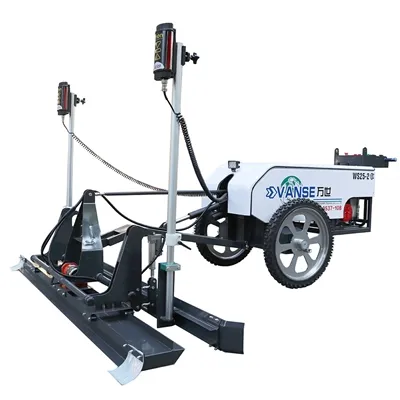
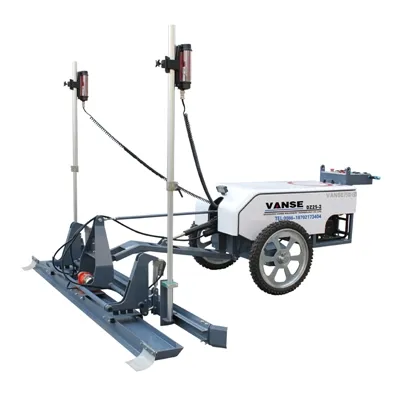
The maintenance method of concrete laser leveling machine is crucial to the normal operation and service life of the equipment. The following will introduce the maintenance methods of concrete laser leveling machine.
1. Daily maintenance
After daily use, routine maintenance should be performed to ensure the normal operation of the equipment and extend its service life. Routine maintenance mainly includes the following aspects:
▼Clean the dust and debris on the surface of the equipment and keep the surface of the equipment clean.
▼Check whether the various connection parts of the equipment are loose or falling off, and tighten them in time.
▼Check whether the running parts of each part are flexible and reliable, and apply grease regularly to prevent parts from wearing out.
▼Check whether the photoelectric sensor is clean and sensitive, and remove dust and debris in time to prevent photoelectric sensor failure.
▼Check whether the power supply, control circuit and other components are normal, and repair them in time if there are any abnormalities.
2. Regular inspection and maintenance Regular inspection and maintenance are important measures to ensure the long-term normal operation of the concrete laser leveling machine. Regular inspection and maintenance mainly include the following aspects:
▼Regularly check whether the power cords, control lines and other lines are damaged or aged, and repair or replace them in time if necessary.
▼Regularly check the wear of various components, such as bearings, gears and other components, and replace seriously worn components in a timely manner.
▼Regularly check the accuracy and stability of equipment, such as laser heads, sensors and other components, and adjust or replace components in a timely manner.
▼Regularly check whether the electrical components of the equipment are working properly, such as electrical control boxes, motors and other electrical components, and replace damaged electrical components in a timely manner.
▼Perform regular comprehensive inspections and maintenance of equipment to ensure normal operation and extend service life of the equipment.
3.Special maintenance
Special maintenance is a deeper maintenance based on daily maintenance and regular inspection and maintenance. Special maintenance mainly includes the following aspects:
▼Carry out comprehensive cleaning and maintenance of the equipment to remove dirt and debris on the surface of the equipment to ensure the normal operation of the equipment.
▼Disassemble and clean the equipment, remove debris and dust inside the equipment, and ensure the normal operation of the equipment.
▼Carry out comprehensive inspection and maintenance of the electrical components of the equipment, remove dust and debris on the surface of the electrical components to ensure the normal operation of the electrical components.
▼Inspect and maintain the hydraulic system of the equipment, remove debris and dust inside the hydraulic system to ensure the normal operation of the hydraulic system.
▼Inspect and maintain the laser head of the equipment, remove dirt and debris on the surface of the laser head, and ensure the normal operation of the laser head.
To sum up, the maintenance methods of concrete laser leveling mainly include daily maintenance, regular inspection and maintenance and special maintenance. In order to ensure the normal operation of the equipment and extend its service life, operators should be proficient in maintenance methods and perform maintenance in strict accordance with the requirements. At the same time, the daily use and storage of equipment should be strengthened to avoid unnecessary damage and waste.
Thanks to All the Friends Who Support and Trust Shandong Vanse Machinery Technology Co., Ltd.
If you want to know more about Shandong Vanse Machinery Technology Co., Ltd. or have any questions, please feel free to contact us:
Our Factory
Shandong Vanse Machinery Technology Co., Ltd.








Share this article

About the Author: Shandong Vanse Machinery Technology Co., Ltd.
Shandong Vanse Machinery Technology Co., Ltd. is a high-tech manufacturer specializing in concrete construction machinery, including laser screeds and related equipment. The company integrates R&D, production, and global sales, with products exported to over 60 countries and widely used in infrastructure projects worldwide.
Previous Post
Next Post
Related Articles
You Might Also Like
Laser leveling machine operation steps and slope adjustment?
•••▶★◀••• Introduction As an indispensable construction equipment in the modern construction industry, the laser leveler's efficient and accurate leveling capabilities provide a strong guarantee for the construction of large-area concrete floors. Correct operation of the laser leveler and reasonable adjustment of the slope can not only ensure Improve construction quality, improve construction efficiency and reduce costs. This article aims to introduce in detail the operating steps and slope adjustment methods of the laser leveling machine, with a view to providing clear and practical operating guidelines for relevant construction personnel. •••▶★◀••• Equipment inspection and preparation Before operating the laser leveling machine, a comprehensive equipment inspection and preparation must be carried out. Specific steps are as follows: 1. Check the appearance of the equipment to ensure that the leveler has no obvious damage, deformation or rust. 2. Check the power system, including engine, battery, etc., to ensure that it is in good condition and has sufficient fuel or power. 3. Check the laser system, including laser transmitter, receiver, etc., to ensure that they are intact and working properly 4. Check the walking system of the leveler, including tires, tracks, etc., to ensure smooth walking and no jamming. 5. Check the control system, including the operation panel, sensors, etc., to ensure that its functions are normal and the display is accurate. After completing the above inspection, the operator should be familiar with the various function keys and operation panel of the leveling machine to ensure that they can operate it skillfully. •••▶★◀••• Laser system calibration The leveling accuracy of a laser leveler depends largely on the calibration of the laser system. The specific steps for laser system calibration are as follows: 1. Set a reference point in the construction area to ensure that the reference point is stable and at the same height. 2. Install the laser transmitter on the reference point, adjust the level of the transmitter, and ensure that the laser beam is projected vertically downward. 3. Turn on the laser transmitter and place the laser receiver on the ground to be leveled to ensure that the receiver can accurately receive the laser signal. 4. According to the data displayed by the receiver, adjust the parameters of the laser system to ensure that the laser beam is consistent with the actual ground height. After completing the laser system calibration, a test should be conducted to ensure that the leveler can accurately level according to the guidance of the laser beam. •••▶★◀••• Set leveling parameters Before officially starting the leveling operation, the leveling parameters need to be set according to the construction requirements. The specific steps for setting leveling parameters are as follows: 1. According to the construction drawings or design requirements, determine the flatness, levelness and other indicators of the ground. 2. Set the leveling speed, lifting range and other parameters of the leveling machine according to the ground indicators. 3. Set the vibration frequency, spatula angle and other parameters of the leveler according to the construction environment. After completing the parameter setting, a trial run should be carried out to ensure that the leveling machine can perform leveling operations according to the set parameters. •••▶★◀••• Start leveling operation After equipment inspection, laser system calibration and parameter setting are completed, leveling operations can begin. The specific steps are as follows: 1. Turn on the leveler and drive the leveler to the ground to be leveled. 2. According to the guidance of the laser system, operate the leveling machine to perform leveling operations. During the leveling process, the operator should promptly adjust the speed and lifting range of the leveling machine according to the actual situation to ensure the leveling quality. 3. During the leveling process, attention should be paid to the operating status and leveling effect of the leveling machine. If any abnormality is found, the machine should be stopped in time for inspection and treatment. After the leveling operation is completed, the leveling machine should be closed and necessary cleaning and maintenance should be carried out. Work. •••▶★◀••• Adjust the slope If the slope needs to be adjusted, this can be achieved by adjusting the lifting device of the leveling machine. The specific steps to adjust the slope are as follows: 1. Set up slope control points in the construction area to ensure that the control points are stable and highly accurate. 2. Install the slope sensor on the leveling machine and calibrate its sensitivity. 3. Determine the slope requirements of the ground according to construction drawings or design requirements. 4. Operate the leveling machine to the slope adjustment area. According to the instructions of the slope sensor, adjust the lifting device of the leveling machine so that the ground reaches the preset slope. During the slope adjustment process, attention should be paid to maintaining the stability and stability of the leveling machine. Level the quality to avoid obvious waves or unevenness. •••▶★◀••• Monitoring and Adjustment During the leveling operation, the leveling quality should be monitored and adjusted in real time. The specific steps are as follows: 1. Use a laser receiver or other measurement tools to measure the leveled ground in real time to ensure that the leveling quality meets the requirements. 2. According to the measurement results, timely adjust the parameters and operating methods of the leveling machine to improve the leveling quality. 3. During the leveling operation, attention should be paid to observing the operating status of the leveling machine and changes in the surrounding environment to ensure the safety and continuity of the leveling operation. 8. End operation and maintenance After the leveling operation is completed, necessary equipment cleaning and maintenance work should be carried out. Specific steps are as follows: 1. Turn off the leveler and clean the dust and debris on the surface of the leveler. 2. Check all components and systems of the leveler to ensure they are intact and functioning properly. 3. Lubricate and maintain the lubricating parts of the leveling machine to ensure that the equipment can operate normally the next time it is used. 4. Park the leveler in a dry and ventilated place, and take necessary protective measures to prevent the equipment from getting damp or damaged. •••▶★◀••• Safety precautions When operating a laser leveling machine, the following safety precautions must be strictly observed to ensure the safety of the operator and the normal operation of the equipment: 1. Operator training: Ensure that all operators have received professional training and are familiar with the operating instructions and safety procedures of the leveling machine. 2. Wear protective equipment: When working near the leveling machine, operators should wear personal protective equipment that meets regulations, such as hard hats, protective glasses, protective shoes, etc. 3. Regular inspection and maintenance: Regular inspection and maintenance of the leveling machine to ensure that the equipment is in good working condition. In particular, important components such as laser systems and power systems should be inspected and calibrated regularly. 4. Pay attention to the surrounding environment: When operating the leveling machine, you should pay attention to changes in the surrounding environment, such as terrain, obstacles, other construction personnel, etc. Avoid operating the leveling on unstable or dangerous ground. 5. Overloading is prohibited: The leveler should operate within the specified load range and must not be overloaded. Overloading may cause equipment damage or cause safety accidents. 6. Observe the operating procedures: When operating the leveling machine, the operating procedures should be strictly followed, and the operating sequence or equipment parameters should not be changed at will. 7. Stop the machine to deal with abnormal situations: During the leveling operation, if any abnormality or malfunction is found in the equipment, the machine should be stopped immediately and professionals should be sought for inspection and repair. Do not disassemble or repair the equipment without authorization. 8. Keep away from power sources and water sources: The leveler should be placed away from power sources and water sources to prevent electrical failure or equipment damage. 9. Prevent dust and noise hazards: The leveling machine may produce dust and noise during operation. Operators should wear corresponding protective equipment, such as dust-proof mouthpieces, earplugs, etc. 10. Obey safety warning signs: When operating the leveling machine, pay special attention to the safety warning signs and prompt information on the equipment, and operate as required. •••▶★◀••• Summary As an important piece of equipment in modern building construction, the laser leveling machine's operation steps and slope adjustment methods are of great significance to ensure construction quality and improve construction efficiency. This article introduces in detail the operating steps and slope adjustment methods of the laser leveling machine, and emphasizes the importance of safety precautions. It is hoped that this article can provide useful reference and guidance for relevant construction personnel to ensure the safe and efficient operation of laser leveling machines. At the same time, it is also recommended that construction units strengthen the training and management of operators, improve the skill level and safety awareness of operators, and jointly promote the healthy development of the construction industry.How to improve the construction quality of concrete laser leveling machine?
Improving the construction quality of concrete laser leveling machines is one of the key factors to ensure the overall quality of construction projects. Concrete laser leveling machines use laser technology to control the flatness and precision of the ground, but to achieve high-quality construction results, multiple factors need to be considered comprehensively. The following is a detailed analysis of how to improve the construction quality of concrete laser leveling machines. In the field of construction, concrete laser leveling machines are widely used in ground leveling operations due to their high efficiency and high precision. However, the improvement of construction quality depends not only on the equipment itself, but also requires strict construction management and operation procedures. Sufficient pre-construction preparation is the basis for improving construction quality: – **Equipment inspection: Ensure that the laser leveling machine is in the best working condition, including the laser system, control system and mechanical components. – **Construction plan formulation: Develop a detailed construction plan according to the project requirements, including concrete mix ratio, pouring thickness and leveling process. – **Operator training: Ensure that the operator is familiar with the equipment operation and construction process, and understands the key points of quality control. The quality of construction materials directly affects the final construction quality: – **Concrete ratio: strictly control the ratio of concrete to ensure that it meets the design requirements. – **Raw material quality: select high-quality cement, aggregates and additives to avoid material problems affecting the construction quality. Quality monitoring during construction is the key to ensuring construction quality: – **Laser system monitoring: real-time monitoring of the stability of the laser system to ensure the accuracy of the laser plane. – **Flatness detection: regularly use professional equipment to detect the flatness of the concrete surface and adjust the working parameters of the leveling machine in time. Accurate operation is a direct means to improve construction quality: – **Equipment adjustment: adjust the height and speed of the leveling machine in time according to the actual situation of the concrete and the construction environment. – **Operation continuity: maintain the continuity of operation to avoid inconsistent flatness due to interruptions in operation. A good construction environment is an external condition to ensure construction quality: – **Environmental factor control: Control the temperature, humidity and light conditions of the construction site to avoid adverse factors affecting the coagulation and hardening of concrete. – **Construction site management: Reasonably arrange the layout of the construction site to ensure the smooth construction process. Reasonable maintenance management is crucial to ensure construction quality: – **Timely covering: Cover the concrete surface in time after construction to prevent moisture from evaporating too quickly. – **Curing time: Ensure sufficient curing time to fully harden the concrete. Detailed recording and analysis of construction data will help to continuously improve construction quality: – **Data recording: Record various parameters during the construction process, such as concrete temperature, pouring speed, leveling speed, etc. – **Data analysis: Analyze data, find out factors that affect construction quality, and continuously optimize construction plans. Establish strict acceptance standards for construction quality: – **Acceptance process: Establish a standardized acceptance process to ensure that each construction link meets quality requirements. – **Acceptance tools: Use professional tools for quality acceptance, such as flatness measuring instruments, strength testers, etc. Quickly identify and solve problems during construction: – **Problem identification: Quickly identify problems that occur during construction, such as concrete segregation, surface bubbles, etc. – **Problem handling: Take appropriate measures to deal with the problem according to the nature of the problem, such as re-leveling, repairing, etc. Technological innovation is an important way to improve construction quality: – **New process exploration: Continuously explore and experiment with new construction processes to improve construction efficiency and quality. – **Technology integration: Integrate the latest technologies, such as intelligent control systems, to improve the level of construction intelligence. Improving the construction quality of concrete laser leveling machines is a systematic project, which requires comprehensive consideration and management from multiple aspects such as pre-construction preparation, quality control of construction materials, quality monitoring during construction, precise operation of construction equipment, control of construction environment, maintenance management after construction, recording and analysis of construction data, acceptance standards for construction quality, problem solving during construction, and technological innovation and application. Through the implementation of these measures, the construction quality of concrete floors can be effectively improved to meet the construction quality and use requirements.Must-have accessories to boost power trowel functionality
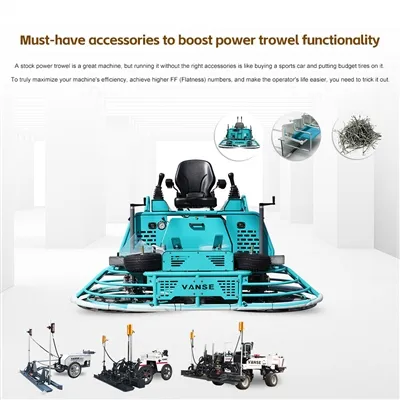
A stock power trowel is a great machine, but running it without the right accessories is like buying a sports car and putting budget tires on it. To truly maximize your machine's efficiency, achieve higher FF (Flatness) numbers, and make the operator's life easier, you need to trick it out. Here are the must-have accessories to elevate your power trowel from a basic finishing tool to a precision instrument. If your goal is high-tolerance floors, these are non-negotiable. Clip-On Float Pans: You cannot achieve a Superflat floor with just blades. Float pans clip directly over the finishing blades. They increase the machine's footprint, allowing it to "bridge" low spots and shave off high spots during the critical early stages of curing. Weight Kits: As concrete cures and hardens, you need more downward pressure to effectively burnish and seal the surface. Bolt-on weight kits allow you to add calibrated mass to the trowel's frame. This is especially vital for ride-on trowels when you transition to the final finishing passes. Edging Rings/Free-Wheeling Rotors: For walk-behind trowels, a rotating outer ring allows the operator to run the machine directly against walls, columns, or forms without damaging the machine or the concrete. It practically eliminates the need for manual hand-troweling the perimeters. Concrete waits for no one, and you are constantly fighting the environment (sun, wind, and darkness). On-Board Sprayer Systems: Wind and dry air can cause the surface of the slab to dry out faster than the bottom (crusting). An automated, push-button sprayer tank mounted on the steering column lets the operator hit dry spots with a fine mist of water or evaporation retarder without stopping the machine. High-Output LED Lighting Kits: Many commercial pours happen at night or in poorly lit, unfinished warehouses. Bolt-on LED light bars that run off the machine's alternator illuminate the immediate work area, ensuring the operator can actually see the "cream" and blade marks they are trying to fix. Moving a 1,000-pound ride-on trowel or even a 250-pound walk-behind off the slab without damaging the fresh concrete or the blades requires the right gear. Trowel Dollies (Transport Wheels): Dragging a trowel by its guard ring bends the frame and ruins the rotor pitch. A heavy-duty set of transport wheels hooks under the guard ring, allowing one person to tilt and roll the machine effortlessly across rebar, dirt, or finished floors. Lifting Bails/Slings: A certified, heavy-duty lifting bail allows a crane or forklift to safely hoist the trowel onto elevated decks or over high foundation walls without warping the machine's center of gravity. Accessory Best Used For Walk-Behind or Ride-On? Float Pans Initial pass, flattening (FF), embedding aggregate Both Weight Kits Late-stage finishing, burnishing hard concrete Primarily Ride-On Edging Rings Getting tight to walls and columns Walk-Behind Sprayer System Applying evaporation retarders, fixing dry spots Ride-On LED Lights Early morning/night pours, dark warehouses Both Transport Dolly Moving equipment safely off the slab Both Pro Tip: If you invest in float pans, make sure you match the profile to your work. Flat pans are better for sheer flatness and cutting high spots, while Z-pans (beveled edge) are better for transitioning over slightly uneven joints without digging in. Would you like me to detail the exact sequence of blade and pan changes required to achieve a highly densified, polished concrete finish? Contact us NOW Note: The parameters provided in this document are for reference only and are not mandatory. Due to differences in technical characteristics between different brands and models of laser levelers, please consult the manufacturer for a suitable solution before actual operation. This reference document assumes no responsibility for any issues arising from failure to follow the manufacturer's instructions.