Technical Knowledge
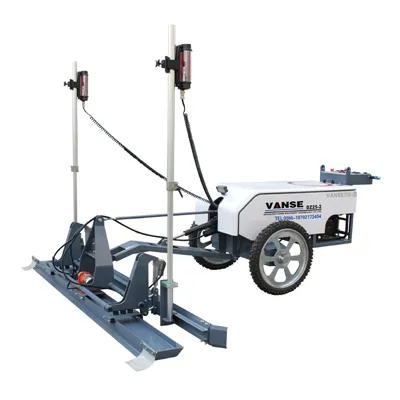
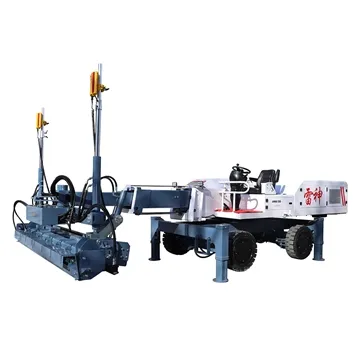
How reliable are concrete laser levelings machine?

The reliability of the concrete laser leveling is very high, which is mainly reflected in the following aspects:
✿High precision:
The concrete laser leveling machine uses advanced laser technology to complete the leveling work quickly and accurately, making the flatness and levelness of the ground optimal, and improving the integrity and service life of the ground.
✿High degree of automation:
The concrete laser leveling machine has the characteristics of automation and intelligence. It can automatically control the construction thickness and levelness, reducing human operating errors and labor costs. The operator only needs to perform simple operations on the console to complete the leveling work, which greatly improves construction efficiency and quality.
✿High reliability:
The concrete laser leveling machine has the characteristics of high precision, high efficiency and high stability, which can greatly improve the construction quality and efficiency. The machine can work continuously, does not require frequent replacement and maintenance, has low cost of use and is highly cost-effective.
✿Good safety:
The concrete laser leveling machine is equipped with a variety of safety protection devices and fault warning systems, which can detect faults and deal with them in time to ensure the safety and stability of the construction process.
✿Wide range of applications:
The concrete laser leveling machine can be applied to various types and sizes of concrete construction projects, including concrete construction and leveling of highways, bridges, tunnels, factories and other buildings. At the same time, it can also be applied to various types and sizes of concrete structure repair and renovation projects, such as roof waterproofing, ground reinforcement, etc.
To sum up, the reliability of the concrete laser leveling machine is very high, which can greatly improve the accuracy and quality of concrete construction, reduce construction costs and time, and improve construction efficiency and quality. Therefore, the use of laser leveling machines in concrete construction is a very reliable and effective technical means.
Thanks to All the Friends Who Support and Trust Shandong Vanse Machinery Technology Co., Ltd.
If you want to know more about Shandong Vanse Machinery Technology Co., Ltd. or have any questions, please feel free to contact us:
Our Factory
Shandong Vanse Machinery Technology Co., Ltd.








Share this article

About the Author: Shandong Vanse Machinery Technology Co., Ltd.
Shandong Vanse Machinery Technology Co., Ltd. is a high-tech manufacturer specializing in concrete construction machinery, including laser screeds and related equipment. The company integrates R&D, production, and global sales, with products exported to over 60 countries and widely used in infrastructure projects worldwide.
Previous Post
Next Post
Related Articles
You Might Also Like
Common Problems in After-sales Service of Concrete Laser Leveling Machine
Concrete laser leveling machine is an indispensable and efficient construction equipment in modern construction projects. Its accurate leveling effect greatly improves the construction quality and efficiency. However, in the long-term use of the equipment, it is inevitable to encounter some common problems. This article will focus on several common after-sales problems of concrete laser leveling machine, combined with specific practical content, to provide detailed processing methods and suggestions, aiming to help users better use and maintain the equipment and ensure smooth construction. 1. Equipment startup failure handling Equipment startup failure is one of the common after-sales problems of concrete laser leveling machine. When the equipment cannot start normally, first check whether the power plug is plugged in and whether the power switch is in the on state. If the power supply is normal, it is necessary to further check whether the motor is damaged or the line is short-circuited. At this time, you can use tools such as a multimeter to troubleshoot. If it is determined that the motor is faulty, you should contact professional after-sales personnel for repair or replacement. At the same time, you should also pay attention to the voltage requirements when the equipment is started to avoid startup failures due to unstable voltage. 2. Laser system troubleshooting The laser system is the core component of the concrete laser leveling machine, and its stability and accuracy directly affect the leveling effect. The main manifestation of laser system failure is that the laser beam is unstable or cannot be emitted. When dealing with such problems, you should first check whether the laser transmitter is clean and whether there are any obstructions. At the same time, you should also check whether the position of the laser receiver is correct and whether the received signal is stable. If the laser system hardware is intact but there are still problems, you can try to calibrate or reset the laser system. If the problem still cannot be solved, you should contact professional after-sales personnel for inspection and repair. 3. Hydraulic system maintenance and care The hydraulic system is an important part of the concrete laser leveling machine, responsible for driving the movement of components such as the leveling blade. The maintenance and care of the hydraulic system is essential to ensure the normal operation of the equipment. In daily use, the oil level and quality of the hydraulic oil should be checked regularly to ensure that the oil is clean and free of impurities. At the same time, it is also necessary to check whether the hydraulic oil pipe has oil leakage or damage, and if so, it should be replaced in time. In addition, regular replacement of the hydraulic oil filter and cleaning of the oil tank are also necessary maintenance measures. During use, the equipment should be prevented from overloading for a long time to avoid damage to the hydraulic system. 4. Leveling effect adjustment method The leveling effect of the concrete laser leveling machine is affected by many factors, including the accuracy of the laser system, the angle and height of the blade, etc. When the leveling effect is not ideal, it can be improved by adjusting the relevant parameters. First, the parameters of the laser system, including the intensity and angle of the laser beam, can be adjusted to ensure that it can accurately reflect the height changes of the ground. Secondly, the angle and height of the blade can be adjusted so that it can better adapt to the ups and downs of the ground. In addition, the walking speed and leveling times of the equipment can be adjusted according to the specific construction requirements to achieve the best leveling effect. 5. Solution to motor overheating Motor overheating is one of the common faults of concrete laser leveling machines, which may cause equipment performance degradation or even damage. There may be many reasons for motor overheating, such as poor heat dissipation, excessive load or internal motor failure. When the motor is found to be overheated, first stop using the equipment immediately and check whether the cooling system is working properly. If there is no problem with the cooling system, check the load of the equipment to ensure that it is not overloaded. At the same time, it is also necessary to check whether the wiring of the motor is loose or in poor contact to avoid overheating due to excessive current. If the above measures cannot solve the problem, contact professional after-sales personnel for repair or replacement of the motor. 6. Replacement and purchase of wearing parts During the use of the Wenjie soil laser leveling machine, some wearing parts such as blades and filters will gradually wear or damage and need to be replaced regularly. When purchasing wearing parts, you should choose the brand and model that matches the original equipment to ensure that its performance and quality meet the requirements. At the same time, you should also pay attention to the installation and replacement methods of wearing parts to avoid damage to the equipment or affect the leveling effect due to improper operation. When replacing wearing parts, you should ensure that the power of the equipment is turned off and operate according to the instructions or the guidance of after-sales personnel. 7. Cleaning and maintenance suggestions for the whole machine Maintaining the cleanliness and good condition of the concrete laser leveling machine is crucial to extending the life of the equipment and improving work efficiency. In daily use, the equipment should be cleaned regularly, including cleaning the dust and dirt on the surface, wiping the mechanical parts and electrical components, etc. At the same time, it is also necessary to pay attention to the regular lubrication of the lubrication parts of the equipment to reduce friction and wear. In addition, when storing the equipment, you should choose a dry and ventilated place to avoid moisture or direct sunlight on the equipment. For equipment that is not used for a long time, it should be started and inspected regularly to ensure that its performance is not affected. In short, the handling of common after-sales problems of concrete laser leveling machines requires comprehensive consideration of the characteristics of the equipment itself and the use environment and other factors. Through in-depth understanding and effective handling of equipment startup failures, laser system failures, wave pressure system maintenance and maintenance alarm adjustment, motor overheating problem resolution, replacement and purchase of wearing parts, and cleaning and maintenance of the entire machine, the stable operation and efficient construction of the concrete laser leveling machine can be ensured. At the same time, users should also strengthen communication and cooperation with professional after-sales personnel so that they can get timely and effective support and help when encountering problems.How to maintain concrete floors in different seasons?
HOW TO MAINTAIN CONCRETE FLOORS IN DIFFERENT SEASONS? -VANSE Machinery The current concrete floor is compacted with a concrete laser leveling machine, and there is almost no error. Concrete technology is becoming more and more important. Concrete has developed from the initial low-strength grade and ordinary concrete to today's high-strength grade and high performance. Sometimes the maintenance of concrete is often ignored in engineering construction, causing the surface of the concrete to shrink. , cracking, peeling and other phenomena, in order to make the concrete floor more sustainable and long-term use, it is necessary to pay special attention to the concrete curing method during construction. Different environments have different maintenance methods: During the high temperature and dry season, the moisture in concrete is easy to lose, so the following measures should be actively taken: 1. Cooling measures must be taken during construction, such as choosing to pour at night to avoid direct sunlight, and adjusting the concrete ratio in time. 2. At the same time, it must be noted that the temperature of the concrete formwork must be cooled, because if the temperature of the formwork is too high, the surface of the concrete will lose moisture quickly after pouring, resulting in defects such as sanding on the concrete surface. The maintenance of concrete in this season requires a lot of water, especially for the parts that are not easy to maintain, such as columns, cover beams, and beam webs, they should be tightly wrapped with geotextiles and sprinkled regularly. The surface of the concrete is always in a humid environment. In the early stage of curing, the concrete surface is sometimes dry and sometimes wet, because the strength of concrete that is sometimes dry and sometimes wet is easy to reduce, and it is easy to produce shrinkage cracks. Therefore, within 7 days of concrete pouring, it is necessary to prevent water evaporation and keep the concrete surface moist. In short, the focus of concrete maintenance in this season is moisturizing. If measures such as moisturizing and cooling are done well, problems such as early setting of concrete, plastic cracks, reduction of concrete strength and durability caused by high temperature will not appear. In the cold season when the temperature is lower than 5°C, the following measures should be taken for the maintenance of concrete: 1. After demoulding, cover and maintain the insulation. 2. The use of steam curing. 3. Improve the thermal insulation performance of the formwork. Most of the steel formwork used in bridge construction has good thermal conductivity and is easy to lose temperature. Therefore, insulation materials such as straw curtains should be wrapped outside the formwork or measures such as thickened formwork and double-layer formwork should be used. 4. Increase the mixing temperature of concrete. First of all, the heating treatment of the mixing water can be considered, and the aggregate can also be considered to be heated. The purpose is to ensure the initial cement hydration temperature and improve the early strength of the concrete. If the maintenance of concrete in the early cold period takes the above measures actively, the concrete will be prevented from freezing due to low temperature. After the concrete is frozen, its hydration will stop. After the temperature rises, although it can continue, the surface of the concrete has changed. Crisp, lose strength, and even larger cracks appear. Therefore, it is necessary to especially strengthen the early insulation and maintenance of concrete, and it must not be frozen before the concrete strength reaches 50% of the design strength.Rotary VS ride-on power trowel—Which polishes super flat floors better
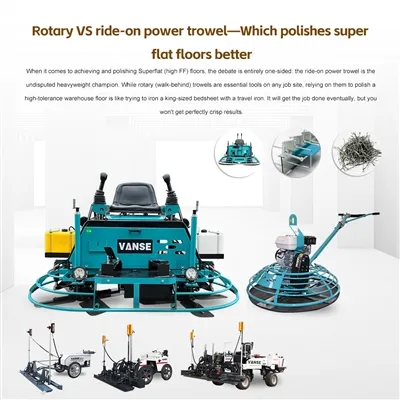
When it comes to achieving and polishing Superflat (high FF) floors, the debate is entirely one-sided: the ride-on power trowel is the undisputed heavyweight champion. While rotary (walk-behind) trowels are essential tools on any job site, relying on them to polish a high-tolerance warehouse floor is like trying to iron a king-sized bedsheet with a travel iron. It will get the job done eventually, but you won't get perfectly crisp results. Here is the technical breakdown of why ride-on trowels dominate the Superflat and polishing arenas. The primary goal of a Superflat floor is high FF (Flatness), which means eliminating the microscopic "waves" in the concrete. Ride-On Trowels: Because they feature dual (or triple) overlapping rotors and a wide, rigid wheelbase, they act like a massive carpenter's plane. When equipped with float pans, a ride-on trowel "bridges" the low spots and violently shaves off the high peaks. Walk-Behind Trowels: A walk-behind has a single, small rotor. Instead of bridging the waves, it tends to ride up and down them. If you aren't careful, a walk-behind can actually create dips and dishing, ruining your FF numbers. Polishing and densifying the surface (creating that hard, dark "burnished" look) requires extreme friction and pressure. Ride-On Trowels: These machines weigh anywhere from 800 lbs to over 2,500 lbs. That massive downward force, combined with high-speed rotors and a steep blade pitch, generates the heat and friction necessary to melt the surface paste into a glass-like finish. Walk-Behind Trowels: Weighing in at only 150 to 300 lbs, they simply do not have the mass to forcefully close the pores of the concrete to the same density as a ride-on. This is the most critical factor for Superflat floors. Walk-Behind Trowels: The operator must physically walk backward on the curing concrete. Even when the concrete is firm enough to support a machine, work boots can still leave millimeter-deep micro-depressions. Every footprint is a localized failure in flatness. Ride-On Trowels: The operator sits on the machine. The weight is entirely distributed across the massive surface area of the rotors or float pans, leaving zero footprints and maintaining the pristine levelness established by the laser Leveling. Feature Ride-On Power Trowel Walk-Behind (Rotary) Trowel Superflat Capability Exceptional (Bridges waves) Poor (Follows contours) Burnishing/Polishing Superior (High downward pressure) Moderate (Lacks weight) Surface Disruption Zero (Operator rides) High (Operator footprints) Best Used For The main floor (the "runway") Edges, tight corners, around pipes It is worth noting that you still need both machines on a Superflat project. A massive ride-on trowel cannot get within a few inches of a wall or a structural column without risking damage to the concrete or the machine. The standard Superflat workflow uses ride-on trowels for 95% of the floor area to establish the density and flatness, while a skilled operator uses a walk-behind trowel equipped with a rotating edge ring to manually polish the remaining 5% along the perimeter. Would you like me to outline a specific overlapping pass pattern for a ride-on trowel to ensure you don't create ridges while pushing for maximum FF numbers? Contact us NOW Note: The parameters provided in this document are for reference only and are not mandatory. Due to differences in technical characteristics between different brands and models of laser levelers, please consult the manufacturer for a suitable solution before actual operation. This reference document assumes no responsibility for any issues arising from failure to follow the manufacturer's instructions.