Technical Knowledge
Common Problems in After-sales Service of Concrete Laser Leveling Machine
Common after-sales problems of concrete laser leveling machine
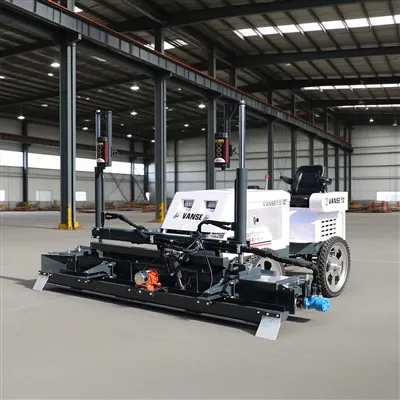
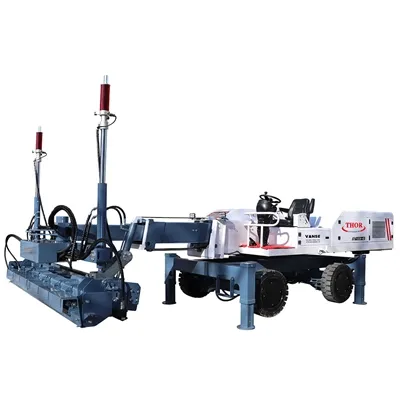
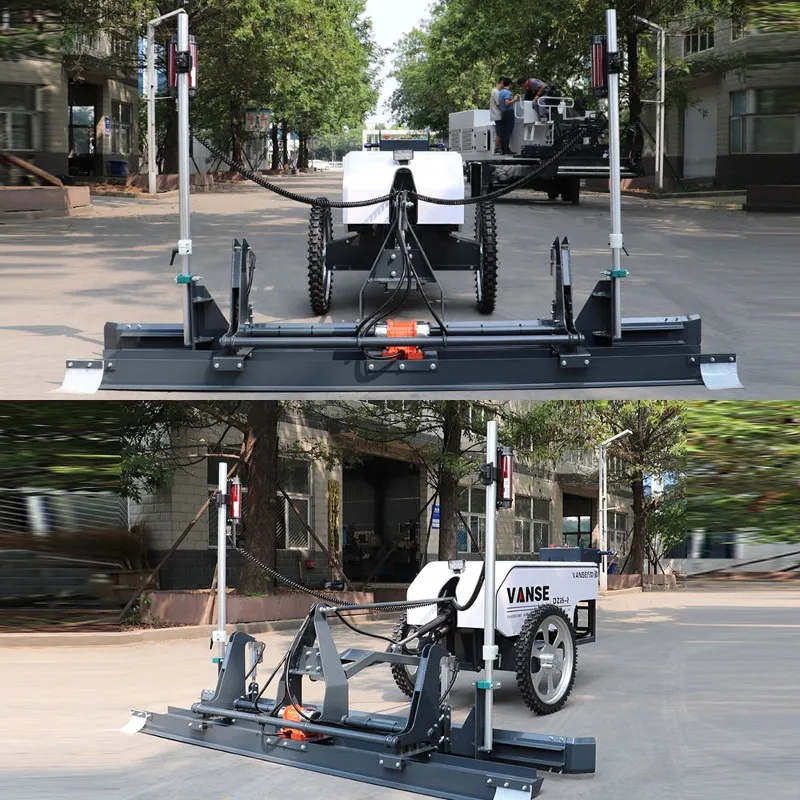
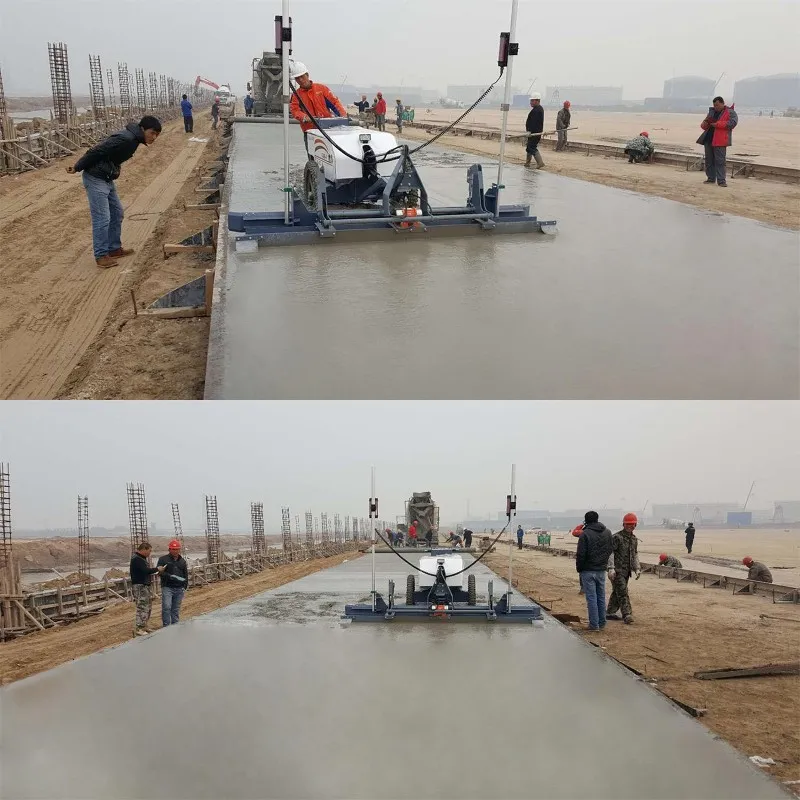
Concrete laser leveling machine is an indispensable and efficient construction equipment in modern construction projects. Its accurate leveling effect greatly improves the construction quality and efficiency. However, in the long-term use of the equipment, it is inevitable to encounter some common problems. This article will focus on several common after-sales problems of concrete laser leveling machine, combined with specific practical content, to provide detailed processing methods and suggestions, aiming to help users better use and maintain the equipment and ensure smooth construction.
1.
Equipment startup failure handling
Equipment startup failure is one of the common after-sales problems of concrete laser leveling machine. When the equipment cannot start normally, first check whether the power plug is plugged in and whether the power switch is in the on state. If the power supply is normal, it is necessary to further check whether the motor is damaged or the line is short-circuited. At this time, you can use tools such as a multimeter to troubleshoot. If it is determined that the motor is faulty, you should contact professional after-sales personnel for repair or replacement. At the same time, you should also pay attention to the voltage requirements when the equipment is started to avoid startup failures due to unstable voltage.
2.
Laser system troubleshooting
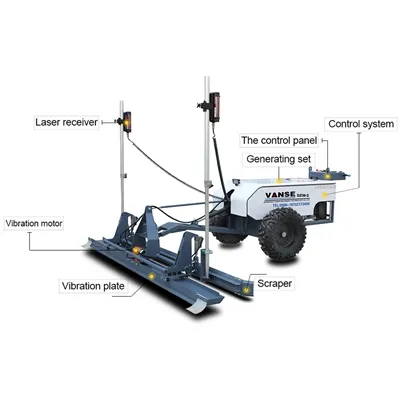
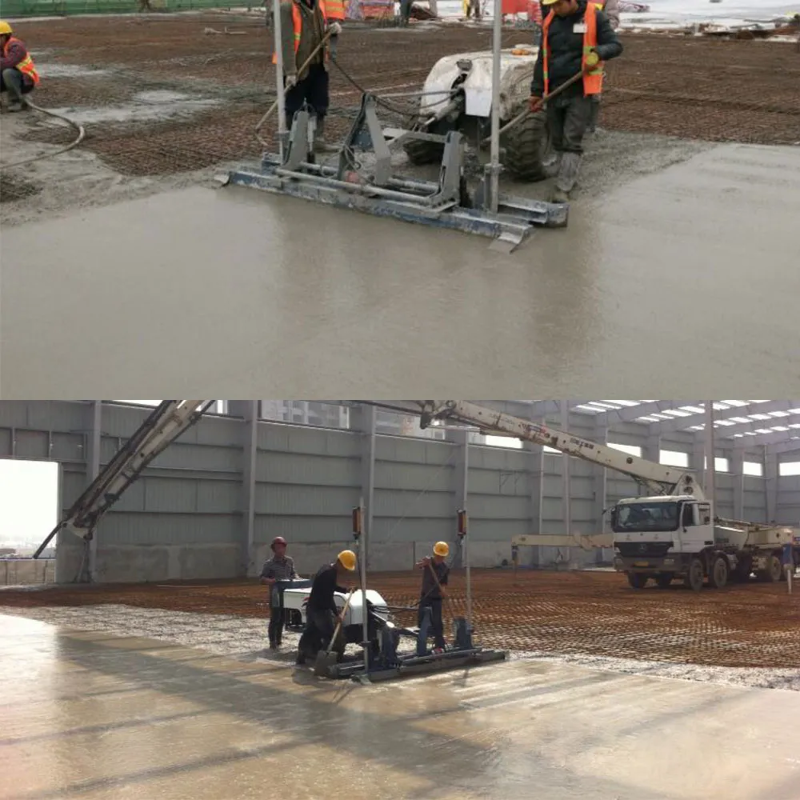
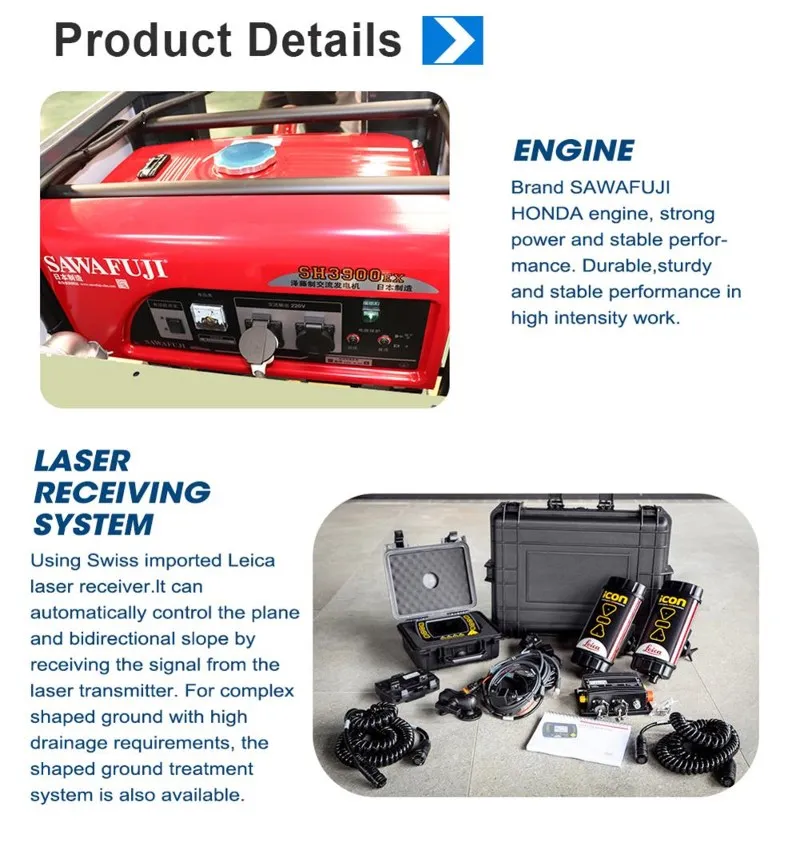
The laser system is the core component of the concrete laser leveling machine, and its stability and accuracy directly affect the leveling effect. The main manifestation of laser system failure is that the laser beam is unstable or cannot be emitted. When dealing with such problems, you should first check whether the laser transmitter is clean and whether there are any obstructions. At the same time, you should also check whether the position of the laser receiver is correct and whether the received signal is stable. If the laser system hardware is intact but there are still problems, you can try to calibrate or reset the laser system. If the problem still cannot be solved, you should contact professional after-sales personnel for inspection and repair.
3.
Hydraulic system maintenance and care
The hydraulic system is an important part of the concrete laser leveling machine, responsible for driving the movement of components such as the leveling blade. The maintenance and care of the hydraulic system is essential to ensure the normal operation of the equipment. In daily use, the oil level and quality of the hydraulic oil should be checked regularly to ensure that the oil is clean and free of impurities. At the same time, it is also necessary to check whether the hydraulic oil pipe has oil leakage or damage, and if so, it should be replaced in time. In addition, regular replacement of the hydraulic oil filter and cleaning of the oil tank are also necessary maintenance measures. During use, the equipment should be prevented from overloading for a long time to avoid damage to the hydraulic system.
4.
Leveling effect adjustment method
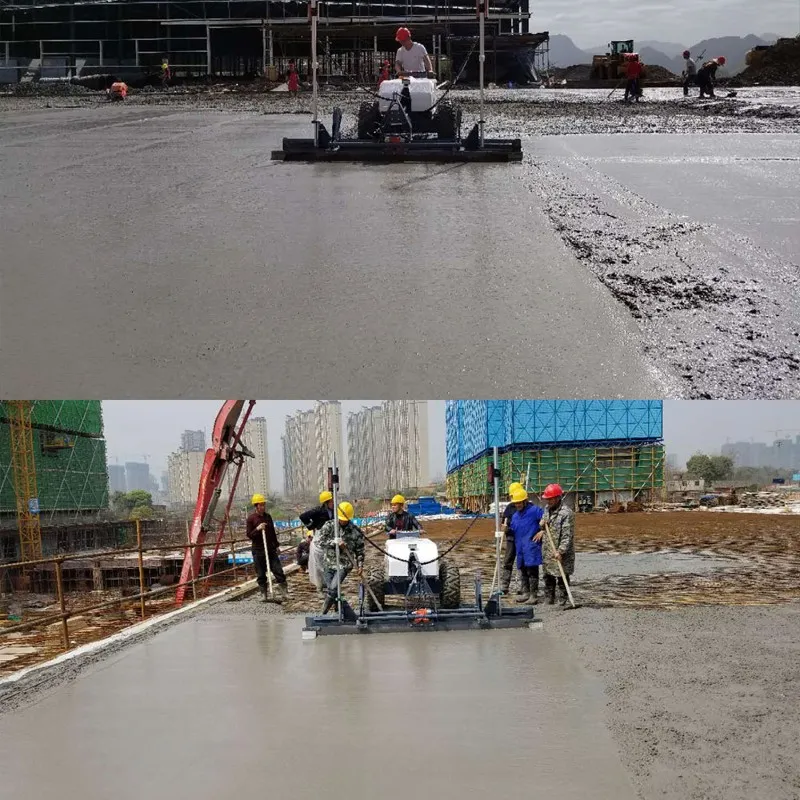
The leveling effect of the concrete laser leveling machine is affected by many factors, including the accuracy of the laser system, the angle and height of the blade, etc. When the leveling effect is not ideal, it can be improved by adjusting the relevant parameters. First, the parameters of the laser system, including the intensity and angle of the laser beam, can be adjusted to ensure that it can accurately reflect the height changes of the ground. Secondly, the angle and height of the blade can be adjusted so that it can better adapt to the ups and downs of the ground. In addition, the walking speed and leveling times of the equipment can be adjusted according to the specific construction requirements to achieve the best leveling effect.
5.
Solution to motor overheating
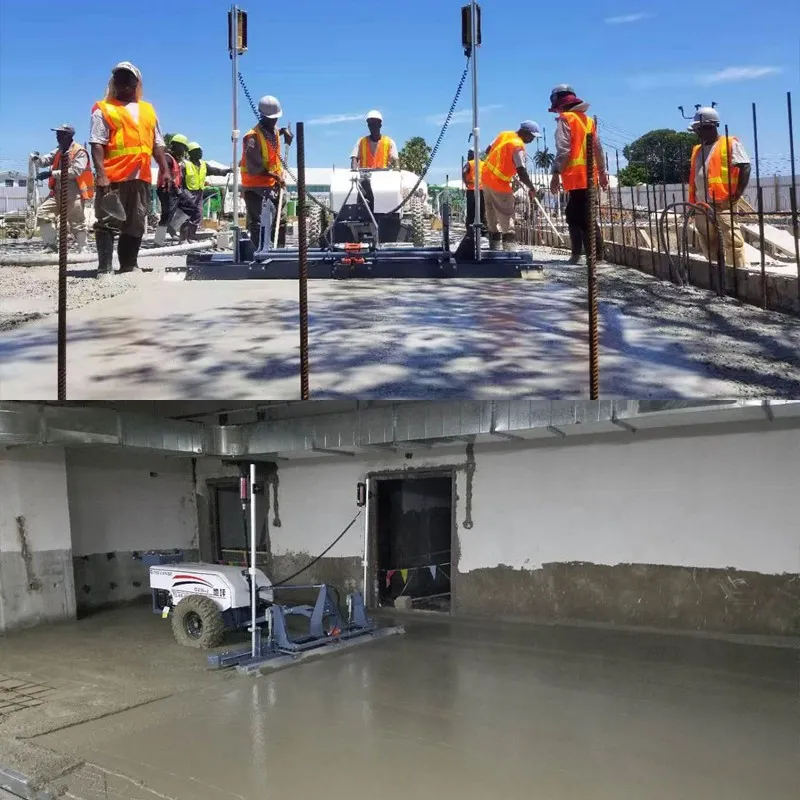
Motor overheating is one of the common faults of concrete laser leveling machines, which may cause equipment performance degradation or even damage. There may be many reasons for motor overheating, such as poor heat dissipation, excessive load or internal motor failure. When the motor is found to be overheated, first stop using the equipment immediately and check whether the cooling system is working properly. If there is no problem with the cooling system, check the load of the equipment to ensure that it is not overloaded. At the same time, it is also necessary to check whether the wiring of the motor is loose or in poor contact to avoid overheating due to excessive current. If the above measures cannot solve the problem, contact professional after-sales personnel for repair or replacement of the motor.
6.
Replacement and purchase of wearing parts
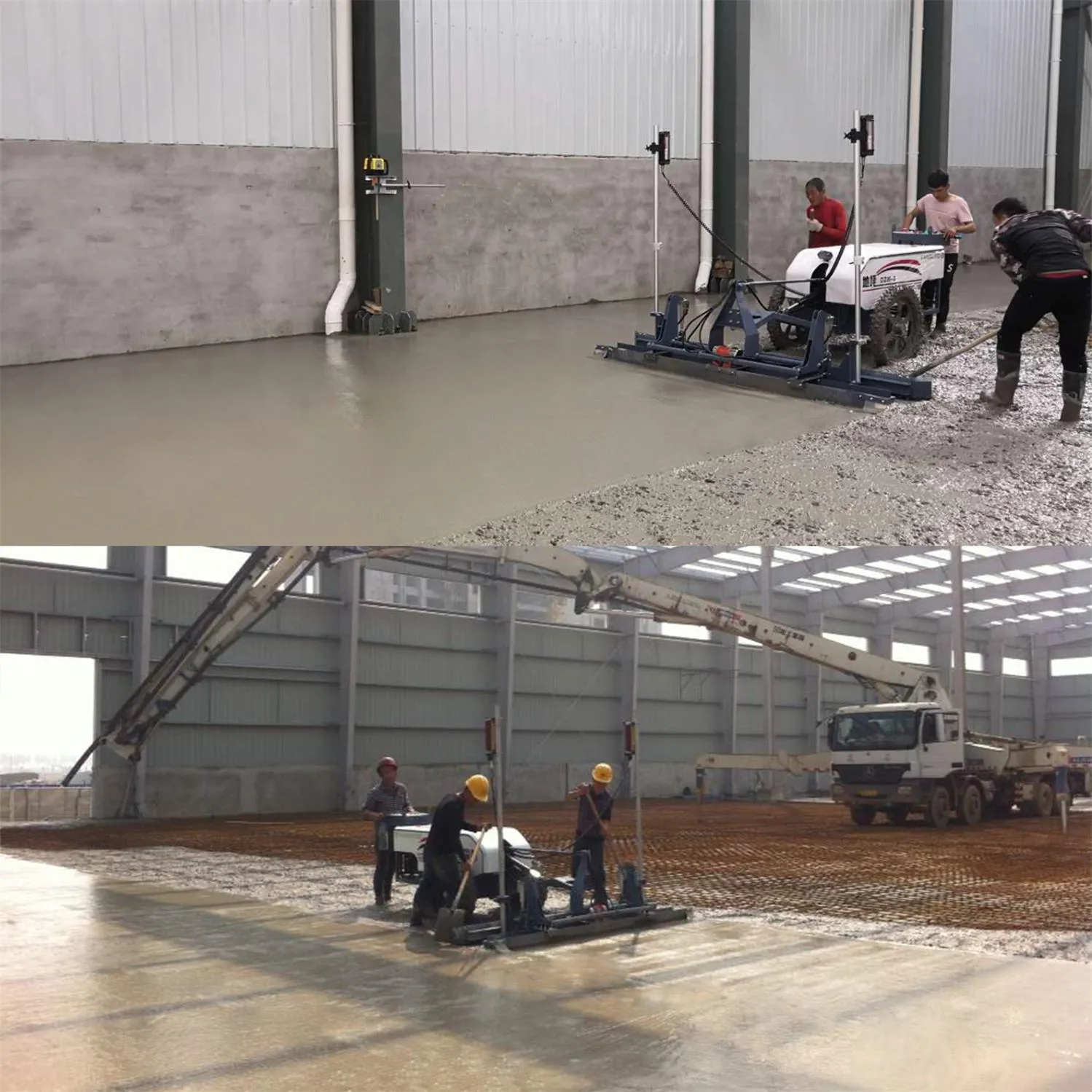
During the use of the Wenjie soil laser leveling machine, some wearing parts such as blades and filters will gradually wear or damage and need to be replaced regularly. When purchasing wearing parts, you should choose the brand and model that matches the original equipment to ensure that its performance and quality meet the requirements. At the same time, you should also pay attention to the installation and replacement methods of wearing parts to avoid damage to the equipment or affect the leveling effect due to improper operation. When replacing wearing parts, you should ensure that the power of the equipment is turned off and operate according to the instructions or the guidance of after-sales personnel.
7.
Cleaning and maintenance suggestions for the whole machine
Maintaining the cleanliness and good condition of the concrete laser leveling machine is crucial to extending the life of the equipment and improving work efficiency. In daily use, the equipment should be cleaned regularly, including cleaning the dust and dirt on the surface, wiping the mechanical parts and electrical components, etc. At the same time, it is also necessary to pay attention to the regular lubrication of the lubrication parts of the equipment to reduce friction and wear. In addition, when storing the equipment, you should choose a dry and ventilated place to avoid moisture or direct sunlight on the equipment. For equipment that is not used for a long time, it should be started and inspected regularly to ensure that its performance is not affected.
Thanks to All the Friends Who Support and Trust Shandong Vanse Machinery Technology Co., Ltd.
If you want to know more about Shandong Vanse Machinery Technology Co., Ltd. or have any questions, please feel free to contact us:
Our Factory
Shandong Vanse Machinery Technology Co., Ltd.








Share this article

About the Author: Shandong Vanse Machinery Technology Co., Ltd.
Shandong Vanse Machinery Technology Co., Ltd. is a high-tech manufacturer specializing in concrete construction machinery, including laser screeds and related equipment. The company integrates R&D, production, and global sales, with products exported to over 60 countries and widely used in infrastructure projects worldwide.
Previous Post
Next Post
Related Articles
You Might Also Like
Although the price of second-hand concrete laser leveling machines is low, is the risk of subsequent maintenance high?
Overall: Risks do exist and are considerable, but through professional and cautious operation, this risk can be effectively managed and reduced. Below, I will provide you with a detailed analysis of the maintenance risks of second-hand concrete laser levelings and how to avoid them Hydraulic system: This is the "heart" of the leveling. The hydraulic pumps, motors, cylinders, valve blocks and other components of second-hand equipment may have problems such as internal leakage, insufficient pressure and slow operation. Repairing a hydraulic system is very expensive, and faults are not easily detected before purchase. Engine: If it is a model equipped with an engine, its working time and maintenance history are both unknown. There may be situations such as power drop, oil burning, and even the need for major overhauls, which are extremely costly. Laser receiving and control system: This is the essence of "laser leveling". Sensors, control mainboards, servo motors and other electronic components may malfunction due to aging, vibration or water ingress. These components are precise and expensive, and the cost of maintenance or replacement is considerable. Chassis and scraper: The degree of wear of vulnerable parts such as blades, tracks, and chains directly affects the construction effect. Although replacement is relatively easy, if the chassis structure deforms, the difficulty and cost of repair will increase significantly. Some second-hand machines may be pieced together from parts of different scrapped machines, or they may be machines that have experienced accidents such as rollover and collision. The structural strength and performance of this kind of equipment cannot be guaranteed, and subsequent problems will arise one after another. If the equipment model is older or the brand is relatively niche, it may encounter problems such as difficulty in finding spare parts, long ordering cycles, and unfamiliarity with maintenance technicians, which can lead to prolonged downtime of the equipment and indirectly cause huge losses. The vast majority of second-hand phones are sold "as is" without any warranty provided. Once a problem occurs, all repair costs and downtime losses will be borne by you. Although the risk is high, by taking the following steps, the probability of "falling into a trap" can be greatly reduced This is the most crucial step! An experienced operator or maintenance technician can determine the general condition of the machine by listening to the sound, observing the movement, checking for oil leakage and other conditions. Static inspection: Observe whether there is any severe deformation or welding marks on the appearance of the entire machine. Inspect key structural components such as the frame and the main beam. Check all the hydraulic cylinders for any scratches or oil leakage. Dynamic test run Start the engine, listen to whether it runs smoothly and observe the color of the exhaust. Test all hydraulic functions: lifting, walking, vibration, etc., to check if the movements are smooth and powerful, and if there are any abnormal noises. Test the laser system: Turn on the laser transmitter and receiver, check if the display on the control panel is normal, and whether the machine can accurately and quickly respond to the laser signal to automatically level. Check the instruments and electrical system: Whether all indicator lights and instruments are working properly. Try to know as much as possible about the previous owner of the equipment, the main construction projects, the working hours (note that the hours can be modified), and the previous maintenance and repair records. Equipment flowing out from large and standardized construction units is usually more reliable than that flowing out from individuals or small workshops. Give priority to well-known domestic and foreign brands. They have a high market share and relatively abundant spare parts supply and maintenance resources. If the budget allows, choose equipment that is newer in age and has fewer working hours. Although it is a bit more expensive, its reliability and remaining service life are also higher. Consider purchasing from officially authorized second-hand dealers of the brand, large equipment rental companies or reputable second-hand equipment platforms. These channels usually offer certain inspection reports and limited guarantees. Equipment with extremely low prices: Be highly vigilant. As the saying goes, "You get what you pay for." This is very likely a "medicine jar" machine, and the subsequent maintenance costs may soon exceed the money you saved on purchasing the machine at the beginning. Moderately priced equipment: Usually the mainstream in the market, risks and opportunities coexist, and it is even more necessary to rely on your machine inspection ability. High-end second-hand machines with relatively high prices: Some devices that have been refurbished by the original factory or large dealers and come with short-term warranters are much more expensive, but they are more reassuring to use and are suitable for users who pursue stable production. If you are in any of the following situations, you may consider a second-hand concrete laser leveling You are an experienced equipment operator or manager with a certain ability to distinguish. Your business volume is unstable or you are just starting out with a limited budget. You can find reliable technical support (repair shops or technicians) as your backing. If you are in any of the following situations, it is recommended that you increase your budget to consider a new machine or lease You are a novice in the industry and have no knowledge of the equipment. Your engineering project is of great significance, with extremely high requirements for the construction period and equipment availability rate. It cannot afford the downtime losses caused by equipment failure. You don't have your own maintenance team, and the spare parts and maintenance services in your area are inconvenient. Finally, a compromise solution is to consider renting a new device or a second-hand one in good condition from a regular channel. This can transfer the maintenance risk to the leasing company, which is particularly suitable for short-term or project-based projects. It is a choice with controllable costs and the lowest risks. I hope these analyses can help you make wiser decisions! Note: The parameters provided in this document are for reference only and are not mandatory. Due to differences in technical characteristics between different brands and models of laser levelers, please consult the manufacturer for a suitable solution before actual operation. This reference document assumes no responsibility for any issues arising from failure to follow the manufacturer's instructions.How to ensure the construction quality and efficiency of concrete laser leveling machine?
How to ensure the construction quality and efficiency of concrete laser leveling machine 1. Introduction The compacted soil laser leveling is an important equipment in modern construction. Its construction quality and efficiency directly affect the quality and efficiency of the construction project. Therefore, it is crucial to ensure the construction quality and efficiency of concrete laser leveling machines. This article will focus on the technical level of operators, machine maintenance and upkeep, materials and mix proportions, construction environment and conditions, quality inspection and control, construction planning and scheduling, technological innovation and application, safety and environmental protection measures, construction site management and coordination, and experience summary Discussions are held with feedback and other aspects to provide a comprehensive and effective method to ensure the construction quality and efficiency of compacted soil laser leveling machines. 2. Technical level of operators The skill and experience of the operator is one of the key factors to ensure the quality and efficiency of concrete laser leveling construction. In order to ensure high-quality construction results, operators need to have a certain technical level and professional knowledge, and be familiar with the operating principles, performance points and safe operating procedures of the leveling. Operators should be trained and skill-evaluated regularly to continuously improve their skill levels to ensure that the performance of the equipment can be fully utilized during the construction process to achieve efficient and high-quality construction. 3. Machine maintenance and upkeep The maintenance and upkeep of concrete laser leveling machines is an important part of ensuring its construction quality and efficiency. Regular maintenance and inspection of the leveling machine to ensure that the equipment is in good working condition can effectively reduce failures and downtime and improve equipment reliability. The specific contents of maintenance and upkeep include lubricating mechanical parts, checking electrical systems, cleaning equipment, etc. In addition, performance testing of the equipment should be performed regularly to ensure that its functions are normal. 4. Materials and mix ratio The quality and mix ratio of concrete materials have a direct impact on construction quality and efficiency. High-quality cement, aggregates and additives should be selected, and reasonable mix proportions should be designed in accordance with design requirements and construction specifications. At the same time, it is necessary to ensure the mixing uniformity and transportation stability of the concrete to avoid concrete segregation and bleeding during the construction process. Reasonable mix ratio design can improve the strength, durability and working performance of concrete, and provide guarantee for construction quality and efficiency. 5. Construction environment and conditions The construction environment and conditions are also important factors affecting the construction quality and efficiency of concrete laser leveling machines. During the construction process, attention should be paid to environmental factors such as temperature, humidity, and wind speed to ensure compliance with construction specifications. For example, too high temperature or too low humidity may affect the initial and final setting time and surface quality of the mixer. Therefore, corresponding measures should be taken according to the actual situation, such as using moisturizing film, adjusting the concrete mix ratio, etc., to cope with adverse environmental conditions. 6. Quality inspection and control Establishing a complete quality inspection and control system is one of the key measures to ensure the construction quality and efficiency of concrete laser leveling machines. During the construction process, various performance indicators of the concrete should be regularly tested, such as slump, Expansion, air content, etc., to ensure that the quality of the compacted soil meets the design requirements. At the same time, quality monitoring during the construction process should be strengthened to promptly discover and solve potential problems to prevent the occurrence of quality accidents. After the construction is completed, the overall construction quality should be inspected and the parts that do not meet the requirements should be rectified. 7. Construction planning and scheduling Reasonable construction planning and scheduling are effective means to improve the construction efficiency of concrete laser leveling machines. When formulating the construction plan, factors such as project volume, construction period requirements, resource allocation, etc. should be fully considered to formulate a scientific and feasible construction plan. At the same time, the scheduling management of the construction site should be strengthened, and the connection time of each process should be reasonably arranged to avoid the occurrence of delays and waiting. By optimizing construction planning and scheduling, the performance advantages of the equipment can be fully utilized and the overall construction efficiency can be improved. 8. Technological Innovation and Application With the continuous development of science and technology, the technology and technology of concrete laser leveling machines are also constantly improving. Construction units should pay attention to industry trends and technological innovation results, actively introduce advanced processes and technologies, and improve the construction quality and efficiency of leveling machines. For example, the use of advanced technical means such as intelligent control technology and high-precision sensors can improve the automation and intelligence level of equipment and further optimize the construction process. 9. Safety and environmental protection measures During the construction process of concrete laser leveling machine, necessary safety and environmental protection measures should be taken. Operators should strictly abide by safe operating procedures.How to evaluate the smoothness of concrete pavement through quality inspection?
Assessing the smoothness of concrete pavements through quality testing ♢♢♢♢ Introduction The smoothness of concrete pavement is one of the important indicators for evaluating its construction quality and performance. Good flatness not only improves the aesthetics of the road, but also helps ensure driving safety and extend the service life of the road. Therefore, it is crucial to inspect and evaluate the flatness quality of concrete pavement. This article aims to discuss how to evaluate the smoothness of concrete pavement through quality testing, including testing methods, evaluation standards, and improvement measures. ♢♢♢♢ Method for testing the flatness of concrete pavement 1. Ruler method The ruler method is a common method for evaluating the flatness of concrete pavement. This method uses a ruler placed on the road surface and determines the smoothness of the road surface by observing the gap between the ruler and the road surface. The larger the gap, the worse the smoothness of the road surface. The ruler method is simple and easy to implement, but it is greatly affected by human factors and requires experienced inspectors. 2. Laser scanning method The laser scanning method is an advanced flatness detection method. It uses the principle of laser ranging to scan the road surface with high precision through a laser scanner to obtain the three-dimensional topography data of the road surface. Through data processing and analysis, the smoothness index of the road surface can be obtained. The laser scanning method has the advantages of high precision and high efficiency, and is suitable for large-area, high-precision road surface smoothness detection. 3. Level method The level method uses a level to measure the elevation of each point on the road surface, and determines the smoothness of the road surface by comparing the elevation differences between adjacent points. This method has high measurement accuracy, but requires more measurement points and complex calculation processes, and the detection efficiency is relatively low. ♢♢♢♢ Evaluation criteria for concrete pavement smoothness The evaluation standards for concrete pavement flatness are usually formulated according to relevant national and regional specifications. Generally speaking, the evaluation criteria include the following aspects: 1. Maximum gap The maximum gap refers to the maximum gap value between the ruler and the road surface in the ruler method detection. According to the specification requirements, the maximum gap value should be within a certain range. If it exceeds this range, the smoothness of the road surface will be deemed not to meet the requirements. 2. Smoothness index Smoothness index is a comprehensive index obtained by counting and processing the elevation data of multiple measuring points on the road surface. This index can comprehensively reflect the smoothness of the road surface and is an important basis for evaluating the smoothness of the road surface. 3. Driving comfort Driving comfort refers to the smoothness and comfort of a vehicle when driving on the road. A well-smooth road surface should ensure the smoothness and comfort of vehicle driving and reduce vehicle wear and driver fatigue. ♢♢♢♢ Measures to improve the smoothness of concrete pavement 1. Optimize construction technology: Construction technology is one of the important factors affecting the smoothness of concrete pavement. Optimizing construction techniques, such as reasonably controlling the water-cement ratio and using efficient vibration equipment, can improve the compactness and uniformity of concrete, thereby improving the smoothness of the road surface. 2. Strengthen construction quality control: Quality control during the construction process is the key to ensuring the smoothness of concrete pavement. Construction units should strictly carry out construction in accordance with design requirements and technical specifications, and strengthen control over raw materials, construction equipment, construction techniques, etc., to ensure that construction quality meets requirements. 3. Deal with pavement defects in a timely manner: During and after construction, pavement defects, such as honeycombs, pitted surfaces, cracks, etc., should be discovered and dealt with in a timely manner. For minor defects, repair measures can be taken to deal with them; for serious defects, rework should be carried out to ensure the smoothness and flatness of the road surface. 4. Strengthen care and maintenance. Concrete pavement will be affected by natural factors and traffic loads during use, causing the smoothness of the pavement to gradually decrease. Therefore, it is crucial to strengthen the maintenance and maintenance of road surfaces. Regular cleaning of the road surface, timely repair of damaged parts, and preventive maintenance can extend the service life of the road surface and maintain its smoothness and smoothness. ♢♢♢♢ Summary and Outlook The flatness assessment of concrete pavement is a complex and important task involving multiple testing methods and evaluation standards. By rationally selecting testing methods and applying evaluation standards, the flatness of concrete pavement can be accurately evaluated, and corresponding improvement measures can be taken to improve the performance of the pavement. With the continuous advancement of science and technology and the emergence of new detection technologies, the evaluation method of concrete pavement flatness will be more accurate and efficient. In the future, we can look forward to the application of more intelligent and automated testing equipment and methods in concrete pavement flatness assessment, providing strong support for improving pavement construction quality and performance.