Technical Knowledge
How To Take Precautions When The Concrete Laser Leveling Machine Works Under High Temperature Conditions
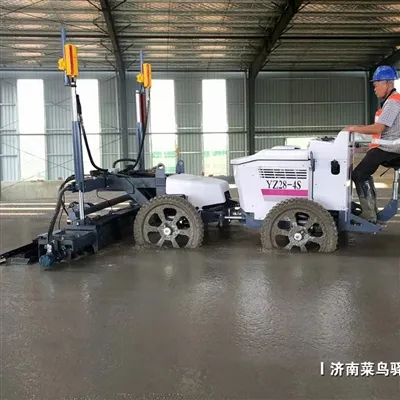
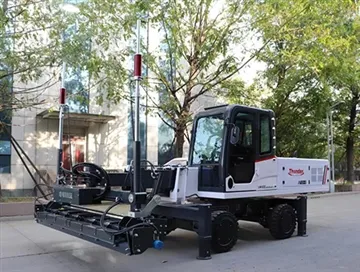
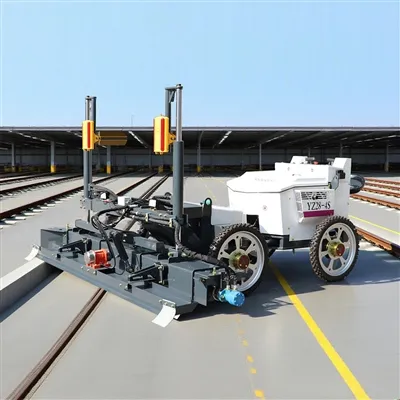
If the concrete laser leveling machine works in the summer, it will need to face hot temperatures for a long time. However, if the leveling machine is always under high temperature, it will actually cause many adverse reactions. For example, the tires will be more likely to be damaged or The water in the water tank will evaporate at an accelerated rate, so in order to protect the concrete laser leveler, when you need to operate the leveler at high temperatures, you should take appropriate precautions in advance. How to take precautions when the concrete laser leveling machine works under high temperature conditions
●First,
because the summer is hot and the temperature is continuous, so if the concrete laser leveling needs to work for a long time, it means that the vehicle tires are always exposed to high temperatures. At this time, you should pay attention to the tires caused by high temperatures. Rubber softening problem. Moreover, if you encounter sharp objects during the work, a tire blowout may occur. Therefore, this requires car owners to check the air pressure level in the tires in advance before the concrete laser leveling machine is working. If the tire temperature is found to be relatively high during the work, appropriate cooling measures need to be taken. There are two misunderstandings to avoid here. The two cooling measures of directly pouring cold water and deflating the air are very undesirable because they will cause damage to the tires and even cause a puncture later.
●Second,
if the concrete laser leveling machine works under high temperature conditions for a long time, the water in the water tank will evaporate more quickly, so the owner should pay more attention to how much cooling water is left and what temperature the water temperature meter shows. , if you find that the water volume is not enough, you should stop the car immediately, but you cannot add water immediately at this time, but you should add water after the temperature has cooled down a little. When adding water, be careful to avoid burns.
●Third,
ther
e are two particularly dangerous time periods that require more vigilance, mainly at noon and dusk. After a morning of working with the concrete laser leveling, especially in summer when the temperature is high, people can easily become sleepy during the noon period, which can lead to fatigue driving and lack of concentration, so accidents often occur. It is also easier to get tired at dusk because of the hard work of the day. In this case, the car owner can drink something refreshing, or stop and rest, and then continue the work of the concrete laser leveling machine when his mental state is better.
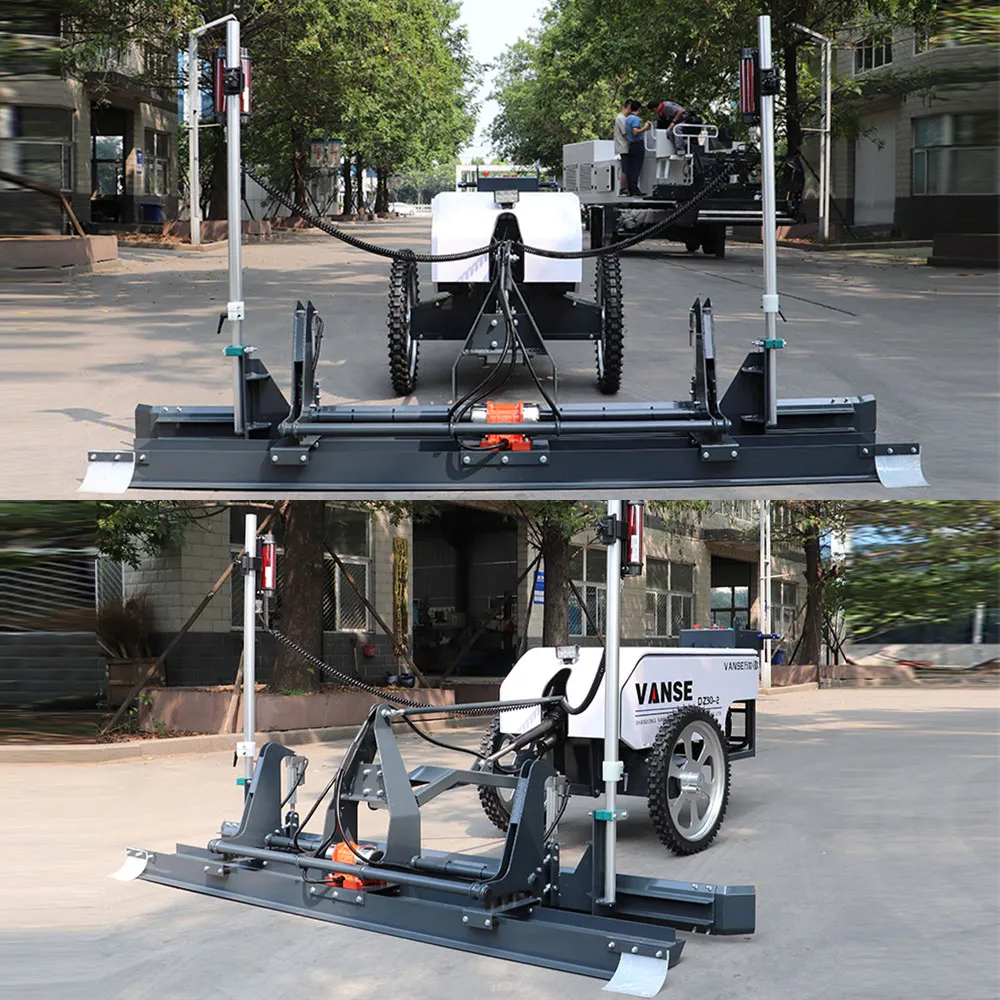
Thanks to All the Friends Who Support and Trust Shandong Vanse Machinery Technology Co., Ltd.
If you want to know more about Shandong Vanse Machinery Technology Co., Ltd. or have any questions, please feel free to contact us:
Our Factory
Shandong Vanse Machinery Technology Co., Ltd.








Share this article

About the Author: Shandong Vanse Machinery Technology Co., Ltd.
Shandong Vanse Machinery Technology Co., Ltd. is a high-tech manufacturer specializing in concrete construction machinery, including laser screeds and related equipment. The company integrates R&D, production, and global sales, with products exported to over 60 countries and widely used in infrastructure projects worldwide.
Previous Post
Next Post
Related Articles
You Might Also Like
Acceptance Standards And Acceptance Procedures For Concrete Laser Leveling Machines
Acceptance standards and acceptance procedures for concrete laser leveling machines ✔ Introduction As an important equipment for modern floor construction, the concrete laser leveling machine's acceptance work is of great significance to ensure equipment performance and construction quality. This article aims to discuss the acceptance standards and acceptance process of concrete laser leveling machines, combined with specific cases, to provide practical reference for relevant personnel. ✔ Acceptance Criteria for Concrete Laser Leveling Machines 1. Equipment appearance inspection The appearance of the equipment should have no obvious damage, deformation, rust, etc. The connecting fasteners of each part should be in good condition without looseness or falling off. The paint coating on the surface of the equipment should be even and free of peeling, blistering, etc. 2. Equipment performance check The performance inspection of laser leveling machine mainly includes the following aspects: (1) Laser system: The laser transmitter should work normally, the light should be stable, and there should be no obvious drift. The receiver should be able to accurately receive the laser signal and control the leveling machine to operate according to the preset elevation. (2) Leveling system: The scraper, vibrator and other components of the leveling machine should work normally without obvious wear, deformation, etc. The leveled ground should be smooth, without waves, bubbles, etc. (3) Power system: Power systems such as engines and motors should work normally without abnormal noise, vibration, etc. Parameters such as oil pressure and water temperature should be within the normal range. 3. Safety performance check Equipment safety performance inspection mainly includes the following aspects: (1) Safety protection devices: The equipment should be equipped with complete safety protection devices, such as protection devices, emergency stop buttons, etc. These devices should be intact and functioning properly. (2) Electrical system: Electrical circuits should be arranged neatly and without damage or exposure. The grounding of the equipment should be firm and reliable to ensure the safety of electricity. (3) Operation convenience: The operation interface of the equipment should be clear and easy to understand, and the operating handles, switches, etc. should be sensitive and reliable and easy for operators to use. ✔ Acceptance process of concrete laser leveling machine 1.Preparation stage Before acceptance, relevant acceptance tools should be prepared, such as distance meters, spirit levels, vibration testers, etc. At the same time, an acceptance team should be formed to clarify their respective responsibilities and tasks. In addition, you should also be familiar with the equipment's technical specifications, operating procedures and other related documents, and understand the equipment's performance characteristics and operating requirements. 2. Appearance inspection Conduct a comprehensive inspection of the appearance of the equipment in accordance with the equipment appearance inspection requirements in the acceptance standards. If problems are discovered, they should be recorded in time and take photos to facilitate subsequent processing. 3.Performance check In accordance with the equipment performance inspection requirements in the acceptance standards, inspect each performance of the equipment one by one. Such as the calibration of the laser system, the flatness test of the leveling system, the oil pressure and water temperature detection of the power system, etc. During the inspection process, the operating procedures should be strictly followed to ensure the accuracy of the inspection results. 4. Safety performance check Conduct a comprehensive inspection of the safety performance of the equipment in accordance with the safety performance inspection requirements in the acceptance standards. Such as the integrity of safety protection devices, the safety of electrical circuits, the grounding of equipment, etc. During the inspection, special attention should be paid to potential safety hazards and dealt with promptly. 5. Rectification and re-inspection If problems are found during the inspection, the supplier should be notified promptly for rectification. After the rectification is completed, the acceptance team should conduct a re-inspection to ensure that the problem is completely resolved. If the problem is serious and cannot be rectified or the acceptance standards are still not met after rectification, acceptance should be refused and the equipment should be returned or replaced. 6. Preparation and filing of acceptance report After passing the acceptance, the acceptance team should prepare a detailed acceptance report. The report should include the acceptance process, problems discovered and their rectification status, acceptance conclusions, etc. The acceptance report should be true, accurate, complete, and archived for subsequent reference. ✔ Actual case analysis Taking a floor construction project in an industrial park as an example, the project uses a concrete laser leveling machine to perform ground leveling operations. During the project acceptance phase, the acceptance team conducted strict checks in accordance with the above acceptance standards and processes. 1. During the appearance inspection, the acceptance team found minor scratches and paint peeling on the surface of the equipment. After communication and negotiation with the supplier, the supplier agreed to repair and repaint the equipment. 2. During the performance inspection, the acceptance team found that there was a deviation in the calibration of the laser system, resulting in the flatness of the ground being substandard. After inspection, it was found that the problem was caused by the improper installation position of the laser transmitter. The supplier promptly reinstalled and calibrated the laser transmitter, and the problem was resolved. 3. During the safety performance inspection, the acceptance team found that the electrical circuits of the equipment were exposed, posing safety hazards. The supplier immediately insulated the exposed parts and strengthened safety protection measures. After rectification and re-inspection, all indicators of the equipment met the acceptance standards. The acceptance team finally issued a detailed acceptance report and archived it. ✔ Conclusion Through a detailed discussion of the acceptance criteria and acceptance process of concrete laser leveling machines and analysis of actual cases, we can see that strict acceptance work is of great significance to ensure equipment performance and construction quality. In the future, with the advancement of technology and the continuous development of the market, we look forward to more innovations and breakthroughs in performance and safety of concrete laser leveling machines, bringing more convenience and value to the floor construction industry. At the same time, we also call on relevant departments and enterprises to strengthen their understanding of the importance and necessity of equipment acceptance work, improve the scientificity and standardization of acceptance standards and processes, and provide a strong guarantee for the healthy development of the industry.The cleaning four steps of laser leveling machine
With the addition of concrete laser leveling machines in the construction industry and road construction industries, there has been a qualitative leap in both quality and speed, and it has also saved a lot of costs for users. However, in the face of high-frequency use, users cannot ignore the cleaning of the equipment. This step must not be sloppy. Let's take a look at how to clean the leveling in a few steps! 1 The liquid crystal surface on the laser leveling machine body also needs to be cleaned. You can use organic resin or lens cleaning cloth to wipe off the dirt. If there is too much dirt, it can be removed with a lens cleaning solution. 2 After the laser leveling machine is constructed, there will be a lot of dust and mud. First of all, the dust on the laser leveling machine should be wiped clean, and the dirt and oil stains should be wiped clean with tissue paper or cotton cloth. 3 If the laser signal is lost during the construction of the laser leveling machine, the machine needs to be restarted, and the interval should be more than ten seconds. 4 If there are too many stains, you can use a soft cloth to soak in water diluted with a neutral detergent, wring it out and clean it. The best laser leveling machine manufacturers remind you not to use volatile oil, thinner, gasoline, etc. Chemical cleaning wipe. The laser leveling machine uses a scraper to take away the raised concrete and initially level it to reach the elevation required by the design. The hydraulically driven vibrating motor vibrates at a frequency of 4000 times per minute, driving the entire vibrating plate to vibrate the concrete together. The leveling of the laser paver does not need to pull the control line, nor does it need the side formwork to control the ground elevation, but is controlled by the laser measurement and control system on the laser leveling machine in real time. As long as the laser transmitter is not disturbed, no matter where the laser leveling machine moves Wherever it is, it can be ensured that the overall elevation of the paved ground will not be affected. The concrete ground laser leveling machine is to spread the mixed concrete along the subgrade according to the given thickness, width and road type requirements, and then complete the construction of paving the concrete road surface through the operation procedures of vibrating, leveling and troweling. mechanical. The working device of the concrete floor laser leveling machine generally consists of a distributor, a scraper, a vibrator (including a vibrator and a vibrator), a leveling machine, a trowel and other devices. At the same time, it also requires the organic cooperation of the frame, walking mechanism, manipulation control system and other auxiliary mechanisms. Some models integrate all the devices into one, and some are divided into two or more independent stand-alone machines.How to troubleshoot the laser signal loss fault of the concrete laser leveling machine? Can I solve it myself or do I need to find professional maintenance personnel?
If the laser signal of the concrete laser leveling is lost, in most cases, you can first check it step by step by yourself. If the problem still cannot be solved after checking, you need to contact professional maintenance personnel. The core troubleshooting logic is "gradually locating from the signal source to the receiving end", first eliminating external interference and simple connection issues, and then determining hardware faults. Troubleshooting in the following order can solve over 80% of signal loss problems without the need for professional tools: Check the status of the laser emitter Confirm whether the transmitter is powered on and whether the power indicator light is on normally (if it is not on, check whether the power cord is plugged in tightly and whether the power adapter is damaged). Observe whether the transmitter is placed horizontally and whether the bottom leveling bubble is in the center (tilting will cause signal deviation, and manual leveling needs to be re-done or the automatic leveling function should be enabled). Investigate signal occlusion and interference Check if there are any obstacles such as steel bars, construction tools, personnel, etc. between the transmitter and the receiving probe of the leveling machine, and clear the straight area between the two. Stay away from other strong light sources or electromagnetic equipment, such as electric welding machines, large frequency converters, and powerful flashlights, as these devices can interfere with the laser signal. Check the connection of the receiving system Check whether the laser receiving probe on the leveling machine is loose or displaced, and whether there is dust or concrete slurry on the probe lens. Wipe the lens with a clean soft cloth. Check the connection cable between the probe and the main unit, and confirm whether the plug is tightly inserted and whether the cable is damaged (if the cable is damaged, it can be temporarily wrapped with insulating tape, and needs to be replaced later). Restart the device and restore factory Settings Turn off the power of the transmitter and the leveler, wait for 1 to 2 minutes, and then restart them. Some temporary signal disorders can be resolved by restarting. If restarting is ineffective, refer to the equipment manual and restore the laser control system to its factory Settings (Note: Record the commonly used parameters before restoring). Test the signal receiving range Move the leveler to a position close to the transmitter (such as within 3 to 5 meters) and observe whether the signal can be received. If it can receive at close range but not at long range, it might be due to insufficient power of the transmitter or a decrease in the sensitivity of the probe. Further hardware testing is required. If the signal is still lost after completing the above troubleshooting, it indicates a hardware fault. It is not recommended to disassemble it by yourself. Please contact the maintenance personnel Transmitter failure: For instance, if the laser tube of the transmitter burns out or the internal circuit board is damaged, it will be manifested as no laser being emitted after power-on, or the laser intensity significantly weakening. The receiving probe is damaged: The internal photosensitive element of the probe is faulty. Even without obstruction, it cannot receive signals. The sensitivity of the probe needs to be tested with a dedicated instrument. Host control system failure: The communication module between the host and the receiving system is damaged, which is manifested as a direct error "signal interruption" after the equipment is turned on. Professional personnel are required to inspect the circuit or replace the module. Note: The parameters provided in this document are for reference only and are not mandatory. Due to differences in technical characteristics between different brands and models of laser levelers, please consult the manufacturer for a suitable solution before actual operation. This reference document assumes no responsibility for any issues arising from failure to follow the manufacturer's instructions.