Technical Knowledge
How Does The Concrete Laser Leveler/ Leveling Achieve Such Excellent Leveling Effects?
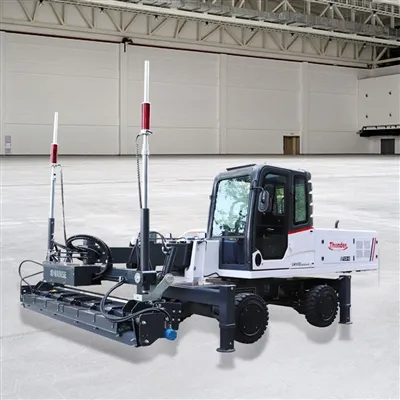
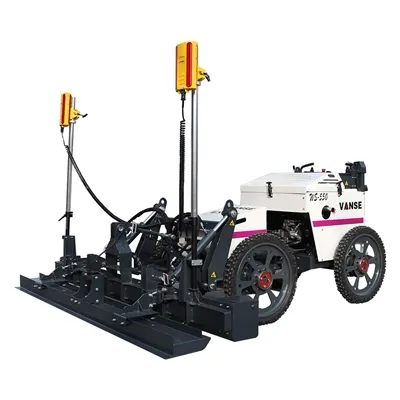
Laser leveling machines have high requirements and standards for road surface smoothness. When performing road surface smoothing, the requirements for smoothness are still relatively high. This is because the smoothness of the road surface also plays a big role in the beauty of the environment. Generally speaking, if manual leveling is used, the effect will not be very good. Fortunately, there are laser leveling machines now, and many construction units have also chosen laser leveling machines for road smoothing operations. So laser leveling machines How does it achieve such excellent leveling effect?
Laser leveling machines have high requirements and standards for road smoothness
1. Control of the laser leveling machine's baseline:
When the leveling machine performs automatic leveling, it needs an accurate reference surface. Generally, when the main focus is to control the height, the tightrope method is suitable; when the main focus is to control the thickness, the floating datum beam method is adopted. Generally, tightrope is used for the bottom layer, and floating datum beam method is used for the middle layer and surface layer. The benchmark wire rope method is to install benchmark wire ropes on both sides of the road, but note: the spacing between the pillars and steel bars supporting the steel wire ropes cannot be too large, generally 5-10m; the steel bars should be 1-2mm higher than the design elevation, and the elevation of the steel bars must be ensured when laying Always accurate during the construction process.
2. Paving speed control of laser leveling machine:
The leveling machine should work at a constant speed without stopping, and it is strictly forbidden to be fast and slow. During the leveling process, stoppages should be avoided as much as possible, and the necessary daily stoppages should be placed at the location where the contraction joint is scheduled to be made at one end of the structure. In case of shutdown in the middle, the leveling of the leveling should be locked to prevent it from sinking; when the mixture temperature is above 100°C, the pause time should not exceed 10 minutes. When the pause time exceeds 30 minutes or the mixture temperature is below 100°C, Re-seam according to the method of treating cold
seams
3. Laser leveling machine operation control measures:
Skill
ed laser leveling machine operators should be selected and given pre-job training; during the paving process, the material transport truck should stop 10-30m away from the laser leveling machine and In neutral gear, rely on the laser leveler to push forward slowly, and there should be a dedicated person to direct the unloading truck to unload; ensure the continuity of the work of the leveling machine's feeding system, that is, ensure the height of the material level in the casters (conveyor wheels) Stable, uniform and continuous, the material level height should be kept at 2/3 of the blade above the central axis. Before construction, the leveling must be cleaned. After adjusting the height and cross slope of the leveling, preheat the leveling. The preheating temperature of the leveling should be close to the temperature of the asphalt mixture, which can generally be heated to 85°C-90°C.
Thanks to All the Friends Who Support and Trust Shandong Vanse Machinery Technology Co., Ltd.
If you want to know more about Shandong Vanse Machinery Technology Co., Ltd. or have any questions, please feel free to contact us:
Our Factory
Shandong Vanse Machinery Technology Co., Ltd.








Share this article

About the Author: Shandong Vanse Machinery Technology Co., Ltd.
Shandong Vanse Machinery Technology Co., Ltd. is a high-tech manufacturer specializing in concrete construction machinery, including laser screeds and related equipment. The company integrates R&D, production, and global sales, with products exported to over 60 countries and widely used in infrastructure projects worldwide.
Previous Post
Next Post
Related Articles
You Might Also Like
What principles should be followed when adjusting the angle of the power trowel blade?
Slump: 120~180mm (about 150mm is appropriate) Applicable scenarios: Applicable to laser leveling machine or paver construction to ensure that the fluidity of concrete meets the requirements of mechanical paving and vibration. High slump: 180~220mm (when adding water reducer) Applicable scenarios: Complex reinforcement structure or high temperature dry environment, it is necessary to improve the fluidity of concrete to avoid segregation. Low slump: 80~120mm (dry hard concrete) Applicable scenarios: Construction with slipform paver, or projects with high early strength requirements. Laser leveling machine: requires a higher slump (120~180mm) to facilitate mechanical vibration and leveling. Slipform paver: The slump should be strictly controlled at 80~120mm to avoid deformation of the structure due to excessive fluidity. Hot and dry weather: The slump can be appropriately increased (+20~30mm) to reduce the slump loss caused by water evaporation. Low temperature or rainy season: The slump can be appropriately reduced (-10~20mm) to prevent concrete segregation. When the coarse aggregate particle size is large and the grading is poor, the slump needs to be increased to ensure workability. Adding water reducer can reduce the water-cement ratio and improve strength while maintaining the slump. Each truck of concrete needs to be tested for slump before unloading. If the deviation exceeds ±20mm, it needs to be adjusted (such as adding admixtures or secondary mixing). The mixing and pouring of concrete must be completed before the initial setting (usually ≤2 hours) to avoid slump loss due to too long time. Slump is too large: it is easy to cause bleeding and segregation, which can be improved by adding fly ash or reducing the water-cement ratio. Slump is too small: poor fluidity, it is necessary to add water reducer or increase the water consumption appropriately (need to be verified by the laboratory). "Technical Specifications for Construction of Highway Cement Concrete Pavement" (JTG/T 3650-2020): The recommended slump is 100~180mm, which is adjusted according to the construction machinery. "Concrete Structure Engineering Construction Quality Acceptance Code" (GB 50204-2015): The slump detection frequency is required to be no less than once every 100m³. Reasonable control of slump can ensure the construction quality, durability and appearance smoothness of concrete pavement. The specific parameters need to be determined in combination with design requirements, construction technology and environmental conditions.Methods for cleaning, grinding & renovation of terrazzo floors and emery floors
Methods for cleaning, grinding and renovation of terrazzo floors and emery floors With the development of modern architecture and industry, floor materials, as an important part of indoor floors, not only carry the functions of daily use, but also directly affect the beauty and comfort of the overall environment. Terrazzo floors and emery floors are common types of floors, and are widely used in various places because of their wear resistance, anti-slip, and beautiful characteristics. However, over time, these floor materials will also lose their original luster and performance due to wear, pollution and other reasons. Therefore, cleaning, grinding and renovation to restore their original beauty and performance has become an important maintenance work. ☑ Overview of floor material characteristics Terrazzo floor is a floor decoration material made of cement, stone particles and other raw materials through grinding, polishing and other processes. It has a hard texture, bright color, anti-slip and wear-resistant waiting points, and is often used in commercial and residential places. Emery floor is a floor paved with emery aggregate as the main component and added with special gelling materials. It has high wear resistance, compressive strength and anti-slip properties, and is suitable for heavy-load places such as industrial plants and warehouses. ☑ Cleaning methods and precautions Before cleaning, grinding and renovating terrazzo floors and diamond sand floors, the floor must be thoroughly cleaned first. The purpose of cleaning is to remove dirt, oil, old layers and other impurities on the floor surface, providing a good foundation for subsequent grinding and renovation work. When cleaning, you can choose to use a high-pressure water gun or a professional cleaning machine, and choose the appropriate cleaning agent and tools according to the degree and type of stains on the floor surface. At the same time, it should be noted that the choice of cleaning agent should avoid corrosion or damage to the floor material. During the cleaning process, it is also necessary to control the concentration and amount of cleaning agent to avoid pollution to the environment. In addition, the following points should be noted when cleaning: 1. Before cleaning, check whether the floor has problems such as damage or cracks. If necessary, repair it first. 2. When cleaning, the site should be well ventilated to avoid harmful gases generated by the volatilization of the cleaning agent from causing harm to the human body. 3. After cleaning, it should be rinsed with clean water in time, and the floor surface should be made dry to avoid residues from affecting subsequent work. ☑ Grinding steps and skills After cleaning, the next step is to grind the floor. The purpose of grinding is to remove the old coating, scratches and uneven parts on the floor surface, so that the floor surface can be restored to a flat and smooth state. When grinding, you can choose the appropriate grinding machine and grinding disc according to the actual situation of the floor. Generally speaking, you can first use a coarse grinding disc for preliminary grinding to remove large particles of impurities and uneven parts on the floor surface; then use a fine grinding disc for fine grinding to make the floor surface smoother and more delicate. During the grinding process, you need to pay attention to the following tips: 1. When grinding, you should maintain uniform force and speed to avoid excessive damage to the floor or uneven grinding. 2. During the grinding process, you should clean up the dust and debris generated by grinding in time to keep the site clean. 3. After grinding, check whether the floor surface is flat and smooth. If there are local unevenness or scratches, local treatment is required. ☑ Renovation and material selection After grinding, the last step is to renovate the floor. The purpose of renovation is to further improve the aesthetics and performance of the floor so that it is more in line with the requirements of use. During the renovation process, appropriate renovation materials and processes can be selected according to the actual situation of the floor. For terrazzo floors, you can choose to use professional terrazzo renovation agents for brushing or polishing to restore its original gloss and color. For diamond flooring, you can choose to use wear-resistant coatings or ring floor paints for brushing to enhance the wear resistance and aesthetics of the floor. When choosing renovation materials, you need to pay attention to the following points: 1. The materials should comply with relevant standards and specifications and have good environmental performance and durability. 2. The color and gloss of the materials should match the original floor to ensure the consistency of the overall effect after renovation 3. The materials should have good adhesion and wear resistance, and can maintain the beauty and performance of the floor for a long time ☑ Construction site safety management Safety management is essential when cleaning, grinding and renovating terrazzo floors and diamond floors. Obvious safety warning signs should be set up at the construction site to ensure the safety of construction workers and surrounding personnel. At the same time, construction workers should wear appropriate safety protection equipment, such as gloves, masks, safety shoes, etc., to avoid the dust and harmful gases generated during the construction process from affecting their health. In addition, the normal operation and maintenance of construction equipment should be ensured to avoid safety accidents caused by equipment failure. ☑ Quality control and effect evaluation In order to ensure the quality of cleaning, grinding and renovation work, strict quality control is required. During the construction process, the cleaning and grinding effects should be checked regularly to ensure that each link achieves the expected effect. At the same time, after the renovation is completed, an effect evaluation should be carried out to check whether the gloss, flatness, wear resistance and other indicators of the floor meet the requirements. If there are unqualified areas, they should be repaired and processed in time to ensure that the overall effect meets the requirements. ☑ Post-maintenance and maintenance suggestions After completing the cleaning, grinding and renovation work, post-maintenance and maintenance are equally important. For terrazzo floors and diamond sand floors, it is recommended to clean and maintain them regularly to avoid damage to the floor caused by the accumulation of stains and debris. At the same time, scratches and collisions with heavy objects and sharp objects should be avoided to avoid damage to the floor. In addition, regular maintenance and repair work should be carried out according to the use and wear of the floor to ensure the long-term service life and stable performance of the floor. ☑ Summary The cleaning, grinding and renovation of terrazzo floors and gold sand floors is a highly comprehensive work. It is necessary to fully consider the characteristics and usage scenarios of the floor materials, and select appropriate cleaning and grinding methods and renovation materials to ensure that the renovated floor is both beautiful and durable. Through the introduction of this article, we have learned about the basic characteristics of terrazzo floors and diamond sand floors, cleaning methods and precautions, grinding steps and techniques, renovation treatment and material selection. At the same time, we also recognize the importance of construction site safety management and the necessity of quality control and effect evaluation. In actual operation, we should flexibly apply this knowledge according to the specific situation to ensure the smooth progress of renovation work. For example, during the cleaning process, you can choose the appropriate cleaning agent and tools according to the type and degree of dirt on the floor surface: during the grinding process, you can choose the appropriate grinding disc and grinding intensity according to the material and wear of the floor. In addition, when choosing renovation materials, full consideration should be given to their environmental protection, durability and matching degree with the original floor. At the same time, later maintenance and care are also links that cannot be ignored. Regular cleaning and maintenance of the floor can extend its service life and maintain its beauty. For local wear or damage, it should be repaired and treated in time to avoid the problem from expanding. In addition, with the continuous development of science and technology, more and more new technologies and new materials are being applied to the field of floor renovation. For example, the application of some new environmentally friendly cleaning agents and high-efficiency grinding equipment can further improve the effect and efficiency of cleaning and bending: some new materials and technologies can also better improve the performance and beauty of the floor. Therefore, we should keep an eye on and understand new technologies and new materials so that we can better apply them in the renovation work. In summary, the cleaning, grinding and renovation of terrazzo floors and diamond sand floors is a complex and important task. By mastering relevant knowledge and skills and paying attention to safety management and quality control of the construction site, we can ensure the smooth progress of renovation work and achieve good results. At the same time, with the continuous emergence of new technologies and new materials, we should also constantly update our knowledge and skills to adapt to the changing market needs and technological development. In the future floor renovation field, as people's requirements for beauty and performance continue to increase, and the concepts of environmental protection and sustainable development are deeply rooted in the hearts of the people, we believe that more innovative technologies and materials will be applied to this field. For example, some floor materials with self-repairing functions may gradually become popular. They can automatically repair after a certain amount of damage, thereby greatly extending the service life of the floor. In addition, some intelligent floor management systems may also come into being, realizing real-time monitoring and intelligent maintenance of floor usage through technologies such as the Internet of Things and big data. At the same time, we also need to pay attention to the impact of floor renovation on the environment. During the renovation process, environmentally friendly materials and processes should be used as much as possible to reduce the generation of waste and pollutants. In addition, the burden of renovation work on the environment can be reduced by rationally utilizing waste materials and recycling resources. Finally, for those engaged in floor renovation, they need to continuously improve their professional skills and qualities to adapt to the ever-changing market demands and technological development. At the same time, they also need to pay attention to the cultivation of safety awareness and environmental awareness to ensure that both quality and safety and environment can be guaranteed in the renovation work. In short, the cleaning, grinding and renovation of terrazzo floors and emery floors is a constantly developing field. Through continuous learning and practice, we can continuously improve our professional level and service quality, and provide customers with better floor renovation solutions. At the same time, we should also actively embrace the application of new technologies and new materials to promote the sustainable development and progress of the floor renovation industry.Key points for purchasing second-hand power trowel and common methods to avoid pitfalls
Selecting a second-hand polishing machine is a job that requires a lot of experience and skills. It can help you obtain a practical device at a lower cost, but if you make a wrong judgment, the subsequent maintenance and delayed construction period may cause you to lose more than you gain. The following is a detailed list of key points for choosing a second-hand polishing machine and common methods to avoid pitfalls. We hope it can be of great help to you. Fuselage structure Chassis (grinding disc) : This is the most crucial part. Check if it is flat and free of deformation. Slight wear and tear is normal, but if the wear is severe, there are pits or obvious deformation, it will lead to poor polishing effect and higher replacement cost. Blade (scraper) : Check if there is still sufficient thickness. If the metal substrate has been worn out, it needs to be replaced immediately, and this cost should be included in the cost. Protective cover: Check for any damage or severe deformation, as this is related to operational safety. Overall framework: Check for any signs of welding, cracks or repairs, which could be a sign of severe impact or drop. Engine (heart) Brand: Give priority to well-known brands such as Honda, Kohler, Briggs & Stratton, etc. Spare parts are easy to find and maintenance is convenient. Appearance: Check for any cracks in the engine casing, especially in the base and radiator sections. Check for obvious oil stains or carbon deposits. This might be a sign of oil leakage or poor maintenance. Air filter: You can ask to remove the air filter to have a look. If the inside is very dirty or even soaked with oil, it indicates that the previous owner might not have paid much attention to maintenance. Engine oil: You can pull out the oil dipstick to check. If the engine oil is black, viscous or contains metal debris, it indicates that the engine wear may be relatively severe and the maintenance condition is poor. Transmission system Gearbox: Check if there are any signs of oil leakage on the gearbox housing. Rotate the drive shaft by hand to feel if it is smooth, and if there is any jamming or abnormal noise. Belt/chain: Open the protective cover and check if the belt has cracks, wear or looseness. Check if the chain is loose and free of oil and rust. Be sure to ask the seller to start the machine for testing! Startup performance Cold start is the most illustrative. Observe whether the rope pulling is smooth and whether the machine can start smoothly within one to three rope pulls. If it is difficult to start, there may be problems (such as carburetors, spark plugs, insufficient compression, etc.). Engine sound After starting, listen to the sounds of the engine idling and accelerating. The operation should be smooth. A regular "tap-tap" sound is normal (valve sound). If there are loud "clicking" sounds, knocking sounds or irregular noises, it indicates that there is severe wear inside. Transmission system sound Let the trowel run idle and listen for any abnormal "clattering" sounds from the gearbox and transmission parts. The voice should be even and deep. Vibration condition When the machine is running, it should be smooth and the vibration should be within a reasonable range. If the vibration is abnormally severe, it may be due to deformation of the chassis, unbalanced installation of the blades or problems with the engine base Purchase time and source: Inquire about the specific year and channel of purchase of the machine to determine its service life. Usage frequency and scenarios: Is it for occasional household use or long-term high-intensity use by professional teams? The latter naturally wears out more severely. Maintenance and repair history: This is of Paramount importance. Has there been any major overhaul? (Such as engine cylinder opening, gearbox replacement When was the last time the engine oil, air filter and spark plugs were changed? Have there been any accidents (such as tipping over or collision)? A reliable seller will tell the truth, while a evasive one needs to be on guard. If possible, conduct a brief load test (such as grinding it on the ground). Observe after the load is applied: Whether the engine is prone to stall and whether the power is sufficient. Check for any slippage or abnormal noise in the transmission system. Whether the machine moves smoothly and if it deviates. Trap description: Merchants thoroughly clean and paint the machines to make their appearance look as good as new, thereby covering up internal wear and tear and malfunctions. Avoidance methods Pay special attention to the screws and interfaces: It is very difficult for a refurbished machine to have no signs of any screws being turned. Check whether there are any signs of wear on the engine fixing screws, chassis screws, etc. Paint surface consistency: The original factory paint surface is usually uniform. If you find that the paint color of some parts does not match the overall color or the paint layer is too thick, it might be due to later spraying. Don't judge a machine by its appearance: Don't be deceived by a clean exterior. The key is to check its operating status and internal wear. Trap description: The machine was once sold after its chassis and frame were deformed due to a fall or collision. It was sold after simple repairs. Avoidance methods Check the flatness: Place the machine on a flat ground and observe from the side whether the chassis is fully in contact with the ground and if there is any warping. Check the welding points: Carefully inspect each connection point of the rack to see if there are any irregular or rough welding points in the later stage. Running test: During no-load operation, observe whether the machine is stable and if there is any regular swinging. This might be a sign of an uneven chassis. Trap description: Piecing together a complete machine with "good" parts from different scrapped machines, which has poor compatibility and stability. Avoidance methods Brand consistency: Check whether the brand, model and newness of the main components such as the engine and fuselage match. Assembly machines often give the impression of being "mismatched". Check the nameplate: Whether the information on the body nameplate (such as model and production date) is consistent with the seller's description. Poor comprehensive operation: When the assembly machine is in operation, various minor problems may occur frequently, making it feel "not smooth". Trap description: The machine performs okay when it is cold or unloaded, but once it is heated up or loaded, problems become apparent (such as insufficient power, severe abnormal noises, and engine stalling). Avoidance methods Persist in long-term testing: Let the machine run for 10 to 15 minutes and observe whether the state is stable after warming up. Load testing is required: This is the best way to verify the true state of the machine. Check the engine oil: After warming up the machine, stop it immediately and check the engine oil. If there are many small bubbles (emulsions) in the engine oil, it might be that the cylinder gasket is being washed away, which is a big problem. Before deciding to purchase, quickly check the following list: Inspection items Qualification standard Be cautious/give up Fuselage chassis Smooth, evenly worn, and without deformation Deformation, cracks, wear limit Engine Well-known brand, smooth start-up, stable operation, pure sound, no oil leakage Difficult to start, severe abnormal noise, oil leakage, and heavy smoke Transmission system The rotation is smooth without any abnormal noise, and the belt/chain is not aged There is abnormal noise, jamming and oil leakage Seller Description Be honest, answer all questions, and keep clear maintenance records Vague and evasive, concealing history Price In line with market conditions (approximately 30% to 50% of a new model) Far below the market price (" There's no such thing as a free lunch ") Test run situation The hot and cold units start well and operate stably under no-load or load conditions Any test is unqualified Final suggestion: If possible, bring along an experienced master craftsman or mechanic. Their experience can help you discover many problems that beginners fail to notice. When making a purchase, it is best to sign a simple written agreement with the seller, clearly stating the condition of the machine, and keep the payment voucher for unexpected needs. Remember, the primary principle when purchasing second-hand equipment is "It's better to miss out than to buy wrongly." Wish you could find a sturdy and durable good machine! Note: The parameters provided in this document are for reference only and are not mandatory. Due to differences in technical characteristics between different brands and models of laser levelers, please consult the manufacturer for a suitable solution before actual operation. This reference document assumes no responsibility for any issues arising from failure to follow the manufacturer's instructions.