Technical Knowledge
Door-To-Door Service Concrete Floor Laser Leveling Machine
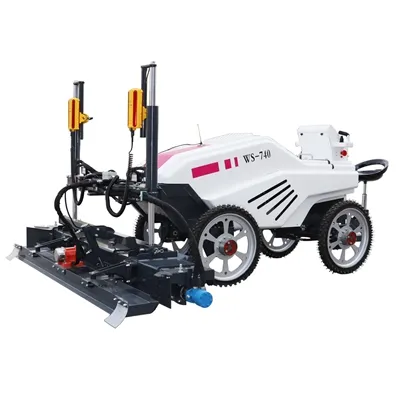
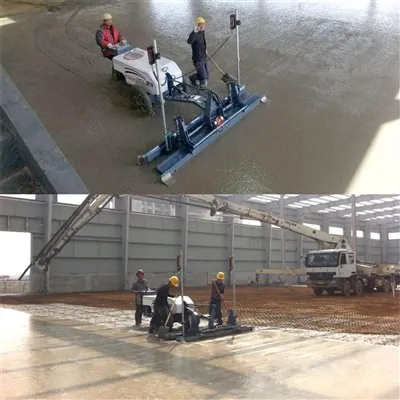
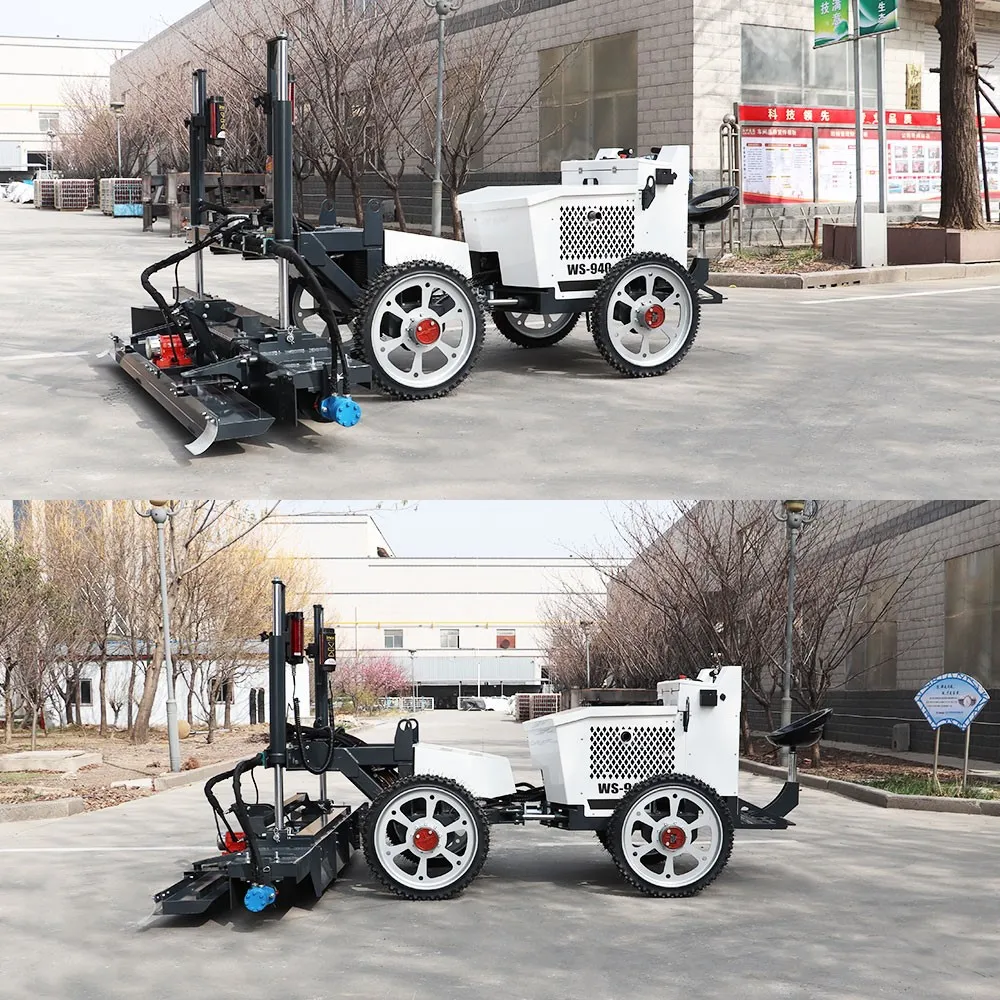
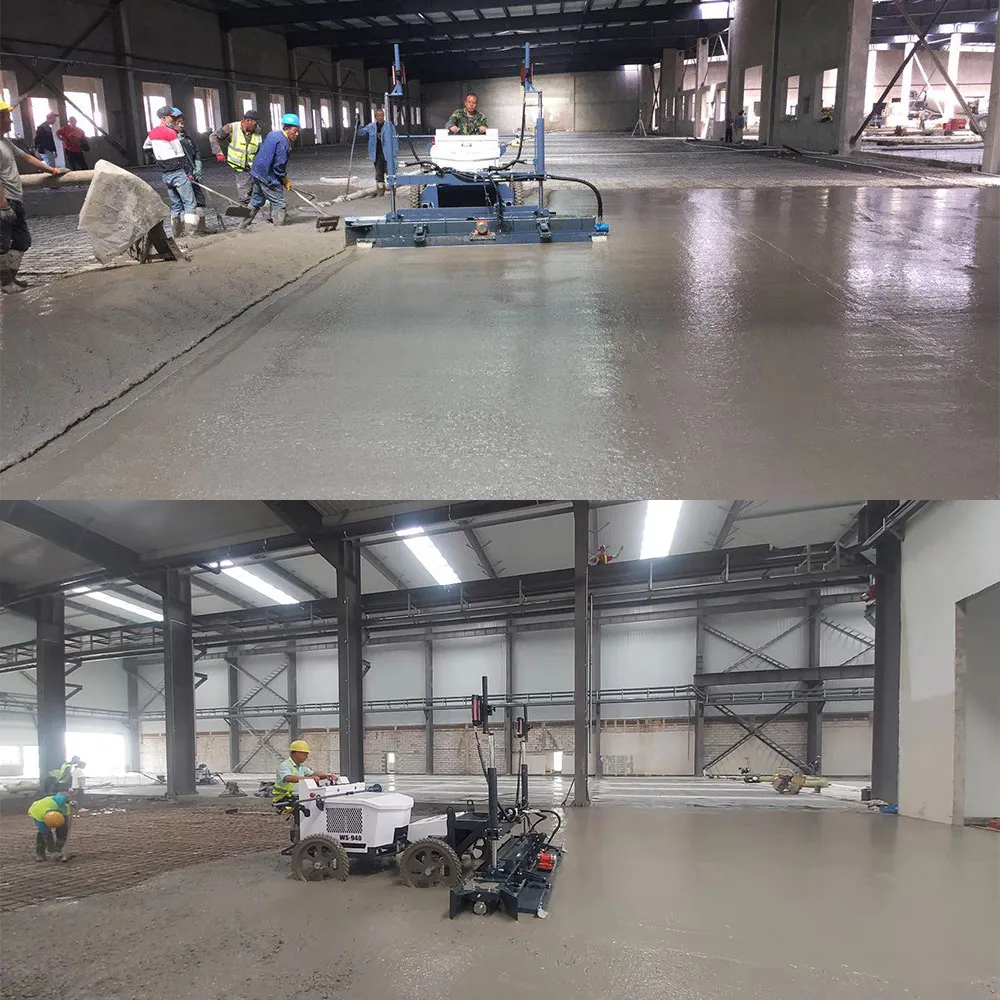
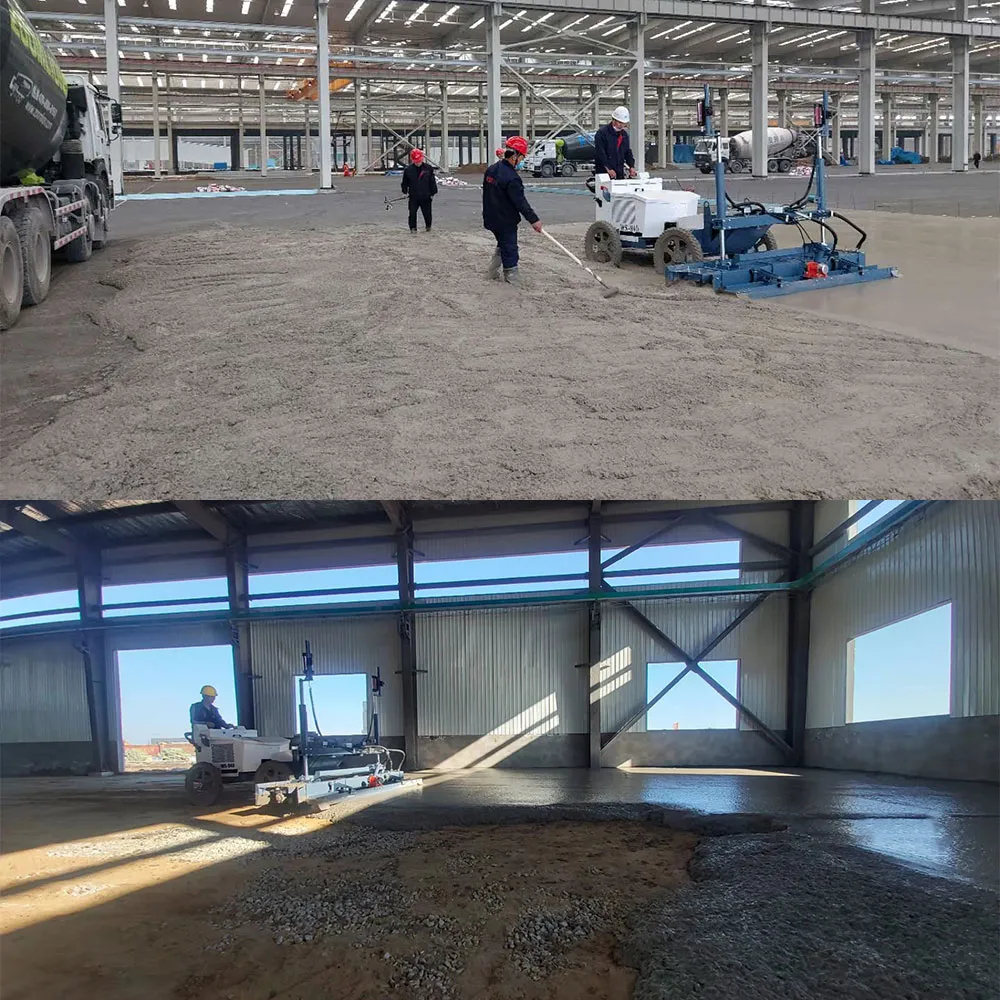
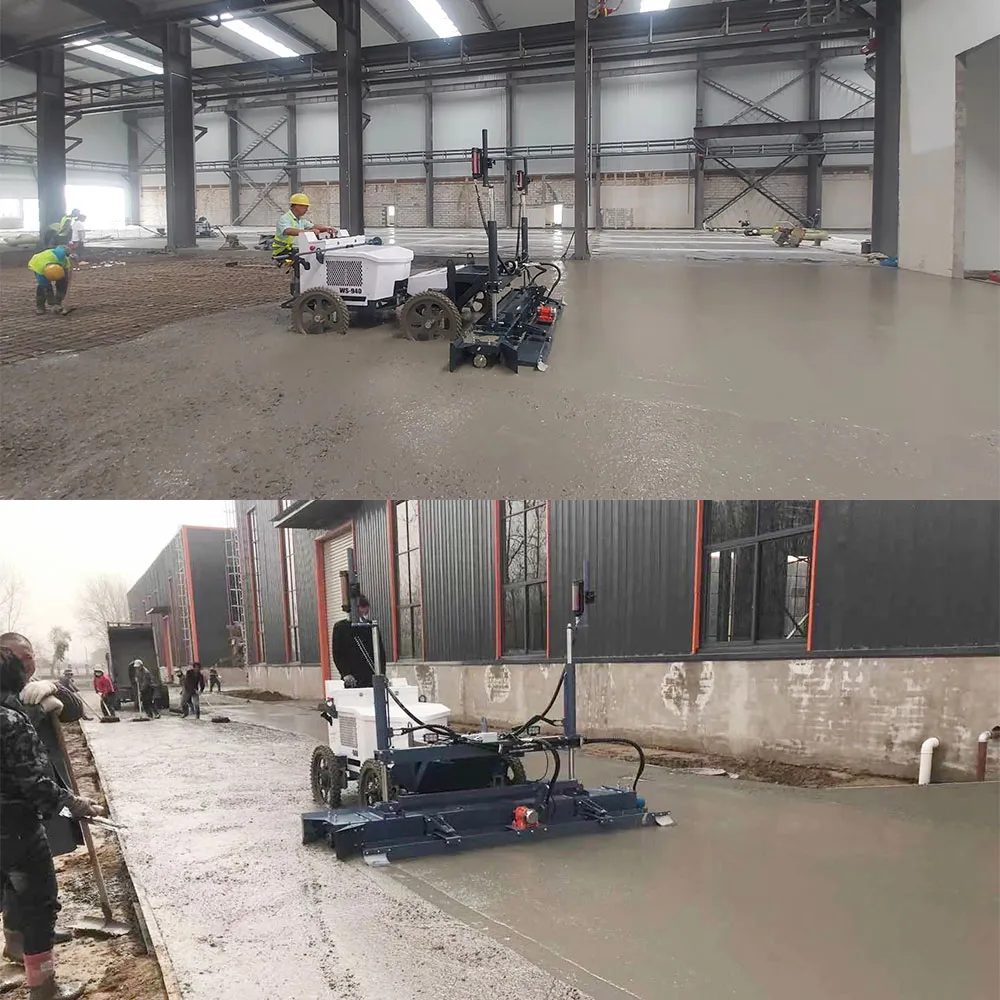
The concrete laser leveler is a device that uses the laser emitted by the transmitter as the reference plane and controls the leveling head in real time through the laser receiver on the laser leveler to achieve high-precision and rapid leveling of concrete. Laser leveling machines are developed based on the increasing demand for ground quality such as strength, flatness, and levelness in modern industrial plants, large shopping malls, warehouses, and other large-area cement concrete floors. With the development of laser technology and electronic technology and the requirements of modern industrial floors, the international engineering field has begun to use laser pavers in the construction of concrete floors since the 1980s, achieving precision leveling of concrete floors. automation.
Concrete floor laser leveling machine:
Indoor floor
①Underground garages, general industrial plants, workshops, and automated three-dimensional warehouses;
②Clean factories for electronic appliances, food materials, medicine, etc.;
③Large-scale warehouse supermarkets, logistics centers, convention and exhibition centers, etc.
Outdoor floor
① Terminals, container yards, cargo yards;
②Airport runways, aprons, parking lots;
③Plazas, residential floors, municipal roads, etc.
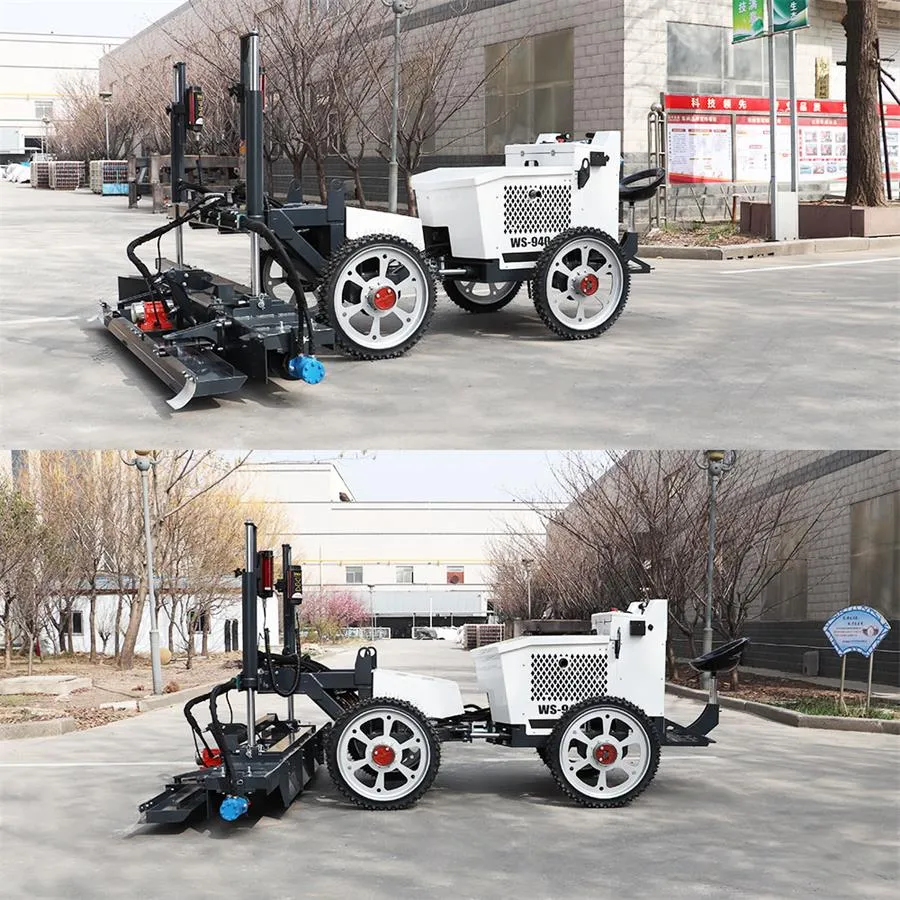
Wanshi concrete floor laser leveling machine–hand-held two-wheel cement floor laser leveling machine–four-wheeled steel mesh cement laser leveling machine–gasoline laser leveling machine–cement floor laser leveling machine–small laser Leveling machine–car laser leveling machine
Thanks to All the Friends Who Support and Trust Shandong Vanse Machinery Technology Co., Ltd.
If you want to know more about Shandong Vanse Machinery Technology Co., Ltd. or have any questions, please feel free to contact us:
Our Factory
Shandong Vanse Machinery Technology Co., Ltd.








Share this article

About the Author: Shandong Vanse Machinery Technology Co., Ltd.
Shandong Vanse Machinery Technology Co., Ltd. is a high-tech manufacturer specializing in concrete construction machinery, including laser screeds and related equipment. The company integrates R&D, production, and global sales, with products exported to over 60 countries and widely used in infrastructure projects worldwide.
Previous Post
Next Post
Related Articles
You Might Also Like
How to evaluate the performance & stability of laser receivers?
There are several aspects to consider when evaluating the performance and stability of a laser receiver: 1. Sensitivity: Sensitivity refers to the minimum optical power that the receiver can detect. Evaluating the sensitivity of a laser receiver usually requires knowledge of parameters such as the laser's output power, beam divergence, optical system efficiency, and receiver noise. 2. Dynamic range: Dynamic range refers to the ratio of the maximum optical power to the minimum optical power that the receiver can receive under normal operating conditions. Evaluating the dynamic range of a laser receiver requires considering factors such as the maximum output power of the laser, the linear range of the receiver, the saturation output, and the nonlinear effects of the optical system. 3. Stability: Stability refers to the performance changes of the laser receiver under different environmental conditions. Evaluating the stability of a laser receiver requires testing its performance under different environmental factors such as temperature, humidity, and air pressure, and observing changes in parameters such as output power, response speed, and noise. 4. Reliability: Reliability refers to the service life and stability of the laser receiver. Evaluating the reliability of a laser receiver requires considering factors such as the stability of its internal circuitry, optical components and mechanical structure, as well as the production process. 5. Compatibility: Compatibility refers to the degree of matching between the laser receiver and lasers of different types and specifications. Evaluating the compatibility of a laser receiver requires consideration of its spectral response range, modulation frequency, and polarization state. To sum up, multiple aspects need to be considered when evaluating the performance and stability of a laser receiver, and a comprehensive evaluation needs to be carried out based on actual application requirements.Precision Setting Techniques for Concrete Laser Leveling Machines in Super-Flat Floor Construction
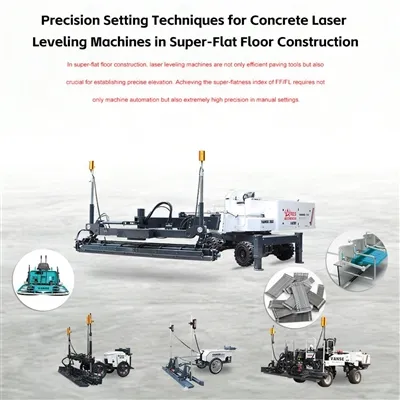
In super-flat floor construction, laser leveling machines are not only efficient paving tools but also crucial for establishing precise elevation. Achieving the super-flatness index of FF/FL requires not only machine automation but also extremely high precision in manual settings. The following are precision setting and operation techniques for laser leveling machines to achieve super-flatness: Avoid interference sources: The transmitter must be installed outside the concrete paving area and away from crane vibrations, passing vehicles, and airflow interference (the support structure needs to be reinforced in windy conditions). Height coverage: Ensure that the transmitter's signal plane covers the entire work area and is not obstructed by on-site columns or equipment. Dual transmitter verification: For extra-large areas, it is recommended to set up two transmitters for mutual verification to ensure that signal attenuation or drift during long-distance transmission is detected in a timely manner. Before the start of each shift, the physical elevation of the top of the formwork must be compared with the signal elevation of the laser transmitter using the same handheld laser receiver rod. Error limit: The error between the measured elevation of the formwork and the laser signal elevation must be controlled within ±1 mm. Technique: Adjust the sensitivity of the hydraulic sensor based on the concrete slump. If the concrete is stiffer, the sensitivity should be appropriately reduced to prevent the leveling head from frequently bouncing due to resistance; if the concrete is thinner, increase the sensitivity to ensure immediate correction of small height differences. Screw Feeder Setting: The lower edge of the screw feeder should be slightly higher than the design elevation (approximately 3-5 mm), using the rear vibrating beam to compact the material to the design position. Material Excess: Always maintain a suitable amount (approximately 2-5 cm) of concrete accumulation in front of the leveling head. Too little material will result in "empty scraping," and too much material will create pushing waves. Operation: Each paving pass should overlap the previously completed pass by 200-300 mm. Technique: Set the hydraulic control on the overlapping side to "manual" and the non-overlapping side to "automatic". This allows the screed to use the completed pavement as a reference, ensuring consistent elevation at the joint and eliminating noticeable "joint ridges". At the end of each paving pass (when the machine retracts its arm), the travel speed should be slightly reduced to prevent the suction created when the screed lifts from pulling up the concrete and causing low spots at the edges. Factors Factors affecting accuracy Troubleshooting Techniques: Wind speed Wind can cause the laser beam to shake. Use windproof supports or add a filtering function to the laser receiver. Concrete slump The consistency (dryness/wetness) of each batch of material varies. Assign a dedicated person to monitor at the discharge point and strictly prohibit spreading material with a slump error exceeding ±20 mm. Tire pressure The amount of tire deflection changes. Check the tire pressure of the leveling machine before starting work each day to ensure symmetry and consistent pressure on both sides. The **first pass with a long-handled straightedge (Highway Straightedge)** after the laser Leveling is completed is crucial: Operation: While the concrete is still plastic, the operator should use an aluminum alloy straightedge of more than 3 meters in length, following the Leveling machine and performing reciprocating leveling perpendicular to the paving direction. Purpose: To eliminate the small marks left by the laser Leveling when changing lines or turning. Note: The parameters provided in this document are for reference only and are not mandatory. Due to differences in technical characteristics between different brands and models of laser levelers, please consult the manufacturer for a suitable solution before actual operation. This reference document assumes no responsibility for any issues arising from failure to follow the manufacturer's instructions.Testing methods and standards for the flatness of concrete floors
– Ruler and feeler gauge detection: This is the most commonly used method. Place the ruler vertically on the ground, and then use the feeler gauge to measure the size of the gap between the ruler and the ground. Usually multiple measuring points are selected on the ground, such as one point every 2-3 meters, and the flatness of different positions is detected and the data is recorded. – Level detection: Use the level to establish a horizontal reference plane, measure the elevation difference of different points on the ground relative to the reference plane, and then calculate the flatness of the ground. This method has high accuracy and is suitable for floors with high flatness requirements, such as industrial plants, precision instrument workshops, etc. – Laser leveling instrument detection: Use laser technology to measure the flatness of the ground. The instrument emits a laser beam, receives reflected light through the sensor, automatically measures the ups and downs of the ground, and directly obtains the flatness data. This method is efficient and accurate, and can quickly obtain a large amount of measurement data, but the equipment cost is high. – General industrial and civil building floors: According to the "Construction Quality Acceptance Code for Building Floor Engineering" (GB 50209 – 2010), the flatness deviation of cement mortar floors and concrete surface floors is 5mm. – Industrial plant floors: For industrial plants with special requirements, such as electronic plants, food processing workshops, etc., the ground flatness requirements may be higher. For example, the flatness requirements of electronic plant floors may reach 2-3mm to meet the installation and operation requirements of high-precision equipment. – Outdoor concrete floors: Such as roads, squares, etc., usually implement the "Urban Road Engineering Construction and Quality Acceptance Code" (CJJ 1-2008) and other relevant standards. For cement concrete pavement, the flatness is tested with a 3m ruler, and the allowable deviation is 7mm. In actual testing, the appropriate testing method and acceptance standard should be determined according to the design requirements of the specific project and relevant specifications and standards to ensure that the flatness of the concrete floor meets the use requirements. AMOUR JOINT CONCRETE LASER LEVELING MACHINE LIGHT TOWER POWER TROWEL STEEL FIBER TRACKED MINI DUMPER