Technical Knowledge
Key points for selecting concrete laser leveling machine
▼1▲
Laser transmitter
The laser transmitter is the core component of the concrete laser leveling, and its quality directly affects the performance of the leveling. When selecting, you should pay attention to the following points:
1. Laser type:
Choose the appropriate laser type, such as ammonia laser, semiconductor laser, etc., to meet different construction needs.
2. Laser wavelength:
Different wavelengths of laser have different penetrating capabilities and reflection properties on concrete, and should be selected according to actual needs.
3. Laser power:
The size of laser power directly affects the construction effect and should be selected according to the construction area and accuracy requirements.
4. Stability:
The laser transmitter should have high stability to ensure continuity and accuracy during the construction process.
▼2▲ Flatness control system
The flatness control system is an important part of the concrete laser leveling, and its performance has a vital impact on the construction effect. When selecting, you should pay attention to the following points:
1. Control accuracy:
The control accuracy of the flatness control system should meet the construction requirements to ensure the flatness of the concrete surface.
2. Response speed:
The system's response speed should be fast to adapt to changes during the construction process.
3. Reliability:
The system should have high reliability to ensure the stability and continuity of the construction process.
4. Ease of use:
The operation of the system should be simple and easy to understand, making it convenient for construction personnel to operate and debug.
▼3▲ Laser receiver
The laser receiver is a device used to receive the laser signal emitted by the laser transmitter, and its quality directly affects the construction effect. When selecting, you should pay attention to the following points:
1. Reception range:
The laser receiver should have a wide reception range to meet the needs of different construction environments
2. Sensitivity:
The sensitivity of the receiver should be high to ensure that the laser signal can be accurately received.
3. Stability:
The receiver should have high stability to adapt to various changes during the construction process.
4. Anti-interference ability:
The anti-interference ability of the receiver should be strong to reduce false alarms and false alarms during the construction process.
▼4▲ Control system
The control system is the core control unit of the compacted soil laser leveler, and its performance plays a vital role in the performance of the leveler. When selecting, you should pay attention to the following points:
1. Control accuracy:
The control accuracy of the control system should be high to achieve precise flatness control.
2. Stability:
The control system should have high stability to ensure the normal operation of the leveling machine.

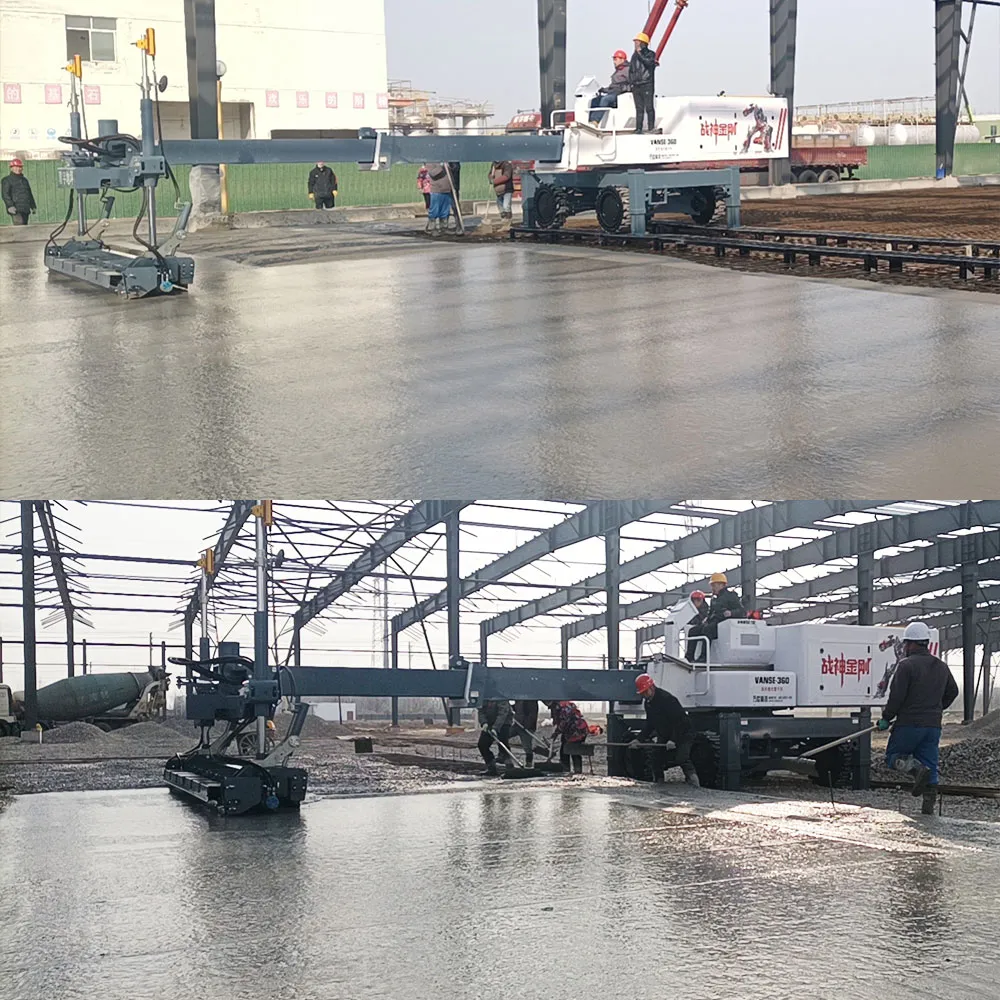
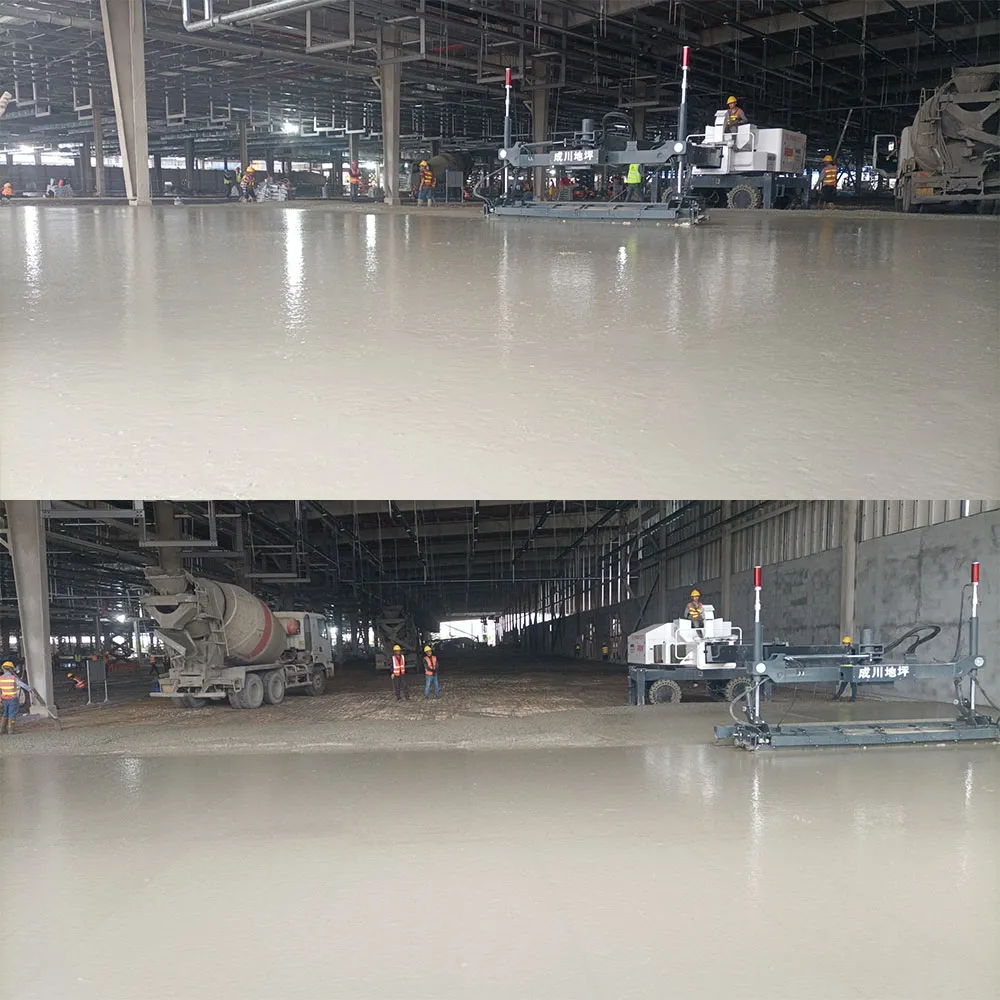
Thanks to All the Friends Who Support and Trust Shandong Vanse Machinery Technology Co., Ltd.
If you want to know more about Shandong Vanse Machinery Technology Co., Ltd. or have any questions, please feel free to contact us:
Our Factory
Shandong Vanse Machinery Technology Co., Ltd.
Share this article

About the Author: Shandong Vanse Machinery Technology Co., Ltd.
Shandong Vanse Machinery Technology Co., Ltd. is a high-tech manufacturer specializing in concrete construction machinery, including laser screeds and related equipment. The company integrates R&D, production, and global sales, with products exported to over 60 countries and widely used in infrastructure projects worldwide.
Previous Post
Next Post
Related Articles
You Might Also Like
Teach you a few tricks to increase the service life of the laser leveling machine
At present, the pace of economic construction is constantly accelerating, and the use of laser leveling machines is naturally increasing. With the increasing precision of road leveling, the use requirements and accuracy of laser leveling machines are also increasing. However, in order to save costs, we must pursue the extension of the service life of the product. In order to help you use the laser leveling machine better, the following article will mainly introduce some methods to extend its service life. 1. Before starting the laser leveling machine, check whether the hydraulic oil of the hydraulic station, the gear oil of the reduction box, and the transmission box are full. 2. Before starting the main motor, check and adjust the turning angle and adjust the working pressure of the hydraulic system, inject lubricating oil into each lubrication point, and check the operation of the mechanical transmission part of the leveling machine to make it flexible in transportation and installation. 3. Operators should wear labor protection supplies and must not leave their posts or go to other posts after starting the machine. 4. After the oil temperature and oil pressure of the hydraulic station are stable, the upper straightening roller is lifted to the initial position, and the material is fed manually. After the plate is sent through the straightening roller, the upper straightening roller is pressed down and clamped. 5. Start the main motor of the laser leveler. The plate moves forward and is straightened at the same time. The motor stops, the straightening roller stops straightening, the upper straightening roller is lifted, and the straightened steel pipe is sent out. 6. The motor of the laser leveler stops, the straightening roller stops straightening, and the next straightening program instruction is repeated. 7. After stopping, turn off the main power supply and do not change the program controller at will. 1. The connection between the supercharger and the intake and exhaust pipes of the laser leveler must be tight and cannot leak. If there is a leak between the exhaust pipe and the exhaust turbine, the efficiency of the supercharger will be greatly reduced, and the exhaust temperature of the diesel engine will rise sharply, damaging the valve and supercharger. 2. Before starting a new machine, fill the supercharger and supercharger oil filter with clean oil to ensure that the supercharger bearing can be lubricated as soon as the diesel engine starts. After the car has traveled 8000 to 10000 km, the supercharger oil filter element must be replaced. 3. Before the diesel engine of the laser leveling machine is shut down, it should be operated at idle speed for 3 to 5 minutes to reduce the speed and temperature of the supercharger, and monitor the sound of the supercharger operation. If any abnormality is found, the machine should be stopped for inspection. If the supercharger rotor is not flexible and there is a jamming or wear sound, it must be sent to a qualified maintenance station for repair. 4. After the laser leveling machine works for every 500 hours or 30,000 km, the clearance on the supercharger rotor shaft should be checked, and the dust and carbon deposits on the compressor turbine shell and rotor blades should be removed. At this time, the turbocharger should be removed from the diesel engine and the metal gasket between the supercharger exhaust pipe should be replaced. Mechanical methods are not allowed to remove the deposits on the rotor parts, but gasoline or other detergents for cleaning aluminum parts should be used. In order to help everyone better use the laser leveling machine, the above content mainly introduces methods to improve the service life of the equipment, and I hope it will be helpful to you. I also hope that you can continue to pay attention to our company's official website, where you will see more news about the leveling machine.Standard operating procedures for daily cleaning and regular deep maintenance of the power trowel machine
This SOP is designed to ensure equipment performance, extend service life and guarantee operational safety. Standardize the daily cleaning and regular maintenance of the power trowel machine to ensure that the equipment is always in good working condition, reduce the failure rate, eliminate potential safety hazards, optimize the construction quality and extend the service life of the equipment. This program is applicable to the maintenance and servicing of all electric, gasoline or hydraulic-driven power trowels (including driver-operated and hand-guided types) of our company. Operator: Responsible for performing daily cleaning and inspection, and reporting any abnormal conditions. Equipment Administrator/Mechanic: Responsible for conducting regular deep maintenance, repair and record-keeping. Project Manager/Supervisor: Responsible for supervising the implementation of the maintenance plan and providing resource support. Before carrying out any maintenance, make sure that the equipment has been completely turned off, the engine/motor has stopped, the key has been removed, and all moving parts have come to a standstill and cooled down. Wear appropriate personal protective equipment (PPE), such as gloves and safety glasses. Do not clean or maintain the equipment while it is in operation. When handling fuel, engine oil and lubricating oil, keep away from fire sources and do it in a well-ventilated area. Operation process: Cleaning -> Inspection -> Report Remove large debris: Use a scraper or wooden chips to remove large pieces of concrete and mortar adhering to the power trowel plate, the bottom of the blades and the protective cover. Rinse/Wipe Timing: If the concrete has solidified, wipe it with a damp cloth. If the equipment permits and the circuit/air filter is protected, low-pressure water can be used for flushing. However, it is strictly forbidden to directly direct water at key parts such as the engine, motor, bearing housing, and control box. Key areas: power trowel plate, blades, chassis, walking wheels (or tracks). Drying and rust prevention: Use a dry cloth to wipe off water stains on the surface of the equipment. For exposed metal parts (non-friction surfaces), apply a small amount of lubricating oil for rust prevention. Power trowel and blade: Check for excessive wear, cracks or deformation. Make sure the installation bolts are tight and not loose. Transmission system Gearbox/reducer: Check for any oil leakage or abnormal noise. Belt/chain (if any) : Check the tension and wear condition, and adjust or replace them. Engine/Motor Gasoline engine: Check if the air filter is clean and visually inspect the oil dipstick (it should be in a horizontal position). Electric motor: Check if the power cord is damaged and if the plug is intact. Walking mechanism: Check the tire pressure and wear of the walking wheels, or the tightness and wear of the tracks. Fasteners: Quickly check whether the visible bolts and nuts at all parts are loose, especially at the connection points of the power trowel and the fixing points of the handle. Safety: Check whether the emergency shut-off switch and protective cover are in good condition and effective. Fill in the "Daily Inspection Form for Equipment". If any abnormality is detected (such as abnormal noise, oil leakage, severe vibration, inability to start, etc.), immediately hang the "Under Repair" sign and report to the equipment administrator. In addition to the daily content, add: Engine maintenance (gasoline engine) Change the engine oil (refer to the manufacturer's manual. The first maintenance is usually carried out after 20 to 30 hours of operation). Clean or replace the air filter element (more frequently in dusty environments). Check the spark plugs, clean the carbon deposits, adjust the clearance or replace them. Check and clean the fuel filter. Transmission system Gearbox: Check the oil level and replenish or replace the specified gear oil if necessary. Bearings: Apply high-temperature lithium-based grease to the main shaft bearings of the power trowel plate, the bearings of the walking wheels, etc. Comprehensive tightening: Use a torque wrench to re-tighten all key bolts in accordance with the torque values specified by the manufacturer. Electrical system: Check whether all wire connections are firm and clean the dust on the heat sink of the motor housing. Carried out by professional mechanics, it includes all first-level maintenance contents and adds: Deep cleaning and inspection Remove the protective cover and thoroughly clean the accumulated dust and oil stains inside. Check the wear condition of the clutch plates (if any). Deep maintenance of the transmission system Replace all the lubricating oil in the gearbox. Check for wear on the belts/chains and replace them in groups if necessary. Check the clearance and abnormal noise of the bearings, and replace them if necessary. Fuel system (gasoline engine) Clean the carburetor. Empty and clean the fuel tank (this must be done before long-term storage). Walking mechanism Inspect the wheel axles and steering mechanism, and apply grease. For the driving type power trowel, check the hydraulic oil level and whether there is any leakage in the hydraulic pipeline. Performance test After the maintenance is completed, run the equipment no-load for 10 to 15 minutes to check for any abnormal sounds, vibrations, overheating or oil leakage, and to ensure that each control lever operates flexibly and effectively. Thorough cleaning: As mentioned earlier, thoroughly clean the equipment and dry it. Fuel treatment (gasoline engine) : Drain the fuel from the fuel tank and carburetor, or add fuel stabilizer and run the engine for 5 minutes to fill the stabilizer system. Engine maintenance Change the engine oil. Remove the spark plug, inject about 15 milliliters of engine oil into the cylinder, pull the starting rope several times to distribute the oil, and then reinstall the spark plug. Anti-corrosion treatment: Apply anti-rust oil to all exposed metal surfaces. Apply butter to the smears and leaves to prevent rust. Storage location: Store the equipment in a dry, well-ventilated and flat indoor area. Lower the power trowel plate to the ground to release the pressure of the hydraulic system (if applicable). Lift the tire off the ground or maintain the standard air pressure. After each maintenance, the maintenance date, operating hours, maintenance items, replaced parts and oils, and the signature of the maintenance person must be recorded in detail on the "power trowel Maintenance and Repair Record Card". The record card should be randomly saved for easy tracking of the equipment's history. Core principles: Prevention first, cleanliness foremost, follow regulations, and keep complete records. Strict maintenance is not only about cost savings, but also an important guarantee for project quality and construction safety. Note: The parameters provided in this document are for reference only and are not mandatory. Due to differences in technical characteristics between different brands and models of laser levelers, please consult the manufacturer for a suitable solution before actual operation. This reference document assumes no responsibility for any issues arising from failure to follow the manufacturer's instructions.Teach you a small roller machine maintenance car paint tips
The surface of a small roller often rusts, and we may say that it is the consequence of the surface paint being cut. In fact, in addition to the common collision, scratches, the car when the tires hit the small stones hit the paint, but also make the paint a peeling off a small point, a long time will produce small rust. And these small scars because most of the inconspicuous, easy to be ignored. Small road transport on the way, encountered rain and snow or passing muddy water pavement is inevitable, the bottom of the car and some other space and the car floor, etc. are easy to accumulate sludge, if not timely cleaning, which will make moisture To hide. To always check, and to keep the door and the body parts of the drainage holes open, check the car cover the humidity, to prevent the rusty parts of the floor. There are some small paint a small road roller, high-speed running in the process of sand particles hit the body may also cause small scratches. For this type of car, you can seal the body glaze, it can form a solid mesh protective film to improve the hardness of the paint, the effect can be maintained for about a year. In addition, for the bottom of the vehicle can be chassis armor or plastic, so you can protect the chassis acid rain, anti-corrosion, so that the original protective layer is not easy to dry, off, but also to prevent the impact of small stones on the chassis. For the small roller body has appeared some minor scratches or rust, if you are placed regardless of easy to rust, but not worth the money to the beauty shop. You can do it yourself with some easy way to handle it. Here to teach you a simple and effective way: found a new small scars, the toothpaste gently wipe the circle painted on the scratch. This can generally reduce the mark imprint, you can simply play a role in isolation, to prevent rust, no problem in the short term. The above is Xiangjiang Xiao Bian for your finishing on the surface of the maintenance of the road, you learn it?