Technical Knowledge
Teach you a few tricks to increase the service life of the laser leveling machine
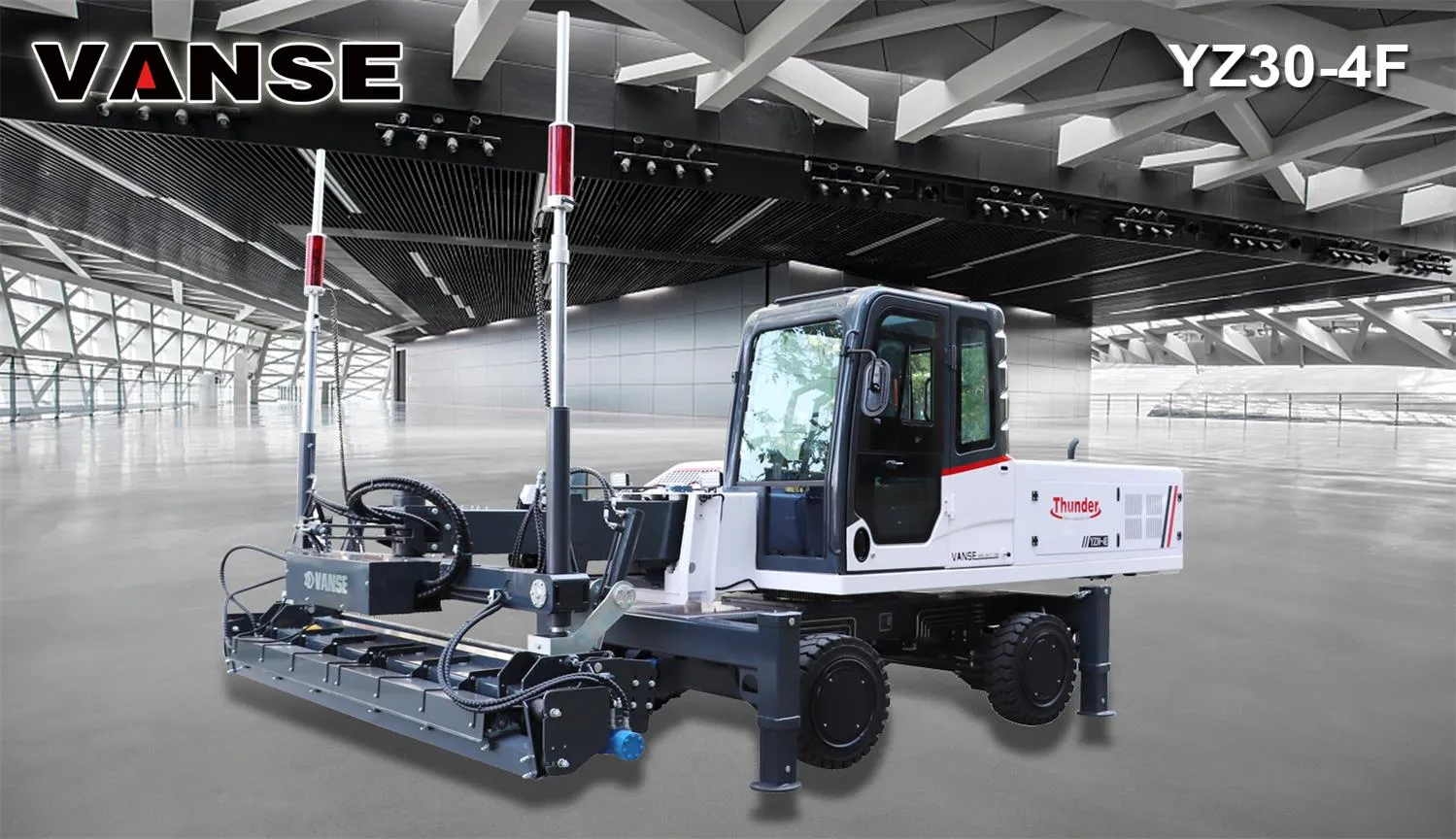
At present, the pace of economic construction is constantly accelerating, and the use of laser leveling machines is naturally increasing. With the increasing precision of road leveling, the use requirements and accuracy of laser leveling machines are also increasing. However, in order to save costs, we must pursue the extension of the service life of the product. In order to help you use the laser leveling machine better, the following article will mainly introduce some methods to extend its service life.
Methods to extend the life of the laser leveling machine:
1. Before starting the laser leveling machine, check whether the hydraulic oil of the hydraulic station, the gear oil of the reduction box, and the transmission box are full.
2. Before starting the main motor, check and adjust the turning angle and adjust the working pressure of the hydraulic system, inject lubricating oil into each lubrication point, and check the operation of the mechanical transmission part of the leveling machine to make it flexible in transportation and installation.
3. Operators should wear labor protection supplies and must not leave their posts or go to other posts after starting the machine.
4. After the oil temperature and oil pressure of the hydraulic station are stable, the upper straightening roller is lifted to the initial position, and the material is fed manually. After the plate is sent through the straightening roller, the upper straightening roller is pressed down and clamped.
5. Start the main motor of the laser leveler. The plate moves forward and is straightened at the same time. The motor stops, the straightening roller stops straightening, the upper straightening roller is lifted, and the straightened steel pipe is sent out.
6. The motor of the laser leveler stops, the straightening roller stops straightening, and the next straightening program instruction is repeated.
7. After stopping, turn off the main power supply and do not change the program controller at will.
Methods for maintaining precision laser levelers:
1. The connection between the supercharger and the intake and exhaust pipes of the laser leveler must be tight and cannot leak. If there is a leak between the exhaust pipe and the exhaust turbine, the efficiency of the supercharger will be greatly reduced, and the exhaust temperature of the diesel engine will rise sharply, damaging the valve and supercharger.
2. Before starting a new machine, fill the supercharger and supercharger oil filter with clean oil to ensure that the supercharger bearing can be lubricated as soon as the diesel engine starts. After the car has traveled 8000 to 10000 km, the supercharger oil filter element must be replaced.
3. Before the diesel engine of the laser leveling machine is shut down, it should be operated at idle speed for 3 to 5 minutes to reduce the speed and temperature of the supercharger, and monitor the sound of the supercharger operation. If any abnormality is found, the machine should be stopped for inspection. If the supercharger rotor is not flexible and there is a jamming or wear sound, it must be sent to a qualified maintenance station for repair.
4. After the laser leveling machine works for every 500 hours or 30,000 km, the clearance on the supercharger rotor shaft should be checked, and the dust and carbon deposits on the compressor turbine shell and rotor blades should be removed. At this time, the turbocharger should be removed from the diesel engine and the metal gasket between the supercharger exhaust pipe should be replaced. Mechanical methods are not allowed to remove the deposits on the rotor parts, but gasoline or other detergents for cleaning aluminum parts should be used.
In order to help everyone better use the laser leveling machine, the above content mainly introduces methods to improve the service life of the equipment, and I hope it will be helpful to you. I also hope that you can continue to pay attention to our company's official website, where you will see more news about the leveling machine.
Thanks to All the Friends Who Support and Trust Shandong Vanse Machinery Technology Co., Ltd.
If you want to know more about Shandong Vanse Machinery Technology Co., Ltd. or have any questions, please feel free to contact us:
Our Factory
Shandong Vanse Machinery Technology Co., Ltd.








Share this article

About the Author: Shandong Vanse Machinery Technology Co., Ltd.
Shandong Vanse Machinery Technology Co., Ltd. is a high-tech manufacturer specializing in concrete construction machinery, including laser screeds and related equipment. The company integrates R&D, production, and global sales, with products exported to over 60 countries and widely used in infrastructure projects worldwide.
Previous Post
Next Post
Related Articles
You Might Also Like
How to ensure the safety of laser leveling machine during construction?
– Reasonable center of gravity design: The laser leveling machine should be designed to ensure that the center of gravity is low and reasonably distributed, so that it can effectively prevent rollover during operation, especially when working on uneven ground or when the machine is turning. Before the equipment is put into use, it is necessary to check whether its center of gravity related parameters meet the design requirements. For example, for large laser leveling machines, the center of gravity is located in the center area of the bottom of the machine by reasonably arranging the positions of components such as the engine and working device. – Good support device: The support legs or stabilizers of the machine should be able to work normally. Before construction, check whether the support legs are flexible and the locking device is reliable. When the laser leveling machine is working on a slope or does not move for a long time for fixed-point construction, a stable support device can prevent the machine from accidentally sliding or shaking. – Guardrails and protective covers are installed in place: For the rotating parts, transmission parts (such as sprockets, pulleys, etc.) of the machine, and moving parts such as scrapers, sturdy guardrails and protective covers should be installed. These protective devices should be able to withstand certain external impacts and be firmly installed to prevent loosening due to vibration and other reasons during construction. For example, a guardrail should be set at the edge of the scraper, and the height should meet safety standards, which can prevent operators from accidentally touching the scraper without affecting the construction line of sight. – Regularly check the wear of mechanical parts: Mechanical parts will wear after long-term use. For example, excessive wear of the scraper may reduce work efficiency and even cause the risk of breakage. The degree of wear of the parts should be checked regularly, and the parts should be replaced in time according to the wear limit. For example, an inspection plan should be formulated to check key parts such as scrapers and travel wheels every certain working hours (such as 100 hours) and record wear data. – Operation skills training: Operators should receive professional training, be familiar with the functions of various operating buttons and handles of the laser leveling machine, and master the correct operation methods. The training content includes various aspects of the machine's start, stop, travel, and leveling operations. For example, during the training process, operators should practice multiple times in an environment that simulates the construction site to master the operating skills under different ground conditions. – Safety knowledge education: Operators are given comprehensive safety knowledge education, including possible safety risks of the equipment and safety precautions at the construction site. For example, operators are informed that when the laser leveler is working, people around should keep a certain safe distance to prevent being hit by the machine; when the equipment is abnormal, how to properly make an emergency stop and other safety knowledge. At the same time, operators should obtain the corresponding operation qualification certificate to ensure that they have the ability to operate safely. – Safety helmets and protective shoes: Operators must wear safety helmets that meet the standards to prevent being hit on the head by falling objects from heights at the construction site. Protective shoes should have anti-slip and anti-smashing functions. When walking in the working area of the machine, avoid slipping or being hit by heavy objects on the feet. – Earplugs and goggles: The laser leveler will generate noise during operation, and long-term exposure may cause damage to the operator's hearing, so earplugs are required. At the same time, in certain construction environments, such as cutting materials or when there is a possibility of foreign objects splashing, goggles can protect the eyes from injury. – Clearing site debris: Before construction, the construction site should be thoroughly cleaned to remove stones, wood blocks, metal fragments and other debris on the ground. These debris may affect the normal operation of the laser leveler and even damage the parts of the machine. For example, when constructing on a site after the demolition of an old building, carefully clean up the construction waste and ensure that the ground is level before starting construction. – Marking underground obstacles: If there are obstacles such as underground pipelines and cables on the construction site, they should be clearly marked on the ground. Warning stakes, colored markings and other methods can be used to remind operators to avoid them. During the construction process, communicate with relevant departments to obtain detailed location and depth information of underground obstacles to avoid the machine from damaging underground facilities during construction and causing safety accidents. – Setting safety distance: Set a safety distance around the laser leveler. Generally, a safety range of at least 2-3 meters is maintained around the machine. Unrelated personnel are prohibited from entering this range to prevent being hit by the machine or injured by splashing materials during construction. Warning tapes, fences and other facilities can be used for isolation. – Divide the construction area: For large construction sites, divide different construction areas, such as concrete pouring area, leveling area, material stacking area, etc. Maintain reasonable passages between each area to ensure that material transport vehicles and construction equipment can pass safely. At the same time, mark the degree of danger in different areas, such as marking warning information such as "Beware of the collapse of stacked materials" in the material stacking area. – Insulation inspection: Regularly check the insulation performance of the electrical system of the laser leveler, including wires, cables, motors and other components. Use tools such as insulation resistance meters to detect whether the insulation resistance meets safety standards. If the insulation resistance is too low, it may cause leakage and cause electric shock accidents. For example, conduct an insulation inspection once a month, record the inspection data, and repair or replace components with reduced insulation performance in a timely manner. – Grounding protection: Ensure that the electrical equipment of the laser leveler has good grounding protection. The grounding device should be firmly connected and the grounding resistance should meet the specified requirements. In the event of an electrical fault, grounding protection can introduce current into the earth to prevent electric shock to operators and damage to equipment. – Laser radiation limit: The laser radiation intensity of the laser transmitter should comply with national safety standards. When selecting equipment, you should choose a laser transmitter that has been safety certified, and its laser wavelength, power and other parameters should be within the safe range. For example, for a laser leveler used for floor construction, the laser radiation intensity should be controlled within a range that will not cause harm to human eyes and skin. – Laser warning signs: Set up obvious laser warning signs around the laser transmitter and construction area to inform personnel to pay attention to laser radiation. The signs should include information such as laser hazard levels and protective measures. At the same time, operators should be trained in laser safety knowledge, such as not looking directly into the laser beam and avoiding exposure to laser radiation when the laser is working.Are concrete laser leveling machines worth it
Excellent question. This is a common dilemma for contractors, serious DIYers, and farmers. The short answer is: Yes, they are absolutely worth it for professionals and for specific large-scale DIY projects. Let's break down the value proposition, the costs, and who should (and shouldn't) buy one. Also called a laser grader or concrete leveling screed, it's a machine that uses a rotating laser level and a sensor-equipped drag blade or screed to automatically grade soil or strike off concrete to a perfectly level or sloped plane. The operator sets the laser, and the machine does the work, moving material to achieve the specified grade. Unparalleled precision and consistency: This is the biggest selling point. You will achieve an extremely high level of flatness that is very difficult to achieve by hand, especially in large areas. This is crucial for warehouse floors, large courtyards, and any drainage or subsequent floor installation projects. Massive Time and Labor Savings: For large slabs (e.g., 1,000+ sq. ft.), a laser grader can do in 1-2 hours what would take a skilled 4-5 person crew using manual screeds and bull floats all day. It reduces the need for a large, highly experienced finishing crew. Reduced Physical Strain & Skill Dependency: It takes much of the "art" and back-breaking labor out of achieving a flat slab. The operator needs to understand the machine and concrete basics, but doesn't need the same level of finishing intuition as a master concrete finisher. Material Efficiency: By precisely cutting to grade, you can often use less concrete because you're not over-pouring to compensate for low spots. Precise subgrade preparation also saves on base material. Versatility: Most machines can handle both fine grading of compacted sub-base (dirt/gravel) and striking off/pouring concrete. This one-tool-does-both capability is a huge efficiency gain on a job site. Professional Credibility and Competitive Edge: Offering laser-graded flatwork is a major marketing point and allows you to bid on larger commercial or high-end residential projects that demand superior flatness. High initial investment: A new professional-grade machine may cost more than 40,000 US dollars. Even smaller riding models start at tens of thousands of dollars. Although the price of second-hand machines is reasonable, there is a risk of maintenance. Not for Small Jobs: The setup time (tripod, laser, calibration) means it's inefficient for tiny pours like a single sidewalk slab or a small porch. It shines on open areas. Learning Curve and Maintenance: You need to learn to set up the laser plane, operate the machine, and perform basic maintenance. It's a piece of mechanical/electronic equipment that can break down. Transportation: These machines are heavy and require a trailer and a capable vehicle to move them. Doesn't Replace All Skill: You still need a crew to place concrete, run vibrators, edge, and finish (broom, trowel) behind the machine. It doesn't automate the entire process. Professional Concrete Contractors: If you pour slabs for garages, warehouses, basements, or large driveways regularly, it's a no-brainer. The ROI in labor savings and competitive advantage is rapid. Site Preparation & Grading Contractors: For precise grading of building pads, sports fields, or arena floors before concrete. Large-Scale Agricultural Operations: For leveling barn floors, silage pads, or large equipment pads. The Extremely Serious DIYer/Homeowner: Only if you have a massive project (e.g., grading and pouring a 2,000+ sq. ft. shop yourself) and value perfection over cost. For 99% of homeowners, renting is the answer. This is often the perfect solution. Rental yards commonly carry laser screeds. You can typically rent one for: $300 – $800 per day $1,000 – $2,000 per week For a one-off large project (e.g., pouring your own backyard shop), renting for a day is extremely cost-effective and gives you all the benefits without the capital outlay and storage/maintenance headaches. Scenario Recommendation Professional Contractor YES. A business investment with clear ROI. Start by renting to try it, then buy when your volume justifies it. Regular Large DIY Projects POTENTIALLY. If you're building multiple outbuildings over years, buying used could pay off. One Big DIY Project RENT. This is the smartest financial move. Small Projects/Patios NO. Stick to traditional screeding methods. Final Thought: For anyone whose business or major project involves creating flat surfaces, a concrete laser leveling machine isn't just a tool-it's a force multiplier. It elevates quality, saves money on labor, and reduces physical wear on crews. For them, it's not just worth it; it's essential. For everyone else, the rental market makes the technology accessible without the long-term commitment. Note: The parameters provided in this document are for reference only and are not mandatory. Due to differences in technical characteristics between different brands and models of laser levelers, please consult the manufacturer for a suitable solution before actual operation. This reference document assumes no responsibility for any issues arising from failure to follow the manufacturer's instructions.Standard use of concrete laser leveling machine
Concrete laser leveling are core equipment for modern, large-scale floor construction. Their proper use directly impacts the flatness, levelness, and overall construction quality of the floor. The following details four aspects: construction preparation, operating procedures, precautions, and post-construction maintenance. Proper preparation is half the battle for a successful construction project. Any negligence during this stage can lead to construction interruptions or quality defects. Compaction: The foundation base (usually a gravel or lime soil layer) must be fully compacted to prevent future settlement. Flatness: The base must be initially leveled, with minimal elevation deviation to minimize concrete waste. Cleaning and Wetting: Clean the base to ensure it is free of debris and loose dust. Before pouring concrete, the base should be moderately moistened (but not with exposed water) to prevent it from absorbing moisture from the concrete too quickly. The top elevation of the formwork must be consistent with the designed floor elevation. The formwork must be strong and stable, able to withstand the weight and vibration of the leveling and prevent deformation. The formwork must be supported straight and the joints tight. Establishing a benchmark network: Set up stable benchmark points outside the construction area according to the construction drawings. Mount the laser transmitter in the center or at a high point within the construction area, ensuring its field of view covers the entire work surface and is unobstructed. Adjust the laser transmitter to its level and design elevation. This is the key to the accuracy of the entire construction process and must be carefully calibrated by a dedicated person. Secure the laser transmitter securely to prevent movement due to vibration or impact during construction. Install protective equipment if necessary. Mix Proportion: The slump of concrete is crucial, generally recommended to be between 140-180mm. Excessive slump results in excessive fluidity, making it difficult for the laser leveling to operate; too little slump results in poor fluidity and difficulty leveling. Aggregate: The maximum aggregate particle size should be minimal (usually no larger than 25mm). Supply: Ensure a continuous supply of concrete to avoid cold joints during construction. Fuel/Battery: Check the leveling machine's fuel or battery level. Cutter Head Inspection: Check the leveling blade (cutter head) for wear and replace if necessary. Sensitivity Calibration: Start the leveling machine and check whether its laser receiver is receiving signals properly and raising and lowering the machine according to the laser plane. Perform lift and lowering tests in both manual and automatic modes to ensure sensitive and accurate response. The concrete truck unloads the material at the construction site. Use a large rake or small excavator to initially spread the concrete to the approximate height. The pile should be slightly higher than the designed elevation (approximately 3-5 cm higher). Place the laser leveling machine astride a pre-installed formwork or on pre-paved concrete. Lower the leveling blade until it contacts the concrete surface. Turn on the laser receiver to confirm it is receiving the laser signal. The machine will then automatically adjust the blade to the precise elevation set by the laser plane. Select a mode: There are usually two modes: automatic and manual. In automatic mode, the machine automatically controls the scraper height based on the laser plane; in manual mode, the operator manually controls it. Start leveling: The scraper at the front removes any raised concrete and fills any low spots. Simultaneously, a high-frequency vibrating plate behind the leveling machine vibrates, compacts, and raises the concrete. The vibration frequency should be adjusted according to the concrete's fluidity. Travel Path: An overlapping travel path is typically used, meaning the next travel overlaps the previous travel path by approximately 10-20 cm to ensure no gaps are missed. Operator Coordination: The operator must follow the machine and monitor the concrete's condition. If any areas are short of concrete, they should be replenished manually. Excessive material should be removed promptly to avoid affecting the levelinging effect. Corners and edges where the laser leveling cannot reach require manual levelinging using a scraper (rebar) against the formwork. The level should be aligned with the machine-leveled area. For very large areas, the work should be divided into grids and constructed sequentially. The interval between adjacent grids should be controlled before the concrete begins to set. Daily Calibration: The laser transmitter and leveling machine's measurement system must be recalibrated before each day's work. Preventing Interference: Avoid frequent movement of people or equipment in the laser path, which could interfere with the signal. Dedicated Supervision: Assign a dedicated person to supervise the laser transmitter to prevent it from being disturbed. Strictly control slump and inspect each load. Substandard concrete will be rejected. Ensure the continuity of concrete pouring to avoid cold joints. Operators must undergo professional training and hold a license. Workers on site must wear safety equipment, especially insulated shoes, to prevent electric shock and concrete corrosion and injuries to the feet. Pay attention to cables around the equipment to prevent them from being crushed. Strong winds can affect laser signal stability, so construction should be conducted with caution or suspended. High temperatures and strong winds can accelerate moisture evaporation from the concrete surface, so timely maintenance is required to prevent cracking. After each use, the leveling must be cleaned immediately and thoroughly, especially on the scraper, vibrating plate, travel wheels, and sensors. Solidified concrete can damage the equipment and affect accuracy during the next use. When flushing, avoid direct high-pressure water jets onto delicate components such as bearings, motors, and laser receivers. Inspection and Maintenance: Regularly lubricate and maintain the engine, hydraulic system, and vibrating bearings according to the manufacturer's instructions. Check the scraper for wear and replace or rotate it promptly. Store the equipment in a dry, level area. Stow the outriggers and reduce tire pressure. Prevent rust on exposed metal parts. Proper use of a concrete laser leveling is a systematic process, requiring meticulous preparation, precise operation, strict material control, and thorough maintenance. Following these guidelines not only significantly improves floor construction quality and efficiency (flatness can reach over 3mm/3m), but also effectively reduces labor costs and minimizes material waste, making it an indispensable process in modern floor construction. Note: The parameters provided in this document are for reference only and are not mandatory. Due to differences in technical characteristics between different brands and models of laser levelers, please consult the manufacturer for a suitable solution before actual operation. This reference document assumes no responsibility for any issues arising from failure to follow the manufacturer's instructions.