Technical Knowledge
Analysis on rapid construction technology of high-flatness flooring in large-area automobile workshops
▶1◀ Technical Overview
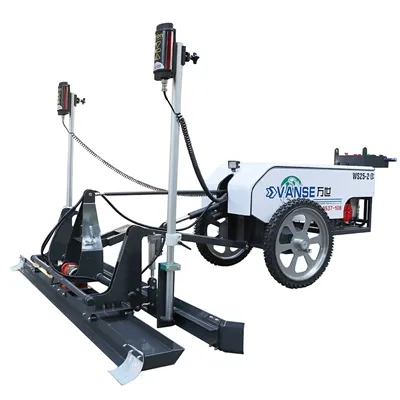
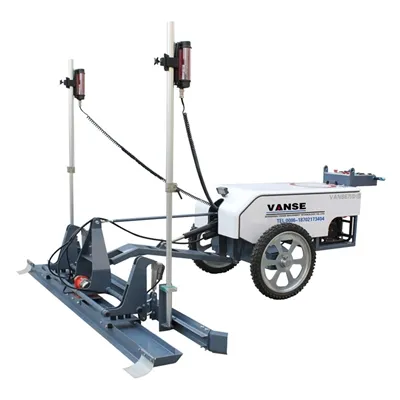
The rapid construction technology of large-area and high-flatness floors in automobile factories is an efficient and high-precision floor construction method. It is mainly used in floor construction of industrial factories such as automobile manufacturing and machinery manufacturing. This technology uses advanced laser leveling technology and equipment to achieve high flatness requirements for large-area floors, while improving construction efficiency and shortening the construction period.
▶2◀ Key points of construction technology
1. Before construction
, clean and level the construction site to ensure that there are no debris or bumps on the ground. At the same time, according to the design requirements and construction conditions, select the appropriate laser leveler and other auxiliary equipment, and carry out inspection and debugging.
2. Concrete mix proportion design:
Carry out concrete mix proportion design based on the design requirements and material properties of the floor. While meeting the strength requirements, optimize the mix ratio, reduce the amount of cement, reduce the heat of hydration, and avoid cracks in the concrete.
3. Concrete pouring and leveling shall adopt the method of large-area concrete pouring,
and concrete shall be poured continuously according to the construction sequence. A laser leveler is used to initially level, vibrate and finely level the concrete to ensure the flatness and compactness of the floor. During the leveling process, pay attention to controlling the traveling speed and elevation of the leveling head to avoid excessive vibration or vibration leakage.
4. Surface treatment and maintenance:
After the concrete is initially set, use a polishing machine to polish the floor surface to improve the gloss and wear resistance of the floor. During the maintenance period, keep the floor surface moist and take appropriate moisturizing measures to prevent cracks.
5. Quality inspection and acceptance
After the floor construction is completed, quality inspection and acceptance will be carried out. The testing content includes the flatness, strength, wear resistance and other aspects of the floor. For unqualified floors, promptly handle and repair them.
▶3◀ Technical advantages
1. High flatness:
Using laser leveling technology, high-precision floor flatness requirements can be achieved and the visual effect and performance of the floor can be improved.
2. Rapid construction:
Compared with the traditional manual scraping method, the laser leveling machine has higher production efficiency, can shorten the construction period and reduce the construction cost.
3. High degree of automation:
Laser leveling machines and other equipment have a high degree of automation, which can reduce manual operations and human errors and improve construction quality.
4. Wide scope of application:
This technology is suitable for floor construction of various large-area industrial plants with high flatness requirements, such as automobile manufacturing, machinery manufacturing, electronics industry and other fields.
5. Environmentally friendly:
There is no noise, no vibration and no pollution during the construction process, which is in line with the concept of green construction.
To sum up, the rapid construction technology of large-area and high-flatness floors in automobile workshops has significant advantages and characteristics. Through reasonable construction preparation, concrete mix ratio design, pouring and leveling surface treatment and maintenance, as well as quality inspection and acceptance and other construction technical points, the quality and efficiency of floor construction can be effectively improved. In the future, with the continuous advancement of technology and the expansion of application scope, this technology will play a more important role in industrial construction fields such as automobile factories.
Thanks to All the Friends Who Support and Trust Shandong Vanse Machinery Technology Co., Ltd.
If you want to know more about Shandong Vanse Machinery Technology Co., Ltd. or have any questions, please feel free to contact us:
Our Factory
Shandong Vanse Machinery Technology Co., Ltd.








Share this article

About the Author: Shandong Vanse Machinery Technology Co., Ltd.
Shandong Vanse Machinery Technology Co., Ltd. is a high-tech manufacturer specializing in concrete construction machinery, including laser screeds and related equipment. The company integrates R&D, production, and global sales, with products exported to over 60 countries and widely used in infrastructure projects worldwide.
Previous Post
Next Post
Related Articles
You Might Also Like
In what scenarios are concrete laser levelings widely used?
Concrete laser levelings are widely used in a variety of scenarios, mainly including the following aspects: 1. Industrial plants and workshops: These places often require large-area, high-precision concrete floors, such as large industrial plants, workshops and automated three-dimensional warehouses. Laser leveling machines can quickly and accurately complete the leveling work of these floors. 2. Electronic appliances and clean workshops: For places such as electronic appliances and clean workshops that require a highly clean environment, laser leveling machines also play an important role because they can provide precise floor flatness and meet cleanliness requirements. 3. Large warehouse supermarkets, logistics centers and exhibition centers: These places also require large areas of concrete floors and high flatness to ensure smooth transportation of goods and safe walking of personnel. 4. Outdoor floors: Outdoor places such as docks, container yards, freight yards, airport runways, aprons, parking lots, squares, residential floors, municipal roads and other outdoor places also require high-quality concrete floors. In these places, laser leveling machines can achieve high-quality leveling of outdoor floors through its high-precision measurement and control technology. In summary, concrete laser leveling machines are widely used in various fields because of their efficient and accurate leveling effects. Places that require high-quality concrete floors.How to do a good job of laser leveling machine construction cooperation ?
In order to ensure the construction quality of concrete floors, more and more construction units are choosing to use precision laser leveling machines to lay concrete floors. However, in the process of actual construction work, because some enterprises do not cooperate in the construction work in place, or do not strictly follow the regulations and operate correctly, the problem of low construction quality of concrete floors sometimes occurs. In order to avoid the recurrence of this kind of situation, our company has detailed some construction cooperation matters during the construction process of the laser leveling machine as follows, and we hope that the relevant construction personnel must keep in mind. ❖Wire setting and leveling at the wall: Since the laser leveling machine at the wall cannot be touched, manual leveling is required within 200mm from the wall, so line setting is required as a reference for manual leveling. At the same time, 2 to 3 benchmark points (ground design elevation, ie ±0.0) that will not be disturbed during the construction period are set up for the laser leveling machine at one time, and good communication with each other is required. Bench point accuracy ±1mm. ❖Set formwork (steel formwork, position according to design requirements) along the periphery of the column to form separation joints. The elevation of the top surface of the formwork should be controlled within +0mm and -2mm, so as not to affect the flatness of the joints. ❖Install the construction joint formwork (steel formwork is recommended) along the range to be poured on the day, and the formwork should reserve holes with a spacing of 300mm for the insertion of dowel bars. The elevation of the top surface of the formwork should be controlled within +0mm and -2mm, so as to avoid large deviations in the flatness of the joints of different warehouses. ❖Establishment of the laser transmitter: It is intended to be erected on the column. The specific position should be set in a better position according to the amount of shop injection on the day. If it cannot be erected on the column, it should be erected on a special tripod. ❖In order to ensure the quality of concrete floor paving, each group needs to arrange 10-12 workers to cooperate to level the surface of the concrete paved on the ground, so that the stacking height is slightly higher than the design level (about 20-30mm). At the same time, for the parts near the wall, the outcropping pipeline and the surrounding formwork, arrange 2 workers to manually smooth the concrete material about 20~30cm away from the wall (formwork) side (using a 2m scraper and an iron trowel). Workers responsible for plastering must be trained skilled plasterers. These workers must obey the command and follow the arrangement in order to ensure the quality of the construction. ❖Since the thickness of the concrete reaches 200mm, and due to the setting of steel mesh, in order to ensure that the concrete is compacted by vibration, this project needs to arrange a vibrator to cooperate with the vibration. At the same time, in order to ensure that the protective layer of steel mesh reaches the thickness required by the design (70mm), it is necessary to arrange in advance to manually lift the steel mesh and place support blocks in the area to be laid. ❖The width of the concrete material laid on the platform is required to be no more than 5m each time, and the length is subject to the formwork boundary. The construction direction is from left to right (along the short side direction), from front to back (along the long side direction). The daily injection volume is recommended to be 1200~1500㎡. Calculated on the basis of 12 hours of working time per day, this requires a feed rate of 30 to 40m³. ❖Others: In order to ensure the flatness of the ground, special attention should be paid during the construction of the laser leveling machine: the slump of the concrete sent to the platform must be consistent each time; the concrete feeding speed must reach 40m/h or above, and each batch of concrete The initial setting time must be consistent; ensure that the formwork elevation is accurate, and cannot be disturbed during construction; the environment is coordinated. The concrete floor that has just been constructed cannot be exposed to sunlight, wind, rain, etc. that are unfavorable to concrete health.Key points for daily maintenance of concrete laser leveling machine
Concrete laser leveling machines are crucial for efficient concrete paving and leveling. Daily maintenance directly impacts their accuracy, service life, and construction safety. The following are key points for daily maintenance, covering pre- and post-operation inspections, key component care, fluid management, and storage procedures: A comprehensive inspection before operation is the first line of defense to prevent failures, and the following should be paid special attention to: Inspect the machine body and frame for deformation, cracks, or looseness. Check that connecting bolts (such as those securing the scraper and vibrator) are tight. If loose, tighten them to the specified torque. Check the housings of precision components, such as the laser transmitter and receiver, for integrity and the lenses for stains, scratches, or damage to ensure signal reception is not interfered with. Before starting the engine, check that the fuel, engine oil, and coolant levels are within standard ranges. Use clean diesel fuel of the specified grade to prevent impurities from clogging the fuel lines. Check the quality of the engine oil. If the oil is found to be emulsified, blackened or contains impurities, the oil and oil filter must be replaced in time. Check the hydraulic oil tank level and inspect the hydraulic oil for clarity, foam, impurities, or discoloration (normal hydraulic oil is light yellow or amber). If contamination is severe, replace the hydraulic oil and filter. Inspect the hydraulic lines and joints for leaks and check for aging and wear. If any problems are found, replace seals or lines immediately. Test the transmission components (such as chains and gears) of the travel drive and leveling mechanisms for smooth operation, abnormal noise, and proper chain tension. Add grease if necessary. Check the laser transmitter for sufficient power and stable signal transmission. Calibrate the laser receiver's sensitivity to ensure leveling accuracy meets requirements. Check the control panel buttons and indicators for proper operation, and the wiring harness connections for security and damage or short circuit hazards. Test the emergency stop button to ensure it can immediately shut off power in an emergency, ensuring the safety of equipment and personnel. During operation, it is important to monitor the equipment's operating status in real time to prevent minor faults from escalating into further damage. Operating sound monitoring: During normal operation, the engine, hydraulic pump, and transmission components should produce no abnormal noise. If any unusual noises (such as metallic friction, banging, or high-frequency whistling) are detected, the machine must be immediately stopped for inspection to identify the source of the problem (such as bearing wear, component seizure, or abnormal hydraulic system pressure). Temperature monitoring: Observe the engine water temperature, engine oil temperature, and hydraulic oil temperature to ensure they are within the normal range (generally 80-95°C for engine water and 30-60°C for hydraulic oil). If temperatures are excessively high, the machine must be shut down for cooling and the cooling system must be checked (e.g., whether the radiator is clogged and the fan is functioning properly) to prevent component damage caused by overheating. Performance monitoring: Pay attention to travel speed, whether the leveling mechanism is rising and falling smoothly, and whether the vibration frequency is normal. If movement is sluggish, weak, or irregular, this may indicate a hydraulic system leak, insufficient pressure, or a transmission component failure, requiring prompt shutdown and inspection. After completing a job, thoroughly clean the equipment and perform targeted maintenance to prevent component damage from concrete solidification and impurity accumulation. Use a high-pressure water jet to rinse concrete residue from the machine body, leveling base, vibrator, scraper, and other components. Pay special attention to removing dust and stains from the laser receiver and sensor to ensure proper signal transmission. Clean dust and debris from the engine, hydraulic oil tank, and radiator to maintain proper heat dissipation. Inspect and clean the air filter element. Replace it if severely clogged to prevent insufficient engine air intake, resulting in reduced power or increased wear. According to the equipment manual, add the appropriate type of grease to all lubrication points (such as bearings, pins, chains, gears, and hydraulic cylinder piston rods) to ensure smooth operation of transmission components and reduce wear. Please focus on lubricating the moving joints of the travel mechanism and leveling mechanism. After lubrication, run the operating parts several times to ensure even distribution of the grease. Lower the leveling mechanism to the ground, retract all retractable components, turn off the laser transmitter, and store it properly to avoid damage from collisions. Check the bolts connecting all components for looseness and re-tighten key bolts (such as the leveling mechanism mounting bolts and hydraulic line connectors). Drain the fuel tank for water and sediment. Check the fuel filter for impurities and replace the filter element if necessary. Refill fuel, engine oil, and coolant to standard levels. If hydraulic oil is low, add the same type of hydraulic oil to avoid mixing different grades, which may cause performance degradation. In addition to daily maintenance, regular deep maintenance is required based on the equipment's age or workload. This is generally categorized as weekly, monthly, and quarterly/annual maintenance. Maintenance Cycle Maintenance Details Weekly Maintenance 1. Replace engine oil and oil filter; 2. Check hydraulic system pressure for normal operation and tighten hydraulic line joints; 3. Check chain and belt tension and wear, and adjust or replace if necessary; 4. Test laser system calibration accuracy and recalibrate if deviations are detected. Monthly Maintenance 1. Replace hydraulic oil and hydraulic oil filter, return filter, and suction filter; 2. Inspect hydraulic cylinder piston rod for scratches and deformation, and seals for leakage, and replace if necessary; 3. Check tires and tracks for wear and adjust tire pressure or track tension; 4. Clean or replace the fuel filter and inspect fuel lines for deterioration. Quarterly/Annual Maintenance 1. Thoroughly inspect internal engine components (e.g., valve clearance, piston ring wear), and perform repairs if necessary. 2. Inspect the performance of the hydraulic pump and motor, testing pressure and flow rates to ensure they meet specifications. Repair or replace any degraded performance. 3. Perform a comprehensive flaw detection on structural components, inspecting for cracks and deformation, especially welds, and perform reinforcement if necessary. 4. Calibrate the laser control system and replace any aging sensors, wiring harnesses, and other electrical components. If the equipment needs to be stored for an extended period (over 1 month), the following protective measures must be taken to prevent rust and aging of components: Park the equipment in a dry, ventilated indoor area. If stored outdoors, cover with a tarp to protect it from sunlight and rain. After thoroughly cleaning the equipment, apply anti-rust oil to all exposed metal surfaces (such as piston rods, pins, and chains) to prevent rust. Drain the fuel tank or add fuel stabilizer to prevent fuel deterioration and clogging of the oil lines. Replace the engine oil and hydraulic oil to prevent impurities in the oil from corroding components during storage. Raise the equipment so that the tires and tracks are off the ground to prevent deformation caused by prolonged stress. Raise the leveling mechanism to its highest position and loosen the hydraulic cylinder piston rod to prevent prolonged stress and aging of the seals. Disconnect the negative battery cable or charge the battery regularly to prevent battery damage due to low power. When storing the laser transmitter, remove the battery and store it separately in a dry place. Regularly (monthly) start the equipment and run it for 10-15 minutes to check the operation of all components and ensure that the lubricant is evenly distributed to prevent sticking. Proper Operation: Operators must undergo professional training and strictly follow the equipment manual. Avoid overloading, speeding, and illegal operation (such as forced steering on uneven surfaces or striking the leveling mechanism against hard objects) that may damage the equipment. Parts Management: When replacing parts, use genuine or qualified parts. Avoid using inferior parts that may degrade equipment performance or cause secondary failures. Record and Traceability: Maintain an equipment maintenance log to record the time, content, replaced parts, and troubleshooting of each maintenance session. This facilitates tracking of equipment status, identifies potential issues promptly, and develops targeted maintenance plans. Through the above daily maintenance measures, the failure rate of the concrete laser leveling machine can be effectively reduced, ensuring that the equipment is always in good operating condition, improving construction efficiency and leveling quality, and extending the service life of the equipment. ARMOUR JOINT CONCRETE LASER LEVELING MACHINE POWER TROWEL TOPPING SPREADER