Technical Knowledge
How does the concrete laser leveling machine work?
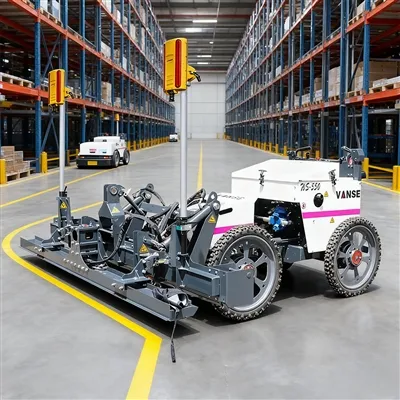
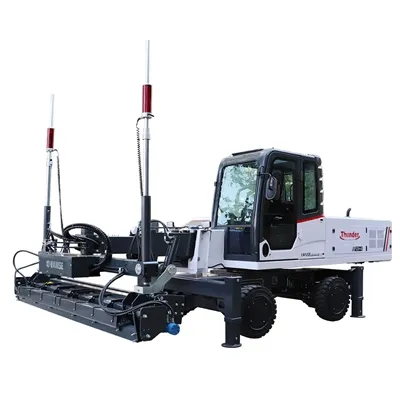
Concrete laser leveling machine is a device that uses laser technology for floor leveling. Its working principle is mainly based on laser measurement and control systems, combined with mechanical automation technology, to achieve high-precision and efficient floor leveling.
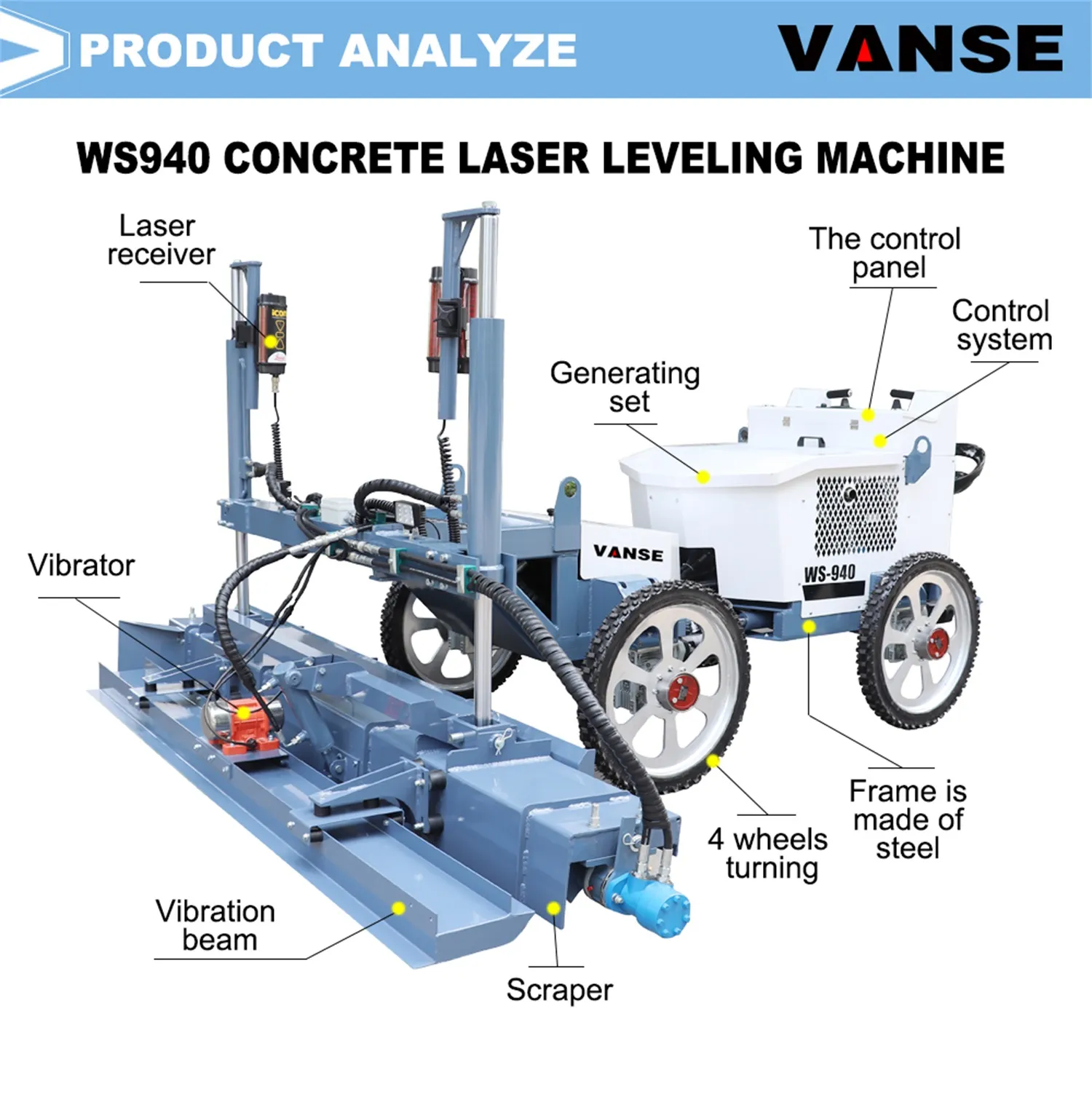
During the specific work process, the laser leveling machine first emits a laser beam through the laser transmitter, which is projected onto the ground to be constructed and received by the laser receiver. The receiver then feeds back the received signal to the control system, and the control system adjusts the position and height of the leveling head based on the feedback signal to ensure that the leveling head always remains at the set elevation position for operation.
The leveling head is the core part of the laser leveling machine. It integrates functional modules such as scraper, spiral and vibrating plate, and can complete the initial leveling, vibration and leveling of concrete at one time. During the leveling process, the role of the scraper and spiral is to evenly distribute the concrete, while the vibrating plate vibrates the concrete to achieve the desired flatness.
At the same time, the laser leveling machine adopts a computer laser control system, which receives and processes laser signals through the laser receiver of the mechanical head to make real-time adjustments at a monitoring frequency of 10 times per second to accurately control the floor elevation. This allows the flatness of the entire floor to be accurately controlled and avoids manual errors and construction joint problems in traditional construction methods.
In addition, in order to achieve large-area construction, laser leveling machines are usually equipped with automatic navigation systems or remote control systems to achieve automated and efficient construction. This construction method can not only improve construction efficiency and shorten the construction cycle, but also reduce manual operating errors and improve construction quality.
To sum up, the working principle of the concrete laser leveling machine is based on the laser measurement and control system. By accurately controlling the floor elevation and flatness, combined with mechanical automation technology, efficient and high-precision floor leveling can be achieved.
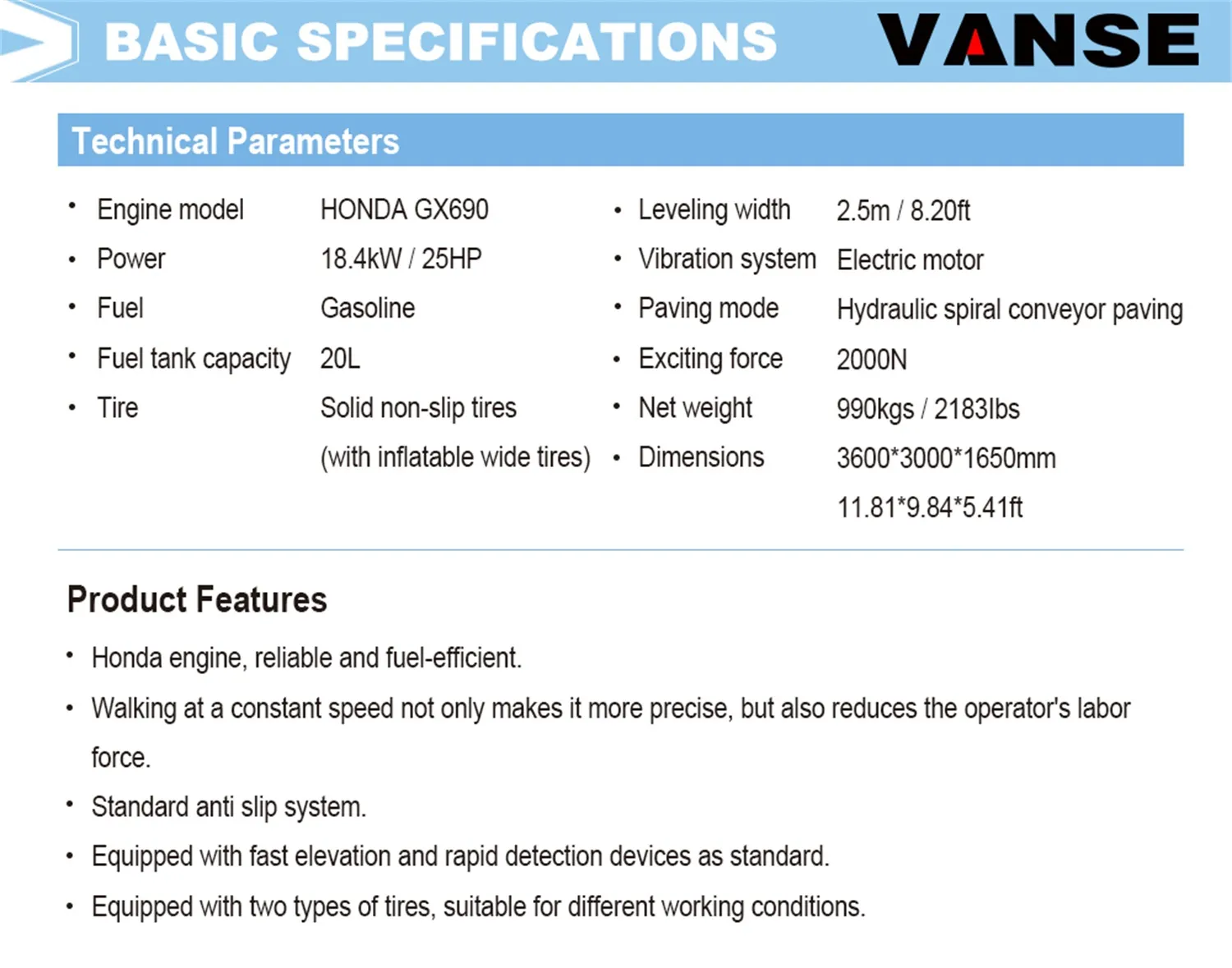
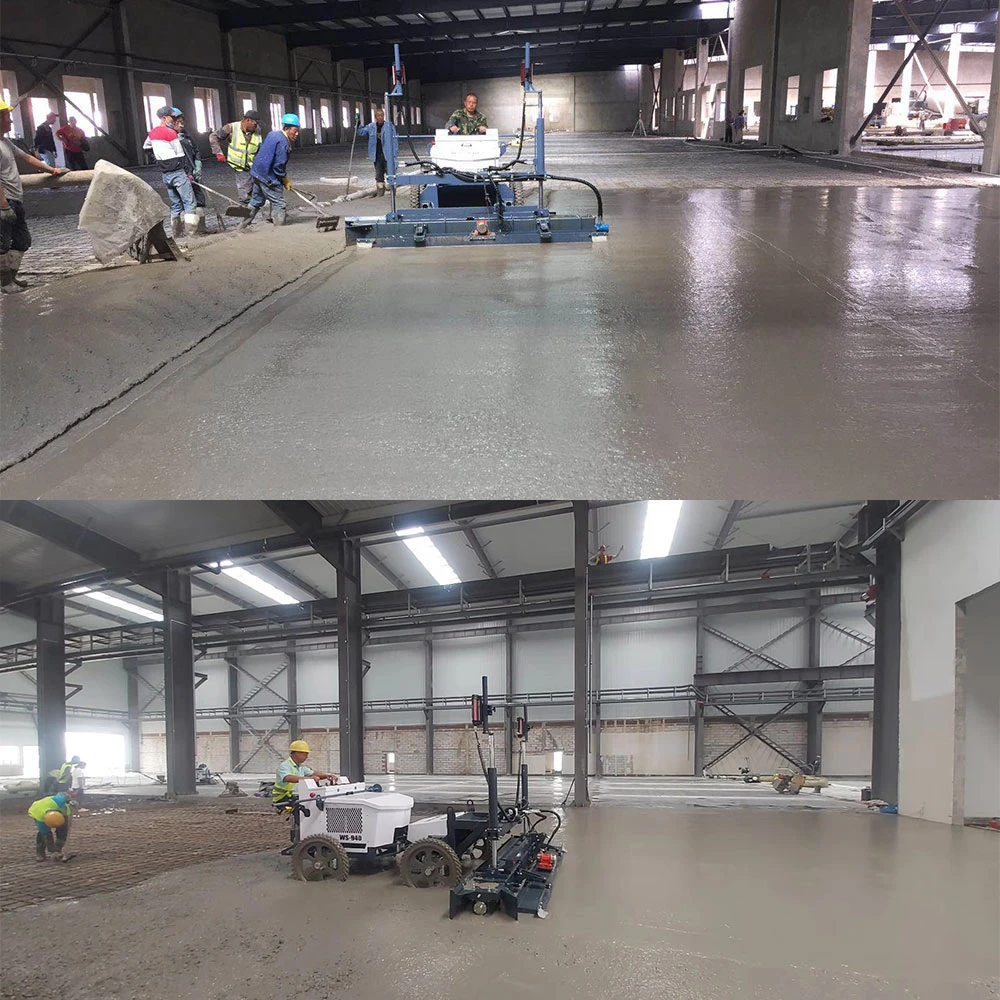
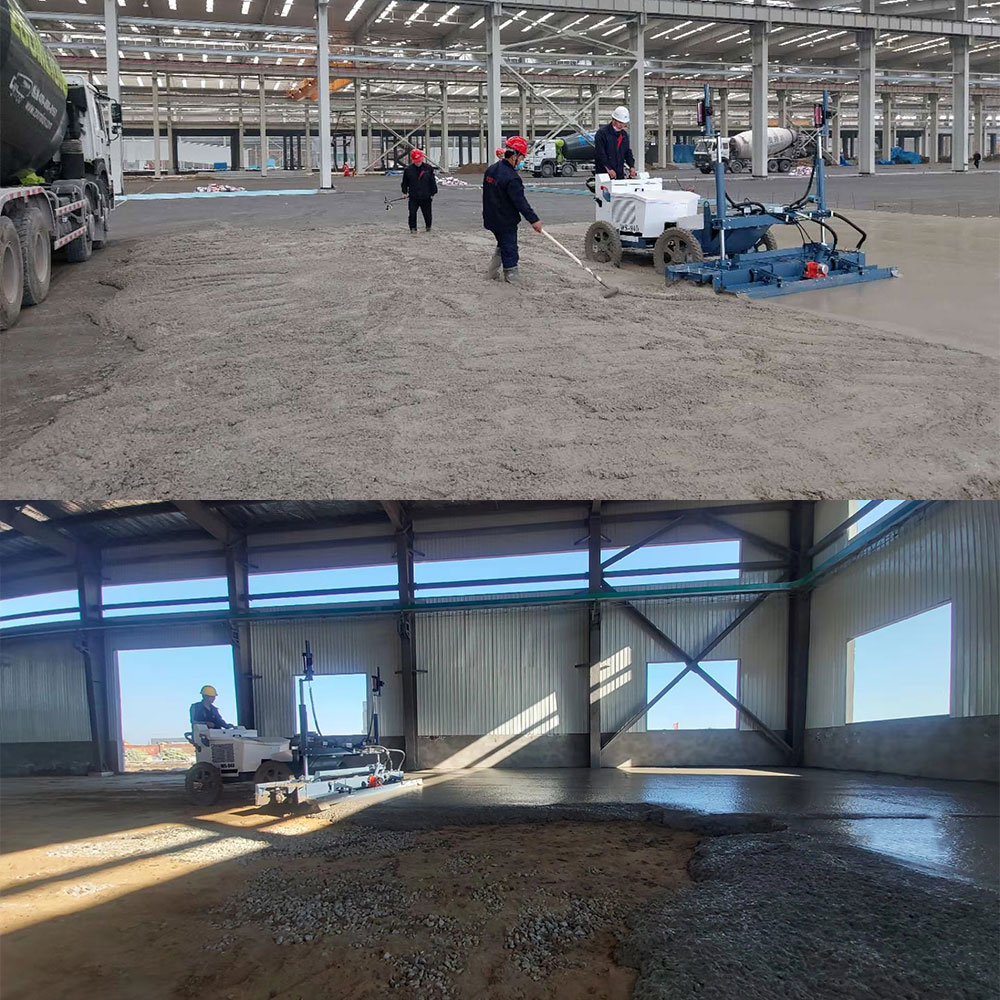
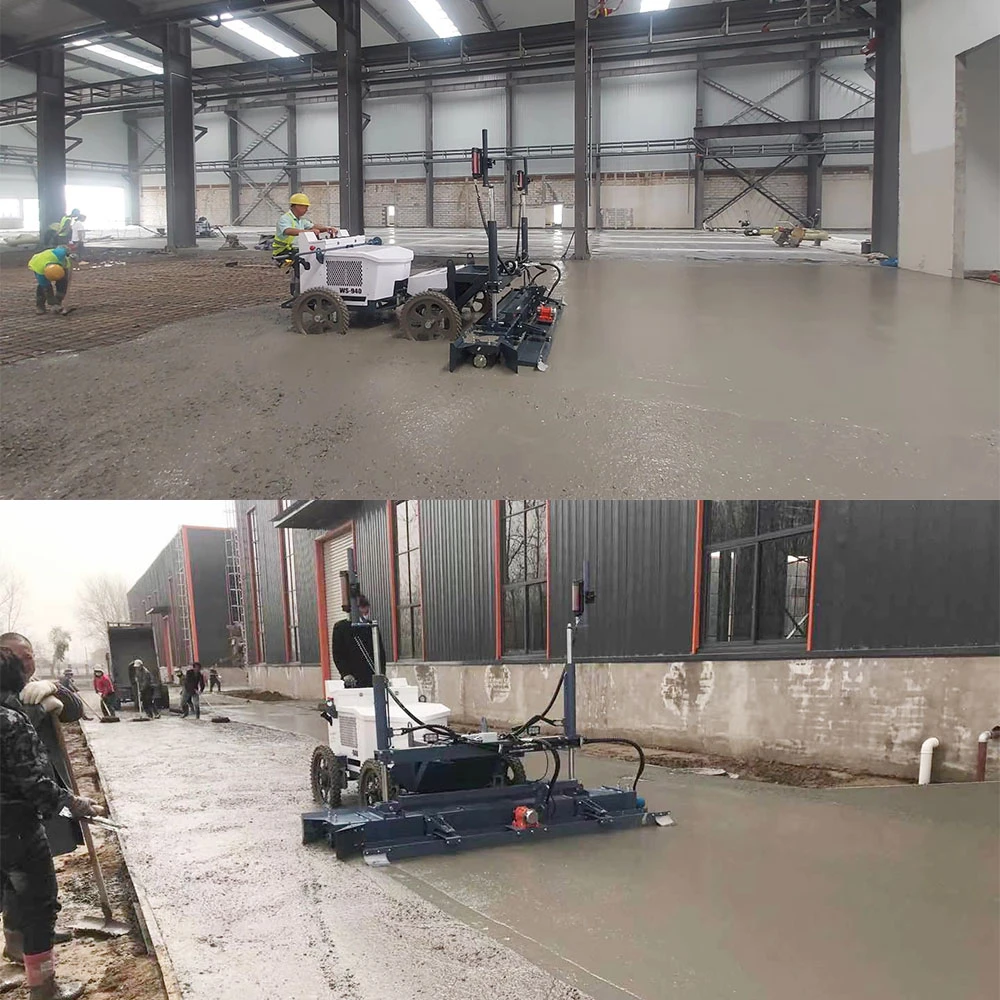
Thanks to All the Friends Who Support and Trust Shandong Vanse Machinery Technology Co., Ltd.
If you want to know more about Shandong Vanse Machinery Technology Co., Ltd. or have any questions, please feel free to contact us:
Our Factory
Shandong Vanse Machinery Technology Co., Ltd.








Share this article

About the Author: Shandong Vanse Machinery Technology Co., Ltd.
Shandong Vanse Machinery Technology Co., Ltd. is a high-tech manufacturer specializing in concrete construction machinery, including laser screeds and related equipment. The company integrates R&D, production, and global sales, with products exported to over 60 countries and widely used in infrastructure projects worldwide.
Previous Post
Next Post
Related Articles
You Might Also Like
How to Control the Quality of Ultra-Large Laser-Leveled Wear-Resistant Concrete Floors
Quality control for ultra-large laser-leveled, wear-resistant concrete floors requires a comprehensive process encompassing "pre-construction prevention, in-construction control, and post-construction acceptance." Combining the technical characteristics (laser precision leveling and the synergistic effect of wear-resistant materials) with the challenges of ultra-large-scale construction (temperature cracking, flatness control, and interface bonding), a control system is established across five core dimensions: personnel, materials, equipment, process, and environment. This can be broken down into the following key steps: Pre-construction preparation for ultra-large flooring directly impacts subsequent quality stability, focusing on addressing three key issues: "unified technical standards, adequate resource allocation, and proactive risk mitigation." Drawing Refinement and Technical Briefing: Based on the building's function (e.g., load and flatness requirements for factories and logistics warehouses must be clearly defined), floor compartment design should be refined (extra-large areas should be divided into 6m×6m or 8m×8m compartments to avoid thermal stress cracking). Key parameters should be clarified, including laser leveling accuracy (typically ±3mm/2m), wear-resistant material dosage (approximately 5-7kg/m2 for metallic aggregates, 3-5kg/m2 for non-metallic aggregates), and concrete strength grade (minimum C30, flexural strength ≥4.0MPa). Technical briefings should be conducted for all employees, with a focus on training laser operators, concrete vibrators, and wear-resistant material spreaders to ensure that all positions understand the key technical aspects of flatness control, wear-resistant layer bonding, and crack prevention. Risk Contingency Plan Development: To address potential issues that may arise during large-scale construction (e.g., insufficient initial setting time for concrete resulting in inability to apply the wear-resistant layer, laser equipment failure resulting in uneven flatness, and cracking due to high summer temperatures), develop a contingency plan: Confirm the initial setting time of concrete with the commercial concrete mixing plant in advance (adjusted to the temperature; ≥4 hours in summer, ≥6 hours in winter), and add a retarder if necessary. Keep one or two spare sets of core concrete laser leveling components (such as laser transmitters and receivers) to prevent interruptions to construction due to equipment failure. Prepare awnings and spray cooling equipment for summer construction, and thermal blankets and electric blankets for winter construction to maintain a temperature difference between the inside and outside of the concrete at ≤25°C. Materials are the core of floor quality. Three key materials, concrete, wear-resistant materials, and surface treatment agents, require full-process inspection: Material Type Key Control Points Inspection Standards Ready-mixed concrete 1. Mix Ratio: Crushed stone particle size 5-20mm (avoid large particles that affect smoothness), sand content 35%-40%; Slump test for each truck upon arrival. Compressive/flexural test blocks are retained according to specifications (one set per 100m³; less than 100m³ is counted as one set). 2. Slump: 120 ± 20mm (slump too large will cause sanding, too small will make vibration difficult); 3. Initial Setting Time: Adapt to the construction schedule (single-chamber construction requires leveling and wear-resistant layer application to be completed before initial setting). Wear-resistant material 1. Composition: Metallic aggregates (such as iron filings and corundum) must have a carbon content ≤ 0.2%, and non-metallic aggregates (such as quartz sand) must have a hardness ≥ Mohs 7; Sampling is randomly sent for inspection upon arrival to test compressive strength (≥60MPa) and abrasion resistance (wear loss ≤0.3g/cm²). 2. Moisture Content: ≤ 1% (avoid clumping that affects spreading uniformity); 3. Adhesion: No risk of delamination at the concrete interface. Interface treatment agent Used at the interface between the concrete base and the wear-resistant layer (if separate-chamber construction requires treatment of the interface between new and old concrete), high adhesion and crack resistance are required. Bond strength is also tested upon arrival (≥1.5MPa). Expired or clumped products are strictly prohibited. The core equipment for laser-leveling wear-resistant flooring is the concrete laser leveling. Its accuracy directly determines the flatness of the floor, so key control measures are required: Equipment Calibration: 24 hours before construction, calibrate the concrete laser leveling blade, vibrator, and laser receiver using a standard calibration ruler (2m straightedge) to ensure the laser transmitter's leveling error is ≤0.1mm/m and the screed blade's flatness error is ≤0.5mm. Equipment Selection: For very large areas (single area ≥1000㎡), a "large concrete laser leveling" (working width ≥2.5m) should be used, combined with a small walk-behind concrete laser leveling for corners (within 300mm of the wall). Equipment Maintenance: Before construction daily, check the equipment's fuel, hydraulic oil, and vibrator motor. After work, clean the screed blade and laser head to prevent concrete residue from affecting subsequent use. Large-scale floor construction requires a "divided-cell flow" approach. The connection between processes within each cell (concrete pouring → laser leveling → wear-resistant layer application → joint cutting and maintenance) is central to quality control, requiring on-site supervision of these five key processes. Separate compartment pouring: Strictly divide the construction area according to pre-designed compartment gaps, using the "skip compartment method" (with ≥48 hours between each compartment) to avoid temperature cracking caused by continuous pouring. The "slant layer method" is used during pouring, with each layer ≤300mm thick. The placement speed is matched to the laser leveling speed (approximately 10-15 m³/h). Vibration Control: After concrete placement, first use an inserted vibrator (vibration interval ≤500mm, vibration time 15-20 seconds, until no bubbles escape) to achieve compaction. Then, use a laser leveler to perform a simultaneous "vibration + leveling" operation (vibration frequency 3000-5000 times/minute) to ensure concrete density (rebound strength must meet the standard) while avoiding excessive vibration that can cause aggregate sinking and surface sanding. Benchmark Setting: The laser transmitter must be set up in a location away from the construction area and free from vibration interference (such as nearby fixed structures). Set the laser baseline according to the design elevation and recheck the baseline every two hours to prevent transmitter drift. Working Path: The concrete laser leveling uses a staggered back-and-forth method (first pass horizontally, second pass vertically). The screed height must be fine-tuned based on the concrete slump (higher slumps, lower slumps). Ensure the finished concrete surface is ≤3mm/2m flat. (Use a 2m ruler for immediate inspection, and correct any unsatisfactory areas immediately.) Corner Treatment: For areas beyond the concrete laser leveling's reach, such as walls and column bases, manual leveling is performed using a small handheld concrete laser leveling with an aluminum alloy screed to ensure consistent flatness across the entire surface. The timing and uniformity of spreading wear-resistant material directly impacts its bond with concrete. Spreading should be done in two stages, with strict timing controls. First Spreading: After the concrete is poured and leveled, wait until the surface moisture has evaporated to the point where no visible indentation is observed when pressed with a finger (approximately 1-2 hours before initial setting). Apply 60% of the total amount of material, evenly spreading using a "plum blossom" pattern (avoiding any accumulation). After spreading, use a grinder (with a circular disc) at low speed to embed the wear-resistant material into the concrete surface. Second Spreading: 30-60 minutes after the first grinding, when the surface of the wear-resistant material has initially set, spread the remaining 40% of the wear-resistant material. Use a grinder (with a different blade) at high speed until the surface is smooth and scratch-free. Control the grinding pressure to avoid thinning the wear-resistant layer; the thickness should be ≥ 3mm. Large-area floors are most susceptible to shrinkage cracks, requiring stress relief through slitting. Key control points: Joint cutting time: Start 24-48 hours after concrete pouring (adjusted to the temperature, within 24 hours in summer and within 48 hours in winter), when the concrete strength reaches 25%-30% of the design strength (rebound value approximately 20 MPa). Avoid premature joint edge cracking and delayed joint cutting, which can cause random cracking. Joint cutting parameters: Compartment joints should be "through joints" (depth ≥ 1/3 of the floor thickness; for example, for a 150mm thick floor, the joint depth should be ≥ 50mm). Longitudinal and transverse joint spacing should be designed based on the compartment design (6-8m), with a joint width of 5-8mm. Polyurethane sealant should be applied promptly after joint cutting to prevent rainwater from seeping into the base layer. Temporary contraction joints: If the area of a single compartment is large (≥ 1000 m2), temporary contraction joints (one every 3-4m, 20-30mm deep) should be installed during pouring. These temporary contraction joints will be extended to through joints during subsequent joint cutting. Inadequate curing can lead to sanding and insufficient strength on the concrete surface. Therefore, a "covering + watering" curing method is necessary. Curing Time: Within 12 hours after finishing the wear-resistant layer, immediately cover with plastic film and geotextile (to prevent rapid evaporation). Curing period: ≥7 days (if using impermeable concrete, curing period: ≥14 days). Curing Frequency: Water 3-4 times daily (increase to 5-6 times in summer) to ensure the geotextile is constantly moist to prevent the concrete surface from drying out and cracking. During winter curing, cover with a thermal blanket and maintain an ambient temperature of ≥5°C (if temperatures fall below 5°C, winter construction measures, such as adding antifreeze, are required). After completion of ultra-large floor construction, a comprehensive inspection is required in accordance with the "Concrete Structure Construction Quality Acceptance Code" (GB50204) and the "Technical Code for Wear-Resistant Concrete Floors" (JGJ/T 337), focusing on the three core indicators of flatness, wear resistance, and crack control. Appearance Inspection: A comprehensive inspection of the floor surface is required. The floor must be free of sanding, peeling, exposed surfaces, or scratches. The wear-resistant layer must be uniform in color with no significant color variations. Crack Inspection: A crack width gauge is used to inspect for cracks. "Non-through surface cracks" (width ≤ 0.2mm) are permitted. "Through cracks" or cracks with a width greater than 0.2mm are strictly prohibited. If excessive cracks are found, the cracked area must be chiseled out (extending 100mm), and the concrete and wear-resistant layer must be re-poured. After rectification, re-inspection will be conducted. Test Items Testing Method Qualification Criteria Smoothness Using a 2m straightedge and a feeler gauge, test at five points (evenly distributed) per 100 m2, recording the maximum deviation. Deviation at any point ≤ 3mm/2m, and a pass rate ≥ 95% Abrasion Resistance Using the Taber Abrasion Test, sample a representative area (100 mm × 100 mm) and weigh it after 500 cycles of abrasion. Abrasion loss ≤ 0.3g/cm² (metal aggregate wear layer), ≤ 0.5g/cm² (non-metal aggregate wear layer) Compressive Strength Concrete test blocks were collected according to specifications (one per 1000 m2) and tested after 28 days of standard curing. Concrete compressive strength ≥ design value (e.g., C30 ≥ 30MPa), flexural strength ≥ 4.0MPa Adhesive Strength Using the Pull-Out Test, samples (50 mm diameter) were taken at the interface between the wear-resistant layer and concrete, and the pull-out strength was measured. Bond strength ≥ 1.0MPa, with failure mode being "cohesive failure of concrete" (not interfacial debonding) After acceptance, finished product protection measures must be implemented to prevent subsequent construction (such as equipment installation and pipeline laying) from damaging the floor: Do not allow heavy equipment (such as forklifts or cranes) to directly roll over the floor (a steel plate is required). Avoid sharp objects (such as rebar or steel pipes) from striking the floor surface. If holes need to be drilled in the floor (e.g., to install a floor drain), use specialized drilling equipment. Manual chiseling is strictly prohibited to prevent cracking of the surrounding concrete. Large-scale floor construction is susceptible to extreme environmental impacts, such as high temperatures, low temperatures, and strong winds. Targeted adjustments to control measures are required: During high-temperature construction (temperature ≥30°C): Adjust the concrete pouring time to the morning and evening (avoid the high-temperature period of 10:00 AM to 4:00 PM); Pour the concrete immediately after arrival to avoid prolonged standing (this shortens the initial setting time); Immediately cover the wear-resistant layer after finishing to maintain moisture, and increase the watering frequency (once every hour). Low-temperature construction (temperature ≤ 5°C): Add antifreeze to the concrete (dosage according to the instructions, strictly prohibit exceeding the standard) to ensure the concrete enters the mold at a temperature ≥ 10°C. After construction, cover with a thermal blanket and electric heating blanket to maintain an ambient temperature ≥ 5°C. Extend the curing period (≥ 10 days) and remove the insulation only after the concrete strength reaches 70%. In strong winds (wind speed ≥ 5m/s): Suspend the application of the wear-resistant layer (to prevent the material from being blown away by the wind); Immediately cover the concrete with plastic sheeting after pouring (to prevent rapid evaporation of surface moisture and resulting in sanding). Through the above full-process and multi-dimensional quality control, the three core quality problems of "poor flatness, peeling of the wear-resistant layer, and shrinkage cracks" of ultra-large-area laser-leveled wear-resistant concrete floors can be effectively solved, and ultimately the floor's "high strength, high wear resistance, and high flatness" requirements can be achieved. Note: The parameters provided in this document are for reference only and are not mandatory. Due to differences in technical characteristics between different brands and models of laser levelers, please consult the manufacturer for a suitable solution before actual operation. This reference document assumes no responsibility for any issues arising from failure to follow the manufacturer's instructions.What is the future development direction of concrete laser leveling machine?
Concrete laser leveling machine is a high-tech equipment commonly used in construction engineering. It uses laser technology to achieve automatic leveling and leveling of concrete. In the future, the development direction of concrete laser leveling machine includes the following aspects: Improve construction efficiency With the acceleration of the urbanization process, the requirements for the construction period of building construction are becoming more and more stringent. The concrete laser leveling machine has played an important role in shortening the construction period and improving construction efficiency. In the future, by further optimizing the equipment structure and control system, the construction efficiency of the concrete laser leveling machine will be further improved to better meet the construction schedule requirements. Realize intelligent construction With the continuous development of technologies such as artificial intelligence and the Internet of Things, concrete laser leveling machines will gradually have more intelligent functions. For example, by combining with building information modeling (BIM) technology, real-time monitoring and data management of the construction process can be realized, the construction process can be further optimized, and construction quality and efficiency can be improved. At the same time, through the combination with intelligent equipment such as robots and drones, more automatic and intelligent construction methods can be realized, human intervention can be reduced, and construction costs can be reduced. Multifunctional development At present, the concrete laser leveling machine is mainly used for leveling and leveling concrete, but it will have more functions in the future. For example, by adding additional equipment, operations such as automatic concrete distribution, finishing, and compaction can be realized, realizing one-stop concrete construction. In addition, with appropriate sensors and testing equipment, quality testing such as concrete strength testing and crack testing can be carried out, providing a more comprehensive guarantee for construction quality. Expand the scope of application At present, the concrete laser leveling machine is mainly used in the construction of concrete structures such as buildings, bridges, and tunnels, but its application range will be expanded to more fields in the future. For example, in road construction, operations such as automatic leveling and compaction of the road surface can be realized; in the field of agriculture, operations such as leveling and compaction of farmland can be realized to improve the efficiency and quality of agricultural production. In short, the future concrete laser leveling machine will develop in a more efficient, intelligent, and multi-functional direction, providing more high-quality, efficient, and intelligent solutions for construction. With the continuous advancement of technology and the expansion of the scope of application, concrete laser leveling machines will play an important role in more fields and make greater contributions to the modernization of the construction industry.How to use concrete vibratory leveling to assist laser leveling in small-area super flat floor construction
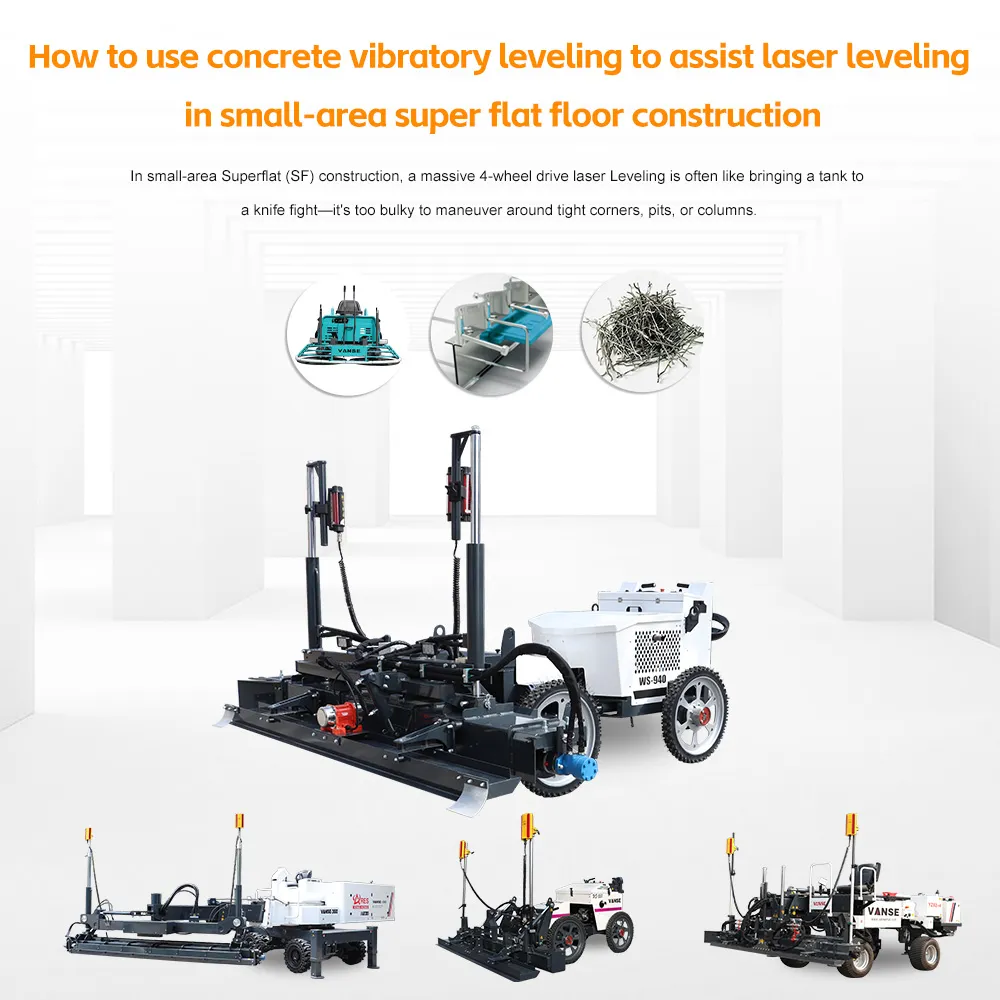
In small-area Superflat (SF) construction, a massive 4-wheel drive laser Leveling is often like bringing a tank to a knife fight-it's too bulky to maneuver around tight corners, pits, or columns. To achieve Superflat tolerances in these spaces, contractors use a "Hybrid Approach": combining the precision of a Laser Reference System with the agility of Vibratory Leveling (hand-held or truss Levelings). Here is how to use vibratory leveling to assist the laser process for high-precision results. In small areas, you don't use a laser Leveling machine; you use laser receivers mounted on a vibratory Leveling pole. The Equipment: A handheld vibratory Leveling (like a "Magic Leveling" or a small "LevelingBot") equipped with a laser receiver. The Process: The laser transmitter (rotary laser) sends a beam across the room. The receiver on the vibratory Leveling gives the operator real-time "High/Low/Level" feedback via LEDs or an audible tone. The Benefit: This ensures that even in a 10' x 10' corner, your Levelness (FL) matches the rest of the 50,000 sq. ft. warehouse perfectly. To hit FF (Flatness) numbers above 50 in small areas, the vibratory Leveling is just the first step. You must follow this sequence: The vibratory Leveling is pulled across the concrete. The vibration "liquefies" the top 1/2 inch of the slab, bringing enough paste (cream) to the surface to seal the face while the laser receiver ensures the height is correct. Warning: Do not "over-vibrate." If you stay in one spot too long, the aggregate will sink, leaving a "soup" of weak paste that will shrink and crack later. This is where Superflat floors are actually made. Immediately after the vibratory Leveling passes, use a 10-foot Highway Straightedge (also called a Bump Cutter). The Action: Run the straightedge at a 45-degree angle to the direction of the Levelinging. The Result: The vibratory Leveling sets the height (FL), but the straightedge cuts the "micro-waves" left by the vibration, ensuring extreme Flatness (FF). Tool Role in Superflat Limitation Laser Transmitter Provides the "Source of Truth" (The Plane). Cannot fix a bumpy surface on its own. Vibratory Leveling Consolidates concrete and sets FL (Levelness). Often leaves small "rhythmic waves." Highway Straightedge Refines FF (Flatness) by cutting/filling. Requires a skilled operator and physical labor. Maneuverability: You can work around floor drains, electrical conduits, and stub-ups that a large laser Leveling would destroy. Lower Risk of "Cold Joints": In tight spaces, big machines often have to wait for manual edges to catch up. Handheld vibratory leveling allows for a continuous, "wet-on-wet" pour. Edge Precision: Laser Levelings sometimes "dip" at the start or end of a pass. Manual vibratory leveling allows for a slower, more controlled approach at the formwork edges. Laser Calibration: In small areas, the laser transmitter must be set to its highest rotation speed (usually 600–1100 RPM). This provides more frequent data "hits" to the receiver on the vibratory Leveling as it moves. Slump Consistency: If the concrete slump varies by even 1 inch (e.g., from a 5-inch slump to a 6-inch slump), the vibratory Leveling will "sink" differently. For Superflat results, the concrete must be identical truck-to-truck. Head-to-Head Overlap: When using a handheld vibratory Leveling, ensure each pass overlaps the previous one by 20–30%. This "erases" the line between passes. Would you like a list of the specific F-number tolerances required for "Category 1" VNA (Very Narrow Aisle) floors versus standard warehouse floors? Contact us NOW Note: The parameters provided in this document are for reference only and are not mandatory. Due to differences in technical characteristics between different brands and models of laser levelers, please consult the manufacturer for a suitable solution before actual operation. This reference document assumes no responsibility for any issues arising from failure to follow the manufacturer's instructions.