Technical Knowledge
What are the safety operating procedures for concrete laser leveling machines?
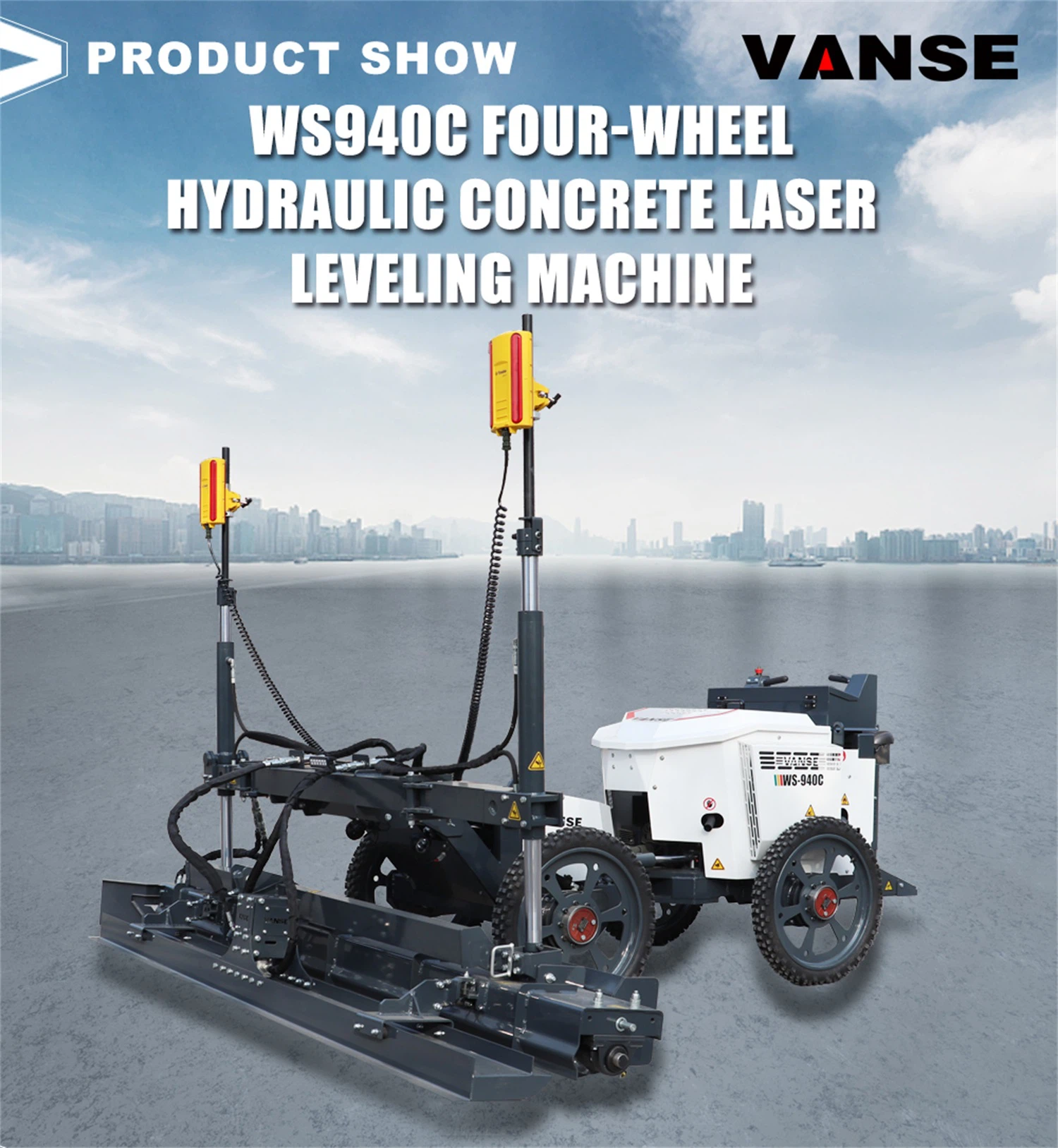
Safety operating procedures for concrete laser leveling machines
◆◆◆◆Preparation before operation◆◆◆◆
1. Operators should be familiar with the performance, principles and operating methods of the machine, and operate it correctly in accordance with the requirements of the instruction manual.
2. Check whether all parts of the machine are intact, without damage or missing, and ensure that the machine is in normal working condition.
3. Ensure the safety and cleanliness of the construction site, clean up the surrounding debris and obstacles, and ensure the smooth progress of the construction.
◆◆◆◆Work environment inspection◆◆◆◆
1. Check whether the work area is safe and free of potential safety hazards.
2. Confirm that there are no oil stains, water stains or other impurities on the concrete surface, so as not to affect the normal operation and leveling effect of the machine.
3. Check whether the laser measurement and control system is working properly to ensure the accuracy and stability of the machine.
◆◆◆◆Equipment startup and shutdown◆◆◆◆
1. Turn on the power switch, start the machine, and check whether the machine is working normally.
2. After the leveling work is completed, the laser measurement and control system should be turned off first, and then the power switch is turned off to ensure the normal service life of the machine.
3. When the machine fails, it should be stopped immediately for inspection, and the work should be carried out after troubleshooting.
◆◆◆◆Machine debugging◆◆◆◆
1. According to work needs, adjust the height, angle and other parameters of the machine to ensure the leveling effect and quality:
2. During the debugging process, attention should be paid to the surrounding environment and personnel safety to avoid accidents.
◆◆◆◆Calibration of laser measurement and control system◆◆◆◆
1. The laser measurement and control system should be calibrated regularly before and after use to ensure the accuracy and stability of the machine.
2. During the calibration process, attention should be paid to the surrounding environment and personnel safety to avoid accidents.
◆◆◆◆Leveling operation◆◆◆◆
1. According to the work needs, select appropriate leveling tools and parameters to perform leveling work.
2. During the leveling process, attention should be paid to the surrounding environment and personnel safety to avoid accidents.
3. After leveling is completed, the leveling effect and quality should be checked and any problems found should be dealt with in a timely manner.
◆◆◆◆Exception handling◆◆◆◆
During use, if any abnormality or malfunction is found in the machine, it should be stopped immediately for inspection and the fault should be eliminated before starting work.
Thanks to All the Friends Who Support and Trust Shandong Vanse Machinery Technology Co., Ltd.
If you want to know more about Shandong Vanse Machinery Technology Co., Ltd. or have any questions, please feel free to contact us:
Our Factory
Shandong Vanse Machinery Technology Co., Ltd.








Share this article

About the Author: Shandong Vanse Machinery Technology Co., Ltd.
Shandong Vanse Machinery Technology Co., Ltd. is a high-tech manufacturer specializing in concrete construction machinery, including laser screeds and related equipment. The company integrates R&D, production, and global sales, with products exported to over 60 countries and widely used in infrastructure projects worldwide.
Previous Post
Next Post
Related Articles
You Might Also Like
How serviceable is a concrete laser leveling machine?
The maintainability of the concrete laser leveling is one of its important characteristics, which directly affects the reliability and service life of the equipment. Here's a 2,000-word analysis of the serviceability of concrete laser levelings: 1. The importance of maintainability Maintainability refers to the ability of equipment to be easily repaired and parts replaced to restore its normal working condition after failure or damage. For concrete laser levelings, the importance of maintainability is reflected in the following aspects: Equipment reliability and longevity The maintainability of the concrete laser leveling directly affects the reliability and service life of the equipment. If equipment is difficult to repair or parts can be replaced after a failure, the reliability of the equipment will be severely affected and its service life will be shortened. Production efficiency and cost control If the repairability of the concrete laser leveling is not good, it will take more time and cost to repair and replace parts after the equipment fails. This will affect production efficiency and increase the company's operating costs. Safety If the serviceability of the concrete laser leveling is not good, there may be safety risks involved during the repair process. For example, if parts need to be replaced manually, the operator may be exposed to hazards such as high temperatures or high pressures. 2. Factors affecting maintainability Equipment design and construction The design and structure of a concrete laser leveling are important factors affecting its maintainability. If the design and structure of the equipment are not reasonable, you may encounter difficulties during the repair process or even be unable to repair it. Replacement of parts The replaceability of concrete laser leveling machine parts is also an important factor affecting its maintainability. If parts are difficult to purchase or replace, it will take more time and cost to repair the equipment after it fails. Operator skills and experience The operator's skills and experience are also important factors affecting the maintainability of the concrete laser leveling. If the operator does not receive adequate training or experience, effective repairs may not be possible after equipment failure. 3. Measures to improve maintainability Optimize equipment design and structure In order to improve the maintainability of the concrete laser leveling, its design and structure should be optimized. For example, the convenience of maintenance should be taken into consideration during the design process, and modular and standardized designs should be adopted as much as possible to reduce difficulties that may be encountered during the maintenance process. Improve part replaceability In order to improve the maintainability of the concrete laser leveling, the replaceability of components should be improved. For example, choose components that are easy to purchase and replace and avoid parts or materials that are too specialized. In addition, a complete spare parts inventory system should be established to ensure that parts can be replaced in time when equipment fails. Improve operator skills and experience In order to improve the maintainability of concrete laser leveling machines, the operator's skills and experience should be improved. Operators should receive adequate training and skills improvement programs to understand the performance and use of equipment, as well as how to perform effective repairs when equipment malfunctions. In addition, operators should be regularly organized to conduct experience exchanges and technical seminars to improve the technical level of operators. Develop maintenance plans and record maintenance logs In order to improve the maintainability of the concrete laser leveling, a reasonable maintenance plan should be developed and a maintenance log should be recorded. By formulating a reasonable maintenance plan, potential fault problems can be discovered and solved in time to avoid the expansion of faults. At the same time, recording maintenance logs can help operators understand the maintenance history and fault conditions of the equipment, and provide reference for subsequent maintenance and upkeep. 4. Summary The maintainability of the concrete laser leveling is one of its important characteristics, which directly affects the reliability and service life of the equipment. In order to improve the maintainability of equipment, a series of measures should be taken, including optimizing equipment design and structure, improving the replaceability of components, improving operator skills and experience, formulating maintenance plans and recording maintenance logs, etc. These measures can help companies improve production efficiency and cost control capabilities while ensuring the safety and reliability of equipment.How to ensure the safety and reliability of concrete laser leveling machine during construction?
It is very important to ensure the safety and reliability of the concrete laser leveling machine during the construction process. This is not only related to the quality of the project, but also directly affects the safety of the operator. Here are some key steps and suggestions to ensure the safe and reliable operation of the concrete laser leveling machine: 1. Training and certification: Ensure that all operators have received appropriate operation training and are familiar with all functions and emergency stop procedures of the equipment. 2. Equipment inspection: Before starting work every day, perform a comprehensive visual inspection of the leveling machine, including checking tires, fuel levels, oil, coolant, and all controls. 3. Laser calibration: Ensure that the laser transmitter is properly installed and calibrated to provide an accurate height reference. 4. Safety protection: Ensure that all safety devices such as emergency brake buttons, safety guardrails, etc. are in good condition. 1. Site leveling: Before using the laser leveling machine, properly prepare the construction site to ensure that the ground is relatively flat and free of large debris. 2. Traffic control: Set up warning signs and fences to restrict unauthorized personnel from entering the work area. 3. Material supply: Rationally arrange the supply speed of concrete to avoid idling of equipment or pouring too quickly due to waiting for concrete, resulting in quality degradation. 4. Smooth communication: Ensure good communication means within the construction site to facilitate command and dispatch and emergency response. 1. Smooth driving: The operator should maintain a constant speed and avoid sharp turns or sudden braking, which can improve flatness and reduce the risk of equipment damage. 2. Monitoring laser signals: Keep an eye on the working conditions of the laser receiver to ensure that a stable signal is received. 3. Timely adjustment: Adjust the scraper angle and vibration frequency according to the actual construction conditions to achieve the best effect. 4. Rest and inspection: Let the machine rest regularly and check the equipment condition again during this period. 1. Regular maintenance: Perform routine maintenance tasks according to the manufacturer's recommended schedule, such as changing the engine oil and cleaning the filter. 2. Record keeping: Keeping detailed records of each maintenance helps track the historical performance of the equipment and predict possible problems in the future. 3. Professional repair: When encountering complex failures, please contact professional repair services instead of trying to repair them yourself. The above measures can greatly improve the safety and reliability of concrete laser leveling machines on the construction site. It is important to always follow the guidelines in the user manual provided by the manufacturer and comply with relevant local safety regulationsOne-step forming construction method of high-precision wear-resistant floor without cutting based on concrete laser leveling technology
– Using laser leveling technology, the laser transmitter generates a precise and stable plane reference. The laser receiver is installed on the leveling machine to sense the deviation in real time, so that the leveling machine automatically adjusts the scraper height to ensure that the floor flatness error is extremely small, which can generally be controlled within ±1.5mm, and can meet the needs of high-end industrial plants, electronic chip manufacturing workshops and other places with strict requirements on flatness. – Optimize the concrete mix ratio, add appropriate amounts of expansion agents, fibers and other admixtures, reduce the shrinkage stress during the hardening process of concrete, and cooperate with the carefully designed construction process, so that the floor does not need to set expansion joints in a large area, which is not only beautiful but also reduces the later maintenance cost, and avoids the accumulation of dust and debris caused by cutting seams. – In the initial setting stage of concrete, wear-resistant materials such as corundum and metal aggregates are evenly spread, and a special trowel is used to closely combine with the floor to form a hard and wear-resistant surface layer. The wear resistance can be several times higher than that of ordinary concrete floors. It is suitable for places with frequent wear and tear such as heavy traffic areas, warehouses, and logistics centers. – From base treatment, concrete pouring, leveling to wear-resistant material spreading, troweling and finishing, the processes are closely connected and completed in one go, avoiding the problem of poor interlayer bonding caused by layered construction, improving the overall strength and durability of the floor, and reducing the construction period. It can usually shorten the construction period by 1/3 – 1/2 compared with traditional processes. Applicable to indoor and outdoor concrete floor projects with large areas and high requirements for flatness and wear resistance, such as various large industrial plants, logistics storage centers, airport terminals, exhibition halls, parking lots, etc., especially suitable for places where obvious expansion joints are not expected to affect the appearance or use function. – The laser transmitter emits a rotating laser beam to form a high-precision horizontal control surface. The laser receiver installed on the leveling machine continuously captures the laser signal, compares the actual elevation of the floor with the laser plane benchmark, and transmits the generated deviation signal to the control system. The control system drives the hydraulic actuator of the leveling machine to adjust the scraper, vibrator and other components in real time to accurately level and vibrate the concrete to achieve high-precision leveling. – On the one hand, by optimizing the concrete mix ratio, selecting low-hydration hot cement, adding an appropriate amount of expansion agent (such as calcium sulfoaluminate expansion agent) to compensate for concrete shrinkage, adding polypropylene fiber to enhance concrete toughness and inhibit the generation of microcracks; on the other hand, during the construction process, strictly control the concrete pouring temperature, vibration method and curing conditions, reasonably arrange the construction sequence, reduce the temperature difference between the inside and outside of the concrete and stress concentration, so that the floor itself has the ability to resist shrinkage and deformation, thereby meeting the requirements of no seam cutting. – The surface of concrete in the initial setting stage has a certain viscosity. At this time, the spread wear-resistant material can be embedded in the surface of the concrete. With the subsequent leveling and finishing operations, the wear-resistant material and the concrete form a solid whole. Wear-resistant materials such as corundum and metal aggregates have high hardness and strong wear resistance, forming a wear-resistant protective layer on the surface to protect the main concrete of the floor from wear. – Technical preparation: Familiar with the construction drawings and technical specifications, formulate detailed construction plans, and conduct technical briefings. – Site preparation: Clean up the site debris and accumulated water, level the base layer, and if the base layer is soft soil, it needs to be reinforced; set up a temporary drainage system for construction; plan the concrete pouring and leveling route according to the site area and shape. – Material preparation: Purchase high-quality cement, sand, gravel, admixtures, wear-resistant materials, etc. according to the design requirements, inspect the raw materials to ensure that they meet the quality standards; prepare sufficient construction water and electricity. – Equipment preparation: Debug concrete laser leveling machine, concrete mixing equipment, transportation equipment, wear-resistant material spreader, trowel, etc. to ensure the normal operation of the equipment; calibrate the laser system so that the laser plane it emits is consistent with the designed elevation of the floor. – Thoroughly clean the surface of the base to remove pollutants such as dust and oil; compact the base with a roller or tamping machine to achieve a compaction degree of more than 90%; repair and fill local low-lying areas and potholes with concrete or mortar to ensure that the flatness error of the base does not exceed ±10mm. – Accurately weigh the raw materials according to the designed mix ratio, use a forced mixer to mix the concrete, and the mixing time is not less than 90 seconds to ensure the uniformity of the concrete; transport the concrete to the construction area by pumping or unloading, control the pouring speed, avoid concrete segregation, and the pouring thickness is slightly higher than the designed floor elevation by 10-20mm to reserve space for leveling. – Start the laser leveling machine and make it move forward at a uniform speed of 1-2m/min; the operator adjusts the scraper height and vibration frequency of the leveling machine in real time according to the feedback signal of the laser receiver to ensure that the concrete surface is flat and compacted; the leveling work of adjacent areas should be completed before the initial setting of the concrete, and the overlapping construction width should not be less than 10cm to ensure the integrity of the floor. – When the concrete is initially set (generally there are slight footprints when stepping on it, and the sinking depth is about 3-5mm), use a special spreader to evenly spread the wear-resistant materials on the floor surface according to the specified amount, and the spreading thickness is generally 3-5mm; during the spreading process, pay attention to controlling the spreading speed and direction to avoid accumulation or leakage of wear-resistant materials, and ensure that the spreading uniformity reaches more than 90%. – After spreading the wear-resistant material, use a trowel to smooth it immediately. The trowel should run in a crisscross pattern to fully blend the wear-resistant material with the concrete. The number of smoothing passes should be no less than 3 times. As the concrete continues to harden, when there is no water stain on the surface and it feels slightly hard when pressed with fingers, it should be smoothed manually. Aluminum alloy rulers, trowels and other tools should be used to make the floor surface bright and smooth. – After smoothing and finishing, the floor should be maintained in time by covering with plastic film, spraying curing agent or laying water straw mats. The maintenance time should be no less than 7 days. During this period, the concrete surface should be kept moist to avoid water loss and cracks. Warning signs should be set up during the maintenance period to prohibit vehicles and pedestrians from passing on floors that do not meet the strength requirements. – Calibrate the laser system before construction to ensure the accuracy of the laser plane; regularly check the flatness with a 2m ruler and a feeler gauge during construction, at least once every 100-200 square meters, and adjust the leveler in time if deviation is found; use a laser flatness meter to fully test the flatness of the floor after finishing to ensure that it meets the design requirements. – Strictly select wear-resistant materials according to design requirements and check the quality certification documents of wear-resistant materials; supervise the spreading amount and uniformity during spreading to ensure that the specified requirements are met; after maintenance, on-site wear resistance tests can be carried out, such as grinding a certain area with a grinding wheel, observing the wear condition, and judging whether the wear resistance meets the standard. – Optimize the concrete mix ratio, control the cement dosage and water-cement ratio; monitor the concrete pouring temperature to avoid high-temperature pouring; strengthen maintenance and control the temperature difference between the inside and outside of the concrete; regularly inspect the floor, and if fine cracks are found, use epoxy resin and other materials to repair them in time. 1. Provide safety training to construction personnel to familiarize them with the operation methods and safety precautions of construction equipment, such as the safety operating procedures of laser levelers, concrete mixers and other equipment. 2. Set up obvious safety warning signs at the construction site to divide the construction area and non-construction area to prevent unrelated personnel from entering the construction danger zone. 3. Regularly check the safety performance of construction equipment, such as electrical insulation, mechanical protection devices, etc., to ensure the normal operation of the equipment and avoid safety accidents caused by equipment failure. 4. Provide construction personnel with necessary personal protective equipment, such as safety helmets, safety shoes, gloves, etc., to ensure the personal safety of construction personnel. 1. Classify and collect solid waste such as concrete residues and discarded wear-resistant material packaging bags generated during the construction process, and transport them to designated garbage disposal sites regularly. 2. Reasonably arrange construction time to avoid high-noise concrete mixing, equipment operation and other operations during residents' rest time. If necessary, take noise reduction measures, such as installing silencers on equipment. 3. Control dust on the construction site, such as covering the material storage area, closing the transport vehicles, regularly sprinkling water to reduce dust, and keeping the construction site clean. – The one-time molding process shortens the construction period, reduces labor costs, equipment rental costs, etc.; no cutting reduces the later maintenance costs, such as cutting, caulking material costs and labor maintenance costs; wear-resistant flooring increases the service life of the flooring, reduces the frequency of flooring replacement, and the overall economic benefits are significant. – It provides high-quality flooring solutions for various large-scale projects, meeting the needs of rapid development of modern industry, logistics and other industries; it reduces noise, dust and other pollution during construction, which is conducive to environmental protection and sustainable development of urban construction. In a large electronic chip manufacturing plant construction project, this construction method was used to successfully create a high-precision, no-cutting, wear-resistant factory floor. The construction area reached 50,000 square meters, and the flatness error was controlled within ±1mm, meeting the stringent requirements of chip manufacturing equipment for floor flatness. In the subsequent years of use, the floor had good wear resistance and no obvious cracks appeared, providing a solid guarantee for the efficient production of the factory. For example, in a certain international logistics and warehousing center project, this construction method also performed well, and a large area of floor was built quickly and efficiently. The seam-free design improved the aesthetics and practicality of the warehouse and was highly recognized by the owner.