Technical Knowledge
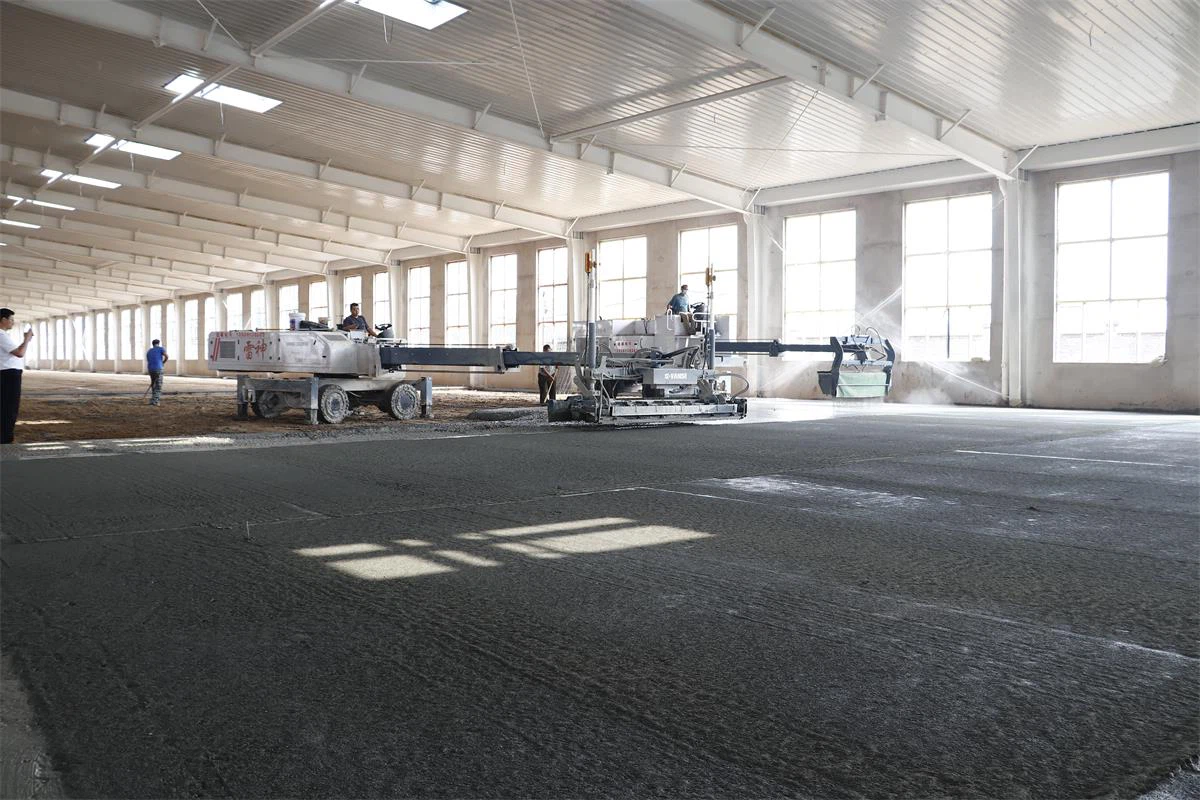
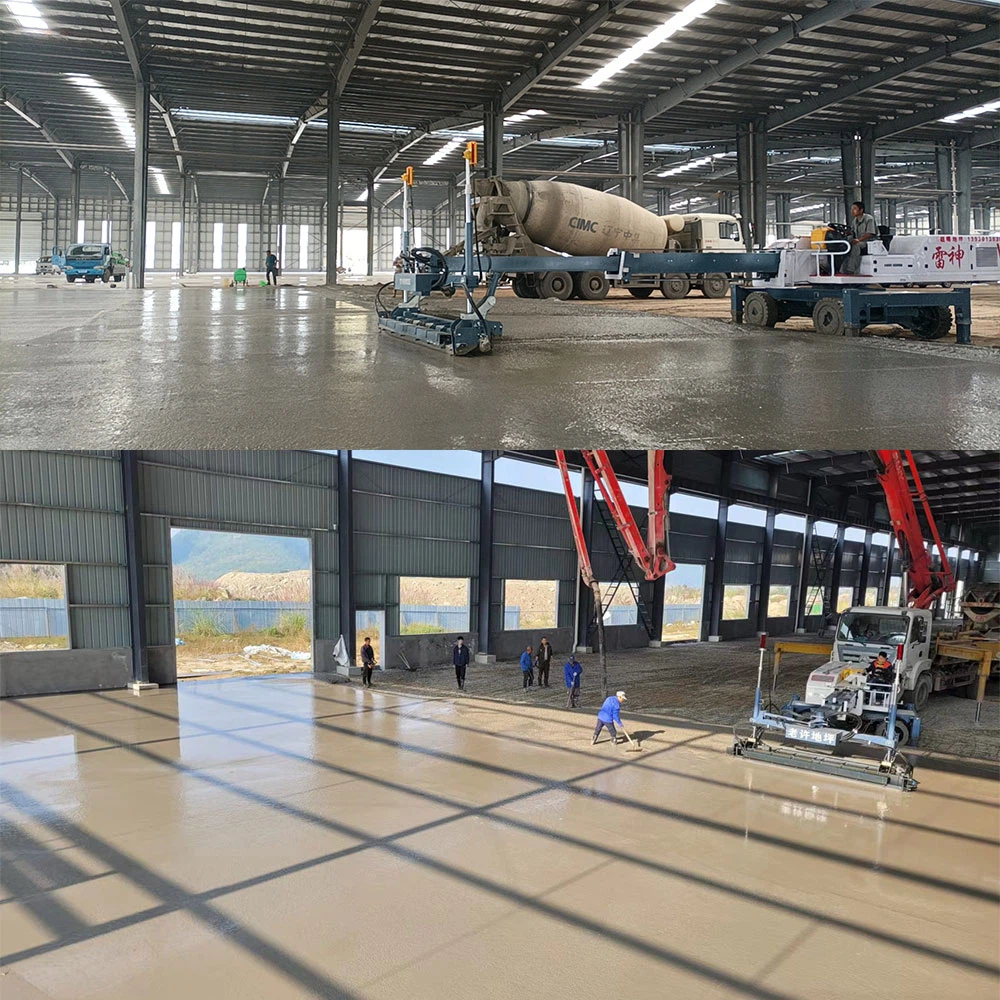
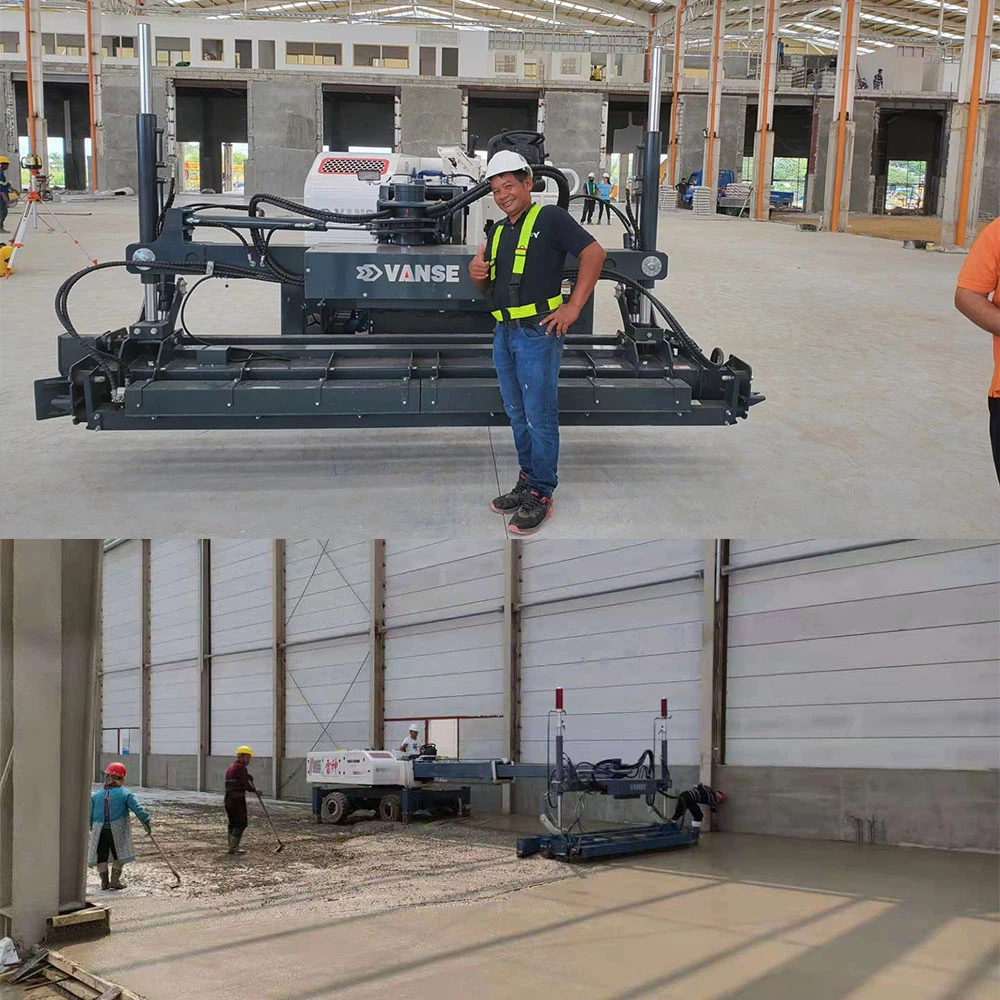
Concrete laser leveling + emery construction plan
◆◆★◆◆ Preparation for the project ◆◆★◆◆
1. Conduct a detailed survey of the construction site to understand the basic conditions of the ground and ensure that the ground is smooth, free of oil stains, and free of debris.
2. Develop detailed construction plans and progress plans based on construction drawings and technical requirements.
3. Organize the construction team to conduct technical briefings and safety training to ensure that the skills and safety awareness of construction personnel are up to standard.
◆◆★◆◆ Material selection and inspection ◆◆★◆◆
1. Select raw materials such as cement, aggregates, admixtures, etc. that are of high quality and meet national standards.
2. Conduct quality inspection on the raw materials entering the site, including strength stability, moisture content and other indicators to ensure that the material quality meets the construction requirements.
◆◆★◆◆ Preparation of laser leveling equipment ◆◆★◆◆
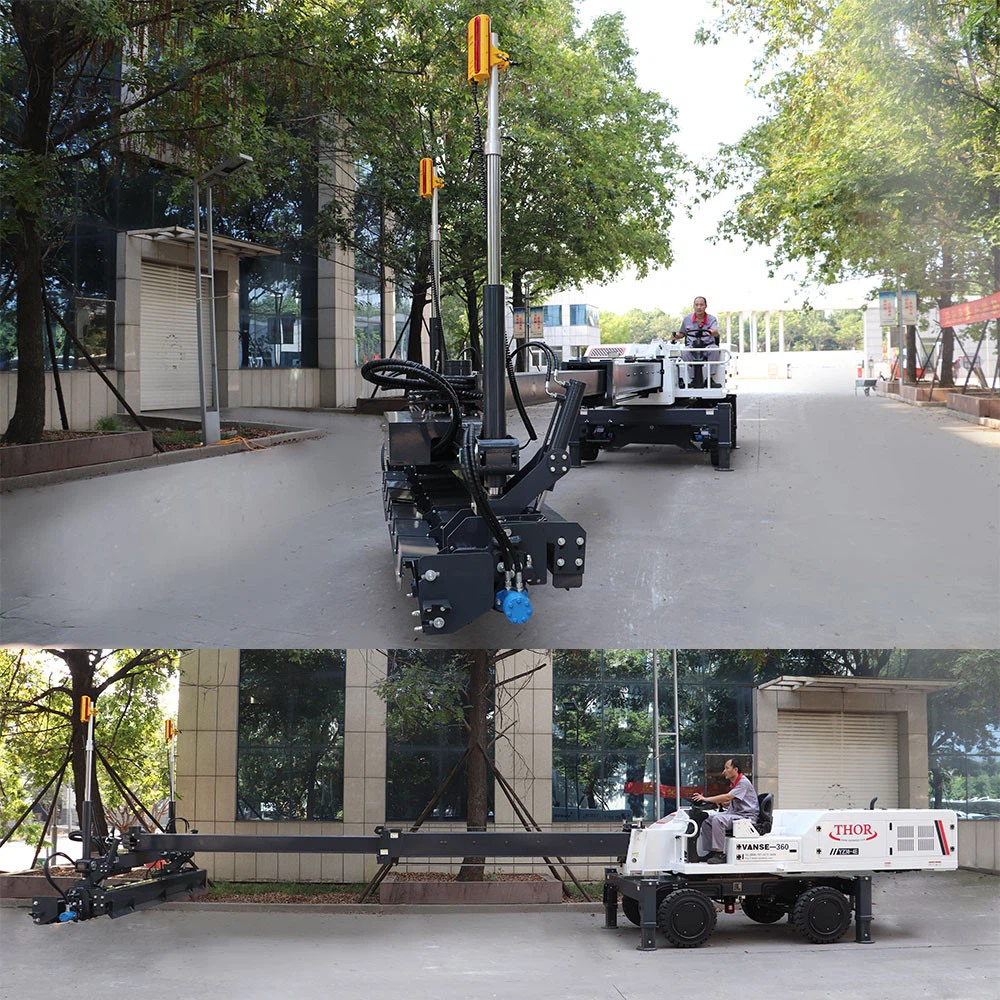
1. Choose laser leveling equipment with mature technology and stable performance to ensure construction efficiency and quality.
2. Carry out comprehensive inspection and maintenance of laser leveling equipment to ensure that the equipment operates normally during the construction process.
◆◆★◆◆ Emery laying process ◆◆★◆◆
1. Determine the laying thickness and laying range of emery according to the construction drawings and technical requirements.
2. Apply a layer of primer evenly on the concrete surface to improve the adhesion between emery and concrete.
3. When laying emery, make sure it is laid evenly, without omissions, and compacted using special tools.
◆◆★◆◆ Construction process control ◆◆★◆◆
1. Strictly control the mix ratio and mixing time of concrete to ensure uniform and stable concrete quality.
2. During the construction process, the operating status of the laser leveling equipment should be checked at any time to ensure the construction quality.
3. When laying emery, attention should be paid to the temperature and humidity of the construction environment to avoid affecting the hardening effect of emery.
◆◆★◆◆ Quality inspection and acceptance ◆◆★◆◆
1. During the construction process, the construction quality should be tested regularly, including flatness, strength and other indicators.
2. After the construction is completed, relevant departments should be organized to conduct acceptance inspection to ensure that the construction quality meets the design requirements.
◆◆★◆◆ Safe and civilized construction ◆◆★◆◆
1. Obvious safety warning signs should be set up at the construction site to ensure the safety of construction workers.
2. Construction workers should wear complete safety protective equipment, such as safety helmets, protective shoes, etc.
3. Good civilized construction habits should be maintained during the construction process and the construction site should be kept clean and orderly.
◆◆★◆◆ Post-project maintenance ◆◆★◆◆
1. After the construction is completed, the emery floor should be regularly maintained and maintained to extend its service life.
2. For problems and damage that occur during use, repair and replacement should be carried out in time.
Through detailed planning and implementation of the above eight aspects, it is possible to ensure the smooth progress of the concrete laser leveling + emery construction plan and achieve the expected construction results and quality standards. During the construction process, relevant technical specifications and safe operating procedures should be strictly observed to ensure the safety of construction personnel while ensuring the quality and service life of the project.
Thanks to All the Friends Who Support and Trust Shandong Vanse Machinery Technology Co., Ltd.
If you want to know more about Shandong Vanse Machinery Technology Co., Ltd. or have any questions, please feel free to contact us:
Our Factory
Shandong Vanse Machinery Technology Co., Ltd.








Share this article

About the Author: Shandong Vanse Machinery Technology Co., Ltd.
Shandong Vanse Machinery Technology Co., Ltd. is a high-tech manufacturer specializing in concrete construction machinery, including laser screeds and related equipment. The company integrates R&D, production, and global sales, with products exported to over 60 countries and widely used in infrastructure projects worldwide.
Previous Post
Next Post
Related Articles
You Might Also Like
How to use concrete vibratory leveling to assist laser leveling in small-area super flat floor construction
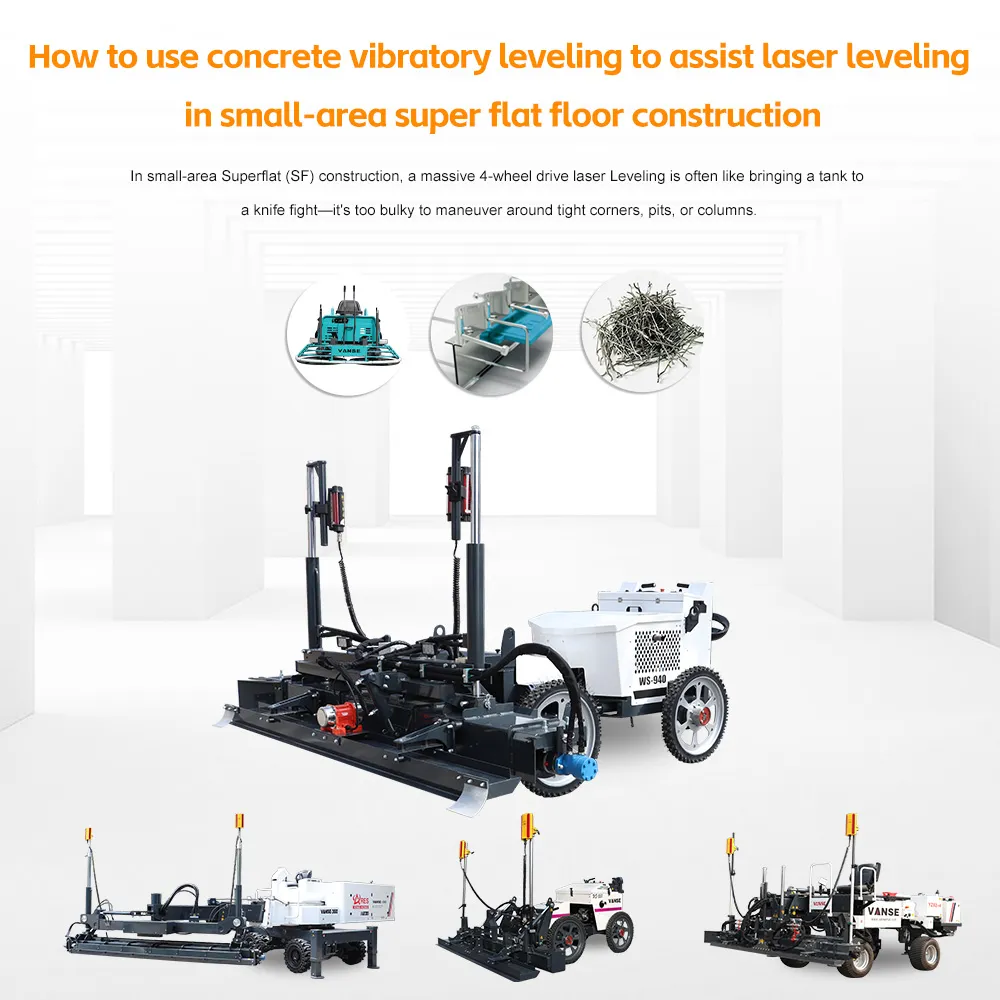
In small-area Superflat (SF) construction, a massive 4-wheel drive laser Leveling is often like bringing a tank to a knife fight-it's too bulky to maneuver around tight corners, pits, or columns. To achieve Superflat tolerances in these spaces, contractors use a "Hybrid Approach": combining the precision of a Laser Reference System with the agility of Vibratory Leveling (hand-held or truss Levelings). Here is how to use vibratory leveling to assist the laser process for high-precision results. In small areas, you don't use a laser Leveling machine; you use laser receivers mounted on a vibratory Leveling pole. The Equipment: A handheld vibratory Leveling (like a "Magic Leveling" or a small "LevelingBot") equipped with a laser receiver. The Process: The laser transmitter (rotary laser) sends a beam across the room. The receiver on the vibratory Leveling gives the operator real-time "High/Low/Level" feedback via LEDs or an audible tone. The Benefit: This ensures that even in a 10' x 10' corner, your Levelness (FL) matches the rest of the 50,000 sq. ft. warehouse perfectly. To hit FF (Flatness) numbers above 50 in small areas, the vibratory Leveling is just the first step. You must follow this sequence: The vibratory Leveling is pulled across the concrete. The vibration "liquefies" the top 1/2 inch of the slab, bringing enough paste (cream) to the surface to seal the face while the laser receiver ensures the height is correct. Warning: Do not "over-vibrate." If you stay in one spot too long, the aggregate will sink, leaving a "soup" of weak paste that will shrink and crack later. This is where Superflat floors are actually made. Immediately after the vibratory Leveling passes, use a 10-foot Highway Straightedge (also called a Bump Cutter). The Action: Run the straightedge at a 45-degree angle to the direction of the Levelinging. The Result: The vibratory Leveling sets the height (FL), but the straightedge cuts the "micro-waves" left by the vibration, ensuring extreme Flatness (FF). Tool Role in Superflat Limitation Laser Transmitter Provides the "Source of Truth" (The Plane). Cannot fix a bumpy surface on its own. Vibratory Leveling Consolidates concrete and sets FL (Levelness). Often leaves small "rhythmic waves." Highway Straightedge Refines FF (Flatness) by cutting/filling. Requires a skilled operator and physical labor. Maneuverability: You can work around floor drains, electrical conduits, and stub-ups that a large laser Leveling would destroy. Lower Risk of "Cold Joints": In tight spaces, big machines often have to wait for manual edges to catch up. Handheld vibratory leveling allows for a continuous, "wet-on-wet" pour. Edge Precision: Laser Levelings sometimes "dip" at the start or end of a pass. Manual vibratory leveling allows for a slower, more controlled approach at the formwork edges. Laser Calibration: In small areas, the laser transmitter must be set to its highest rotation speed (usually 600–1100 RPM). This provides more frequent data "hits" to the receiver on the vibratory Leveling as it moves. Slump Consistency: If the concrete slump varies by even 1 inch (e.g., from a 5-inch slump to a 6-inch slump), the vibratory Leveling will "sink" differently. For Superflat results, the concrete must be identical truck-to-truck. Head-to-Head Overlap: When using a handheld vibratory Leveling, ensure each pass overlaps the previous one by 20–30%. This "erases" the line between passes. Would you like a list of the specific F-number tolerances required for "Category 1" VNA (Very Narrow Aisle) floors versus standard warehouse floors? Contact us NOW Note: The parameters provided in this document are for reference only and are not mandatory. Due to differences in technical characteristics between different brands and models of laser levelers, please consult the manufacturer for a suitable solution before actual operation. This reference document assumes no responsibility for any issues arising from failure to follow the manufacturer's instructions.Methods for cleaning, grinding & renovation of terrazzo floors and emery floors
Methods for cleaning, grinding and renovation of terrazzo floors and emery floors With the development of modern architecture and industry, floor materials, as an important part of indoor floors, not only carry the functions of daily use, but also directly affect the beauty and comfort of the overall environment. Terrazzo floors and emery floors are common types of floors, and are widely used in various places because of their wear resistance, anti-slip, and beautiful characteristics. However, over time, these floor materials will also lose their original luster and performance due to wear, pollution and other reasons. Therefore, cleaning, grinding and renovation to restore their original beauty and performance has become an important maintenance work. ☑ Overview of floor material characteristics Terrazzo floor is a floor decoration material made of cement, stone particles and other raw materials through grinding, polishing and other processes. It has a hard texture, bright color, anti-slip and wear-resistant waiting points, and is often used in commercial and residential places. Emery floor is a floor paved with emery aggregate as the main component and added with special gelling materials. It has high wear resistance, compressive strength and anti-slip properties, and is suitable for heavy-load places such as industrial plants and warehouses. ☑ Cleaning methods and precautions Before cleaning, grinding and renovating terrazzo floors and diamond sand floors, the floor must be thoroughly cleaned first. The purpose of cleaning is to remove dirt, oil, old layers and other impurities on the floor surface, providing a good foundation for subsequent grinding and renovation work. When cleaning, you can choose to use a high-pressure water gun or a professional cleaning machine, and choose the appropriate cleaning agent and tools according to the degree and type of stains on the floor surface. At the same time, it should be noted that the choice of cleaning agent should avoid corrosion or damage to the floor material. During the cleaning process, it is also necessary to control the concentration and amount of cleaning agent to avoid pollution to the environment. In addition, the following points should be noted when cleaning: 1. Before cleaning, check whether the floor has problems such as damage or cracks. If necessary, repair it first. 2. When cleaning, the site should be well ventilated to avoid harmful gases generated by the volatilization of the cleaning agent from causing harm to the human body. 3. After cleaning, it should be rinsed with clean water in time, and the floor surface should be made dry to avoid residues from affecting subsequent work. ☑ Grinding steps and skills After cleaning, the next step is to grind the floor. The purpose of grinding is to remove the old coating, scratches and uneven parts on the floor surface, so that the floor surface can be restored to a flat and smooth state. When grinding, you can choose the appropriate grinding machine and grinding disc according to the actual situation of the floor. Generally speaking, you can first use a coarse grinding disc for preliminary grinding to remove large particles of impurities and uneven parts on the floor surface; then use a fine grinding disc for fine grinding to make the floor surface smoother and more delicate. During the grinding process, you need to pay attention to the following tips: 1. When grinding, you should maintain uniform force and speed to avoid excessive damage to the floor or uneven grinding. 2. During the grinding process, you should clean up the dust and debris generated by grinding in time to keep the site clean. 3. After grinding, check whether the floor surface is flat and smooth. If there are local unevenness or scratches, local treatment is required. ☑ Renovation and material selection After grinding, the last step is to renovate the floor. The purpose of renovation is to further improve the aesthetics and performance of the floor so that it is more in line with the requirements of use. During the renovation process, appropriate renovation materials and processes can be selected according to the actual situation of the floor. For terrazzo floors, you can choose to use professional terrazzo renovation agents for brushing or polishing to restore its original gloss and color. For diamond flooring, you can choose to use wear-resistant coatings or ring floor paints for brushing to enhance the wear resistance and aesthetics of the floor. When choosing renovation materials, you need to pay attention to the following points: 1. The materials should comply with relevant standards and specifications and have good environmental performance and durability. 2. The color and gloss of the materials should match the original floor to ensure the consistency of the overall effect after renovation 3. The materials should have good adhesion and wear resistance, and can maintain the beauty and performance of the floor for a long time ☑ Construction site safety management Safety management is essential when cleaning, grinding and renovating terrazzo floors and diamond floors. Obvious safety warning signs should be set up at the construction site to ensure the safety of construction workers and surrounding personnel. At the same time, construction workers should wear appropriate safety protection equipment, such as gloves, masks, safety shoes, etc., to avoid the dust and harmful gases generated during the construction process from affecting their health. In addition, the normal operation and maintenance of construction equipment should be ensured to avoid safety accidents caused by equipment failure. ☑ Quality control and effect evaluation In order to ensure the quality of cleaning, grinding and renovation work, strict quality control is required. During the construction process, the cleaning and grinding effects should be checked regularly to ensure that each link achieves the expected effect. At the same time, after the renovation is completed, an effect evaluation should be carried out to check whether the gloss, flatness, wear resistance and other indicators of the floor meet the requirements. If there are unqualified areas, they should be repaired and processed in time to ensure that the overall effect meets the requirements. ☑ Post-maintenance and maintenance suggestions After completing the cleaning, grinding and renovation work, post-maintenance and maintenance are equally important. For terrazzo floors and diamond sand floors, it is recommended to clean and maintain them regularly to avoid damage to the floor caused by the accumulation of stains and debris. At the same time, scratches and collisions with heavy objects and sharp objects should be avoided to avoid damage to the floor. In addition, regular maintenance and repair work should be carried out according to the use and wear of the floor to ensure the long-term service life and stable performance of the floor. ☑ Summary The cleaning, grinding and renovation of terrazzo floors and gold sand floors is a highly comprehensive work. It is necessary to fully consider the characteristics and usage scenarios of the floor materials, and select appropriate cleaning and grinding methods and renovation materials to ensure that the renovated floor is both beautiful and durable. Through the introduction of this article, we have learned about the basic characteristics of terrazzo floors and diamond sand floors, cleaning methods and precautions, grinding steps and techniques, renovation treatment and material selection. At the same time, we also recognize the importance of construction site safety management and the necessity of quality control and effect evaluation. In actual operation, we should flexibly apply this knowledge according to the specific situation to ensure the smooth progress of renovation work. For example, during the cleaning process, you can choose the appropriate cleaning agent and tools according to the type and degree of dirt on the floor surface: during the grinding process, you can choose the appropriate grinding disc and grinding intensity according to the material and wear of the floor. In addition, when choosing renovation materials, full consideration should be given to their environmental protection, durability and matching degree with the original floor. At the same time, later maintenance and care are also links that cannot be ignored. Regular cleaning and maintenance of the floor can extend its service life and maintain its beauty. For local wear or damage, it should be repaired and treated in time to avoid the problem from expanding. In addition, with the continuous development of science and technology, more and more new technologies and new materials are being applied to the field of floor renovation. For example, the application of some new environmentally friendly cleaning agents and high-efficiency grinding equipment can further improve the effect and efficiency of cleaning and bending: some new materials and technologies can also better improve the performance and beauty of the floor. Therefore, we should keep an eye on and understand new technologies and new materials so that we can better apply them in the renovation work. In summary, the cleaning, grinding and renovation of terrazzo floors and diamond sand floors is a complex and important task. By mastering relevant knowledge and skills and paying attention to safety management and quality control of the construction site, we can ensure the smooth progress of renovation work and achieve good results. At the same time, with the continuous emergence of new technologies and new materials, we should also constantly update our knowledge and skills to adapt to the changing market needs and technological development. In the future floor renovation field, as people's requirements for beauty and performance continue to increase, and the concepts of environmental protection and sustainable development are deeply rooted in the hearts of the people, we believe that more innovative technologies and materials will be applied to this field. For example, some floor materials with self-repairing functions may gradually become popular. They can automatically repair after a certain amount of damage, thereby greatly extending the service life of the floor. In addition, some intelligent floor management systems may also come into being, realizing real-time monitoring and intelligent maintenance of floor usage through technologies such as the Internet of Things and big data. At the same time, we also need to pay attention to the impact of floor renovation on the environment. During the renovation process, environmentally friendly materials and processes should be used as much as possible to reduce the generation of waste and pollutants. In addition, the burden of renovation work on the environment can be reduced by rationally utilizing waste materials and recycling resources. Finally, for those engaged in floor renovation, they need to continuously improve their professional skills and qualities to adapt to the ever-changing market demands and technological development. At the same time, they also need to pay attention to the cultivation of safety awareness and environmental awareness to ensure that both quality and safety and environment can be guaranteed in the renovation work. In short, the cleaning, grinding and renovation of terrazzo floors and emery floors is a constantly developing field. Through continuous learning and practice, we can continuously improve our professional level and service quality, and provide customers with better floor renovation solutions. At the same time, we should also actively embrace the application of new technologies and new materials to promote the sustainable development and progress of the floor renovation industry.Do you know the three major operating misunderstandings in concrete laser leveling machine maintenance?
The concrete laser leveler can meet the construction needs of large areas and high flatness and levelness. It plays a very important role in the construction process. After the equipment is used, I believe everyone knows the maintenance of the leveler. However, it is very likely that incorrect operations will occur during the maintenance process, which will only have the opposite effect. In this article, our staff will explain to you the three major maintenance misunderstandings of concrete laser leveling machines. 1. The bolts are too tight. The concrete laser leveling machine has many bolts and nuts. In order to make the connection reliable, it should be ensured that it has sufficient pre-tightening force. However, we should not mistakenly believe that the tighter the bolts are, the better. Blindly increasing the torque of the bolts will not only cause permanent deformation of the fasteners due to excessive external force, but also cause the threads of the screws to slip due to excessive tension. Or the screw is broken. 2. The tire pressure is too high. The tire inflation pressure of the concrete laser leveling is the main factor that determines its service life and working quality. When the air pressure is too low, the carcass deformation increases, which causes internal stress to increase, and accelerates rubber aging and cord fatigue; at the same time, rolling resistance increases, so tire shoulder wear intensifies. However, when the inflation pressure is too high, the tire cord will generate a lot of tension, weakening the resistance to impact, and the edges and corners of rocks can easily damage the tire; at the same time, the tire tread wear will increase, causing the tire to slip, which will reduce the efficiency of concrete laser leveling. machine operating efficiency. 3. When replacing the hydraulic oil, only drain the oil in the tank. The concrete laser leveler has many hydraulic components and requires sufficient hydraulic oil. Whenever the hydraulic oil deteriorates due to long use and needs to be replaced, there will always be people who mistakenly think that they only need to drain the oil in the hydraulic oil and fill it with new hydraulic oil. In fact, the correct oil change procedure should first drain the hydraulic oil in the hydraulic oil tank, then clean the oil tank and add new hydraulic oil; then remove the main circuit pipe, start the engine and run it at a low speed, which will cause the oil pump truck operator to operate manually. If Operate each mechanism separately, and only rely on hydraulic oil to drain the old oil in the circuit one by one until new oil flows out of the oil return main pipe; then connect the oil return main pipe to the oil tank, and then add new hydraulic pressure to the concrete laser leveling machine oil tank Oil to the specified position.