Technical Knowledge
What are the specific application cases of laser leveling machines in municipal engineering?

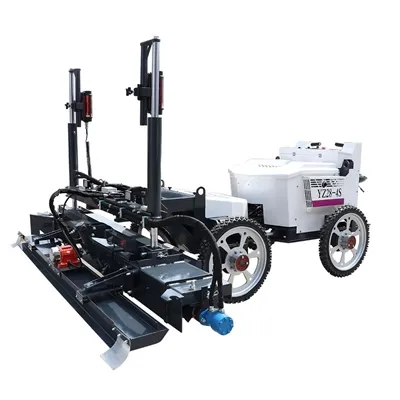
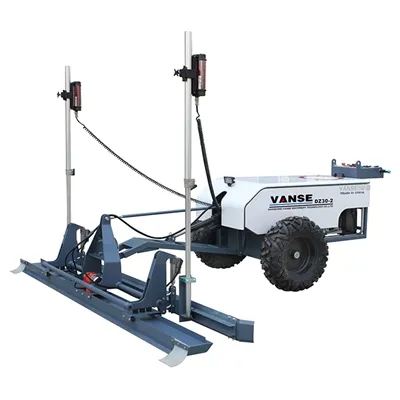
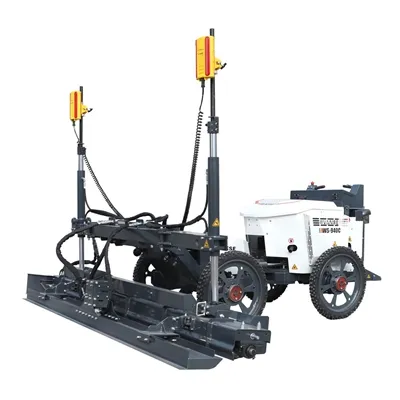
There are many specific application cases of laser leveling machines in municipal engineering. Here are some examples:
1. Highway construction: Laser leveling machines are widely used in highway construction, especially in the construction of highways and urban roads. They can help lay the road surface quickly and accurately, ensuring the flatness and stability of the road surface.
2. Municipal facility construction: Laser leveling machines can also be used in municipal facility construction, such as parking lots, squares, parks, etc. These places require large areas of concrete floors, and laser leveling machines can complete this work quickly and efficiently.
3. Subway construction: Subway construction also requires a large amount of concrete floors, so laser leveling machines are also widely used in this field. They can help lay subway platforms, tunnels and other infrastructure quickly and accurately.
4. Pipeline laying: Laser leveling machines can also be used for pipeline laying, especially the laying of large pipelines. They can help ensure the flatness and stability of pipelines and reduce the cost of subsequent maintenance.
5. Bridge construction: Bridge construction also requires a large amount of concrete floors, so laser leveling machines are also widely used in this field. They can help lay bridge panels and other infrastructure quickly and accurately.
In short, laser leveling machines are widely used in municipal engineering, which can help improve work efficiency and quality, reduce construction costs, and at the same time ensure the safety and stability of project quality.
Thanks to All the Friends Who Support and Trust Shandong Vanse Machinery Technology Co., Ltd.
If you want to know more about Shandong Vanse Machinery Technology Co., Ltd. or have any questions, please feel free to contact us:
Our Factory
Shandong Vanse Machinery Technology Co., Ltd.








Share this article

About the Author: Shandong Vanse Machinery Technology Co., Ltd.
Shandong Vanse Machinery Technology Co., Ltd. is a high-tech manufacturer specializing in concrete construction machinery, including laser screeds and related equipment. The company integrates R&D, production, and global sales, with products exported to over 60 countries and widely used in infrastructure projects worldwide.
Previous Post
Next Post
Related Articles
You Might Also Like
What are the special operating techniques of laser leveling machines in different construction environments?
Laser leveling machine is a kind of equipment used for large-area concrete paving and leveling. There are special operating skills in different construction environments: – Indoor space is usually limited, and the size of laser leveling machine is relatively large. Before entering the indoor construction site, accurately measure the size of doors, passages, etc. to ensure that the machine can enter smoothly. If the passage is narrow, some parts, such as detachable scrapers, may need to be removed and installed after the machine enters the room. – During operation, pay attention to the turning radius of the machine due to limited indoor space. Plan the leveling route in advance and minimize the machine's large-scale turning movements to avoid colliding with walls, columns and other building structures. – Pay special attention to dust control during indoor construction, because dust will affect indoor air quality and subsequent decoration processes. The laser leveling machine can be equipped with an efficient dust suction device to simultaneously remove dust during the leveling process. – For situations where there are more loose debris on the ground, use a broom or industrial vacuum cleaner for preliminary cleaning before construction to reduce the situation of debris being raised during the leveling process. – Indoor floors usually have high requirements for flatness, such as warehouse floors, exhibition hall floors, etc. Before construction, carefully calibrate the laser transmitter and receiver to ensure the accuracy of the laser signal. – According to the designed slope of the indoor floor (if any), accurately set the control system parameters of the laser leveler. For example, for indoor floors with drainage requirements, the leveling operation should be carried out according to the designed drainage slope (such as 0.3% – 0.5%), and the flatness should be checked regularly during the construction process. Tools such as rulers can be used for random inspections. – If there is an uneven original ground on the construction site, such as potholes, bumps, etc. Before construction, use equipment such as bulldozers to perform preliminary leveling on the site and deal with areas with large height differences. For small potholes, the thickness of the concrete can be appropriately increased during the construction of the laser leveler to fill them. – When the site has a certain slope, the working mode of the laser leveler should be adjusted according to the design requirements. For example, for the gentle slopes at the entrance and exit of the parking lot, they should be leveled according to the specified slope (such as no more than 7% – 10%), and the transition with the adjacent plane area should be natural and smooth. – Weather factors have a greater impact on outdoor construction. If high temperatures are encountered, the solidification speed of concrete will be accelerated. The leveling construction speed should be appropriately accelerated, and retarders can be added to the concrete to extend the working time of the concrete. At the same time, attention should be paid to providing heatstroke prevention measures for operators. – When encountering rainy weather, the laid but not completely solidified concrete should be covered with plastic film in time to prevent rain erosion. If there is water accumulation on the ground, drain it before construction, and check the water content of the ground to avoid affecting the quality of concrete due to excessive water content. – For large outdoor sites, in order to improve construction efficiency, multiple laser leveling machines can be used for collaborative operation. When dividing the construction area, the walking route of the machine should be reasonably planned to avoid mutual interference. – Arrange the supply of concrete in advance to ensure that concrete can be supplied to the construction area continuously and stably. Concrete mixer trucks can be used to unload directly near the construction area to reduce the concrete transportation time and improve the overall construction progress. – When constructing on narrow roads or corridors, the positioning of the laser leveler must be accurately controlled. Due to the narrow space, the machine may not be able to perform regular steering operations. The concrete can be spread and leveled by adjusting the angle of the scraper by alternating forward and backward movements. – Set up warning signs on both sides of the road or corridor in advance to prevent other vehicles or personnel from interfering with the construction, and also to avoid the machine from colliding with roadside facilities. – When constructing in narrow spaces, the safety of the operator is of vital importance. The operator should wear protective equipment, such as a helmet, reflective vest, etc. And ensure that the machine's emergency brake is in good condition so that it can stop in time in case of an emergency. – As roads or corridors may have a certain amount of traffic flow, during construction, it is necessary to work closely with on-site traffic management personnel and select periods with less traffic flow for construction, or adopt temporary traffic control measures.In addition to improving the construction quality and efficiency, what other potential industrial application advantages does the concrete laser leveling machine have?
– Laser leveling machines can achieve high-precision ground leveling at the millimeter level. In some industrial sites with extremely high requirements for flatness, such as electronic chip manufacturing plants, precision instrument production workshops, etc., the ground flatness can be accurately controlled to provide a stable foundation for the installation and operation of high-precision equipment. For example, in chip manufacturing workshops, the ground flatness error is required to be controlled within ±1-2mm, and laser leveling machines can meet this requirement well. – Its precise control system can automatically level through laser guidance, and operators can accurately set the leveling machine according to specific construction requirements, such as slope, elevation, etc. This is very important for building industrial sites with drainage slopes (such as open-air production areas of chemical companies) or storage areas where elevation needs to be precisely controlled (such as automated stereoscopic warehouses). – Modern advanced laser leveling machines are usually equipped with data recording functions, which can record various parameters during the leveling process, such as flatness data, slope changes, construction area, etc. These data are very valuable for quality control and subsequent site evaluation. For example, after the construction of a large logistics warehouse, the data can be analyzed to verify whether the ground meets the design standards and provide a reference for later ground maintenance and renovation. – Data can also be used to optimize the construction process. By analyzing multiple construction data, the construction team can find out the bottleneck links in the construction process, adjust the operating parameters of the leveling machine, and improve the overall efficiency and quality of the construction. – Compared with traditional manual leveling methods, laser leveling machines can greatly reduce the number of manual workers. A laser leveling machine can replace the work of multiple skilled workers to a certain extent, especially in large-scale industrial floor construction, this advantage is more obvious. For example, in the construction of an industrial plant floor of thousands of square meters, the use of a laser leveling machine may only require 2-3 operators, while the traditional method may require 10-15 workers. – With the continuous increase in labor costs, the use of laser leveling machines can effectively reduce the proportion of labor costs in the entire construction cost and improve the economic benefits of construction companies. At the same time, reducing manual operations also reduces the probability of construction quality problems caused by human factors. – It is relatively easy to operate a laser leveling machine. The operator is mainly responsible for controlling the basic operations such as the direction and speed of the machine. There is no need to perform heavy physical labor like traditional construction, such as bending over for a long time with tools such as shovels and scrapers. This helps to improve the operator's work comfort and reduce the risk of occupational diseases caused by long-term high-intensity physical labor. – Concrete laser leveling machines can adapt to different terrain conditions. Whether it is a complex column grid layout indoors, an irregularly shaped industrial site, or an outdoor site with a certain slope change, it can be flexibly constructed. It can adapt to terrain changes by adjusting its own working mode (such as changing the scraper angle, vibration frequency, etc.). For example, in an industrial plant with multiple equipment foundations, the laser leveler can operate flexibly around the foundation to ensure the integrity and flatness of the ground. – For some renovation projects of old industrial sites, the ground may be uneven, with old foundation residues and other complex conditions. The laser leveler can use its powerful power system and working parts to effectively handle these complex grounds and create good conditions for new ground construction. – In some industrial environments, there may be harsh conditions such as heavy dust, high temperature or chemical corrosion risks. The design of the laser leveler usually takes these factors into consideration. The body shell can be made of corrosion-resistant materials, and the engine and electrical system also have corresponding protection measures. For example, in the ground construction of chemical enterprises, the laser leveler can resist a certain degree of chemical corrosion to ensure the normal operation of the equipment.Two methods and techniques for concrete pavement leveling, how to improve leveling efficiency and quality?
◑◐Construction method: Use a 3-4m light ruler to scrape the concrete surface, remove excess water and slurry, fill the low-lying areas with concrete, vibrate and re-trim, remove and trim the high parts, and then smooth them appropriately. The vibrator rod will also be used to "quickly insert and slowly pull out" to fully vibrate the concrete. The moving distance of each rod is generally not more than 1.5 times its effective radius (can be controlled as 30cm), and the distance from the template is less than 0.5 times the effective radius of the vibration. Vibrate until the slurry overflows on the surface of the concrete mixture, no longer sinks significantly, and no obvious bubbles overflow; then use the vibration beam to walk back and forth 2-3 times to level and raise the slurry to make the surface flat and uniform. ◑◐Applicable scenarios: Applicable to small projects, rural roads with narrow construction sites or relatively low requirements for flatness. For example, some self-built roads in rural areas, internal roads in small factory areas, etc. ◑◐Advantages: The equipment is simple and easy to obtain, the cost is low, the operation is relatively easy, and the technical requirements for operators are relatively low. ◑◐Disadvantages: The construction efficiency is low, the labor intensity of manual operation is high, the flatness control accuracy is limited, and it is difficult to meet the requirements of large-area, high-precision road projects. ◑◐Construction method: The laser emitted by the transmitter is used as the reference plane, and the leveling head is controlled in real time through the laser receiver on the laser leveling machine. Just like the laser leveling machine equipped with a HONDA GX690 engine (power 18.4kW/25HP, fuel tank capacity 19L), the steel bar is tied after the formwork of the civil engineering project. Before pouring concrete, the elevation is set on the column reinforcement and led to the laser leveling control system. When the pouring personnel scrape the elevation, the elevation is controlled to be 5-10mm higher than the design elevation, and then the machine operator uses the equipment to accurately level the concrete surface. The leveling width is 3m (9.84ft), and it adopts hydraulic screw conveying paving mode. The vibration system is hydraulic vibration, with a maximum excitation force of 2000N, which can be automatically calibrated and controlled at a certain frequency. After the water seepage of the concrete pouring surface is completed, the laser leveling instrument is used for re-measurement, the water accumulation is filled, and the 3-meter scraper is used to rotate and level it, and then the single-disc trowel is used to level the slurry. ◑◐Applicable scenarios: It is widely used in large-scale industrial plants, large shopping malls, warehouses, underground garages, airport runways, docks and other large-scale concrete floor projects with high requirements for ground flatness, horizontality and strength. For example, the workshop floor of a large automobile manufacturing plant, the floor of a large logistics storage center, etc. ◑◐Advantages: It can achieve high-precision and fast leveling of concrete, and the flatness and levelness of the ground are more than 3 times higher than conventional methods, and the density and strength are increased by more than 20%; it can improve work efficiency by more than 50% and save about 35% of labor; it can lay high-strength concrete, low-slump concrete and fiber concrete; and it can also automatically control the longitudinal and transverse slopes. The equipment has an all-aluminum body and is light in weight (net weight 835kgs / 1841lbs), which is convenient for operation under various working conditions. It is also equipped with an anti-skid system, a hydraulic brake system and a trailer system, a more precise height adjustment rod, a standard soft landing system for the working head, and switch detection and valve port calibration functions to ensure stable machine performance after long-term use. It is also equipped with two types of tires (inflated narrow tires and inflated wide tires) to adapt to different working conditions. ◑◐Disadvantages: The equipment has high purchase costs, high professional and technical requirements for operators, and requires professional training; the site requirements are relatively high, and it is inconvenient to operate in narrow and complex terrain sites. ◑◐Pre-construction preparation skills: Before construction, ensure that the roadbed is stable, the formwork is strong and installed straight and flat, and set up a support device every 1m. Accurately measure and lay out the construction site to determine the road elevation and slope. At the same time, clean the construction site to ensure that the ground is clean, dust-free, and oil-free. If there are cracks or unevenness on the ground, it needs to be repaired first. In addition, the quality control of raw materials and mechanical debugging must be done well to ensure the quality of concrete and the normal operation of equipment (such as the laser leveling machine equipped with the HONDA engine mentioned above). ◑◐Concrete spreading skills: Spread the material during pouring. When unloading with a dump truck or a mixer truck, it is strictly forbidden to concentrate the material on a few points to prevent concrete accumulation and ensure that the concrete mixture is evenly distributed. ◑◐Vibration operation skills: Use the vibrator to "insert quickly and pull out slowly" to avoid missing vibration and over-vibration. Control the moving distance of the vibrator and the distance from the formwork. For equipment using a hydraulic vibration system (such as the relevant laser leveling machine), the exciting force should be reasonably adjusted according to the characteristics of the concrete and construction requirements. ◑◐Surface treatment skills: Correct minor defects in the leveling process in time; rub the surface with a grinding disc to compact the slurry before the initial setting to eliminate water seepage channels and tiny cracks; complete the finishing and embossing processes before the final setting, and finish 3-4 times. Moisturize in time during hot and windy weather in summer to prevent the surface from evaporating too quickly and forming a hard shell. ◑◐Equipment upgrade and reasonable configuration: When conditions permit, give priority to equipment such as advanced laser leveling machines with the above parameters. Its hydraulic screw conveying paving mode and larger leveling width can improve construction efficiency. At the same time, according to the scale of the project and the conditions of the construction site, reasonably match other auxiliary equipment, such as concrete mixers, pump trucks, etc., to ensure smooth connection between concrete supply and construction. ◑◐Construction process optimization: Scientifically plan the construction sequence and operation area, adopt a segmented flow operation method, and reduce the waiting time between each process. For example, reasonably arrange the connection between concrete pouring, vibration, and leveling with a laser leveler (operated according to its performance parameters) to avoid idle work. ◑◐Personnel training and management: Strengthen the skills training of operators to enable them to master the operation of construction equipment (especially laser levelers) and construction processes, and improve their operating proficiency and accuracy. At the same time, optimize the division of labor, clarify the responsibilities of each position, and improve the efficiency of teamwork. ◑◐Strictly control the quality of raw materials: Select raw materials such as cement, aggregates, and admixtures of qualified quality, control the mix ratio, and ensure that the strength and workability of concrete meet the design requirements. For example, cement should be selected from brands with stable strength and reliable quality, and the particle size and mud content of aggregates should meet the standards. ◑◐Strengthen process quality inspection: During the construction process, use measuring instruments such as levels and theodolites to monitor road elevation, flatness, slope and other indicators in real time, and make timely adjustments when deviations are found. At the same time, do a good job in testing the slump of concrete and the compaction density. For laser leveling machine construction, it is necessary to regularly check whether the laser system and hydraulic system of the equipment (such as checking the accuracy of its height adjustment rod, the performance of the hydraulic brake system, etc.) are normal. ◑◐Protect the finished product: After the concrete pavement construction is completed, timely take maintenance measures such as covering and sprinkling water, and the maintenance time is not less than 14 days. Set up warning signs to restrict the passage of vehicles and pedestrians before the concrete strength reaches the design requirements to prevent damage to the road surface.