Technical Knowledge
The construction effect of laser leveling machine changes under different climatic conditions, the specific impact and corresponding adjustment methods

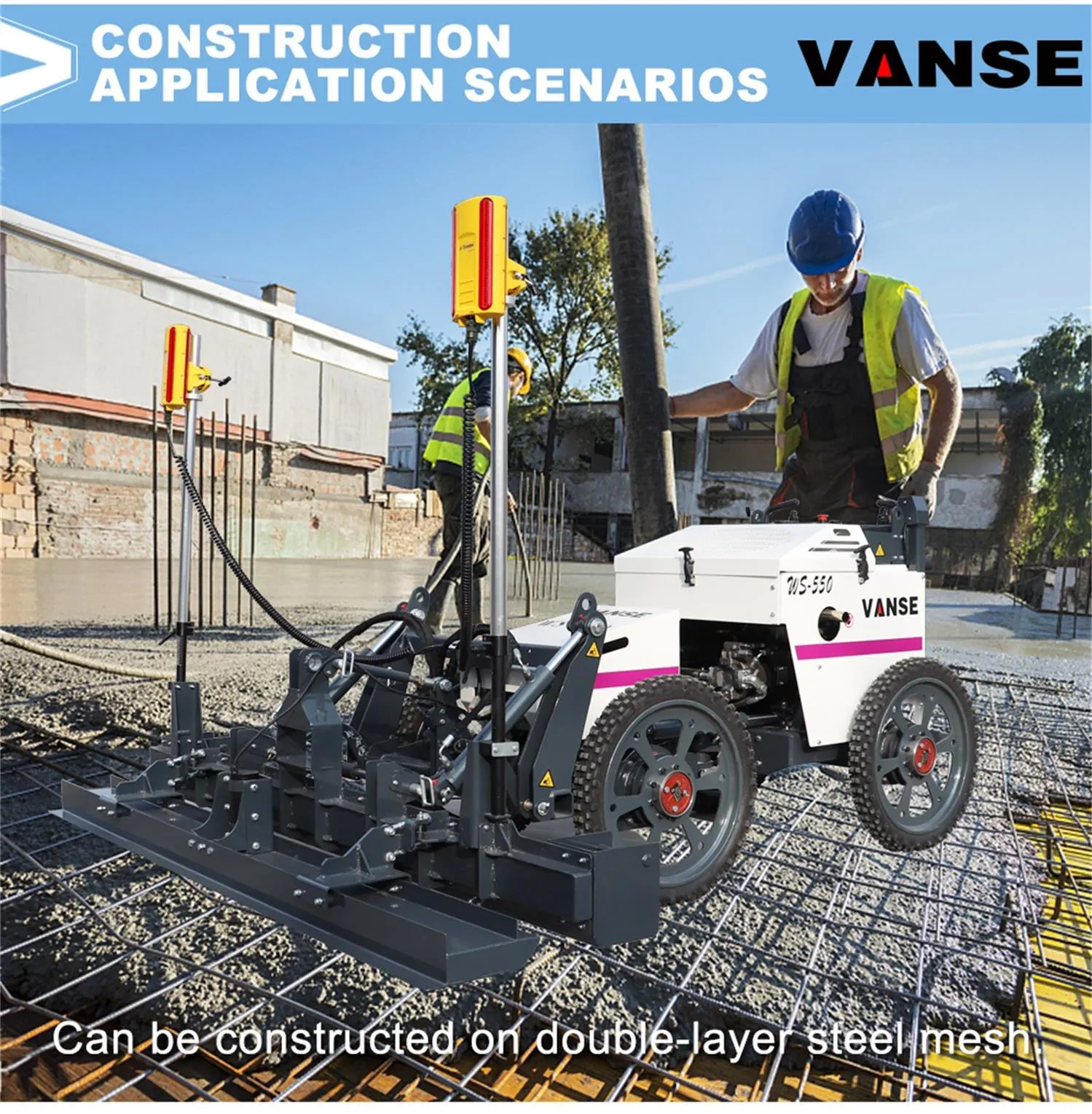
The construction effect of laser leveling machine will change under different climatic conditions. Here are some specific effects and corresponding adjustment methods:
1. **Temperature change**:
– Under high temperature conditions, the setting speed of concrete is accelerated, and the laser leveling machine needs to adjust the working speed to adapt to the faster setting time. At the same time, attention should be paid to the heat dissipation of the equipment and the moisture retention of the concrete.
– Under low temperature conditions, the setting speed of concrete slows down, and measures may need to be taken such as using heating equipment or choosing a concrete formula suitable for low temperature construction.
2. **Humidity effect**:
– High humidity environment may affect the drying speed of concrete. When the laser leveling machine is used for construction, it is necessary to extend the curing time to ensure that the concrete is fully hardened.
– Low humidity or windy environment may cause the moisture on the concrete surface to evaporate too quickly. Measures need to be taken to keep the concrete moist, such as covering with wet cloth or increasing the frequency of watering.
3. **Rainfall effect**:
– Rainfall may occur during construction, and rain protection measures, such as temporary shelters, need to be prepared to protect the newly constructed concrete surface from rain erosion.
4. **Influence of wind speed**:
– High wind speed may affect the stability of the laser signal of the laser leveler. It is necessary to consider the impact of wind direction and wind speed on the laser transmitter and receiver, and take corresponding wind protection measures.
5. **Construction process adjustment**:
– Under different climatic conditions, it may be necessary to adjust the construction process, such as the paving speed of concrete, the travel speed of the laser leveler, and the vibration frequency, to ensure the construction quality.
6. **Equipment maintenance**:
– Different climatic conditions have different maintenance requirements for laser levelers. For example, in a humid environment, it is necessary to pay attention to the rust and moisture prevention of the equipment; in a dusty environment, the equipment needs to be cleaned regularly to prevent dust from affecting the performance of the equipment.
7. **Construction plan arrangement**:
– Reasonably arrange the construction plan according to the climatic conditions, avoid construction under extreme climatic conditions, such as avoiding construction in heavy rain or high temperature, to reduce the impact on the construction effect.
Through the above adjustments, the laser leveler can maintain the construction effect under different climatic conditions and ensure the construction quality and efficiency.
Thanks to All the Friends Who Support and Trust Shandong Vanse Machinery Technology Co., Ltd.
If you want to know more about Shandong Vanse Machinery Technology Co., Ltd. or have any questions, please feel free to contact us:
Our Factory
Shandong Vanse Machinery Technology Co., Ltd.








Share this article

About the Author: Shandong Vanse Machinery Technology Co., Ltd.
Shandong Vanse Machinery Technology Co., Ltd. is a high-tech manufacturer specializing in concrete construction machinery, including laser screeds and related equipment. The company integrates R&D, production, and global sales, with products exported to over 60 countries and widely used in infrastructure projects worldwide.
Previous Post
Next Post
Related Articles
You Might Also Like
Selection Strategy for Riding-Type VS Hand-held Trowel Machines: Large Warehouse VS Small Workshop
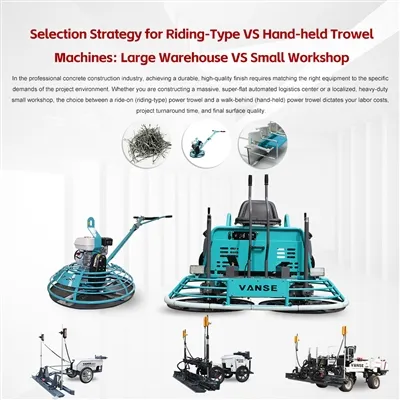
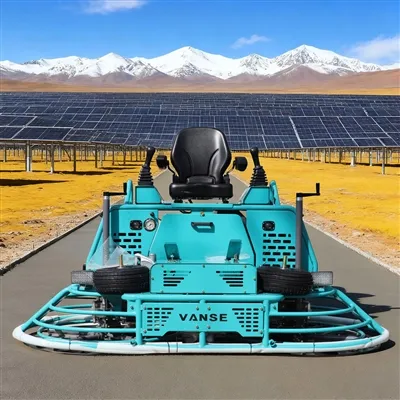
In the professional concrete construction industry, achieving a durable, high-quality finish requires matching the right equipment to the specific demands of the project environment. Whether you are constructing a massive, super-flat automated logistics center or a localized, heavy-duty small workshop, the choice between a ride-on (riding-type) power trowel and a walk-behind (hand-held) power trowel dictates your labor costs, project turnaround time, and final surface quality. To maintain high E-E-A-T (Experience, Expertise, Authoritativeness, and Trustworthiness) standards in concrete flooring, contractors must deploy a strategic equipment selection process. Here is the ultimate guide to selecting the right concrete finishing machinery for your next project, featuring industry-leading insights and equipment solutions from Shandong Vanse Machinery Technology Co., Ltd. (www.vansemac.com). The Requirement: Massive daily pour volumes, strict international Floor Flatness (FF) and Floor Levelness (FL) tolerances, and high surface wear resistance. For expansive commercial and industrial spaces, the riding-type power trowel is the undisputed necessity. Utilizing walk-behind equipment in a massive warehouse is an operational bottleneck that dramatically inflates labor costs and risks the concrete curing before the finishing phase is complete. Superior Surface Compaction: Ride-on trowels, such as the heavy-duty models offered by Vanse Machinery, feature dual-rotor systems and weigh significantly more than hand-held units. This intense mechanical weight drives coarse aggregates down and brings the cement paste to the top, resulting in a highly densified, burnished finish that resists the heavy dynamic loads of forklifts and automated storage and retrieval systems (ASRS). Protecting FF and FL Metrics: When pouring super-flat floors, contractors rely on advanced Concrete Laser Screeds (like the Vanse YZ30-4E or YZ40-4E telescopic boom models) to establish the perfect grade. A ride-on trowel operator sits on the machine, meaning no human footprints disrupt the freshly leveled surface. The wide, overlapping stance of the machine acts as a massive smoothing plane, locking in the laser-guided levelness. Exponential Efficiency (OpEx Savings): A single operator on a high-speed ride-on trowel can cover thousands of square meters in a fraction of the time it takes a manual crew. This rapid turnaround is essential for preventing cold joints and keeping international construction projects ahead of schedule. The Requirement: Maneuverability, cost-effectiveness, and precision around structural obstacles. Not every project has the square footage to justify the deployment of heavy riding equipment. For small workshops, residential garages, retail expansions, or tight mezzanine decks, the walk-behind power trowel is the strategic choice. Unmatched Maneuverability: Walk-behind trowels excel in confined spaces. They can easily navigate around plumbing stub-outs, structural columns, and tight corners where a bulky ride-on machine simply cannot fit or safely maneuver. Lower Capital Expenditure (CapEx): For smaller contracting firms or specialized repair teams, hand-held trowels require a much lower initial investment while still providing the mechanized blade rotation necessary for a smooth, hard trowel finish. Ease of Transport: Walk-behind units are lightweight and can be easily loaded into standard service trucks or elevated to upper-deck projects without the need for heavy-duty telehandlers or cranes. For global contractors handling comprehensive commercial builds, the selection strategy is rarely "either/or." It is highly recommended to view concrete finishing as an integrated ecosystem. As demonstrated by the comprehensive product lineup at Vanse Group, a flawless commercial floor requires a hybrid deployment: The Primary Output: Deploy the Ride-On Power Trowel to handle the vast 90% of the open warehouse floor space, matching the rapid advancement of the laser Leveling. The Perimeter Polish: Simultaneously deploy a team with Walk-Behind Power Trowels to follow the perimeter, expertly finishing the critical edge work along the formwork, walls, and structural pillars where the ride-on machine cannot safely reach. Selecting the correct concrete power trowel is a direct calculation of project scale, labor economics, and required floor specifications. For vast, seamless industrial floors, ride-on trowels are critical for efficiency and super-flat compaction. For confined workshops and precise edge-work, walk-behind trowels remain indispensable. By equipping your fleet with a balanced combination of reliable, high-performance machinery from an authoritative manufacturer like Shandong Vanse Machinery, you ensure your contracting business can competitively bid on-and flawlessly execute-any project, from the smallest workshop to the largest global logistics center. Note: The parameters provided in this document are for reference only and are not mandatory. Due to differences in technical characteristics between different brands and models of laser levelers, please consult the manufacturer for a suitable solution before actual operation. This reference document assumes no responsibility for any issues arising from failure to follow the manufacturer's instructions.Technical measures to ensure the quality of power trowel operation under extreme weather conditions such as high and low temperatures
For the technical measures to ensure the construction quality of the power trowel machine under extreme weather conditions such as high and low temperatures, we also need to systematically respond from four dimensions: environmental analysis, material adjustment, process optimization and finished product protection. The following is the specific technical measure plan: Prevention first: The core of all measures lies in "early prediction and preparation" rather than remedial measures after the fact. Systematic response: Concrete construction is a closely interlinked process that requires full-process control from the concrete mix ratio to the final curing. Flexible adjustment: Dynamically adjust the construction process based on specific conditions such as on-site temperature, humidity, and wind speed. High temperatures can cause rapid evaporation of water in concrete, significant loss of slump, and shortened setting time, thereby increasing the difficulty and risk of operating the power trowel, and easily leading to problems such as surface powdering, plastic shrinkage cracks, and surface cracking. (1) Preparations before construction Concrete mix proportion adjustment Communicate with the commercial concrete mixing station to use retarding water-reducing agents, delay the initial and final setting times, and strive for a longer operation window for plastering. When necessary, air-entraining agents can be appropriately added to enhance the crack resistance of concrete. Under the premise of ensuring the design strength, the amount of cement should be reduced as much as possible to minimize the heat of hydration. Pouring plan adjustment Avoid high-temperature periods: Try to schedule concrete pouring in the evening, at night or in the early morning. Ensure the coherence of the construction organization and shorten the entire timeline from the concrete leaving the tank to the completion of the plastering. On-site preparation Water the base layer and formwork to cool them down, but there must be no standing water. Prepare sunshades, sunshade nets, windbreak sheds, etc., to reduce the area of concrete exposed to sunlight and wind. Ensure that the power trowel is in good condition and prepare a spare machine to prevent delays caused by equipment failure. (2) Key control Points for the operation of the power trowel machine Precisely control the timing of polishing The initial setting judgment is crucial: Use the "footprint method" (when the footprint depth is approximately 3-5mm) for judgment, and at this point, the first round of smoothing can be carried out. Concrete reaches a workable state very quickly at high temperatures and must be closely monitored by a dedicated person. Better late than early: In high temperatures, it is especially important to avoid operating the machine when there is still floating slurry and bleeding on the concrete surface, otherwise the surface structure will be damaged, leading to sanding and cracking. Optimize the polishing process First coat (rough power troweling/slurry lifting) : Use a power trowel to install the disc and quickly carry out slurry lifting and initial leveling. Act quickly and avoid staying in the same position for too long. The second coat (fine power troweling/calendering) : When the surface moisture has evaporated and the footprints left by people stepping on it are very shallow, replace the power trowel (power trowel) of the power trowel machine and perform cross-operation. This round is the key to eliminating marks and enhancing density. If necessary, increase the number of passes: If the surface loses water too quickly, a manual wooden power trowel can be used to assist in roughening between two passes to seal fine cracks and create conditions for the next machine smoothing. Prevent surface water loss During the intervals of the power trowel operation, if you notice that the surface starts to turn white and dry, you should immediately use a sprayer to apply a small amount of spray to moisten the surface. It is strictly forbidden to sprinkle a large amount of water. Beside the operation area of the power trowel machine, arrange workers to be ready to spray the curing agent at any time. (3) Post-construction maintenance Immediate maintenance: After the last coat of polishing is completed, the surface moisture and luster disappear, and there is no trace left when pressed hard with a finger, maintenance should be carried out immediately. Maintenance method Prioritize the use of curing agents: Immediately spray a layer of film-forming curing agent on the concrete surface to lock in moisture. This is the most effective way. Covering for moisture retention: Immediately after the smoothing is completed, cover with plastic film, wet felt cloth or geotextile, and ensure that the covering remains moist at all times. The coverings should overlap tightly. Low temperatures can significantly delay the hydration reaction of cement, resulting in a slow increase in the strength of concrete. In the early stage, it is prone to frost damage, causing the surface to peel and become loose, and permanent loss of strength. The operation window period of the power trowel machine will be abnormally extended, but power troweling and curing must be completed before the freshly poured concrete freezes. (1) Preparations before construction Concrete mix proportion adjustment Communicate with the commercial concrete mixing station to use early-strength water-reducing agents or antifreeze to accelerate the development of early strength and lower the freezing point. High-strength grade cement or Portland cement can be considered for use, as they have a higher early hydration heat. Environmental temperature guarantee Build an insulated shed: Set up a sealed insulated shed in the construction area, and use warm air fans, steam pipes, etc. for heating inside to ensure that the temperature inside the shed does not fall below +5℃. Foundation preheating: Preheat the base layer and steel bars to prevent concrete from coming into contact with the frozen base layer. Hot air blowers can be used for blowing or insulation materials can be laid. Material and equipment preparation The temperature of concrete leaving the machine should not be lower than 10℃, and the temperature of concrete entering the formwork should not be lower than 5℃. Place the power trowel machine in a warm shed in advance for preheating to prevent the cold machine from touching the concrete surface, causing "rapid cooling" and adhesion. (2) Key control Points for the operation of the power trowel machine Precisely control the timing of polishing Concrete sets very slowly at low temperatures. It is strictly forbidden to operate the machine before the concrete reaches a certain hardness. One must wait patiently and use the "footprint method" for judgment, but the waiting time will be much longer than at normal temperature. It may take several hours or even longer to wait. Better late than early: Waiting for a long time is better than boarding the computer too early. Using the machine too early will damage the concrete structure, causing excessive bleeding and peeling on the surface, forming "spring-like soil" that cannot be polished. Optimize the polishing process Due to the slow increase in intensity, the operation of the power trowel can be more relaxed, but the interval time between each pass will be very long. The operation number of the power trowel is similar to that at normal temperature, but it is necessary to pay attention to observing the surface. If ice crystals or signs of freezing are found, the operation must be stopped immediately and insulation and heating measures should be strengthened. Prevent surface freezing Ensure that the construction environment temperature is always above the safety line. Keep a close eye on the weather forecast to prevent the "quick-freezing" weather from hitting. (3) Post-construction maintenance Heat storage and insulation maintenance After the smoothing is completed, immediately cover it with a layer of plastic film (to prevent water loss), and then cover it with insulation materials such as insulation blankets, straw curtains, and rock wool quilts. The number of covering layers should be determined based on the temperature measurement results to ensure that the concrete does not freeze before reaching the "critical strength for frost resistance" (usually 30% of the designed strength or 5MPa). Continuous heating curing If heat storage alone cannot ensure the temperature, continuous heating should be provided in the insulated shed to keep the concrete in a positive temperature environment. Steam curing is more effective and can provide both temperature and humidity simultaneously. Extend the curing time: At low temperatures, the strength growth of concrete is slow. The curing time should be at least twice as long as the time required by the specification. Moreover, before the strength of the test blocks cured under the same conditions reaches the design requirements, they should not be frozen or subjected to loads. Precise temperature measurement: Set up temperature measurement points at key structural parts to monitor the internal temperature of the concrete at regular intervals and guide the curing work. Control dimension High-temperature environment Low-temperature environment Core contradiction Water evaporates quickly, condenses rapidly and is prone to cracking Slow hydration, slow strength growth, and prone to freezing Material adjustment Retarder, air-entraining agent, reducing cement dosage Early strength agent/antifreeze, high-strength cement Construction timing Avoid midday and choose early morning, late evening or late night It should be carried out during the daytime when the temperature is relatively high Polish the timing The waiting time is short. Be sure not to miss the window. It's better to wait late than early The waiting time is long. Be sure not to go up too early. It's better to be late than early Polishing process It acts quickly and can be sprayed in small amounts to prevent water loss Operate calmly and strictly prevent surface freezing Maintenance measures Spray the curing agent immediately or cover it to retain water Cover and keep warm immediately, and heat if necessary Key tools Sprayers, sunshade nets, maintenance agents Insulation shed, heating equipment, insulation materials, thermometer Through the above systematic technical measures, the negative impact of extreme weather on the construction quality of the power trowel can be offset to the greatest extent, ensuring that the strength, flatness, wear resistance and appearance quality of the final floor meet the standard requirements. Note: The parameters provided in this document are for reference only and are not mandatory. Due to differences in technical characteristics between different brands and models of laser levelers, please consult the manufacturer for a suitable solution before actual operation. This reference document assumes no responsibility for any issues arising from failure to follow the manufacturer's instructions.The role of concrete floor grinders in refining the flatness of laser-leveled surfaces
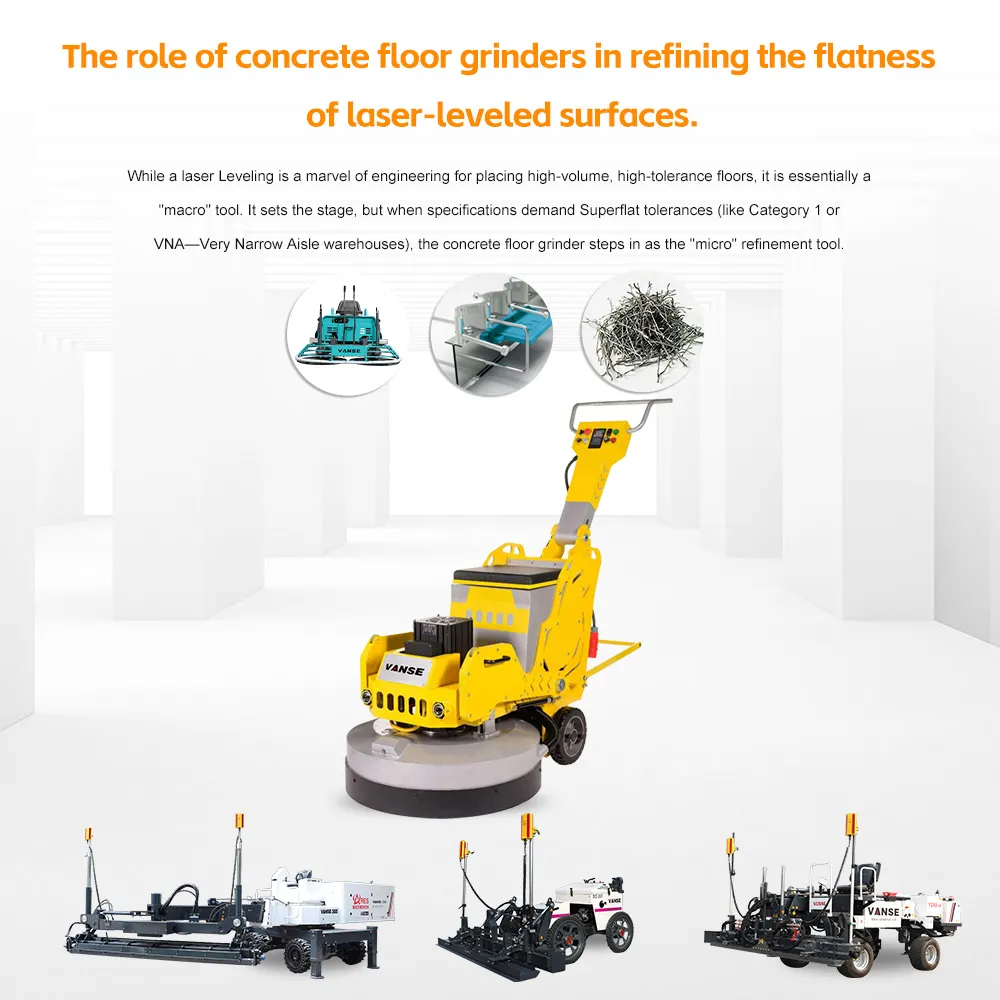
While a laser Leveling is a marvel of engineering for placing high-volume, high-tolerance floors, it is essentially a "macro" tool. It sets the stage, but when specifications demand Superflat tolerances (like Category 1 or VNA-Very Narrow Aisle warehouses), the concrete floor grinder steps in as the "micro" refinement tool. Here is how grinding bridges the gap between a good pour and a perfect surface. Even the best laser Leveling can leave behind subtle periodic waves caused by the vibration frequency of the Leveling head or slight settling of the concrete. The Problem: These waves might only be 1–2 mm high, but at high speeds, a forklift will feel them as significant vibrations. The Solution: Heavy-duty planetary grinders equipped with coarse metal-bond diamonds act as a "plane." Because the machine has a large, rigid footprint, it bridges the valleys and shaves off the peaks (high spots), effectively flattening the Waviness Index. One of the biggest enemies of laser-leveled floors is drying shrinkage, which causes the edges of the concrete slabs to "curl" upward at the saw-cut joints. The Impact: A floor that was perfectly level on day 1 may have "steps" at the joints by day 28. The Refinement: Grinders are used to "chase" these joints. By grinding across the joint, the machine transitions the height difference into a long, imperceptible slope, ensuring smooth wheel transitions for equipment. In the world of floor tolerances, we use F-numbers to measure quality: FF (Flatness): Relates to the bumpiness of the surface. FL (Levelness): Relates to the tilt of the slab. Laser leveling is excellent at achieving high FF (Levelness) because it follows a laser plane. However, achieving an FF (Flatness) above 60 or 80 usually requires mechanical grinding. The grinder removes the "noise" in the data, smoothing out the micro-texture that a Leveling simply cannot address. Feature Laser Leveling (Placement) Floor Grinder (Refinement) Primary Goal Bulk leveling and consolidation. Precision flattening and smoothing. Tolerance Range Good to Great (FF 25–45). Exceptional (Up to FF 100+). Material State Wet/Plastic concrete. Cured/Hardened concrete. Surface Profile Closed-face (cream) finish. Refined, open, or polished finish. For high-spec projects, contractors use a "Measure-Grind-Measure" loop: Initial Measurement: Use a floor profiler (like a Dipstick) to map the high and low spots of the laser-leveled floor. Targeted Grinding: The grinder is used specifically on the "red zones" (high spots) identified by the software. Verification: The floor is re-measured to ensure it meets the Narrow Aisle (VNA) specification. Note: Grinding to refine flatness is different from grinding for aesthetics. In flatness refinement, the goal is stock removal (shaving the concrete), which often exposes the aggregate. If the client wants a uniform look, the entire floor must be ground to the same depth. Would you like me to explain the different types of diamond grit sequences used for stock removal versus final polishing? Contact us NOW Note: The parameters provided in this document are for reference only and are not mandatory. Due to differences in technical characteristics between different brands and models of laser levelers, please consult the manufacturer for a suitable solution before actual operation. This reference document assumes no responsibility for any issues arising from failure to follow the manufacturer's instructions.