Technical Knowledge
Concrete laser levelling machine VS manual construction, where is the difference?
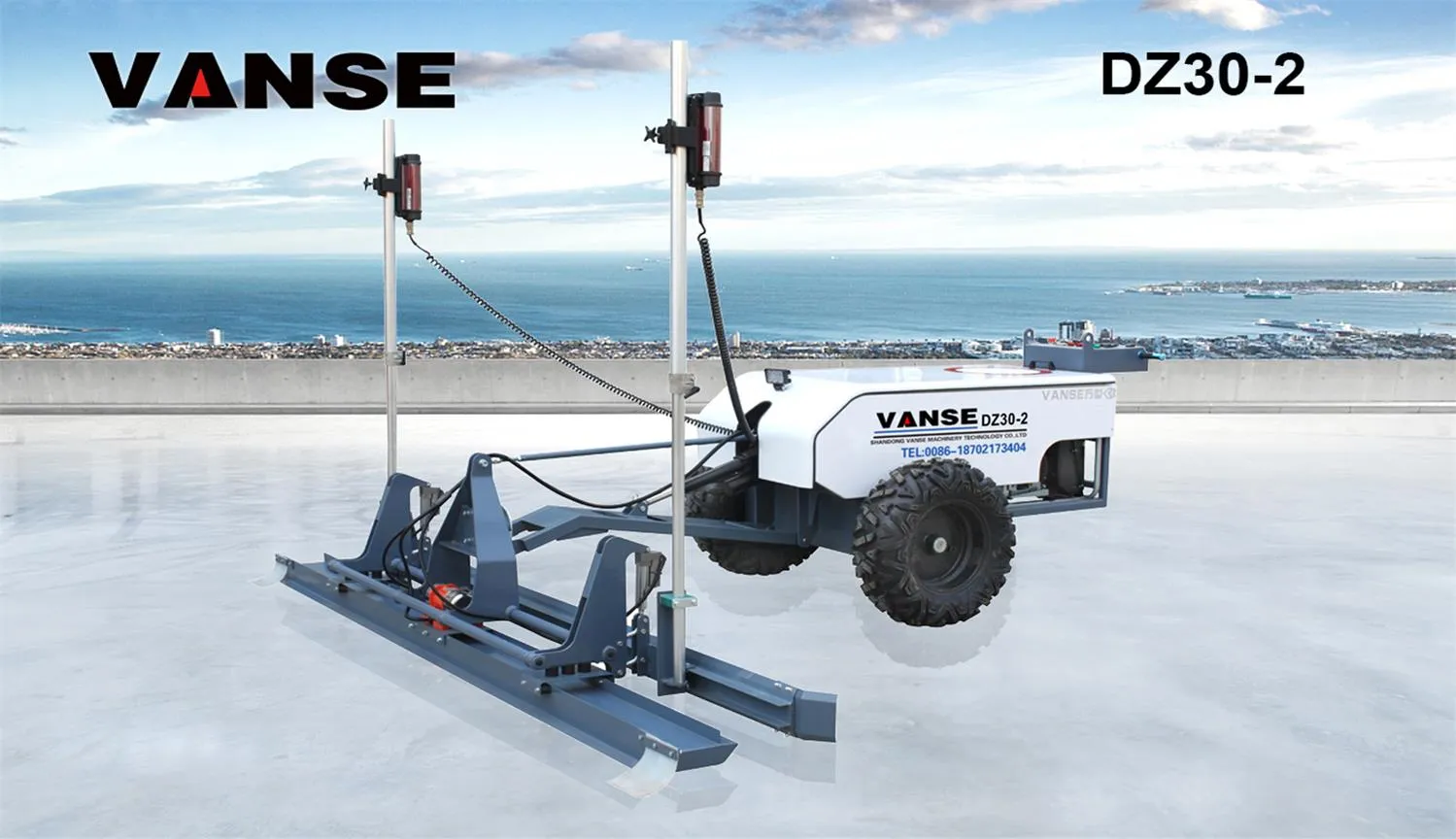
| In recent years, with the continuous development of the economy and society, the construction demand of large areas such as parking lots, large squares, industrial plants is also increasing, because these sites mainly use concrete to pour the foundation, and then cover the floor tile or floor paint, so higher requirements are put forward for the flatness of the base layer. In order to ensure that the ground flatness after construction reaches an ideal level, it is necessary to use a concrete laser levelling machine. So, what is the difference between the construction of concrete laser levelling machine and manual construction? What are the significant construction advantages of the concrete laser leveling machine itself? |
|
█ Traditional construction method
The common concrete floor construction method is to manually level, and then use a polishing machine to wipe. This method requires a lot of labor, the quality of the construction process is not controlled, the need for manual correction many times, repeated measurement and adjustment of the ground under construction, and the efficiency is not high. A large area of concrete floor construction needs to use a large number of wood or metal plates to form the side formwork in advance, and measure the height of the side formwork by the level to control the height of the concrete after laying. Due to the need to use the level for multi-point measurement, the side template must be retested after laying to ensure accuracy. Therefore, the process is prone to human error. In addition, the removal of the side template also requires a lot of labor. |
|
█ Intelligent construction method
1. Operation principle
2. Construction advantages
|
| Summary of this chapter: Although the concrete laser levelling machine is an emerging new equipment with excellent technology in recent years, it is widely used in airport runways, high-speed rail platforms, large workshop pavements and other projects with high requirements for ground smoothness. If it can be widely popularized and promoted, it will bring very considerable construction benefits. |
Thanks to All the Friends Who Support and Trust Shandong Vanse Machinery Technology Co., Ltd.
If you want to know more about Shandong Vanse Machinery Technology Co., Ltd. or have any questions, please feel free to contact us:
Our Factory
Shandong Vanse Machinery Technology Co., Ltd.








Share this article

About the Author: Shandong Vanse Machinery Technology Co., Ltd.
Shandong Vanse Machinery Technology Co., Ltd. is a high-tech manufacturer specializing in concrete construction machinery, including laser screeds and related equipment. The company integrates R&D, production, and global sales, with products exported to over 60 countries and widely used in infrastructure projects worldwide.
Previous Post
Next Post
Related Articles
You Might Also Like
How to improve the construction efficiency and quality of concrete laser leveling machines under extreme climatic conditions through technological innovation?
– Develop an advanced intelligent temperature control system that can monitor the temperature of the engine, hydraulic system and key electrical components in real time. When the temperature approaches the critical value, the system automatically adjusts the working state of the equipment, such as reducing the engine speed or reducing the load of the hydraulic system to prevent overheating. For example, by installing a high-precision temperature sensor in the engine coolant circulation system, when the temperature reaches 90-95℃ (different equipment may vary slightly), the system automatically adjusts the speed of the cooling fan to speed up and enhance the heat dissipation effect. – The intelligent temperature control system can also be combined with remote monitoring technology to transmit the temperature data of the equipment to the operator's mobile device or control center in real time. In this way, even if the operator is not next to the equipment, he can understand the temperature of the equipment in time and take measures in advance, such as arranging equipment rest or adjusting the construction plan. – Use high temperature resistant sealing materials and lubricants in key parts of the engine and hydraulic system. For example, the use of high temperature resistant sealing materials such as fluororubber can effectively prevent leakage problems caused by aging and deformation of seals at high temperatures. At the same time, choose hydraulic oil with good high-temperature performance, which has a high flash point and oxidation stability, can maintain good performance in high-temperature environments, and reduce system failures caused by the decline of hydraulic oil performance. – For the outer surface of the equipment, use reflective heat-insulating coatings. This coating can reflect infrared and ultraviolet rays in sunlight and reduce the heat absorbed by the equipment. For example, nano-ceramic reflective heat-insulating coatings can effectively reduce the surface temperature of the equipment. In a high-temperature environment, the surface temperature of the equipment can be reduced by about 10-15℃. – Optimize the heat dissipation structure of the equipment and increase the heat dissipation area and ventilation channel of the radiator. For example, a fin-type radiator design is used to increase the contact area with the air and improve the heat dissipation efficiency. At the same time, reasonable vents and air guides are designed on the equipment casing, and the natural wind or forced ventilation devices (such as fans) generated when the equipment is running are used to guide the cold air to flow through the key heating components and take away the heat. – For the hydraulic system, an independent hydraulic oil heat dissipation circuit is designed to dissipate the heat of the hydraulic oil through a special cooler. The cooler can be water-cooled or air-cooled, and can be flexibly selected according to the actual construction environment and equipment requirements. – Develop efficient engine preheating system, such as the combination of electric heating plug and intake preheater. The electric heating plug can directly heat the air in the engine cylinder, while the intake preheater preheats the cold air entering the engine. Before starting, the controller automatically starts the preheating program, which can preheat the engine to the appropriate starting temperature (such as 30-40℃) in a low temperature environment of -20℃ in just 5-8 minutes. – For hydraulic systems and working parts, use oil heating technology. Install heating devices, such as oil heaters, in the lubrication system of hydraulic oil tanks and working parts. Before starting the equipment, heat the hydraulic oil and lubricating oil to achieve the appropriate working viscosity, reduce the resistance when the equipment is started, and improve the starting efficiency of the equipment. – Design the battery for low temperature adaptability, such as using cold-resistant batteries or adding special electrolyte additives inside the battery to improve the discharge performance of the battery at low temperatures. At the same time, optimize the insulation structure of the battery, wrap the battery with insulation materials to reduce heat loss. – Choose tire or track materials suitable for low temperature environment. At low temperatures, ordinary rubber will become hard and brittle, affecting the driving performance and comfort of the equipment. Using cold-resistant rubber materials to make tires or tracks can ensure good elasticity and grip in low temperature environments. – Equip the equipment with automated snow and ice removal devices. For example, heating wires are installed on the working parts of the equipment such as scrapers and spiral spreaders. When the equipment is started, the heating wires automatically work to melt the snow and ice on the working parts to prevent them from affecting the normal operation of the working parts. – Set up a small snow blowing device around the walking device (tires or tracks) of the equipment, and use compressed air or fans to blow the snow away from the walking device to ensure that the equipment can travel normally on snowy or icy roads. – Adopt higher-level waterproof sealing technology, such as IP67 or IP68 level sealing standards (IP level is the international code used to identify the protection level, and the larger the number, the higher the protection level). For key components such as electrical control cabinets and motors, use sealing rubber rings, sealing pads and sealants for multiple sealing to prevent water, dust and moisture from entering. – Develop waterproof and breathable membranes to cover the vents and parts of the equipment that may be flooded. This membrane allows air to circulate but prevents water from entering, balancing the air pressure inside the equipment while keeping the equipment dry. For example, using a waterproof and breathable membrane on the housing of the laser transmitter and receiver can prevent water from entering without affecting the transmission of the signal. – Install a dehumidification and drying system that can dehumidify the air inside the equipment using desiccant or the principle of refrigeration and dehumidification. For example, a small dehumidifier is installed in the cab or electrical control cabinet of the equipment. When the humidity sensor detects that the air humidity exceeds the set value (such as 70% – 80%), the dehumidifier automatically works to reduce the air humidity to an appropriate range. – For hydraulic systems and lubricating oil systems, vacuum drying technology is used. During equipment maintenance, the water in the system is extracted by a vacuum pump to ensure the dryness and purity of the oil and extend the service life of the oil. – Intelligent monitoring and protection against rust: – Develop an intelligent monitoring system for anti-rust, and monitor the rust of components in real time by installing corrosion sensors on key metal components of the equipment. The sensor can detect parameters such as humidity, salinity and pH on the metal surface. When these parameters reach critical values that may cause rust, the system will sound an alarm. – Based on the monitoring data, a device for intelligently spraying rust inhibitors is used. When the system determines that rust prevention treatment is required, it automatically sprays rust inhibitors on the parts that may rust, or protects the metal parts of the equipment through electrochemical protection methods, such as cathodic protection technology, to prevent rust.How to ensure the safety and reliability of concrete laser leveling machine during construction?
It is very important to ensure the safety and reliability of the concrete laser leveling machine during the construction process. This is not only related to the quality of the project, but also directly affects the safety of the operator. Here are some key steps and suggestions to ensure the safe and reliable operation of the concrete laser leveling machine: 1. Training and certification: Ensure that all operators have received appropriate operation training and are familiar with all functions and emergency stop procedures of the equipment. 2. Equipment inspection: Before starting work every day, perform a comprehensive visual inspection of the leveling machine, including checking tires, fuel levels, oil, coolant, and all controls. 3. Laser calibration: Ensure that the laser transmitter is properly installed and calibrated to provide an accurate height reference. 4. Safety protection: Ensure that all safety devices such as emergency brake buttons, safety guardrails, etc. are in good condition. 1. Site leveling: Before using the laser leveling machine, properly prepare the construction site to ensure that the ground is relatively flat and free of large debris. 2. Traffic control: Set up warning signs and fences to restrict unauthorized personnel from entering the work area. 3. Material supply: Rationally arrange the supply speed of concrete to avoid idling of equipment or pouring too quickly due to waiting for concrete, resulting in quality degradation. 4. Smooth communication: Ensure good communication means within the construction site to facilitate command and dispatch and emergency response. 1. Smooth driving: The operator should maintain a constant speed and avoid sharp turns or sudden braking, which can improve flatness and reduce the risk of equipment damage. 2. Monitoring laser signals: Keep an eye on the working conditions of the laser receiver to ensure that a stable signal is received. 3. Timely adjustment: Adjust the scraper angle and vibration frequency according to the actual construction conditions to achieve the best effect. 4. Rest and inspection: Let the machine rest regularly and check the equipment condition again during this period. 1. Regular maintenance: Perform routine maintenance tasks according to the manufacturer's recommended schedule, such as changing the engine oil and cleaning the filter. 2. Record keeping: Keeping detailed records of each maintenance helps track the historical performance of the equipment and predict possible problems in the future. 3. Professional repair: When encountering complex failures, please contact professional repair services instead of trying to repair them yourself. The above measures can greatly improve the safety and reliability of concrete laser leveling machines on the construction site. It is important to always follow the guidelines in the user manual provided by the manufacturer and comply with relevant local safety regulationsWhat’s so good about VANSE laser leveling machine?
[MANUAL PK EQUIPMENT] WHAT'S SO GOOD ABOUT VANSE LASER LEVELING MACHINE? We have all seen the exquisiteness of manual production, but after all, it is aimed at a small number of people and cannot be mass-produced, and manual work will prolong the construction time. Some time ago, VANSE Machinery specially conducted a man-machine battle, asking 8 senior technicians to compete with the laser leveling machine, and the result is self-evident. Concrete laser leveling machine has many advantages compared with traditional construction. Take the YZ30-4E concrete laser leveling machine as an example. After years of research and development, Shandong VANSE Machinery is the first to launch a laser leveling machine in China, which directly solves these troubles of customers . Let me tell you about the five advantages of our concrete laser leveling machine compared with traditional construction: About 8 workers use Wanshi laser leveling machine to form a construction team, which can complete 300 square meters of paving work per hour, and a single shift can complete 3000-5000 square meters. In large-area floor construction, manual construction with traditional techniques requires a team of about 15 people, and the workload of a single shift is within 700 square meters. The original labor needs to pay the formwork in advance, which wastes labor, delays the construction period, and cannot effectively return funds. Using VANSE concrete laser leveling machine, 3000-5000 square meters can be completed in one day. The original artificial formwork is supported in advance, the construction effect is low, and the construction period is prolonged. The working principle of VANSE Concrete Laser Leveling Machine is that the laser transmitter generates rotating laser, the laser receiver on the leveling machine receives the signal, and the laser measurement and control system analyzes it, and the deviation will be fed back to the sensitive computer control system on the leveling machine. The left and right electric push rods will adjust the height of the scraper to ensure leveling accuracy and high leveling. The technological principle of VANSE Concrete Laser Leveling Machine is to rely on gasoline generators to generate electricity, and use electric power to drive the laser measurement and control system, computer control system and servo drive system to use the leveling head to complete the leveling work. Laser leveling machine leveling does not need to pull the control line, and also There is no need for side templates to control the ground elevation, but it is controlled in real time by the laser measurement and control system on the leveling machine. As long as the laser transmitter is not disturbed, no matter where the leveling machine moves, the overall elevation of the paved ground can be ensured Not affected. Our VANSE laser leveling machine uses a high-frequency vibrator of 4,000 times per minute. The uniform high-frequency vibration of the vibrating plate of the leveling head makes the concrete floor dense and can avoid ground cracks caused by stress concentration caused by deformation. It can reduce cracks and effectively solve the problems of hollowing, shelling, cracking and inequality on the ground.